
It’s a setup an action movie would kill for: an empty Washington street, rain coming down, one man in a raincoat walking out of the dark. No witnesses, no traffic, no room to argue about who started it. That’s the arena where the Bourne-versus-Wick question finally gets run properly.
On one side, John Wick: the underworld’s boogeyman, retired, pulled back by a dog and a dead wife’s memory, and now fighting to burn the whole thing down. On the other, Jason Bourne: a CIA ghost who was supposed to be a weapon and ended up a fugitive, fighting to remember who he was before the program erased him. Fictional, both of them. Peak human, both of them. And every stat sheet in the world misses the point as long as it treats this like a single fight with a single answer.
Because the real answer depends on which universe you drop them into. Get that clear, and the comparison stops being about a winner and starts being about which of these two operating philosophies is actually worth stealing.
Key Takeaways
The Death Battle Fanon wiki, a fan-made structured analysis, runs the matchup in a rainy Washington alley and lands on Bourne: he disarms Wick’s Glock, stabs him, and finishes with a grenade launcher, taking the fight on hand-to-hand advantage, tactical planning, and weapon disarming.
The verdict is venue-dependent, not fixed. Give Wick his home universe, lawless, long-range, full arsenal, and his gun-fu likely dominates; the winner is whoever lands their exploit first.
The real takeaway is the archetype. Wick’s gun-fu holds range on a Heckler & Koch P30L, Glock 17, Glock 26, and Kel-Tec KSG shotgun; Bourne’s hand-to-hand closes distance on Krav Maga, Jeet Kune Do, boxing, and Filipino Kali. Which one to study depends on your temperamament and your actual training goals, not on crowning a champion.
Table of Contents
The fight everyone argues about
Most threads die the same way: someone posts the matchup, everyone fights over body counts and favorite scenes, and nobody actually tries to structure the damn thing. That’s what makes the Death Battle Fanon wiki’s entry useful, even though it’s fan-made and not canon. It runs a genuine head-to-head in a rainy Washington alleyway, background on each man, skills, a written scenario, and a verdict. And it lands on Bourne.
But that verdict is a starting reference, not the end of the conversation. Most debates never ask why Bourne wins in that specific setup, or what happens when the setup changes.
Origins: a black-ops ghost vs. an underwrold king
The way each man was made explains how he fights.
Wick: forged by an underwrold code
Wick was a High Table hitman, the kind of legend the underwrold tells stories about, and he retired. He came back because of a dog and a dead wife’s memory. Grief and rage push him forward, and they make him take risks a smarter man wouldn’t.
He’s bound to the Continental Hotel’s honor code, which matters because his world is an assassin-run society where the rules are real and the people enforcing them are armed. He doesn’t fight to survive a threat. He fights to burn a world down, and it shows in every decision he makes.
Bourne: built by a government program
Bourne used to be David Webb. Then Treadstone, a CIA black-budget conditioning program, erased him and rebuilt him as a living weapon. Now he’s rogue, and his fight is about recovering an identity he doesn’t fully remember. That quest changes how he moves: restraint, assessment, survival first. He doesn’t commit to a shootout unless the math says he can walk out of it. He fights to stay alive long enough to remember who he was before the program turned him into the asset.
One man was built by a state-sponsored program designed to adapt to any mission. The other was forged by an honor-bound underwrold apprenticeship built on reputation and consequence. That’s why one fights to destroy and the other fights to survive.
Combat styles: gun-fu at range vs. hand-to-hand up close
The variable that actually decides engagements is distance.
Wick’s gun-fu holds the range game
Wick’s signature is gun-fu: fluid, firearm-first choreographia built on a real martial-arts base in boxing, judo, aikiudo, and jiu jitsu. It’s not a formal martial art and it’s not a doctrine. It’s a way of moving that maintaains range and keeps firing. Watch him clear a room and you see it: he keeps the fight at arm’s length where his guns do the work, and he does it continuously. Sustained fire is the whole point of the style.
Bourne’s hand-to-hand closes it
Bourne’s martial arts are more varried and they’re his primary tool: Krav Maga, Jeet Kune Do, boxing, Filipino Kali. He’s proven against elite hand-to-hand opponents, bodies like Desh and the Asset, and he wins those exchanges. He can disarm a man with bare hands or whatever’s in reach, a towel, a magazine, and he’s fought with junk most people wouldn’t think of as a weapon at all, a book, hell, even a newspaper.
Wick governs the range game, and Bourne wins the second the gap closes. That makes the fight a race, either to keep distance or erase it. In practice, these arguments usually skip that context entirely and just argue about which style is better, as if the answer didn’t depend completely on where the two men are standing when the shooting starts.
Weapons and arsenal: a curated loadout vs. anything in reach
What each man carries matters less than what happens when the guns stop working.
Wick’s curated kit
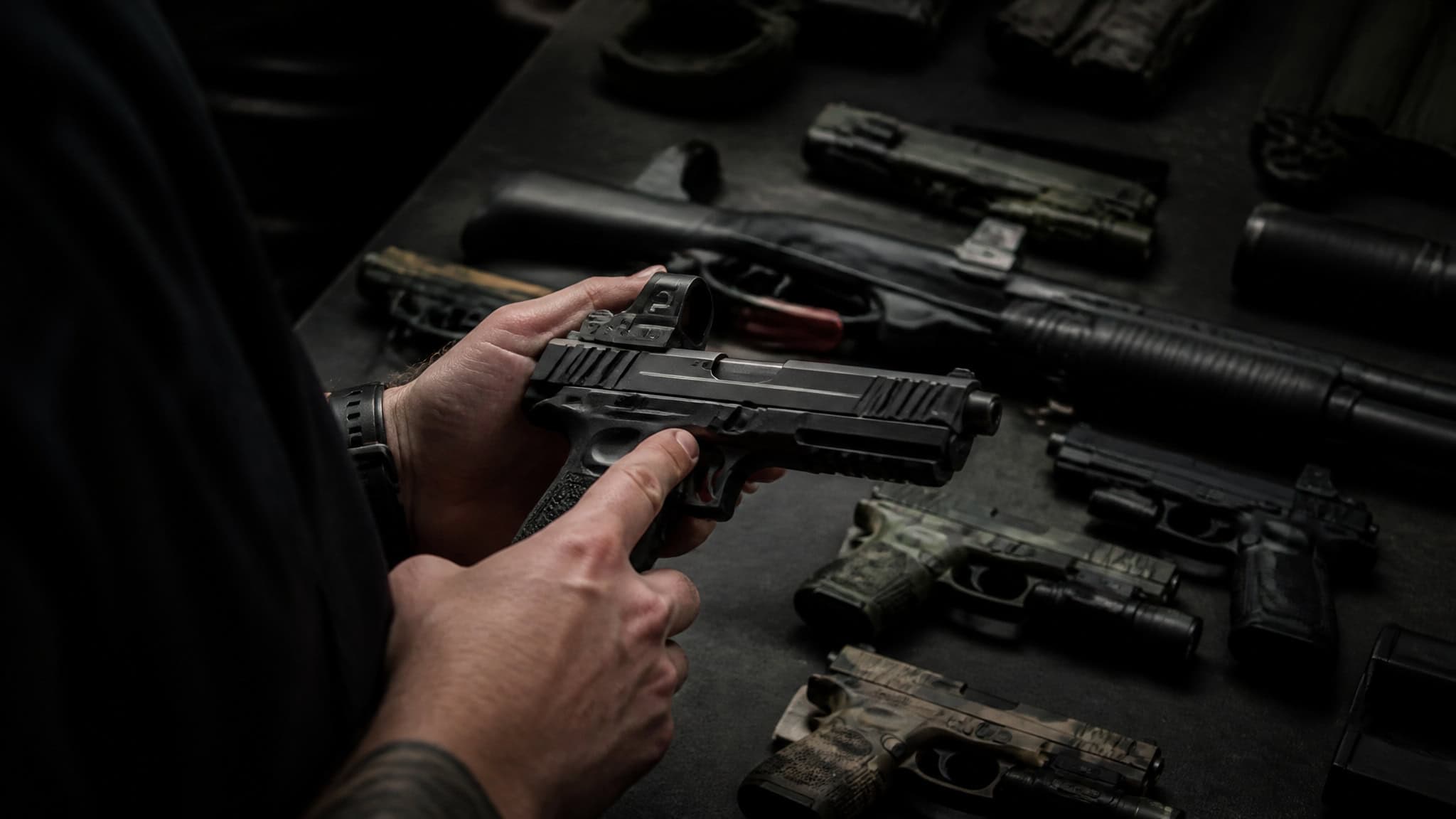
Wick’s loadout is deliberate: a Heckler & Koch P30L, a Glock 17, a Glock 26, and a Kel-Tec KSG shotgun. Practical and no-nonsense, and his gun-fu depends on it staying exactly that way. He’s an expert marksman, accurate under pressure, and because his style depends on sustained fire, ammunition conservation becomes a real constraint in a long fight.
Bourne’s everything-in-reach toolbox
Bourne carries similar equipment, a Heckler & Koch USP, a Glock 19, a Brüger & Thomet GL-06 grenade launcher, a SIG-Sauer P226R, but he treats firearms as disposable tools. He strips and reassembles a gun in seconds, uses empty weapons as melee weapons, and when a magazine runs dry he keeps going with whatever’s on the floor.
Both are expert marksmen, so that part cancels out. Wick’s style collapses when the ammo runs out, because his whole identity is in the guns. Bourne’s degrades gracefully, because his identity was never in the weapon.
Give him a towel and a magazine and he’s still dangerous. Take Wick’s guns away and you’ve taken away the guy.
Physical condition: the numbers behind the myth
Wick can move around 338 pounds (153 kg), Bourne around 359 (163 kg). Bourne also posts about a 26 mph sprint. That’s a small edge, and there’s a qualifier that matters more than the gap: Wick’s “peak human” is peak for his age, he’s pushing 48, while Bourne’s has no asterisk attached. Both are peak human, not superhuman, so none of these numbers is a trump card.
Bourne fights through the brutal Desh exchange and it visibly slows him. Wick absorbs staggering amounts of damage across his films and keeps coming. So the totals are close, Bourne has a real but margional edge, and it’s not what decides anything. Two peak humans this evenly matched come down to tactics, not lifting totals.
Tactical mindset: the planner vs. the improviser
Bourne plans missions carefully, and he adapts when the plan breaks. His fieldcraft and situational awareness let him control the terms of an engagement before it starts. Wick improvises on skill and instinct and rarely carries a detailed plan into a room. Gun-fu carries him through a crowd of mooks, but it looks thin against an opponent who’s actually thinking.
The hidden limitation is the Bat-man teleport. Wick’s celebrated ability to vanish and reset an encounter depends on the crowd around him. In a packed club with cover and confusion, his evasion works. In an empty street, there’s no reset move. That’s a crowd-dependent tactic, and it’s a liability in a bare venue.
An opponent can study an improviser’s habits because they’re habits. A prepared tactic ian has already considered the alternatives before the room even goes loud.
Weaknesses: what actually cracks each fighter
Wick’s weakness is his reliance on firearms. The documented evidence is his near-defeat by Ms. Perkins, who put him on the ropes in close quarters. That’s a hand-to-hand ceiling against a top-tier opponent. Bourne’s weakness runs the other way: he slows down when he takes too many hits. The Desh fight shows a real threshold, and a prolonged, high-damage exchange wears him out.
Both run finite ammunition, but the constraint bites differently. Bourne’s disarming skill means the ammo limit matters less for him. Wick’s doesn’t.
If Bourne closes the gap before Wick empties a magazine, the source’s own scenario says Wick can’t win the close fight. If the range holds, Bourne’s damage decay leaves him exposed. There’s no draw here. Whoever lands their exploit first walks away.
Realism vs. spectacle: whose universe is the fight in?
The “realism” in the Bourne films is a visual aesthetic: close-quarters work, shaky camera, improvised tools, including some of the greatest car chases in movie history. That’s a genre choice, not a physics cap on his feats. Meanwhile Bourne operates in a surveillance-dense world where actions have consequences and the CIA can track him. Wick operates in a fantasy underwrold with no police, magical body armor, and a society run by assassins.
The confusion comes from conflating “gritty” with “realistic.” Audiences see shaky cam and improvised weapons and decide Bourne is the grounded one, then judge Wick’s choreographia by a standard neither franchise actually follows. Neither fighter wins on realism. The fight has to be judged by the venue it’s in, and the venue is fictional either way.
The death battle, and the venue that flips it
Here’s where the structured analysis actually earns its keep, and where the answer turns genuinely conditional.
The fight as written
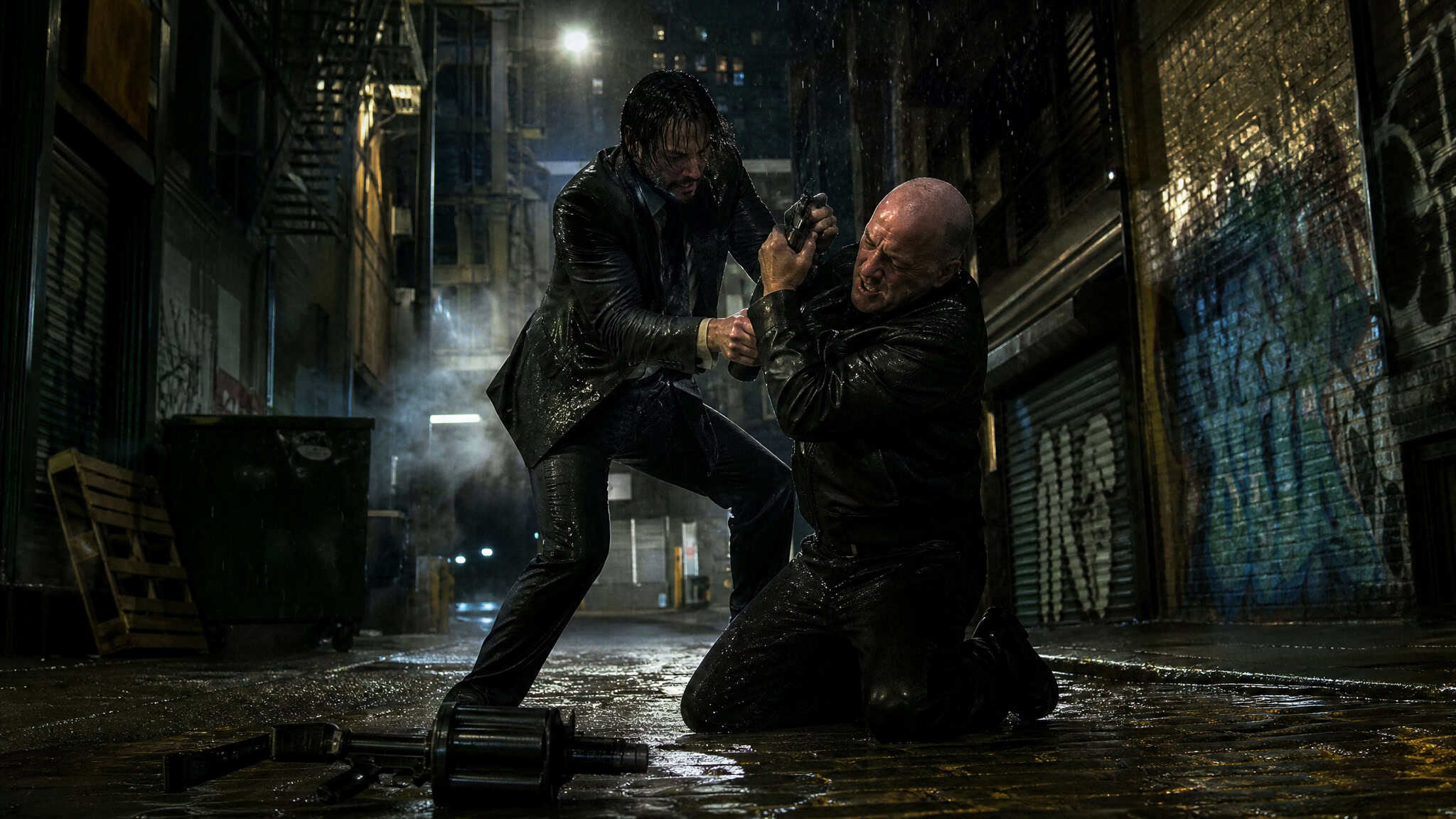
The Death Battle Fanon scenario drops them into a rainy Washington alleyway. Bourne disarms Wick’s Glock, stabs him, and finishes with the grenade launcher. Wick lands a final gut shot on Bourne, but he dies in the blast. It’s a close fight, but the verdict is Bourne, and the reasons are specific: hand-to-hand advantage, tactical planning, and weapon disarming. Wick’s gun reliance and his lack of a plan are the decisive disadvantages.
This is fan-made analysis, not canon. It’s one of the better structures floating around the debate, and it deserves to be treated as a reference, not a ruling.
When the venue changes the verdict
Give Wick his home universe and the math flips. Lawless setting, open sight lines, full arsenal, no police intervention. That’s the environment his gun-fu was built for, and his firepower likely dominates. Put the fight in Bourne’s surveillance-heavy world or back in a neutral alley, and Bourne’s control of terms wins, same as the scenario.
This is the head-to-head scorecard for that neutral-alley version:
| Criterion | John Wick | Jason Bourne | Edge |
|---|---|---|---|
| Weapons | Curated pistols and a shotgun | Disposable tools, improvised weapons, grenade launcher | Bourne |
| Hand-to-hand | Solid base, near-loss to Ms. Perkins | Krav Maga, Jeet Kune Do, Kali; beat Desh and the Asset | Bourne |
| Physical stats | Peak for age 48, 338 lb lift | Slight edge, 359 lb lift, ~26 mph sprint | Bourne |
| Tactics | Improviser, crowd-dependent | Planner, adapts | Bourne |
| Weaknesses | Gun reliance | Damage decay | Bourne |
It’s the shape of the answer when the venue is neutral, and it’s exactly the part most forum threads skip.
The community debate: body count vs. feats
Wick’s higher on-screen body count gets treated as proof he’s superior, while Bourne’s specific feats, the magazine disarm, the fieldcraft, surviving Treadstone, get underweighted. Quantity of evidence gets mistaken for quality.
The actual arguments are a mixed bag. There’s the Bat-man teleport claim, which looks strong until you notice how crowd-dependent it actually is. There’s the High Table resources versus CIA reach comparison, which is a scale question more than a fight question. And there’s the institutional-threat difference: Wick makes crime syndicates run for cover, Bourne destabilizes a government agency in a world that looks like ours. Those are different kinds of danger, and neither one proves who wins a fight.
Wick terrorizes an underwrold. Bourne makes the CIA run scared in a world close to our own. Don’t confuse scale with skill. It’s a fan debate, not an official ranking, and it’s been spinning for decades because the two men represent genuinely different kinds of threat.
Beyond the duel: which archetype to model
Each fighter represents a philosophy, and picking one isn’t about “strongest,” it’s about matching a mindset to your own temperamament and realistic training goals. Honest disclaimer first: none of this is a weekend course. These are fictional peak humans, and no amount of drills turns any of it into a real skill set overnight.
Robert McCall’s environment-first improvisation
Robert McCall is the third option, part of the broader conversation even though he’s not in the main Death Battle analysis. A former intelligence operative, his whole thing is turning everyday objects into weapons. That’s an intelligence-led, environment-first approach: the fight is won before it starts because he’s already read the room and found the tools in it.
Jack Reacher’s physicality first
Jack Reacher goes the other route: physicality-first brutality. If you’re the kind of guy who trains strength and size before you worry about technique, his is the archetype that makes sense. The philosophy is simple: make the body the weapon and the details take care of themselves.
Agent 47’s methodical precision
Agent 47 is the third path: methodical, pre-planned execution. No improvisation needed if the plan is good enough and you run it coldly. That’s the model for methodical people who want the whole engagement mapped before it starts.
So you’ve got real options: adaptability and conditioning (Bourne), disciplined firearm practice (Wick), improvisation under pressure (McCall), or physicality first (Reacher). None is stronger. One fits better, and that’s the entire point of comparing the two in the first place: not to pick a champion, but to figure out which operating philosophy you actually want to study.
Bourne wins the source’s neutral-venue scenario because he controls the terms and can take a gun away. Move the fight into Wick’s universe, where the rules are his and the arsenal is full, and it flips. That’s not wishy-washiness. That’s what actually happens when two fighters from different worlds meet: the world decides more than the stats do.
The fight is less about lifting totals and sprint speeds than it is about which universe’s rules you’re walking into. And the archetype worth modeling isn’t the “winner.” It’s the one that matches your temperamament and the goals you can actually pursue. Rewatch both franchises knowing that, and the endless who-wins argument stops being a dead end and starts being a way to pick a direction for yourself.