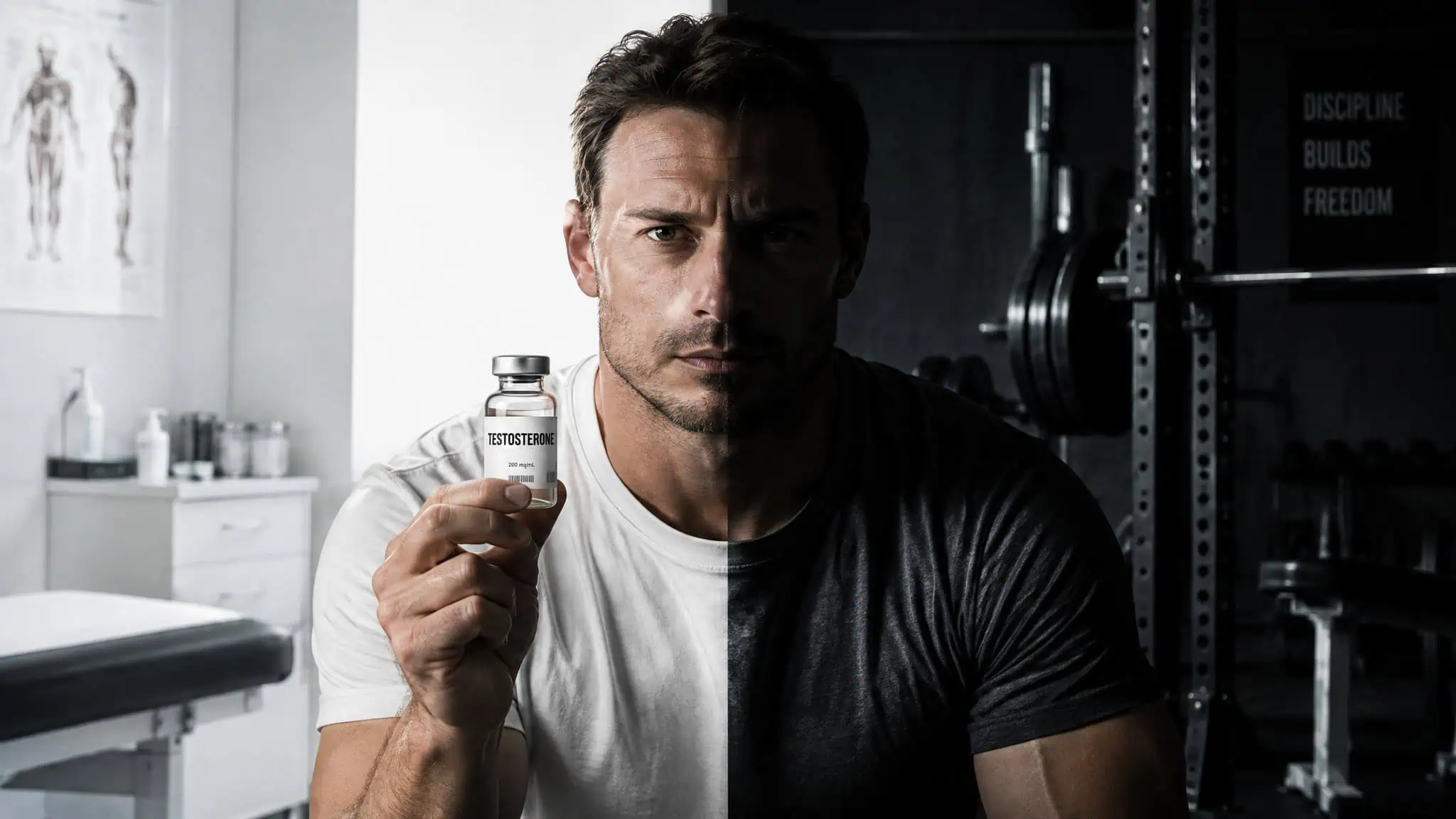
The guy at the gym who’s clearly “on something” and the guy whose doctor just handed him a prescription for low testosterone are, technically, putting the same hormone into their bodies. That fact makes a lot of men uncomfortable, and it’s exactly why most articles on this topic either dodge it or turn into a clinic ad. Here’s the honest version.
Key Takeaways
Testosterone is an anabolic-androgenic steroid by chemistry, so TRT is technically steroid use, but clinician-supervised replacement for diagnosed low testosterone is a fundamentally different practice from unsupervised bodybuilding use.
The dose gap is the story: prescribed TRT runs bioidentical testosterone cypionate at 120-200 mg per week, while nonmedical use runs 400-1,000 mg of a testosterone base, often stacked with synthetic androgens like oxandrolone or nandrolone decanoate.
A 2021 Copenhagen study found former steroid users still showed reduced testicular capacity an average of 32 months after quitting, though the researcher himself said it’s still debated whether illicit steroid use causes long-lasting testosterone deficiency.
Table of Contents
Technically, yes. That word is doing real work.
Let’s kill the dodge first. Plenty of sites will tell you TRT “doesn’t count as a steroid.” That’s chemically false, and it falls apart the second you fact-check it. Anabolic-androgenic steroid names a chemical class, and testosterone belongs to that class by definition. That’s not a technicality you can argue around; it’s the definition.
Dr. Moeller, a men’s health physician who’s addressed this question directly, put it plainly: by the strict chemical definition, yes, prescribed testosterone counts as steroid use. The real question, he says, is whether that’s the same thing as unsupervised bodybuilding use. It isn’t, and the difference isn’t the molecule.
Worth knowing where these compounds came from: they were developed as medicine, for delayed puberty and muscle-wasting conditions. The gym repurposed them. So when a guy on prescribed testosterone says he’s not “on steroids,” what he usually means is that he’s not doing what the guy in the squat rack is doing. He’s right about that part. He’s just wrong about the chemistry.
Nonmedical steroid use is easy to define: using these compounds without a doctor, for looks or performance, at doses way above what any prescription calls for. That’s the thing most people mean when they say “steroids.” TRT is not that thing.
Restore versus enhance: the actual dividing line
What actually separates a prescription from a gym protocol comes down to supervision, dose, indication, and legality. Everything else is detail.
- TRT is legal only with a prescription; nonprescription anabolic steroid use is illegal in the U.S. as a Schedule III controlled substance.
- Dose: Prescribed TRT runs bioidentical testosterone cypionate at 120-200 mg per week. Nonmedical use is 400-1,000 mg of a testosterone base, often 10 to 100 times replacement dosing.
- Compounds: TRT uses bioidentical testosterone, the same molecule your body makes. Nonmedical use is frequently stacked with non-bioidentical androgens like oxandrolone or nandrolone decanoate.
- Purpose: TRT restores normal levels in a man with diagnosed low testosterone (hypogonadism). Steroid abuse builds muscle and performance beyond what your body would do.
- Supervision: TRT comes with regular bloodwork and dose adjustments on a schedule the clinician sets. Nonmedical users get none unless they arrange it themselves.
- Legal status: Prescribed TRT is legal with a prescription, the only legal route. Nonmedical use is Schedule III under the Controlled Substances Act and illegal without one.
Two rows in that table do more work than the rest. First, bioidentical versus synthetic: cypionate is the same molecule your body produces, while compounds like oxandrolone and nandrolone decanoate build more muscle but bring health concerns that bioidentical cypionate doesn’t carry. Second, the endpoint: TRT is calibrated to land you inside the normal range. Enhancement protocols deliberately exceed physiology. That’s not an accident or a side effect of sloppy dosing. It’s the point.
In practice, a common first-appointment scene at a TRT clinic looks like this: a guy shows up with a forum protocol on his phone, and the doses men pass around online run far higher than any clinician would ever prescribe. The forums aren’t describing medicine. They’re describing something else entirely.
Will TRT build muscle like steroids?
No, and it’s engineered not to. TRT dosing is calibrated to stay inside normal physiological levels, so its muscular ceiling is physiologic by design. For a man who’s actually deficient, that means strength and body composition move back toward a healthy baseline: less dragging through the day, mood back, drive back. Past that ceiling, you’re not in medicine anymore. You’d need doses that no clinician will write, which is exactly where the risks below come from.

One thing worth saying about the dramatic before-and-after claims floating around: most benefit claims for high-dose use come from bodybuilding culture, case reports, marketing, or extrapolation from medical settings. What’s been shown under a doctor’s supervision doesn’t automatically transfer to a DIY protocol, and guys comparing notes on Reddit are usually working from exactly those weak receipts. That doesn’t make their experiences fake. It makes them a lousy basis for deciding what to put in your own body.
What unsupervised steroid use actually costs
These apply to steroid use broadly, and they’re what guys report, not what a pamphlet says. The same compound behaves differently depending on who’s taking it, so it’s worth breaking down.
Across the board: irritability and mood swings, aggression (the “roid rage” thing is real enough that it has a nickname), depression, increased libido, fluid retention, severe scarring acne on the back and shoulders, getting sick more easily, trouble sleeping, and injection-related nerve damage.
For men: pattern baldness, shrinking testicles, gynecomastia (breast tissue growth), reduced sperm count, erectile dysfunction, and prostate problems. Nobody enjoys typing that list. Guys searched for it anyway.
For women: excess hair growth, clitoral enlargement, deepened voice, lost periods, breast shrinkage. One line each because that’s all they need.
For teenagers and twenty-somethings still growing: stunted growth, stretch marks across the chest and arms from growing too fast, training injuries because muscle outgrows tendon, premature balding, and skin that ages into a leathery look early. This is the trade you can’t undo. Everything on this list is most permanent for the youngest users.
Long term: gonad damage, paranoia, delusions of invincibility (feeling untouchable while doing damage is its own kind of problem), tremors, high cholesterol, hypertension, tendon injuries, liver, kidney, and heart problems, and needleborne infections like hepatitis B, hepatitis C, HIV, and tetanus from shared or dirty needles.
The research worth knowing about here came out of Copenhagen. Jon J. Rasmussen, M.D., Ph. D., of Rigshospitalet, backed by Anti Doping Denmark, presented the work at ENDO 2021 and published it in the Journal of Clinical Endocrinology & Metabolism, the flagship journal of the Endocrine Society, the largest global organization of hormone scientists and physicians with more than 18,000 members across 133 countries.
His team looked at serum INSL3, which is a stable marker of how well the testicular testosterone-producing cells (Leydig cells) work. It’s steadier than testosterone itself, which bounces around day to day. The study covered 132 recreationally training men aged 18 to 50, average age 32: 46 current users, 42 former users, 44 never-users. Regular gym guys, not pros.
The finding: former users had been off steroids an average of 32 months, nearly three years clean, and still showed reduced INSL3 at 0.39 µg/L versus 0.59 in never-users. Current users were markedly suppressed below both. Longer use tracked with lower capacity.
Now the honest part, because Rasmussen himself provided it. He said it is still debated whether illicit use of anabolic steroids causes long-lasting testosterone deficiency, and nobody yet knows what INSL3 difference is actually clinically meaningful. He also raised the question of whether some former users might benefit from stimulation therapy using aromatase inhibitors or SERMs, drugs that act on estrogen to nudge the testes back toward function, a question that touches on the broader world of testosterone replacement therapy. That’s an open research question, not a recommendation.
The study is small. Read it as a real warning sign, not a verdict.
Supervised doesn’t mean risk-free
Here’s where the credibility of everything above gets tested. TRT has its own list of what men can realistically expect energy, body composition, libido, mood, and cognitive benefits, with honest framing of what it won’t fix, and pretending otherwise would make this a clinic ad instead of an article.
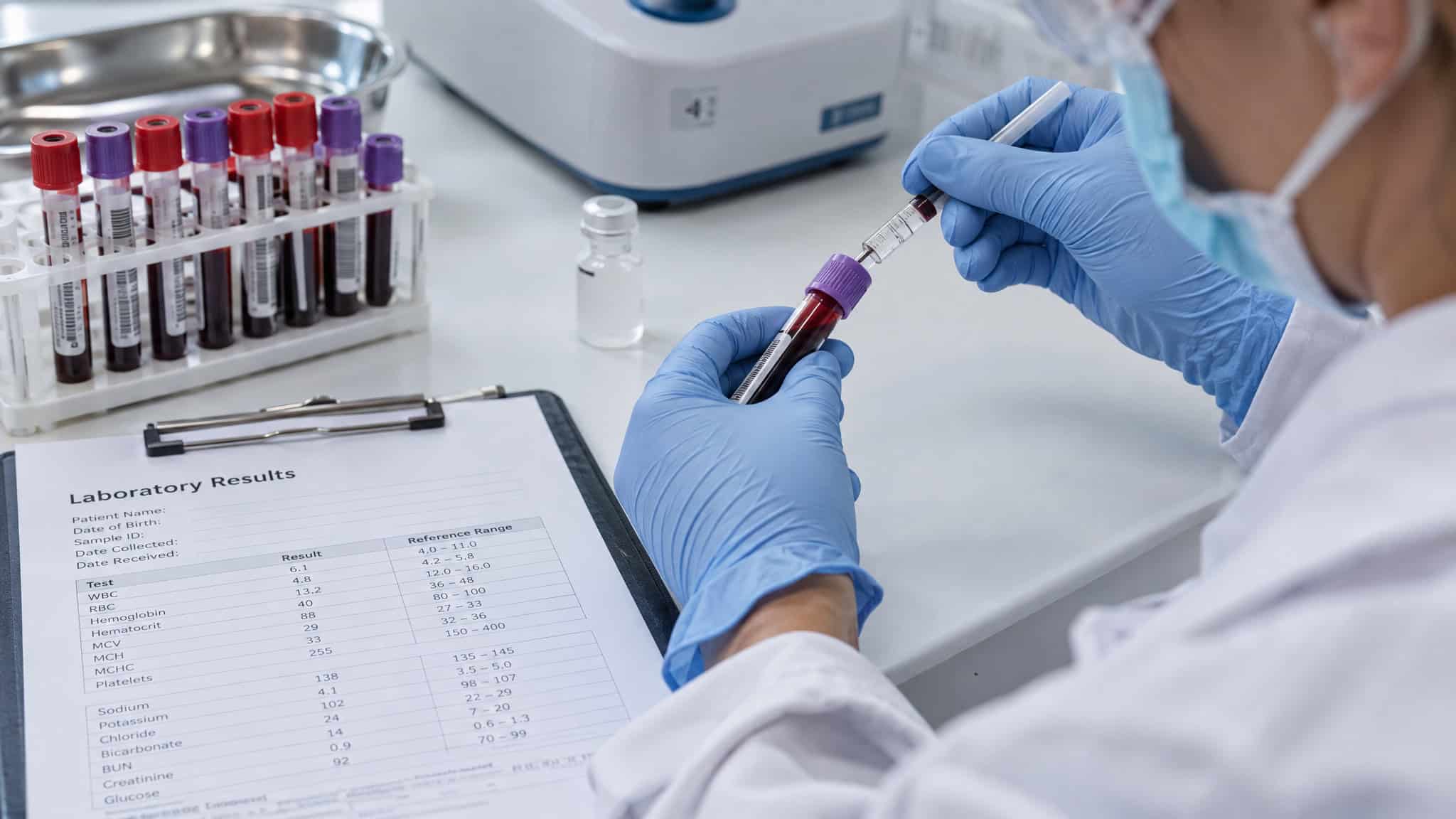
The real risks: smaller testes, obstructive sleep apnea (breathing stops during sleep), acne, deep vein thrombosis (blood clots in deep veins), breast tissue growth, reduced sperm count, higher blood pressure. Flagged serious risks include heart attack, prostate cancer, chest pain, and erectile dysfunction. The everyday stuff: oily skin, ankle swelling, insomnia, back pain, depression, dizziness, headache.
That’s a heavy list. The difference is what happens next. Those risks are exactly what monitoring exists to catch: labs, dose adjustments, a clinician reviewing your numbers and asking actual questions. A protocol where the adverse events are documented and watched is safer by design than one nobody is tracking. Generally safer than anabolic steroids, but not risk-free. Both halves of that sentence matter.
One trap to name, because it shows up constantly: guys using unmonitored hormones point to one normal blood panel as proof of safety. One clean draw only captures that moment. Harm that shows up later, including heart strain, HPTA suppression and fertility loss, withdrawal, or contamination, can all still appear after a normal panel, and quitting isn’t as simple as stopping TRT makes it sound. Clinicians read patterns across markers and timepoints. That’s part of what the money for supervised care actually buys: labs, dose adjustments, and someone accountable, versus whatever the underground charges, with none of it. Prices vary, but the oversight is the product.
Red flag: One clean blood panel doesn’t prove a hormone protocol is safe. Clinicians read patterns across markers and timepoints, not single snapshots.
Which leads straight to the supply problem.
Buying without knowing: the underground problem
The issue with black-market products isn’t just that they’re illegal, though they are. It’s that a buyer has no way to know what he’s taking. A label, a forum name, or a seller description verifies nothing:
- What’s actually in the bottle
- Whether it’s sterile
- What concentration it really is
- Its legal status
- Whether it’s right for your body at all
A label tells you what a seller says; it doesn’t tell you what’s in the bottle.
The route you choose shifts which risks you face without removing the big ones. Injectables add infection and abscess risk. Orals add liver strain. Neither touches the class-wide cardiovascular, hormonal, fertility, and mood effects that come with the territory regardless.
Name confusion causes real mistakes too. Brand names point to historical products, generic names to the actual active drug, and underground labels blur both on purpose. Add esters, which affect release timing, and forum slang, and you get guys doubling up substances, buying the wrong thing, or blaming the wrong drug for a side effect. None of that makes nonmedical use supervised. A fancier ester isn’t a doctor.
This is also where the “safer alternative” pitch lives. SARMs, short for selective androgen receptor modulators, hit androgen receptors selectively in muscle and bone, driving local testosterone and DHT activity and fast growth there. That selectivity is exactly why people assume they’re safer than steroids. Ayan Sanyal, MD of the Cleveland Clinic says the research raises concerns and that perception may not hold up.
The regulatory picture agrees: no FDA-approved uses, still investigational with poorly understood long-term safety, illegal to sell as supplements, banned by the Department of Defense and the NCAA, with more than 120 SARM-containing products on the WADA Prohibited List that can trigger positive tests even after you stop. And the labels? “For research purposes only.” “Not for human consumption.” That’s a disclaimer doing legal work, not safety work.
Cycling, recovery, and two different timelines
Two terms, defined once. Cycling means taking steroids in phases, on and off, with the aim of balancing gains against side effects. Without labs and a doctor, the “minimizing” part is a guess. Stacking means combining multiple steroids for a stronger effect, which makes side effects harder to attribute and raises interaction risk. When three drugs are in play, nobody can isolate the problem.
The timelines diverge harder than the vocabularies. TRT is generally an ongoing commitment, because exogenous testosterone suppresses your natural production, and stopping is a decision that belongs inside clinical care, not a solo project. Nonmedical use borrows benefits now against undefined recovery later, and the open question from the Copenhagen study, about whether testicular capacity fully bounces back, is exactly what makes “later” undefined.
Getting answers about your specific situation
The useful frame isn’t picking a winner and a loser. It’s four questions: what exactly is the substance, why are you using it, what’s your health history, and are there clinician-supervised alternatives. Answer those and the TRT-versus-steroids question mostly answers itself.
Some symptoms shouldn’t wait for a scheduled appointment: chest pain, fainting, severe shortness of breath, sudden weakness on one side, difficulty speaking, seizures, severe abdominal pain, jaundice, signs of infection at an injection site, thoughts of self-harm, or severe agitation. Those mean getting checked now.
Everything else belongs in a routine visit, and a routine visit covers more than most guys expect: your symptoms, whatever products you’ve used, blood pressure, labs, mental health, and fertility goals. One appointment, wide net. It’s the low-effort smart move.
Then the decision point. If you’re actually low T, dragging through the day, mood gone, drive gone, see a provider and get tested. Diagnosis comes before any treatment decision, and if you want a fuller walkthrough of the trade-offs, the guide on whether men should take TRT covers who’s genuinely a candidate. If you’re chasing gains instead, the boring answer is the real one: lean proteins, alternating cardio with weight training, per Dr. Sanyal of the Cleveland Clinic. Unglamorous, effective, and it won’t shrink anything.
The straight version of the whole thing: TRT is the safer route for diagnosed low testosterone, and steroid gains fade while the health risks stick around. If any of this is sitting on your mind, book the appointment and get the bloodwork. That’s the move.
Frequently Asked Questions
Is TRT therapy the same as steroids?
Chemically, yes — testosterone belongs to the anabolic-androgenic steroid class, so prescribed TRT technically counts as steroid use. But it’s not the same practice as unsupervised bodybuilding use. TRT is clinician-supervised replacement with bioidentical testosterone at doses calibrated to restore normal levels, while nonmedical steroid use runs far higher doses, often stacked with synthetic compounds, with no medical oversight.
Is TRT a strong steroid?
TRT uses bioidentical testosterone, the same molecule your body makes, but at replacement doses of roughly 120-200 mg per week — far below the 400-1,000 mg testosterone base common in nonmedical use, which is often 10 to 100 times replacement dosing and frequently stacked with stronger synthetic androgens. So the compound itself isn’t exotic; the dose and the protocol are what separate medicine from enhancement.
What are the side effects of TRT in males?
Real risks include smaller testes, obstructive sleep apnea, acne, deep vein thrombosis, breast tissue growth, reduced sperm count, and higher blood pressure, with flagged serious risks including heart attack and prostate cancer. Everyday effects can include oily skin, ankle swelling, insomnia, and headache. The difference from underground use is that these risks are exactly what monitoring — labs, dose adjustments, clinician review — exists to catch. Safer than anabolic steroids, but not risk-free.