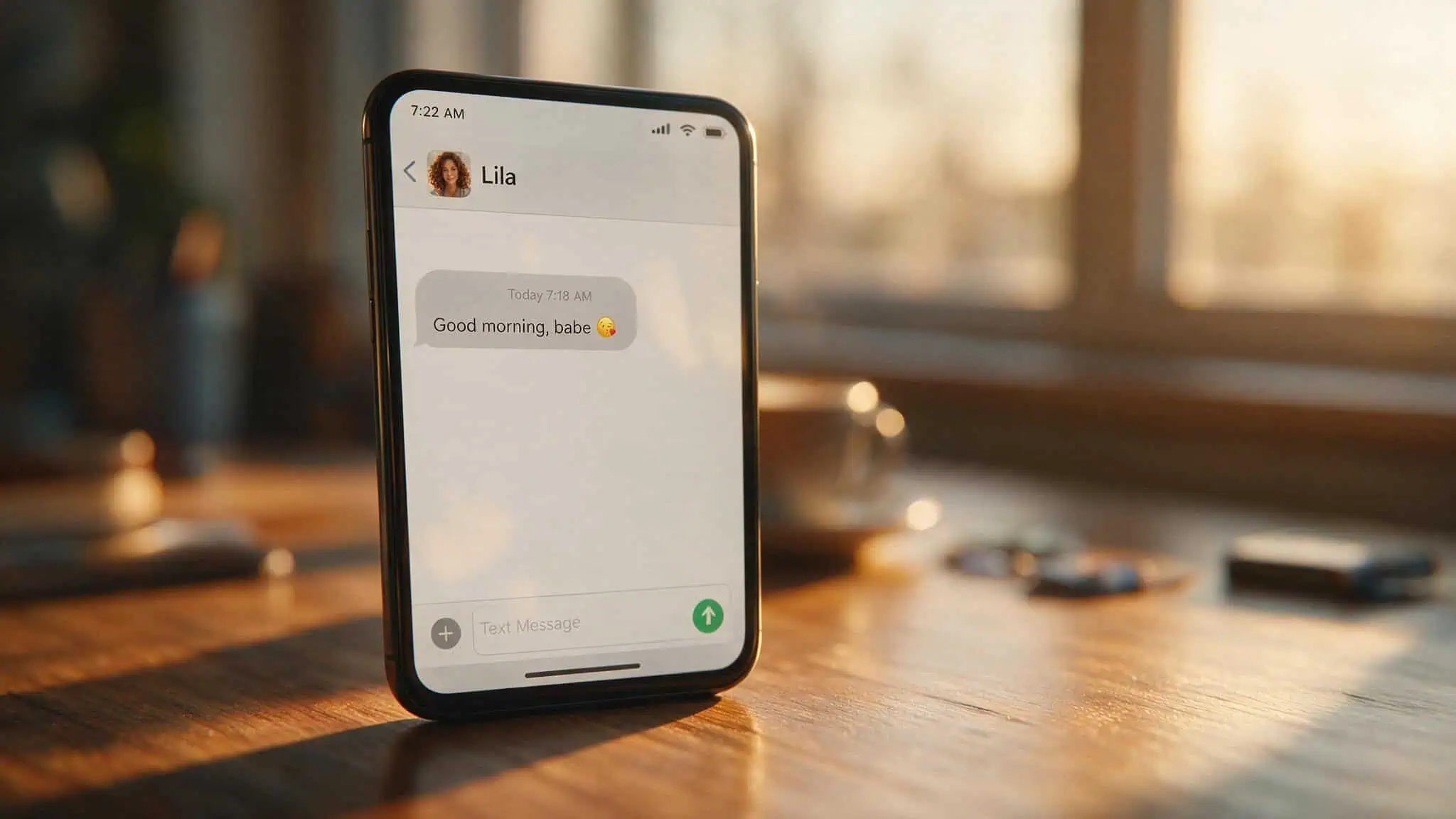
You’ve been seeing someone for a few weeks. Things are going well. Then it appears: “Good morning, babe 😘.” And suddenly you’re not sure if you’re in a relationship or just a contact in someone’s phone.
That’s the thing about “babe.” It’s a highly versatile term that can sound sweet, creepy, fond, or totally hollow — all depending on who says it, when, and in what tone. Maria Sullivan, Vice President of Dating.com, notes that the word adapts easily — it’s used by any gender, among partners, and even often among friends.
So is it flirty? Is it just friendly? The real answer is boring and useful at the same time: it depends. But the good news is you can actually figure it out without resorting to guesswork. Here’s how.
Key Takeaways
“Babe” signals genuine affection when the level of closeness matches the language — early use before meeting in real life often feels unbalanced and performative.
A specific red flag is when someone calls you “babe” or “hun” but never uses your actual name; it’s a tactic to avoid tracking multiple dating partners.
Regional dialects change everything: in British cockney, scouse, or Geordie speech, “babe” is common among friends, and in the Southern US, many women use it as a generic address like “hon” or “sweetie.”
Table of Contents
When It’s Too Soon to Call Someone “Babe”
Forget the “wait three dates” advice. The real issue isn’t calendar days — it’s whether the word matches the actual relationship stage. If you’ve never met in person and someone is already dropping “babe,” that’s a sign the dynamic is out of balance. It feels performative, like they’re trying on a relationship costume before you’ve even sat across from each other.

The HUD dating app community flags this pattern: using pet names before meeting IRL can make the connection feel lopsided. One person is already acting like a couple; the other is still figuring out if they even have chemistry in person.
The one-question test: Does the language match the stage? If you’re on a third message exchange and they call you “babe,” the answer is no.
When “Babe” Is a Red Flag (and When It Isn’t)
Not every use of “babe” is innocent, but not every use is a warning sign either. The key is learning to distinguish between a genuine term of endearment and a red flag that signals something else entirely.
The name-tracking red flag
Here’s a specific warning from the HUD article: If someone calls you “babe” or “hun” and never, ever uses your actual name, that’s not necessarily affection. It could be a convenience tactic. When you’re juggling multiple conversations, a generic pet name saves you the trouble of remembering who’s who.
This is different from someone who uses “babe” sometimes but also says your name. The red flag is the exclusive use of pet names along with early, overly familiar intimacy. As Julianne Cantarella — a dating coach with over a decade of experience who has helped hundreds of women through her program at New Jersey’s Matchmaker — notes, consistent behavior matters. If they can’t be bothered to learn your name, they’re not that invested.
Red flag: If someone exclusively calls you “babe” or “hun” and never uses your actual name, it’s a convenience tactic — not affection.
When early ‘babe’ is genuine warmth
But not every early “babe” is a warning sign. Some people are just warm communicators. They use endearments the same way others say “dude.” The real test is whether their overall actions are respectful.
Do they follow through on plans? Do they ask about your day? A genuine “babe” from a warm person comes with consistent, respectful behavior. A red-flag “babe” comes with vagueness and distance.
What It Means When a Guy vs. a Girl Calls You “Babe”
Let’s be clear: gender doesn’t determine intent. But societal expectations color how we interpret it.
When a guy calls you ‘babe’
Sullivan says calling someone you’re not dating “babe” can be a way to hint at romantic interest. It plants a seed, as the subtle mention of the word can get your crush thinking. So if a guy you’re not close with drops “babe,” it’s probably not just friendly — unless he’s trying some smooth pick-up lines from Roblox. That said, some men use it platonically — especially in regional dialects or among close friends. Context is everything.
When a girl calls you ‘babe’
When a woman calls you “babe,” it can indicate closeness, romantic interest, or simply casual friendship. On HiNative, native speakers pointed out that women often compliment each other with “babe” — for example, saying “You’re a total babe” to express admiration without romantic intent. But if it’s a direct address in a one-on-one context, especially with emojis, it’s likely a signal of affection or interest, raising the question of what does hot babe mean and how it differs from these more casual uses.
How to Decode “Babe” in Person and Over Text
Decoding “babe” in person is different from decoding it over text. Each setting offers its own set of clues to interpret the speaker’s intent.
Reading non-verbal cues in person
In person, you’ve got the full picture. Body language, tone, facial expressions, proximity — they all tell you more than the word ever could. Is he leaning in when he says it? Does her voice go soft?
Is there eye contact or a smile? If the non-verbal signals are warm and engaged, the “babe” likely means affection. If they’re distracted or flat, it’s probably just a verbal tic.
Decoding digital signals: emojis, punctuation, and context
In digital communication, ‘babe’ can be both endearing and ambiguous. You lose tone and body language in text, so the small signals become everything. Compare “Hey babe 😊” — where the smiley face suggests flirtation, warmth, and a little extra intent, with “Thanks, babe.” The period and lack of emoji make it a casual acknowledgment, like signing off a transaction. Emojis and punctuation are the paint on a blank canvas.
If the message feels warm and intentional, the “babe” is likely affectionate. If it’s dry and short, it’s probably a placeholder.
Regional and Cultural Context: “Babe” Means Different Things Everywhere
This is where a lot of overthinking falls apart. The same word can be romantic in one city and as neutral as “dude” in another.
British dialects and the platonic ‘babe’
HiNative users confirm: in British English, especially cockney, scouse, and Geordie dialects, “babe” is used among friends all the time. If you’re talking to someone from Liverpool or Newcastle, “babe” might carry no romantic weight at all. It’s just how they talk.
Southern US and the generic ‘hon’
Same story in parts of the American South. As one HiNative user observed, some women call everyone babe, hon, sweetie, etc., especially in the South. If a woman from Georgia calls you “babe,” she might call her barista the same thing, but what is slang for hot girl? Terms like “babe,” “hottie,” “fox,” and “snack” each carry different nuances. Don’t read into it unless other signals line up.
A global perspective on terms of endearment
This isn’t unique to English, either. Spanish has “Querido/a” (dear), French has “Chéri/e” (darling, usually romantic), Italian has “Tesoro” (treasure, deep affection), and Japanese uses “Aishiteru” to convey profound love similar to “I love you.” Every culture has its own weight system. The point: the word itself never travels alone — it carries the accent of where and how the speaker learned to use it.
Professional Settings and New Acquaintances: When to Avoid “Babe”
Short version: don’t. In a professional environment, avoid “babe” entirely. It can be perceived as overly familiar, presumptuous, even creepy. Same goes for new acquaintances.
Unless you already know they’re comfortable with that level of familiarity, stick to their name. Sullivan warns that calling people “babe” can make some people uncomfortable, and if you’re using it in a friendly way, the receiver needs to understand that intention. When in doubt, leave it out.
Setting Boundaries: The “Julie” Test and What It Reveals
If you’re unsure how someone will react to a boundary, a simple test can reveal their level of respect without creating conflict. The “Julie” test offers a low-risk way to gauge their response.
The ‘Julie’ script: a low-stakes respect test
Here’s a concrete tool from the HUD article. Say your name is Julie. Someone calls you “babe” and you don’t like it. You can simply say: “Hey, my name’s Julie — I’m not into nicknames!”
That’s it. No drama, no accusation. You’re stating a preference.
What pushback reveals about the other person
Then watch what happens. If they apologize and switch to your name, that’s a good sign — they respect boundaries. If they push back, make a joke about it, or keep calling you “babe,” that tells you something important. As Sullivan notes, if someone dislikes being called “babe,” the other person should stop using that term.
Pushback on this small request is a microcosm of bigger issues. This one sentence can save you weeks of wondering.
“Babe” vs. “Baby” and the Magic of Organic Nicknames
Not all pet names carry the same weight, and the difference between “babe” and “baby” can reveal a lot about the speaker’s sense of intimacy. Understanding this spectrum helps you read the relationship stage more accurately.

‘Babe’ vs. ‘baby’: the public-private spectrum
Sullivan draws a clear line: Babe is generally used in casual settings and around other people. Some couples hold off on using the term baby with each other until they are in a more private setting. So “babe” is the public-friendly version — casual, social, less loaded. “Baby” tends to feel more intimate and intentional, reserved for private moments. That’s not a rule, but it’s a common pattern.
Why the best nicknames are earned, not assigned
The best pet names don’t come from a list. They emerge naturally from shared experiences. One Seventeen article gives the example of someone who spilled ramen and got dubbed “Noodle.” That nickname carries a story, a laugh, a memory. It’s earned. Ten years ago, ‘Bae’ was more common, but language shifts — the nicknames that stick are the ones that feel organic to your relationship.
A generic “babe” from someone who barely knows you? That’s a hollow placeholder. The real signal of closeness is when a pet name feels specific to your relationship, not a default setting.
So, What Does “Babe” Really Mean?
The word itself goes back a long way — Middle English, derived from Old English “baban,” meaning “baby.” It has always been about vulnerability and care. But knowing that doesn’t tell you what this “babe” means right now.
The wikiHow article on this topic has been viewed 187,829 times. That’s a lot of people trying to crack the same code. And the real answer isn’t in the word — it’s in everything around it.
If you’re confused, don’t try to decode it alone. Say something. If you like the word, use it back. If you don’t, pull a Julie.
The response you get will tell you more than any dictionary, any expert, any article ever could. Trust your own comfort. Communicate it directly. And watch how they react. That’s the signal that actually matters.
People Also Ask
Why would a guy call you babe?
A guy might call you babe to hint at romantic interest, especially if you’re not yet close — it plants a seed of intimacy. But it can also be purely platonic in certain regional dialects or among close friends. The key is to look at his overall actions: does he respect your boundaries and use your name, or is it a generic placeholder?
Do guys prefer baby or babe?
There’s no universal preference, but ‘babe’ is generally used in more casual or public settings, while ‘baby’ tends to feel more intimate and is often reserved for private moments. The best pet names are earned through shared experiences, not assigned from a default list — so what matters more is whether the name feels specific to your relationship.
What’s the difference between babe and baby?
Babe is the public-friendly version — casual, social, and less loaded — while baby typically feels more intimate and intentional, often used in private settings. This isn’t a hard rule, but it’s a common pattern that reflects the relationship stage and comfort level between two people.
What does it mean when a girl calls you babe?
It can indicate closeness, romantic interest, or casual friendship. Women often use ‘babe’ to compliment each other platonically, but in a one-on-one context with emojis, it’s likely a signal of affection or interest. The surrounding behavior — like whether she uses your name and follows through on plans — gives the real answer.