
Congratulations, you won the car. Here’s what the auction website didn’t mention during the bidding: the second the hammer dropped, that vehicle became yours, storage and all. Nobody at the lot is going to haul it out of goodwill, and the meter is already running. You’ll usually have somewhere between 48 hours and a week to get the car out, and some lots are stricter than that.
Storage is usually free for 3 to 5 days, then it’s $15 to $75 a day for a car you already own. Some municipal and lien lots are even worse. The impound auction in Omaha, for example, expects a car won on Saturday to be picked up by 8 PM Sunday. That’s not a typo.
The other thing nobody mentions: auctions went national and digital. A guy in Michigan can win a car in a Dallas lane, another in Phoenix the same morning, another in Atlanta by lunch. Buying got easy. Moving got hard.
So if you’re figuring out shipping a car from auction, understand what you’re actually pricing. The transport quote is the tip. Underneath it: storage fees and dry run charges, your money parked in a car that isn’t moving, and possibly a forfeited arbitration claim on the car’s condition. That’s the real bill.
Key Takeaways
Storage runs $15-$75 a day after 3-5 free days, so booking a carrier the same day you win usually means paying nothing in storage at all.
A carrier needs three things before the lot releases your car: release paperwork (gate pass or release form plus buyer ID and lot number for Copart/IAAI), the exact pickup address and gate hours, and confirmation your payment fully cleared. “Submitted” isn’t “cleared.”
Brokers keep roughly 20-30% of every move. On an $850 quote, about $213 never reaches the truck, per AHX’s analysis.
Table of Contents
What happens the moment you win: the four clocks
Here’s the part that surprises first-timers. You didn’t just buy a car. You started four timers at once, and only one of them cares about your schedule.

Clock one: the removal window. Most lots give you somewhere between 48 hours and a week to get the car off their property. Salvage and municipal lots sit at the tight end of that range, wholesale dealer auctions at the loose end. And then there’s the Omaha impound lot, which gives you until Sunday evening for a Saturday purchase. Check your specific lot before you bid, not after.
Clock two: the storage meter. You get 3 to 5 free days depending on the lot. After that it’s $15 to $75 a day, and some lots raise the rate the longer the car sits. Think of it as a parking meter you didn’t know was running. A lazy week on the wrong lot costs you up to $300, and the car isn’t appreciating while it sits there.
Clock three: your own money. Dealers call it floor plan interest when a car is financed while it sits. If that’s not you, here’s the translation: the longer the car sits or takes to arrive, the more the deal shrinks. Every day of transit and storage is a day the margin between what you paid and what the car’s worth gets nibbled.
Clock four: arbitration. This is the one that bites. NAAA arbitration windows can be forfeited if the car is delivered late. Meaning if you win a car, it ships slow, and it shows up with a problem the auction photos didn’t show, your winnable claim might already be dead. The car’s condition dispute dies because the logistics took too long.
Here’s the pattern that shows up over and over: the buyer who haggles hard over the transport rate but never asks when the free storage ends. He saved $50 on the quote and burned $300 on the lot. And apparently he’s in good company. In AHX’s 2025 dealer survey, 46% of dealers couldn’t put a dollar figure on a single extra transit day.
These are people who do this for a living. If the pros don’t know their number, sit down and figure out yours.
Step one: clear payment and gather the release paperwork
Before any truck shows up, a carrier needs three things from you. Get them together early, because auction staff check paperwork harder than a dealership does and they won’t rush for you.
- Proof of ownership or release authorization. For Copart or IAAI, that’s a gate pass or release form plus your buyer ID and the lot number. For a dealership purchase, a bill of sale. Have the right stack for where you actually bought.
- The exact pickup address and gate hours. Auction lots aren’t dealership lots with a front desk. A wrong address or a truck arriving after the gate closes wastes a trip, and trips cost money.
- Confirmation the payment has fully cleared, not submitted, actually cleared.
That last one deserves its own paragraph. Auctions release the car only after payment clears, and this is how every lot works, not stubbornness on your part. Wire transfers often clear within a day. Other methods take longer.
If you schedule pickup while the payment is still “processing” and the carrier arrives to a lot that won’t release the car, that’s a dry run fee: you paid for a truck trip that couldn’t happen. It typically lands on the buyer. Your mistake, your bill.
Red flag: Scheduling pickup while payment is still “processing” invites a dry run fee that lands on you. Confirm cleared funds first.
The fix is unglamorous: confirm the money cleared, not just sent, before you schedule the truck. And when you book, name a specific point of contact at the lot. “Talk to Dave at the gate” moves faster than a general phone line, and faster release means fewer hours burned on your storage clock.
Know your auction’s rules before you bid
The short version of how Copart and IAA pickup works: clear your payment, get your release paperwork, book a carrier who knows the lot, and confirm the lot’s current rules before the truck rolls. That’s the sequence. The devil is in each auction’s quirks, and there are quirks.
Copart. Pickup appointments get booked through Copart’s app, which is a small friction that’s annoying to discover at the gate. Your third-party transporter can’t pull the car without a Gate PIN from you, so have it ready before the truck shows up. And here’s one that surprises people: you can’t drive the car off the lot even if it runs.
It leaves on a truck, period. Salvage cars need a hauler with the right equipment and some yard knowledge, which is not every cheap carrier on the internet.
IAA. IAA loaders cap at 11,000 lbs, so big trucks and heavy SUVs can be a genuine problem. And the driver must wear a high-vis vest or the lot won’t load. Yes, really. No vest, no car. Also set expectations: IAA cars can be rough, condition varies, and some need extra care just to load and move.
Manheim and ADESA. These are wholesale dealer auctions. Manheim alone moves more than 7 million vehicles a year. Salvage houses run tighter removal windows and faster-escalating storage fees than wholesale lanes, so if you’re buying at a salvage auction, move quicker. Mecum is its own animal: it’s a car-show auction, and those purchases almost always need shipping, because you’re not driving a auction-floor collectible home.
Regional and independent lots. There are hundreds of them, Sierra Auction and Royal Auction Group among them, and their rules are scattered across websites. The Auto Auction Directory pulls 400-plus auctions’ rules into one place, which is a handy shortcut if you’re bidding somewhere unfamiliar. Like a buddy tipping you off, not a sponsorship.
One caveat on all of this: lot rules are current-as-reported. Confirm with your specific lot before booking, because these details change and the fee for finding out at the gate is yours to pay. The real homework beat is this: know the removal window, the gate hours, and the payment-before-release rule before you bid. Not after.
Open or enclosed? Matching transport to your car
Here’s the one-liner: open transport is the cheap, exposed option; enclosed is the safe, expensive one. Now the math behind it.
Open is the default move, and for good reason. Open haulers fit roughly 10 cars, so the driver splits his cost across the whole load, which is why it’s the cheapest way to get an auction car home. The trade-off is that your car rides exposed, so tar, rocks, and road grime are on the table. For a lower-value vehicle or a fixer-upper, that’s usually a fine bet.
Whatever you choose, insure the car fully before it goes on the truck. That’s the one step guys skip and regret.
Enclosed is the safest way to move a car. Closed trailers, nothing hits it on the highway. Those trailers only hold 6 to 7 cars versus 10 on an open hauler, and that’s the real reason enclosed costs more per slot. It’s for the nice stuff: luxury, classics, anything you’d be sick about finding a rock chip in. It’s the most expensive option, and for the right car, it’s worth every dollar.
Now the branch most articles skip. You won a car that doesn’t run. Fine, it can still ship. The trailer just needs a winch to load it, and that runs an extra $150 to $300.
This is normal at salvage auctions, so don’t let a quote with a winch line surprise you. The decision rule is simple: salvage lots like IAA produce non-runners, so budget for the winch. Mecum collectibles warrant enclosed. Match the equipment to the car.
Four ways to arrange the move, and what each really costs
You’ve got four paths to get this car moved, and they are not priced the same.
Auction “click and ship.” One click, done. Also the most expensive option, and you can’t rate-shop or even see who’s hauling your car. Kirk Rogers of McCarthy Auto Group made the case directly: handing over an extra $300-$500 per car for the sake of one-click convenience means forfeiting that money on every load. That’s the convenience premium, from a guy who runs wholesale for a living.
Brokers. They handle everything, which sounds great until you see the receipt. Brokers quietly keep a 20-30% cut of every move. Per AHX’s analysis, on an $850 quote, about $213 never reaches the truck.
Worth knowing that AHX sells a broker alternative, so that’s the source’s math, not neutral consensus. But the shape of it tracks: somebody’s keeping a cut, and it’s not the guy driving the truck.
Load boards. Central Dispatch and Super Dispatch cut the broker fee out. The catch: you just became your own dispatcher. You’re vetting carriers, chasing ETAs, and handling problems solo.
And the free boards in particular are where double-brokering and ghost carriers thrive. The fee you saved gets paid back in hours.
Direct-to-vetted-carrier marketplaces. This is the middle ground: the vetting is done for you, you pay one flat fee, and the carrier sees his full rate and gets paid fast, which is a big part of why he shows up for your lane. uShip is the easy price check here. List the car’s details and free instant quotes show up in seconds. AHX is the other model in this space, founded in 2022 by Royce Neubauer after 24-plus years as a freight broker. Full disclosure: AHX is the source of several stats in this piece, so weigh them accordingly.
One more industry footnote, briefly: Ship. Cars and Auction Direct Transport announced a partnership on July 15 giving ADT carriers discounted SmartHaul TMS access, the back-office plumbing covering booking through invoicing, AI paperwork digitization, route optimization, and load alerts. You won’t touch it directly, but it’s the kind of plumbing that eventually makes pickups less of a mess.
What shipping an auction car should cost
Five things move the price: distance, make and model, condition, insurance, and season. Only the first one is out of your hands.
Distance is obvious: further costs more. Make and model matter because bulky vehicles eat trailer space. Condition matters because a non-runner needs loading equipment. Insurance is a lever people miss: check whether the hauler already carries enough coverage before buying more. And season is real: summer and winter are the pricey windows to ship, so if your removal window allows waiting for spring or fall, that alone moves the number.
Now the benchmarks, so you can smell a bad quote before you smell it:
- Industry average runs $1 to $3 per mile.
- A 500-mile move often starts around $800 per car.
- Full truckloads of 8 or more units run $800 to $1,500 per vehicle, because volume pricing is real.
- Fees on top of the base rate add another 10 to 20%.
- Insurance premiums run 1 to 1.5% of the car’s value.
Treat all of that as starting points, not guarantees. Your real number will be higher than the quote, and now you know roughly by how much.
One comparison most articles blur: shipping from a dealership costs less than an auction pickup. Simpler paperwork, and the car usually runs. On a Florida-to-New York route, the per-mile price drops for a dealership pickup, because winch and gate charges get stacked onto the auction side. Some dealerships offer shipping as an add-on, but arranging it yourself, direct or through a broker, gives you price control and easier rate comparison.
Auction transport providers quote for free, so there’s no reason to guess what shipping costs. Get a few numbers.
How to vet the carrier and avoid getting burned
The protection is a two-step check. First, verify the carrier in FMCSA’s SAFER records before you book: that covers their authority, insurance, and DOT safety rating. Second, when the truck shows up, confirm it matches who you booked by checking the USDOT or MC number. That’s most of your exposure covered in about ten minutes of homework.
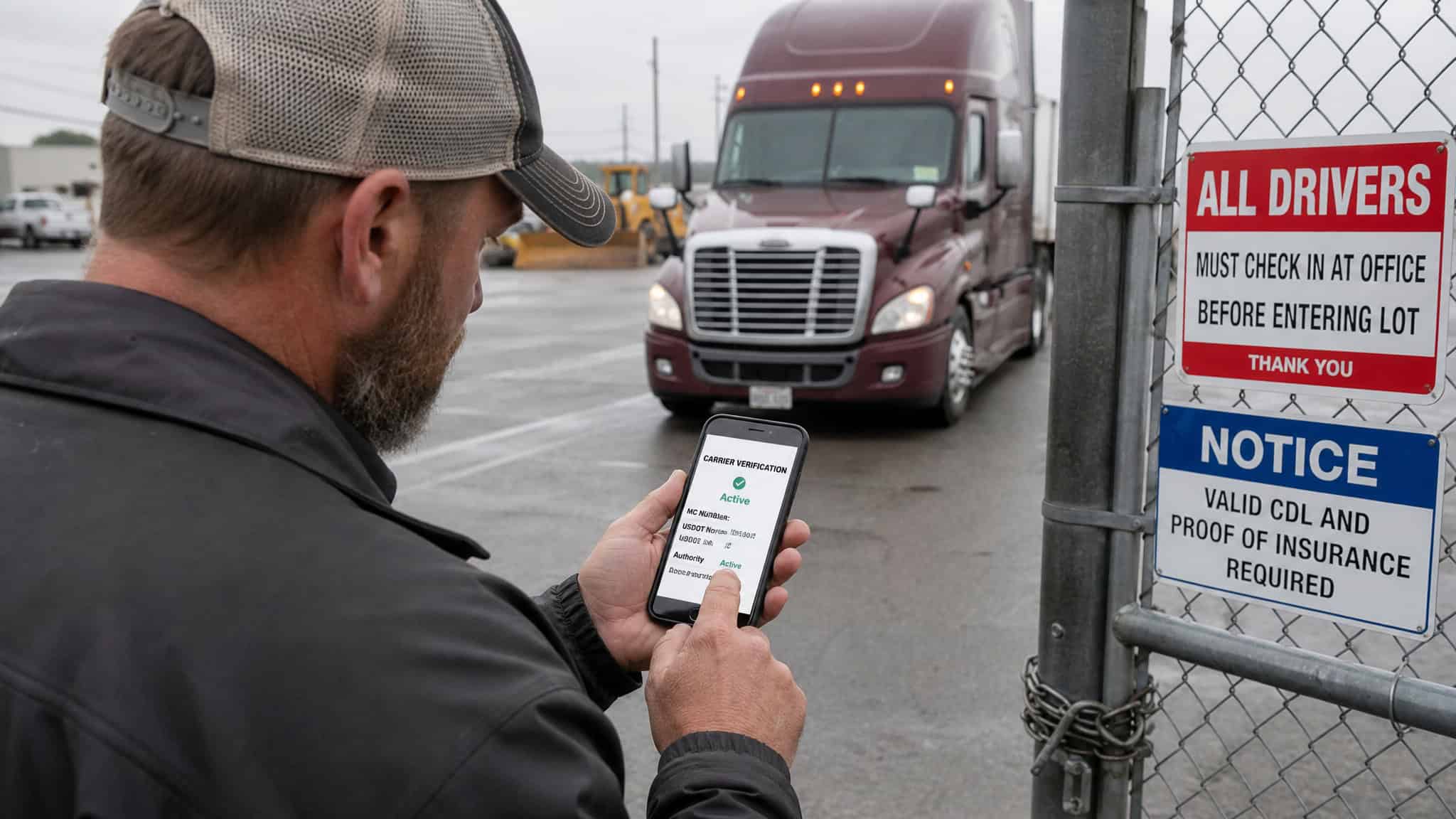
The three ways to get burned, named plainly: ghost carriers, who take the booking and vanish; double brokering, where your car gets handed down an invisible chain of subcontracts, and the tell is a different truck arriving than the one you booked; and straight-up stolen vehicles. FMCSA classifies the first two as criminal acts, not industry shortcuts.
Quick test: Check the carrier in FMCSA’s SAFER records before booking, then match the USDOT or MC number on the truck at pickup. Ten minutes, most of your risk covered.
Some scale, delivered dry and with honest attribution. Per TIA’s 2025 report, reported fraud incidents have climbed roughly 1,500% compared with 2021 levels. AHX’s survey found that 29% of shippers had experienced transport fraud in the past three years, and shippers reliant on brokers and load boards 72% more likely to report fraud. AHX sells the direct-booking alternative, so salt those numbers accordingly.
But the pattern that shows up repeatedly on load boards is real regardless of who’s counting: convincing paperwork, different truck at the gate. The SAFER lookup plus the truck-match check is what catches it.
Book the same day, and what to do when the truck arrives
Most carriers can dispatch within a day or two. That means booking transport the same day you win, inside your 3 to 5 free storage days, usually dodges storage fees entirely, plus release delays and dry run fees. One habit, three problems avoided.
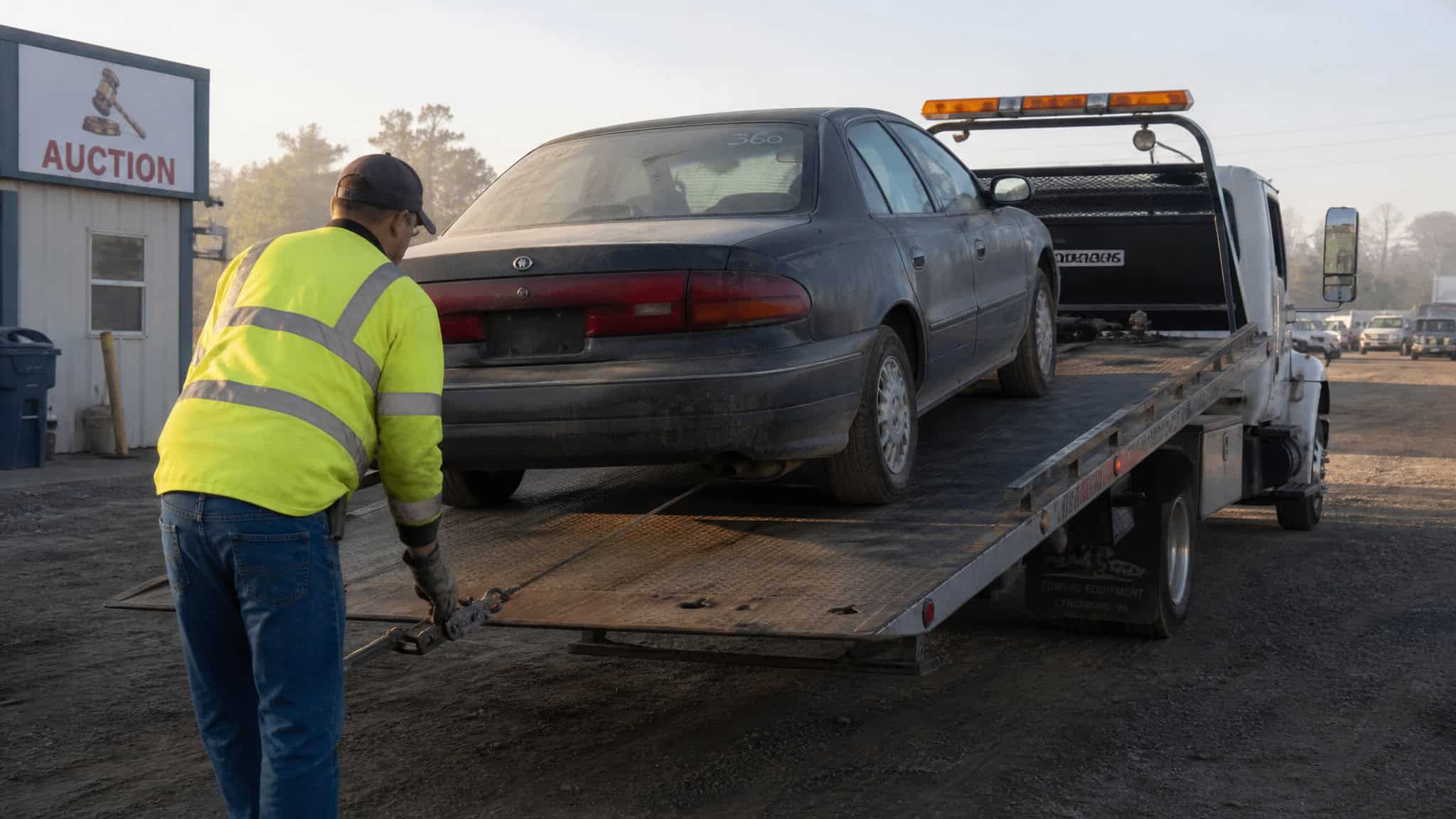
Here’s the counterintuitive part: timing is the one variable fully in your control, and booking fast matters more to your final cost than which carrier you pick. You can spend a week rate-shopping to save $75 and rack up $300 in storage doing it. The math doesn’t favor the careful shopper here. Book the same day, name a specific contact at the lot, confirm the payment cleared. Then stop worrying.
Before the truck arrives, do a quick pass on the car itself. Clear out your stuff and the previous owner’s junk, since it’s an auction car and you never know what the last owner left behind. Take the car seat out rather than leaving it installed; it’s a two-second job and avoids arguing with the driver. Bought an EV? Check the charge-level requirements with the hauler, because they have rules for battery cars that are easy to miss.
Delivery day has one step that almost no transport guide mentions: inspect the car against the original auction photos and condition notes before you sign the Bill of Lading. That signature is your last chance to document transit damage while the arbitration window is still open. Sign first, find the damage second, and you’ve likely kissed the claim goodbye.
And the proof the fast move works at scale: per AHX, Cable Dahmer went direct and booked same-day, and delivery windows shrank to 4-5 days from a prior 14-16. Same mechanism, scaled up. You’re just running it on one car.
A fast move vs a slow one: what the difference is worth
Everything above scales, and the dealers prove it. If you’re moving cars at any kind of volume, the advice is the same: move units fast, because the carrying costs are the real bill. Money tied up per transit day, plus a forfeited arbitration claim, will dwarf the difference between carrier rates. And the market gives you no cushion: wholesale values stay high while margins tighten, with the Manheim index up 2.1% in June, so slow logistics takes a bigger bite of profit than it used to.
Run the arithmetic. Four-day delivery instead of fourteen saves ten days of carrying cost per car. Ten days of interest on money that’s parked in a car instead of working.
The dealer case, flagged as vendor-reported since it comes from AHX: Cable Dahmer moves roughly 1,000 units a month through its eight dealership locations, went direct to vetted carriers, cut delivery from 14-16 days to 4-5, saved about 25% per car and over $500,000 in year one. Tom Bear of Cable Dahmer put it this way: Every extra day in transit is money on fire. And Stephan Morris, on seeing what the carrier actually got paid versus what the dealership charged: “I about fell out of my chair.” McCarthy Auto Group’s Kirk Rogers has made the same point from the other side, that paying extra for one-click convenience is leaving real money behind.
Scale that down to your one car and the levers are identical: booking speed, a named contact at the lot, payment cleared before the truck rolls, and direct booking where you can see who’s hauling. The levers are speed and paperwork, not carrier brand or a slick website.
The landed cost is the real number
The transport quote is the smallest number in this equation. The bill underneath is storage fees, dry run charges, broker markup, and the arbitration claim you forfeited because the car arrived late. Add those up and the quote you agonized over is a rounding error.
The whole sequence in one breath: confirm cleared payment, assemble the release paperwork, know the lot rules, match the transport method to the car’s condition, book the same day, verify the carrier in SAFER and at the gate, inspect before signing.
And if you’re still in the bidding stage, even better. Check the Auto Auction Directory before you raise a paddle, because the cheapest car at auction is the one whose logistics you priced before you won it.
Frequently Asked Questions
Can you ship cars you get from the auction?
Yes, and in most cases you have to — many auction lots won’t let you drive the car off the property at all, even if it runs. At Copart, for example, every vehicle leaves on a truck. You can book transport yourself through a carrier or marketplace, use a broker, or pay for the auction’s one-click shipping, which is usually the priciest route.
How to haul cars from auction?
First confirm your payment has fully cleared — not just submitted — then gather the release paperwork (a gate pass or release form plus buyer ID and lot number for Copart/IAAI, or a bill of sale for a dealership purchase). Get the exact pickup address and gate hours, book a carrier who knows the lot, and verify the carrier in FMCSA’s SAFER records before booking. Book the same day you win, while you’re still inside the 3 to 5 free storage days.
What happens when you buy a vehicle from an auction?
The second you win, the car is yours along with its storage clock. Most lots give you somewhere between 48 hours and a week to remove it, with 3 to 5 free storage days before fees kick in at $15 to $75 a day. You also need to clear payment, assemble release paperwork, arrange transport, and keep your arbitration window alive — NAAA condition claims can be forfeited if the car is delivered late.
How much does it cost to ship a car from an auction?
The transport quote itself runs roughly $1 to $3 per mile — around $800 to start for a 500-mile move — but that’s only the tip. underneath sit storage fees ($15 to $75 per day after 3 to 5 free days), possible dry run charges, winch fees of $150 to $300 for non-runners, and broker markups of 20 to 30% if you use one. The landed cost, not the quote, is the real number.
What paperwork does a transporter need to pick up my car from an auction?
Three things: proof of ownership or release authorization (a gate pass or release form plus your buyer ID and lot number for Copart or IAAI, a bill of sale for a dealership purchase), the exact pickup address and gate hours, and confirmation that your payment fully cleared. Copart also requires a Gate PIN from you before a third-party transporter can pull the car. Missing or wrong paperwork wastes a truck trip, and the dry run fee typically lands on you.