
The honest answer to how much do most personal injury settlements pay isn’t the number most websites lead with. Real cases span from about $5,000 for a minor soft tissue injury to $25 million and up for the catastrophic ones, and most land somewhere in the low-to-mid five and six figures. The “averages” you’ve been seeing online are inflated by design: one analysis found the mean settlement runs 4.2 times higher than the median, because a handful of nine-figure verdicts wreck the math for everyone else.
Key Takeaways
Auto bodily injury claims averaged roughly $26,000-$28,000 in 2022 per Insurance Information Institute claim data, which is a far better reality check than any law firm’s marketing page.
A 2024 analysis of 1,288 verdicts over $10 million found a $21 million median against an $89 million mean, so any “average settlement” figure you see is structurally inflated.
Who you sue often matters as much as how badly you’re hurt: tracked 2026 cases show corporate defendants paying a $1.89M median versus $300K for individuals, mostly because state-minimum insurance is the ceiling.
Table of Contents
How much do most personal injury cases settle for?
Most settlements run from roughly $5,000 to $25 million and up, with the majority of cases landing in the low-to-mid five and six figures. That’s the honest answer. The question is which part of that range you’re standing in.
The most trustworthy anchor comes from actual insurer claim data, not a law firm’s homepage. The Insurance Information Institute reports that auto bodily injury claims averaged about $26,000 to $28,000 in 2022. That matters because it’s built from real claims insurers actually paid, not from a marketing department’s creative math.
Firms publish their own numbers too. Brown & Crouppen, for example, reports a $37,248.62 average for auto cases. These are self-reported, unverified, and they run higher than the III baseline. Not accusing anyone of anything, but a firm’s own caseload isn’t the same thing as market data.
Severity is the framework that actually locates you:
- Minor injuries (sprains, bruises): $5,000-$30,000
- Moderate injuries (broken bones): $25,000-$200,000
- Catastrophic injuries (TBI, spinal damage, disfigurement): $500,000-$25 million+
The fast lane exists too. Minor claims often wrap in 3-6 months, and VerdictSearch puts soft tissue verdicts at $12,000-$30,000.
There’s also a tracked 2026 dataset worth knowing about: 62 publicly reported settlements and verdicts from January through June, across 22 states, totaling $242.9 million with a $950K median and a typical cluster of $150K-$4M. Here’s the caveat that is the whole point: big cases make the news and small ones don’t, so this is a median of reported cases, not what the typical claimant walks away with. It’s the closest thing to modern numbers, but read it with that asterisk.
One more thing worth internalizing: averages are midpoints, not standards. Two guys with the same broken leg recover differently based on age, prior conditions, and whether they actually did their physical therapy. Your specifics drive your number.
Settlement amounts by case type: car, truck, dog bite, malpractice, wrongful death
The takeaway up front: your accident type sets the rough neighborhood before anything else happens. Here’s the benchmark block, with each figure’s source attached so you know what you’re trusting:
- Car: about $26K-$28K average (III insurer claim data, 2022). Tracked 2026 standard motor vehicle cases show a $495K median across 15 cases, with the public-reporting skew caveat attached.
- Truck: $2.39M median across 12 tracked 2026 cases, roughly 5x a car claim. Bigger vehicle, bigger everything.
- Pedestrian/cyclist: $3M median across 11 tracked cases. No protection means worse injuries, and worse injuries mean bigger numbers.
- Motorcycle: injuries are catastrophic by default because there’s no cage around you. Some context on why: NHTSA recorded 6,335 rider deaths in 2023, the highest since 1975.
- Dog bite: $69,272 average claim, $1.57 billion in total payouts in 2024 (III analysis). Didn’t expect that one either. This is one of the most consistently tracked claim categories out there, which is exactly why it’s reliable to cite.
- Premises liability: $505K median across 6 tracked cases. Solid middle-of-pack.
- Malpractice: $348,065 average payout per the National Practitioner Data Bank, and cases that reach trial average around $1 million. The trade-off: these cases cost more to fight. Expert witnesses, long discovery. But they pay more too.
- Wrongful death: typically $500K-$1M, moving on the person’s age, earnings, dependents, and state rules. Verdicts blow past that range when a corporation is involved, when negligence was gross, or when the deceased was a young breadwinner. That’s what the headlines you see actually are.
Firms self-report numbers too, and they’re useful for comparison with a big asterisk attached: truck $103,654.08, pedestrian $67,511.90, motorcycle $66,107.60, dog bite $97,517.86, workers’ comp $29,750.10. Self-reported, unverified, and running higher than the insurer data. You’ve been warned.
As for the headline verdicts you’ve scrolled past: the $52M Illinois school bus settlement, the $39M Texas oil field burn, the $19M New Jersey Uber verdict, the $18M California state park crosswalk, the $9.25M Seattle bike lane case, the $3.5M Iowa birth injury settlement. And further out, the $831M Mendez verdict, the $329M Benavides/Tesla verdict (Tesla’s share worked out to about $243M at 33% fault), the $45M Zemo, the $11.3M Target case. Real cases, real money, none of them what a normal claim looks like. They’re outliers, not benchmarks.
Settlement ranges by injury severity, and the treatment ladder that matters more
Back and neck injuries run roughly $20K-$50K as a baseline, but here’s the real driver: treatment, not the diagnosis label. One firm self-reports back/neck at $47,442.56, asterisk attached as always. The escalation ladder:
- PT only: $0-$50K
- Epidural injections: $50K-$150K
- Discectomy: $80K-$500K+ (one VerdictSearch example hit $547K)
- Spinal fusion: $1M up to eight figures (roughly $9M verdict in one case; the surgery alone costs over $100K)
Fusion cases are the “forever injury” tier. The spine doesn’t un-fuse, and permanence is what insurers actually pay for.
Quick per-injury map: whiplash $12K-$30K, fractures $15K-$207K (one cracked rib at the bottom, multiple vertebral fractures at the top), ankle $18K-$75K (swings hard on torn ligaments and surgery), amputation $750K-$5M+. Think of this as a benchmark map, not a price list.
How settlements are calculated: the multiplier and per diem formulas
Adjusters and attorneys value pain and suffering with two methods: the multiplier and the per diem. The multiplier runs the economic damages through a severity factor. Here’s the actual arithmetic: $50,000 in medical bills, plus $10,000 in lost wages, plus $75,000 for pain and suffering at 1.5x, equals $135,000. The tiers run 1.5x-2x for minor stuff, 2.5x-3.5x when surgery’s involved, 4x-5x for permanent injury, TBI, or chronic pain. It’s a rule of thumb, not law.
The per diem method is simpler: a daily dollar rate times documented recovery days. And it’s not lawyer folklore. Washington University Law Review research links per diem framing to higher expected value, and Rivera-Ramirez v. Hall, a 2023 Maryland appellate ruling, affirmed that per diem arguments can go to juries, including daily rates times life expectancy for permanent injuries.
One pattern worth knowing: when a claim file has chronology gaps, adjusters quietly drop the multiplier. Your paper trail is doing more work than you think.
Quick test: If your treatment record has gaps, expect the multiplier to drop. A consistent paper trail is the cheapest way to protect your number.
How much of your settlement will you actually pocket?
There’s no fixed percentage. What comes out of the gross number is the attorney’s contingency fee, which is negotiable with no universal cut, plus medical liens and case costs. (It helps to know what questions to ask a lawyer before signing one of these agreements, and our piece on contingency fees breaks that arrangement down.)
Then the gotcha almost nobody mentions in a personal injury claim: insurers may count only what was actually paid on your medical bills, not the sticker billing. The billed number isn’t the real number, and that gap can quietly shrink your case value no matter how strong your proof of injury may be.
On the economic damages side, document past and reasonably certain future costs: visits, surgery, prescriptions, therapy, travel to appointments. Lost wages go beyond missed paychecks too, covering future missed work, reduced earning capacity, and retraining if you can’t go back to your old job. Pay stubs, employer letters, and tax returns prove it; big cases may bring in an economist’s projections. And remember, a settlement is a one-time final release, so every future cost has to be priced in now.
Should you sue or settle with the insurance company?
Settle when the insurer’s offer is fair against your proof, sue when they lowball a strong case. Six things move your number either way: injury severity, pain and suffering, bills and lost wages, insurance coverage, fault, and trial risk. What the adjuster actually weighs is liability strength, objective injury findings, treatment consistency, your credibility, and what juries in your county tend to pay, the factors that decide how hard it is to win a personal injury lawsuit, from burden of proof to the missteps that sink claims. Both sides settle because neither wants the courtroom dice roll, and remember a settlement is a one-time, final release, so don’t sign before the offer prices in everything.

Documentation is a valuation input, not just paperwork. Gaps in your records make the timeline look broken, weaken causation, and drop the multiplier. Half-done demand packages get slow, low offers because adjusters check them against internal approval thresholds, which also explains the silence after you send things in.
You’ll see claims that represented claimants recover 3.5x more. That’s a firm marketing figure, unverified. Treat it accordingly.
Who you sue matters as much as how badly you’re hurt
What makes a case worth millions is often the defendant’s wallet, not just the injury. Tracked 2026 medians: corporate defendants paid $1.89M, government entities $1M, individuals $300K. Why? Because for individuals, state-minimum insurance is the practical ceiling, which is why what to do after a car accident that’s not your fault matters as much as the injury itself, since average settlements often land far below the headline numbers. Small samples here, 4 to 22 cases per category, so hold this loosely.
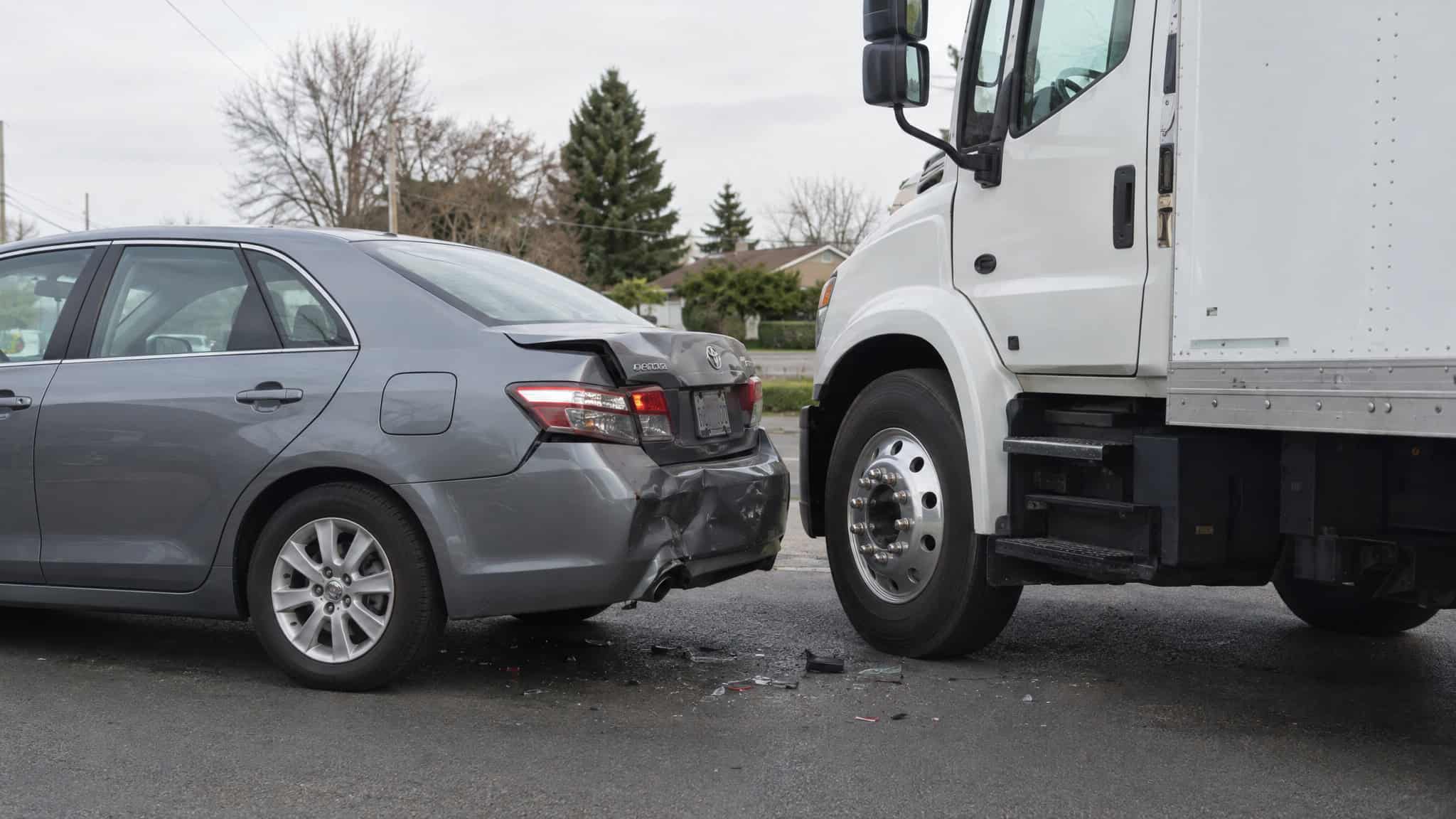
Dog bites prove the point better than any theory. Six of eight tracked dog bite cases clustered at $300K-$310K, almost certainly homeowner’s policy limits setting the number rather than the injury itself. One involved an American bulldog attack causing hemorrhagic shock; a Virginia bite hit $1M through a premises theory. Same mechanism every time: the insurance, not the injury, set the ceiling.
Government pays on its own terms. Florida caps sovereign immunity at $200K per person unless the legislature passes a claims bill, which is how the $4.3M Metrobus case and an $800K gate arm case had to go.
The ways past a low ceiling: multiple defendants with separate policies (the $19M New Jersey Uber verdict was the first holding Uber liable for its driver under respondeat superior, the doctrine that makes an employer answer for what its employee does on the job), plus your own UM/UIM coverage and umbrella policies, which typically run $1M-$5M. And a pattern attorneys see over and over: the seriously injured claimant discovers mid-negotiation that the at-fault driver carried minimum coverage.
Fault rules and damage caps: how your state changes the math
Comparative fault reduces your recovery in proportion to your share of the blame: 30% at fault on a $500K case means $350K. And in a few places, any share of fault means nothing at all.
The regimes, quickly. Pure comparative states like California reduce your recovery but never erase it. Most states use modified rules: 10 states bar recovery at 50% fault, 23 at more than 50%. Cross the line, get nothing.
And 5 jurisdictions use pure contributory negligence, where 1% fault kills the whole claim. Rare but brutal.
Caps matter too. California’s malpractice cap sat at $250K until AB 35 started raising it annually. Texas holds at $250K per defendant. Arizona, Delaware, Kentucky, and New York have no caps at all, which for some readers is genuinely good news.
One real example of the reduction mechanics: the Miller v. Crested Butte ski lift verdict, $20M, cut to $12.4M by comparative fault and caps.
On state comparisons: California led the 2026 tracked data with 10 cases and $59.5M total. Illinois showed 9 cases and $56.5M, but drop the one $52M outlier and the other 8 average $562K. Texas, Arizona, Florida, New Jersey, and Washington all showed smaller samples. Directionally interesting, statistically nothing. The samples are too small for state rankings, so I’ll spare you the league table.
How long cases take, and why settling before MMI costs money
Most cases run 2-4 years, within a spread from 9 months to 10 years, and settling too early is the most expensive mistake in the process. Clear fault and a well-documented file speed things up. Trial drags them out: the Uber verdict took about 7 years, a California state park case about 2.5, while the $39M Texas well blowout settled in roughly 9 months after 20-plus depositions.

Maximum Medical Improvement (MMI) means “as healed as you’re going to get.” Settle before you hit it and you can’t price in later surgery, ongoing rehab, or conditions like TBI that show up late. The check stops the clock: it’s a one-time final release, so flare-ups and future care have to be accounted for upfront. After MMI, you can document permanent impairment ratings and future treatment costs, which is exactly what pushes the number up.
The earliest offer usually arrives before the full treatment picture is known. That’s not a coincidence.
Why settlement averages mislead, and how to benchmark your own case
Settlement averages mislead because a handful of giant verdicts wreck the mean. It’s like splitting a bar tab with a billionaire. The proof: a 2024 analysis of 1,288 verdicts over $10M (2013-2022) found a $21M median against an $89M mean. A 4.2:1 skew. The 2026 tracked dataset shows the same shape: $950K median versus a $3.9M mean, and public reporting skews large anyway.
This is also why “my offer seems low versus the average” is usually structural, not bad luck. Adjuster factors, pre-MMI timing, the policy ceiling, and an outlier-inflated benchmark all pull your number below the headline figure you googled.
So here’s the method, in place of a disclaimer. Use medians over means. Locate your case by treatment path and defendant type. Check your state’s fault regime and the defendant’s policy limits.
Price in the 2-4 year timeline and the MMI risk before taking anything. And keep Mendez and Benavides out of the benchmark conversation entirely. They don’t live in your universe.
Camp Lejeune: settlement values being set in real time
If you’ve got a claim, here’s where the money stands: the government has paid roughly $708 million total, over $421 million of that through the Elective Option since mid-January 2026, against a $22 billion allocation and a CBO estimate of up to $21 billion in liability. Early projections of $1M-$1.5M average Parkinson’s payouts haven’t materialized. A rough back-of-envelope (110,000 accepted claims against $22B) suggests something closer to $200K average.
Quick frame for anyone new: the water at Camp Lejeune was contaminated with TCE and PCE from roughly 1953 to 1987, and the 2022 Camp Lejeune Justice Act finally opened the courthouse after North Carolina’s statute of repose killed earlier claims. The health stakes weren’t abstract: a 2013 CDC study found the birth defect rate, spina bifida in particular, ran about four times higher among children of mothers exposed to that water. The bottleneck is paperwork, not case facts. Only about 13,000 of roughly 408,000 claims, around 3%, meet the documentation thresholds, though digitized muster rolls produced mid-2026 may unstick exposure-proof problems for a lot of stuck claimants.
The schedule matters. The first kidney cancer bellwether trials, Mousser on November 9 and Fancher on November 16, 2026, are coming up, with an October 30 global settlement objective on the calendar. Those outcomes will set the market. And one cautionary detail, stated without cruelty: a Marine accepted a $100,000 offer on July 23.
A PET scan on August 3 confirmed his lymphoma had returned. Eleven days. Early settlement has a price. (On the business side, one plaintiffs’ firm, Galindo Law, filed bankruptcy with over $50M in liabilities, a reminder of who you hand your case to.)
Benchmark with medians. Find your rung on the treatment ladder. Check who the defendant is and what their policy actually covers. Know your state’s fault rules.
And don’t sign anything before you’ve healed as much as you’re going to. Every range here is a benchmark, not a promise.