
A guy described this to me the way most of them do: he searched his own stage name for a boring reason, and the third result was a folder of his paid photosets on a site he’d never heard of, hosted who knows where, with a download counter ticking up. No warning. No way to un-ring that bell. If you sell content on a subscription platform, that moment is either already behind you or it’s coming, and the only real question is whether you have a system for it.
This isn’t a prevention problem or a cleanup problem. It’s both at once: everything you do before publishing decides whether you can win the takedown fight afterward, and the fight never fully ends. Filing a DMCA notice hands the accused party your legal identity, and removal is maintenance, not a one-time win.
Key Takeaways
Copyright is automatic the moment your work exists in fixed form. You don’t need registration to file a takedown, though registration strengthens your position if a counter-notice or lawsuit shows up.
A valid DMCA notice needs six elements: your signature, a description of the work, the exact URLs, your legal name and contact info, a good-faith statement, and an accuracy statement under penalty of perjury. Most platforms act within 24 to 72 hours of a valid notice.
One or two stolen photos every six months is manageable DIY. Hundreds of leaked links across platforms is a job for a removal service. Delisting from Google kills discoverability (up to 99.9% per vendor claims) even when the page itself stays live.
Table of Contents
Who actually owns your content (and who doesn’t)
Copyright is automatic.The moment a photo or video exists in fixed form, it’s yours, no registration required. You also don’t need registration to file a takedown, though registering your work strengthens your hand if a counter-notice or lawsuit ever shows up. Think of it as optional insurance.

What enforcement actually requires is documented ownership, not depiction.Appearing in a photo isn’t the same as owning it; the copyright usually sits with the photographer unless rights were handed over. Collaborations get messier, because they can create split ownership or shared usage rights, which is why written agreements happen before every shoot, not after something leaks.
The coverage is broad: photos, art, graphics, writing, video, music, product designs, and digital downloads like SVGs, PDFs, and templates. If you made it, it probably counts.What copyright doesn’t cover is where assumptions break: ideas, styles (there’s no copyright in “anime style”), facts, short titles, and public domain material. Two myths die here. Tracing or redrawing someone’s design isn’t legal, and the “I changed 20%” rule isn’t a rule.
Owning the copyright means you control reproduction, distribution, public display, derivatives, and licensing.That bundle is the business model, which is why a leak isn’t just annoying. It’s someone exercising rights that are yours.
Protecting exclusive content before it leaks
Watermarking, access controls, and written collaboration agreements are the pre-publish moves, and they shrink the target without guaranteeing anything. Here’s what the evidence actually supports: watermarked copies, raw files, unedited videos, and dated original posts can all serve as proof of ownership if you file a takedown later.They’re receipts, not a force field. The watermark does double duty as deterrence and evidence, but nobody should pretend it prevents leaks.
The pre-publish checklist looks like this:
- Watermarked copies of everything, plus dated originals
- A raw-file archive: original photos, unedited videos, source files
- Written collab terms sorted before every shoot
- Licensed or royalty-free audio, because background music trips takedowns more than anything else
- A backlog of unpublished content, so a single takedown can’t derail your release schedule
Licensing beats arguing fair use every time, because a license settles the rights question before a dispute can start, while fair use is a defense you argue after the takedown has already landed.
How to find out if your paid content has been leaked
The protocol: open an incognito window, search your stage name in quotation marks, and pair it with terms like “leaks,” “free,” “download,” “rip,” and “mega folder.” The incognito window matters because your search history skews results otherwise.Then widen it: old usernames, misspellings, shortened versions of your name, platform names. Leakers don’t spell it right either. Run the whole set across multiple search engines, and never assume one clean search means you’re clear.
Never search your stage name together with your legal information.Search engines remember queries and suggest them to other people, so your searches leave breadcrumbs. This is exactly how people dox themselves.
Next, reverse image search. Upload a clear promotional image to Google, Bing, TinEye, or PimEyes and see where it turns up, including other photos of the same face.Screenshots from promo accounts can lead back to your paid pages or personal profiles. Think about what you’re feeding the machine. Opting out of a face-search engine also isn’t the same as removing the original content.
The alert layer sits underneath: Google Alerts, Google’s “results about you” feature, and F5B keyword alerts for Reddit. They find leaks.They remove nothing.
A common pattern: a creator does a thorough sweep, feels it’s handled, then finds fresh re-uploads days later, because leakers repost constantly.
Building the case before you file
You’re capturing a volatile scene, not doing paperwork. Document the stolen copy and prove your original before you file anything.
On the infringement side, screenshot the stolen content and the entire page. Capture the site name, the uploader’s username, their profile info, and every URL containing your content. Save whole pages as PDFs with the date and URL visible. The reason is shelf life: pages vanish, posts get edited, links die, and by the time a provider reviews your notice, your saved copy may be the only proof left.
On the ownership side, keep the original post with its date, the original page, raw photos, unedited videos, and watermarked copies. Raw files are your receipts.
Two rules of behavior here. First, don’t contact the leaker.Don’t warn them, don’t threaten them, don’t tip them off that a takedown is coming. It just buys them time to move, and the practitioner accounts of this backfiring are consistent enough to say it plainly: say nothing.
Second, give the notice a final idiot check before submitting, and save your submission receipts. The idiot check is exactly what it sounds like.
How to file a DMCA takedown notice that actually gets acted on
A valid notice has six required elements, and one missing element can get the whole thing rejected, which is why most “just file a DMCA” advice fails. The checklist:
- Your signature, physical or electronic. Trivially easy, don’t overthink it.
- A description of the infringed work.
- The exact URLs of the infringing pages. Vague links get ignored.
- Your legal name and contact info.
Required, and there’s a privacy cost covered below. - A good-faith statement saying you believe the use isn’t authorized. One line, standard part of the form.
- An accuracy statement made under penalty of perjury.
This is the serious line that keeps people honest.
Routing matters: notices go to the service provider’s designated copyright agent, and major platforms have official copyright or IP report forms. Most platforms act within 24 to 72 hours of a valid notice, though counter-notices stretch that.
Filing a false notice is illegal and carries penalties. Only file when the infringement is clear. If you’re squinting at it, don’t file.
Templates exist, including the U.S. Copyright Office’s own and one circulated through the Creators Spicy Tea Patreon. Those are sourced resources, not personal endorsements. And the standard caveat applies: I’m not your lawyer, and none of this is legal advice.
What happens after you file (and why platforms comply fast)
A valid notice gets one of four responses: removal, a request for more info, a rejection, or silence. If it’s a rejection, read why before resubmitting, repeating the same mistake burns a week.
If the platform claims it’s handled, check which version of handled you got. The source might actually be removed, one page might be disabled, or the page might just be delisted from search while still live. Those are three different outcomes wearing the same word.
The leverage is simple. Platforms comply fast because their own legal protection depends on it: safe harbor requires a designated agent on file, prompt removal, and a repeat-infringer termination policy. Compliance is self-interest, not charity. Scale explains the rest. Big platforms hosting millions of pieces daily, YouTube and TikTok and Instagram among them, can see hundreds or thousands of notices a week.
Complete, specific notices get action. Vague ones sit in the pile. For a sense of the broader copying economy: U.S. Customs and Border Protection seized $1 billion worth of counterfeit goods in 2022, and that figure excludes intangible-service infringements, which is the category your leaked files fall into.
Automated content recognition has no context for fair use or parody, so false positives happen.The robots are dumb about jokes. The fix that works is automated flagging plus a human on the edge cases.
What to do when a leak site ignores your takedown
If the site ignores you, move up the stack. Run a hosting lookup on the domain, then work through the host, the abuse email, the CDN, the registrar, or the designated agent, because the site’s infrastructure providers may still respond even when the site won’t.The aggregator sites that live off reposted paid content are a whole sub-economy, and they behave predictably once you know which doors open.
Work the layers in order:
| Layer | Does it act on your complaint? |
|---|---|
| Major platform’s official IP report form | Yes (routes faster than any email) |
| The leak site itself | Partial (many of its DMCA pages are pure decoration) |
| Host, CDN, registrar, abuse contact | Yes (infrastructure providers respond predictably) |
| Google and Bing delisting | Yes (works basically every time, occasional appealable rejections) |
| Site hosted in a non-enforcing country | No (DMCA is U.S. law, and some sites choose this hosting deliberately) |
The official platform form comes first even though it’s boring. It’s correct. Hosting lookup is the move for leak sites with no report button: you’re hunting for the hosting provider, a DMCA page, a copyright contact, an abuse email, the CDN, the registrar, the designated agent.Then comes search-engine delisting from Google and Bing, which is the reliable layer.
On realistic expectations: one removal vendor’s own figures, which are sponsored material and unverified, put delisting at succeeding nearly every time, with the occasional appealable Google rejection, killing up to 99.9% of a leak’s discoverability. Source removal succeeds roughly half the time by the same vendor’s account. Those numbers come from a company selling the service, so hold them loosely, but the shape matches what practitioners describe.
The DMCA is U.S. law, so a site hosted somewhere the DMCA carries no weight faces no consequences for ignoring your notice, and some leak sites pick that hosting deliberately. That’s why the realistic strategy is attacking discoverability rather than chasing full erasure. And speed matters because of how leaks travel: a search engine indexes the content, someone copies it to a new URL, then three more sites scrape it. The longer it stays up, the farther it goes, which is why waiting a week is a mistake.
No legitimate company can guarantee every stolen file disappears from the internet forever. Effective protection means attacking every reachable layer, continuously. That’s triage, not futility.
Source removal vs. delisting: why “resolved” isn’t resolved
Source removal means the content actually comes off the original site, or access to it gets disabled.Delisting means the search engine stops displaying the page while the page itself stays live. That distinction explains the most common post-takedown frustration: creators get a “resolved” message, stop checking, and later learn the content was only delisted. Practitioner reports put that outcome at nine times out of ten, and vendor reports describe plenty of leak-site DMCA pages as pure decoration.
Delisting alone is still a meaningful win even when it feels like failure.It kills discoverability, up to 99.9% per the vendor claim and still unverified, even though the page exists somewhere nobody’s searching.
The “why bother” answer, head-on: full erasure is unrealistic, but removal is still worthwhile because leaks cost you control. Where the content appears, how it’s framed, what it gets associated with, who profits. And one detail worth letting sting: leaked content can rank easier than your actual paid pages.
Counter-notices, fair use, and when the system turns on you
The takedown system is bidirectional. The accused can file a counter-notice, and unless you actually sue within the window, the content comes back. The mechanics: the platform forwards the counter-notice to you, you get 10 to 14 business days to decide on legal action, and if you let the window lapse the platform may put the content back up. In practice, that restoration is what most counter-notices end in.The platform isn’t weighing the merits; it’s just passing papers along.
Fair use is a U.S.-specific defense judged case by case on four factors. It’s not blanket permission, and it’s argued after the fact, not claimed in advance. Transformative use and taking only the amount necessary strengthen a position, which is why short clips in a review hold up better than extended stretches of footage.Geography note for anyone with an international audience: the UK and Canada run on the narrower “fair dealing,” so what’s fair use in the U.S. can still infringe elsewhere.
Before fighting anything, figure out what it actually costs you in audience, engagement, or revenue. If it’s genuinely transformative, dispute makes sense. If it’s clearly infringing, sometimes you take the L and rework it.Escalation to court is rare and happens when an owner rejects a counter-notice and sues; once a claim looks contentious, get an IP attorney. Most disputes resolve within the standard process.
The privacy cost of filing a DMCA notice
The enforcement tool itself exposes your identity. Filing a DMCA notice means handing over your legal name and contact details, and the platform has to pass both along to the accused party.That’s baked into the process.
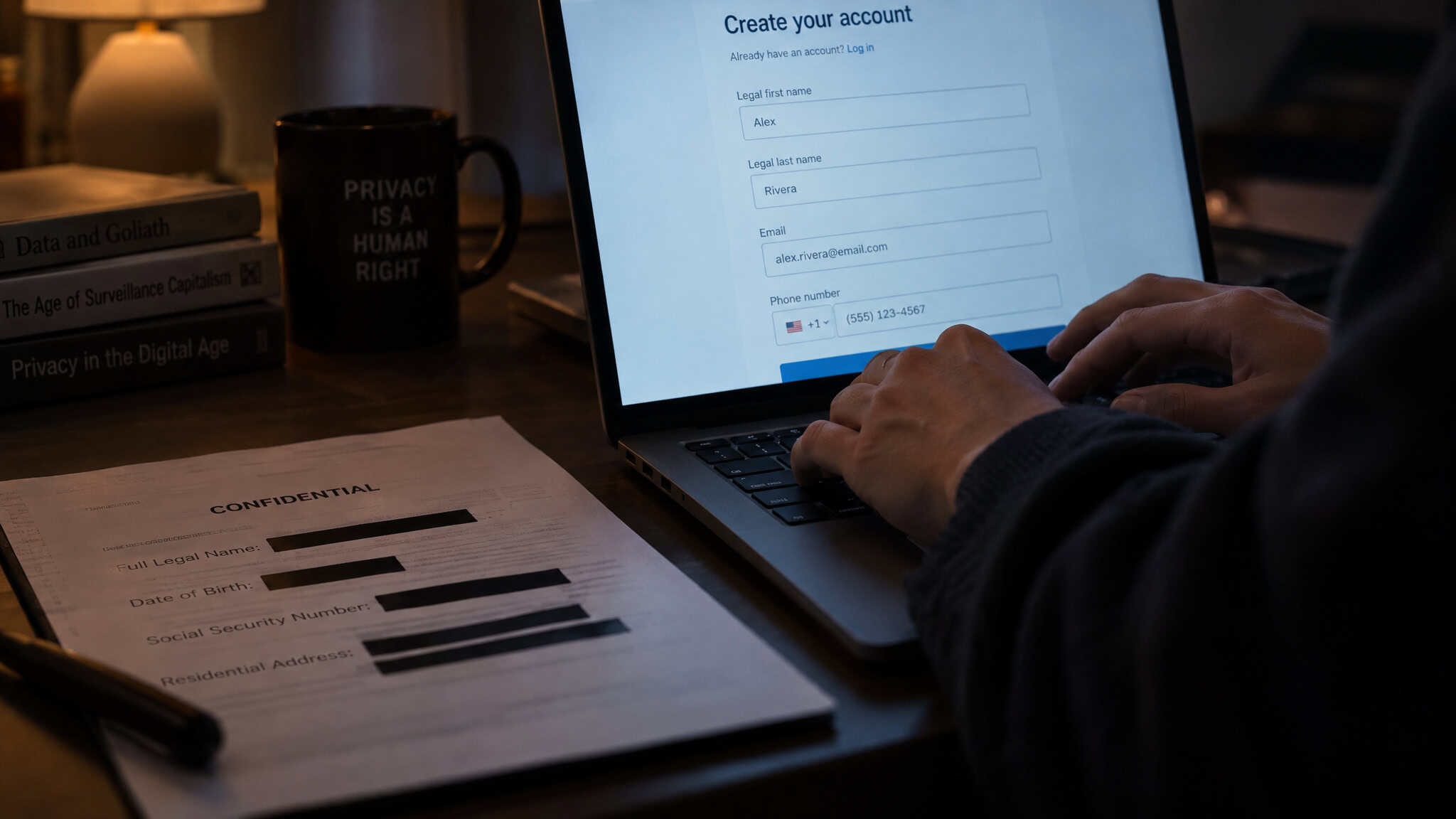
Here’s where that identity travels. The person you’re filing against receives it directly. Filed notices can appear publicly on the Lumen database.And sketchy leak sites are known to publish the notices they receive, legal name and all.
That’s what you’re signing up for when you file under your own name. It connects back to the no-contact rule. Nothing you send a leaker should go beyond what the process demands, because the process already hands them plenty.This fact is also what makes the DIY-versus-service decision partly a threat-model decision rather than just a workload one, which is where the next section picks up.
Should you handle takedowns yourself or hire a removal service?
The dividing line is volume. One or two stolen photos every six months is probably manageable DIY. Hundreds of leaked links, or years of content spread across platforms, is a workload where a service makes sense.
A removal service does five things: searches for links, files source removal requests, requests search-engine delisting, watches for re-uploads, and tracks cases. That’s what the money buys. The four factors that actually decide DIY versus hire look like this:
| Factor | Points toward DIY | Points toward a service |
|---|---|---|
| Volume | One or two stolen photos every six months | Hundreds of leaked links, years of content across platforms |
| Time | A sweep now and then fits your week | You’re burning hours weekly on searches and filings |
| Privacy | You’re comfortable with your legal name hitting sketchy inboxes | You want your name out of that loop |
| Emotional toll | Seeing your stolen content stings but passes | Re-viewing it is doing real damage |
The hand-off triggers are the same four things in the right column: leaks constantly reappearing, hours spent searching every week, your legal information going to hostile websites, or viewing stolen content becoming genuinely harmful.
Many creators report the same arc.They start DIY in earnest, then realize the real cost isn’t money. It’s spending hours every week submitting their legal identity to sketchy sites and re-viewing their own stolen content. The emotional toll, not the income loss, is what pushes people to outsource. Plenty of creators say repeatedly viewing their own stolen content is the hardest part of the whole process, harder than the lost revenue, and paying someone else to do the monitoring can be emotionally protective rather than a failure.
On the buying side, evaluate a takedown service the way you’d evaluate any gear purchase: what you get, what it costs beyond the sticker, and what you could do yourself. Two questions before paying anyone. Does it only find links, or does it follow through and file removal requests? And does it handle source removal, or just search-engine delisting?Plenty of services stop at delisting without ever sending a DMCA form to the source site, and “we handle takedowns” can mean very different things depending on who’s saying it.
On cost, the material behind this article describes value factors and free-versus-paid plan structures but gives no actual pricing, so I won’t invent numbers. The worth-it math is the four factors above. No legitimate company can promise permanent erasure.Vendor performance claims float around this space, roughly 50% source-removal success and similar figures, but they’re sponsored and unverified. Treat them as marketing until proven otherwise.
The maintenance reality: removal never really ends
Removal is a cadence, not an event, and the checking never stops. The mechanics make that unavoidable: a file taken down on one site can resurface at a different URL, and another site may have scraped it while the original was still live.Clean sweep on Monday, fresh links on Tuesday is the norm, because leakers repost constantly. Early removal matters for exactly this reason: it interrupts the spread chain before copies compound.
The cost accounting should include the psychological labor, because it’s real. Creators report that repeatedly looking at their own stolen content is harder than the lost income.Building a standing system, DIY or outsourced, is the sane response to that, not white-knuckling it. Outsourcing the monitoring is emotionally protective, and that’s a legitimate reason to pay for it.
Not legal advice, and when to get a lawyer
Nothing here is legal advice. If ownership is disputed or a claim turns contentious, that’s the trigger for a licensed copyright attorney. Most disputes resolve through the standard process without litigation, so the courtroom is the rare exception, not the plan.
Frequently Asked Questions
How to get leaked content removed from Google search results?
File a delisting request with Google and Bing, which is described as the reliable layer — it works basically every time, with only occasional appealable rejections. Delisting stops the search engine from displaying the page even though the page itself stays live, and per one vendor’s unverified claim it can kill up to 99.9% of a leak’s discoverability. If the leak site itself ignores your DMCA notice, work up the stack: the host, abuse email, CDN, and registrar often respond even when the site won’t.
Why is my leaked content still showing up after I filed a takedown?
Because “resolved” often means delisted, not removed. The page may have been dropped from search results while still live on the site, and practitioner reports put that outcome at nine times out of ten — many leak-site DMCA pages are pure decoration. A file taken down on one site can also resurface at a different URL, and other sites may have scraped it while the original was still up, so checking has to be a standing cadence, not a one-time sweep.
Can leaked content ever be completely removed from the internet?
No legitimate company can guarantee every stolen file disappears forever, and full erasure is unrealistic — especially when a leak site is hosted in a country where the DMCA carries no weight, which some sites choose deliberately. The realistic strategy is attacking discoverability rather than chasing full erasure, and removal is still worthwhile because leaks cost you control over where content appears and who profits. That’s triage, not futility.
How do I protect exclusive content from subscribers who screenshot or redistribute it?
Watermarking, access controls, and written collaboration agreements shrink the target before publishing, but they’re receipts, not a force field — nobody should pretend a watermark prevents leaks. Keep watermarked copies, dated originals, and a raw-file archive of everything, because those become your evidence of ownership when you file a takedown later. Prevention and enforcement are the same machine: what you document now is what wins the fight afterward.