
How Much Is a Home Health Aide Paid?
The average home health aide makes $36,120 a year, or $17.36 an hour — but pay varies widely by state, setting, and a proposed federal rule change. You search “home health aide salary” and get three different numbers. The Bureau of Labor Statistics says one thing, Payscale says another, and the Labor Department median sits somewhere in between. Which one do you trust?
The short answer: the average home health aide makes about $36,120 a year, or $17.36 an hour. But that number hides a lot of variation. Some aides earn barely above the federal minimum wage of $7.25 an hour. Others clear $20 an hour. And right now, there’s a policy fight happening that could change everything about how this job pays.
This isn’t a career guide with fake certainty. It’s the real numbers, the tradeoffs, and the political battle that could hit your paycheck.
Key Takeaways
The national average for home health aides is $36,120 per year ($17.36/hour), but the median is lower at $16.78/hour, and the bottom 10% earn around $11.03/hour.
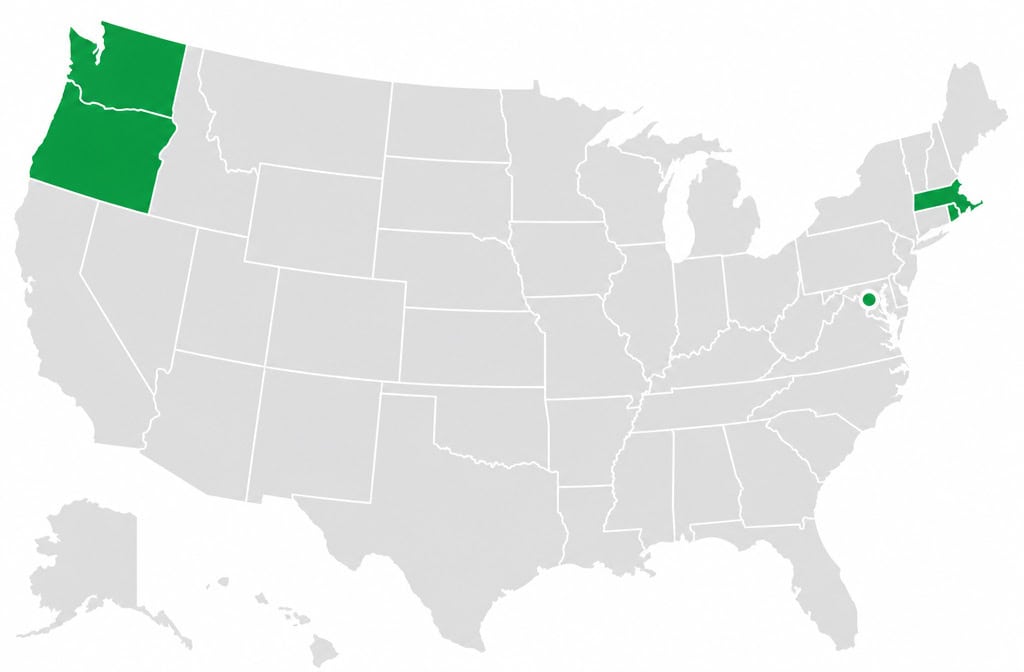
The top-paying states are Washington, Oregon, D.C., Rhode Island, and Massachusetts, though high cost of living eats into those wages.
A proposed federal rollback of the 2013 Obama-era rule could strip minimum wage and overtime protections from over 3 million home care workers, while some states like New York have their own safeguards.
Table of Contents
National Pay Averages: The Numbers You Need
Let’s start with the confusion. The Bureau of Labor Statistics reports the average annual salary for home health aides at $36,120, or $17.36 an hour. That’s the most commonly cited figure. But the Labor Department’s 2024 median was $16.78 an hour — a more honest number because it’s not pulled up by top earners.
Payscale, which relies on user-reported data, puts the 2026 average at $15.08 an hour, with a high of $20.27 and a low of $11.03. Why the gap? The BLS counts all personal care aides, including those in institutional settings. Payscale reflects what actual workers type into a website. The median tells you what the typical worker actually brings home.
And then there’s the federal floor: $7.25 an hour. That’s the minimum wage, unchanged since 2009. Some HHAs earn barely above it.
What does an HHA actually do? Help with activities of daily living — bathing, eating, dressing, plus health maintenance like wound care and light housekeeping. No college degree required. You’ll find them working for home health agencies, group homes, or public health programs. The job is physically and emotionally demanding, and the pay often doesn’t reflect that.
Best-Paying States for Home Health Aides
The highest-paying states for 2025–2026 are:
- Washington
- Oregon
- District of Columbia
- Rhode Island
- Massachusetts
In Washington, the average hourly wage can push past $20, with the highest pay for a Home Health Aide reaching $20.27 per hour. But here’s the catch: Seattle rent is brutal. A $20 wage in Seattle might not beat $17 an hour in a lower-cost area like Georgia or Florida.
Cost of living matters, not just the hourly rate. California and New York aren’t in the top five, but they have huge job markets and, in New York’s case, a state-level protection: the Domestic Workers’ Bill of Rights guarantees minimum wage and overtime even if federal rules change. Nevada home care workers are pushing for a $20 minimum wage through grassroots organizing.
If you’re searching how much is a home health aide paid in Florida or “in California” or “in Georgia,” the numbers vary. Florida’s average is lower than the national median. California’s is higher, but housing costs eat the difference. New York City HHAs see higher hourly rates, but they also deal with the highest cost of living in the country.
Here are the BLS state-level average salaries for these high-demand states, along with a cost-of-living note for each:
- California: $38,520/year ($18.52/hour). Cost-of-living note: Housing costs are about 50% above the national average, so the higher wage may not stretch as far.
- Florida: $30,720/year ($14.77/hour). Cost-of-living note: Housing is near the national average, making this lower wage more usable in many areas.
- Georgia: $31,200/year ($15.00/hour). Cost-of-living note: Overall costs are about 10% below the national average, so this wage goes further than it would in pricier states.
- New York: $37,440/year ($18.00/hour). Cost-of-living note: New York City’s housing costs are roughly double the national average, but upstate areas are more affordable.
The takeaway: a high nominal wage isn’t a win until you subtract rent, gas, and food.
Cost check: A $20 wage in Seattle buys less than $17 in Georgia after you factor in rent and groceries. Always compare cost of living, not just hourly rates.
What Determines Your Pay: Experience, Certifications, and Where You Work
Four things drive your hourly rate: location, years of experience, work performance, and job setting. Location is the biggest, but setting is the lever you can actually pull.
Here’s a pattern that matters: the same hands-on work pays more if it’s classified as clinical rather than domestic. State government jobs (non-hospital) often pay more than general hospitals. Working for a home health agency gives you benefits but sometimes lower pay than private clients who pay out of pocket. Going independent can boost your hourly rate, but you lose health insurance and retirement matching.
Experience matters. More years on the job mean higher pay, but we’re talking incremental raises, not jumps. Performance counts — being reliable and skilled can lead to better assignments.
Certifications give you leverage. A certified medication assistant credential, dementia care training, or hospice support training can push your rate up. These aren’t guaranteed raises, but they make you more valuable to agencies and private clients.
No college degree needed. And the job can be a stepping stone to CNA or higher nursing roles — more on that later.
Beyond the Hourly Rate: Benefits, Mileage, and Pay Frequency
Two people earning $17 an hour can take home very different amounts once benefits and mileage are factored in. One works full-time for an agency that offers health insurance, paid time off, and a 401k match. The other works part-time as an independent contractor and pays for everything himself.
Pay frequency is straightforward: biweekly is standard. Some per diem or part-time roles pay weekly or even daily. Independent contractors bill clients directly — you get paid when the client pays, which can be a headache.
Benefits are where the gap widens. Full-time agency workers typically get health insurance, PTO, and retirement matching. Part-timers and independent contractors are on their own. That’s a big deal. If you’re independent, you need to budget for your own health insurance and retirement.
Mileage reimbursement is more common from home health agencies than private clients. If you’re driving between clients’ homes, ask about it. Independent contractors can deduct mileage on taxes — keep a log.
When you get a job offer, look beyond the hourly rate. A $16/hour job with full benefits and mileage might be worth more than $18/hour with nothing.
Overtime: The Right and the Paradox
Under the Fair Labor Standards Act, many home health aides are eligible for overtime — time-and-a-half after 40 hours. That sounds like a win. But it’s not that simple.
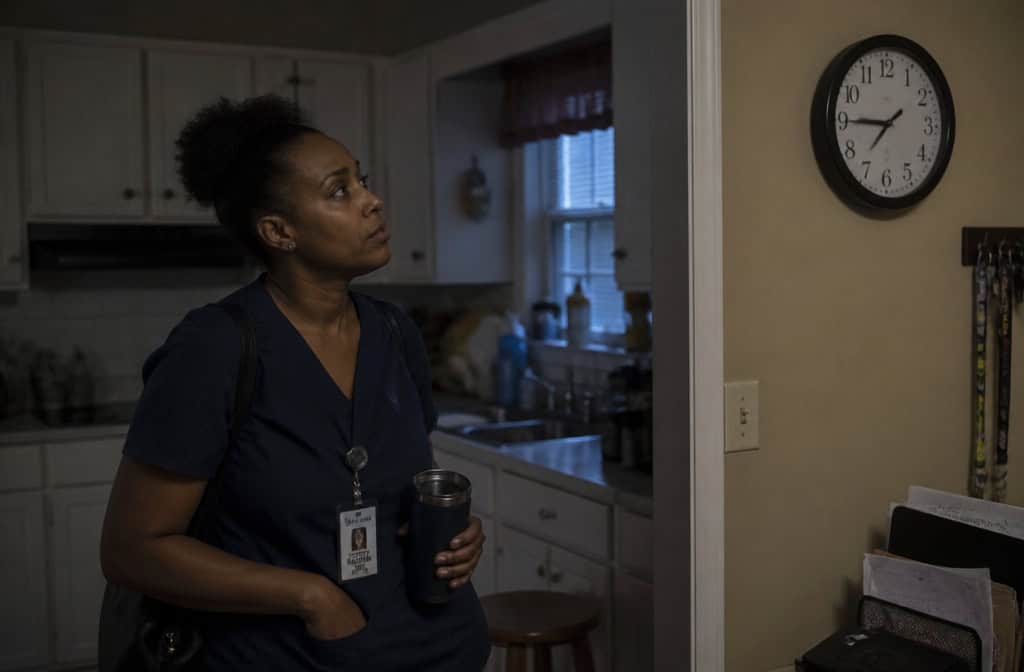
When the 2013 rule first gave HHAs overtime protections, some agencies responded by capping workers at 40 hours to avoid paying OT. This actually reduced total earnings for aides who had been working 50- or 60-hour weeks. According to PHI research, only about 10% of caregivers worked more than 40 hours before the rule. So the cap didn’t hurt most workers. But for that 10%, it was a real loss.
At the same time, the rule created enforcement value. Since 2013, home care agencies have paid nearly $158 million in back wages for overtime violations. That’s money workers wouldn’t have gotten without the rule.
Independent contractors don’t get overtime protections. That’s a major downside to going 1099.
The tradeoff: overtime protections are valuable, but they can lead to hour caps. If you’re counting on long shifts for income, you need to factor that in.
HHA vs. CNA: What Explains the Pay Gap
Certified Nursing Assistants (CNAs) make about $42,700 a year on average — $20.53 an hour. That’s roughly $6,580 more than what an au pair vs nanny typically earns. And it’s not because they work harder. It’s because their jobs are classified as clinical.
CNAs work in broader medical settings — hospitals, nursing homes, rehab facilities. They have a larger scope of practice: they can take vital signs, insert catheters, handle more complex medical tasks. They take on larger patient loads and care for sicker patients. All of that justifies higher pay on paper.
But the duties overlap significantly. A home health aide in a hospice setting might do wound care, monitor vitals, and assist with medication — the same things a CNA does in a facility. The title classification creates the pay gap.
If you’re an HHA and want to earn more, becoming a CNA is a natural step, and a guide on how to be a home health care worker can help you navigate the transition. The training is relatively short, and your HHA experience counts.
Bottom line: The HHA-to-CNA upgrade is a short training commitment for a $6,580 average raise. Your existing experience shortens the timeline.
A History of Exclusion: Why HHA Pay Has Always Been Low
This history explains the low wages. The specific policy decisions go back nearly a century.
When the Fair Labor Standards Act passed in 1938, domestic workers were intentionally excluded. The reason? To secure votes from Southern Democrats who didn’t want federal labor protections applied to predominantly Black domestic workers. That exclusion set the stage.
In 1974, Congress extended the FLSA to cover some domestic workers but continued to exclude those providing “companionship services.” Babysitters and companions were still outside federal wage and overtime laws. Home health aides, whose work was often classified as companionship, fell through that loophole for decades.
The Obama Labor Department argued that professional caregivers do far more than keep someone company. They monitor health, manage medications, provide wound care. In 2013, the department issued a rule that finally extended minimum wage ($7.25) and overtime (time-and-a-half after 40 hours) to home care workers for the first time in history.
That rule changed the legal landscape. But as we’ll see, it’s now under threat.
Who Cares? The Demographics and Economic Reality
The numbers are stark. 85% of home care workers are women. Two-thirds are people of color. Annual turnover is around 80% — four out of five workers leave the job each year. And nearly half of all direct care workers rely on some form of public assistance: Medicaid, SNAP, or other programs.
That means taxpayers are already subsidizing the industry’s low wages. People who care for the elderly and disabled often can’t afford to live on what they earn.
Consider Marilyn Blackett. She’s been a caregiver in New York City for 24 years and still makes under $20 an hour. Her clients need help eating, bathing, wound care, even hospice. She says no Americans want to do the job for the pay. She’s not wrong.
Or consider Irma Nunez and Thomas Draa. Nunez has been Draa’s caregiver for 12 years — the kind of relationship that shows the value of continuity and trust in this work. But continuity depends on pay that can keep people in the job.
This is a job that demands a lot and pays little, and the workforce reflects that.
The Proposed Rollback: What It Means for Your Pay
Here’s the policy fight that could change everything.
The Trump administration proposed rescinding the 2013 rule that gave home care workers minimum wage and overtime protections. If finalized, over 3 million workers would lose those federal protections. The proposal itself admits it will “likely reduce employee earnings.” That’s a rare admission from a federal agency.
The industry group Home Care Association of America (representing about 4,300 agencies) argues the 2013 rule backfired. Their claim: agencies capped hours to avoid overtime, reducing total pay for some workers and disrupting caregiver-client relationships. They say rolling back the rule would reduce “regulatory burdens” and compliance costs.
Labor advocates — including PHI, AARP, and the National Domestic Workers Alliance — say removing protections will worsen the already catastrophic 80% turnover rate. AARP formally opposed the rule, warning it could force families to put loved ones in costly institutional settings because they can’t find home care workers.
The PHI data complicates the industry’s argument: only 10% of caregivers worked over 40 hours before the rule, so the caps didn’t hurt most workers. And the $158 million in back wages shows the rule had real teeth.
State-level protections matter here. New York’s Domestic Workers’ Bill of Rights ensures minimum wage and overtime regardless of federal changes. A few other states have similar laws. But most states don’t. If the rollback goes through, workers in those states lose their federal floor.
The debate isn’t over. The future of home care pay depends on whether the rollback happens and whether states step up.
What’s Next for HHA Pay
The U.S. is adding home care jobs fast. Projected growth is 17% over the next decade — much faster than average. That’s roughly 681,000 new jobs. The demand is real and growing as the population ages.
But here’s the mismatch: more jobs don’t automatically mean higher pay. Most families pay for home care out of pocket. Medicaid covers only the poorest seniors, and states aren’t required to cover home care at all. Federal funding for Medicaid was cut under the Trump administration, putting more pressure on an already strained system.
So we have rising demand, shrinking funding, and a proposed rollback of worker protections.
If you’re considering this job, understand the numbers, the tradeoffs, and the political fight. The pay might look one way today and different tomorrow. But the work itself — helping people live with dignity, isn’t going anywhere.
People Also ask
What pays more, CNA or home health aide?
CNAs typically earn more, averaging about $42,700 a year ($20.53/hour) compared to the home health aide average of $36,120 ($17.36/hour). The gap exists mainly because CNA work is classified as clinical rather than domestic, even though the duties often overlap significantly.
How many hours does a home health aide work?
Most home health aides work under 40 hours per week, with only about 10% working more than that before overtime rules took effect. Agencies sometimes cap hours at 40 to avoid paying overtime, which can reduce total earnings for aides who previously relied on longer shifts.
Where do home health aides get paid the most?
The top-paying states are Washington, Oregon, the District of Columbia, Rhode Island, and Massachusetts, where hourly wages can push past $20. However, high living costs in those areas can eat into the higher pay, so a lower wage in a cheaper state might actually go further.
What’s the difference between a caregiver and a home health aide?
A home health aide is a specific type of caregiver with formal training in tasks like monitoring vitals, wound care, and medication assistance, often working through an agency. A caregiver is a broader term that can include family members or informal helpers who may not have that training or certification.
Can a home health aide make $20 an hour?
Yes, but it depends on location, experience, and certifications. Aides in top-paying states like Washington or Massachusetts can earn over $20/hour, and those with specialized training in hospice or dementia care may also command higher rates. The national median, however, is closer to $16.78/hour.
Is home health aide pay going up or down?
The outlook is uncertain. Demand is growing fast with 17% projected job growth, but a proposed federal rollback could strip minimum wage and overtime protections from over 3 million workers. State-level protections vary, so future pay depends on whether the rollback happens and whether states step in.
Why is home health aide pay so low?
Low pay stems from historical policy decisions dating back to 1938, when domestic workers were excluded from federal labor protections. Home health aides were classified as ‘companions’ and left out of minimum wage and overtime laws until 2013, and that legacy of exclusion still depresses wages today.