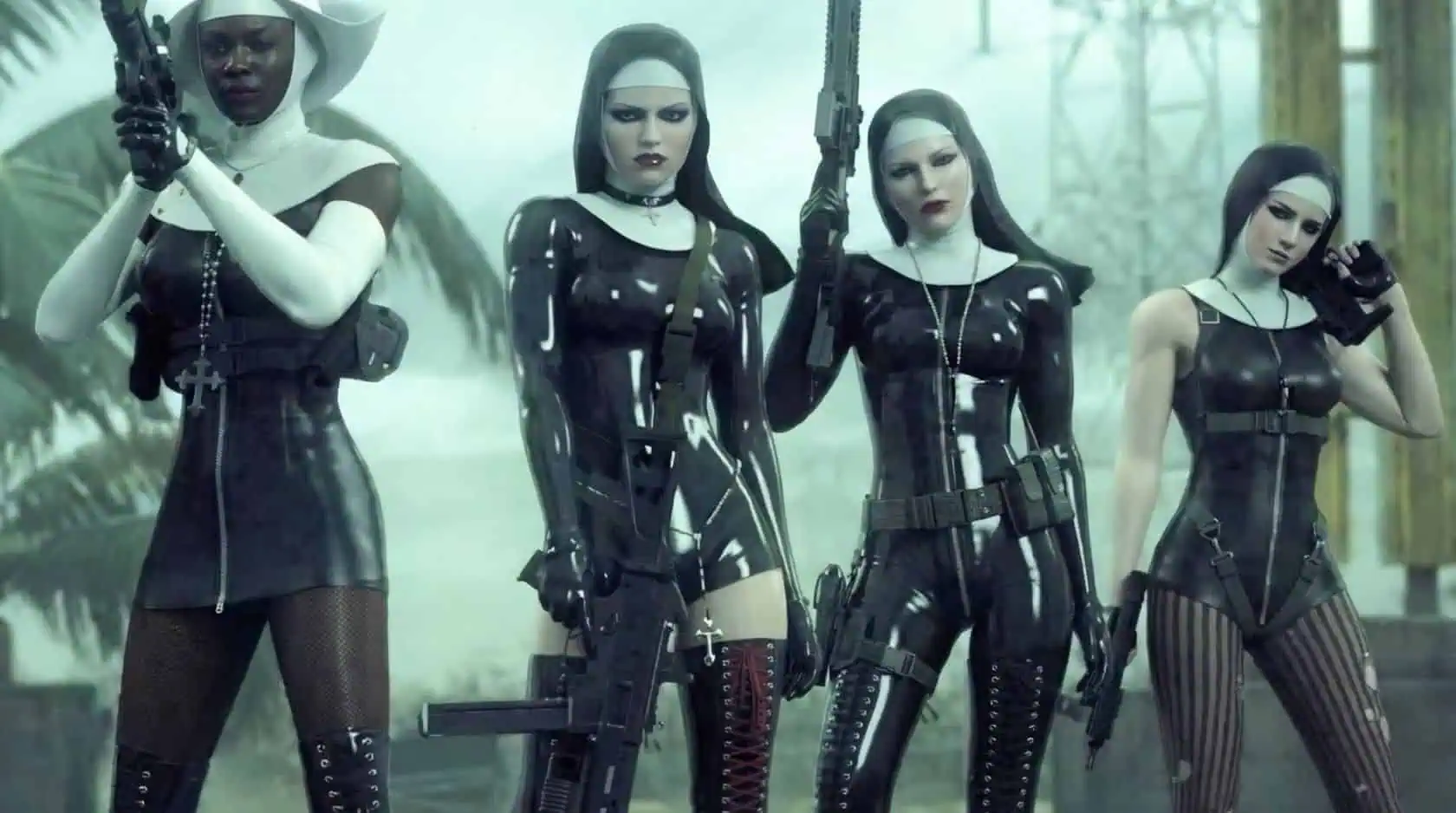
Ever wonder why hitman absolution still gets brought up whenever people talk about “that weird trailer with the nuns”?
You’re thinking of The Saints, an ICA assassin unit that shows up in the mission Attack of the Saints, and gets remembered for a marketing blow-up as much as the actual gameplay.
I’m going to walk you through who they are, what they do to Agent 47, what the controversy was really about, and what the community has done with it ever since.
Key Takeaways
The Saints are an ICA “pet project” tied to Benjamin Travis, and the mission Attack of the Saints is where their ambush on Agent 47 becomes the centerpiece.
The cinematic “Attack of the Saints” teaser dropped on May 29, 2012, and its imagery kicked off a public debate about sexualization, tone, and marketing choices.
IO Interactive’s director publicly apologized in June 2012, saying the trailer was not intended to offend.
Later that year, the game’s marketing took another hit when a Facebook promo app was pulled on December 4, 2012 after heavy criticism over its content.
If you care about the bigger picture, the U.S. player base is broad: ESA’s 2025 Essential Facts summary puts players at 52% men and 47% women, which is why “who are we marketing to?” becomes a real business question, not just a social one.
Table of Contents
The Saints in Hitman: Absolution
In the actual game, The Saints aren’t a one-off joke. They’re presented as a serious ICA tool, sent in when Travis gets desperate and wants Agent 47 dead.
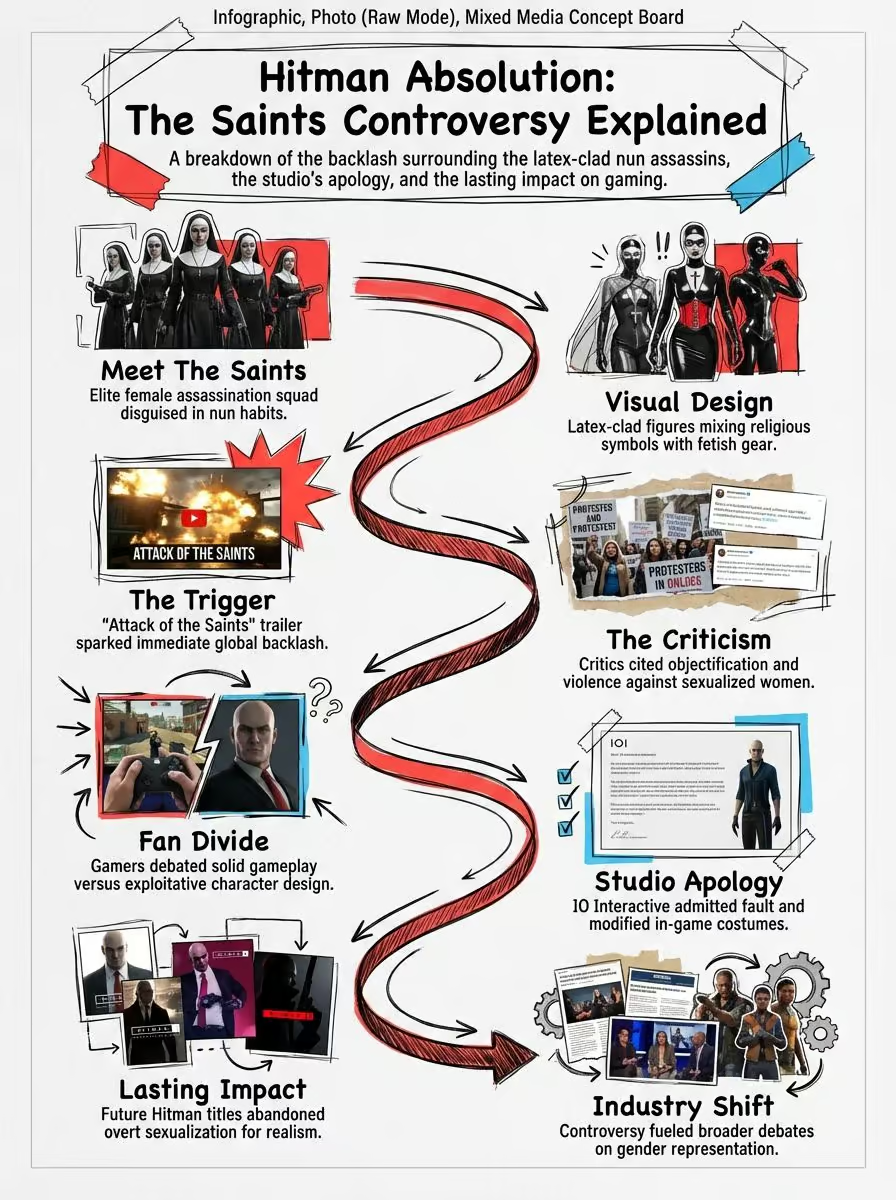
IO Interactive turned them into a set-piece threat, and the mission has enough structure and stealth options that it’s still one of the more memorable sections of the campaign.
If you want to see the specific trailer that started the argument, here it is:
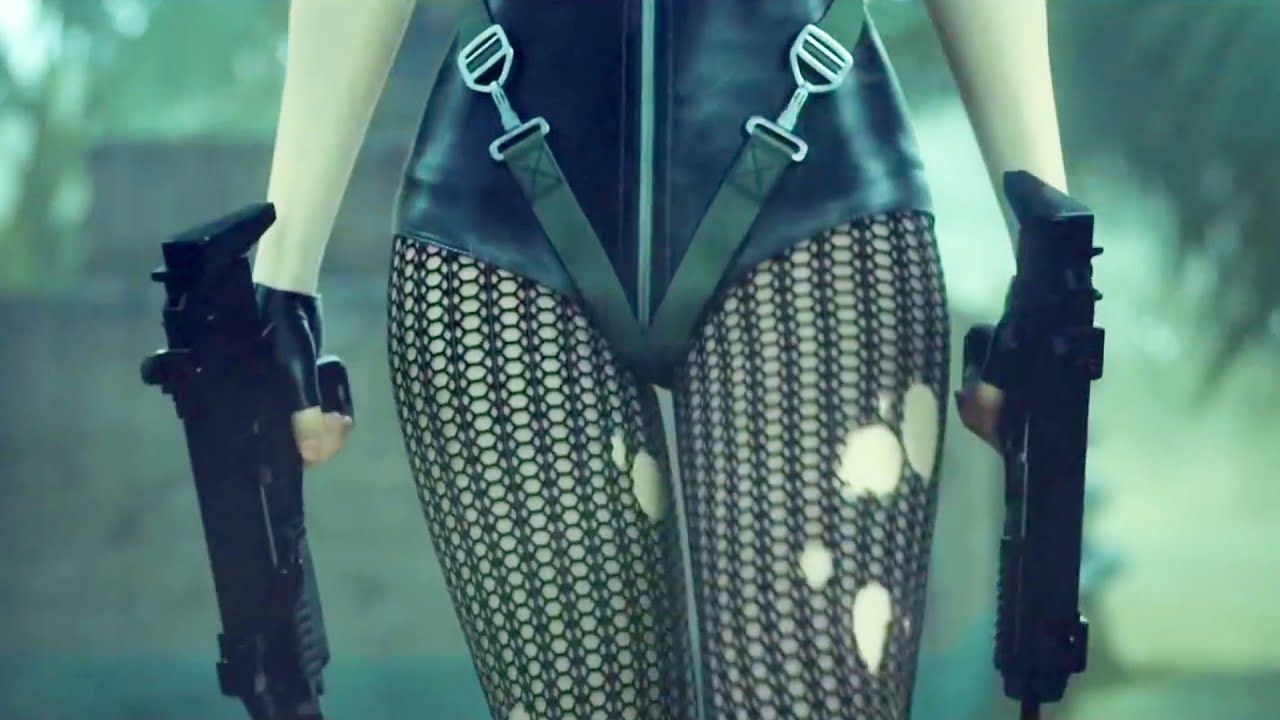
Who are The Saints in the game?
The cleanest way to think about The Saints is this: they’re an ICA strike unit with named operatives, ICA-style personal files, and a “rapid intervention” vibe that’s meant to feel more organized than random guards.
In Attack of the Saints, you’re not just dealing with three enemies. You end up eliminating multiple Saints members across the mission’s segments, with the most commonly cited names being Jennifer Anne Paxton, Heather McCarthy, and their field captain LaSandra Dixon.
Heather McCarthy, in particular, stands out visually—one of the nuns reminds me of adult film star Romi Rain, with that bold, curvaceous presence amid the latex and veils.
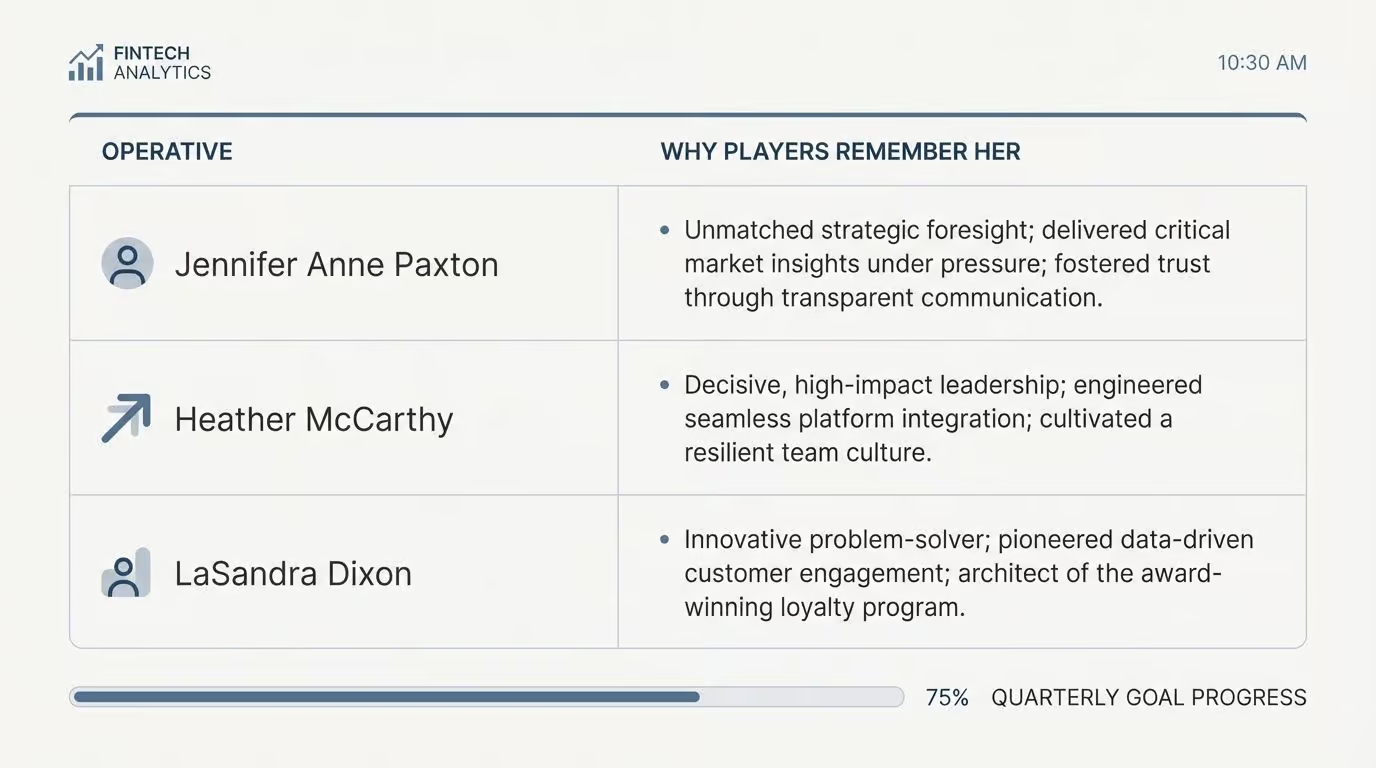
| Operative | Why players remember her | How it shows up in the mission |
|---|---|---|
| Jennifer Anne Paxton | Often cited as the first named Saint you take down | Listed as an elimination target early in the mission |
| Heather McCarthy | Has one of the most talked-about looks, and is heavily tied to the controversy | Listed as an elimination target early in the mission |
| LaSandra Dixon | The leader figure, strongly associated with the rocket-launcher moment | Shows up as a late mission target and the Saints’ on-site commander |
There are also other Saints you deal with later, and some guides identify additional named Saints targets in the cornfield segment (for example, Louisa Cain and Jaqueline Moorhead).
- Quick clarity: the trailer’s “three-nuns” framing is what most people remember, but the mission itself plays out like a multi-target operation with a broader team presence.
- Why that matters: it changes the vibe from “one shocking moment” to “an organized sweep,” which is a big part of why the level feels tense even on replays.
What role do The Saints play in Hitman: Absolution?
Story-wise, The Saints exist to show you Travis escalating. Instead of sending more regular ICA muscle, he sends a unit that’s designed to hit hard, fast, and clean up witnesses.
Gameplay-wise, Attack of the Saints is structured into three segments that push you through different stealth problems (parking lot pressure, tighter indoor spaces, then the cornfield). One mission summary describes it as Parking Lot, Reception, and Cornfield, and that’s a helpful mental map when you’re replaying it for better ratings.
- Use disguises with intent: guides commonly call out disguises like Agency Soldier and Scarecrow during this mission. If you’re getting spotted too easily, you’re probably forcing the wrong disguise in the wrong segment.
- Let the cornfield do the work: the cornfield section is built for line-of-sight breaks. Treat it like cover, not decoration.
- If you’re collecting evidence: walkthrough guides list three evidence pickups across Parking Lot, Reception, and Cornfield. If you keep missing one, slow down and search the “transition” areas near boxes and vehicles.
One detail that gets missed: the rocket launcher is more of a cinematic signature than a normal “loot this weapon” moment, it’s commonly described as appearing in cutscenes and promotional material rather than as a standard usable tool.
And yes, the weapons talk is real. For example, Saints operatives are frequently associated with compact firearms like the Agency Dynamics CPW, while LaSandra Dixon is often singled out for using a different signature handgun.
If you want to go down the gear rabbit hole after this mission, the series’ most famous weapon reference point is still the Silverballer.
The Controversy Surrounding the Nuns
The controversy wasn’t “people can’t handle edgy Hitman stuff.” It was more specific: the marketing leaned into a mix of religious imagery, fetish styling, and brutal violence, and that combination set off alarms fast.
As of May 29, 2012, the game’s cinematic “Attack of the Saints” teaser (produced by Square Enix’s CGI studio Visual Works) was already being called out publicly for how it framed women and violence.
If you want to watch another cut tied to the discussion around their depiction, here’s the preserved link: Watch another Saints-related video
How are the female assassins depicted?
In-game, the Saints read like a stylized ICA strike team: coordinated arrival, heavy weapons presence, and a “no witnesses” approach that makes civilians feel like part of the stakes.
Visually, it’s the nun headpieces plus latex styling that became the headline. One character detail that adds fuel to the debate is that Heather McCarthy is often singled out as having an in-game outfit that’s described as more revealing than what appeared in some promotional material.
| Where you see them | What the moment emphasizes | Why it became controversial |
|---|---|---|
| Cinematic teaser trailer | Slow-motion gunplay, fetish styling, “spectacle” framing | People read it as selling violence through sexualized imagery |
| Mission: Attack of the Saints | Multi-area stealth pressure and targeted eliminations | The outfits still stand out, but the mission plays like a structured operation |
If you’re trying to be fair to the game, this table is the key: the trailer is what the internet argued about, while the mission is what players actually spent time inside.
Why did people criticize their portrayal and outfits?
A big criticism was that the trailer looked like it was aiming for shock and fetish appeal first, and character meaning second. A few high-profile writers flat-out described it as pandering, and that framing stuck.
Another angle was “marketing honesty.” Some critics argued the trailer sold a type of fast, brutal action that didn’t represent what Hitman gameplay usually rewards, patience, observation, and stealth.
- Religious imagery: nun visuals are instantly recognizable, so they hit harder than generic tactical gear.
- Sex plus violence: people argued the combo wasn’t neutral, it was part of the sales pitch.
- Who the scene is “for”: the debate quickly turned into an argument about the male gaze and how studios chase attention.
If you’ve ever argued about this with friends, the fastest way to keep it productive is to separate two questions: “Is the level fun?” and “Was the trailer a good idea?” Those answers don’t have to match.
Impact of the Controversy on the Gaming Industry
The Saints controversy didn’t just create a few angry comment threads, it became a case study in how marketing can dominate the conversation around a game, even years after release.
It also landed during a period where critics and players were already pushing harder on representation, and studios were getting used to the idea that “bad press” can travel faster than your feature list.
Here’s the preserved link tied to this section: Watch a video connected to the controversy
What changes did IO Interactive make after the controversy?
Two concrete, time-stamped outcomes matter most here.
- Public response: in June 2012, the game’s director apologized for the trailer and said it wasn’t intended to offend.
- Marketing rollback: on December 4, 2012, IO Interactive pulled a Hitman: Absolution Facebook promotional app the same day it was criticized for sexist and insulting “identify your friends” content.
There’s also a practical lesson for players: if you judge Hitman: Absolution purely by the trailer, you’re missing what the mission actually plays like. The trailer sells spectacle. The mission still asks you to plan.
How did this spark broader discussions on gender representation in games?
This is where the “it’s just a game” argument starts to feel thin, because games are not only made for one type of player.

For U.S. demographics, ESA’s 2025 Essential Facts summary reports a near-even split, 52% men and 47% women. When your audience looks like that, marketing that leans too hard on one fantasy can backfire, even if some players enjoy it.
If you want a snapshot of how people debate Anita Sarkeesian’s broader impact on gaming conversations (not just Hitman), there’s an ongoing discussion here: a discussion about Anita Sarkeesian.
Community Reactions
Players didn’t react with one unified opinion. They reacted like gamers always do, loudly, creatively, and with a lot of side arguments about what “Hitman” is supposed to be.
And the longer the argument lasted, the more it split into two camps: people judging the mission, and people judging the marketing.
What are fan opinions and debates about the controversy?
You still see the same themes pop up in forums and comment threads today.
“I honestly believe they were added to look cool, and appeal to the male gaze.”
- “The level rules, the outfits don’t”: many players praise the mission’s layout and replay value while still calling the visual concept distracting.
- “It’s grindhouse on purpose”: defenders argue it’s meant to be pulpy, exaggerated, and not realistic.
- “The trailer misled people”: a common complaint is that the promo didn’t match how stealth-focused the series can be.
- “They’re underwritten”: even some fans who like the concept say the Saints needed more meaningful characterization to justify the spotlight.
- “It’s a double standard”: others compare the reaction to other sexualized characters and ask why this one became the lightning rod.
How did the controversy influence modding and cosplay?
Once something becomes recognizable, it becomes remixable. That’s basically the law of the internet.
In practice, most Saints-related fan work tends to fall into a few buckets:
- Costume swaps: mods that push the look closer to a traditional habit, or fully into tactical gear, depending on what the creator is trying to “fix.”
- Faithful recreations: some modders and cosplayers recreate the exact latex-and-veil visual because it’s instantly identifiable.
- Satire: edits and memes that exaggerate the tone problem, basically saying, “Yes, it was that weird.”
Even outside Saints-specific content, some fans use series lore deep-dives to connect the imagery back to Hitman iconography. For example, this preserved link is often used as a reference point: history of the Hitman logo.
Lasting Legacy of The Saints
If you strip away the outrage cycle, The Saints are remembered for two things at once: a genuinely memorable mission, and a promotional moment that became bigger than the mission itself.
That’s why people still search the saints and attack of the saints years later. They’re trying to figure out what was “real game” and what was “marketing noise.”
How did the controversy affect future Hitman games?
It’s hard to prove a single straight line from one controversy to later design choices, but you can say this with confidence: the modern Hitman era puts far more emphasis on sandbox replayability, player creativity, and social stealth than on shock-heavy cutscene spectacle.
If you’re replaying Hitman: Absolution today, The Saints mission is also a good personal benchmark. Try it two ways:
- Stealth-first: treat it like classic Hitman, disguise, timing, and clean exits.
- Chaos run: see how quickly the level collapses into a firefight, and compare how it feels versus the trailer fantasy.
What does this reveal about representation in modern gaming?
The Saints are a reminder that “stylized” is not the same thing as “neutral.” A design can be intentional and still land badly with a big chunk of players.
It also shows why marketing choices matter. You can build a solid mission, then accidentally teach the internet to talk about your game as “the latex nun thing” forever.
People Also Ask
What happened in Hitman Absolution with the nuns?
The game had a mission that featured nuns, sometimes called The Saints in news reports. Many people felt the scene showed religion in a bad light, and that sparked public outcry.
Why did players and groups react so strongly?
People said the nuns were shown in a violent, sexualized way, and that hit a raw nerve, so angry posts and calls for change spread fast.
Did the developers respond to the Saints controversy?
Yes, the game maker changed the scene and added options to soften it. The developers said they heard fans and moved quickly, like putting a bandage on a fresh cut.
Did the controversy change how people view Hitman Absolution?
Yes, it left a mark on the game’s story and talk around it. Some fans still praise the stealth and design, others say the Saints controversy stains the tale. Like a pebble in a pond, one scene made big ripples in the game’s legacy.
References
https://hitman.fandom.com/wiki/The_Saints
https://worldclassvillains.com/2013/04/04/hitman-absolution-oh-when-the-saints/
https://www.theguardian.com/commentisfree/2012/jun/01/hitman-absolution-trailer-nuns
https://www.vg247.com/io-interactive-responds-to-hitman-trailer-controversy
https://videogamelaw.sites.olt.ubc.ca/files/2015/01/The-depiction-of-women-in-video-games.pdf (2015-01-19)
https://gamefaqs.gamespot.com/boards/943495-hitman-absolution/64731280?page=1 (2012-11-25)
https://www.escapistmagazine.com/io-changed-hitman-absolution-following-nun-controversy/ (2025-10-16)
https://www.pcgamer.com/hitman-absolution-game-director-apologises-for-controversial-trailer/
https://www.ign.com/articles/2012/06/07/io-apologetic-over-hitman-trailer-controversy