
Men want to build lucrative side hustles without nuking their day jobs. If you’re developing controversial titles or doing commission artwork, staying anonymous isn’t about being a sketchy ghost hiding in the shadows. It’s a strictly practical exercise in modern reputation management.
Developing or playing NSFW content without risking professional relationships requires structural separation of identities, which most developers fail to implement correctly. They think they can throw a pseudonym on a website and download a VPN to solve the problem. In reality, true professional anonymity demands non-KYC financial channels, business intermediaries, and real legal discipline. You can easily hide your storefront identity from your social circle, but you can’t hide your financial identity from the IRS.
Key Takeaways
Steam provides native consumer privacy toggles like Invisible Mode, Steam Game Details Privacy Setting, and Steam Friends List Privacy Settings for user control, but professional anonymity requires relying on structural non-KYC financial channels and business intermediaries.
Publishing a game requires submitting personal legal documents to Valve for internal tax audits, but the only mandatory public exposure on a storefront is your developer support email. The legal and tax compliance realities dictate that these internal documents remain confidential from the public.
Network tools like a Virtual Private Network (VPN) or performance overlays like MSI Afterburner handle hardware optimization and connection routing, not the legal isolation required for true financial anonymity.
Table of Contents
The Reality of Marketplace Anonymity on Steam
Let’s start with where you sell and play on everyday PCs. The strategy for managing NSFW Steam games depends on whether you’re buying them, or building them for PC and Mobile environments. Hiding what you do as a consumer takes three clicks. Protecting who you are as a commercial developer takes structural planning.
Consumer Privacy: Hiding Personal Playtime
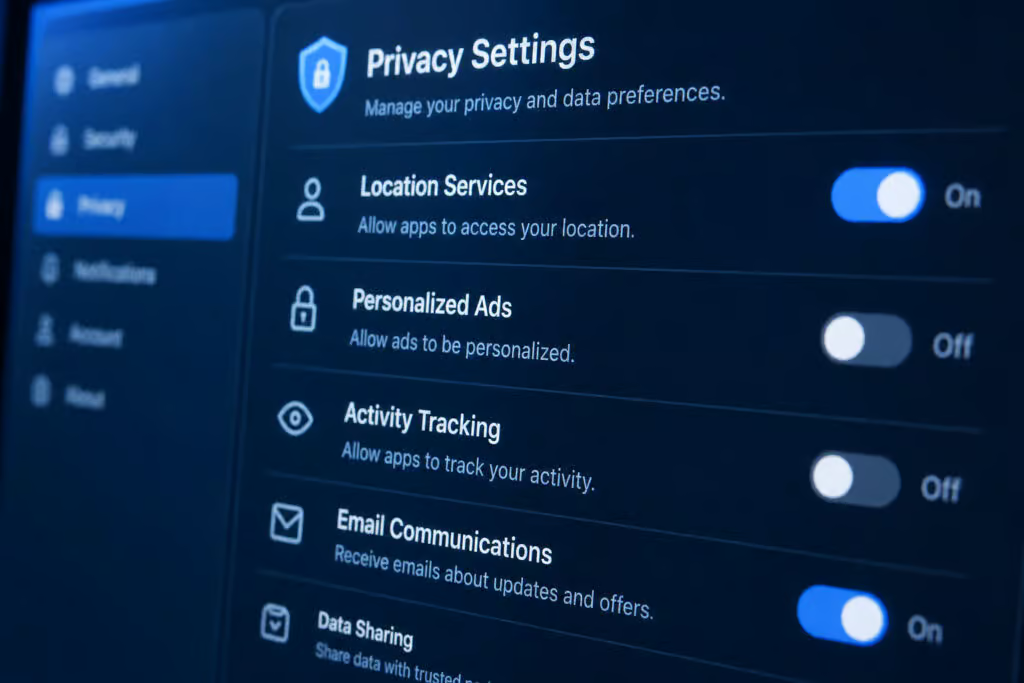
If you want to know how to hide what game you’re playing on Steam so your buddies don’t see your smut library, Steam provides native privacy features to handle it, much like the presence toggles found on a Microsoft Xbox. You need to change your Steam Game Details Privacy Setting to ‘Private’ to instantly hide your purchased games, wishlist activity, achievements, and active playtime from public view. Additionally, adjusting your Steam Friends List Privacy Settings ensures your social presence remains controlled. Finally, flipping on your Invisible Status lets you use regular chat while masking your online presence from your Friends List.
Developer Privacy: Storefront Validation Vs. Public Identity
Developers fear Valve’s Know Your Customer (KYC) requirements, but incorrectly assume storefront presence compromises privacy, ignoring that Valve only requires legal documentation for internal tax compliance. Submitting your legal documents to Steam is an internal audit for their tax compliance. Valve isn’t publishing your home address on the web. The only guaranteed point of public exposure on your storefront is your developer support email. So long as you build a dedicated alias email address for that public storefront, your real identity stays buried securely in Valve’s backend.
Navigating Professional-to-NSFW Transitions
Moving from standard development into adult content doesn’t mean you have to burn your bridges. It means drawing a hard line in the sand. Treat your side project like a real business by separating its assets. Set up an anonymous Google account to handle all your project branding and email, and ensure you maintain zero social media cross-linking between your public life and your NSFW output.
For developers who have already linked their public identities to an adult project, simply starting fresh isn’t enough. You must execute a structural handoff by scrubbing crossover recovery emails and transferring any shared domain registrations to a privacy-shielded registrar. If your personal name or existing LLC is already tied to previous releases, permanently sever the paper trail by migrating those intellectual property assets to a newly formed, anonymous holding entity.
If you’re doing custom gigs, such as designing assets for an adult hanime game, lean into the unspoken social contract within niche art and commission-based work. Buyers and creators in this development space naturally protect each other’s real-world identities as a professional courtesy. And if you think staying faceless somehow hurts your commercial appeal, look at the Balatro developer, for example; they chose to remain fully anonymous despite achieving mainstream commercial success, proving that creator identity isn’t a prerequisite for title performance.
Buyers and creators in the development space for adult online games naturally protect each other’s real-world identities as a professional courtesy.
Technical Privacy Vs. Hardware Performance Monitoring
There’s a persistent myth on Reddit and gaming forums that throwing software at your PC somehow protects your identity. A Virtual Private Network (VPN) encrypts your data over public Wi-Fi and café Hotspots, which is useful for basic network security. But it does nothing to hide your financial paper trail.

Worse, guys conflate networking tools meant for secure Wireless connections with the purely Hardware-based diagnostic software used for tweaking Desktop builds and Gaming Laptops, which they read about in the 43,000+ product reviews cataloged by PCMag. Tools like MSI Afterburner are for performance monitoring — adjusting your fans and clock speeds — and have zero impact on your operational privacy, so they won’t hide your internet traffic if you’re suddenly looking up the meaning of gooning.

Financial Obfuscation Strategies: LLCs, Intermediaries, and Crypto
This is where real anonymity lives.

The PayPal Metadata Failure Point
The fastest way anonymous gamers ruin their cover is by using personal transaction apps on an iPad or Android Apps, which leak financial identity through invoice metadata. When you run a transaction through a standard PayPal Business account, you inevitably leak your invoice metadata right back to the client. It creates a direct paper trail linking your creative pseudonym to your restrictive legal identity.
Private Legal Entities (LLCs) Vs. Intermediaries
You have two structural choices for effective reputation management: a formal Private Entity or business intermediaries like Fiverr, both of which intercept metadata leaks. When considering Fiverr’s platform anonymity, the service acts as a buffer because it manages the financial transaction and invoicing, shielding the creator’s legal identity from the direct buyer. Alternatively, forming a Limited Liability Company (LLC) acts as an institutional barrier that separates commercial activity from your personal legal identity. You still own the business entity, but the public client only ever sees the brand.
Cryptocurrency and the Stablecoin Tradeoff
Your other option is Cryptocurrency. You can bypass fiat banking by accepting cryptocurrencies; however, high gas fees and the perception of instability may deter mainstream clients. If you go this route, run your payouts through a stablecoin like Tether to dodge market volatility and protect your payout value.
The Unavoidable Reality of Taxes and Compliance
Anonymity is difficult when money is involved due to tax laws. The legal and tax compliance realities dictate that a business entity effectively shields your identity from the public, but nobody can hide their financial reality from the Internal Revenue Service (IRS) or other tax authorities. For example, in the United States, passing the Form 1099-K reporting thresholds on payment platforms will immediately trigger mandatory financial tracking. You have a legal obligation to report your commercial income to the government, regardless of whether you accept fiat cash or cryptocurrency. Treating this like a professional enterprise means adhering to these regulatory requirements rather than attempting to live off the grid.
Navigating cross-border tax implications is another crucial reality for international developers. When processing international commission taxes, tax treaties between nations dictate what information is automatically shared. While an LLC structure and proper W-8BEN forms can successfully mask your personal details from foreign clients or distributors, these treaties prevent you from hiding your income from your home country’s financial regulatory boards. Ultimately, these treaties are designed to prevent double taxation, meaning they require full transparency with your local tax authority rather than serving as privacy shields.
Frequently Asked Questions
Can people see what games I play on my phone?
Steam-related privacy settings on a PC do not inherently extend to mobile platforms. While you can hide your PC gaming activity through Steam’s native privacy toggles and ‘Invisible’ status, you must check individual mobile store settings and social account links to ensure your mobile gameplay isn’t being broadcasted or tracked by linked profiles.
Can someone track you from a game?
While general gameplay usually remains isolated, you can be tracked if you fail to maintain a strict separation between your professional identity and project assets. This often happens through leaking metadata in financial transactions or via insecure developer support emails, rather than through the game software itself.
Does using a VPN protect my professional anonymity when developing games?
No, a VPN only encrypts your network traffic; it does nothing to mask your legal or financial identity. Professional anonymity requires structural barriers, like using business intermediaries or a formal LLC, to ensure your real-world identity isn’t tied to your public-facing creative work.
Will Valve release my personal info if I publish a game on Steam?
Valve requires legal and tax documentation to comply with internal audits, but this information is not made public. The only mandatory contact information displayed on your storefront is the support email address you provide, so using a dedicated alias email effectively shields your identity from the public.
How can I accept payments for creative work without leaking my identity?
You should avoid personal transaction apps that leak invoice metadata, such as standard PayPal accounts. Instead, use a formal business entity like an LLC or a platform-based intermediary that acts as a financial buffer between you and the client.
Is cryptocurrency a foolproof way to hide my side hustle income?
Cryptocurrency can bypass traditional fiat banking, but it does not exempt you from your legal tax obligations. Regardless of whether you are paid in stablecoins or cash, you are required to report your commercial income to tax authorities to remain compliant with the law.
What’s the difference between performance monitoring tools and privacy software?
Performance tools like MSI Afterburner are strictly for hardware diagnostics, such as adjusting fan speeds or monitoring clock speeds, and have no impact on your online privacy. Beginners often mistakenly believe these tools offer security, but they provide zero protection for your internet traffic or financial data.