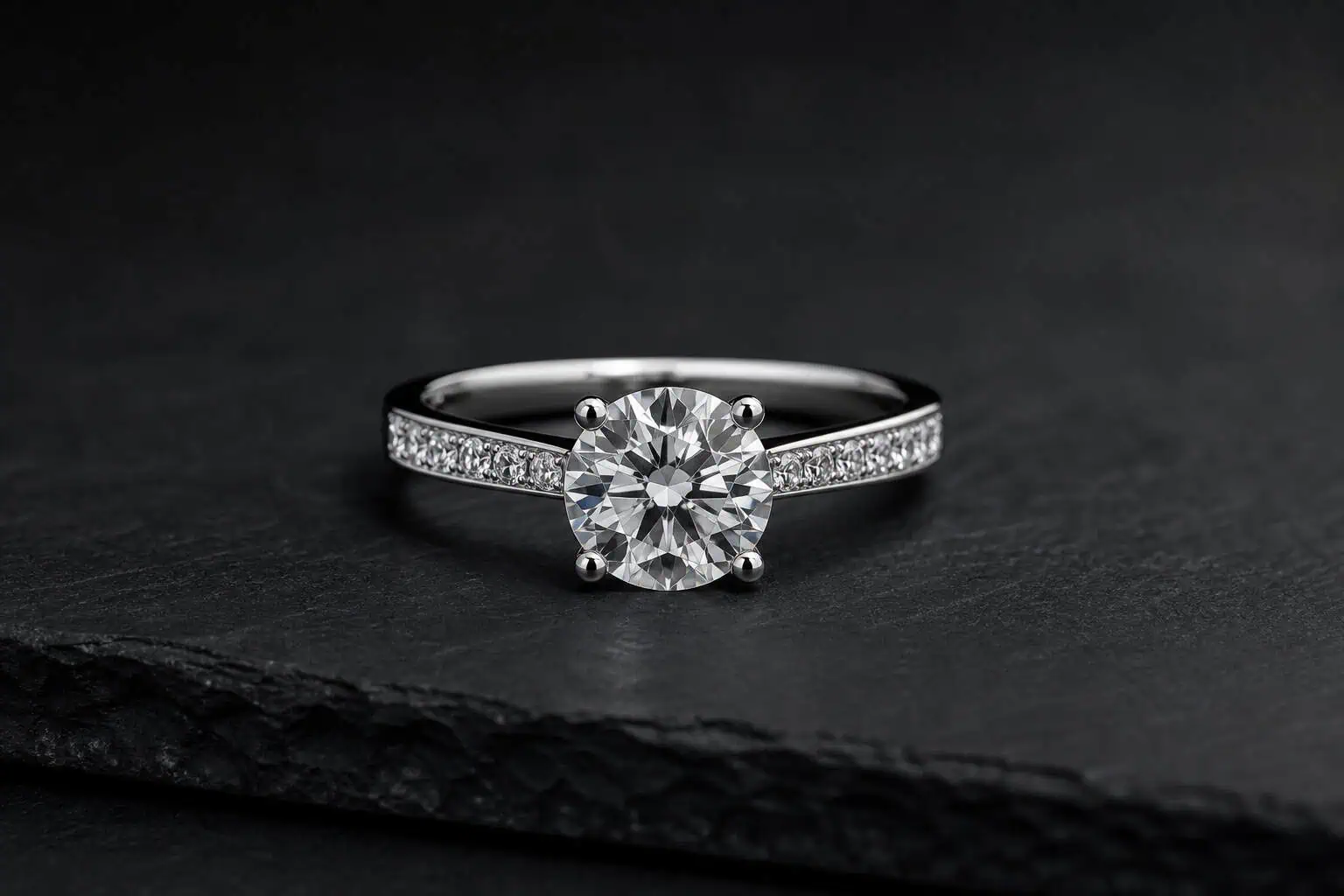
Buying an engagement ring usually starts with anxiety and ends at a generic mall jeweler rather than a dedicated Beavercreek jewelry store. The “sad ring” scenario happens when she pretends to love something she hates.
At Unfinished Man, we believe you should treat this less like a mysterious art and more like a structured procurement project. If you’re looking for a diamond engagement ring guide for guys, the first rule’s to kill the total-surprise narrative. Preserving the romantic surprise happens when you propose, not with what you propose. Explicit direction takes priority over tradition.
Key Takeaways
Using Direct-to-Consumer jewelers like Sonny’s Diamonds can reduce final costs by approximately 50% compared to traditional retail.
White sapphire is less durable for daily wear and tends to lose luster faster than diamonds or harder colored stones.
Sizing accuracy improves by using the 4-step ninja technique: tracking an existing ring’s precise inner diameter on paper.
Table of Contents
Partner Preferences and the Digital Style Deck
Transitioning from vague conversational hints to a documented brief is the most critical move you can make. Understanding exactly what she likes—and what she hates—completely eliminates subjectivity. Align the ring selection with her established style and jewelry habits to ensure the design matches her aesthetic.
Decoding Jewelry Habits
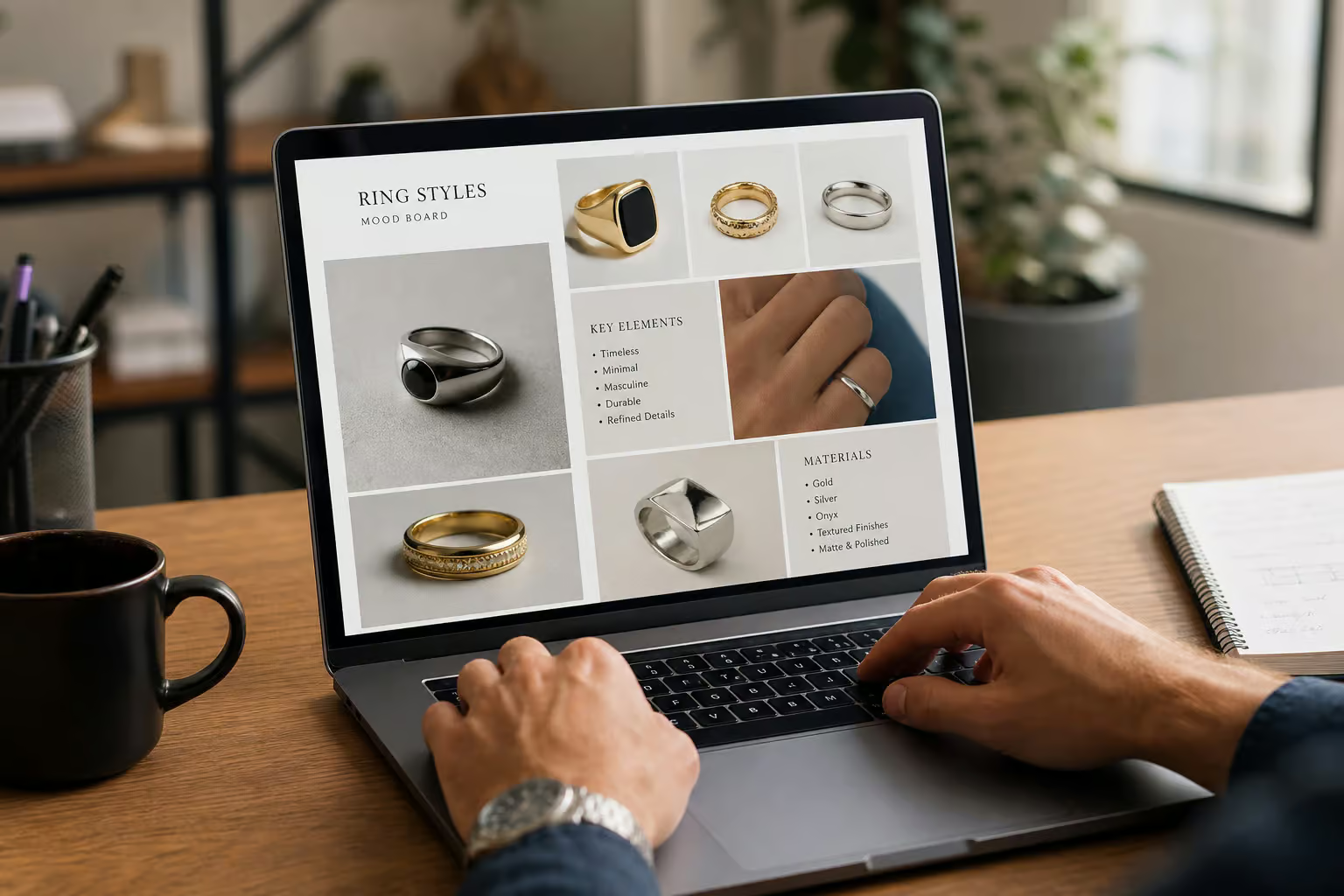
Establish her style preferences before visiting any retail locations. Observe if she gravitates toward vintage versus modern styles. Consider if she already wears silver, yellow gold, or rose gold jewelry. You can check her fashion sense for clues, and ask her friends and family for advice. Treat this as a hard research phase.
Building a Visual No-go List
The most actionable engagement ring guide for guys, as debated in the r/EngagementRings subreddit in 2023, advocated for using formal documentation. To avoid the guessing game, create a Digital Preference Deck with her—using presentation software like Google Slides or a shared Google Sheet. Having her compile ring styles into a visual guide removes subjectivity and lets you build a firm No-Go List of dealbreakers so you don’t make a catastrophic mistake.
This process also forces a crucial visual reality check that directly pairs Carat Weight against its real-world Visual Impact. Comparing how a .75ct versus a 1.5ct stone actually looks on a finger helps reconcile unattainable inspirational photos with wearable, daily reality and budget expectations.
“Preserving the romantic surprise happens when you propose, not with what you propose.”
Budget Mechanics and Direct-to-Consumer Savings
Let’s look at the financial logistics. Setting a realistic budget range that suits your financial reality is crucial, as the “two months’ salary” rule is a marketing gimmick. A realistic budget range spans anywhere from $500 to $20,000+ depending entirely on the market segment you choose to engage with. By using direct-to-consumer models, you bypass retail margins to keep costs manageable.
Whether you’re renting an extravagant venue or planning a backyard wedding, you can bypass retail margins on the ring by shifting to online jewelers. Direct-to-Consumer (DTC) models like Sonny’s Diamonds reduce costs by approximately 50% compared to traditional retail by eliminating Middleman Markups.
Covert Sizing With the 4-Step Paper Sketch Method
Getting the correct fit is where most guys fail. A common failure pattern occurs when partners frantically rely on sizing from a ring the recipient wears on a different, incorrectly sized finger. You need a completely covert technique to avoid suspicion. Enter the 4-step ninja size technique.
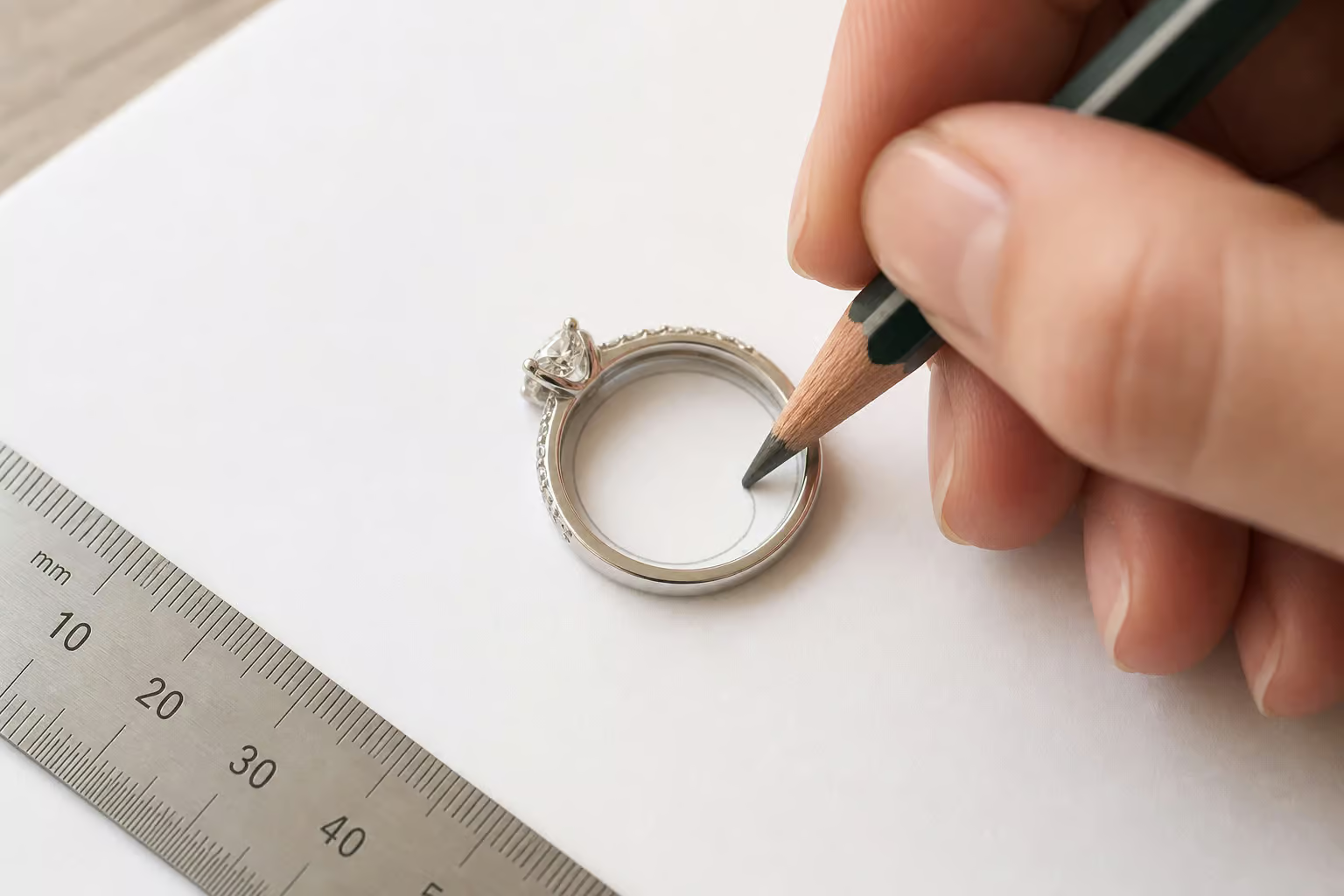
Take an existing ring she actively wears on her ring finger and trace the exact inner circle onto a piece of paper. Use a standard ruler to measure the diameter.

By comparing this Paper Sketch Method directly against a standardized chart, you secure the precise Inner Diameter metric you need. To confirm your math, casually check with a partner’s friend for her size if she has previously shopped. It’s accurate, stealthy, and guarantees you won’t trigger a post-proposal resizing process.
Gemstone Selection and Technical Metrics
Selecting a stone involves more than just picking a color or funding the biggest rock. Understanding the technical metrics that govern pricing and the physical limits of different materials is vital for a lasting purchase. Base gemstone selection on material durability and individual aesthetic preference.
Understand the 4 Cs
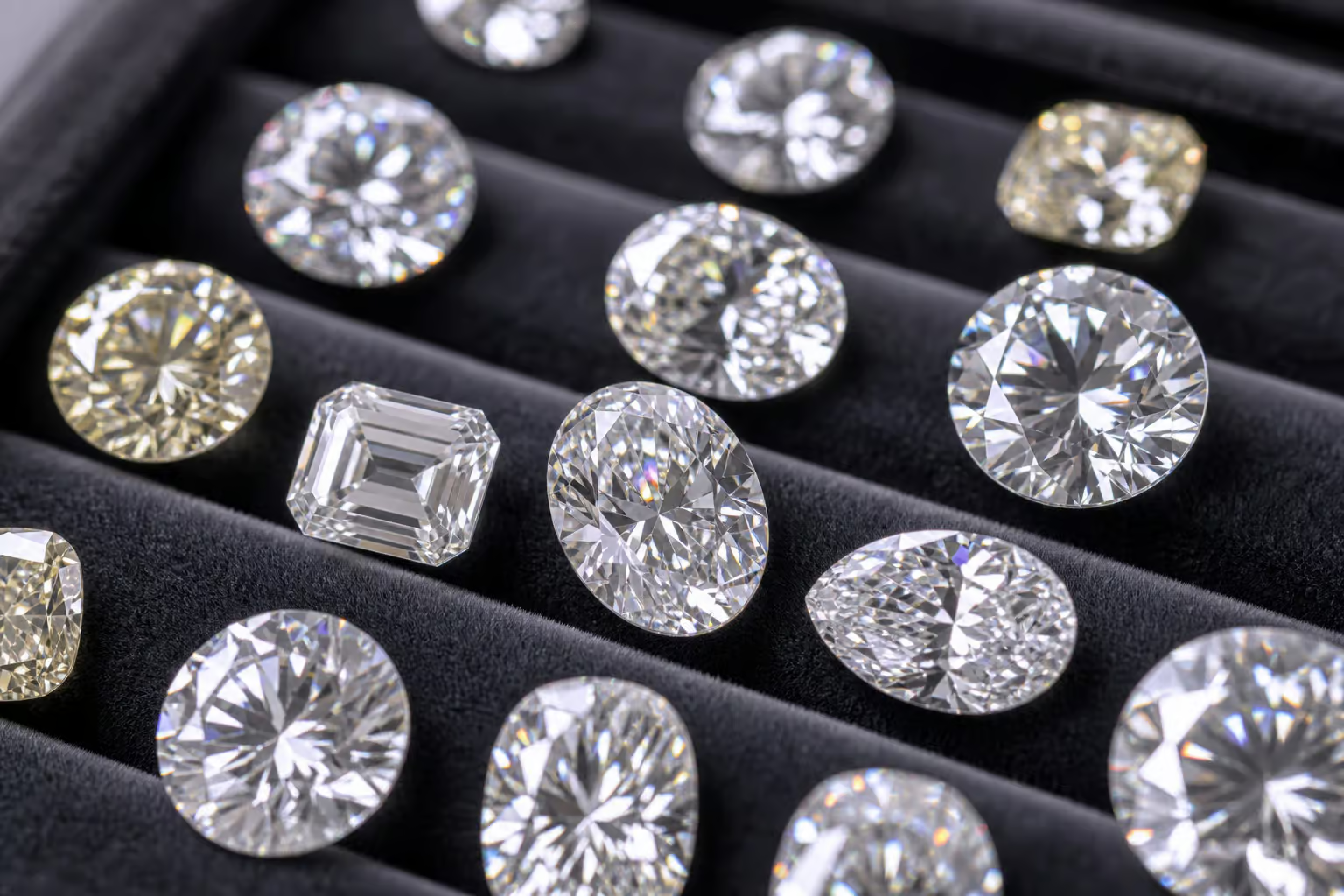
Grasping the basic standardized metrics is necessary to understand the 4 Cs—Color, Cut, Clarity, and Carat—which dictate the price of diamonds. Grading scales, such as the GIA Clarity scale ranging from Flawless to I3, allow you to balance budget against visual quality.
Mohs Hardness and Alternative Stones
Gems must score 9 or higher on the Mohs Hardness scale to withstand daily impact. While diamonds represent elite durability, alternatives like white sapphire are less durable and tend to lose luster, whereas Moissanite serves as a tougher, brilliant alternative.
If she explicitly prefers a diamond, consider the ethics of lab-grown diamonds as a visually identical, conflict-free alternative that typically captures a 60% to 75% cost savings compared to natural stones. Lab-grown options offer identical molecular structures to mined stones, ensuring you secure a highly ethical center stone without compromising strict durability thresholds.
Setting Architectures, Metal, and Personalization
The structural foundation of a ring relies on the setting style—such as halo or bezel—and the metal composition, which directly dictates its daily durability. Evaluating these architectures explicitly ensures longevity; a classic prong setting maximizes light but leaves the stone exposed, while a bezel surrounds it securely in metal. Alternatively, halo and pavé settings offer intense brilliance but require more delicate daily care.
Custom Options
Customization—adjusting stone selection or metal composition—can elevate a standard design into a bespoke piece. If you decide to pursue full customization, building from scratch typically requires only a 3-Week Turnaround, allowing you to architect exactly what she requested.
Evaluating Gold and Platinum
Standard gold purity availability breaks down into three practical karat tiers: 10k, 14k, and 18k. Platinum is highly durable but comes with a higher price point. To map these choices correctly, match silver or platinum metals to cool skin undertones, while pairing yellow or rose gold with warmer complexions. If preferences remain undocumented, 14k White Gold serves as a neutral, durable default.
Decoding Standard Stone Shapes
Once the band is chosen, the stone’s base orientation shifts the ring’s proportion. Base stone shapes include Round, Emerald, Oval, East-West Oval, Cushion, Pear, Marquise, and Asscher. The orientation flatters the finger length. Identifying engagement ring styles to avoid means matching these structural geometry elements perfectly to what she logged in your slide deck.
Customization Timelines and End-to-End Logistics
Concluding your ring design means adding personal details like an inner-band engraving to compound its emotional value. You don’t have to succumb to timeline panic; pursuing a fully personalized or custom-built ring from scratch isn’t a multi-month ordeal and easily fits within standard delivery windows.
Once built, securing the ring through modern insurance and shipping realities is a vital next step. Deliveries for high-value engagement rings use discreet, heavily insured transit protocols requiring direct adult signatures, completely protecting the asset from porch theft while quietly preserving the surprise.
Frequently Asked Questions
Is the ‘two months’ salary’ rule for engagement rings actually a real standard?
No, it is simply a marketing gimmick with no basis in modern financial logic. You should set a realistic budget based on your own financial reality, which can vary wildly depending on your chosen market segment.
How can I figure out her ring size without her knowing?
The most effective way is the 4-step paper sketch method using a ring she already wears on her ring finger. Simply trace the exact inner circle of the ring onto a piece of paper and use a ruler to measure the diameter, which you can then compare against standardized sizing charts.
Are direct-to-consumer jewelers actually cheaper than mall stores?
Yes, moving to a direct-to-consumer model can reduce your total costs by approximately 50% compared to traditional retail. These companies bypass middlemen and retail margins, allowing you to pay for the materials rather than the overhead of a physical storefront.
Why is white sapphire considered a poor choice for an engagement ring?
While white sapphire looks similar to a diamond, it is significantly less durable and tends to lose its brilliance and luster much faster with daily wear. Diamonds or harder alternatives like Moissanite are better choices if you want the ring to withstand the rigors of everyday life.
What is the point of creating a ‘Digital Preference Deck’ for rings?
Using a shared folder or slideshow replaces vague guesses with a concrete, actionable brief of exactly what she likes and hates. It removes subjectivity from the process, protects you from making a catastrophic aesthetic mistake, and helps you build a firm ‘no-go’ list.
What does a gemstone’s score on the Mohs Hardness scale mean for an engagement ring?
The scale measures a stone’s ability to withstand scratching and daily impact. For an engagement ring to look good for a lifetime, you should prioritize stones that score a 9 or higher on the Mohs scale to ensure they aren’t damaged by routine activities.
Is platinum better than gold for an engagement ring?
Platinum is exceptionally durable and high-quality, but it comes with a significantly higher price point compared to gold. If you aren’t sure what to choose, 14k white gold is a reliable, durable, and neutral default that works for most styles.

