The first thing to settle is the money. Planning figures from a group-trip source put an all-in Marrakech trip at roughly $1,110 to $1,430 per person for a group of 4 to 12 men, with return flights starting around $650 and mid-range hotel rooms from about $70 a night. Those are estimates from a trip-planning source, not figures we’ve independently verified, and prices may vary. Fly in April-May or September-October and flights run 20-30% below peak.
The city itself is a place of extremes: medina chaos one minute, a quiet riad rooftop the next, street food worth crossing town for one block and something dead the following one. That swing is why it works for a group. Hotels will take adjacent rooms or whole-floor blocks, restaurants handle a 10-top without blinking, and the activities spread across neighborhoods so the crew isn’t stuck circling one tourist hub all week. According to The Strawberry Fountain, big resorts like Aqua Mirage Marrakech have enough pools, restaurants and facilities spread across extensive grounds that guests never feel crammed into one small space.
Key Takeaways
Budget $1,110, $1,430 per person all-in for 4-12 guys, with flights from ~$650 and mid-range hotels from ~$70/night; April-May or September-October flights run 20-30% cheaper.
The dirham is a closed currency you can’t legally exchange outside Morocco, so withdraw only what you’ll spend; medina shops and taxis are cash-only.
Book Al Fassia first, Nomad before sunset, and skip shorts entirely: nothing above the knee for men in Marrakech.
Table of Contents
Good to know: money, water, health, and airport reality
Yes, you need cash, and the Moroccan dirham is a closed currency that can’t legally be exchanged outside Morocco. Whatever you’re still holding at the airport on the way home is effectively dead paper, so withdraw only what the trip will spend. You’ve got three ways to get dirhams: pull cash at the airport on landing, use the Bureau de Changes in the Medina, which give surprisingly good rates, or pay a driver in euros or by card and top up at Medina ATMs as you go. One classic group setup mistake: one guy fronts the airport ATM run for everyone, and the rest of the trip becomes an awkward ledger of who owes whom. Everyone books and withdraws their own.
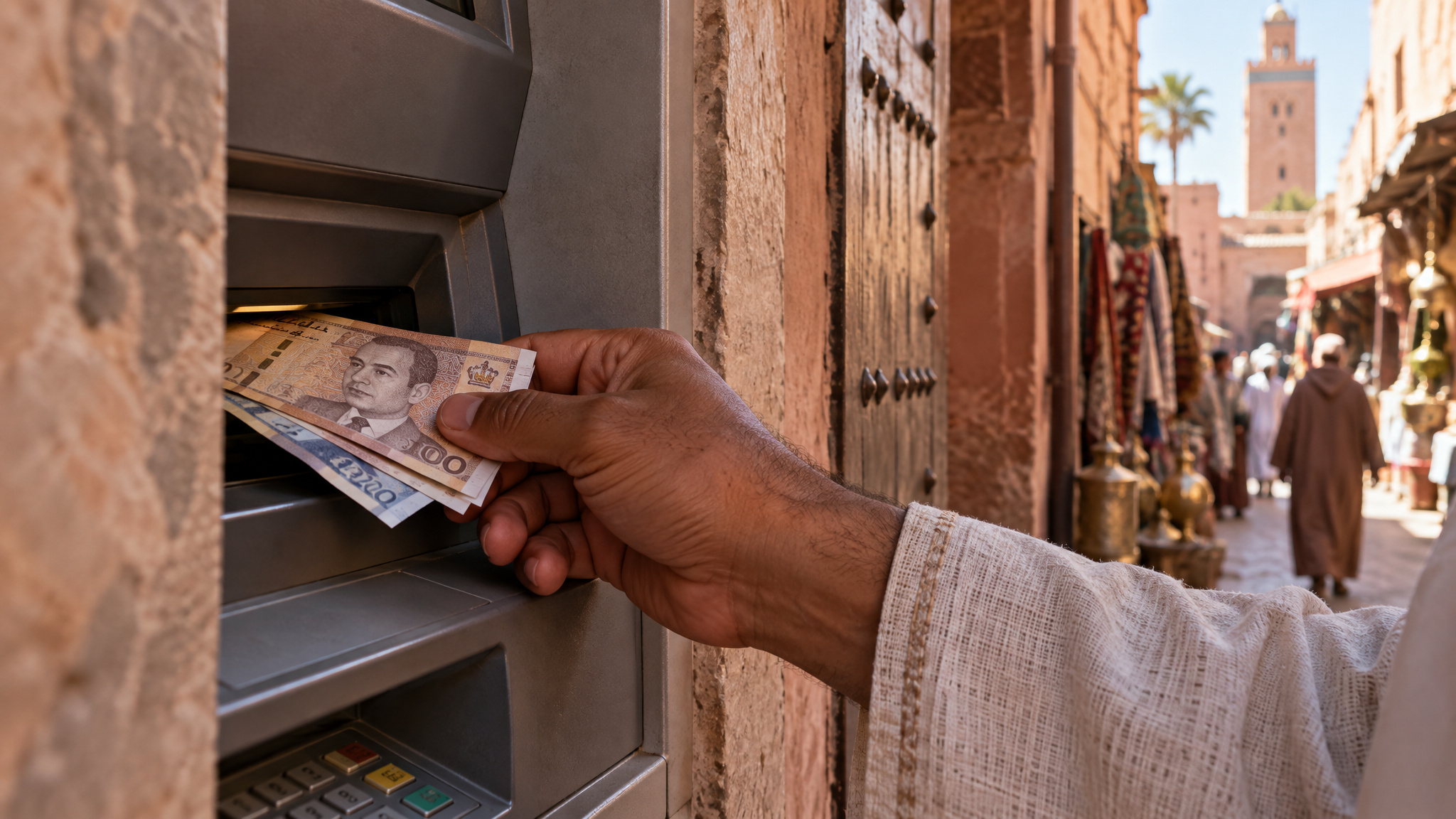
This is mostly a cash society. Medina shops and taxis take no cards, though many restaurants do. Tap water isn’t drinkable, and bottled water is for drinking and brushing teeth, which is the detail people forget. On vaccines, the NHS technically recommends Tetanus, Typhoid and Hep A boosters; research turned up no real consensus, and the travelers who wrote the guide I’m pulling from got them anyway.
Pack stomach meds. Pretty much everyone those travelers have met who’s been to Morocco got a funny tummy, them included. After past street food experiences in Marrakech, they also steered clear of the snails and the grilled chicken khobz bread sandwiches.
The airport deserves respect: passport control took about 1 hour 45 minutes despite a short line, partly because new direct US routes mean more people and more processing. Treat three hours before departure as a minimum. Language-wise, Arabic is the official language of Morocco, French is more common than English on the ground, and English is widely spoken too, so a few French phrases pay off. And expect slow service and long waits. That’s the pace of the place, not bad service.
What men should wear and how to behave in Marrakech
No, men shouldn’t wear anything above the knee in Marrakech. The modesty norms are tied to Muslim culture and they apply to men as much as women, so leave the shorts at home. Women should cover shoulders. Skip the designer handbags and blingy jewellery too, which is common sense anywhere but especially here.
A couple of small etiquette things that are easy to get right once told: shake with your right hand, because the left is considered unclean, and don’t show the soles of your feet to people, which is easy to do accidentally when you’re lounging around a rooftop.
On shared rooms: two men sharing a hotel room is normal, though modesty norms and the fact that many riads operate as shared family houses mean it’s worth confirming arrangements when you book rather than assuming. One calendar check before locking anything in: the source’s visit landed on the start of Ramadan and many restaurants ran different hours, so check Islamic holidays against your dates before booking dinners.
Haggling, taxis, and the scam playbook
The common scams are helpers who walk you somewhere then demand payment, shop owners demanding payment or a purchase after you photograph a stall, one traveler snapped a Medina shop and the owner aggressively demanded payment or a purchase on the spot, and monkey handlers at Jemaa el-Fnaa handing you an animal then charging for the photo. Not everyone, not always, but know the patterns so you see them coming. Don’t photograph stalls without asking; it’s basic respect and it also saves your wallet.
Haggling follows one simple rule: no price tag means negotiable. That covers taxis and souks; restaurants and accommodations have fixed prices, so don’t be the guy haggling the dinner bill. In a taxi, ask for the meter, it’s considerably cheaper than a quoted price, and if the driver won’t use it, haggle a fare instead. Here’s where guys get it wrong in the souks: whoever names the first number sets the ceiling. Sellers open high, and haggling down from there is brutal.
Name your starting price, decide your max in advance, and walk away if they won’t meet it. The source learned this the hard way. The tell of an inexperienced buyer is asking “how much?” first; groups that agree a max internally walk away and get waved back. That’s the pattern.
Field note: Agree your maximum price with the group before you touch the first stall. Whoever names the first number sets the ceiling.
Taxis: ask for the meter, every ride. It’s cheaper than any quoted price. If the driver won’t use it, haggle a fixed price instead. One exception worth knowing: Chabi Chic sells beautiful homeware at fixed prices, the exception that proves the haggling rule.
Where a group stays: riad in the Medina or hotel outside it
Pick a riad in the Medina unless your group needs nightly recovery from the haggling and crowds, in that case, stay outside it. The choice is between Medina immersion, where the chaos is your lobby 24/7, and an outside-the-Medina escape. Both work; the deciding factor is how much rest your group needs between outings.
- Riad Kniza. Worth the money if you get the kind of deal the source got. A 5-star riad in the more local part of the Medina with a calm rooftop oasis above the street noise. The travelers stayed here after landing a deal instead of booking El Fenn.
- El Fenn. Worth it if the budget stretches. It’s a reviewer and blogger favourite, it looks the part, and the reviews back the hype up. It’s where the source would have stayed without the Kniza deal.
- Riad Yasmine. Worth it if you want the famous one. It shows up in blogger photos nine times out of ten, and per the source, the fame appears earned.
- La Mamounia. Fabulous if you have the budget. Rooms start from £700 a night, which is why the source only came for a drink. That honesty is the useful part: Le Marocain and Le Bar Majorelle work even if you’re not staying over.
- IZZA. Worth it, and the source’s favourite. Peaceful and art-filled, a self-described house of friends, welcomed with orange blossom and honey tea and baklava. The 14 bedrooms are named after 1960s/70s creatives connected to Bill Willis, who spent about four decades in Marrakech and previously owned the building. One room is “Grace,” after Grace Jones, and contemporary art by Hicham Benohoud and Hassan Hajjaj lines the walls. Doubles from around £180 a night, including breakfast and a 45-minute massage.
- Hotel Capaldi. Worth it as a deliberate breather, not a base. It’s 45 minutes from the airport, a bit under an hour from the Medina, and known for its breakfast. A night away from the city’s intensity.
The night logistics most guides skip: souk alleys turn daunting after the shops close, and taxis can’t reach many riads on narrow lanes. Prioritize location, and plan early dinners or eat at the hotel on Medina nights. Also, riads look rough from the street and open up lush inside, so don’t judge a hotel by its door.
Where a group eats: ranked restaurant verdicts
The order of operations for a group is Al Fassia first, Nomad booked before sunset, and Latitude 31 only after both. That ranking comes from four days of eating tagines before the travelers declared a winner, so it’s earned.
- Al Fassia. A traditional restaurant run entirely by women, and the source’s favourite meal of the trip. After four days of tagines, theirs was the best, described as tasting like cinnamon and glory. Order the Moroccan salad starters. The best validation: locals eat Moroccan food at home and make an exception for Al Fassia.
- Nomad. A mixed experience, honestly told: modern decor, a meal of highs and lows, and a rooftop that made it worth it anyway. Book for a bit before sunset. The timing and the venue are one unit.
- Latitude 31. Solid, ranked below the other two. It’s hidden down narrow winding streets full of locals and dogs, serving modern food with a Moroccan twist.
- Le Jardin. The lunch pairing after Le Jardin Secret. Get the pastillas and the date milkshake, and note the turtle wandering underfoot.
- Atay Cafe and Cafe Clock. Disclosed upfront: the source didn’t make it to either. Atay gets raved-about reviews for rooftop views and juices, and Cafe Clock is described as the closest thing to a hipster cafe with a local hangout vibe. The buzz is real; the verdict isn’t theirs to give.
The food list: lamb tagine, lamb tangia, pastilla, harira, briouates, mint tea, and the Moroccan salad starter. Local dishes run about $3-4. One cultural note for the group: non-tourist cafes are predominantly male social spaces, and mixed-gender venues like DaDa, a vast art space with easy seating, and the Amal Centre, which runs cookery lessons and communal dining, exist alongside them. Also worth a line each: Noujoum, IZZA’s terrace restaurant doing small plates and cocktails, and Le Trou Au Mur, less pretty but equally delicious, ideal for sunset, book ahead.
Drinks and nightlife: a curated thread, not a club scene
Nightlife for a group of men here is a curated drinks thread, rooftop terraces as the default evening plus one or two splurge bars, not a club scene. The centerpiece is the Churchill Bar at La Mamounia: old-fashioned luxury, named after Winston Churchill, who drank there when visiting Marrakech, and perfect for an after-dinner drink. Le Bar Majorelle and its saffron negroni round out the splurge list, and since La Mamounia’s rooms start from £700 a night, a drink at the bar is the budget-friendly way in. Being straight with you: the sources document bars thinly, so there’s no invented club list here. The honest case for a Marrakech guys’ trip is food, souks, hammams, and a well-chosen drink, and that’s a better trip than a fake party scene anyway.
What to do: the Medina, days out, and their failure modes
The short version: the Medina is the main event, and every day trip has a packing or booking catch.
- Getting (almost) lost in the Medina is the activity, not the accident. Souks, snake charmers, and the Ironmonger’s District, where sellers weld in the middle of the street.
- Jardin Majorelle: cobalt blue, cactus, the Yves Saint Laurent connection. Once walk-in, now pre-booked tickets and queues. The source traded the visit for an hour of sunshine and regretted it. Don’t repeat that.
- Atlas Mountains day trip: the source hiked in shorts and a t-shirt expecting heat and froze in the shade and wind. Pack layers even in “hot” North Africa. Expect the group to split, half wanting the hike, half the pool and rooftop.
- Pikala bike tours: a not-for-profit employing young locals and running free cycling lessons for Moroccan women and girls, about 3 hours off the tourist trail.
- Ben Youssef Mosque: roughly 1,000 years of history. Hiring a guide was useful, and the Medersa nearby is worth a visit in itself.
- Hammam and gommage as the group’s recovery slot: traditional bathing and exfoliation, and the verdict was never been so exfoliated. Bain D’or near the Medersa for the real deal, Farnatchi Spa for the luxury version.
- Le Jardin Secret for a quiet hour, small entry fee, iced teas at the cafe. Climb a rooftop at least once. If your dates land in late January, the 1-54 art fair is typically on. The Agafay desert and Essaouira are place references for further afield.
One packing note: backpack over wheeled suitcase. The cobbled streets make wheels useless.
A long-weekend skeleton for the group
A long weekend works as a 3-4 day structure where every block already carries its constraint, so nobody learns the hard way on your dime.
- Day 1: arrival buffer. The three-hour airport reality, dirham withdrawal on landing, and no group ATM run. Everyone handles their own money from minute one.
- Day 2: Medina day. Work the ranked meals, book Nomad for before sunset, and hit Jemaa el-Fnaa with the scam patterns already in your head.
- Day 3: day-trip day. The Atlas-versus-recovery decision, with layers packed either way, or the hammam as the option for the half that wants to stay flat.
- Day 4: splurge nightcap. The Churchill Bar, after dinner, no agenda.
The group norms that hold it together: 4 to 12 guys, a long weekend to a week, and per-person booking so one guy isn’t fronting the whole trip and chasing reimbursements for a month.
Closing verdict
Marrakech is amazing, beautiful, and enchanting, and worth the trip for a group that plans the frictions instead of discovering them on arrival. The real budget control comes down to you: open the bidding in the souks and don’t over-withdraw dirhams. Do those two things and the rest of the trip takes care of itself.
Frequently Asked Questions
Why do guys go to Morocco?
Marrakech works for groups because the city absorbs a crew of 4 to 12 without friction: hotels take adjacent rooms or whole-floor blocks, restaurants handle a 10-top without blinking, and activities spread across neighborhoods so nobody’s stuck circling one tourist hub. The honest case is food, souks, hammams, and a well-chosen drink rather than a party scene — and that mix holds up.
Can males wear shorts in Marrakech?
No — skip shorts entirely. Modesty norms are tied to Muslim culture and apply to men as much as women, so nothing above the knee. Leave the shorts at home, and skip the designer handbags and blingy jewellery too.
Where should a group eat in Marrakech — best restaurants for a big table?
The order of operations is Al Fassia first, Nomad booked before sunset, and Latitude 31 only after both — a ranking earned over four days of eating tagines. Al Fassia, run entirely by women, was the best meal of the trip; Nomad is a mixed meal saved by a rooftop worth booking for sunset timing. Local dishes run about $3-4, and restaurants have fixed prices, so don’t be the guy haggling the dinner bill.