Most trips sold as great outdoor adventures for men fall apart in one of two ways. Either you book the packaged version of something epic and spend your days on the diluted itinerary, or you find out in July that the permit window for the trip you actually wanted closed back in January. Both failures are avoidable, and neither has anything to do with toughness or kit, not your Beretta clothing, not your boots. What decides who completes these trips is knowing the real numbers before you commit: mileage, vertical feet, and booking window.
So every trip below carries its numbers, arranged from easiest to hardest rather than as a simple ranked list. The shortest trip here is a 4,500-foot volcanic dayhike. The longest is a 2,700-mile bikepacking route. Find your rung, then read forward or backward from it.
Key Takeaways
Mount Elbert and Mount St. Helens both demand 4,500 vertical feet; the terrain, not the effort, is what halves your pace on Monitor Ridge.
West Coast Trail permits and the mandatory ferry reservation go on sale each January and sell out within hours, from $154.
The Grand Canyon rim-to-rim-to-rim run is 44 miles with 20,000 feet of elevation change in one day; Will Taylor’s 4:38 a.m. to 6:09 p.m. finish took four months of training.
Table of Contents
How this adventure list is calibrated
Three things separate a genuine adventure from a tourist version: physical demand, remoteness, and planning difficulty. The trips here draw on Michael Lanza’s three-plus decades as an outdoors writer, including years as a Backpacker magazine field editor and on his site, The Big Outside, plus contributor-recommended adventures from Outside Online. The list covers seven national parks, three standout paddling trips, three signature backpacking routes, Mount St. Helens via Monitor Ridge, which the writer calls one of the coolest dayhikes in America, and a ski route through the densest cluster of active geysers on the planet. The tiers run from entry summits like Mount Elbert and Mount St. Helens, through park backpacking routes and multi-day treks, down rivers, up to the endurance ceiling, and out to spectacles governed by timing rather than fitness.
One blanket rule applies to all of it: these trips are popular, and they require reservations months in advance. The ladder is an organizing frame, not a set of tested rankings. If 4,500 vertical feet on a smooth trail sounds right, start with Mount Elbert. If 2,700 miles sounds right, jump ahead to the Continental Divide route.
Mount Elbert: the entry-level 14er benchmark
Mount Elbert is the floor of this ladder, and it’s an honest one. Colorado’s highest point tops out at 14,448 feet, and the standard route that writer James Dziezynski describes gains 4,500 vertical feet over 4.9 miles. The trail itself is relentless but smooth: no scrambling, no exposure, just a slope that keeps going. The difficulty here is cardio, nothing else. Your legs and lungs will file the complaint; the terrain won’t add anything on top.
That makes Elbert the benchmark every other entry gets measured against. Hold onto the number, because the next mountain asks for the identical effort on a different surface.
Mount St. Helens via Monitor Ridge: same effort, harsher terrain
The decisive difference between Monitor Ridge and Mount Elbert is terrain, not effort. Both demand 4,500 vertical feet, but Monitor Ridge’s surface is what halves your pace. The 10-mile round trip starts on loose stones and dirt, then shifts to ash that feels like hiking up a giant sand dune. Every step slides back a few inches.
From the top you can see Hood, Adams, and Rainier, and the writer behind the trip calls it one of the coolest dayhikes in America. That’s one writer’s call, not an official ranking, but it’s earned. Permits can be grabbed last-minute, which makes this one of the few marquee climbs you can decide on a week out. The catch is that weather can turn ominous hours into the ascent, so the easy entry and the real risk travel together.
The common failure here isn’t cardio. It’s the guy who trains on smooth trails, says he does 10 flat miles a week, then meets a slope where his pace collapses and the descent punishes his knees and whatever footwear he hasn’t tested on scree.
Pico de Orizaba: a beginner-accessible 18,491-foot summit
Pico de Orizaba adds two things the US summits don’t: glacier and altitude, and it still works for beginner mountaineers. Mexico’s tallest volcano stands 18,491 feet, and the summit push means crampons and an ice axe on a steep glacier, but no technical climbing. The gear list is minimal; the stakes change because everything above 18,000 feet punishes poor acclimatization.
The logistics are older than most American outfitters. Servimont, based in Tlachichuca, has guided trekkers up this mountain since the 1930s, with five-day trips from $990 running June through October. Writer Owen Clarke climbed it solo in May 2021 and got sunrise views of Popocatépetl from the summit, which is the kind of morning that justifies the whole trip. A first 18,000-er is realistically bookable here, with a guide, for under a grand.
Yosemite’s waterfalls: the iconic dayhike, with the real logistics
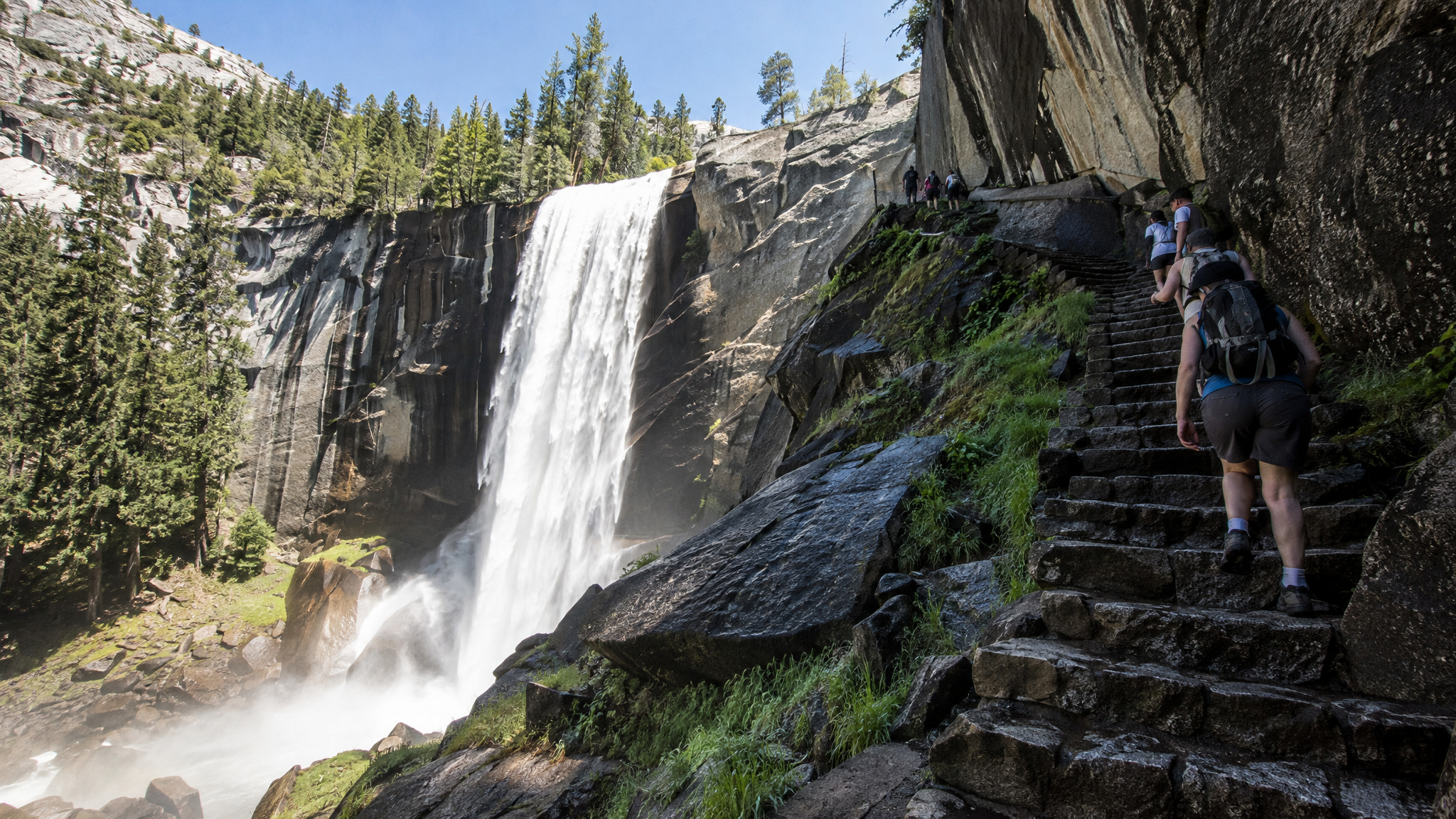
Upper Yosemite Falls drops a sheer 1,400 feet, and the five-mile Mist Trail passes 317-foot Vernal Fall on the way to getting showered by a waterfall under blue sky. Yosemite Valley is famous for a reason, and the postcard version is worth seeing once. The challenge version is different: the climb to the top of Upper Falls, where the final steps run along a narrow granite catwalk, is the effort pick. The finale is not a casual stroll.
The logistics most lists skip, per writer Megan Michelson: Tuolumne Meadows Campground reopens in June after renovation, with half its sites held for walk-up campers at $36 per night. That’s the fallback lever if the valley floor is booked solid, and it puts you at elevation instead of in traffic.
Angels Landing in Zion: the park’s exposed classic
Zion National Park belongs on this list for Angels Landing, the famous exposed chain-section hike and the permit-managed icon of the park tier. The source names it without embellishment, but the terrain speaks for itself: cliffs of pure white and blood-red sandstone soar hundreds of feet overhead, and the final stretch puts you on a high rim looking down on a labyrinth of slot canyons and isolated mesas. Its job here is contrast. This is the route everyone queues for, which sets up the next entry, where the smart move is combining trails instead of joining the line.
Grand Canyon, done right: Grandview to South Kaibab via the Tonto
A four-day, 29-mile route combining the Grandview and South Kaibab trails with a less-busy stretch of the Tonto Trail delivers the canyon most visitors never see. Constant big views the whole way. The routing is the appeal: the postcard rim viewpoint and this route combination deliver the same canyon, but one of them means backpacking it instead of gawking at it.
This is unforgiving terrain, and route choice is critical. Picking the wrong stretch in a place with no water and no shade isn’t a scheduling problem. There’s a harder expression of this same canyon further down the ladder, for readers who want their Grand Canyon measured in hours instead of days.
Cross-country skiing Yellowstone’s Upper Geyser Basin
The Upper Geyser Basin holds one-fourth of the world’s active geysers and their greatest concentration, and 2.5 nearly flat miles of cross-country ski trail run right through it. That’s the whole pitch: a marquee Yellowstone landscape in winter, on skis, demanding almost no fitness. Emphasis on nearly flat. This is the low-effort expression of the park tier, and the winter version means you get the basin without the summer crowds, with steam rising off the ground instead of off other tourists.
Backpacking the southern Olympic coast
A three-day backpacking trip on the wilderness coastline of Washington’s Olympic National Park ranks among America’s classic backpacking trips, and the texture is why: offshore sea stacks, giant trees, tide pools, and flotsam washed up on beaches that no road touches. This is coastal wilderness travel, not a beach walk. Tides set the schedule and driftwood sets the footing, which means the route decides your pace as much as your legs do. Three days is short enough to actually schedule, which is more than most classic trips can say.
The Smokies’ quiet 7,000 feet: the AT from Fontana Lake to Kuwohi
The Appalachian Trail runs 72 miles through Great Smoky Mountains National Park. The 32-mile stretch described here starts at western Fontana Lake and climbs 7,000 feet to Kuwohi (formerly Clingmans Dome), the park’s high point. The crowd-dodge is the point. The drive-up summit above is a zoo; the AT approach delivers the same 7,000 feet of climb through the backdoor, on foot, with the park’s quietest terrain underneath it. It’s the section-hike answer for guys not ready to commit to 2,000 miles of trail but done with scenic overlook parking lots.
Kalalau Trail: Kauai’s cliff-hugging Na Pali Coast
The Kalalau Trail hugs the high cliffs of the Na Pali Coast in Haena State Park, and the decision tree is specific. The two-mile day hike to Hanakapiai Beach requires a $5 reservation, and there’s a $40 shuttle from Princeville. One more mile past the beach reaches 300-foot Hanakapiai Falls, and that extra mile is worth it. For the full 11-mile backpacking route, the permit must be booked 90 days ahead via camping.ehawaii.gov, starting at $25.
Buyer rule: Count back 90 days from your hike date and book that morning — the permit window is the trip.
Count back 90 days from when you want to hike. That’s the day you book, not the day you start looking. This is the fixed-calendar mechanism in its purest form, and it’s the difference between hiking the Na Pali Coast and reading about it.
The Long Path: 360 miles starting at a subway station
The Long Path starts at New York City’s 175th Street subway station and runs 360 miles toward the southern Adirondacks, marked with aqua-colored blazes. The hook is the trailhead itself: zero travel logistics to begin a long-distance hike. You tap through the turnstile and start walking. For anyone who’s ever priced out shuttle services and trailhead parking for a thru-hike, a long trail reachable by public transit is its own kind of rare. The blazes matter too, because a route you can actually follow is a route you can actually finish in sections.
AMC White Mountains huts: the alpine traverse with hot meals
Eight historic high-mountain huts in the White Mountains link up into an alpine traverse with legs running 4.5 to 13.4 miles, which means you pick your pain level. On-site staff cook hot breakfasts and dinners late spring through early fall, and hot food at altitude is a bigger deal than it sounds. Shoulder season is cheaper, but you cook for yourself: money versus convenience, pick one. Writer Mardi Fuller’s favorite is Zealand hut, for its wood-burning stove.
The catch: summer stays book three months ahead, and rates run from $74. This section opens a question that runs through the whole trek tier: how raw do you want the wilderness? The huts are one end of that spectrum. The West Coast Trail, a few entries down, is the other.
Tour du Mont Blanc: 105 miles around the Monarch of the Alps
Yes, a first-time multi-day trekker can handle the Tour du Mont Blanc, provided he respects the daily climbing and books accommodation ahead. The parameters: roughly 105 miles, or 170 km on maps, around 15,771-foot Mont Blanc, the Monarch of the Alps, crossing France, Italy, and Switzerland over passes near 9,000 feet, with glaciers and peaks in view basically the whole way. It appears on just about every list of the world’s greatest trails.
Mileage is moderate by trek standards, but the cumulative pass climbing adds up, and three-country logistics are the real commitment. Village infrastructure means food and beds at the end of every day, which puts this at the supported end of the trek spectrum. The daily vert is what earns the view.
Brian Head to Escalante: 190 miles with stocked container huts
The Brian Head to Escalante route starts at the 11,307-foot Brian Head Peak summit, and starting that high is the whole appeal. From there it roller-coasters 190 miles east to Escalante, crossing the Aquarius Plateau, often above 10,000 feet. It also skirts Zion and Bryce Canyon, so you get the famous scenery from the quiet side. The one-of-one mechanic: the huts are shipping containers stocked with food, beer, and bunks.
Not glamping, not a resort. Exactly what you need at the end of a 30-mile day.
The route runs June through October, and five-day trips start at $990. Window and price together, as always.
West Coast Trail: 47 self-sufficient miles, and a January permit war
The West Coast Trail runs 47 miles over six days on Vancouver Island, through mossy rainforest and along beaches with black bears in the brush and orcas and gray whales offshore. Wooden ladders and boardwalks stitch the route together, a dozen established campgrounds mark the nights, and solitude lives at Cullite Cove and Carmanah Creek. Writer Zoe Gates points to the app for conditions and tides. This is the raw end of the support spectrum: total self-sufficiency, no villages, no hot meals, nobody cooking for you.
Permits and the mandatory ferry reservation go on sale each January and sell out within hours, from $154. This pattern plays out every January. Set the calendar reminder or miss the season.
Crested Butte to Aspen: a one-day 12,490-foot pass
The Crested Butte to Aspen crossing puts a 12,490-foot pass, West Maroon, under your boots in five to six hours. The return from Aspen runs 16 miles over 11,800-foot East Maroon Pass, about seven hours. Those hour-by-pass numbers are the calibration tool: compare them against your own pace on a big day and you’ll know immediately whether this is your trip.
This is the self-supported alpine test between the hut treks and the endurance ceiling: big vert, no overnight infrastructure, no container huts stocked with beer. What you carry is what you have.
Green River through Stillwater Canyon: the beginner’s 52-mile float
If you want a multi-day adventure without a fitness threshold, the Green River float through Stillwater Canyon is the pick: 52 easy miles in Canyonlands National Park with no paddling résumé required. You camp on sandy beaches and slickrock benches, and the trip comes with history and wildlife built in: centuries-old Puebloan rock art, cliff dwellings, and bighorn sheep on the rock faces.
One party of 17 in the source’s data ranged from age four to 80. Read that as evidence the float works for basically any group, not as a family recommendation. This is the flatwater entry point on the river spectrum, and the next two entries complete it.
Canoeing the Everglades: mangrove tunnels, dolphins, and wilderness beaches
Before you’ve paddled a mile, the bird list is already showing out: brown pelicans, roseate spoonbills, white ibises, black anhingas. The trip is canoeing between remote islands with wilderness beach camping, and the moment that sells it is a dolphin surfacing right at one canoe’s bow.
You’re sharing flatwater with alligators. It’s part of the deal, not a dealbreaker. This is one of the most beginner-friendly trips on the list, and the reward is wildlife proximity, not rapids. If you’ve never done a multi-day paddle, this is the one to start with.
Middle Fork Salmon: 105 miles of Class IV through 2.4 million acres
Writer Tim Neville’s pick, ROW Adventures, runs a 105-mile trip down the Middle Fork Salmon with Class IV rapids, hot springs, and cutthroat fishing, through the Frank Church-River of No Return Wilderness. Nearly 2.4 million acres, the second-largest federal wilderness in the continental US, and a name that does half the selling on its own. It’s guided but wild, the outfitted middle of the river spectrum, against the Green River’s DIY float.
You pay, they handle the permits and the drybags, and you bounce through Class IV in between soaking in natural hot springs. That’s what the money buys.
Gauley River: 100+ rapids that exist only on a dam-release calendar
The Gauley’s biggest whitewater runs only during scheduled dam releases, which begin the first weekend after Labor Day. The calendar, not your skill level, decides when you can run it. Right now, in mid-October, that season is underway or recently finished, which is exactly the kind of thing worth knowing before you plan a trip around it.
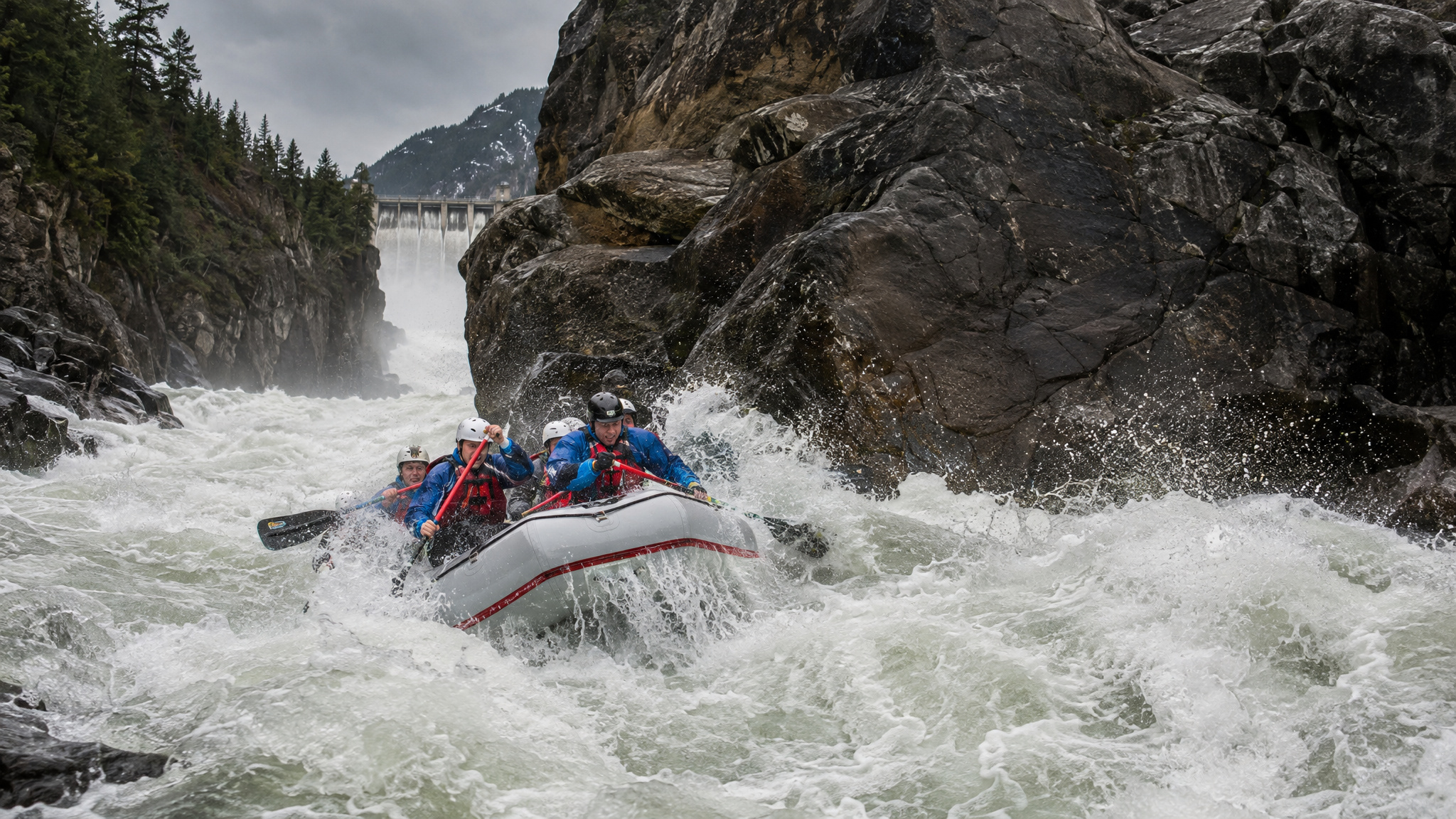
The numbers: more than 100 named rapids in the 25-mile Gauley River National Recreation Area, with Pillow Rock as the Class IV-plus one people talk about, per writer Graham Averill. The upper section is ages 16 and up, the lower 12 and up. New and Gauley River Adventures runs trips from $149. The Green River float and Pillow Rock are both “rafting,” but the mechanisms are different. One runs whenever you show up; the other exists because a dam opens on a schedule.
Rim-to-rim-to-rim: 44 miles and 20,000 feet in one day
For an experienced outdoorsman looking for an extreme US adventure, the Grand Canyon rim-to-rim-to-rim run is the definition: 44 miles with 20,000 feet of elevation change in a single day. Down one side, up the other, back again. The benchmark run belongs to Will Taylor, who started at 4:38 a.m. at South Kaibab Trailhead and finished at 6:09 p.m. at Bright Angel Trailhead, nearly 14 hours on trail, after four months of training. Those timestamps are the fair warning. Nobody stumbles into this.
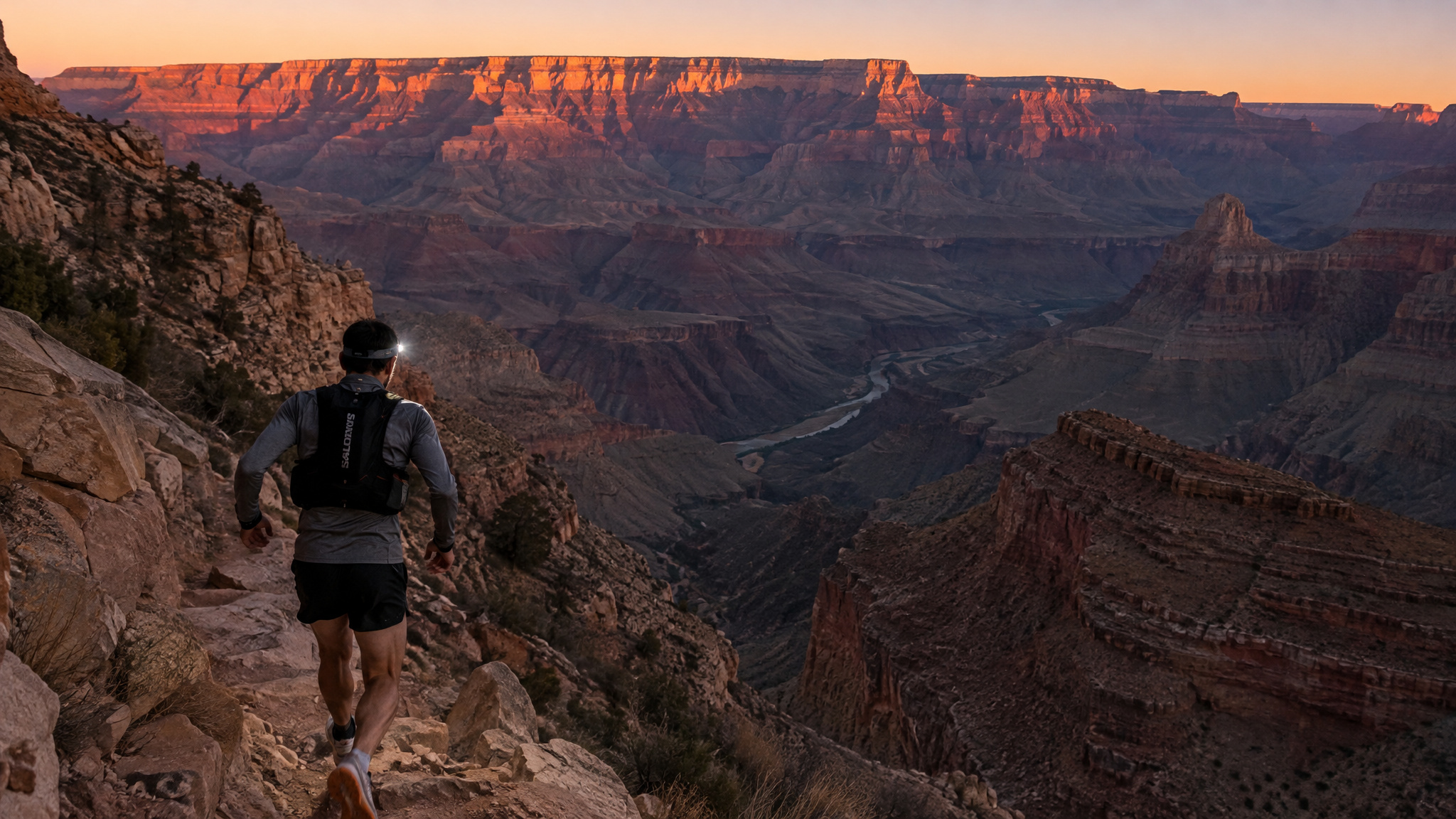
This is a training project, not a trip. The commitment happens in the four months before departure, which the “sign up for an adventure” framing conveniently hides. Four months of building the legs and lungs to descend 10,000 feet, climb out, and do it again, in a canyon where heat and terrain punish miscalculation harder than almost anywhere else on this list.
It’s also the second expression of a canyon this article has already visited. The four-day Tonto route earlier in the list and this single brutal day deliver the same 29-plus miles of inner-gorge terrain in different formats: one is a backpacking trip with views, the other is an endurance event with a finish line. Same rock, opposite sports.
Where does this sit on the ladder? At the ceiling, alongside two other entries a trained reader can actually target: the 18,491-foot Orizaba climb and the 2,700-mile Continental Divide bikepacking route. Those three form the US extreme tier. None of them are spontaneous. All three are bookable by a guy who does the preparation the numbers demand.
Bikepacking the Continental Divide: 2,700 miles, 149,000 feet, 45 days
The Continental Divide route runs about 2,700 miles between the US-Mexico border and Banff, with 149,000 feet of gain. Bryan Rogala rode it northbound in June over 45 days. Those three numbers, distance, vert, and duration, do all the work this section needs. A 45-day window makes this a life-scheduling project in a way the rim-to-rim-to-rim run, with its one-day format, never becomes.
You’re not training for a day off; you’re negotiating a season and a half of your calendar with your employer. That’s the real barrier.
RAGBRAI: the endurance event that’s really a rolling town
RAGBRAI is a weeklong July ride across Iowa with roughly 18,000 registered cyclists, and it’s the world’s oldest, largest, and longest recreational bike-touring event. The most recent edition ran July 19-26, and it happens every July. This is the social end of the endurance tier: the challenge is seven consecutive days in the saddle, but the infrastructure is a moving festival with volunteers, towns, and a certain light beer sponsoring the whole rolling operation. It’s the approachable ceiling entry. You suffer daily, but you suffer with 18,000 other people and a town waiting at the end of it.
Crater Lake Marathon: 500 runners at 7,000 feet, and no PRs
The Crater Lake Marathon happens every August, capped at 500 runners, circling the caldera rim at 7,000 feet. Ian Sharman, who won it in 2012, says the hilly course is not PR-friendly. Translation: don’t show up chasing a personal best, because the altitude and the hills will take it from you anyway. The capped field is the appeal. Five hundred runners, one of the most striking settings in American distance running, and a race you choose for the story rather than the time.
Yellowknife: northern lights roughly 240 nights a year
The aurora shows up about 240 nights a year in Yellowknife, and odds that good change the planning math entirely. Joe Buffalo Child of North Star Adventures, an Indigenous aurora hunter, guides trips there, and writer Stephanie Vermillion described her September trip with him as among the most moving travel experiences of her life. This is where the ladder pivots: from here on, the governing skill is timing, not fitness.
Being in the right place on the right night is the entire game, and no amount of training improves the odds. Two hundred forty out of 365 is about as close to a sure thing as the sky offers.
Arctic National Wildlife Refuge: the 840-mile caribou migration
The Porcupine caribou herd, 200,000 strong, calves near the Beaufort Sea and then migrates 840 miles south, the longest land migration of any animal on earth. Arctic Wild runs trips at $8,800 for five nights, with Gwich’in hamlet context along the way. This is the list’s most expensive entry, and the cost is the remoteness. There’s no road infrastructure, and the window is the herd’s calendar, not yours.
Some readers will see that number and close the tab. Better to self-select out now than find out after clicking.
Piedra Herrada: tens of thousands of monarchs and a no-talking rule
Tens of thousands of monarchs overwinter at the Piedra Herrada sanctuary, each having flown some 3,000 miles to get there, and loud noises spook them, so visitors stay silent. The silence rule is what makes it hit different. Most natural spectacles you watch; this one you stand inside, quietly. The best window runs late fall through mid-March.
It’s a two-mile trek up to 10,000 feet with a reserve guide, and horseback is available if the climb isn’t your thing, which is the honest accessibility note. Base yourself in Valle de Bravo; admission runs $5 and a guide $17. A cheap trip with a real experience behind it, which is a combination this list doesn’t offer often.
Anza-Borrego superbloom: a carpet visible from space, on rain’s schedule
The April superbloom in Anza-Borrego lays down purple and yellow so thick it’s visible from space, and it happens only when above-average rainfall follows a drought. No guarantees, plan around it. The same bloom shows up in Death Valley National Park and Mojave National Preserve as backups when Anza-Borrego doesn’t pop. The Theodore Payne Foundation posts current bloom info, which is the one practical pointer that matters.
Unlike every other entry in this tier, you can’t reserve this one. You watch rainfall data and go when the desert tells you to.
Bay of Fundy: tides that drop 52 feet in about six hours
The Bay of Fundy has the world’s highest tides: water levels can drop as much as 52 feet, versus a 3-foot global average, and the whole transition takes about six hours. Keep both numbers in mind, because the comparison is what makes the superlative land. The timing skill here is reading the tide table, not the season. This spectacle runs on a daily calendar, twice a day, which makes it the most forgiving entry in the timing tier: miss the morning, catch the afternoon.
Big Bend: stargazing in the world’s largest Dark Sky reserve
The world’s largest Dark Sky-certified place sits in southwest Texas, spanning more than nine million combined acres, with McDonald Observatory near Fort Davis as the anchor. Big Bend Ranch State Park also hosts free ranger-led star parties, and free is worth saying out loud. Astro lodges like Marathon Motel and Summit at Big Bend run from $15 to $159, and both ends of that range are real options.
Aurora and blooms gate on seasons and rainfall, but dark skies gate only on cloud cover. That makes this the most reliably schedulable spectacle on the list, and the budget entry besides.
The iconic-trees pilgrimage: 4,800-year-old bristlecones to Pando’s single root
Bristlecone pines hold the record as the oldest living organisms on earth, at 4,800-plus years. Sit with that number for a second: a tree germinating before the pyramids, still standing. Redwoods reach 379 feet. General Sherman needs about 15 people with arms outstretched to ring it. In Utah’s Fishlake National Forest, Pando is roughly 40,000 quaking aspens across 106 acres joined by a single root system, one organism pretending to be a forest. And the Angel Oak in Charleston shades an area the size of a hockey rink.
This is a road trip with real stops, and the adventure is standing beside living things that make human timescales feel tiny. No permits, no summits, no suffering. Just scale, measured in millennia.
Canyon de Chelly: horseback through 5,000 years of habitation
People have lived in Canyon de Chelly for 5,000 years, and that number changes how you see the thousand-foot walls. Exploration is only possible with a Native guide, which is the rule and it makes sense: the canyon’s history is inseparable from its living Diné (Navajo Nation) community, and access runs through them. Petroglyphs of hunters, snakes, and Kokopelli mark the walls. Justin’s Horse Rental is the only authorized horseback outfitter, with rides from $30.
And writer Tasha Zemke’s wild-horses sighting is the kind of moment you can’t plan but remember.
Driving the Alaska-Canada Highway: 1,387 miles of the last great road trip
The Alaska-Canada Highway runs 1,387 miles from Dawson Creek, B.C. to Delta Junction, Alaska, and it’s paved and open year-round, which reframes an epic-sounding drive as logistically simple. Mount Logan, at 19,551 feet Canada’s highest, anchors the skyline. Realistic wildlife sightings include bison and grizzlies, and per Jayme Moye’s drive, Muncho Lake and Liard River Hot Springs were nearly theirs alone except for a couple of caribou.
This is the road trip as the adventure tier’s DIY extreme: no permits, no guides, no outfitter, gated only by distance. It’s the opposite scarcity profile of the West Coast Trail, which sells out in hours. This one just asks for 1,387 miles of your time.
Isla Espíritu Santo: four nights in Baja from $395
Four nights at Isla Espíritu Santo run from $395 through Todos Santos Eco Adventures, which makes this the list’s cheapest multi-night guided trip: a sea-and-desert island adventure at a fraction of the Arctic entry’s $8,800. That price gap, $395 versus $8,800, is the whole comparison. Same category of trip, guided and multi-night, separated by two orders of magnitude in cost. If the Baja version fits the budget and the Arctic one doesn’t, that’s not a compromise. That’s the decision working correctly.
Bentonville’s Oz Trails: 550+ miles of singletrack in the self-declared mountain-bike capital
The Oz Trails network spans 550-plus miles of singletrack in Bentonville, Arkansas, which claims the mountain-biking capital of the world title. The title is Bentonville’s own claim; the mileage is the actual argument. Five hundred fifty miles is weeks of trail, not a weekend, and it’s the kind of infrastructure you return to every year instead of checking off once. That’s what makes this the bridge to the hobby tier: everything above was a trip. This is a place.
U.S. National Whitewater Center: 1,300 acres of manufactured adventure near Charlotte
The U.S. National Whitewater Center is a 1,300-acre campus near Charlotte with a man-made whitewater river and 40 miles of mountain-biking trails. Tuck Fest, its free spring festival, ran April 25-27 and drew about 40,000 people, and it happens every spring. This is the anti-Gauley. Same activity, opposite gatekeeping.
The Gauley’s rapids exist only when a dam opens on schedule; the Whitewater Center’s rapids run on demand, guaranteed, whenever you show up. The calendar never decides anything here, which is either the selling point or the compromise, depending on what you’re after.
Casual Crabbing with Tia: a $125 morning that ends with your catch
Tia Clark left a hospitality career to teach sustainable crabbing tied to her Gullah Geechee culture, and her tour runs $125. One group with zero crabbing knowledge spent a morning with her, then ate their catch at Charleston Crab House, with bibs. That’s the shortest commitment-to-reward ratio on this list: half a day, one new skill, and your own catch on the plate.
Adventure-adjacent culture: art, film, food, and stillness
Mainstream adventure coverage pretends the spectrum ends at sleeping in a tent, but there’s a legitimate tier where the outdoors gets consumed through art, film, food, and stillness.
Hell’s Backbone Grill
A 25-year-old James Beard Award-nominated restaurant on Utah’s Route 12, co-owned by Jen Castle and Blake Spalding. It closes early December to mid-March, so plan the drive accordingly.
The Lightning Field
Walter De Maria’s 1977 land-art installation near Quemado, New Mexico: 400 steel rods, 15 to 26 feet tall, maintained by the Dia Art Foundation, with an on-site cabin that sleeps six. The oddness sells itself.
Mountainfilm Telluride
Memorial Day weekend in Telluride, about 4,000 attendees and 100-plus documentaries. In the source’s year, shorts shown there qualified for Academy Awards for the first time. Passes from $210.
Blackberry Mountain
The splurge, and it says so itself: 5,200 outdoorsy acres in the Smokies, off-roading in a Lexus GX, a ropes course, waterfall hikes, a 22-foot troll sculpture, the Firetower restaurant at the highest point, and modern treehouses, from $1,995 per night with a three-night minimum. That’s roughly $6,000 before you’ve unpacked.
Spirit Rock
The meditation center founded by Jack Kornfield, offering Vipassana and Zen retreats as the stillness end of the spectrum.
Guided men’s trips: what a legit outfitter publishes before you book
Guided men’s trips occupy their own tier, and the way to evaluate any operator is what they publish before you pay. One example, using its own published details, shows the benchmark.
The WayForward model
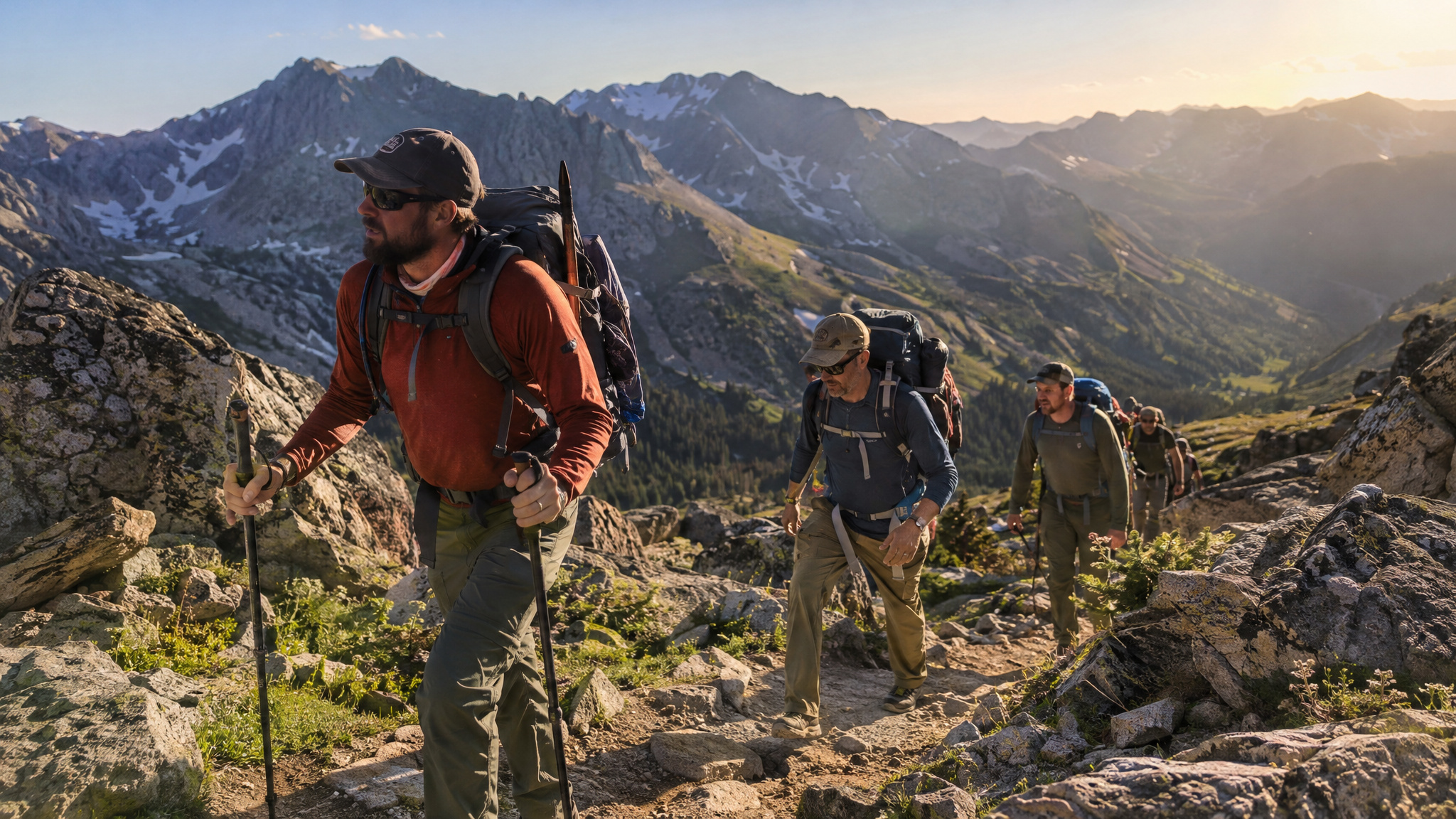
WayForward runs guided men’s group backpacking in the Colorado Rockies at 9,000 to 13,000 feet, all-inclusive: experienced guides, community building, a discovery curriculum, lodging, meals, and backpacking gear. A 4-day trip runs $12,650 for up to 10 guests; 5-day, $13,750 for up to 11. Most participants are first-time backpackers, and there’s no minimum fitness requirement, only good health suitable for a 6-day walk at altitude. One participant, John Marshall, put it this way: The Trip Was Life Changing, And It Was With Friends Whose Lives Were Being Changed As Well. That’s one example of the category using its published numbers, not an endorsement.
The vetting checklist
The tell for any operator is transparency. WayForward publishes that its guides hold Wilderness First Aid or higher plus CPR, complete a two-week training program or bring prior outfitter experience, maintain Leave No Trace compliance, and operate under US Forest Service permits, with deposits refundable for 30 days. The typical mistake runs the other way: assuming “guided” means fully inclusive, then discovering after booking that gear, transfers, or meals sit outside the package. Operators that publish credentials, permit status, and full pricing up front are the exception. That’s the vetting standard.
Guided vs. DIY
The tradeoff, quantified: guided trips like WayForward’s all-inclusive pricing, Servimont on Orizaba from $990, or ROW on the Middle Fork buy out the permit-and-logistics burden. DIY wins on price but demands months-ahead reservations and route knowledge. Paying for structure isn’t the soft option. It’s the fast one.
The booking calendar: permit windows that make or break these trips
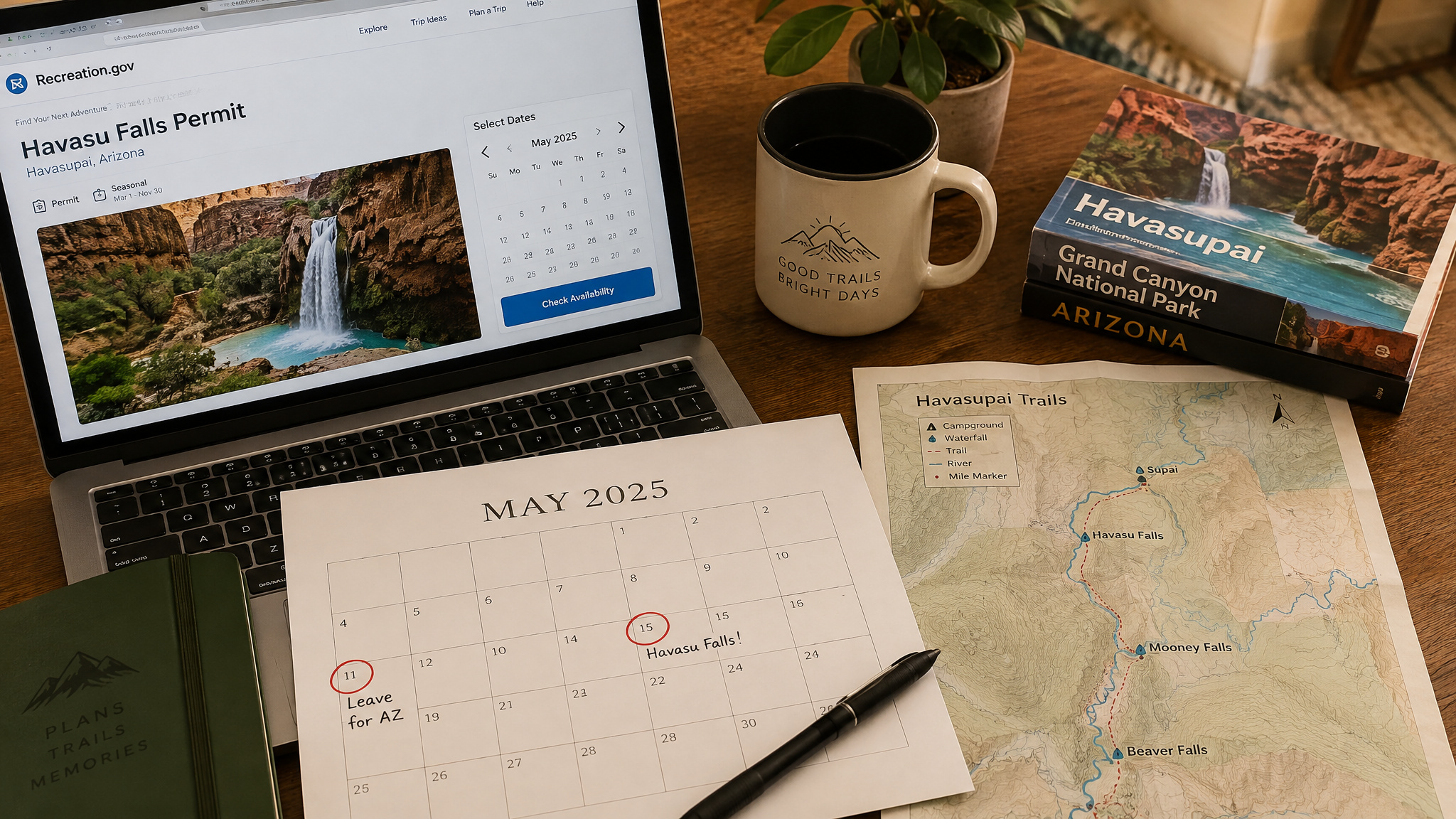
Every trip on this list requires reservations months in advance. Here’s every sourced window in one place.
| Trip | Window and mechanism | Price |
|---|---|---|
| West Coast Trail | Permits and mandatory ferry reservation on sale each January, sell out within hours | From $154 |
| Kalalau Trail | Full 11-mile backpacking permit booked 90 days ahead via camping.ehawaii.gov | From $25; day-hike reservation $5 |
| AMC White Mountains huts | Summer stays booked three months ahead | From $74 |
| Tuolumne Meadows Campground | Reopens in June after renovation; half its sites held for walk-up campers | $36 per night |
| Gauley River | Dam releases begin the first weekend after Labor Day | Trips from $149 |
| Pico de Orizaba | Guided season June through October | Five-day trips from $990 |
| Brian Head to Escalante | Open June through October | Five-day trips from $990 |
| RAGBRAI | Weeklong ride every July | Registration required |
| Crater Lake Marathon | Every August, capped at 500 runners | Registration required |
| Mountainfilm | Every Memorial Day weekend | Passes from $210 |
The failure pattern looks like this: a guy books a headline trek as if it were a spur-of-the-moment weekend outing, picks a date, then finds the window closed months earlier. The fallback is a degraded consolation route, the watered-down version he was trying to avoid in the first place.
The access economics are worth the math: an $80 annual pass covers more than 2,000 recreation areas across all 63 national parks for 12 months. Two or three park visits and the pass has covered itself. Guided options like ROW, Servimont, and WayForward absorb the permit burden for a price, which is the same tradeoff in a different wrapper.
One caveat covers every price and window in this article: rules change season to season, so verify current windows before booking.
Guys’ weekend destinations: the social tier, honestly labeled
If the group wants actual outdoor adventure instead of a bar crawl, the destinations below beat the default, but know which tier you’re shopping for. These are trips where the adventure is social rather than physical, the honest bottom rung. A distillery weekend and a 4,500-foot volcano climb both get sold as adventure trips for men, and knowing the difference prevents a mismatched group trip.
Ridgeland, MS
“Mississippi’s Steakhouse Capital” (Koestler Prime, Tico’s Steakhouse) with new culinary and cocktail trails, Barnett Reservoir (“the Rez”) for boating, fishing, and guided crappie trips, mountain-bike trails, Topgolf, and Pelican Cove Grill, Cock of the Walk, and Shucker’s Oyster Bar.
Old 96 District, SC
Trophy bass fishing, the 300-acre Palmetto Shooting Complex in Edgefield with skeet, trap, sporting clays, and 3D archery, Wood Widgeon Sportsman Camp, 10 golf courses including Lake Thurmond layouts, plus Edgefield Pool Room, Montague’s, Blue Ocean, and Good Times Brewing.
Franklin, KY
Dueling Grounds Distillery tastings with pizza, Kenny Perry’s Country Creek Golf Course (18 holes along Drakes Creek), the Circa Sportsbook at The Mint Gaming Hall, the largest east of the Mississippi, and fall live thoroughbred racing.
Bardstown, KY
Heaven Hill, founded in 1935 by the Shapira family, offers the 11-minute 1935 Distillery Theater film, the family and Elijah Craig and Larceny galleries, a shuttle to Heaven Hill Springs, and Five Brothers Bar & Kitchen.
Charlotte, NC
Charlotte FC at Bank of America Stadium, the Knights at Truist Field, the Checkers at Bojangles Coliseum, Olde Mecklenburg, Heist, Crunkleton, and Dot Dot Dot, the U.S. National Whitewater Center, golf, axe throwing, and Beef ‘N Bottle Steakhouse.
San Antonio, TX
2M Smokehouse, Mi Tierra Café y Panadería in Market Square, the River Walk by foot or boat, bike rides to the historic Missions, golf, Topgolf, and the Texas Hill Country beyond.
Muscle Shoals/Florence, AL
Renaissance Shoals Resort & Spa on the Tennessee River with Alabama’s only revolving restaurant (360 Grille), Swampers Bar & Grille live music, FAME Recording Studios and Muscle Shoals Sound Studio tours, and downtown Florence with Billy Reid, the GunRunner Hotel, and Southern Grocery.
One disclosure, because most republications of this material omit it: the source coverage for these destinations is sponsored content, paid for by Explore Ridgeland, Old 96 District Tourism, Simpson County Tourism, and Heaven Hill Distillery. Weight it accordingly.
Hunting: the oldest outdoor tradition, and a different reward structure
Hunting is a repeatable outdoor tradition with a different reward structure than a bucket-list trip: harvest, provision, season-by-season progression, and it almost never appears in adventure-travel roundups. One Christian outdoorsman who films his seasons took four deer in a single year, including a 2018 spike buck with a Rossi.243 eaten for Christmas dinner, a 2020 buck with a Weatherby.30-06, and a 2021 “curly buck” with a Savage 212 12-gauge, alongside trapping varmints and hunting everything from small game to white-tailed deer, eating all his game and crediting God for it. The faith framing is his, not this article’s.
Bucket-list trip or outdoor hobby? Matching the format to the life you want
A bucket-list trip happens once; a hobby builds on itself year after year, and the hobby tier (hunting, mountain biking, climbing, paddling) rarely shows up in adventure roundups. The entry points are already on this list: Bentonville’s 550-plus miles of singletrack, the Gauley’s dam-release season and the Charlotte whitewater campus for paddling, Mount Elbert as the gateway to peak-bagging. And one last fact: the hardest trips here were completed by multi-generational groups, a 10-year-old and a 76-year-old on Mount St. Helens, an 80-year-old on the Tour du Mont Blanc. The real gatekeeper isn’t toughness or the “for men” label.
It’s booking-window discipline and terrain-specific preparation. Pick the tier first, then book inside its window.
Frequently Asked Questions
What are some good adventure trip ideas for guys?
Options span a real ladder of difficulty: entry summits like Mount Elbert and Mount St. Helens, backpacking routes like the Grand Canyon’s Grandview-to-South Kaibab traverse, multi-day treks like the Tour du Mont Blanc, river trips from the beginner-friendly Green River float to Class IV rapids on the Middle Fork Salmon, and endurance ceilings like the Grand Canyon rim-to-rim-to-rim run. Pick your rung by mileage, vertical feet, and how far ahead you can book.
What are the top 10 most popular outdoor hobbies?
Common repeatable outdoor pursuits include hiking and peak-bagging, backpacking, mountain biking, paddling and whitewater rafting, hunting, fishing, climbing, skiing, bikepacking, and trail running. The distinction that matters is hobby versus bucket-list trip: a hobby builds season by season, while a trip like a rim-to-rim-to-rim run happens once and demands a dedicated training block.
Mount St. Helens Monitor Ridge hike vs Mount Elbert: which is harder?
Both demand the same 4,500 vertical feet, so the effort is identical — the terrain is what separates them. Elbert’s standard route is smooth trail with no scrambling or exposure, making it a pure cardio test. Monitor Ridge starts on loose stones and shifts to ash that feels like climbing a sand dune, halving your pace, and the descent punishes knees and untested footwear on scree.
How much does a guided men’s backpacking trip cost?
It varies widely by destination and support level. A five-day guided climb of Pico de Orizaba with Servimont runs from $990, while an all-inclusive four-day guided men’s group backpacking trip in the Colorado Rockies runs $12,650 for up to 10 guests. The premium buys out the permit-and-logistics burden that DIY trips demand you handle yourself.
What permits and reservations do popular adventure hikes require months in advance?
The tightest windows: West Coast Trail permits and the mandatory ferry reservation go on sale each January and sell out within hours; the Kalalau Trail’s full 11-mile backpacking permit must be booked exactly 90 days ahead via camping.ehawaii.gov; and AMC White Mountains hut summer stays book three months ahead. Nearly every marquee trip requires reservations months in advance, so count back from your hike date and book that morning.