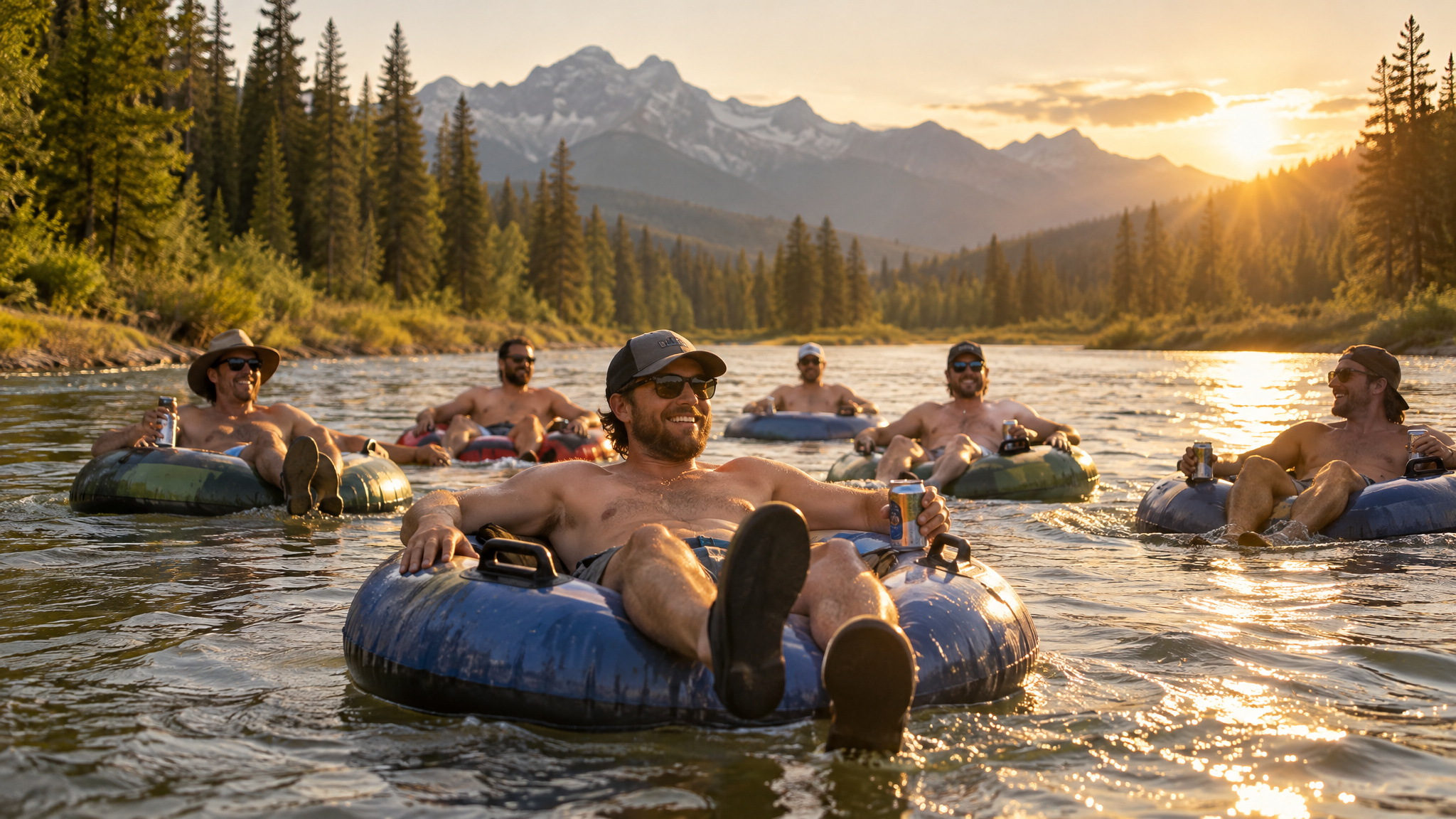
Every Alberta trip thread you’ve ever read ends the same way: Banff, rent a car, drive the Icefields Parkway. Nobody tells you what it costs, when to book, or what happens when six guys show up on a Saturday without a reservation. I got tired of that answer, so I went looking for Alberta guys trip ideas that come with actual numbers attached, and I found them in a strange place: a tested 3-day Edmonton itinerary published July 15, 2025 by Chelsea Findling on Crazy Fun Outdoor Adventures, plus Alberta guides from Adventures with Ange on ehCanadaTravel.com. The filter I applied is simple.
A good guys trip is adventure plus chill, not just nightlife: friends you like, low-key plans, drinks in hand, and if the crew wants to put a few dollars on the game while the drinks flow, that’s a legal option now, since real-money wagering through licensed Alberta sportsbooks is available to anyone in the province. What follows covers a tubing day trip, a beach day, sleeping in a train caboose, a fishing retreat, a festival, road trip regions, and off-season options. Every one comes with drive times, prices, and booking reality, not destination praise.
Key Takeaways
Pembina River Tubing: about $8 per vehicle with your own tube, $4 walk-in drop-off, or $18 per person for the first-come, first-served shuttle. Tubes are reservable up to two weeks ahead from June 2 to September 1.
The tested Edmonton loop chains Fantasyland Hotel (Day 1), Sylvan Lake, Footloose Caboose near Tofield (three cabooses, advance booking required), and an Elk Island hike with possible bison sightings.
Near Sundre, Bearberry Cabins is a pet-friendly, year-round base with 20 km of easy cross-country ski trails, reached by going west on Highway 584 about 18 km, then onto gravel Range Road 54 past where the pavement ends.
Table of Contents
Pembina River tubing day trip from Edmonton
Pembina River Tubing is about a one-hour drive west of Edmonton, the float runs roughly two hours depending on water levels, and it ends at the exit after the 16A bridge at Pembina Provincial Park Day Use Area. That’s the whole shape of the day: short drive, lazy river, $8 with your own tube. It’s the kind of trip where the logistics matter more than the destination, so here’s all of it.
Getting there and the float
You bob downstream for about two hours, feet first, sturdy sandals on, there are rocks down there, and a stubbed toe mid-float is a bad look. Water levels change the duration, so your mileage may vary. Rentals are first-come, first-served, which means arriving early is the one mistake that matters. Show up on a summer weekend at noon and you’re watching from shore while other groups push off.
Costs, reservations, and the shuttle decision
Here’s the full money picture:
- Own tube plus parking: $8 per vehicle
- Walk-in drop-off: $4
- Shuttle back to the start: $18 per person, first-come, first-served
- Second vehicle parked at the Day Use Area: free, minus the driver shuffle
The shuttle-versus-second-vehicle call comes down to group size and who’s willing to drive. The shuttle is priced per person, so a crew of six pays $108 to skip the car shuffle. The second vehicle is free but costs a driver and a car retrieval at the end of the day. Four guys with one volunteer driver?
Park the second car. Two guys who both want a beer at the exit? The shuttle math starts looking fine.
Planning a Pembina River tubing day trip from Edmonton is simple: it’s about an hour’s drive west, the float runs roughly two hours depending on water levels, and you exit after the 16A bridge at the Pembina Provincial Park Day Use Area. Reserve tubes up to two weeks ahead, but only between June 2 and September 1, walk-ins risk showing up to nothing, and crews that roll in on a summer weekend without reserving end up splitting the group or paying the shuttle premium. Pricing runs $8 per vehicle if you bring your own tube, $4 for walk-in drop-off, or $18 per person for the first-come, first-served shuttle back to the start; parking a second vehicle at the Day Use Area skips the shuttle entirely. Waivers are required at the counter, cash is preferred though card is accepted, and renters get a lifejacket. Cash keeps the counter line moving faster.
Buyer rule: Reserve tubes up to two weeks ahead from June 2 to September 1, and bring cash — weekend walk-ins risk splitting the group.
Should you tie your tubes together
The operator recommends tying tubes together, citing strong current around the bridge piers. That’s their call and it’s a fair one. Chelsea Findling, who wrote the tested itinerary, advises the opposite: tying kills your paddle maneuverability, and her raft’s bottom tore open after it snagged a rock while the group was roped together. Her take, from experience, is that staying close untied is easier and safer.
I land on her side, with reasoning rather than a ruling: an untied group that paddles to stay together handles obstacles better than a tied raft that can’t steer around them. But the operator knows that current, and if your group is inexperienced, their advice exists for a reason. Either way, someone’s getting outvoted at the put-in.
Gear that earns its place
Three items, one reason each:
- MEC Fulcrum Guide PFD: the zippered pockets carry your camera and snacks, which means nobody’s passing a phone down a line of tubes.
- Keen Newport Sandals: flip-flops get lost mid-float, guaranteed.
- MEC Brooks Dry Bag clipped to the tube: keys and phone stay dry, that’s the whole pitch.
Sylvan Lake beach day (and the Petro Beach alternative)
Sylvan Lake sits 1 hour 30 minutes southwest of Edmonton, and the day is a sandy beach at Sylvan Park plus the tradeoffs that come with it. The main beach is busy and loud. The bathrooms are change facilities, and their upkeep is spotty. Parking along Lakeshore Drive is paid; free parking means walking several blocks. The water’s cold but refreshing, which is the honest version of lake swimming in Alberta.
Petro Beach Day Use Area is the quieter alternative: more secluded, an outhouse in good condition, mostly a kayak and boat-launcher crowd. The catch is the shore, which is mucky and weedy, so swimmers walk further out to actually swim. It’s a tradeoff, quiet for convenience, not an upgrade.
Food closes the day well here. The Big Moo Ice Cream Parlor sits directly opposite the main beach, which draws enough crowds that a line is likely, and Bamboo Hut Southeast Asian Cuisine on Lakeshore Drive does Thai takeout you can eat right on the sand. Rain plan: Lakeside Go-Karts and Mini Golf, where adult mini-golf runs $13.95 for a single game or $25 all-day, and the go-kart lap racing settles whatever scores the beach started.
Footloose Caboose: a train-car stay near Tofield
For a group that wants the accommodation to be the evening’s entertainment, Footloose Caboose near Tofield is the pick: three actual cabooses you sleep in, 1 hour 52 minutes northeast of Sylvan Lake. Three cabooses means scarcity, and advance booking is required, so book early or miss it. Supper is home-cooked and served in the dining car, along with a bacon-and-eggs breakfast. One detail that changes the math: in 2025, the dining car was open only to overnight guests, so anyone considering dinner-only was out of luck. Findling and her partner Kris stayed for their anniversary, and she pairs the night with the next morning’s Elk Island hike, which is the sequencing that makes the loop work.
Elk Island day hike: bison, lakes, and forest
Elk Island is the last stop, and the trails run from one hour to a full day through lakes and forest. Bison sightings are possible, on foot or from the car. The “possible” is doing real work there: sightings are the payoff, not a guarantee, and the maybe is part of the fun. Trails run hangover-friendly to full-send; the group sorts itself out. The itinerary supplies one piece of micro-logistics worth stealing: bring snacks from Sylvan Lake the day before, because a hungry hike day is a bad hike day.
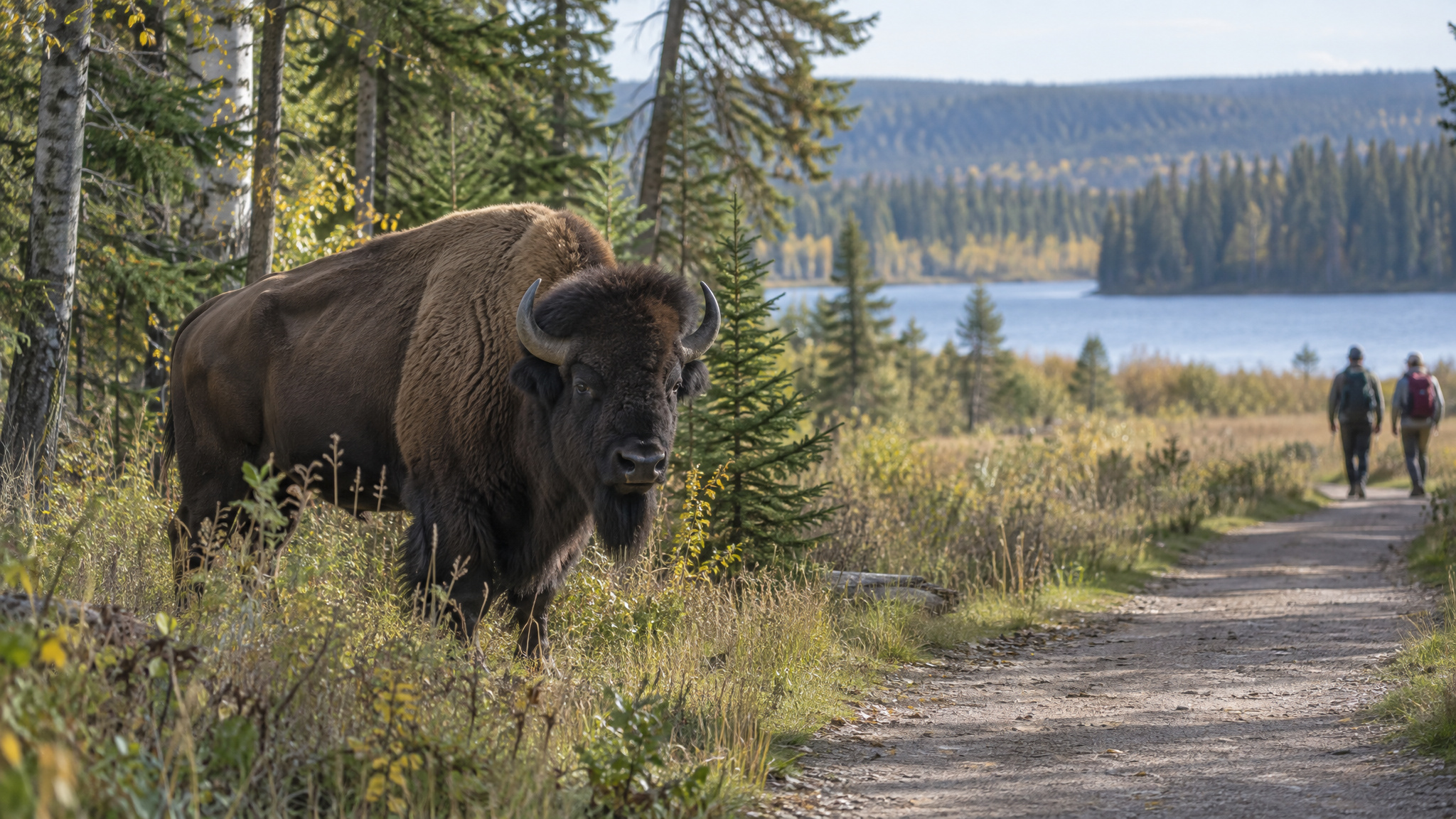
For gear, an Osprey Tempest 24 pack for essentials and an Arc’teryx Covert Cardigan for warmth, which earns its place once the wind picks up off the lakes. This is the Day 3 payoff after the caboose night, and the drive chain is what makes the whole loop function.
Fantasyland Hotel inside West Edmonton Mall
Fantasyland Hotel sits inside West Edmonton Mall, about an hour east of the Pembina area, and it was the Day 1 overnight in the tested loop. Themed rooms go beyond the Polynesian room with the jacuzzi, and Bourbon Street’s on-site dining row. Moxies, Old Spaghetti Factory, Mai Asian Fusion, Cactus Club Cafe, means dinner is solved without moving the car. Yes, you’re sleeping in a mall. It’s fine. It’s kind of great, actually.
Sundre fishing retreat with a Bearberry Cabins base
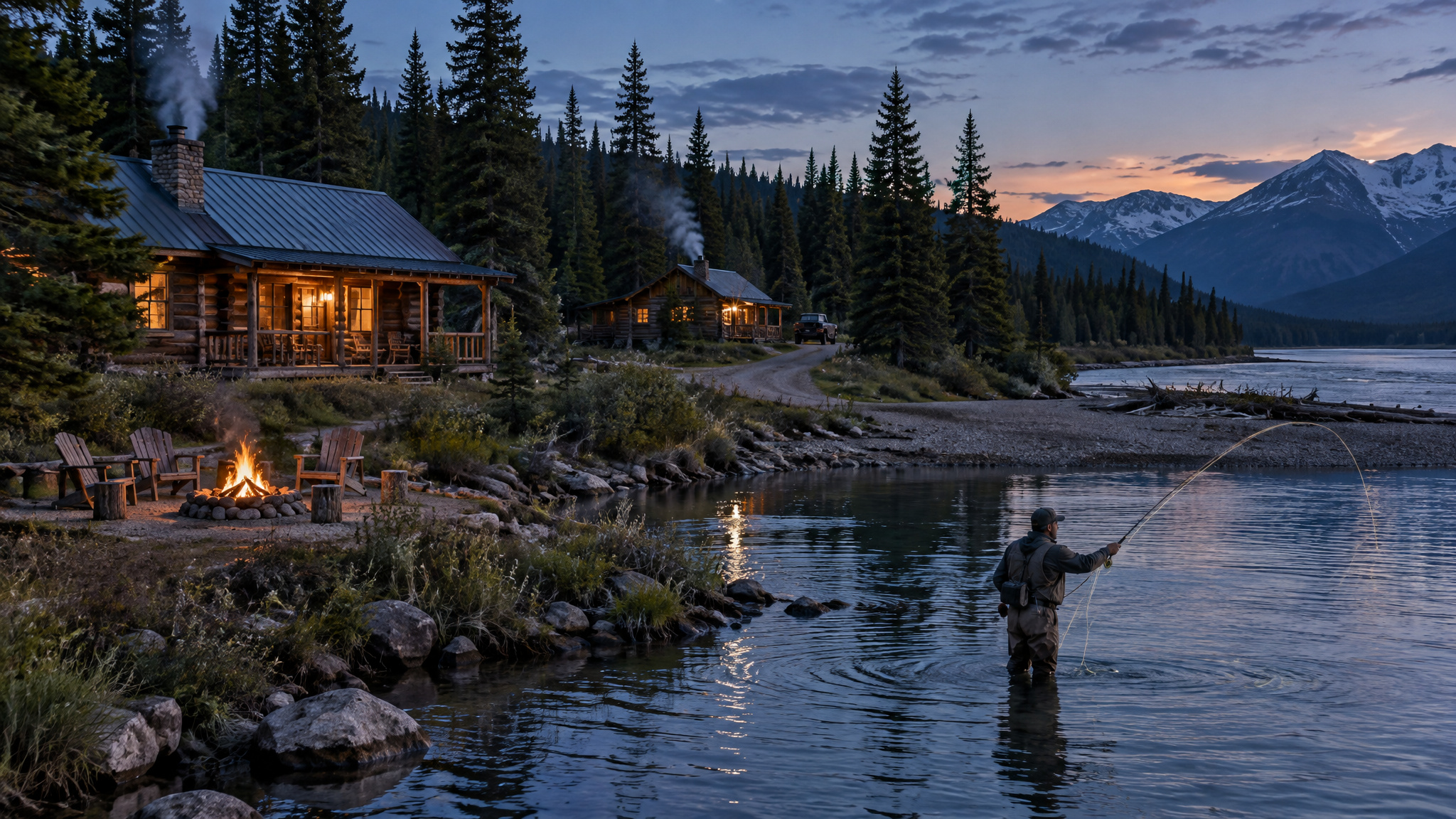
A Sundre fishing retreat is a copyable blueprint for a guys weekend in Central Alberta, not a one-off event you missed. The 2026 Canada Adventure Seeker Retreat near Sundre documented the template: fishing, small-town exploring, and listings tagged outfitter, cabins, horseback, museum, and wildlife viewing. That’s the menu of stuff to do, and the point is the variety. A weekend where the group can fish in the morning, poke around a small town in the afternoon, and still have horseback riding and a museum on the board is a weekend that doesn’t collapse when half the guys want a different pace.
The retreat blueprint
The structure is simple: pick a base with cabins, build days around the water, and let the small towns fill the gaps. The 2026 retreat near Sundre is the proof the template works in Central Alberta, a corner of the province where even the Flames once got going by setting the foundation for the Saddledome, and where outfitters and cabins are already tagged in the area’s listings. No transformation arc, no wellness language, just fishing and exploring with a place to sleep. With a long weekend and at least one guy who knows a fly rod from a spinning reel, this is the plan.
Bearberry Cabins logistics and the gravel-road turnoff
Bearberry Cabins, also listed as Bearberry Recreation Centre, is the base: pet-friendly, year-round, wheelchair access, Visa accepted, phone 403-638-4153, bearberrycabins.com. It’s described as a quiet getaway, and that’s a practical fact, not a pitch: the quiet is the point when the trip is about the fishing and the fire, not the Wi-Fi.
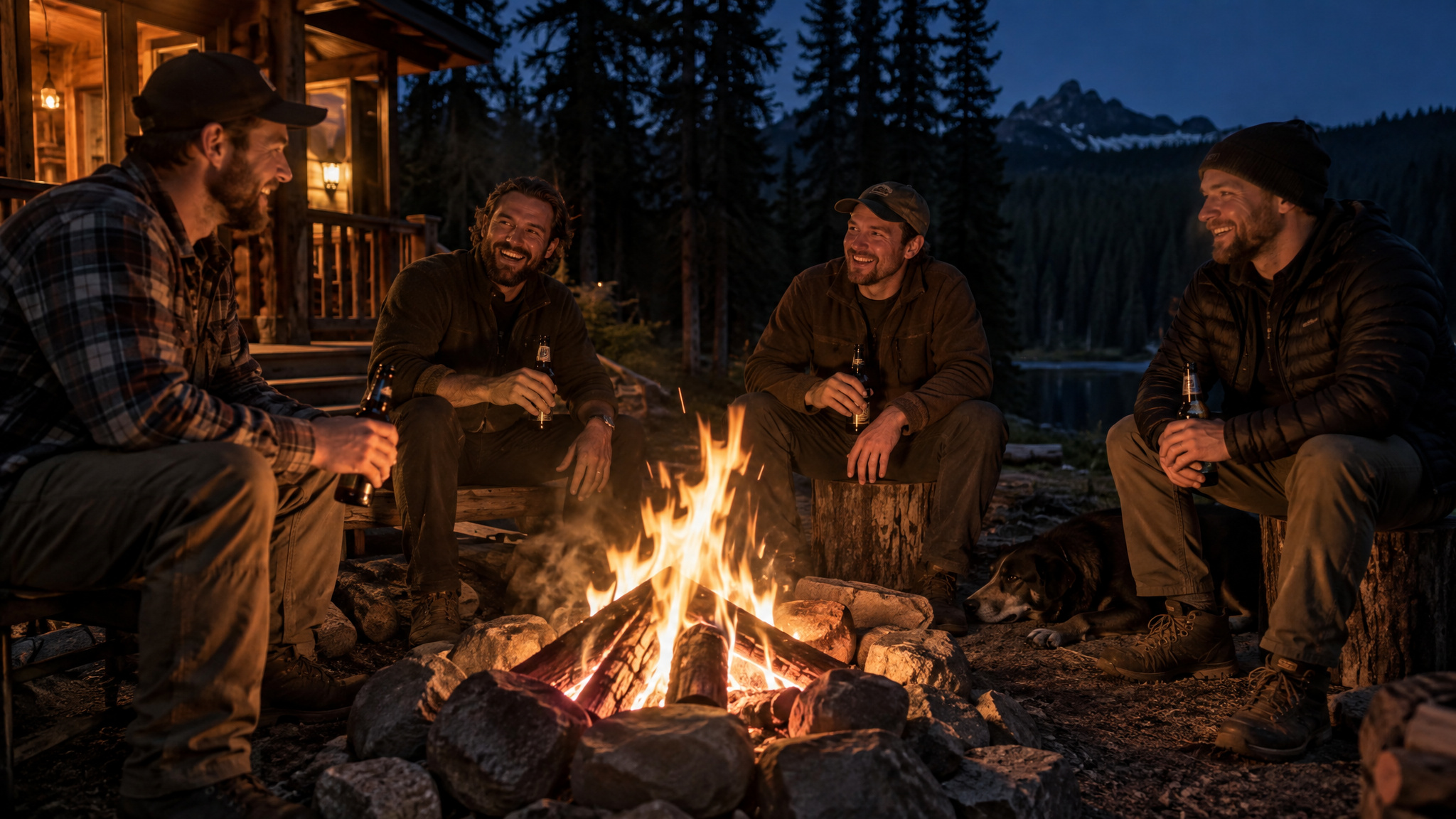
The directions are the trust-builder here, because they’re the kind no tourism page carries. From Sundre, go west on Highway 584 for about 18 km, turn onto gravel Range Road 54, and keep going past where the pavement ends. The cabins are on the right, clearly marked. That last detail, past where the pavement ends, tells you exactly how remote this feels, and it’s worth knowing before you commit a low-clearance car to it.
The same property also carries 20 km of easy cross-country ski trails, which turns the identical cabin into a cold-weather base. More on that below.
Rockin’ Thunder Edmonton and the festival road trip
A festival is the rare guys-trip theme where the event does the planning for you: one weekend, one anchor, and the road trip builds out from it. Rockin’ Thunder Edmonton is that anchor here, backed by an attended Day 1 review rather than a preview, and it slots into a wider Western Canada festival circuit if the crew wants more than a single stop. Here’s what the coverage actually says.
The Day 1 verdict
Yes, Rockin’ Thunder Edmonton is worth building a group trip around. The attended Day 1 review from Adventures with Ange makes the case with the detail that matters: thunderstorms rolled through and the festival still lived up to its name. That’s someone who was on the ground, not someone guessing from a press release. Weather happened, rock legends played anyway, the show delivered. The listing notes children are welcome, which is one line for guys whose trip includes family instead of the crew.
Stampede vs the Houston rodeo
The same author walked the Houston Livestock Show and Rodeo asking herself “Texas or Canada?”, testing Alberta’s marquee western event against the American icon. Honestly, I’m not sure there’s a clean answer, and she didn’t pretend there was one either. It’s just two western icons and one fun argument for the drive home.
The Western Canada festival circuit
The Best Summer Music Festivals 2026 guide reframes festival-going as a road trip across Western Canada and the Northern U.S., one stop on a summer circuit rather than a single ticket. Rockin’ Thunder is the anchor example, and the circuit framing means one festival weekend can become the centerpiece of a longer drive without inventing the whole trip around it.
Alberta road trip regions beyond Banff
The best Alberta road trip regions outside Banff, per the Adventures with Ange guide, number five. Alberta Vacation Ideas Beyond Banff names five road trip regions built around scenic stops, sweet treats, waterfalls, and wildlife, with Nordegg as the anchor community where you’d sleep and stage day trips from. The anti-Banff thesis holds, stated plainly: booking is easier, trails are emptier, and weekend drive times actually work outside the park corridors the consensus defaults to. The guide doesn’t rank the five regions, and neither will I; the count is the structure, the waterfalls and wildlife are the texture, and Nordegg is where you book the cabin.
Grande Cache: the underrated mountain getaway
Grande Cache is an underrated year-round mountain getaway, one that stacks waterfall stops, lake views, trailheads, historical sites, and the kind of odd roadside discoveries you don’t plan for. The attribute tags are what matter for a group: easy family-level trails, access in every season, and wheelchair access. Read those as low-barrier group options, not family-only marketing. Easy trails mean nobody in the crew gets left at the cabin, year-round means the calendar doesn’t rule the trip out, and wheelchair access means the plan works for whoever shows up. Nobody’s talking about this place, which is exactly why it’s worth the look.
Thrift store road trips through Alberta small towns
For groups after a trip theme that comes with its own scoreboard, hunting second-hand finds along Alberta’s history-heavy backroads delivers. Nobody frames thrifting as a guys-trip theme, which is exactly why it works; the scoring dynamic is best find of the day, and someone always gets insufferable about it. The guides cover three routes: a Southern route with a Medicine Hat base, a Central route based in Olds, and a Northern route out of Whitecourt, plus maps of small-town thrift stores to plan from. One practical constraint: cash is the noted payment method on the northern route, and some small-town spots won’t take card, so bring bills or skip stops.
For context on why small towns deliver, Greg Girard wrote a listicle of 25 signs of living, working, and playing in a small town; he’s a tourism advocate and appeared on a 2025 ehCanadaTravel top Canada travel influencers list, so weigh the bias accordingly. The underlying point stands: small towns save money and deliver without the Banff circus.
Shoulder-season and winter guys trips in Alberta
The best time to visit Alberta to avoid crowds is the shoulder season nobody markets: spring and fall in Clearwater County near Rocky Mountain House offer a different Alberta, with wetlands wildlife viewing and open year round. Fewer crowds, different vibe. It’s a real tradeoff, not an insider hack; you’re trading peak-weather certainty for emptier trails and a quieter version of the same province.
The winter version: Bearberry Cabins’ 20 km of easy cross-country ski trails make a cabin-and-ski group trip viable near Sundre in the months every listicle goes quiet. Easy is the documented claim, and I’ll stand behind exactly that and nothing more. Two adjacent proof points, clearly outside Alberta: Andrea Horning took a January non-skier road trip to Ainsworth Hotsprings, BC, and Redbridge Lookout near North Bay, Ontario is a scenic snowmobile stop on the OFSC Snow Explorers Route. Inspiration only, not itinerary.
The group planning checklist: bookings, payments, and gear
Book early where it counts. Tubes are reservable up to two weeks ahead from June 2 to September 1, Footloose Caboose needs advance booking, and Pembina rentals plus the shuttle are first-come, first-served. Payments vary by stop: cash preferred at Pembina, cash noted on the northern thrift route, Visa at Bearberry. Per-vehicle versus per-person pricing is a group-size decision, so run the math before you leave.
One heads-up on money: the source itinerary’s booking-resource block (Expedia, Booking.com, Vrbo, Viator, GetYourGuide and others) is affiliate-linked, and its author is an Amazon Associate who earns from qualifying purchases. The Calgary Outdoor Adventure & Travel Show runs each spring in Calgary if you want gear ideas before the season starts.
The guys-trip formula, translated to Alberta
Alberta guys trip ideas work best when the plan balances adventure with downtime: the right crew, easygoing activities, drinks in hand, and no rush. Not a nightlife checklist. The Top Five Guys ranked list defines the formula, and it’s worth stealing.
What the ranked US list gets right
Asheville took #1: Beer City USA, 30+ craft breweries within walking distance of downtown, plus the Blue Ridge Parkway, whitewater rafting, and a mountain cabin. Outer Banks at #2 is 200 miles of barrier islands where the trip is rent a beach house, fill the cooler, forget the schedule, with Nags Head for the one night off the deck. Lake Tahoe at #3 balances adventure and relaxation: summer boating, golf, and beaches; ski runs and fireside whiskey in winter, with casinos and Lake Powell as the quieter alternative. Golf getaways at #4 run through Myrtle Beach, Scottdale, Bend, Palm Springs, and the RTJ Trail in Alabama: fairways, cold drinks, steak at night.
And the Kentucky Bourbon Trail at #5 stretches roughly 100 distilleries between Louisville and Lexington. Maker’s Mark and Woodford Reserve down to smaller stops such as Bardstown Bourbon Company and Lux Row, with stuff you can’t do at home like infusing your own bourbon and tasting-and-cigar pairings.
Where Alberta wins and where it doesn’t
The translation, not substitution: Asheville’s walkable brewery density maps to Alberta small-town exploring; Tahoe’s adventure-relaxation balance maps to the Sylvan Lake-plus-go-kart-backup pattern; the Outer Banks’ no-schedule beach house maps to the cabin stays. The pattern transfers. The brewery count doesn’t.
Where Alberta genuinely beats the US list, argued from this article’s own evidence: bison at Elk Island, waterfalls in the beyond-Banff regions, year-round access at Grande Cache and Bearberry. Tahoe can’t show you a bison.
The honest gaps: these sources cover no Alberta brewery counts, no distillery scene, and almost no after-dark layer. Nothing in these sources supports an Asheville-style walkable bar district here, so the nightlife question remains unanswered. What you get instead is the part of the formula the ranked list is actually about: friends, water, a fire, and time that slows down.
Frequently Asked Questions
What is a good destination for a guy’s trip?
The winning formula is adventure plus chill: friends you actually like, low-key plans, drinks in hand — not a nightlife checklist. In Alberta that translates to concrete options like a Pembina River tubing float, a Sylvan Lake beach day with go-kart tiebreaker, sleeping in a train caboose near Tofield, or a fishing-and-cabin weekend based out of Bearberry Cabins near Sundre.
Is Rockin’ Thunder Edmonton worth attending with a group?
Yes — it’s worth building a group trip around, per an attended Day 1 review rather than a press-release preview. Thunderstorms rolled through and the festival still delivered, with rock legends playing anyway. It also anchors a wider Western Canada festival circuit, so one festival weekend can become the centerpiece of a longer road trip, and children are welcome if the trip includes family instead of the crew.
How much does Pembina River tubing cost?
With your own tube it’s about $8 per vehicle for parking, or $4 for walk-in drop-off. The shuttle back to the start runs $18 per person, first-come, first-served, while parking a second vehicle at the Day Use Area is free minus the driver shuffle. Reserve tubes up to two weeks ahead between June 2 and September 1, and bring cash — though card is accepted, cash keeps the counter line moving faster.