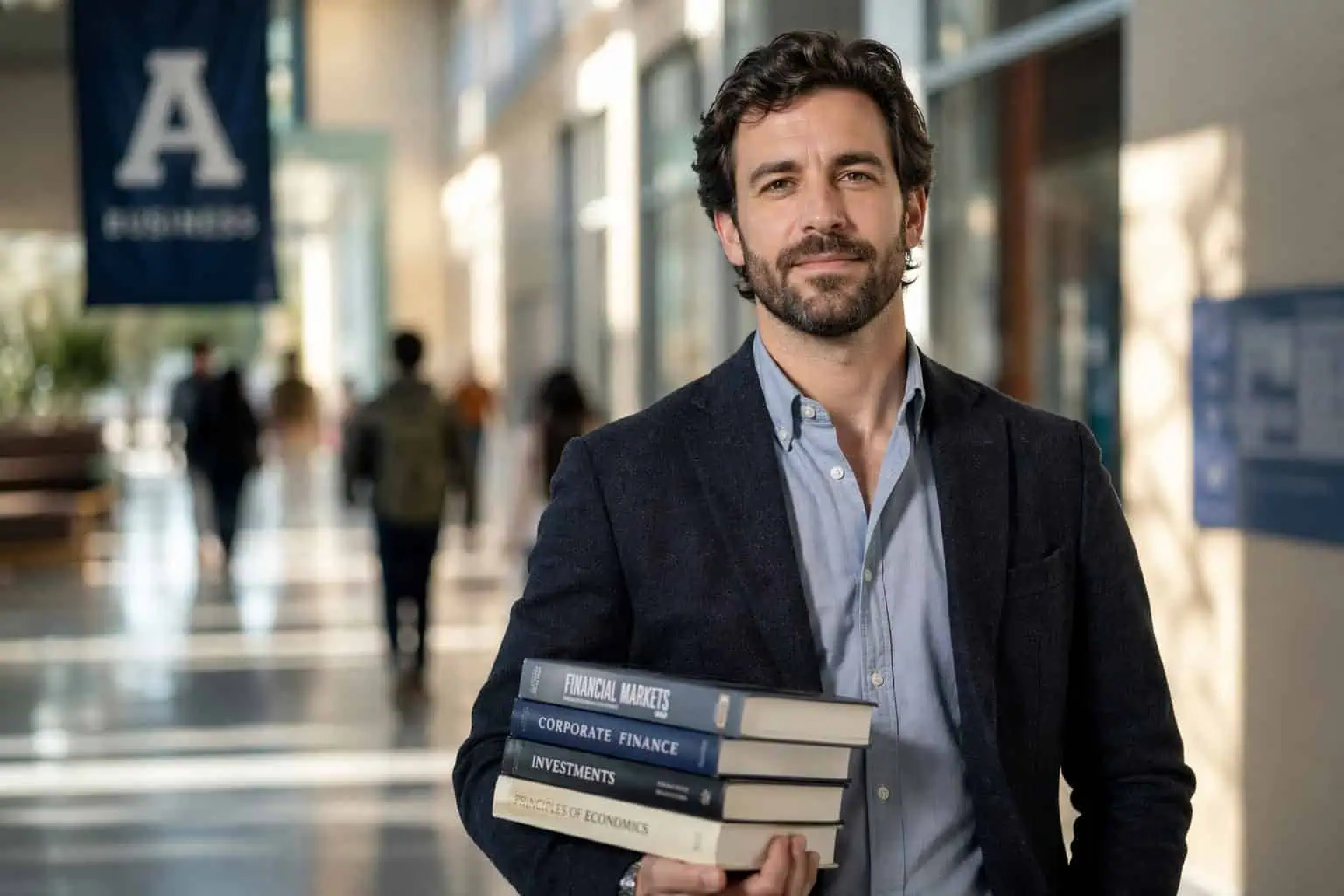
Walking onto a college campus full of nineteen-year-olds when you are deep into your thirties is a hit to the ego. I get it. While there is a certain appeal to making money without a job, there is a hard ceiling on how far you can advance in most careers without a degree, and feeling awkward in a lecture hall is a weak excuse for leaving money on the table. When you calculate the gap, the math leans heavily toward going back to school: evaluating your Lifetime earnings ROI against the Short-term debt of tuition makes the decision sound.
Modern college admissions departments want older students in their programs. In fact, 1 in 10 current college students is 40 or older. They use a system of Holistic admissions to assess your work history and stability, heavily favoring the Non-traditional student. Professors prefer teaching people who have spent a decade paying rent, navigating bad bosses, and managing deadlines because your executive function will smoke the average freshman’s. Calculate the individual lifetime earnings gap between your current trajectory and a Bachelor’s degree, and let that math rationalize the temporary disruption to your life.
Key Takeaways
Community colleges are the most cost-effective entry point, typically charging ~$100/credit hour compared to $300+ at universities.
Most degree programs for adults mitigate the need for outdated Exams.
Bachelor’s degrees increase median lifetime earnings by approximately $900,000 for men and $630,000 for women.
Table of Contents
Apply to a Community College Entry Point
Skip the four-year university applications entirely and start your reentry at a local community college. Schedule an initial appointment with a community college academic advisor specifically trained to handle adult reentry, which establishes your academic baseline without the pressure of applying to a larger school. An advisor will walk you through the paperwork, tell you what placement tests matter, and build a map targeting the actual Bachelor’s degree or Associate’s degree you want.

Erase Past Academic Gaps
If you dropped out or barely scraped by as a teenager, your past academic failures have officially expired. Universities weigh current adult stability far heavier than teenage performance. Utilizing GED credentials and admission petition letters to overcome prior academic gaps is a proven strategy. You show up, present your GED, write a letter stating your current career goals, and the slate is wiped clean.
The Financial Math Behind Transfer Credits
Community colleges are the most cost-effective entry point, typically charging ~$100/credit hour compared to $300+ at universities. You take your lower-level education requirements there using lower fees compared to $300+ at universities. Once you secure the foundation, you rely on a local Community college pipeline combined with state Reciprocity agreements to transfer. This guarantees the cheap credits you just earned map directly to the four-year university where you will finish your degree.
By strategically stacking these credits and utilizing tools like an eventual student loan refinance to manage interest rates on your long-term debt, you turn a daunting expense into a calculated investment. Once you secure the foundation, sometimes utilizing an essay writing service to manage heavy coursework, you rely on a local community college pipeline to ensure the path to graduation remains affordable.
Bypass the Standardized Testing Pipeline
Decline to submit or register for the SAT or ACT, and instead take the untimed Accuplacer or ALEKS placement assessments at your local community college. Standardized testing is built to filter teenagers, not adults with a decade of lived experience.

Why Traditional Testing Fails Adults
High-stakes exams hold zero predictive value for an adult returning to school. Fortunately, most degree programs for adults mitigate the need for outdated Standardized Testing (SAT / ACT). Instead of gatekeeping, colleges now use Accuplacer / ALEKS untimed assessments as matchmaking tools to ensure you start at the right level. These are completely separate from the high-pressure environment of traditional exams.
The Hidden Value of Remedial Foundations
Do not study for or stress over placement exams. If you have not looked at an algebra equation since 2010, placing into a “remedial” foundational math class is exactly where you want to be. It rebuilds your confidence safely. Barely scraping a passing grade into a high-level Calculus or statistics class sets you up to fail out by week three. Take the ego hit, sit in the basic class, and build the foundation correctly.
Convert Life Experience Into Academic Credit
Review your personal work history and military experience, and cross-reference those skills against available CLEP exams to test out of introductory courses. Prior Learning Assessment allows you to directly translate the corporate management, military logistics, or technical training listed on your resume into actual college credits without sitting in a classroom.

If you already know the material from simply living a professional life, register for CLEP exams to secure Credit-by-exam and skip the semester entirely. Passing these tests lops months off your overall timeline, which protects your well-being by leaving time for self-care ideas for men instead of unnecessary coursework. Whether you want to pursue fields entirely unrelated to your past like Instructional Design, computer Informatics, Learning Technology, or Business Psychology, testing out of the general education prerequisites clears the runway so you can focus on the specific material you need to learn.

Navigate Financial Aid and Dodge Diploma Mills
Submit the FAFSA using independent student status, and formally request your company’s HR continuing education policy before you sign a master promissory note for student loans. Financing an adult education requires pulling different levers than the traditional teen-loan model.
Independent Student Status and the FAFSA
As an adult over 24, filing the FAFSA using Independent student status shifts the entire Financial Aid calculation away from your parents and anchors it solely to your own tax returns and current financial reality. This unlocks specific adult grants, federal aid, and occasionally even under-advertised childcare grants for student parents. To maximize this status, apply for state-specific funds like the California Promise or free community college initiatives for residents over 25. That changes the math.
Bridging the Initial Tuition Gap
If state Financial Aid does not clear in time for your first term, deploy alternative funding to temporarily bridge the gap. Look into corporate tuition reimbursement policies first—employers often fund a master’s or bachelor’s if it directly benefits your role. Take a moment to check your online employee handbook, benefits portal, or set a meeting with your HR representative to confirm your available benefits. If corporate funds are unavailable, you can explore Personal Finance Tools like restricted 401k loans as a temporary stopgap to cover the initial, lower community college expenses, including tuition and fees, until your formal grants activate.
Spotting the Red Flags of Predatory Programs
Avoid aggressive fast-track operations that relentlessly court older workers. For-profit institutions often use predatory enrollment practices and should be vetted critically. If an admissions rep sounds like a timeshare salesman pushing you to sign immediately, walk away. For-profit institutions rely heavily on Predatory enrollment tactics targeting busy working adults, routinely resulting in piles of un-transferable debt and useless credentials. Stick to established state schools and community colleges.
Pace Your Unit Load to Prevent Dropout
Cap your first semester schedule at a maximum of two classes—roughly 4 to 7 credits—to test the logistical demands of studying while working full-time. Operational overload is the primary reason older students quit. The academic material rarely breaks a mature, motivated adult, but trying to read 200 pages a week while managing a 45-hour job and a family definitely will.
The Truth About Schedule Burnout
Aggressive credit load choices drive adult dropout rates because the friction between professional responsibilities and academic deadlines becomes unsustainable. Carefully managing your early semesters is the best way to mitigate the risk of high burnout rate metrics that plague working students. Start with one or two foundation classes, field-test your personal capacity, and scale up only once you stabilize your routine.
Enrolling in 15 credits out of the gate is a lack of respect for your own time constraints, leaving you with zero bandwidth to explore hobbies to meet people or build a life outside of the classroom.
Asynchronous Structures for Working Adults
Evaluate asynchronous online models that ditch physical attendance requirements. The Franklin University and City University of Seattle models tailored for working adults strip away the rigid demands of commuting to a lecture hall at 2:00 PM on a Tuesday. Instead, they let you watch lectures and complete coursework on your own schedule. If completing a Doctoral degree or a technical certification means squeezing lectures in after your kids go to sleep, an asynchronous structure is a convenience—it is a mandatory survival tool.
Frequently Asked Questions
Is 27 too late to start college?
Absolutely not. In fact, admissions departments often prioritize non-traditional students because your professional experience and executive function usually outperform the average nineteen-year-old freshman.
What do you need to go to college as an adult?
You need to shift your approach by filing your FAFSA as an independent student and starting at a community college to maximize cost-efficiency. You will also need to engage with an adult reentry academic advisor to map out your credit transfers and bypass unnecessary standardized testing requirements.
Is going back to college at 40 worth it?
When you account for the lifetime earnings gap—which can be over $900,000 for men and $630,000 for women—the math strongly favors returning to school. While it requires a temporary ego hit and lifestyle adjustment, the long-term ROI makes the sacrifice sound.
How to go to college as a broke adult?
Start at a community college to keep costs low at roughly $100 per credit hour and leverage your independent student status on the FAFSA to unlock adult-specific grants. Before taking out loans, always check if your current employer offers tuition reimbursement programs.
Why should adults choose community college over a university?
Community colleges are significantly cheaper and serve as the ideal entry point to secure foundational credits that map directly into four-year degrees via state reciprocity agreements. They also cater to adult needs by offering placement assessments like Accuplacer instead of the high-pressure standardized exams designed for teenagers.
Can I get college credit based on my work experience?
Yes, you can use Prior Learning Assessment and CLEP exams to translate your corporate, technical, or military experience into actual college credits. This allows you to skip introductory courses, saving you both time and tuition money.
How many classes should I take when returning to school while working?
Keep your first semester load to a maximum of two classes, or roughly 4 to 7 credits. Trying to balance a full-time job, personal life, and a heavy credit load is the fastest path to operational overload and eventual burnout.