
You’ve been thinking about it. Maybe you’re tired of watching the fuel gauge drop when you tow your boat. Maybe your buddy with a Cummins won’t shut up about it. Or maybe you like the idea of owning a truck that sounds like it means business.
Nobody at the dealership will tell you: diesel ownership is not “gas but bigger.” It’s a different animal. Different costs. Different maintenance.
Different risks. And the answer to “should I buy one?” is more complicated than the torque specs suggest.
I’m not a diesel mechanic. But I spent time with someone who is — Chris Brahs, who runs Brahs Solutions in Albuquerque, and I dug through the diesel subreddit to find out what first-time owners learn. Here’s what I found.
Key Takeaways
Diesels burn lubricating oil during normal operation, so you need to check the dipstick every time you fill up with fuel — no dashboard warning will catch a low level
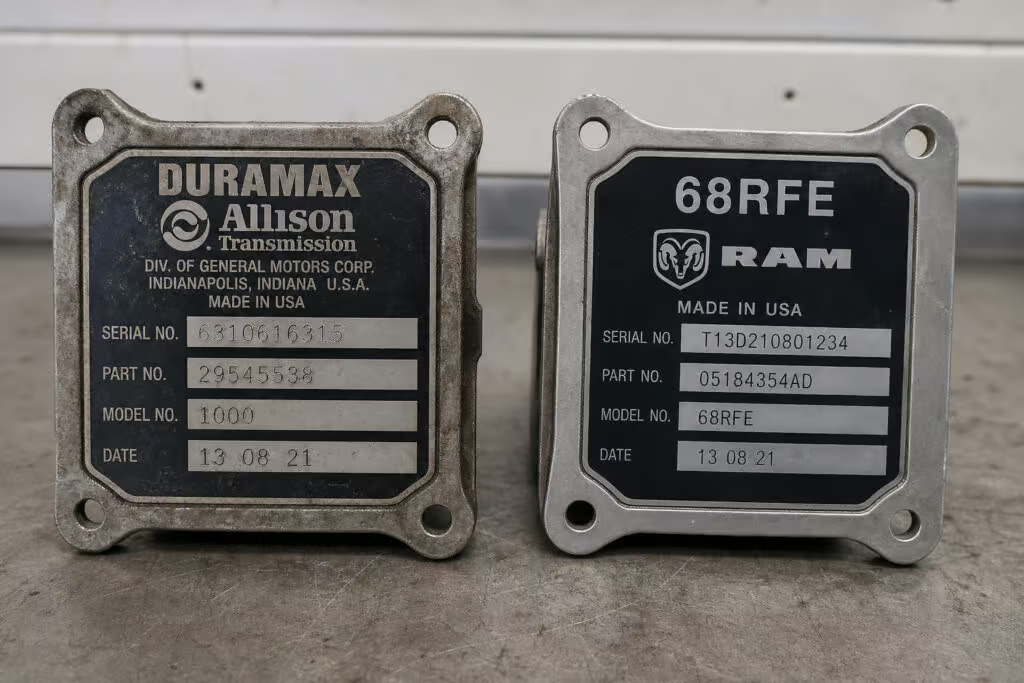
The transmission matters more than the engine brand when choosing a truck; three Duramax/Allison combos accumulated 850,000 miles combined without dropping a pan, while some Rams eat their 68rFE transmissions before 100,000 miles
A $200 pre-purchase inspection from a diesel specialist is the best money you’ll spend: a 2013 Ford F350 at 195,000 miles needed an $8,000 fuel system repair that a good mechanic could have spotted in an hour
Table of Contents
How Driving a Diesel Truck Feels Different from a Gas Truck
Chris Brahs drives a 2011 Dodge diesel that has 210,000 miles on the odometer. He tows a 38-foot car hauler at 75 mph. Try that in a gas truck and watch your fuel gauge head south.
Diesel engines produce greater torque than gas engines, making moving heavy loads easier. If you’re used to a gas 2500 struggling with a heavy trailer, a diesel in the same truck makes the job feel casual.
The fuel economy difference shows up under load. Towing a 20,000-pound trailer using a gas truck? You’re looking at 4–5 mpg. A diesel multiplies that; pulling a 20,000-lb trailer with a diesel truck delivers significantly better fuel economy than 4-5 mpg. Even unloaded, modern diesels achieve roughly 29% better highway fuel economy and 24% better city fuel economy compared to gas.
Modern diesels also come with features that make the driving experience different: exhaust brakes, manual-shift transmissions, tow/haul modes. These aren’t gimmicks. An exhaust brake alone can save your service brakes on a long downhill pull.
There’s a safety angle too. Diesel fuel has to be atomized to ignite. It won’t go up the way gasoline will in a collision. Diesel fuel is safer than gasoline because it must be atomized before ignition, unlike gasoline which can ignite by flame.
But if you mostly drive empty, that fuel economy advantage shrinks. A diesel running unloaded isn’t much better than a modern gas V8. You’re paying the premium whether you use the capability or not.
The Cost Reality: Do Diesels Save Money or Drain Your Wallet?
The professional view: Brahs argues that over the long haul, diesels cost less. Higher upfront price (roughly $10,000 more than a comparable gas truck). More expensive maintenance. But the engines run upwards of 300,000 miles, and you’ll do fewer major repairs over the vehicle’s life compared to a gas motor.
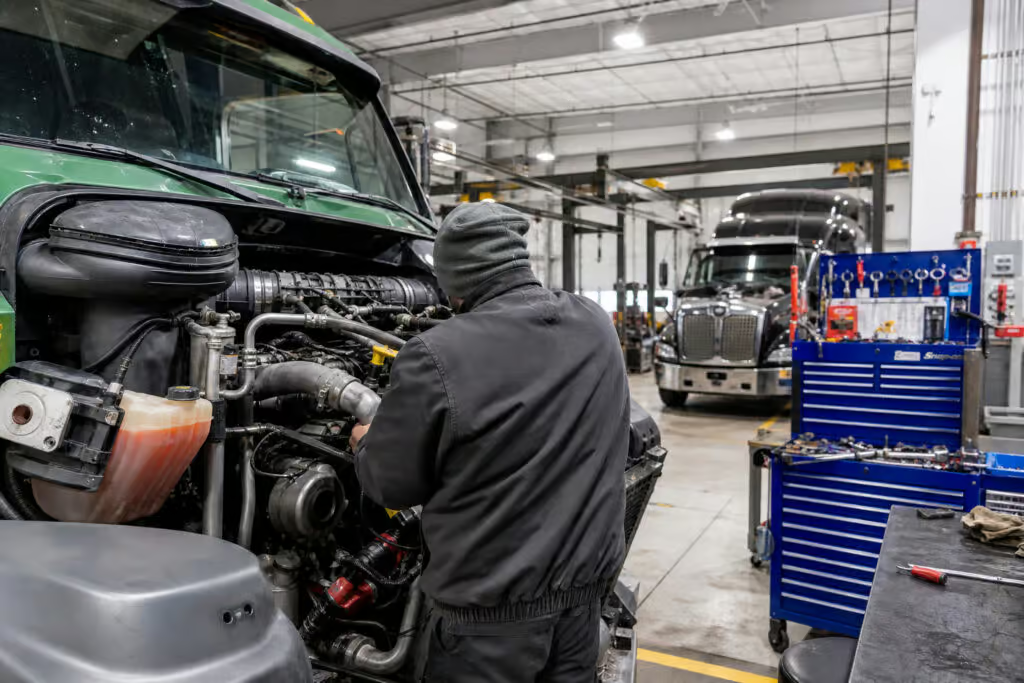
The Reddit view: As one user put it, When they’re running, they’re a joy to drive. But when they break, you need a second mortgage to cover the repair.
- A new diesel truck nicely optioned: roughly $80,000
- Diesel costs about 50% more per gallon than regular gas
- Oil change: ~$100
- 6.7 Ford PowerStroke injectors: $500 each. There are eight of them.
- Engine replacement: $20,000 or more
- Pre-purchase inspection: ~$200
- One owner’s 2013 Ford F350 6.7 PowerStroke at 195,000 miles: $8,000 for a fuel system repair
- Another owner’s 2015 Ram 2500 6.7 Cummins: transmission dead at 55,000 miles
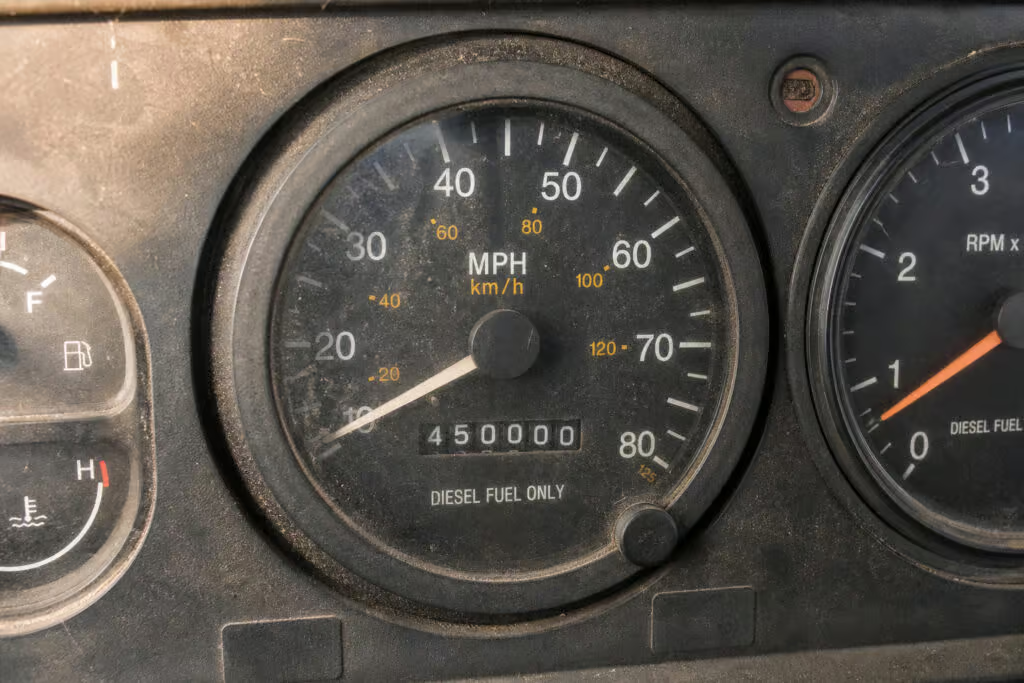
And then you’ve got the other side: some 6.7 Ford trucks hit 450,000 miles without major issues. Diesel trucks are a crap shoot in terms of reliability.

If you can’t afford a $5,000+ repair without financing it, you shouldn’t buy a diesel truck.
Which Diesel Engine Is More Reliable? Duramax, PowerStroke, or Cummins?
The engine isn’t the deciding factor. The transmission is.
Duramax with Allison 1000 transmission: Three Duramax/Allison units accumulated 850,000 miles combined without dropping a pan, making this combo a reliability benchmark.
6.7 PowerStroke (Ford): The engine can go 450,000 miles. Some 6.7 Ford trucks have rolled past 450,000 miles without major issues, while others needed $8,000 repairs at 195,000 miles. But injectors cost $500 each, and here’s the kicker — the cab has to come off for turbo or injector service. That means the cab has to come off for turbo or injector service, adding significant labor hours.
6.7 Cummins (Ram): The inline-6 design is easier to work on. Turbo, injectors, downpipe — all accessible without lifting the cab. But the transmissions paired with it are unpredictable. One owner ran a 2014 Ram with the 68rFE to 165,000 miles at over 500 wheel horsepower without issues. Another owner’s 2015 Ram 2500 needed a new transmission at 55,000 miles bone stock.
Nobody guarantees a transmission will hit 200,000 miles without a rebuild.
If you’re looking at used trucks, pay more attention to the transmission’s history than the engine badge. An Allison-equipped Duramax is a safer bet. A Cummins with a problematic transmission is still a problem.
Old vs. New Diesel: Which Should a First-Time Owner Choose?
There’s a strong case for going old-school.
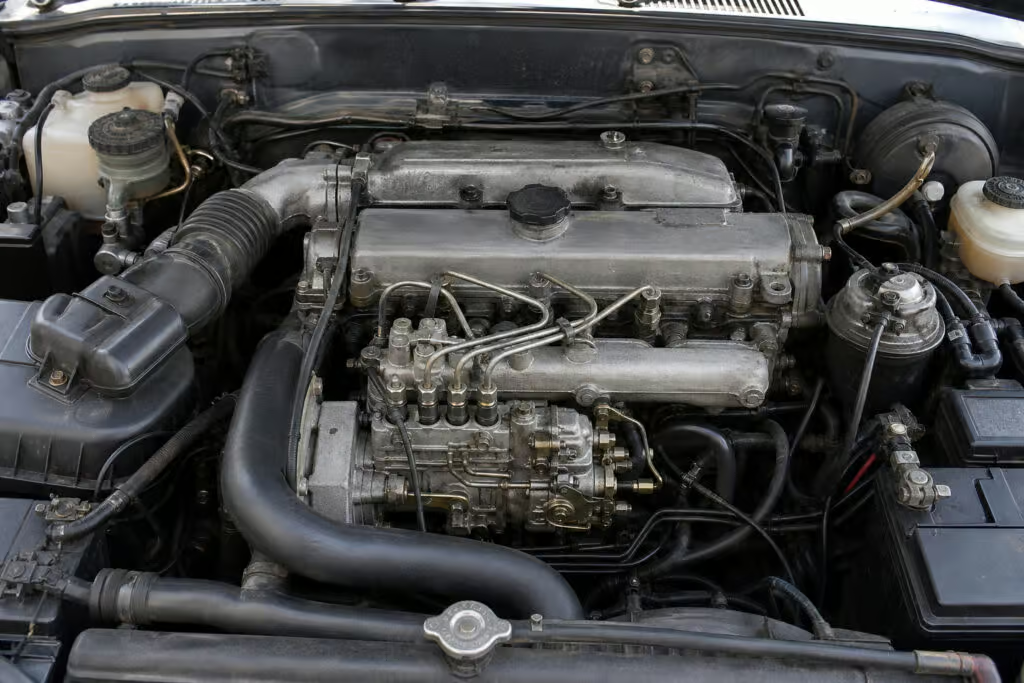
Any new diesel with emissions equipment (DPF, SCR, EGR) can have expensive surprises, regardless of brand.
Older vehicles are simpler, easier to work on, and less likely to strand you. You can roadside repair most issues. Parts are cheaper. You can jerry-rig repairs on the roadside, making you less likely to get stranded.
Consider the evidence:
- A 2000 24-valve Cummins needed injector replacement and valve adjustment at 195,000 miles. Manageable job. Reusable valve cover gasket.
- Compare that to the $8,000 fuel system repair on the 2013 PowerStroke at the same mileage.
One Reddit user sold a 2018 F-150 and bought a 2001 F-250. His take: “Not interested in anything after 2011.”
There’s a guy driving a 31-year-old Dodge as his daily. It’s not trouble-free. But he feels safer on the road than he would in a newer truck with complex emissions equipment.
The tradeoff: old trucks need more body and interior work. Parts can be hard to find. If you are rebuilding a modern Ram, you might need a complete upgrade solution like a Cummins delete kit, whereas an older truck could require custom fabrication or a trip to a hydraulics shop for something a newer truck would have at the local auto parts store.
If you want towing capability with less financial exposure, a well-inspected older mechanical diesel is worth considering. Know what you’re getting into.
Seven Maintenance Must-Dos for First-Time Diesel Owners
These are the habits that separate a 300,000-mile truck from a “needs a second mortgage” truck.
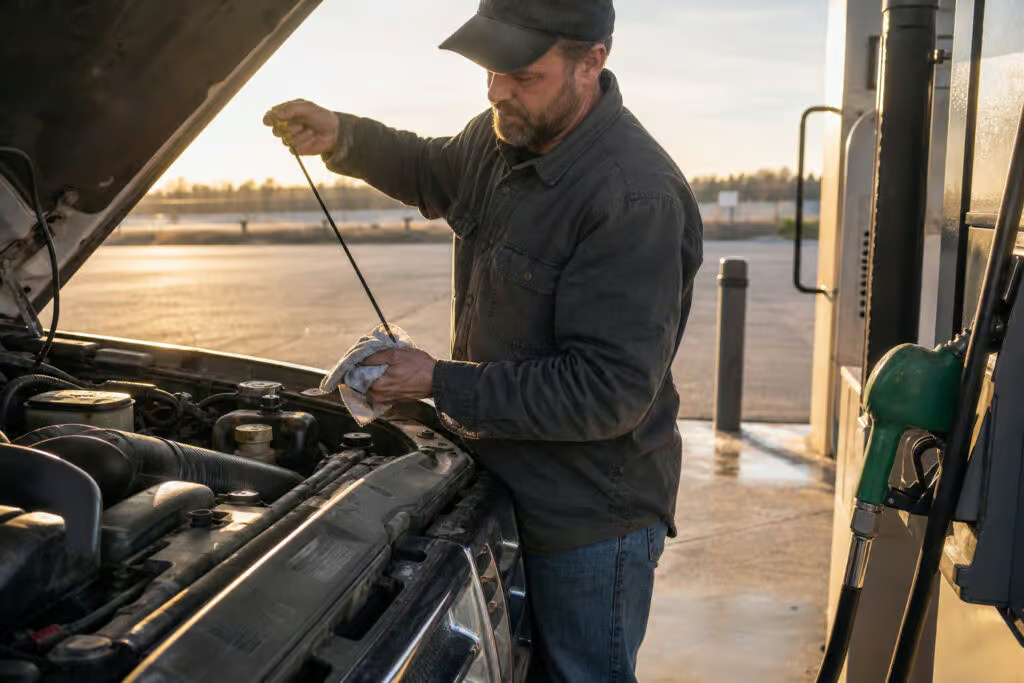
Check your oil every time you fill up
Diesels burn lubricating oil during normal operation. Unlike gas engines. And what catches gas owners: there’s often no dashboard warning for low oil. You won’t know until it’s too late unless you check the dipstick.
Make it a habit. Every fuel fill. Pull the dipstick.
Change oil every 5,000 miles
$100 now or $20,000 for an engine replacement later. That’s the math. Use a good diesel oil — Brahs runs Outlaw 15w-40 in his shop trucks.
Replace the fuel filter when the warning appears
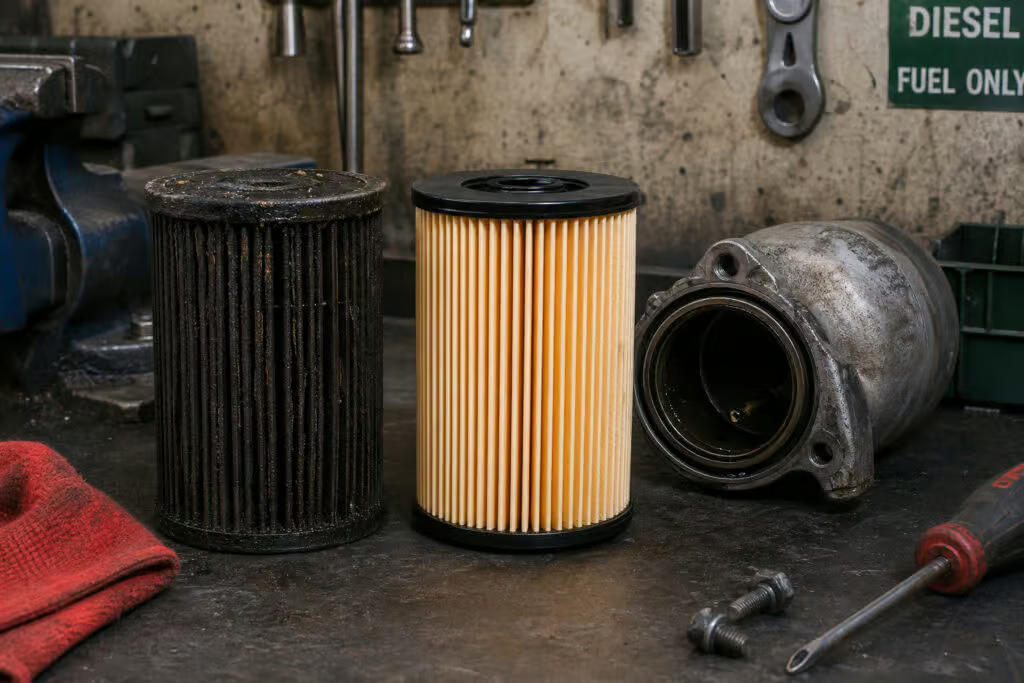
Diesel fuel isn’t as clean as gasoline. Filters clog faster. On Reddit, there’s a pattern of owners assuming the fuel filter warning is a sensor glitch. It’s not. Ignoring it damages injectors, and injectors are expensive.
Run the truck monthly until fully warm
If you don’t drive your diesel daily, get it out once a month and let it reach full operating temperature — coolant temp around 220°F. Short trips that never warm the engine up will kill your fuel filter and other components.
Use a fuel additive
Brahs recommends Hot Shot’s Secret Everyday Diesel Treatment. One customer with a 2006 Dodge Cummins 5.9L reported a 5–6 mpg improvement, which naturally raises the question of which pickup trucks get good gas mileage. Your mileage may vary, but the point is that Ultra Low Sulfur Diesel (the EPA-mandated stuff) lacks the lubricity older diesels were designed for. An additive replaces what’s missing.
Use an oil additive
FR3 Friction Reducer stabilizes oil, reduces heat, and extends service intervals.
Find a diesel specialist — don’t trust the dealer
“Find a reputable diesel shop and spend a couple hundred dollars,” Brahs says. Dealers often don’t know diesels. Brahs learned this firsthand with his own truck: “The dealer never told me that.”
Cold Weather Surprises: Block Heaters and Slower Warm-Up
You park the truck overnight. Next morning, the temperature is 10 degrees. You turn the key and… nothing.

Diesel warms up slower in freezing temps; coolant temperature operates at 220°F once warm. They need to reach operating temperature to run efficiently, and in winter that can take a long time.
Your block heater is the solution. Plug it in overnight. Check owner’s manual for location and operation of the block heater.
Two specific cold-weather risks:
- Gelled fuel: Diesel fuel can thicken in extreme cold. Gelled fuel is a real risk below -20°F, and many diesel owners use an anti-gel additive in winter. If it gels, you’re calling a tow truck.
- Weak glow plugs: Old or failing glow plugs make cold starts impossible.
Short cold-weather trips are bad for diesels. If your commute is five miles, the engine may never reach full operating temp. That means incomplete combustion, more soot, and faster wear on components.
If you live somewhere it gets cold and you’re buying a diesel, learn where your block heater plug is before you need it.
The Pre-Purchase Inspection: Your Best $200 Insurance
The paradox: the people selling you an $80,000 truck often know less about diesels than the independent mechanic down the street.

A pre-purchase inspection from a reputable diesel shop costs a couple hundred dollars. A diesel motor replacement costs upwards of $20,000. Do the math.
What a good inspection checks:
- Injector balance rates
- Turbo shaft play
- Fuel filter contamination
- Transmission health
- Compression
- Exhaust back pressure
Used truck buyers especially need this. Condition matters more than mileage. A high-mileage truck that was maintained religiously is a better buy than a low-mileage truck that was neglected.
Don’t skip this.
Community Wisdom: What Reddit Won’t Tell You Until It’s Too Late
Some roll past 450,000 miles without major work. Others need $8,000 repairs at 195,000 miles. There’s no way to predict which one you’re buying.
Driving style and luck matter more than the badge on the grille. One owner hammered a 2014 Ram with a 68rFE to 165,000 miles at well over 500 wheel horsepower — transmission held up fine. Another killed the same transmission stock in 55,000 miles. That’s driving style and luck, not a manufacturer defect.
Old truck owners admit their vehicles aren’t trouble-free. Parts may need to be ordered ahead or custom fabricated. But they feel safer on the road knowing they can fix almost anything with basic tools, unlike newer trucks with complex emissions equipment.
Reliability comes down to maintenance discipline, driving style, and luck.
So, Should You Buy a Diesel Truck?
The framework I used to decide:
Ask yourself three questions:
- How often do I tow over 10,000 pounds? If the answer is “rarely” or “never,” you’re paying a premium for capability you won’t use.
- How many miles a year do I drive? Diesel makes more financial sense at high annual mileage where the fuel economy advantage compounds.
- Can I afford a $5,000+ repair without financing it? If not, the risk is too high.
Two “yes” answers, and diesel might fit. One or fewer, and a gas truck is the better financial move.
The middle path: a well-inspected older mechanical diesel. You get the towing capability with less financial exposure. Know what you’re getting into.
If you do buy, find a diesel specialist. Check your oil. Replace your fuel filter. Plug in your block heater when it’s cold.
Do that, and you might be the guy who gets 450,000 miles. Or you might be the guy with the $8,000 repair bill. That’s the tradeoff.