
Here’s a detail that tells you everything about how this world works: even the cooks at CIA facilities need a Top Secret clearance. Not most of them. All of them. The security guards, the cleaners, the guy running the cafeteria line at a Langley-adjacent building. That’s the vetting depth we’re talking about.
And here’s the other thing most people get wrong: most of the people doing CIA mission work don’t wear a CIA badge. They’re contractors, hired by private companies and parked inside Agency facilities. If you’re ex-military or already cleared and wondering whether a contractor seat beats the brutal 18-24 month direct-hire wait, that distinction is the whole ballgame. Two ideas run through this article: the timing-versus-pay tradeoff between contracting and staff work, and the fact that the credential making it all possible is one somebody else can take away.
Key Takeaways
CIA contractor jobs go through third-party firms like Booz Allen Hamilton and Leidos, and Northern Virginia technical and analytical roles typically pay $130,000 to $200,000+.
Direct hire takes 18-24+ months from application to start. Already hold an active TS/SCI clearance plus Full-Scope Polygraph? A contractor role can start within weeks of an offer.
Lack of candor, including omitting things you considered private, is the top reason the CIA withdraws an offer, and no marijuana or THC is allowed from the day you sign the SF-86, even where your state legalized it.
Table of Contents
Does the CIA hire contractors? What the work actually is
Yes, the CIA hires contractors, but almost never directly. The Agency works through vetted U.S. private security and defense firms that hold active contracts, and those firms do the hiring. You’re an employee of the middleman company, not of the CIA. That’s the mechanic to grasp before anything else, because it changes where you apply, who pays you, and what happens if the contract ends.
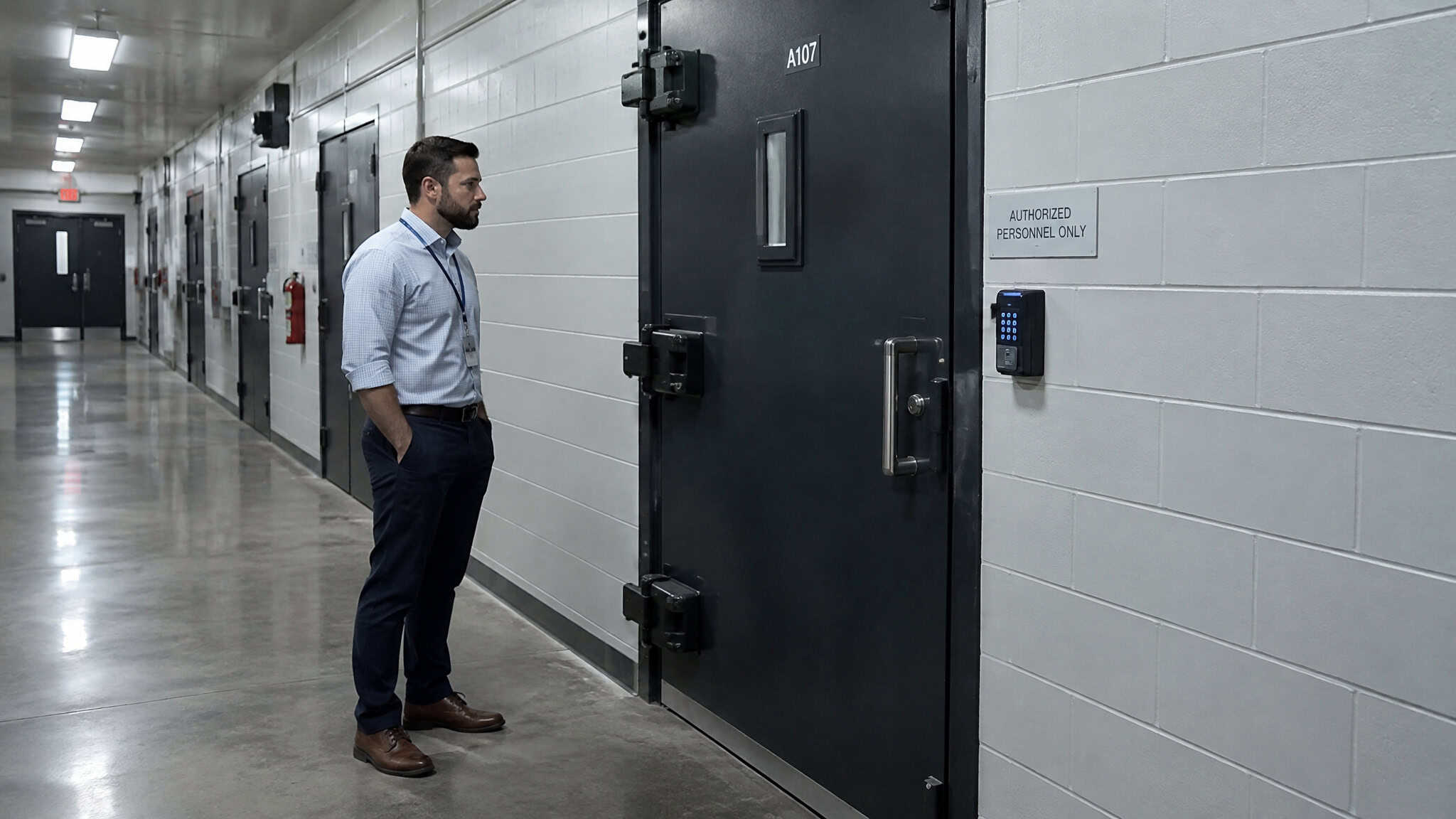
Yes, there are, if you’re in the right zip code. The scale surprises people. A very large share of CIA mission support is contract labor. Cleared contractors handle technology, IT infrastructure, data science, and analysis support inside CIA facilities and accredited SCIFs throughout Northern Virginia. Those are the windowless, signal-proof rooms where classified work happens, and the Washington DC metro area is where most of them sit. If you’re nowhere near Northern Virginia, that’s your first problem, before the resume even comes into it.
The mundane jobs tell the story best. Installation security guards, cooks, cleaners at CIA facilities typically require a Top Secret clearance. Think about that. The catering staff gets vetted harder than most federal employees. It tells you how deep the screening goes and why the clearance is the real currency here.
One more practical wrinkle: many contractor postings never say “CIA” anywhere in them. The company name is there, the clearance requirement is there, the Agency’s name is nowhere. Job-board searching alone fails for exactly this reason. You have to know which firms to watch.
For contrast, here’s the front door, the one most people picture. The CIA’s direct-hire entry positions fall into four categories:
- Core Collectors and Operations Officers. Overseas, finding and recruiting foreign sources, sometimes protecting them. The job in the movies.
- Collection Management Officers. The desk side, deciding what collectors work on and passing validated intelligence up the chain.
- Staff Operations Officers. Connective tissue between headquarters and the field, with covert travel to support agents.
- Specialized Skills Officers. Dropped where a specific skill is needed: language, technical, media, combat.
These seats are few, slow to fill, and brutally selective, which is exactly why the contractor market exists.
Quick orientation while we’re here, because people mix these agencies up constantly. The CIA is an independent federal agency focused on human intelligence, meaning people, not signals. The NSA does signals intelligence, the DIA does military intelligence, and the CIA is the only U.S. agency authorized by law to run covert action, at the President’s direction.
The three unofficial pipelines into CIA contractor work
Three routes get you into CIA contracting, and none of them start with a posting you click on. Route one is the primes: Booz Allen Hamilton, Leidos, Palantir, SAIC. These firms staff cleared contractor roles supporting the CIA, and they recruit heavily from elite military backgrounds. If you didn’t serve in a special operations or comparable unit, most of these seats aren’t your lane, and it’s better to know that now than after three rejection emails.
Even elite-background candidates don’t walk in ready. The primes put every hire through additional training and assessment before deployment. Nobody shows up on day one already qualified to work the mission, whatever their past looks like.
Route two is the oddball one, and it’s mostly the CIA’s move, not yours. In rare cases the Agency directly approaches someone who has access to something, or someone, the CIA can’t get any other way. That’s the only reason this route exists. And even here, the access doesn’t skip the vetting.
The background interrogation of your life is just as heavy. You can’t apply for this one. It finds you or it doesn’t.
Route three covers the variety most people never imagine: specialized jobs filled independently or in tiny teams, often through careful, extensive vetting rather than any public listing. Operators often work alone or in small teams, which is a lifestyle fact worth sitting with. Some guys want that. Some would hate it inside a month.
And the screening isn’t just skills. They’re screening personality and demonstrated maturity as hard as the technical abilities, which makes sense when the work environment is a room with three people and no margin for ego.
Then there’s the kicker at the end of the road: perform well as a contractor and the CIA may come back with a direct-hire offer. Contracting works as a back door into staff employment, and it’s a real one. It’s not a branded pipeline program. It’s just how hiring in this world actually works when you’re already inside the building and proven.
Contractor vs. staff officer: the speed-and-pay tradeoff
Put the numbers side by side and the tradeoff gets simple. Direct hire takes 18-24+ months between applying and your first day, so you may need to apply two-plus years before you actually want to switch careers. Withdrawn or deselected candidates typically have to wait before reapplying, too. A contractor role can start within weeks of an offer, if you already hold an active TS/SCI clearance plus Full-Scope Polygraph.
The pay gap runs the same direction, at least on paper. Technical and analytical contractor roles in Northern Virginia typically run $130,000 to $200,000+, with the exact figure shaped by your experience and clearance, generally above the equivalent CIA position. Direct hires sit on the CIA’s own proprietary pay scale, not the standard GS system, with strong federal benefits, and overseas assignments add cost-of-living, hardship, and danger pay on top.
The common pattern, a composite of a typical path rather than one person’s story: a cleared professional applies for a staff job, sits out the long vetting, takes a contractor seat in the meantime, and discovers the contractor seat pays more and sits closer to the mission. Senior intel professionals rotate between government and contractor roles deliberately, working both sides of the pay differential. It’s an observed pattern, not advice.
And the geography is the job. The work is where the SCIFs are, which means DC and Northern Virginia, full stop.
Security clearance: the contractor’s core asset
Yes, CIA contractor roles generally require an active Top Secret (TS/SCI) clearance plus a Full-Scope Polygraph. That’s the gate, and everything else in this article bends around it.
Background, in one breath: U.S. clearances come in three levels, confidential, secret, and top secret. Your level gets you in the building; need-to-know decides what you actually see. Holders generally have to be U.S. citizens, with rare exceptions, see why non-citizens can’t join the CIA and what foreigners can realistically do instead. More than four million people hold U.S. clearances, so this world is bigger than the movies suggest, though most of those four million aren’t anywhere near Langley.
Two things worth knowing that nobody mentions. First, lying about holding a clearance is a felony. Don’t do it. It’s a crime, full stop.
Second, the background investigation means someone knocks on your neighbors’ doors and interviews your friends, supervisors, and coworkers. Your past gets told by other people whether you talk or not. Clearances get reinvestigated at least every five years, so it’s not a one-and-done badge. You maintain it like an asset, and it’s the clearance, not your resume, that sets your hiring speed and your pay.
The vetting gauntlet: polygraph, SF-86, and why candidates actually fail
Is it hard to get hired by the CIA directly? Yes. The 18-24 month clock from application to start is the first wall, and the mandatory polygraph has no exceptions. But candor trips more candidates than any skeleton in their closet. One frequent worry is 30 too old to join the CIA, turns out not to be a real barrier, since the agency often values mid-career applicants with life and professional experience.

The Full-Scope Polygraph is required for all direct hires and most contractors supporting CIA programs. The questions probe counterintelligence matters, spying, leaks, overseas relationships, and personal conduct, including drugs and criminal behavior. It’s one of the most thorough polygraph processes in the intelligence community, and it can take multiple sessions. If you get called back for a second or third round, that’s not a failure signal. It’s the process. Don’t panic at a callback.
Behind it all sits the SF-86, the questionnaire everything hangs on, and the thirteen government screening criteria that adjudicators use: allegiance, foreign influence and preference, sexual behavior, personal conduct, finances, alcohol, drugs, psychological conditions, criminal conduct, handling protected information, outside activities, and use of IT systems. In normal speech: they review your whole life, and they’re really checking whether you can be pressured and whether you can keep your mouth shut, which is exactly what getting a job at the CIA demands from the very first step.
Here’s the part worth underlining. The tell is usually the omission, not the fact. Lack of candor, omitting, underreporting, or inconsistently reporting, is the top reason the CIA withdraws an offer. The composite from published guidance looks like this: candidates volunteer nothing false but leave off things they considered private.
The Agency cares less about the skeleton than about you hiding it. That’s the single most avoidable mistake in the whole process.
Eligibility rules and modern disqualifiers
Start with the drug rule, because it’s the one guys don’t expect. No marijuana or THC, including prescription medical marijuana, on or after the date you sign the SF-86, no matter what your state legalized. Federal law beats state law, and your dispensary receipt doesn’t care about your career plans. Beyond that: no other illegal drugs or prescription misuse within one year before applying, or anytime after.

The baseline gates: U.S. citizen or dual-national U.S. citizen, and if you’re mid-citizenship process, you apply only after it’s awarded. The CIA won’t help with the paperwork. Minimum age 18, Selective Service registration squared away before they’ll consider you (a five-minute fix that sinks people), DC-area relocation required, and usually a bachelor’s with a 3.0 GPA, where “usually” is doing real work. Direct hire adds a medical exam handled under HIPAA standards plus a psychological evaluation.
Then the process rules most people miss. You submit through MyLINK only while physically in the U.S., and you don’t contact the CIA from abroad by any channel. Short foreign travel during hiring is fine; just no calls, email, or messages from overseas. Don’t follow the CIA on social media or post about your processing.
Friending, following, liking, sharing, all of it counts. And the newer one: no AI in your writing samples, assessments, screenings, or interviews. AI for resume help like grammar review is fine only if you disclose and explain it.
The quiet disqualifiers: recent, recurring alcohol problems raise suitability concerns, and criminal or dishonest conduct is judged by its nature whether or not there was a conviction. No charges filed isn’t a clean slate.
The ex-military path and the hidden market
The veteran angle starts with history. After 9/11, the CIA expanded into covert paramilitary operations, and that expansion is the documented demand behind elite-military contractor hiring. The Special Activities Division handles foreign political influence. The Information Operations Center has shifted from counter-terrorism to offensive cyber, which matters if your background is technical. Primes recruit those specialized military backgrounds, add their own training and assessment, and strong performers can convert to direct hire.
The honest ledger for veterans: pay and pace on one side. Benefits, revocation exposure, and political vulnerability on the other. Contractor income runs higher, but it hangs on a credential and a contract that aren’t yours to control. That’s not a reason not to do it. It’s a reason to go in with eyes open.
The other half of this market is invisible. Many sensitive and technical roles never hit a public job board. They fill through internal transfers or cleared contractors, which means your clearance-holding network and a prime’s recruiter matter more than any listing. In the cleared-job market, that’s simply how hiring tends to work.
Language changes the math too. Native U.S.-citizen speakers of Arabic, Mandarin, Russian, Farsi, Dari, Pashto, Korean, and Urdu are among the most wanted, and strong language skills can offset gaps elsewhere in your background. The tradeoff for heritage speakers: every foreign contact and affiliation goes on the SF-86 in full. The clearance only works with honesty attached.
When a clearance disappears: the Joel Willett case
Yes, clearances can be revoked, and for a contractor that’s not a credential problem. It’s a livelihood problem.
Joel Willett was 41, a Louisville native, Army veteran who joined at 17, a former CIA officer, and a White House situation room detailee under Obama. He was CEO of contractor Cybermedia Technologies. In August 2025, he says DNI Tulsi Gabbard revoked his clearance for political reasons. That’s his claim; no official rationale is documented.
He linked it to Herald-Leader reporting that he was considering a 2026 Democratic Senate run in Kentucky, where Pam Stevenson of Louisville is the only declared Democrat so far and three well-known Republicans are competing for the nomination. He said the revocation directly threatened his contracting work, and he told NPR the administration was moving to weaponize the government; on X, he likened the loss of his clearance to a drunk driver losing his license, in his telling an attack on his livelihood rather than his record. He believes he was among 37 people revoked that same week. Laura Loomer claimed she flagged him to the administration over the Senate interest and a 2019 letter he signed supporting impeachment hearings, posting that he’d lose all of his government contracts.
Context, evenly: Trump’s earlier revocation of John Brennan’s clearance, citing “lying and recent conduct,” kicked off the political-revocation debate. The Brennan revocation was unprecedented without a security violation, and critics called it an attempt to stifle free speech. The legal reality cuts the other way: the president holds broad authority over classified access. The counterpoint: ex-officials like John McLaughlin keep clearances so they can be recalled to serve, and his was vital when he returned voluntarily to chair a counterterrorism committee.
Dry takeaway: the same asset that gets you in the door in weeks is the one somebody else can take away.
Quick answers
Does the CIA hire contractors? Yes, through primes like Booz Allen Hamilton and Leidos, rare unique-access approaches, and cleared support roles inside Agency facilities.
How do you become one? Clearance-first. An active TS/SCI plus Full-Scope Polygraph, prime-firm recruiters, and a cleared-community network, with offers turning into starts within weeks.
Is direct hire hard? The 18-24 month clock, the mandatory polygraph, and the candor standard say yes, which is exactly why contracting exists.
Is 30 too old? You can apply from age 18 onward, and the CIA values high-level experience in military, business, economics, and engineering. Willett was 41 and working as a contractor.
People Also ask
Is 30 too old to join CIA?
No, 30 is not a real barrier. You can apply from age 18 onward, and the CIA often values mid-career applicants with life and professional experience in military, business, economics, and engineering. For what it’s worth, contractor Joel Willett was 41 when his clearance was revoked — well past 30 and still fully in the game.
What security clearance do you need for CIA contractor jobs?
Generally an active Top Secret (TS/SCI) clearance plus a Full-Scope Polygraph. That requirement runs deep — even cooks, cleaners, and security guards at CIA facilities typically need a Top Secret clearance. Clearances get reinvestigated at least every five years, and the clearance, not your resume, sets both your hiring speed and your pay.
Can a CIA contractor’s security clearance be revoked?
Yes, and for a contractor that’s a livelihood problem, not just a credential problem. In August 2025, Joel Willett — a former CIA officer and CEO of contractor Cybermedia Technologies — said DNI Tulsi Gabbard revoked his clearance for political reasons after reporting that he was considering a 2026 Senate run; no official rationale is documented. The legal reality is that the president holds broad authority over classified access, which is the tradeoff baked into contracting: the same asset that gets you in the door in weeks is the one somebody else can take away.