Color psychology defines selecting a specific swimwear hue as a purposeful act of emotional regulation, effectively altering your internal mood before stepping into a highly vulnerable public space. Rather than being a superficial styling choice, a swimsuit’s color serves as a critical psychological anchor for the wearer.
I recently shopped for some bikinis for my wife from a premium brand called Sauvage Swimwear. Finding the right piece required navigating both her personal identity and an increasingly homogenized market where genuine choices are rare.
Key Takeaways
The modern swimwear market prioritizes the string bikini and thong bikinis, forcing consumers to hunt for moderate cuts rather than having genuine retail choices.
Premium makers like Sauvage, founded in 1985, reject fast-fashion homogenization by keeping design and manufacturing onshore.
Brands track color choices actively: retailers often note that blue shades denote reliability and lower stress in anxious wearers.
Table of Contents
Blue: Calmness and Serenity in High-stress Environments
Blue swimwear actively lowers stress and induces tranquility in crowded public environments. If your wife hates the visual and social anxiety of a packed resort pool, deep naval or sky blues subconsciously trigger the brain’s association with reliable, calming natural elements.
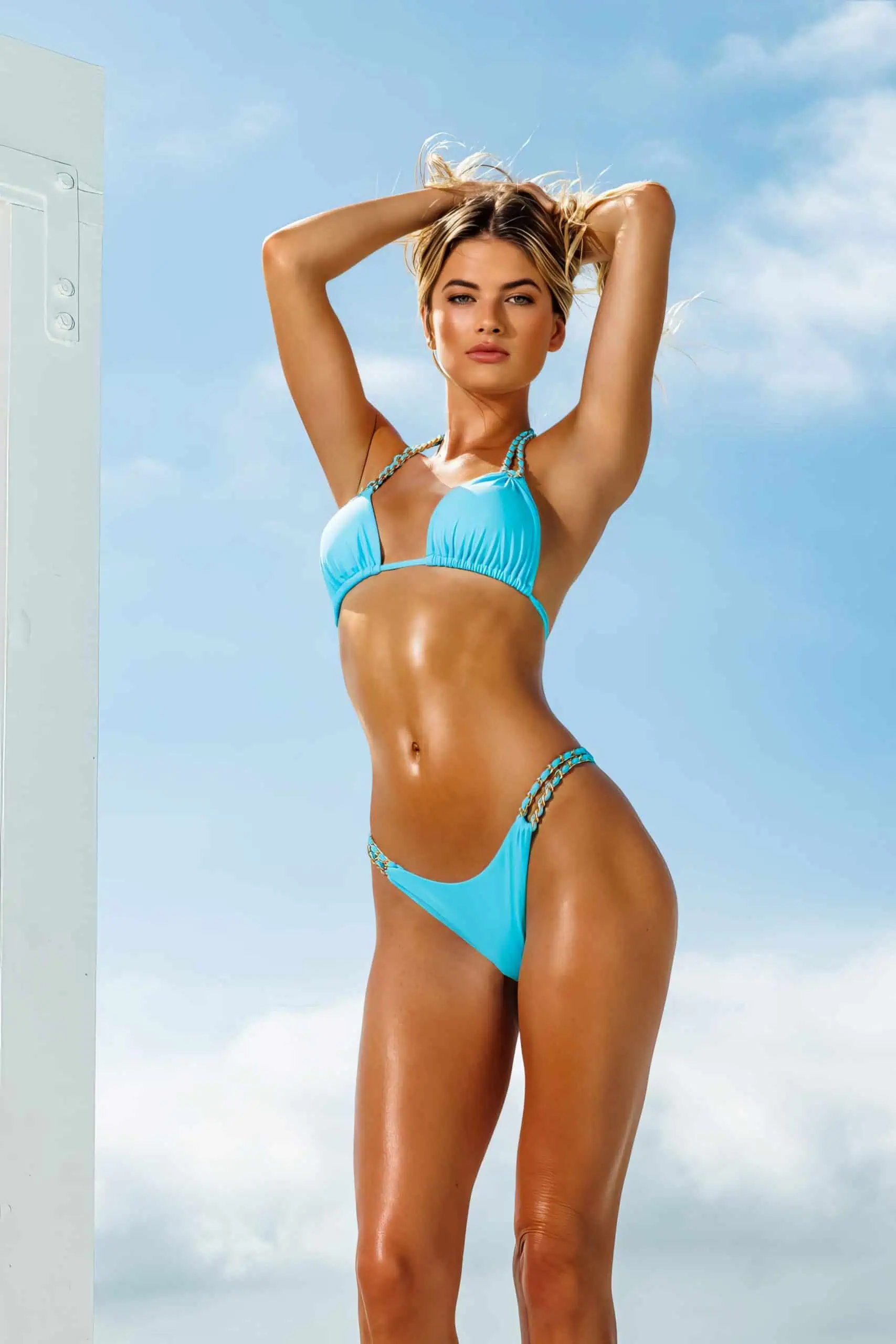

Swimwear retailers track this. Data from Simply Swim and Bummer shows consumers specifically gravitate toward cooling blues when they want to down-regulate tension near the water. It turns a standard swimsuit into a localized defense mechanism. Choosing a soothing color helps alleviate the inherent tension of being exposed in a crowd, actively supporting both relaxation and overall emotional well-being.
“Choosing a soothing color helps alleviate the inherent tension of being exposed in a crowd.”
Red: Projecting Confidence and Cultural Assertiveness

Wearing red signals a deliberate choice to be seen, effectively acting as physical armor for expressing assertiveness. Red commands attention. It conveys passion, strength, and vitality, making it the ultimate tool for projecting confidence when walking down the sand.
Eastern traditions often interpret red as a beacon of luck and prosperity, highlighting how Western cultural symbolism dictates that red is a statement of unapologetic boldness. Because our color perception is conditioned by these regional narratives, red serves as a powerful signal. When Irina Shayk wore the red Starlet bikini on the cover of Sports Illustrated in 2011, it codified this shade as the dominant color of body confidence in Western fashion media.
If a woman chooses red, she is not trying to blend in. She is steering into the skid.
Green: Balance, Grounding, and Ethical Intent
Green connects a psychological desire for grounding with a rejection of disposable mass-market trends.
The Aesthetic of Nature
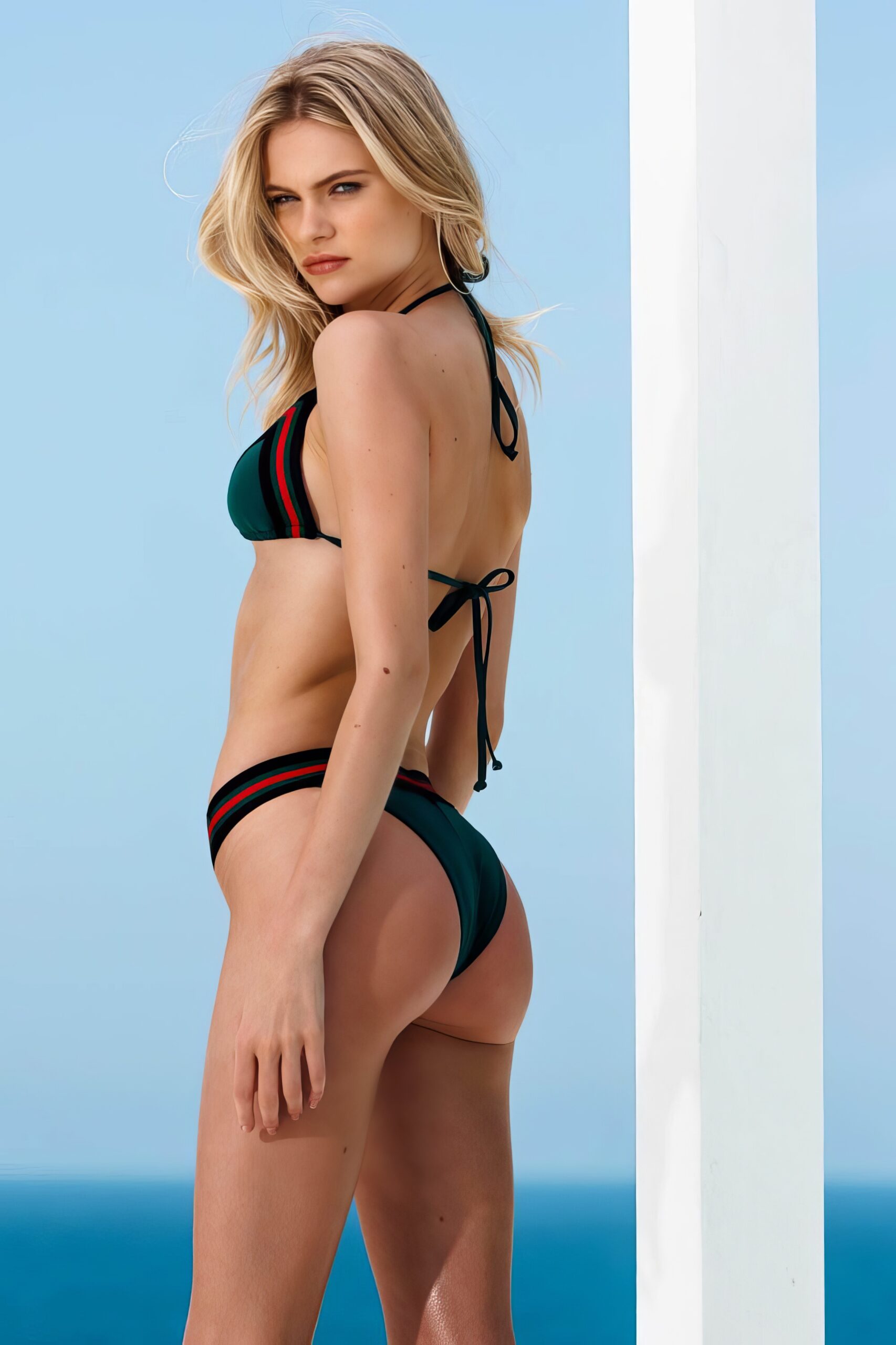
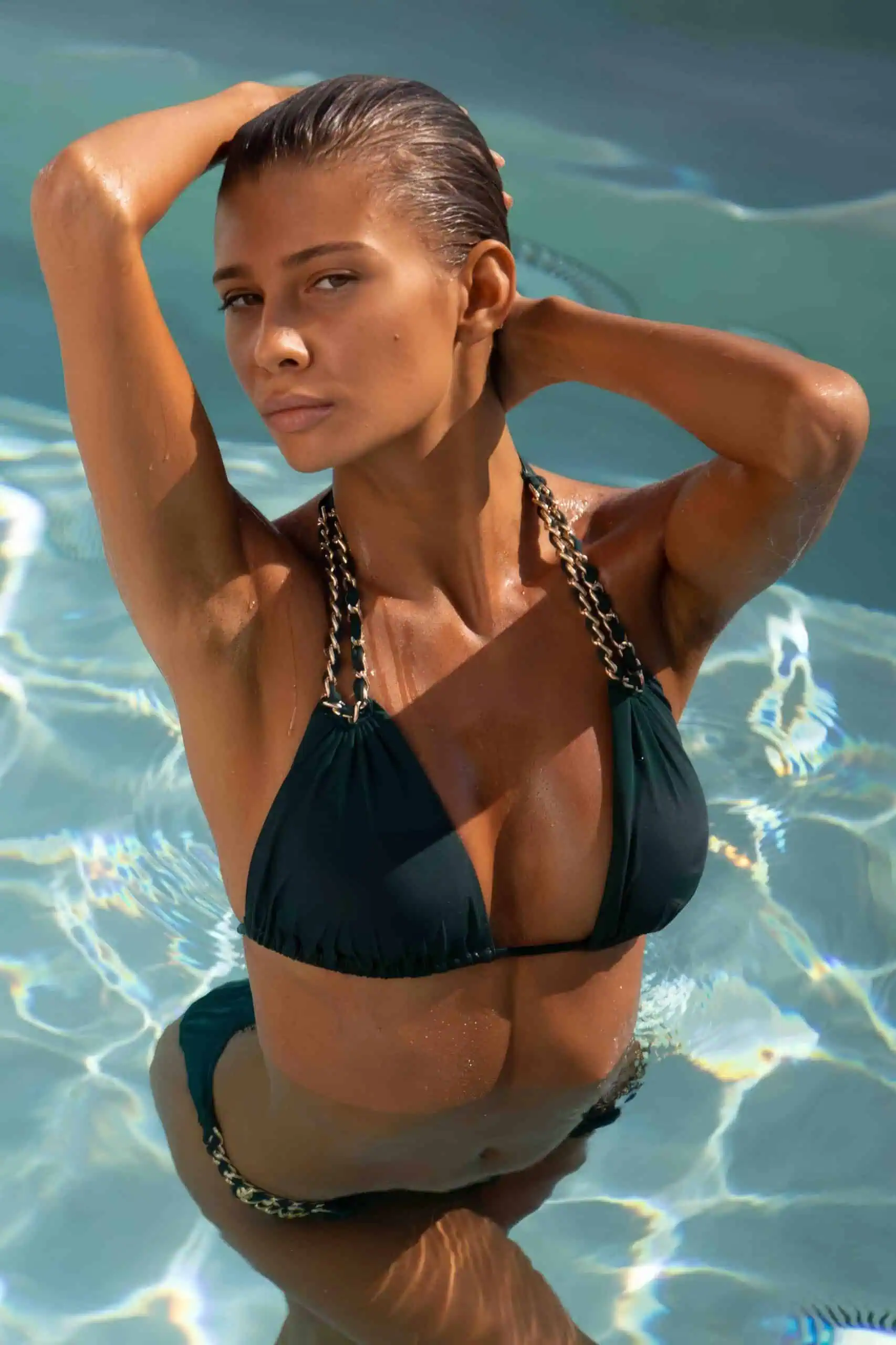
Wearing Green, whether as a solid forest tone or a bright emerald shade, serves as a grounding force. It helps the wearer feel aligned with their surroundings, particularly if they prefer quiet beaches or morning swims over loud resort parties.
Sustainable Industry Pioneers
That aesthetic preference often translates directly into ethical purchasing. Grounded consumers increasingly reject cheap, shrinking fast-fashion norms. They verify a green swimsuit’s psychological promise of harmony by checking if the brand practices ethical production. This is where structural industry shifts matter. When Simon & Elizabeth Southwood built the premium brand out of California, they ignored mass-market trends.
Elizabeth Southwood winning the 2023 excellence in design award from the Mare di Moda Fashion Group in Italy validates this approach. By operating with complete vertical integration and sustainable manufacturing, brands prove that intentional, ethical design remains the counterculture to mass-market homogeneity.
Yellow: Optimism Against the Illusion of Choice
Bright yellows and neons offer critical water safety and increased visibility, while allowing wearers to reclaim agency when shopping racks are flooded with identical cuts. Yellow is a carrier of cheerfulness and creativity in swimwear styling.


But wearing an optimistic color often serves as armor against a frustrating market. The industry’s aggressive push toward smaller profiles—often prioritizing the ubiquitous string bikini and revealing thong bikinis popularized by photos of hot bikini girls over moderate cuts—is driven by an economic tactic to save on material costs, rather than pure consumer liberation. This combination of fabric shrinkflation and cheeky bottoms means women are regularly paying the same or more for less material. The cheerful yellow aesthetic masks an industry-wide reduction in garment construction. Finding a bright, bold suit that provides standard coverage is a victory against garment shrinkflation.
Purple: Royal Mystique and Resort-wear Engineering
Bright neons project aggressive energy, while pastel purples evoke a soft, calming mystique. When investing in deep purples or luxury swimwear, checking for hidden structural engineering authenticates the garment’s premium status beyond its color.
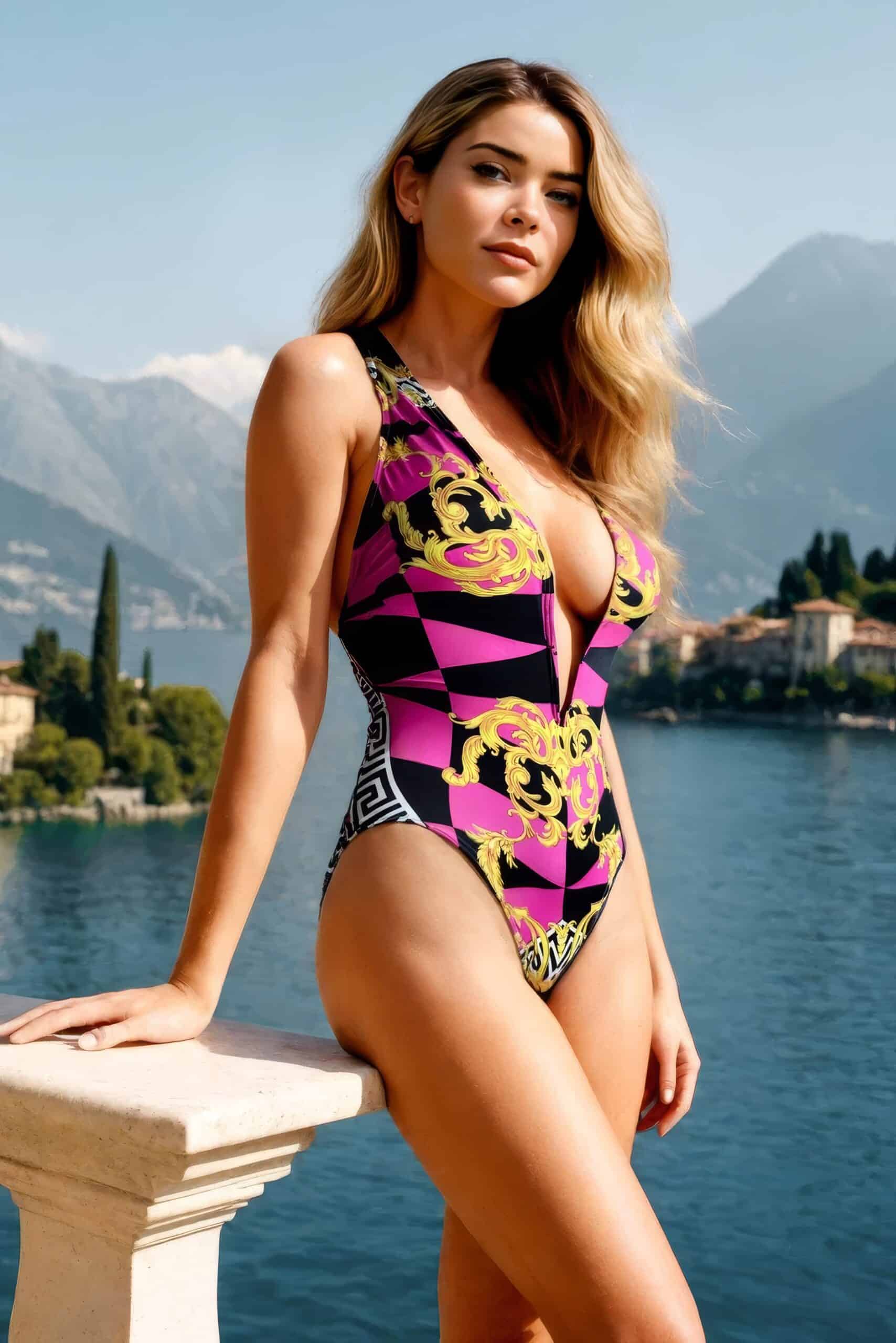
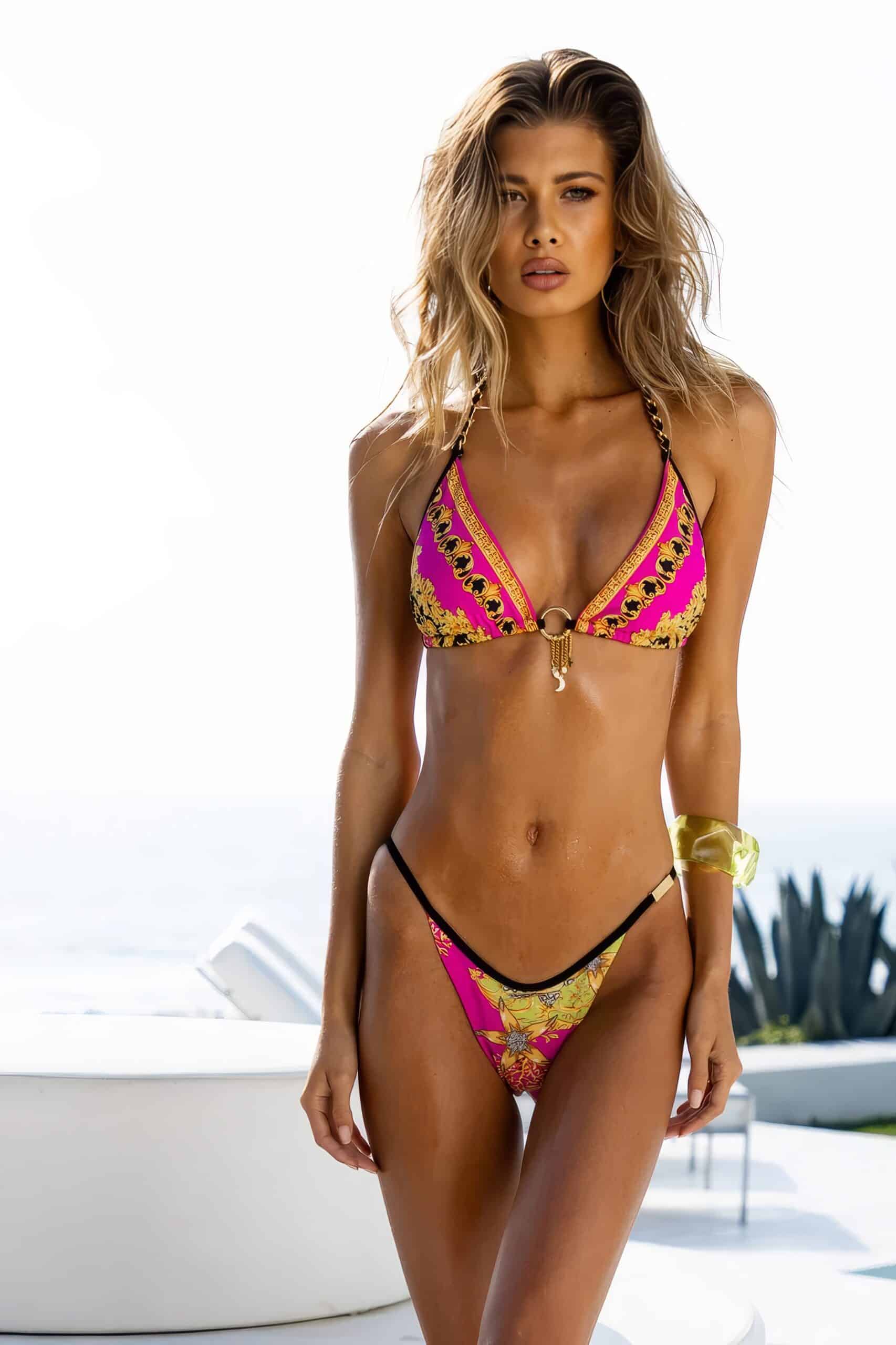
True sophistication in modern swimwear goes far beyond the color of the dye. It requires robust mechanical design features that the fast-fashion market routinely ignores. A swimsuit should be an engineered investment piece, not a disposable seasonal item. Premium builders authenticate this through high-end embellishments like Swarovski crystals, but the test happens out of sight.
A suit needs serious mechanical construction to hold up in the surf. A blend of underwire support and resort-wear engineering puts the wearer at ease.
“A swimsuit should be an engineered investment piece, not a disposable seasonal item.”
Pink: Sweetness and the Modesty Double Standard
Identify your complexion’s undertones and select a contrasting shade—like soft blush for dark skin or vibrant magenta for fair skin. Beyond individual skin tone, pink’s association with sweetness and compassionate femininity highlights the psychological friction women face against a market skewed heavily toward ubiquitous, revealing cuts.



But wanting a “sweet” or modest style clashes violently with modern retail. The normalization of minimal coverage creates friction, a frustration reflected in recent NPD Group consumer surveys showing widespread dissatisfaction with shrinking silhouettes. There is a tense, unspoken conflict between legitimate body positivity and the compulsory sexualization pushed by mainstream brands. Women looking for swimwear alternatives to thong bikinis face difficulty. You have to identify when a brand’s empowerment messaging is masking a lack of varied cuts.
Black: Power, Independence, and Structural Sophistication
Black is universally recognized as the definitive shade for projecting sleek, unapologetic power. Opting for a structured black bikini confidently bypasses micro-trends, projecting timeless, independent authority on the beach.
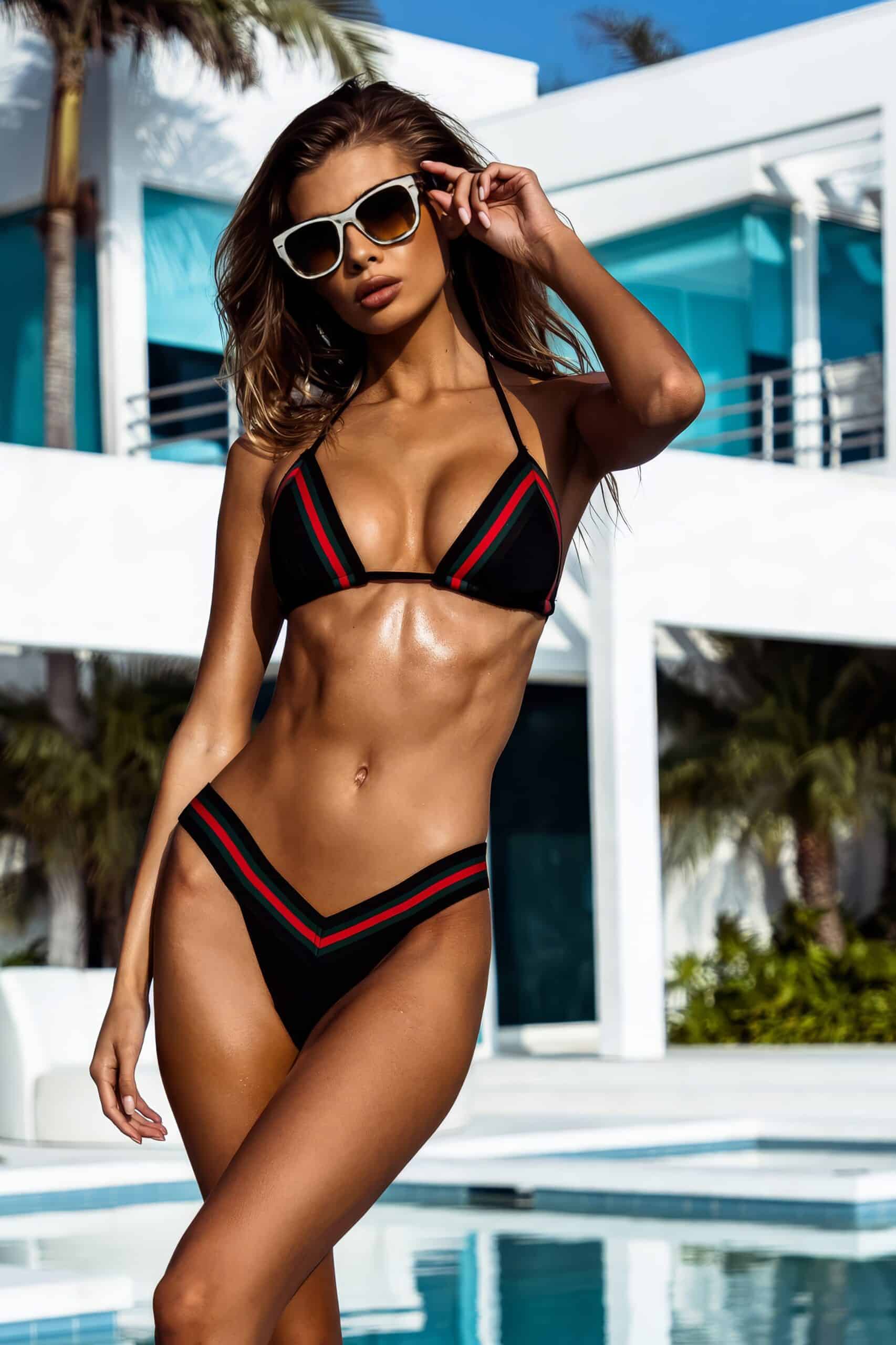
It also sidesteps the frantic evolution of women’s swimwear. There is a double standard here. Men wear the same static, functional board shorts for decades. The acceptable footprint of women’s swimwear shrinks by the year.
This creates a persistent fear that choosing comfortable, modest swimwear results in social obsolescence. Global regions handle this differently, heavily reinforcing a stark USA and Italy modesty double standard. Italy showcases a broad regional acceptance of comfortable, chic cuts for both sexes, whereas the USA enforces a rigid double standard by relentlessly pushing women into uncomfortable micro-trends while leaving men’s coverage entirely untouched. A well-cut black suit kills that anxiety. It commands respect and refuses to look outdated.
White: Purity, New Beginnings, and Reclaiming Autonomy
Bright whites are optimal for attracting attention in a social setting because they provide the highest visual contrast against natural elements like sun-tanned skin and blue water. Using the psychology of color as a personal filter allows the wearer to cut through the noise on retail racks and ensure the swimwear serves their emotional needs first.
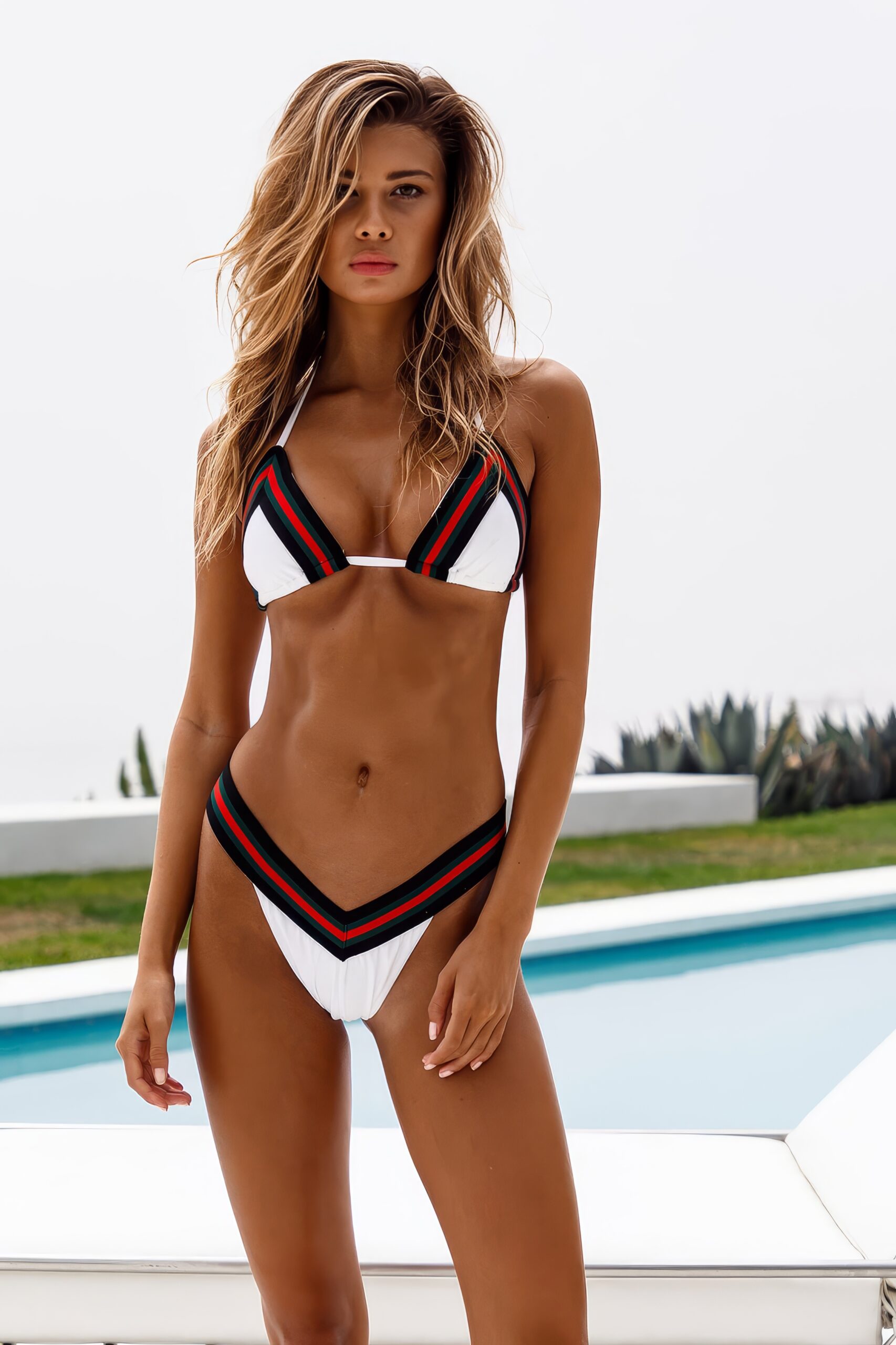
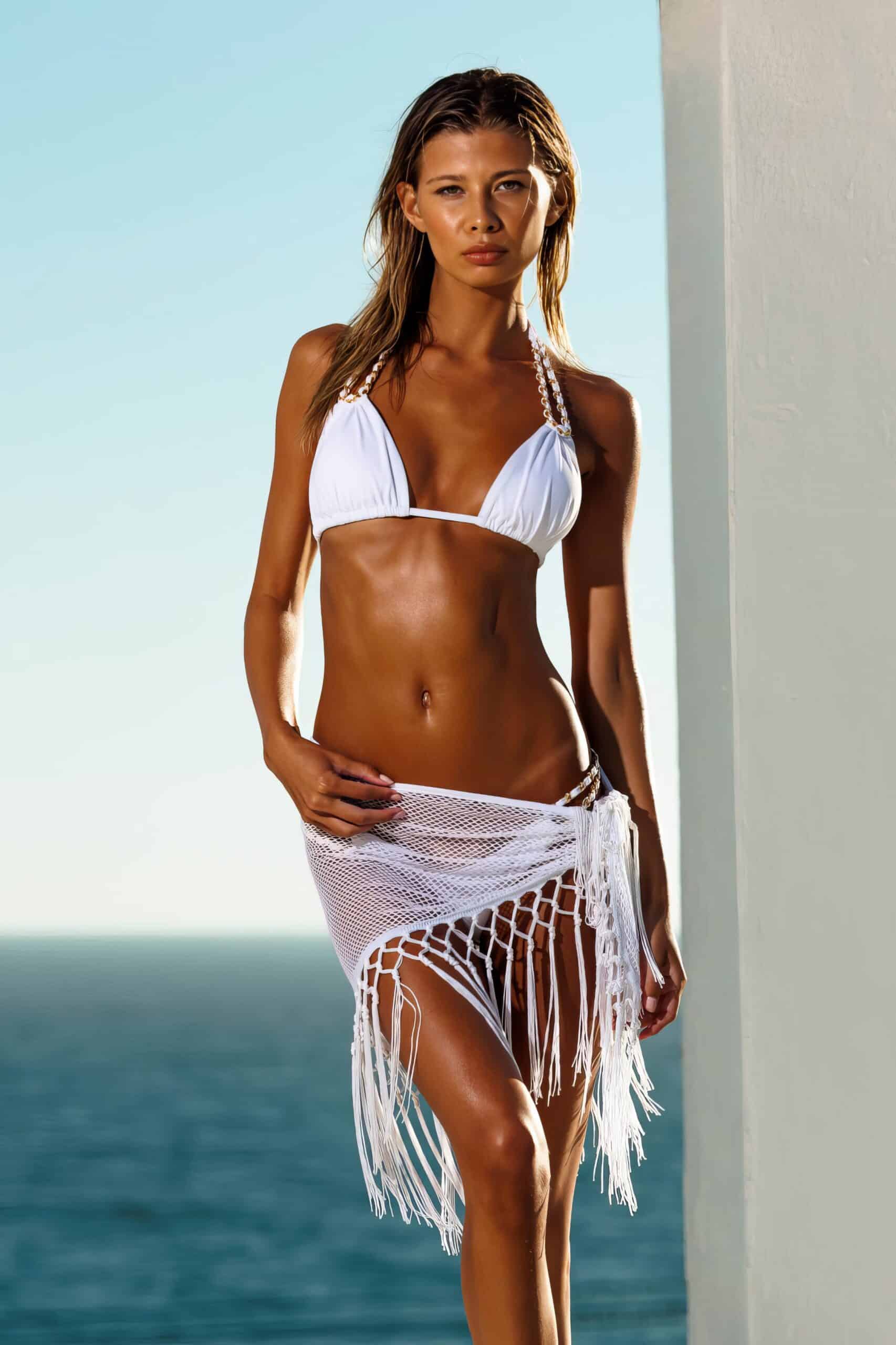

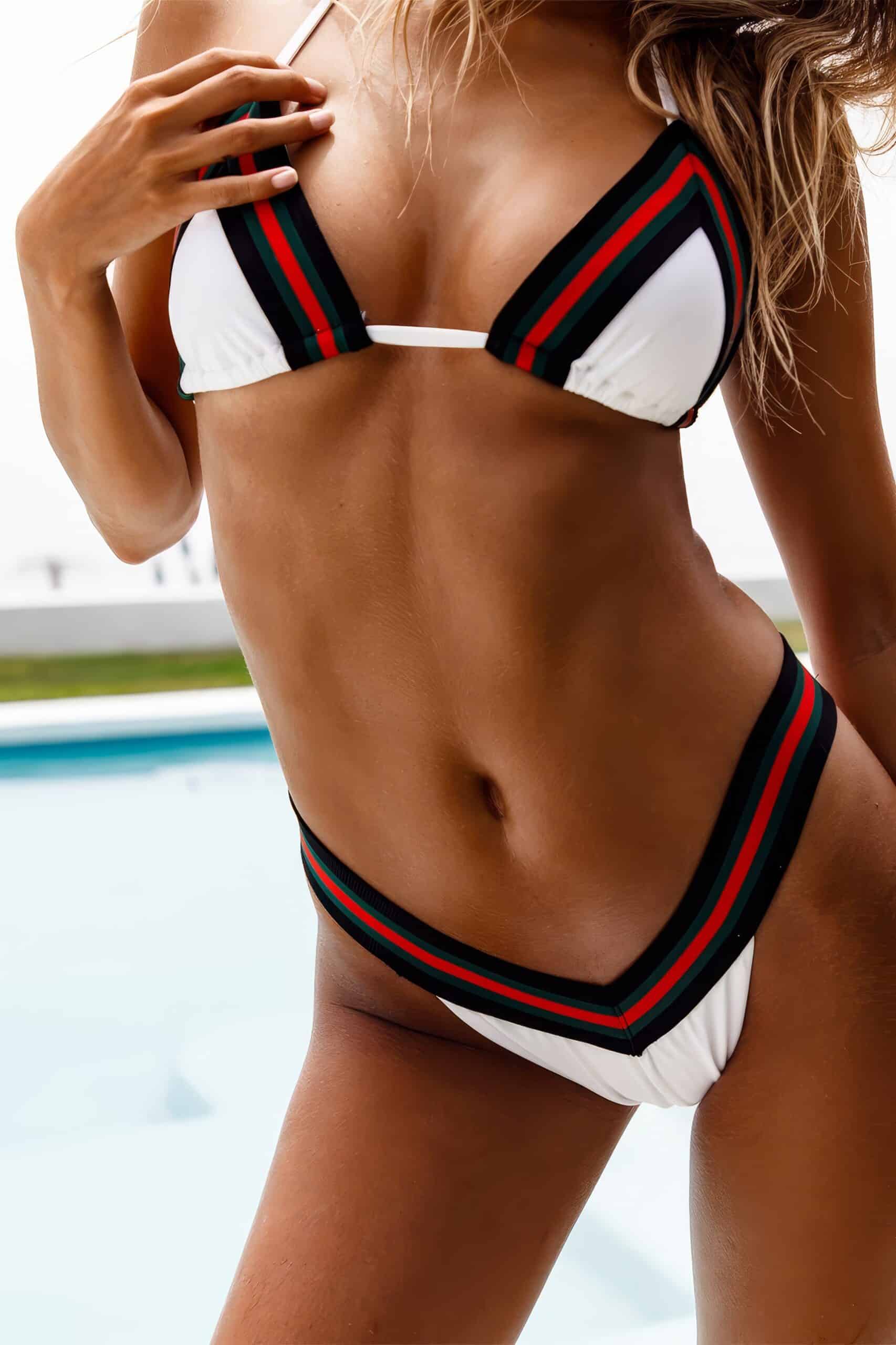
Finding genuine choice requires intentionally filtering out the noise. The disappearance of the mid-coverage bikini is a failure of retail homogenization. It creates a reality: whether browsing fast-fashion or high-end designer brands like Zimmermann, retail metric data from EDITED confirms that modern retail racks offer an overwhelming ratio of identical, exclusionary micro-cuts. The abundance of minimal coverage provides only an illusion of choice. Reclaiming autonomy means focusing on what feels authentic, utilizing color psychology to ensure you step onto the sand with complete comfort and well-being.
Frequently Asked Questions
What is the most attractive color in psychology?
There is no single ‘most attractive’ color; rather, different hues serve as tools for emotional regulation and projecting specific personas. Red is used to command attention and project confidence, while blue is utilized to foster tranquility and lower social anxiety in crowded environments.
What color bikini makes you tan the most?
The provided text does not suggest that any specific bikini color influences physical tanning processes. Instead, it emphasizes choosing colors like yellow for visibility and safety, or blue for its ability to help the wearer manage stress and project calmness near the water.
How does fast-fashion affect the availability of swimwear cuts?
Fast-fashion brands increasingly prioritize minimalism, such as string and thong bikinis, to reduce material costs—a phenomenon known as ‘fabric shrinkflation.’ This creates an illusion of choice while making it difficult for consumers to find garments with moderate, structured, or more modest coverage.
Why does color psychology matter when choosing swimwear?
Selecting a color acts as a purposeful act of emotional regulation rather than just a styling choice. Wearing specific shades can serve as a ‘defense mechanism,’ helping the wearer manage their internal mood and anxiety levels before entering a public, high-stress beach or resort environment.
Is a premium bikini worth the extra investment over fast-fashion?
Premium swimwear is designed as an engineered investment piece rather than a disposable item. You are paying for robust mechanical construction, such as underwire support and durable fabrics, which fast-fashion brands often ignore in favor of minimal, short-lived designs.
What determines if a brand is truly sustainable or ethical?
True ethical production is often found in brands that maintain vertical integration and reject the mass-market trend of moving manufacturing offshore to cut costs. Look for brands that prioritize sustainable manufacturing over the seasonal ‘disposable’ norms common in the mainstream swimwear industry.
How do I avoid the social anxiety of wearing a swimsuit in a crowd?
Choosing calming colors like deep naval or sky blue can subconsciously trigger associations with serenity and mitigate the stress of being in a packed public space. Additionally, selecting a structured black suit can help you project independent authority, allowing you to bypass the pressure of fleeting, revealing micro-trends.