
Stand at the edge of a career change, a new business, or a move into independent work, and the loudest advice in the room tells you to burn the boats. Popular entrepreneurship culture insists that if you believe in what you’re building, you have to risk everything you own to prove it. Here at Unfinished Man, we look at career and money scripts the same way we look at an overpriced tool: if the design forces you to break your own knuckles to prove it works, it’s a bad design. Watching a company burn just to show you were all-in is financial desperation dressed up as grit.
A smarter lesson comes from a children’s publishing founder who warns that piling on deliberate risk damages the business you’re building, and Olympic freeskier Eileen Gu, who backed a double cork 1620 with a decade of film study. You see the same discipline in first-generation UMass Law graduate Paul Riley, who leaned on a 50% tuition fellowship, and Ruby authors Sandi Metz and Avdi Grimm, who paid strategist Suzan at Bet On Yourself to get them off the hamster wheel.
Key Takeaways
Financial suffering doesn’t prove commitment to a business; keeping enough financial breathing room to make strategic decisions prevents the panic-driven lane-switching that sinks new ventures.
High-stakes career leaps rely on preparation and structural scaffolding, whether that is Eileen Gu analyzing her ski runs from age 8 before landing a double cork 1620 at Beijing 2022 or Paul Riley using a 50% Public Interest Law Fellowship to attend UMass Law.
Daily habits and outside perspective protect the bet: five minutes of journaling to audit self-talk like game tape, a hard filter between good ideas and necessary spending, and strategic coaching help you adjust before a bad month turns into a wreck.
Table of Contents
What betting on yourself means
Betting on yourself means choosing to invest in your own potential, resilience, and skills when the outcome is uncertain, trusting that you can build, learn, adjust, and figure out the details along the way rather than manufacturing a personal financial emergency as proof of commitment. Hustle culture treats the phrase like an all-or-nothing wager on a platform like BetUS Casino, where going broke proves you cared.
Olympic freeskier Eileen Gu told Olympics.com (as cited in a StoicIndex YouTube video analysis) that she isn’t a gambling woman. Still, she took a big bet on herself knowing everything could go wrong and leave her with nothing while juggling Stanford, modeling, three ski disciplines, and injury recovery at once.
The literal bet: can you bet on yourself?
Regulated sports leagues ban athletes from placing literal cash wagers on their own games to protect the integrity of the outcome. People looking up the rules around a literal gold bet, a sportsbook payout, or a golds bet apk are dealing with actual gambling regulations, where putting money on your own match will get you suspended or banned.
Outside a sportsbook, the phrase has nothing to do with a wagering window. When someone asks where this kind of bet takes place, the answer is in a career transition, a skill investment, or a business launch where your time, reputation, and capital are on the line.
The metaphor the phrase actually carries
The loud script says you have to empty your savings account and work without a net so that fear forces you to succeed. If I were weighing a move, I’d skip the theatrical poverty and look at how people who win at high levels actually operate.
Gu’s comment to Olympics.com captures the real tension of an ambitious workload. She knew that running a full academic schedule at Stanford alongside modeling, three separate skiing disciplines, and rehabbing injuries carried the real risk of walking away empty-handed because she was trying to do so much at once. The bet wasn’t a blind roll of the dice; it was a test of whether her preparation and daily systems could hold the weight.
The all-in myth: sacrifice is not commitment
No, betting on yourself doesn’t mean risking all your money, because financial suffering isn’t evidence of stronger belief in a business, and the move becomes a bad idea the moment financial desperation starts driving panic decisions or you realize in real time that a path is actively failing. Still, a Grit Daily essay on entrepreneurial discipline points out that financial discipline produces better decisions for founders and independent workers than emptying your savings and cornering yourself.
Under the principle that a business shouldn’t need its founder financially cornered, the Grit Daily author dismantles the “bet everything,” “take the bigger risk,” “sacrifice a little more,” and “sleep when you’re dead” script. Nobody believes in you more because you’re hurting for rent.
Piling extra intentional risk onto your life can damage the company you’re trying to build, and watching a venture burn for all-or-nothing credibility is just desperation. You still have to invest in growth, but you balance that spending against the trap of endlessly financing activity that plainly isn’t working. Otherwise, you stay on a failing track, like military writer Dylan Warnick catching himself sitting in his office parking lot at 0500 while supposedly on leave.
Financial breathing room is a decision-quality asset
Preparing financially to start a business before quitting a job requires keeping enough financial breathing room that your decisions come from strategy rather than panic, because no universal dollar figure fits every launch. While modest financial constraints can force useful prioritization and patience, genuine desperation wrecks your judgment; as the Grit Daily author illustrates, building a company without a cushion is like grocery shopping while starving, whereas keeping yourself fed lets you invest heavily in real infrastructure like the personal capital she put into a children’s publishing company before sales justified it on paper.
When you shop hungry, every item in the aisle looks like a lifesaver. Desperate founders do the same thing: they monitor every move for an immediate cash return and switch lanes the second an idea takes longer than a week to pay off, pulling the plug before anything has time to bloom. When the publishing founder backed her children’s book venture, the money went into books, inventory, websites, legal expenses, school partnerships, marketing, and systems, without public dollar totals or timelines. Having breathing room allowed her to watch what customers actually wanted without panicking, and to recognize that returns don’t always show up as immediate cash when visibility, infrastructure, relationships, and new opportunities are building the asset.
Every good idea does not need funding
Separating “This would be great” from “This is necessary right now” is a developed discipline, not a quick checklist. In the Grit Daily author’s framework, every choice has an invoice attached and being able to afford something doesn’t make it a smart financial call, so saying I am not spending money on that right now and leaving a good idea unfunded is one of the most entrepreneurial ways to protect the financial discipline that serves as your lifeboat.
Knowing when you’re failing: self-audit in real time
Catching misalignment in real time and auditing your daily self-talk like game tape is how you build self-belief through doubt and recover when a career move goes sideways. Most people stay locked into an outgrown routine or a bad mental loop for months before noticing the damage, yet military writer Dylan Warnick showed in his June 29, 2025 essay for From the Green Notebook how rare in-the-moment awareness breaks that stall, just as Eileen Gu uses five minutes of daily journaling to rewire how she handles pressure.

Recognizing failure in the moment
In his essay “Failing to Leave,” published on fromthegreennotebook.com, Warnick describes sitting in his car in an office parking lot at 0500 while he was supposed to be on leave. Right there in the dark, it hit him that he was actively failing. Recognition rarely shows up while the mistake is happening; catching it in the lot, or treating a bad business month as a signal to learn and change direction when conditions shift, is how you stop digging.
Journaling as game tape
Gu keeps her head straight by journaling every day and breaking down her thought processes with an analytical lens. As the StoicIndex video notes, she reads her own thoughts the way a coach reads game tape, operating on the belief that controlling how you think lets you control who you are. Five minutes a day drives neuroplasticity, rewiring the brain around repeated thoughts, habits, and self-talk.
Fear and excitement: same wiring, different label
Gu’s coach taught her that fear and excitement share identical neuroscience, releasing the same chemicals and physical response while differing only in the label you slap on them. She doesn’t try to suppress nerves before dropping in; she notices the feeling and asks herself whether it’s stopping her or acting as fuel.
Case study: Eileen Gu’s calculated bet
Eileen Gu’s high-stakes bet worked because she engineered it through years of preparation and judged it by her own internal scoreboard, not reckless impulse. That same thread runs through this whole playbook: Gu asking whether nerves are stopping her or serving as fuel, law graduate Paul Riley advising peers to take the risk when they love the work, and the Grit Daily rule that belief and desperation are never the same thing. Casual viewers saw raw nerve when an 18-year-old Gu landed a trick she’d never tried in practice to win gold at Beijing 2022, yet that single jump sat on top of deliberate failure analysis she started at age 8.
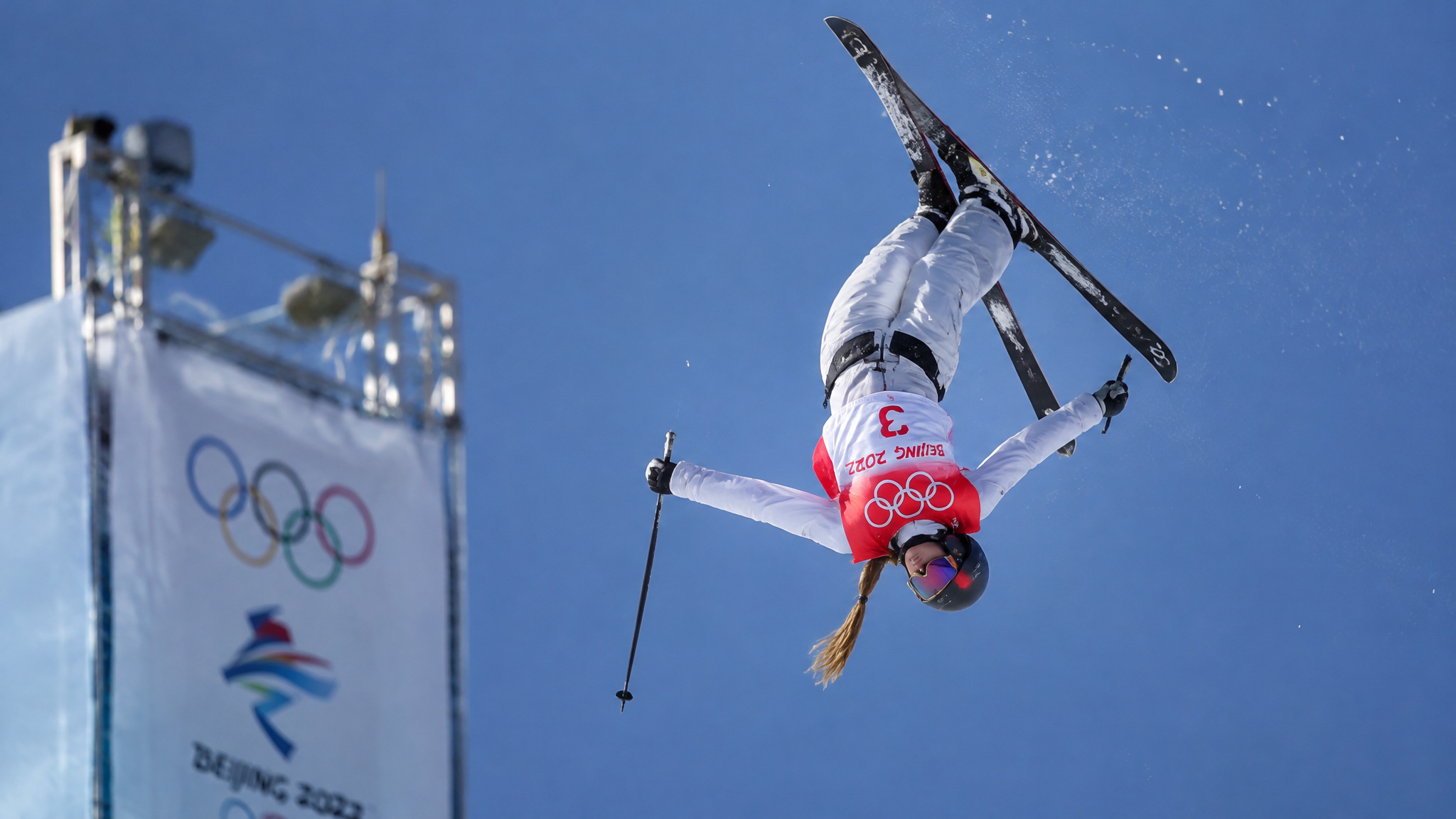
The Beijing 2022 final run
Sitting in third place after two runs at the Beijing 2022 Olympics, Gu called her mother, who told her not to attempt a double cork 1620, two flips and four and a half spins, because it was too dangerous. No woman, including Gu, had ever tried the trick even in training. She dropped in, landed it for gold, and later explained that choosing to believe in yourself is the most important decision because no one is better positioned to step up to the challenge.
Preparation over outcome
Gu started studying her own ski runs and analyzing her failures at age 8, became the first Chinese athlete to win X Games gold at 17, took two Olympic golds and a silver at Beijing 2022 at 18, and at 22 became the most decorated female freestyle skier in Olympic history after locking in back-to-back golds with a 94.75 run score, all while studying at Stanford, modeling, and speaking three languages. She noted that even if the medals hadn’t come, she would’ve had zero regrets because she did everything possible to prepare and showed the world at the critical moment that she wasn’t afraid to try.
Her own scoreboard
Behind the podiums, Gu admitted she fought tooth and nail for everything she had, dealing with mental health struggles after the Beijing Games, severe injury, and a concussion in January 2025. At the 2026 Milan Olympics, where the StoicIndex video narration describes her winning two silver medals before adding three more Olympic medals in Italy and noting that doing it five times is exponentially harder, a reporter at a press conference asked if her silvers were two silvers gained or two golds lost. Gu called that perspective ridiculous and pointed to her record as the most decorated female freeskier in history, measuring her work by her own scoreboard rather than a stranger’s ruler.
Case study: the scaffolded bet. Paul Riley’s path to law school
For a career changer rather than a startup founder, betting on yourself means pairing a personal leap with structural scaffolding, tuition aid, honest friends, and a backing institution, that lowers the financial exposure of switching fields. Instead of quitting a job cold to rack up six figures of debt alone, a smart career transition uses institutional support to make the math work, the way Paul Riley moved from elections administration into public defense with a 50% tuition fellowship at UMass Law, financial support without which Riley said he wouldn’t be in law school.

A nontraditional path to law school
In a University of Massachusetts Dartmouth feature posted and updated on August 7, 2026, naming him the Class of 2026 student commencement speaker at UMass Law, Riley shared how he grew up in Dedham, Massachusetts, where his parents worked multiple jobs to raise five boys with little spare cash but everything they needed. Graduating from an agricultural high school sometimes felt like a reach, and his college graduation happened during COVID with no real ceremony. After three years working in elections administration, he doubted he was smart enough for law school. Friends finally convinced him to apply, pushing him to ask himself whether this was all he had or if he could give a little bit more.
The fellowship that lowered the stakes
Riley enrolled at UMass Law, the only public law school in Massachusetts, because its Public Interest Law Fellowship covered 50% of his tuition and fees in exchange for community service during school and a public service commitment after graduation. He stated plainly that without that financial support, he wouldn’t have been in law school.
Doubt, community, and giving back
Academics never came easy for Riley, and he spent nights during his first semester wondering what he had gotten himself into before finding his footing in a place he summed up in one word as home, where professors knew his name within weeks. Believing that everyone deserves quality legal representation regardless of what they can pay, he interned at Launie & Marino and Norfolk County Superior Court, served as executive vice president of the Student Bar Association, editor-in-chief of the UMass Law Review, and a member of the First-Gen Law Student Association, joined classmates at the Massachusetts State House for the annual Walk the Hill event, accepted a public defender position, and advised incoming students not to limit themselves, to stay patient through the first semester, and to take the risk and bet on themselves if they think they might love the work.
You don’t bet alone: outside perspective for accomplished experts
Going independent or staying in a traditional job matters less than getting out of a reactive work cycle. A self-directed career strategy works in either mode, even top technical authors like Sandi Metz (Practical Object-Oriented Design in Ruby) and Avdi Grimm (Confident Ruby) paid an outside consultancy to help plot their course. Many capable guys assume that backing themselves means locking the office door and figuring out every business problem solo, yet veterans at the top of the software field hired Suzan’s consultancy, Bet On Yourself (betonyourself.com), to package their assets and get unstuck.
On a steady paycheck or out on your own, the real test is the same: how much control you have over what you build, how much stress you carry, what your income looks like, and whether your week is driven by a strategy or by whatever lands in your inbox. Suzan’s practice works with technical experts who are weighing a career change, going independent, or trying to build a meaningful career on their own terms inside a company. If I were billing good money as a specialist but spending every Tuesday putting out other people’s fires, I’d pay for an outside set of eyes before blowing up my career.
The three practitioners who went on the record show what changes when you stop reacting. Before working with Suzan, Sandi Metz was trapped on a reactive hamster wheel, spending her energy answering random personal requests; she credits the business strategy and goal focus with lowering her stress, raising her income, and clearing the deck so she could finish big works of general utility.
Marty Haught, a software architect and founder of Haught Codeworks, calls Suzan his brand whisperer for helping him cut through noise and make key strategy course corrections. Avdi Grimm, who created Ruby Tapas alongside writing Confident Ruby, calls her his entrepreneurial muse for getting him unstuck as a creative entrepreneur. None of them needed to prove they knew how to write code; they needed a structural plan so their effort actually compounded.
The real risk: failing vs never knowing
In the StoicIndex analysis of Eileen Gu’s career, the core danger of playing it safe is reaching the end of your run without ever testing your ceiling.
Gu’s track record of severe injury, post-Olympic mental health struggles, and a January 2025 concussion gives weight to her statement that she isn’t out there to parade medals around, and that the whole point of her success is showing that if she can do it, everyone else should try too. She isn’t an anomaly built on magic genetics. She deliberately and consistently chose to become the person her 8-year-old self would look up to, and that kind of calculated, prepared commitment is open to anyone willing to do the work.
A working playbook: bet on yourself without betting everything
Betting on yourself without risking everything comes down to a five-step preparation sequence that trusts your ability to build, learn, adjust, and keep going rather than manufacturing a personal financial emergency:
- Audit your self-talk daily with five minutes of journaling, reading your thoughts like game tape and asking whether you’d hire yourself as your own coach.
- Define your own metrics for winning, not for parents, followers, or friends, and write them down.
- Separate what would be great from what’s necessary right now, keep financial breathing room, and count visibility, infrastructure, relationships, and opportunity as real returns.
- Secure scaffolding, fellowships, community, mentors, or outside strategy, before jumping.
- Ask yourself Paul Riley’s trigger question on whether you have a little bit more to give, take the bet, and treat a bad month as data to adjust direction.
Frequently Asked Questions
What does it mean to bet on yourself?
It means backing your own skills, grit, and capacity to adapt when the outcome isn’t guaranteed. Instead of staging a reckless financial crisis just to look committed, you trust yourself to learn the ropes and solve problems as they show up. High performers treat it as a test of their preparation and daily habits rather than a blind roll of the dice.
does betting on yourself mean risking all your money?
No, draining your bank account only proves that you’re cornered, not that you’re committed. Keeping a financial cushion protects your judgment so you don’t make frantic, short-sighted calls just to make rent. Real discipline means leaving good ideas unfunded when they aren’t necessary right now and keeping your lifeboat intact.
how much money should you invest in starting your own business before quitting your job?
There is no universal dollar target that fits every launch, because the real requirement is keeping enough financial margin to make strategic choices instead of panicked ones. Without a cushion, founders act like starving grocery shoppers and abandon promising projects the second they don’t pay off in a week. You need enough breathing room to pay for core infrastructure while giving customer relationships, visibility, and systems time to mature.
when is betting on yourself a bad idea?
It turns into a bad move the moment financial desperation starts steering your decisions or you catch yourself pouring energy into a path that is plainly failing. Piling on intentional risk just for all-or-nothing street cred damages what you’re trying to build. When a venture or routine isn’t working, the smart play is to recognize the stall in real time and change direction rather than funding a wreck.
how do you build self-belief when you doubt you are good enough?
You build it through years of preparation, honest daily self-audits, and the right structural support rather than waiting to feel fearless. Olympic freeskier Eileen Gu spends five minutes a day journaling to review her self-talk like game tape and reframe pre-run nerves as fuel, while UMass Law graduate Paul Riley leaned on honest friends and a 50% tuition fellowship when he doubted he belonged in law school. Backing yourself with preparation and community makes it much easier to test your ceiling.
What are some inspirational quotes about betting on yourself?
A few standout perspectives come from people who actually lived the risk rather than internet hustle gurus. After landing a historic double cork 1620 at Beijing 2022, Eileen Gu noted that choosing to believe in yourself is the most important decision because no one is better positioned to step up to the challenge. Law graduate Paul Riley pushed himself past self-doubt by asking whether this was all he had or if he could give a little bit more, while a Grit Daily publishing founder summed up financial discipline with the rule that a business shouldn’t need its founder financially cornered.

