
BALL Watch Company announced a partnership with the US Navy Explosive Ordnance Disposal unit, and the watch they built to go with it is their most robust mechanical watch ever. That’s BALL’s own claim, not mine.
The Engineer Hydrocarbon EOD is licensed by the US Navy EOD — that’s a real endorsement, not a logo slapped on a dial. The watch has to be tough enough for guys who disarm bombs under water, on land, and after parachuting in. The case back even carries the EOD insignia. It’s a tribute as much as a tool.
But the real story is the engineering. This watch uses three separate patented anti-shock systems, a mumetal shield against magnetic fields, micro gas tubes that glow for years without charging, and special movement oil that lets it run from -45°C to 80°C. Let’s dig into how it works and whether it’s worth a spot on your wrist.
Key Takeaways
The Engineer Hydrocarbon EOD survives a 10-meter (33-foot) free fall thanks to a patented elastomer ring that lets the movement shift on impact — standard watches often break after a 1-meter drop onto tile.
SpringLOCK reduces balance spring shock by 66% compared to Swiss certification standards, protecting the most fragile part of the movement.
The watch resists magnetic fields up to 1,000 Gauss (80,000 A/m) via a mumetal shield, roughly 16x the resistance of a typical watch — enough to handle laptop speakers, magnetic clasps, and even an MRI room’s fringe field.
Table of Contents
The US Navy EOD Partnership — Why It Matters Beyond the Logo
The EOD partnership is more than a branding deal — it means the watch has to pass the real-world standards of the unit it represents.
What the EOD really does
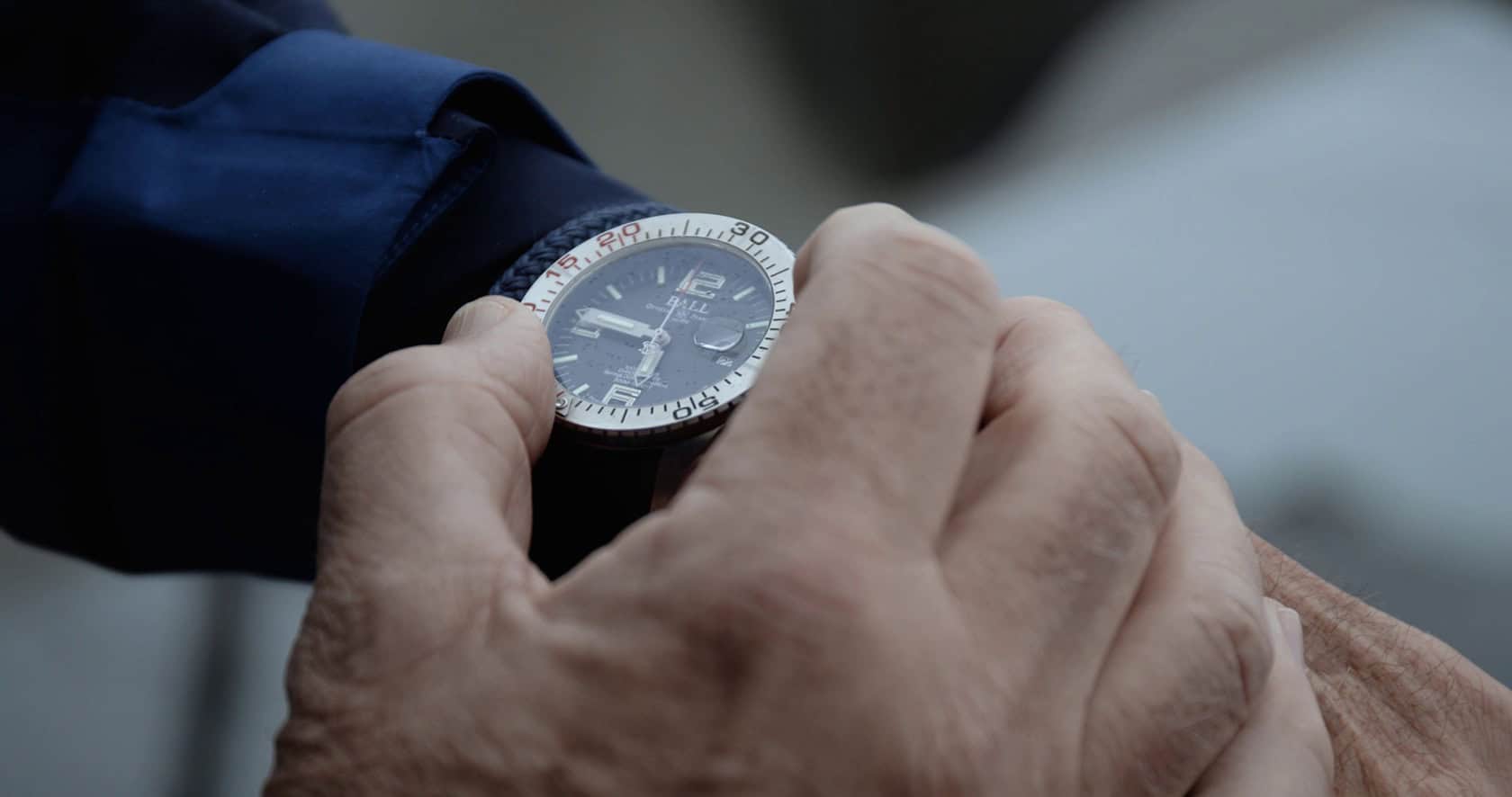
The US Navy Explosive Ordnance Disposal unit was created in 1941 to clear WWII battlefields. Today they clear land and underwater terrains of unexploded bombs and improvised devices. EOD technicians don’t just disarm explosives. They master parachute insertions, helicopter insertions, diving, swimming, weapons, small unit tactics, and tactical communications.
The training is rigorous; only the most dedicated become part of the EOD elite.
That’s the standard this watch has to meet. Not a lab test. Not a marketing claim. Real-world validation from guys who work under conditions where there’s no second chance.
“Initial Success or Total Failure”
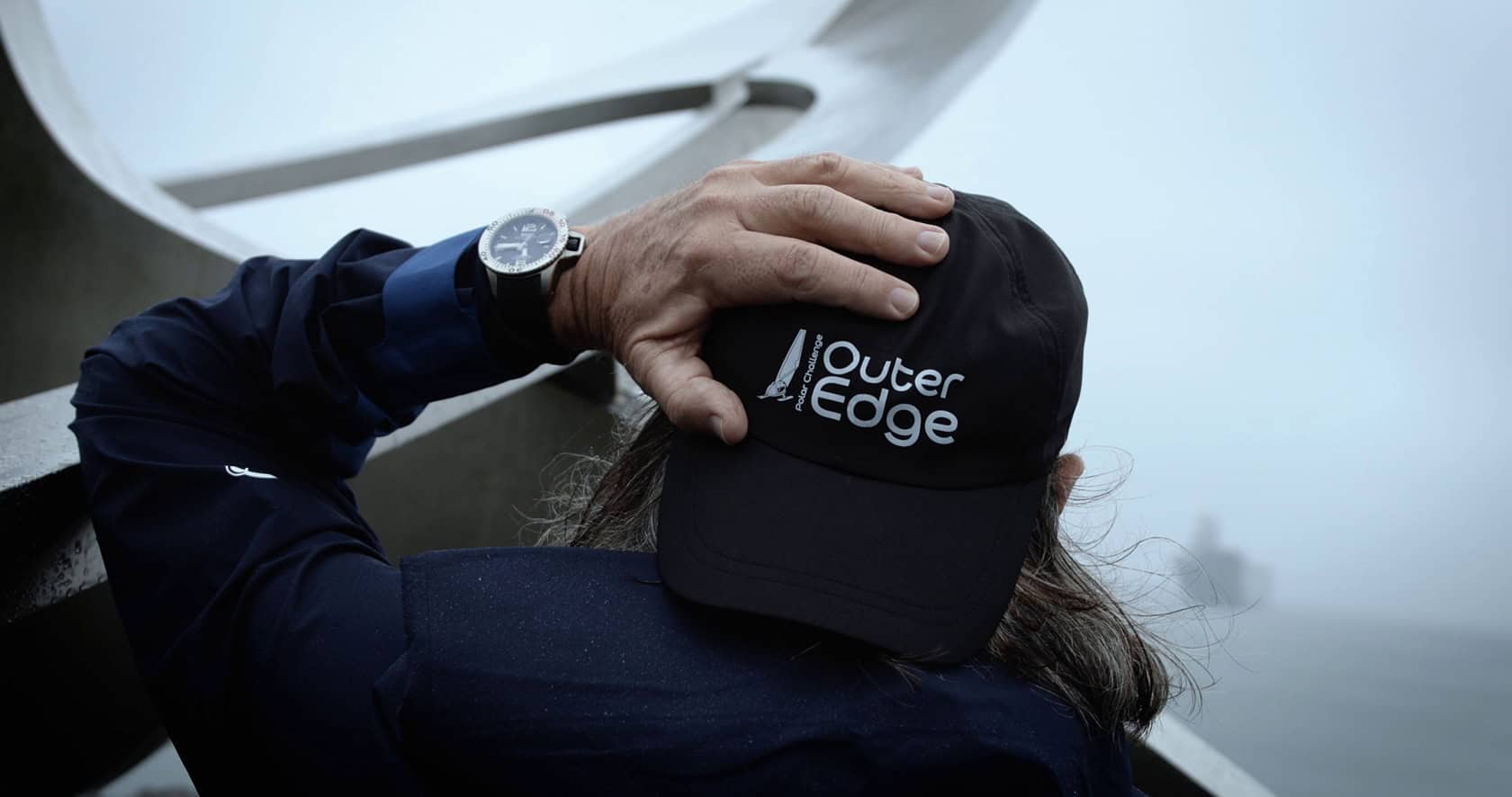
The unofficial motto of the US Navy EOD is ‘Initial Success or Total Failure’. The EOD partnership isn’t a co-design — it’s a license.
But BALL didn’t just get the logo. They built a watch tough enough to carry it.
Case Construction and Materials — Titanium, Dimensions, and Crown Protection
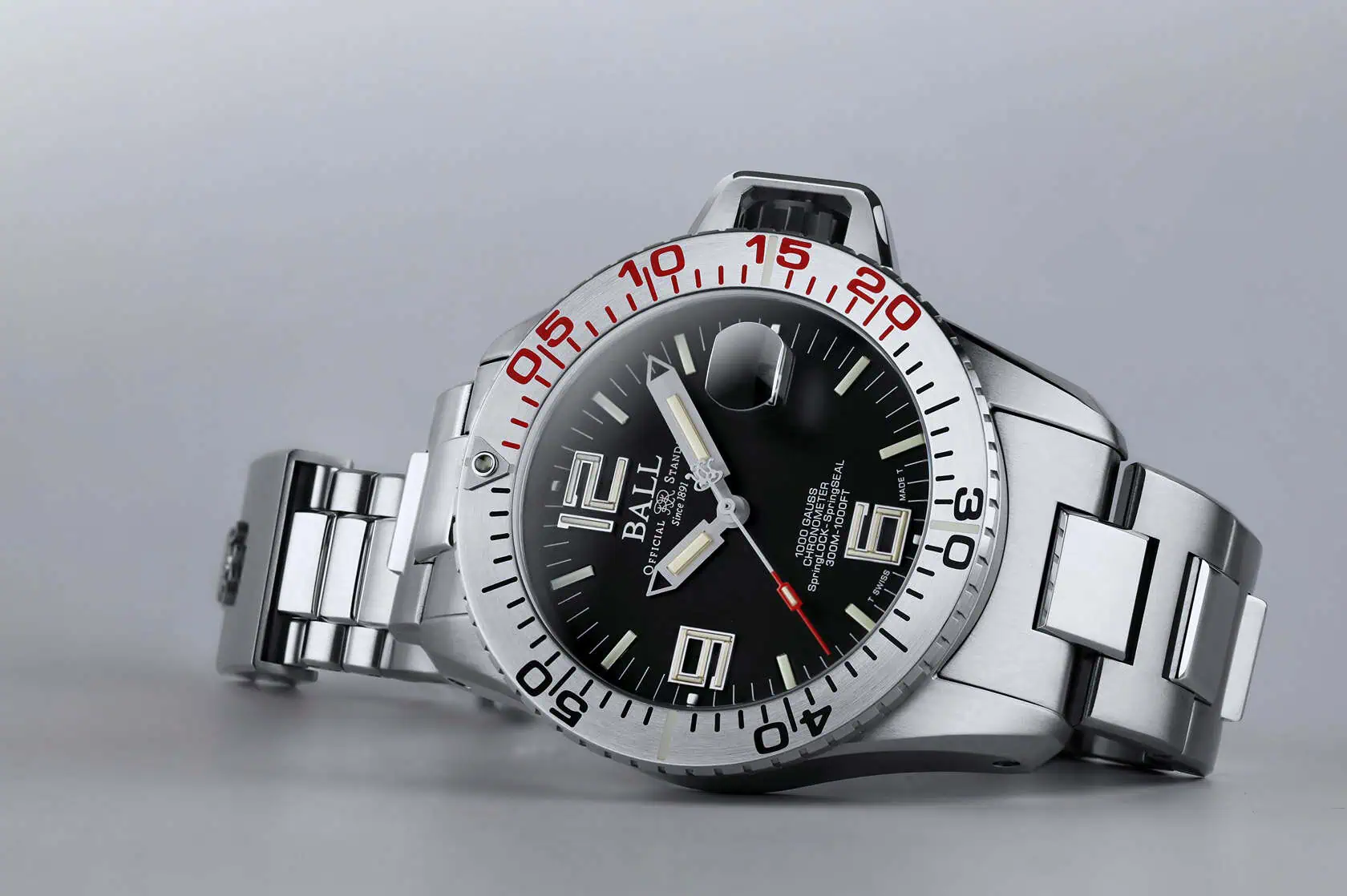
The Engineer Hydrocarbon EOD uses a 42mm titanium case that’s 13.7mm thick. Titanium keeps it lighter than steel, which matters for a watch this chunky. The 13.7mm height is noticeable, but you’re not wearing this with a suit. It’s a tool watch.
Water resistance is 300 meters (1,000 feet), good for serious diving. The crystal is anti-reflective sapphire, scratch-resistant and easy to read in bright light. The bracelet is a tapered titanium and stainless steel design with a patented folding buckle. Comfortable, secure.
The black dial is classic and legible. Nothing fancy. It works.
Bezel material tradeoff: stainless steel vs. ceramic
You have two options: stainless steel (model DM3200A-S1C-BK) or black ceramic (DM3200A-S2C-BK). Both are unidirectional rotating bezels with a gas tube inset and Super LumiNova. The tradeoff is real: stainless steel is more impact-resistant — if you smack it against a rock, it’ll dent rather than shatter. Ceramic is more scratch-resistant, so it’ll look newer longer.
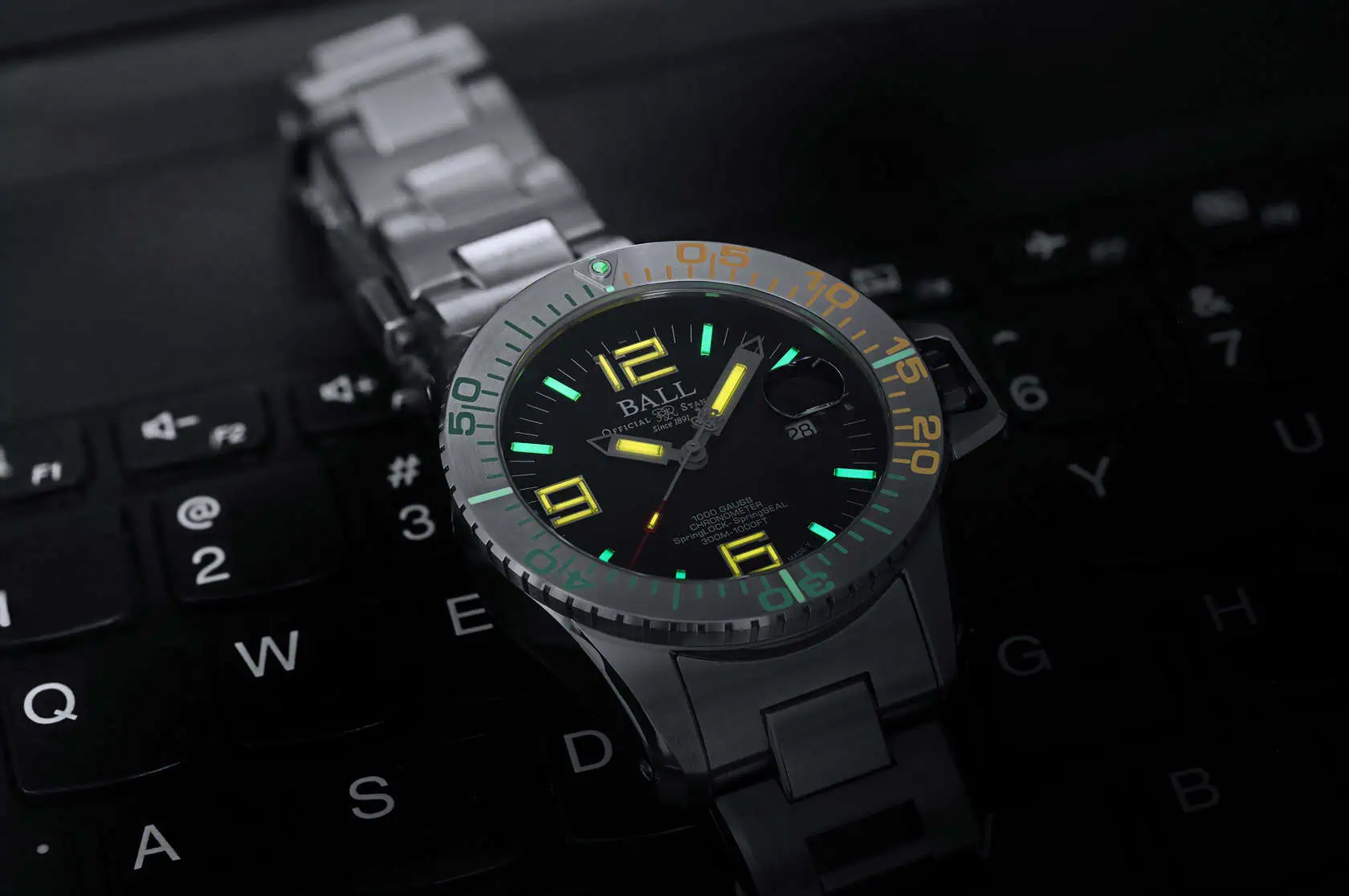
Choose based on your environment. If you’re worried about scratches, go ceramic. If you’re worried about shattering on a ladder or a dive boat, go steel.
Crown protection with ball lock mechanism
BALL designed a patented crown protection system with ball lock specifically for this watch. It uses a ball lock mechanism that secures the crown and prevents accidental damage. Most dive watches have crown guards. This is a step beyond — a mechanical lock that’s easy to use and built to withstand abuse.
It’s not a cosmetic cover. It actually works.
The Three-Layer Anti-Shock System — Elastomer Ring, SpringLOCK, and SpringSEAL
A common failure pattern in mechanical watches is a broken balance staff after a drop onto tile. Even a 1-meter fall can be fatal to a standard movement. The Engineer Hydrocarbon EOD is engineered for a 10-meter drop. That’s about 33 feet. Drop it off a ladder, it’ll be fine.
The watch uses three separate patented systems working together.
The elastomer ring: absorbing the 10-meter fall
The primary shock absorber is a new patented shock absorption elastomer ring that BALL specially re-invented for the EOD. It sits inside the case, around the dial and movement. Elastomer is a flexible, UV-resistant, long-lasting rubber that won’t degrade in sunlight. On impact, the ring lets the crown stem, spring, and dial shift slightly, absorbing the energy instead of transferring it to fragile parts. There’s also protective padding inside. The system’s structure is inspired by architecture — designed to give way rather than break.
SpringLOCK: protecting the hairspring
The hairspring is a key regulating organ and one of the most fragile parts of a mechanical caliber. It’s a tiny coil that regulates the watch’s rate. If it deforms or breaks, the watch stops. SpringLOCK is a patented system that reduces shock to the balance spring by 66% compared to Swiss certification standards.
It limits the unfurling of coils, preventing deformation or breakage. That’s a real number, not marketing fluff.
SpringSEAL: keeping the regulator in place
After a drop, many watches need to be reset because the regulator — the part that adjusts timekeeping, has moved. SpringSEAL locks the regulator setting in place during a shock. So you drop it, pick it up, and it’s still keeping good time. No reset needed. That’s the most relatable benefit: you don’t have to wonder if the watch is still accurate after a knock.
The entire system is rated to withstand 50,000Gs. That’s a huge number. It means this watch can take a serious beating.
Anti-Magnetic Protection — The Mumetal Shield
Most watches are resistant to about 60 Gauss. Place one near a laptop speaker or a magnetic clasp, and you’ll see it gain or lose seconds per day. The Engineer Hydrocarbon EOD resists magnetic fields up to 1,000 Gauss (80,000 A/m). That’s roughly 16x the resistance of a typical watch.
The shield is made of Mu-metal, an alloy of nickel, iron, copper, and molybdenum. It has high magnetic permeability — it attracts and deflects static or low-frequency magnetic fields away from the movement. Can this watch survive everyday magnetic exposure from speakers, airport scanners, and even the fringe field of an MRI machine? Yes, and that’s the point. You don’t have to worry about where you set it down.
Movement and Chronometer Certification — The BALL RR1101-CSL
Inside the case is the BALL RR1101-CSL automatic caliber. It’s a COSC certified chronometer, meaning it meets the Swiss standard for accuracy. That’s important, but not unique. The special movement oil allows operation across a range of -45°C to 80°C (-49°F to 176°F).
Most COSC watches can’t run below -10°C. This one works in polar cold and desert heat. The oil is the unsung hero of the extreme-temperature spec.
The movement shows hours, minutes, sweep seconds, and a magnified date window. No complications. Just reliable timekeeping.
Legibility in Darkness — Micro Gas Tubes and Super LumiNova
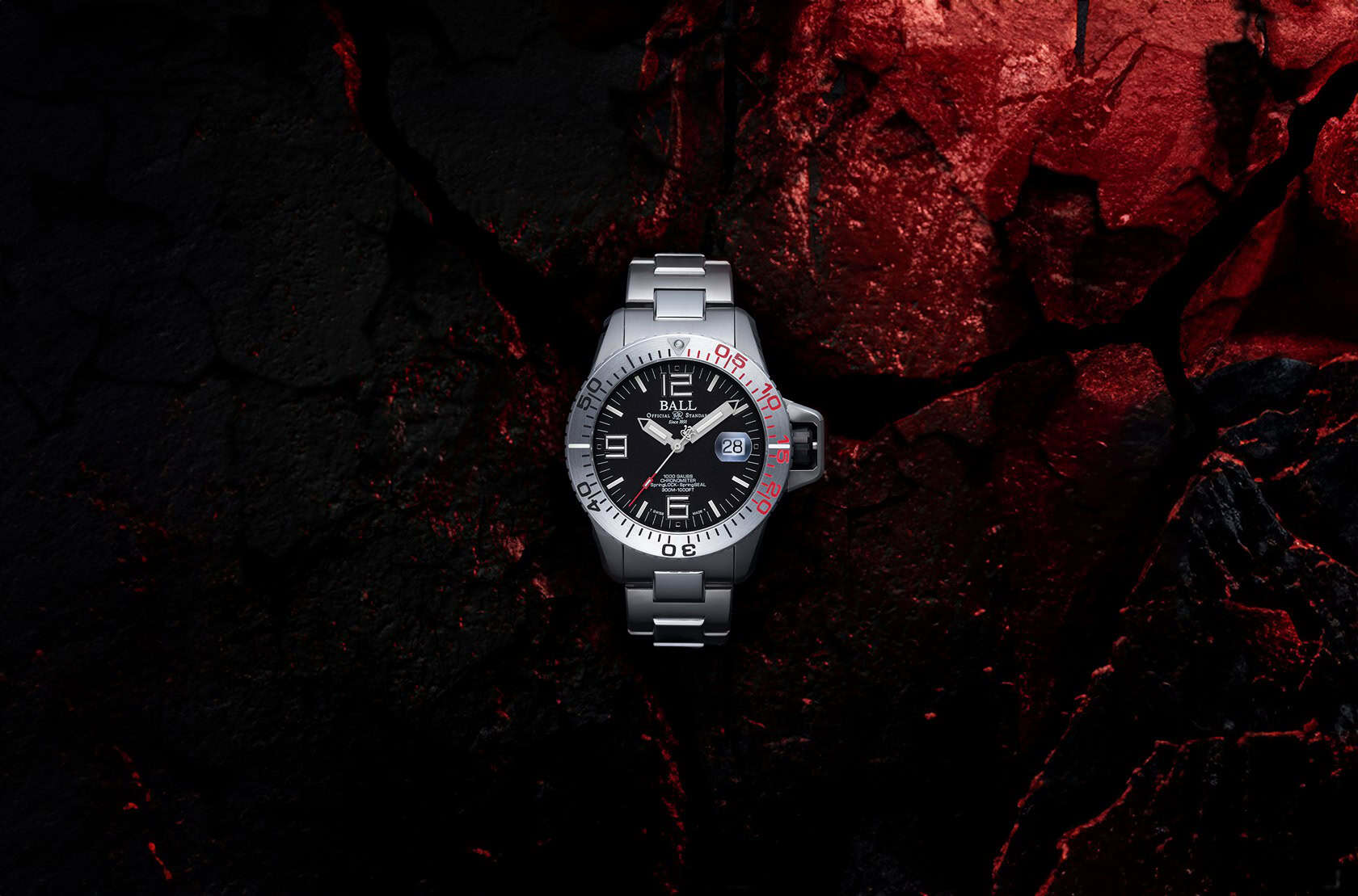
The Engineer Hydrocarbon EOD uses 28 self-powered micro gas tubes that glow for years without charging, plus Super LumiNova on the bezel for a brighter initial charge. A common buyer mistake is assuming all lume works the same way. The tell is disappointment when a watch with only Super LumiNova fades after a few hours. Micro gas tubes glow for years without charging. BALL is one of the few brands that uses them extensively, and the Engineer Hydrocarbon EOD has 28 of them on the dial, hands, and bezel.
The tubes are Swiss technology — gas-filled glass microcapsules that are self-powered. No battery, no button pressing. You can read the time in total darkness instantly. They’re always on, though they’re dimmer than a freshly charged Super LumiNova.
BALL also applies Super LumiNova on the bezel in addition to the gas tube inset. That gives you both systems: tubes for constant glow, LumiNova for a bright initial charge after exposure to light. It’s a pragmatic redundancy. You get the best of both worlds.
Brand Heritage — From Railroad Time to Patrick’s Labs
BALL Watch Company was founded in 1891 after a tragic accident that reshaped timekeeping standards.
The Kipton train collision that changed timekeeping
BALL Watch Company was founded in 1891 after the tragic 1891 Kipton, Ohio head-on train collision. The crash was caused by a timing error. American railroad companies appointed Webster Clay Ball ‘Chief Time Inspector’, and he supervised newly synchronized timing protocols. The standardized ‘railroad time’ efficiency originated the ‘Be on the Ball’ proverb.
His work later inspired the future Swiss Society of Chronometry (COSC) — the same certification body that rates this watch. The same commitment to precision that started with railroad time is what drove the R&D behind these patented systems.
Patrick’s Labs: BALL’s innovation engine
Patrick’s Labs is BALL’s first spin-off company, a dedicated Research and Development Center. The elastomer ring, SpringLOCK, and mumetal shield all came from Patrick’s Labs.
Who Should Buy the Engineer Hydrocarbon EOD?
This watch is a problem-solving tool, not a status symbol. If you need a watch that can survive a 33-foot drop, resist magnetic fields from speakers and electronics, stay accurate in temperatures from -45°C to 80°C, and glow for years without charging — this is it.
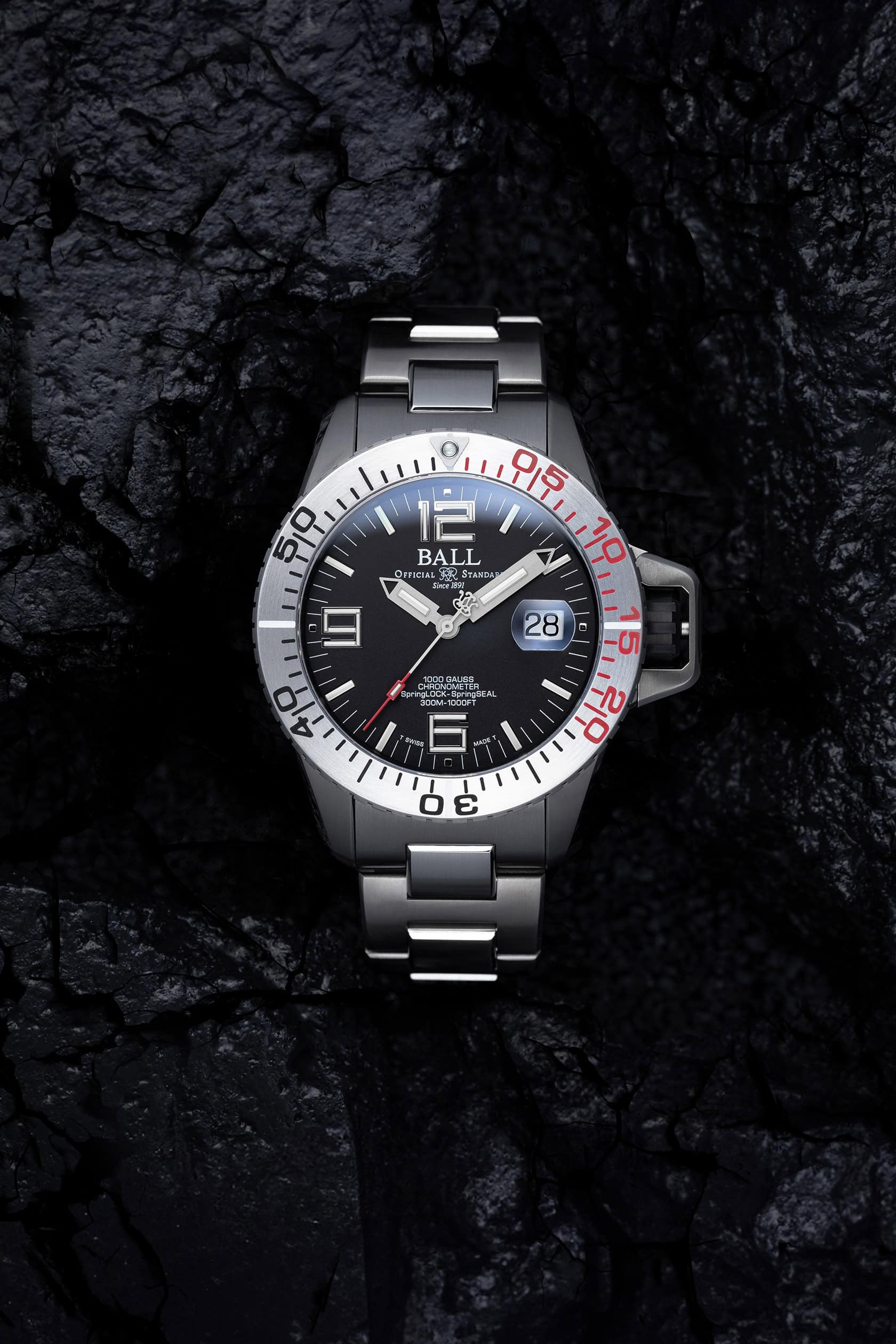
Pricing for the Engineer Hydrocarbon EOD sits around $3,000 to $3,500, depending on the bezel choice. That puts it in the same ballpark as the Sinn U1 (around $1,500–$2,000) and the Damasko DK30 (around $2,000–$2,500). The premium over those competitors comes from the triple anti-shock system, the mumetal shield rated to 1,000 Gauss, and the licensed US Navy EOD partnership — features you won’t find in a standard tool watch at this price.
The main decision point is the bezel. Choose the stainless steel version (DM3200A-S1C-BK) if you’re worried about impact damage. Choose the ceramic version (DM3200A-S2C-BK) if scratches bother you more. Everything else is the same.
The EOD insignia on the case back is a reminder of the partnership. The U.S. Navy trademarks are used under license, so it’s legit.
But the guy who needs this watch knows he needs it. He’s the one who drops things, works in extreme environments, or just wants one watch that can handle anything.
If that sounds like you, the Engineer Hydrocarbon EOD is worth a serious look.
Frequently Asked Questions
What makes the BALL Engineer Hydrocarbon EOD different from other dive watches?
It’s built to survive a 10-meter free fall, resist magnetic fields up to 1,000 Gauss, and run in temperatures from -45°C to 80°C. The US Navy EOD partnership means it passed real-world standards from bomb disposal technicians, not just lab tests.
Is the BALL Engineer Hydrocarbon EOD worth the price?
If you need a watch that can handle extreme drops, magnetic fields, and temperature ranges from polar cold to desert heat without losing accuracy, yes. It’s a problem-solving tool with COSC certification and a legitimate military partnership, not a status symbol.
Why does the BALL Engineer Hydrocarbon EOD have a US Navy EOD logo?
BALL has a licensed partnership with the US Navy Explosive Ordnance Disposal unit, meaning the watch had to pass their real-world standards. It’s not just a logo slapped on a dial — the case back carries the EOD insignia as a legitimate endorsement.