
I spent years doing everything right. Church community. Meditation. Long walks.
Friendships that ran deep. Real love. Daily laughter. Conversations that kept me up past midnight. A life that looked, from the outside, like the kind of peaceful, prayerful existence people write novels about.
And I still felt empty.
The missing piece, when I finally admitted it, was money. Not greed. Not status. The feeling of earning my own way, of having something I’d built. The piece of the puzzle I’d been told didn’t matter.
That’s the problem with the standard “money can’t buy happiness” sermon. It’s not wrong, exactly. But it’s incomplete. Because here’s what nobody tells you: romance can’t buy happiness either.
Neither can meditation. Neither can clean living or deep insights or any single thing you throw at the wall.
Every source of happiness has limits. Having a wonderful romantic relationship is not everything; lacking hobbies, goals, creative challenges, and acquaintances outside the relationship will cause it to suffer. Having mind-blowing ‘aha’ moments is not everything; lacking discipline and self-control leads to unhealthy habits.
No one thing carries the whole load. In fact, all desirable states, when considered in isolation, fail to constitute a balanced and fulfilling life — no single pursuit, no matter how noble, can sustain well-being on its own.
The real question is whether you’re betting everything on one horse — any horse.
Key Takeaways
Research now shows three distinct groups with different income-happiness relationships, from plateau at $100K to accelerating gains after $100K
People earning $35–40K reported being substantially happier than those earning $150K+ in both US and German national data. Social comparison effects likely explain it — reference groups shift upward as income rises.
How you spend money matters more than how much you have: employees who spent about a third of their average $5,000 bonus on others rose a full point on a five-point happiness scale, while bonus size itself had zero effect
Table of Contents
What the Research Actually Says
For years, the conventional wisdom was simple: money makes you happier until you hit about $75,000 a year, then it doesn’t matter. That came from the 2010 Kahneman and Deaton study, which used regression analyses on a Gallup sample of US residents, and it got repeated so often it became gospel.
Then Matthew Killingsworth published research in 2021 in PNAS showing the opposite — that more income keeps increasing happiness without any ceiling. $75K is good. $100K is better. A million is way better.
So which is it?
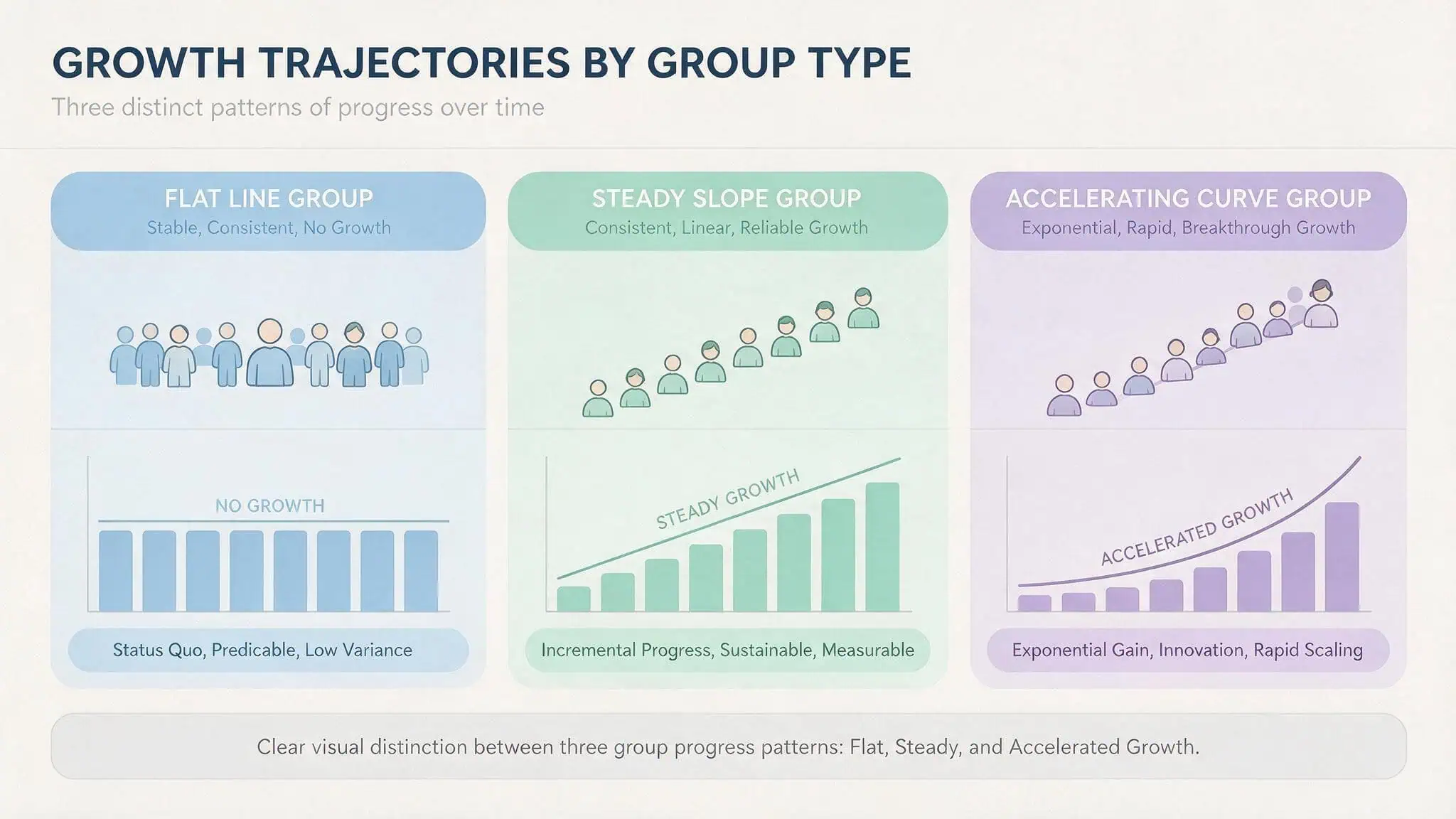
The two researchers, along with Barbara Mellers, did something rare in science: they worked together to figure out who was right. In their adversarial collaboration, they split subjects into three groups (least happy, middle-range happy, most happy) and found that the answer depends on who you are.
They split people into three groups:
The least happy: For people who are already struggling, more income helps — but only up to about $100,000. After that, it plateaus. More money won’t fix deeper issues.
The middle group: Linear relationship. Every dollar helps. No ceiling. These people are doing okay, and more money makes their lives better.
The most happy: This is where it gets interesting. For people who are already thriving, more income increases happiness, and it accelerates after $100K. The people who are already doing well get more out of every additional dollar.
The takeaway isn’t that money doesn’t matter or that it’s everything. It’s that the relationship between income and happiness is individual. If you’re miserable, a raise past six figures probably won’t fix you. If you’re building something good, every dollar helps — but the deeper question is how to align your money sex and happiness without losing yourself in the process.
Bottom line: Your starting happiness level determines how much a raise will actually move the needle — and that’s different for everyone.
When the Love of Money Goes Wrong
There’s a difference between using money as a tool and being consumed by it. The research from Guy Leschziner’s 2024 book The Seven Deadly Sins: The Biology of Being Human draws the line.
Greed correlates with a grim list: neuroticism, lower self-esteem, envy, narcissism, antagonism, depression, unhappiness, anxiety, and emotional instability. Greedy people are more likely to cheat, bully, and engage in infidelity. Greed inhibits prosocial behaviors like sharing, donating, and volunteering. It interferes with empathy and sympathy. Greed fuels most financial scandals reported in business news.
Gordon Gekko, the fictional financier from the 1987 film Wall Street, was wrong. “Greed is good” sounds like a line from a movie because it is one — and it’s not backed by data.
Social connections are a greater predictor of happiness than money. Greed actively destroys those connections. When money becomes the only thing you care about, you push out everything else that sustains a good life. The problem isn’t money itself. It’s when money crowds out every other source of happiness, though financial stability helps weaken the link between money and happiness over time.
The Counterintuitive Data
Here’s where it gets weird.

A 2022 study published on 2022 May 31 in Frontiers in Psychology by Karlijn Hoyer and colleagues looked at data from both the US and Germany. When they treated income as a smooth, continuous number — the standard way, they found no relationship with daily happiness at all. Nothing. Using lowess and spline regressions, the researchers confirmed that the relationship was non-linear and depended heavily on how income was categorized.
But when they treated income as categories, a different picture emerged. People earning between $35,000 and $40,000 appeared substantially happier than people earning over $150,000. The specific number: a coefficient of 0.16 on a seven-point Likert-type scale, with the $35–40K group outpacing the $150K+ group. This held in both the American Time Use Survey and the German Socioeconomic Panel. It also aligns with research on the money happiness threshold for men, which includes social pressure and provider identity.
Why would middle-income people be happier than the rich?
The most likely explanation is social comparison. As your income rises, your reference group shifts upward. You start comparing yourself to people who make as much or more than you. You don’t feel better — you feel worse. The Easterlin Paradox describes this: as national income rises, people don’t become happier because they compare their own achievements to others’.
There are important caveats here. Household surveys don’t capture the very poor or the very rich well — the top income category in the US data was $150K, and in Germany it was €360K. Millionaires aren’t necessarily in these samples. The data is from 2010 to 2015, and it can’t tell us about causation. The American Time Use Survey lacks longitudinal data and doesn’t manipulate income or explore mechanisms, so causal interpretation isn’t possible.
It’s also possible that less happy people select into higher-paying careers rather than money causing unhappiness — a reverse causality issue discussed by Kushlev et al. (2015).
But the pattern holds across two countries and multiple datasets. Some middle-income people are happier than some high-income people. Money helps, but not in the simple way we assume.
Red flag: If you catch yourself comparing income to friends or coworkers, that social-comparison effect is eroding whatever happiness your raise should provide.
Why We’re Bad at Predicting What Will Make Us Happy
Daniel Gilbert’s work on prospection — how we imagine our future feelings, explains a lot of the confusion. Psychologist Ann Masten of the University of Minnesota has argued that psychology has neglected important phenomena in human adaptation during periods of focus on risk and pathology. She notes that resilience arises from ordinary resources in minds, brains, bodies, families, relationships, and communities, not from rare or special qualities in minds, brains, bodies, families, relationships, and communities. This conclusion, she writes in her article ‘Ordinary Magic: Resilience Processes in Development’ in American Psychologist, provides a more hopeful basis for action than the notion that rare and extraordinary processes are required.
We’re terrible at predicting what will make us happy. The main culprit is “presentism”: we believe we’ll feel in the future the way we feel right now. When you’re dissatisfied with your current life and imagine winning the lottery, you project your current frustration into a future where you’re rich. You don’t account for the fact that you’ll adapt.
And we adapt to almost everything. Paraplegics are generally quite happy people. Blind people often say the worst problem they have is that everyone assumes they’re sad. Lottery winners feel euphoric at first, then revert to their baseline happiness.
This doesn’t mean money never matters. It means we systematically overestimate how much it will change our lives. When you imagine getting a raise, you’re picturing your current dissatisfaction disappearing. What happens is you adjust to the new income, your expectations shift, and you find new things to want.
How to Actually Use Money for Happiness
Elizabeth Dunn and Michael Norton have spent years studying what people do with money and how it affects their happiness. Their findings are practical.
Employees at a Boston-area medical supply company received bonuses averaging about $5,000. The size of the bonus had no relation to their happiness. What mattered was how much they spent on others. People who spent about a third of their bonus on others rose a full point on a five-point happiness scale.
In a separate study with 109 University of British Columbia students, participants were asked whether they’d be happier with $5 or $20. Most said $20. They predicted they’d be happier spending money on themselves. But the students who spent money on others or charities were happier — and the amount they received had no effect.
Money is stored energy and a powerful tool for education, healthcare, clothing, shelter, and time to enjoy enriching life activities. That’s real utility. But what you do with it matters more than how much you have.
Practical takeaway: next time you get a bonus, a tax refund, or any windfall, consider spending a portion — even a third, on others. Gifts, donations, treating friends. The data says it works better for your happiness than spending it all on yourself.
Quick test: Before spending any windfall, try giving away roughly one third. Then compare how you feel versus your usual self-focused purchases.
Building a Life That Doesn’t Depend on Any Single Source
A man was referred for therapy, depressed and anxious despite earning well. His entire existence revolved around sales and money. He’d become distant from his family. He felt “sad and empty.”
He chose a new script. Less time at work. More time with his family. His realization came while holding his wife’s hand at a movie theater. What he was holding represented the joy and wealth in his life.
This is where the diversification thesis becomes concrete. Don’t put all your eggs in the money basket. Don’t put them all in the relationship basket either.
Or the career basket. A good life requires a mix of reliable sources.
Joshua Hook, a professor of positive psychology at the University of North Texas, puts it simply: “Just like you diversify your investments, diversify your sources of happiness.”
Some practical strategies:
- Use prosocial spending when you have extra money. That third-of-a-bonus rule works.
- Perform small acts of kindness. Tal Ben-Shahar’s class exercise asks students to do five small acts in one week. It boosts happiness.
- Consider meditation. Research suggests it increases gray matter in the precuneus, a brain region linked to happiness and a key node of the default mode network. Is it proven? No. Is it worth trying for twenty minutes? Probably.
Money isn’t meaningless, and meaning isn’t money-less. They’re not opposites. The goal isn’t to choose between them.
People Also Ask
How much of a bonus should I spend on others to boost happiness?
Research suggests spending about one third of a windfall on others. In a study of employees who received average bonuses of $5,000, those who spent roughly a third on others rose a full point on a five-point happiness scale, while the size of the bonus itself had zero effect on happiness.
What’s the difference between using money as a tool and being consumed by it?
Using money as a tool means treating it as stored energy for education, healthcare, shelter, and time to do what matters. Being consumed by it — greed — correlates with neuroticism, lower self-esteem, envy, depression, and actively destroys the social connections that predict happiness better than money does.
Can money buy happiness if I’m already unhappy?
It depends on your starting point. If you’re already struggling, more income helps — but only up to about $100,000, after which it plateaus. If you’re miserable, a raise past six figures probably won’t fix deeper issues. The real question is whether you’re betting everything on one source of happiness, whether that’s money, relationships, or anything else.