Here’s the split I found in the data: 70% of buyers gave this grinder five stars. Nine percent gave it one star. That’s not a typo, and it’s not a minor blip. That kind of gap tells you more about a product than any marketing description ever could.
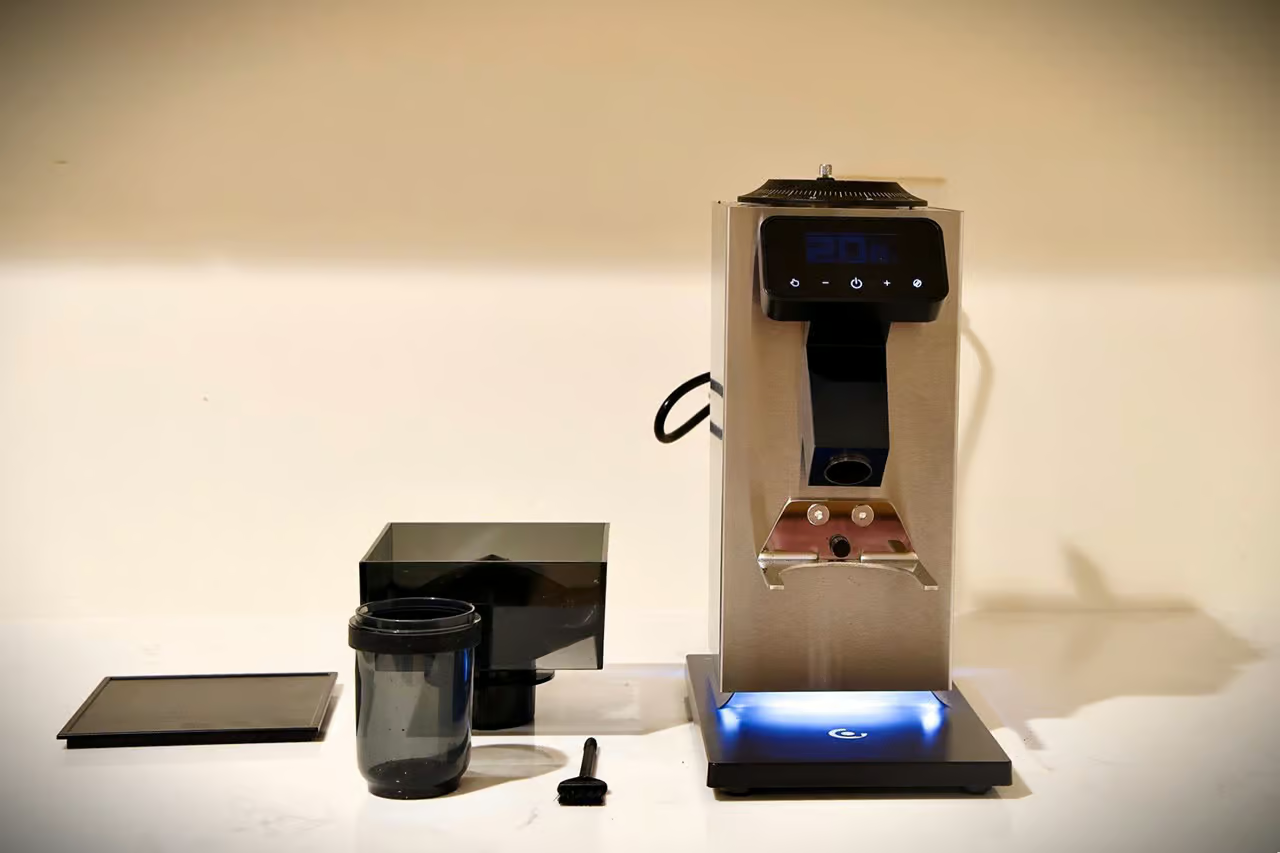
The AMZCHEF Commercial Flat Burr Espresso Bean Grinder (model FC6202) is currently sitting at $179.99, down from a $199.99 list price. For that money, you get a heavy, all-metal machine with 64mm flat burrs and 90 grind settings. That’s an attractive spec sheet for a home espresso setup. But when I dug through all 245 ratings, the picture got more complicated. Here’s what you need to know before you buy.
Key Takeaways
The 4.2-star average hides a sharp split: 70% five-star ratings versus 9% one-star ratings, with specific complaints about dead-on-arrival units, touch screen issues, and portafilter holder fit problems with DeLonghi machines.
User-reported dial-in settings are the most valuable info you’ll find: setting 3 for a DeLonghi Dedica (before choking), settings 6-8 for consistent two-shot cups, and a sweet spot of 14-16 for a Breville Bambino.
The anti-static system works for some users, one reported zero static after six months, but others report grounds flung everywhere and a catch cup that sits too far from the chute.
Table of Contents
What This Grinder Is, and Who It’s For
Here’s the pitch: a $180 flat burr grinder that wants to be your home espresso workhorse without emptying your wallet. The 64mm flat burrs are the headline spec, and they matter. Flat burrs produce more uniform particle sizes than conical burrs, which means your espresso extracts more evenly. That’s the difference between a shot that tastes balanced and one that hits sour then bitter in the same sip.
The build backs up the ambition. This thing weighs 12.6 pounds of stainless steel and metal chamber. It’s not going anywhere on your counter. It also happens to be the kind of machine that sits at #123 in Amazon’s burr grinder rankings, which puts it in solid territory for a budget flat burr option.
The buyer here is someone who’s moved past supermarket pre-ground coffee and wants to actually dial in shots at home. You’re also getting 90 grind settings that span espresso all the way to cold brew, plus SSP-compatible burrs. That last bit matters if you’re the tinkering type: SSP makes higher-end burrs you can swap in later for better grind quality. It’s a future-proofing option, not something you need to budget for now.
Build Quality and Design. Does “Commercial” Hold Up?
Let’s address the word in the product name: “commercial.” It’s marketing, not a tested spec. This is a heavy home grinder, and that’s fine, but don’t expect it to survive cafe volumes.
What you get is a 12.6-pound block of metal that stays put while grinding. The weight does real work: it dampens vibration and helps with heat dissipation. When you’re grinding for espresso, you don’t want the machine walking across the counter or overheating the beans. Users consistently report that the build feels solid for the price.
One buyer described it as durable after six months of use. Another called the build quality impressive relative to the price tag.
There’s a practical downside to all that metal: you’re not moving this around. It’s a set-it-and-forget-it machine. If you’re the type who wants to pack your grinder for a weekend trip, look elsewhere. This one lives on your counter and stays there.
Grind Performance, 90 Settings and Real Dial-In Numbers
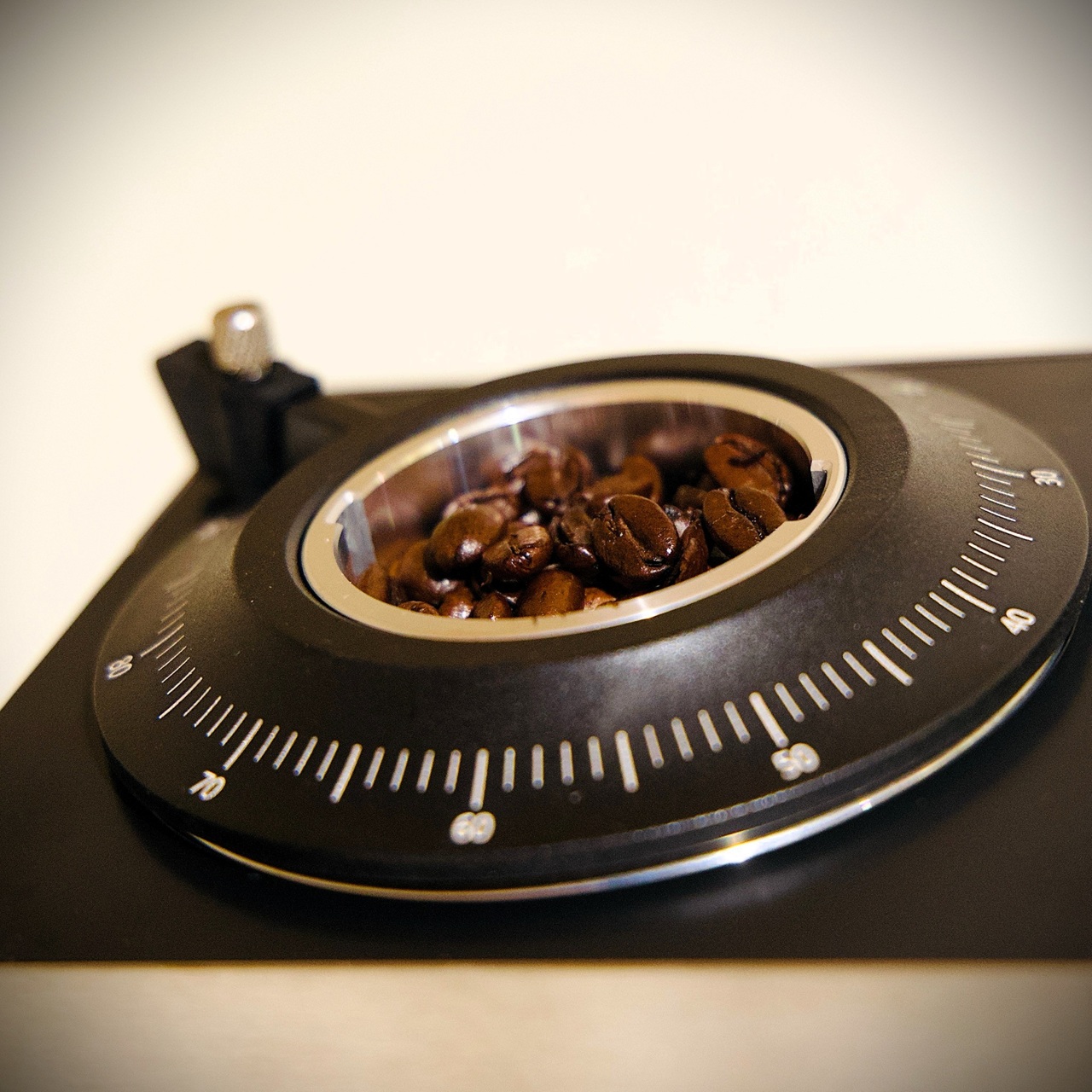
The spec sheet says 90 settings: espresso from 4 to 15, moka and pour over from 16 to 55, French press and cold brew from 56 to 90. That range covers everything you’d ever brew at home. The 0.1-second timer also means you can get close to your target dose by time alone.
But here’s where the reviews get useful. The default settings often don’t work out of the box. Users report that the recommended settings produce the wrong grind, and you’ll need to adjust.
The specific numbers people found:
- For a DeLonghi Dedica, grind setting 3 is right before the machine chokes. That’s how fine this grinder can go.
- Settings 6 to 8 produce a consistent two-shot cup for several users.
- For a Breville Bambino, the sweet spot lands at 14 to 16.
If you’re using a DeLonghi, the timer math helps: 12 seconds produces roughly 10 grams. That’s your starting point.
A few users hit a frustrating wall early on. Some reported that the grinder produced unusably coarse grounds for the first few days. One mentioned that after an update, it could finally grind fine enough for espresso, which is unusual for a grinder, but it happened. As this AMZCHEF professional coffee grinder review notes, the machine packs 90-step adjustable grind settings and a stainless steel conical burr design, so don’t expect plug-and-play perfection. Give yourself a few days to break it in and find your machine’s setting.
Anti-Static and Mess Management. The Headline Feature, Tested by Users
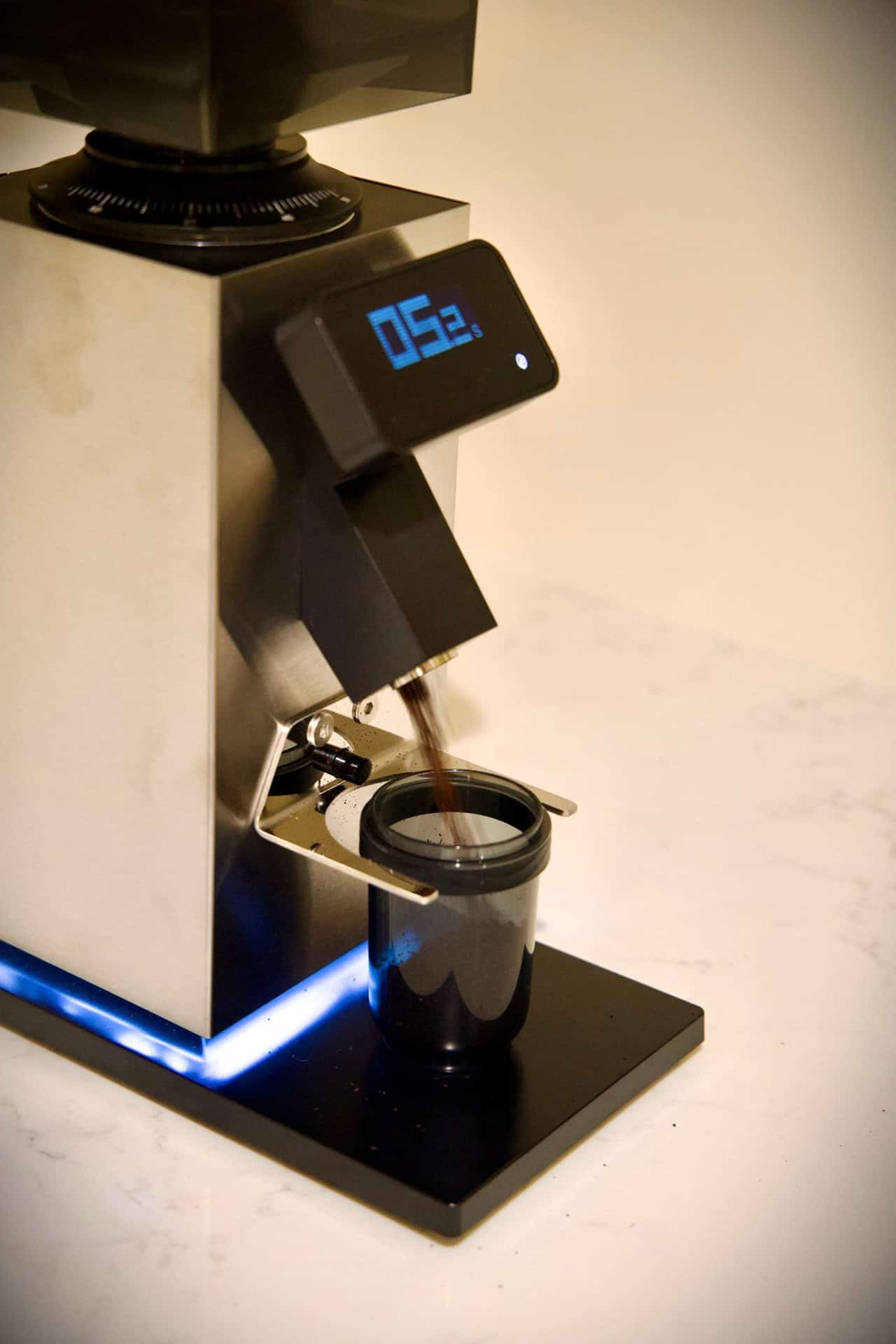
Static is the enemy of clean coffee grinding. It makes grounds stick to the chute, fly around your counter, and waste coffee. The AMZCHEF’s answer is a negative ion generator paired with a stainless steel angled exit chute and a magnetic single-dose catch cup, which its AMZCHEF coffee grinder review notes offers 24 exact grind settings for espresso, drip coffee, or French press.
When it works, it’s great. One user reported zero static issues after six months of daily use. Others say the grinder stays clean and the grounds pour neatly into the portafilter. The angled chute does help direct the grounds where they need to go.
But “when it works” is doing a lot of work there. Other users report the opposite: grounds flung everywhere, a catcher that sits too far from the chute to catch everything, and occasional grounds falling out if you overfill the hopper. The anti-static system isn’t a guarantee, it’s a feature with mixed real-world results. If a spotless counter is your top priority, you’re gambling on which experience you’ll get.
Ease of Use and Cleaning
The LED touch panel with 0.1-second timer precision is useful. It’s how you get consistent doses without weighing every grind. The timer accuracy means you’ll get the same amount of grounds shot after shot, which is the whole point of dosing by time.
The touch panel itself is where opinions split. Some users find it sensitive to the point of being fickle. Others report it works fine with no issues.
Cleaning is a real plus. The all-metal chamber is accessible, and a cleaning brush comes included, which matters more than you’d think, since coffee oils go rancid and stale grounds will ruin your next shot. If you’re weighing whether this kind of upkeep is worth it, this AMZCHEF brand guide covers coffee machine options, burr grinders, milk frothers, and other small gadgets at $159.99 with 1800W power. A grinder you can clean is a grinder you’ll keep clean.
Reliability and Customer Satisfaction. The Bimodal Truth
Here’s the number that should drive your decision: 4.2 stars from 245 ratings. The breakdown is where it gets interesting.
- 70% five-star
- 12% four-star
- 3% three-star
- 6% two-star
- 9% one-star
Nine percent at one star is meaningful. It’s not “a few defective units”, it’s roughly one in eleven buyers who had a bad experience.
The specific complaints: units that fail to start on arrival (dead on arrival), touch screen issues where the panel doesn’t respond or responds to nothing, inconsistent grind results on certain machines, and a portafilter holder that doesn’t fit all portafilters. DeLonghi owners specifically report fit issues with the holder.
The flip side is the long-term reports. Multiple users report six months of daily use without static problems or quality degradation. They describe consistent output and solid durability.
Some buyers are very dissatisfied, one went as far as calling it garbage in frustration. That’s harsh, but it reflects real anger from a minority of buyers. The honest read: this grinder has a quality control issue, not a design disaster. You might get a perfect unit or a frustrating one. There’s no way to know until it arrives.
How It Stacks Up Against the Alternatives
Buyers who compared the AMZCHEF directly to other budget grinders came away preferring it. Users describe it as better designed, quieter, and faster than both the SHARDOR (64mm, $169.99) and the MOKKOM (Titanium 64mm, $79.98). One buyer put it plainly: aesthetically, it’s better designed than both.
That user-validated comparison is worth more than any spec sheet. In the same price neighborhood, you’ve got a few other options:
- Tuni G3: $199.00, 4.5 stars from 75 reviews
- KIDISLE Conical: $189.99, 4.3 stars
- GeniCup: $89.99, 3.8 stars from just 6 reviews
- DAOFEL 64MM: $49.99, 4.8 stars from 27 ratings
The AMZCHEF sits in a reasonable spot: cheaper than the Tuni and KIDISLE, more expensive than the budget options. The fact that users who tried the SHARDOR and MOKKOM preferred the AMZCHEF suggests the price premium over those options is justified.
Warranty, Support, and Protection Plans. The Financial Picture
You get a 1-year manufacturer warranty and a 24-hour after-sales support line. Returns are free for 30 days, and the refund typically comes through within 24 hours. That return window is your real safety net, use it if your unit has issues in the first month.
If you want extra coverage, Asurion offers two plans: $28.99 for 3 years and $38.99 for 4 years. There’s also a Complete Protect option at $16.99 per month with up to $5,000 in claims per year. I’m not going to tell you which plan to buy. For a grinder with a 9% one-star rate, the 3-year plan is reasonable insurance, but it’s not a must-have. If a $180 grinder failing after a couple of years would annoy you, the plan costs less than a single cafe visit per month.
Sustainability and Certifications
The grinder carries a Global Recycled Standard certification (TE-00320036) and a Climate Pledge Friendly badge. That means the product contains recycled materials and meets Amazon’s sustainability criteria. It’s not a reason to buy, but it’s a nice footnote if you’re trying to make more conscious purchases.
Final Verdict. Who Should Buy This Grinder?
Here’s the tradeoff in one sentence: $179.99 buys you real 64mm flat burrs, 90 settings, and a solid metal build, with a genuine gamble on quality control.
Buy this grinder if you’re a home espresso enthusiast on a budget who wants flat burr performance and is willing to spend time dialing in. You should be comfortable troubleshooting a bit, and you should use the 30-day return window to verify you got a good unit. If you own a standard 58mm portafilter machine, the fit should work for you.
Skip it if you want plug-and-play reliability. Skip it if you own a DeLonghi, verify the portafilter holder fits your specific model before buying. Skip it if you don’t have the patience for a possible break-in period with unusably coarse grinds.
The single biggest risk is quality control. You have a roughly one in eleven chance of getting a lemon. That’s not a great ratio, but the 70% who got a good unit are overwhelmingly happy with their purchase. The Asurion plan can hedge that risk if you want peace of mind.
My read: if you’re willing to gamble, and you use the return policy as a safety net, this grinder delivers flat burr performance at a price that’s hard to beat. If you want certainty, spend more or look elsewhere. Either way, you know the odds before you click buy.
People Also Ask
Is AMZCHEF a good coffee grinder?
It’s a mixed bag. The 4.2-star average hides a sharp split: 70% of buyers give it five stars, but 9% give it one star. If you get a good unit, it delivers solid flat burr performance, but there’s a real risk of quality control issues like dead-on-arrival units or touch screen problems.
Is AMZCHEF a good espresso machine?
AMZCHEF makes grinders, not espresso machines. This grinder is designed for espresso, but it’s not a machine that brews coffee. It grinds beans for espresso, and it works well for that purpose if you’re willing to dial in the settings.
What brand is AMZCHEF?
AMZCHEF is a brand that sells small kitchen appliances, including coffee grinders, espresso machines, and milk frothers. This particular grinder is the AMZCHEF Commercial Flat Burr Espresso Bean Grinder, model FC6202.
How do you dial in the AMZCHEF grinder for espresso?
Start with the recommended settings from other users: for a DeLonghi Dedica, try setting 3; for a Breville Bambino, try 14-16. You’ll need to adjust based on your machine and beans, and expect a break-in period where the grinds might be too coarse at first.

