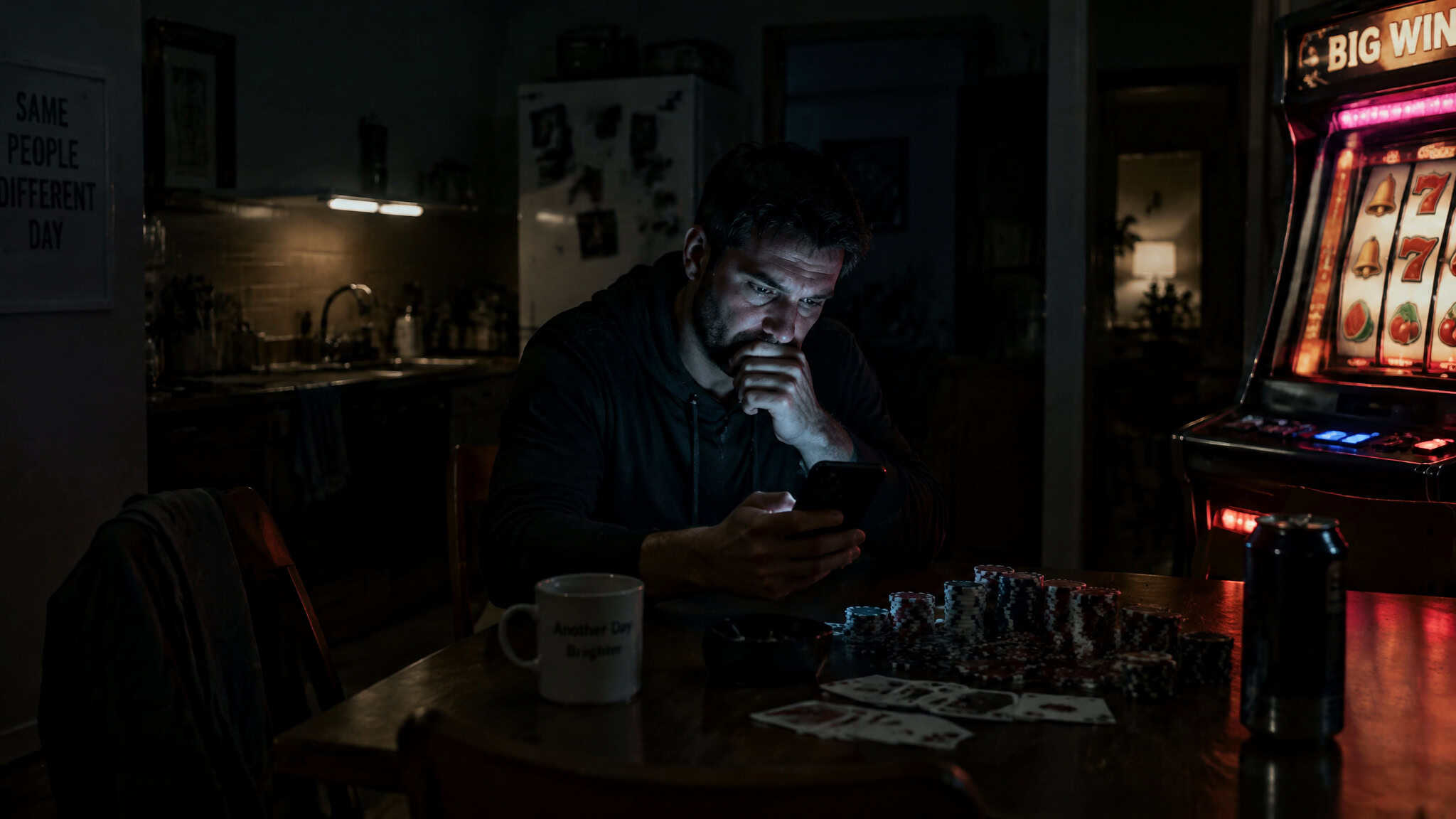
There’s a search a certain kind of guy runs late at night, usually after things have gone sideways again: why some men are attracted to women they later call crazy. If you’ve typed a version of it, you probably already suspect the answer isn’t entirely about the women. Good instinct. The pull isn’t toward pathology. It’s toward intensity, need, and unpredictability, the exact things that switch on wiring most of us were raised with and never examined.
The question is uncomfortable because it points the camera back at you, which is exactly why it’s worth asking. You can’t avoid a pattern you can’t see, and this one stays invisible as long as you think you’re just unlucky in love. I write for Unfinished Man, a site for guys still figuring things out, so treat this as a mechanism breakdown rather than a verdict on anyone. Here’s how I’d read it.
Key Takeaways
The pull isn’t toward mental illness. It’s toward intensity and unpredictability, which trips the provider/hero/fixer wiring most men were raised on.
Intermittent reinforcement, the same slot-machine mechanism behind social media feeds, makes unpredictable partners feel like passion while steady partners register as background noise.
The relationship has turned unhealthy when it runs on proving, fixing, or waiting; the honest test is whether you actually like how you feel around her.
Table of Contents
What “crazy” actually labels
The pull some men feel toward women labeled “crazy” is a response to intensity and unpredictability, not to mental illness. Worth saying up front, because the label itself is folk vocabulary. It points at volatility, hot-and-cold behavior, drama. No diagnosis attached, and none should be.
Interrogate the premise a little and it wobbles. “Crazy” usually gets applied after the fact, sometimes after a breakup, by the person who was inside the conflict. That changes what actually needs explaining. It isn’t her psychology.
It’s what he was responding to: an intensity signal, need, unpredictability, visible distress. Culture already has a name for that reflex. It’s called damsel in distress.
Not every man has this pull, and where it exists it’s some mix of thrill, ego, and misread intensity. On the stereotype question: some men genuinely do chase volatility, and healthy attraction favors warmth, consistency, and honesty. Which is why a lot of what gets called crazy is emotional expressiveness wearing a bad label.
The hero instinct: why a woman in distress activates men
Men feel the need to fix and rescue women they date because most of us get raised as providers, heroes, and fixers, and those urges stick around even toward women who don’t need rescuing. Nobody has proven whether it’s taught or innate, and plenty of men don’t have it at all. But when it’s there, it sticks.
One blogger’s first-hand account from November 2018 shows how fast the reflex fires. Five days into doing it full-time, she was hauling five huge shopping bags out of Ann Taylor on 5th Avenue, two of them from Primark at Kings Plaza Mall. A strap snapped and her winter white coat landed on the sidewalk. Three separate men converged within moments.
One gathered the scattered items. An older, well-dressed gentleman held her bags and asked if she was okay about ten times in two minutes. A guy in a baseball cap took the broken bag to the trash, and everything got redistributed into the four surviving bags.
Nobody was flirting. Distress alone read as a role offer, and the rescue reflex fired before romance was even on the table. That’s the mechanism in miniature: being needed can substitute for being loved, fixing feels like purpose, and a partner in crisis hands you the job description pre-written.
For the record, the outfit that hit the sidewalk: a Zara trench coat, a Capulet bodysuit, a Tibi satin skirt, and Balenciaga boots picked up via The RealReal. Photos by Rose Lazard; edits by Monroe Steele. If this kind of breakdown is your thing, subscribing to the newsletter is how you keep it coming.
The fixer template: relationship roles you didn’t choose
Roles like these aren’t chosen off a shelf. A family crisis assigns them, and they follow you into every relationship afterward, where they tend to meet someone whose cracks fit yours exactly.

Same man, same role, different women
The same blogger traced the pattern through her ex. His father died suddenly, which left his mother raising three kids, so he stepped into the provider and protector role and stayed in it. The girlfriend before her was a single mother. The one after was a mother of three leaving an abusive relationship.
Same man, same role, different women. Her own hindsight was dry: the relationship was probably doomed from the start. That’s one person’s retrospective observation, not a law of dating.
The other half of the pairing
The blogger’s side of it: raised largely by a single mother until her stepfather arrived, learned to fend for herself, independent to the core. Her update now is that it’s fine to need people. She lets guys install the AC unit or carry the bags and says thank you instead of insisting she’s got it. She figures she’ll fall in the street again anyway. Maybe next time on Wall Street.
The chemistry of chaos: why unpredictability feels like passion
The pull some men feel toward “crazy” women runs on conditioning, not chemistry with a particular person. The mechanism has a name, intermittent reinforcement, and it works like a slot machine: unpredictable rewards hook people while predictable ones bore them, so warmth one day and coldness the next keeps the brain chasing the next message, compliment, or touch. Unpredictability sends dopamine and cortisol through the brain, the same chemicals behind addiction, and it’s the one part of this nearly every source agrees on, the Behind the Mind YouTube channel included.
The slot machine effect
The slot machine is the classic model: unpredictable rewards hook people, predictable ones bore them. Unpredictability sends dopamine and cortisol through the brain, the same chemicals behind addiction, and then it moves on to running your life. The social feed runs the same system, which is why you keep scrolling.
A constant hum goes unnoticed until it stops, which is why calm stretches turn invisible while the ruptures register as the real feeling. The gambler waiting for the next win is the partner waiting for the next good day.
Field note: If the good days feel like payouts, the bad days are already setting the odds.
Conditioning or genuine preference?
One reading says the brain treats emotional unpredictability as mystery rather than rejection, the sense that something valuable is here but you can’t fully reach it. Pain can strengthen attachment when love feels uncertain, which is trauma bonding in one sentence. Another camp frames the same pull as a genuine preference. Both readings come from non-experts with no empirical backing behind them, so hold them loosely.
Attachment origins: when love had to be earned
Yes, childhood patterns can make chaos feel like love, when affection was inconsistent growing up. A parent warm one day and cold the next teaches the brain early that love equals effort. Nobody sits down and learns that lesson on purpose. It gets absorbed, and years later a volatile partner feels less like a warning and more like home turf.
Familiar feels like home even when it isn’t safe or peaceful. That’s the whole problem in one line.
The fixer instinct often runs on the past, not the partner. The “he’s just been hurt” framing is frequently the fixer’s own childhood speaking, the rescue impulse aimed at the wrong person. Then comes the loop: to an avoidant partner, all that intensity feels like pressure, so he withdraws further, and both people end up exhausted but still attached.
One honest flag. This origin story comes from non-expert sources, and it explains the unconscious part of the question. It isn’t a clinical diagnosis, and it isn’t an argument for blaming anyone’s parents.
The chase and the validation economy: ego, scarcity, and the ethical line
Some of this pull is ego, and one corner of dating advice sells it as strategy.
Headspace goes to the uncertain
One camp argues uncertainty increases mental investment: the less sure she is of his interest, the more headspace he takes up, with validation framed as a currency whose value is set by scarcity. Their contrast case is a lawyer with a BMW whom women lost interest in within a couple of weeks, next to a bartender in a studio apartment whom women got obsessed with.
A real mechanism, a bad use
That uncertainty effect is real, but it’s the same intermittent-reinforcement conditioning from the last section. A mechanism being real says nothing about the tactic being healthy. The corrective camp’s main mistake: treating perceived value as fixed by job, car, or muscles, when it actually depends far more on self-presentation, interaction style, and neediness.
Where the line sits
The corrective camp’s answer: a strong man doesn’t manufacture scarcity. No vanishing for three days, no affection as reward and silence as punishment. Confusion isn’t intimacy. The three-day texting rule and the “97% of men” framing are marketing claims from a non-expert source, and some of this is just the chase-and-challenge effect, men wanting to handle the woman others walked away from.
The unavailability debate: strength or fear?
Ask the advice ecosystem whether emotional unavailability is a flaw or a feature and you’ll get both answers, confidently.
The case for distance
One advice-talk source splits unavailable men in two: the guy too busy and focused to deal with his feelings, and the guy who knows what he feels and withholds it anyway. The first reads as forgivable. The second doesn’t.
The case against
Corrective sources counter that most emotionally unavailable partners aren’t strong but afraid: silence looks like control, distance feels like dominance, and people confuse silence for depth. Here’s the distinction that actually helps: availability means being present and caring; dependence means needing her approval to feel okay. Neither camp has empirical backing, but this one at least explains the conditioning mechanism.
Post-breakup vulnerability and the selection effect
The pull and the label both spike after a breakup. The fixer instinct and the search for intensity surge right when a relationship ends, because self-worth is low and being needed starts standing in for being loved. That’s careful reasoning from the fixer pattern, not a cited study; nobody has counted rebounds this way.

The label spikes for its own reason. “Crazy” usually names the conflict that ended things, applied after the fact by the person who was inside the dynamic.
Then the reframe that answers the attraction version of the question. A man who signals rescuer availability selects for women in distress. He isn’t a magnet for chaos; he’s broadcasting, and what you broadcast is a separate audit. The ex from the blogger’s story is one traced example: the same man with a single mother before, a mother of three fleeing abuse after.
One example, not a universal law. But it lands the point. The pattern is a repeated choice, and choices can change.
When attraction to a volatile partner becomes unhealthy
Attraction to a volatile partner turns unhealthy when the relationship starts running on proving, fixing, or waiting. That’s the survival threshold: once love becomes a game you’re constantly trying to win, you’re surviving it, not living it, and recognizing that is where breaking the cycle begins. You can hear it in small details. You’re decoding a two-word text for an hour. The good days feel like payouts because the bad days set the odds.
Trauma bonding is the plain name for part of what’s happening. When love feels uncertain, pain becomes part of the bond. Highs and lows blur together until love and pain stop being distinguishable, and chaos starts registering as passion. Holding on through mixed signals doesn’t make you weak. It makes you emotionally conditioned, which is a different problem with a different exit.
The sneakier trap is hope. You can end up bonded not to a person’s love but to the potential of what that love could be. Recognizing that hope is the trap is what sets you free.
The contrast worth memorizing: real love gives peace. It doesn’t keep you anxious, doesn’t make you question your worth, and a man who truly loves gives affection freely instead of rationing it. One non-expert source claims that experiencing stable, patient, emotionally open love is what finally makes the addiction to chaos fade. I can’t promise that outcome for anyone. The direction of it rings true.
As for whether intensity is the same thing as love: no, with one exception. Intensity counts when it shows up alongside the quieter markers. Feeling respected. Being comfortable being yourself.
Saying what you think without fearing she’ll go quiet on you as punishment. Both people initiating, both apologizing, both putting in effort, both keeping some room of their own. If those are present, the intensity is probably real. If they’re absent, the intensity is the whole relationship, and that’s the tell. If you’re already inside one of these dynamics, the day-to-day tactics for handling it are their own problem.
The self-diagnostic: intensity is not compatibility
The attraction to women who get labeled crazy is driven by conditioning, not by the chaos itself: intermittent reinforcement stacked on top of whatever love-equals-effort wiring you picked up young. Naming the mechanism is what makes the pattern visible, and what’s visible becomes avoidable. It also explains why calm can start to feel like nothing at all.

The peace-versus-anxiety test
The core self-check is one question: is being around her something you actually enjoy? Then a second: is this relationship running on proving, fixing, or waiting? Neither is a clinically validated instrument. They’re gut checks, and harder to answer honestly than they look, because the honest answer usually costs something.
The first one deserves real time. Most guys answer it fast and wrong.
How to read your own evidence
Intensity is not compatibility. A relationship is better measured by whether you feel respected, whether you’re comfortable being yourself, whether you can communicate without fear of abandonment, and whether space, initiation, apologies, and effort run both ways. One behavior proves nothing; patterns matter. Don’t over-read a single changed behavior, and don’t spend three weeks decoding a three-word message like it’s a hidden confession.
The anxious version looks specific. Weeks get spent guessing whether she wants you, while clear communication from her stays rare. You feel anxious after interactions instead of steady. You accept inconsistency because the highs justify it.
And when you weigh the exciting chaotic dynamic against the calm stable partner, use the same criteria on both. Judge each by how it feels day to day: respected, safe to speak, mutual effort. Not by how dramatic the highs are. Drama is a fee, not a feature.
The way out: from chasing chaos to clarity
The exit starts with awareness, noticing when love has become survival. After that it runs on clarity and matched effort, not tactics. When reciprocity runs low, the response that works is clarity, not coldness.
The performance usually looks like better stories, exaggerated achievements, constant availability, a message drafted five times before sending. Dropping it matters because genuine confidence is being comfortable letting someone discover who you are, not convincing them you’re impressive. A life that’s larger than one person’s attention turns rejection into information instead of devastation. The guardrail: if you’re building that life to trigger her scarcity response, you missed the point.
What tends to work better is matching genuine effort with genuine effort, one step for a step. The common mistake is going tenfold after one good signal. Effort beats words because words are cheap. A door already swinging keeps opening when you stop pushing; a door that only moves when pushed tells you something too. The question worth asking isn’t “How can I make her chase me?” but “Am I giving this relationship room for her to choose me, too?” If you’d rather never start one of these again, prevention is its own guide.
The point of all this psychology is better communication and protecting your own well-being, not manipulating anyone. Consistent interest produces clarity that replaces confusion, and there’s no victory in making someone chase. The goal isn’t winning her over. It’s becoming the man she feels lucky to have won.
Frequently Asked Questions
Why are women attracted to funny men?
Humor signals social intelligence and ease, and it tends to register as warmth and consistency rather than volatility. That matters because the attraction patterns that cause trouble run on intensity and unpredictability, while humor usually signals the opposite: someone you can relax around. Steady, comfortable attraction doesn’t produce the dopamine spike that chaos does, but it’s the kind that lasts.
Why do guys call girls crazy?
“Crazy” is usually folk vocabulary applied after the fact, often after a breakup, by the person who was inside the conflict. It typically labels volatility, hot-and-cold behavior, or drama — but a lot of what gets called crazy is just emotional expressiveness wearing a bad label. The label says as much about the person applying it and what he was responding to (intensity, need, visible distress) as it does about the woman.
Is relationship intensity the same as love or just drama?
No — with one exception. Intensity counts as love when it shows up alongside the quieter markers: feeling respected, being comfortable being yourself, saying what you think without fearing silence as punishment, and both people initiating, apologizing, and putting in effort. If those are absent, the intensity is the whole relationship, and that’s the tell. Drama is a fee, not a feature.
Exciting chaotic relationship vs calm stable partner which is healthier
Judge both by the same day-to-day criteria: do you feel respected, safe to speak, and is effort mutual? Not by how dramatic the highs are. A chaotic dynamic runs on proving, fixing, or waiting, and once love becomes a game you’re constantly trying to win, you’re surviving it, not living it. Real love gives peace; it doesn’t keep you anxious or make you question your worth.