
Starting an online business checklist can feel overwhelming, right? You have the big idea, but the mountain of paperwork and tech choices can make you want to close your laptop before you even start.
You aren’t alone in feeling this way.
Government data shows that about 20% of small businesses don’t make it past their first year. That sounds scary, but flip it around: it means 80% of them actually succeed.
The difference often comes down to having a simple plan.
I’m going to walk you through the exact steps I use, and I think you’ll be surprised at how easy it can be. So, grab a cup of coffee, and let’s go through it together.

Key Takeaways
Beat the Odds: While 20.4% of businesses fail in year one (according to 2024 BLS data), following a step-by-step checklist drastically improves your chances of survival.
Smart Research: Don’t just guess; use free tools like Google Trends and the Facebook Ad Library to see exactly what your competitors are selling before you spend a dime.
Legal Protection: Registering an LLC costs an average of $132 in the US and protects your personal assets from business risks.
Bank Better: Open a separate business bank account immediately—options like Bluevine offer up to 2.0% APY and no monthly fees, unlike traditional banks.
Boost Sales: Enable Shop Pay on your store, which can increase checkout conversion rates by up to 50% compared to guest checkout.
Table of Contents
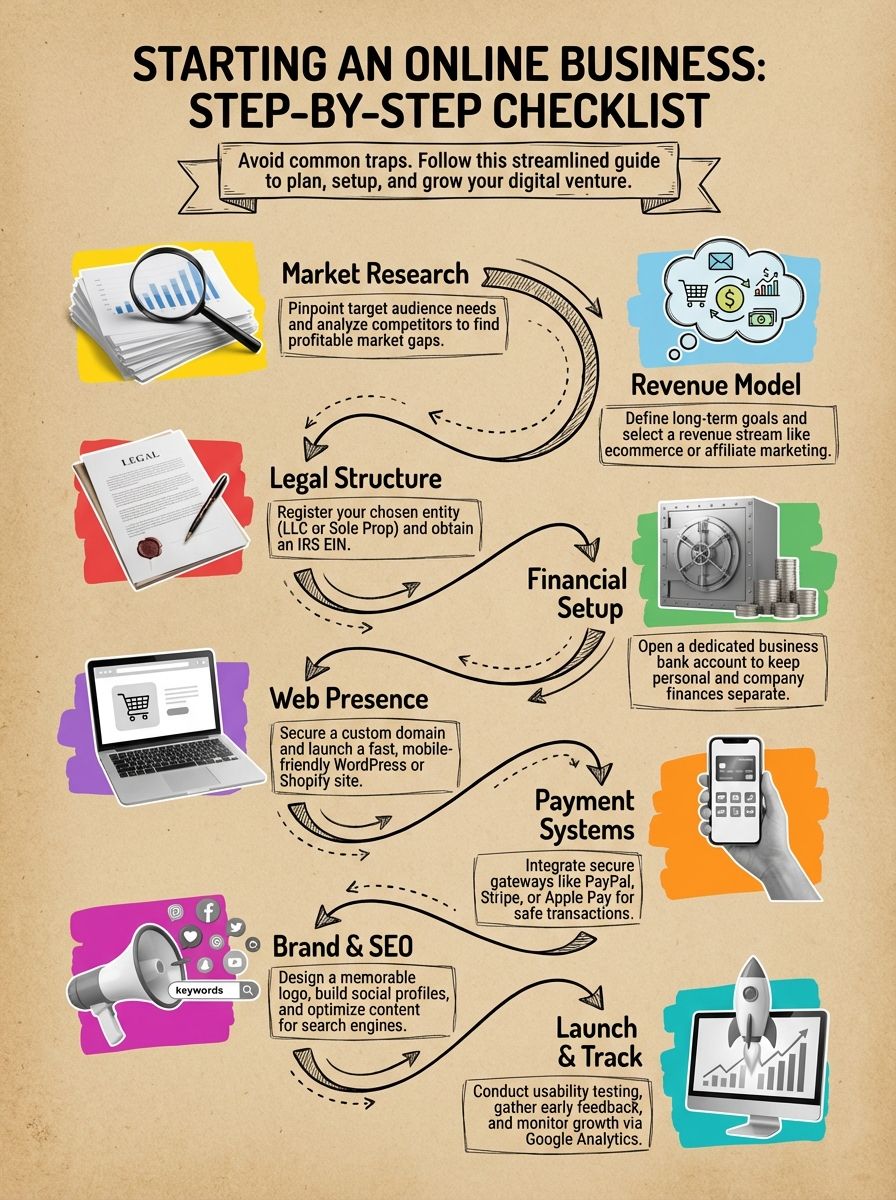
Planning Your Online Business
Ready to turn that bright idea into a real online gig? Grab your smartphone, open Gmail, and get set because Google Workspace and some solid market research tools are about to be your best friends.
What is your business idea and who is your target audience?
Shifting gears has never felt more right. For me, blogging lost steam last year, while online shopping soared. So now I’m keen to buy apps that are already making money and enter a fresh business field.
My eye is on men between ages 25 and 50 who crave easy-to-use digital tools that help with work or daily routines.
Every plan needs a sharp focus on the problems customers face. To get this right, you need a market research snapshot. I recommend using Google Trends to see if interest in your niche is growing or shrinking over the last 12 months.
You should also pin down their buying habits. Are they scrolling Instagram or browsing LinkedIn? Do they prefer credit card payments or quick options like Apple Pay?
Key questions steer how you structure your goals. Think about whether you want long-term growth or an exit strategy fit for scaling up. Setting clear targets makes building your team easier too, since each hire should match what your audience needs most.
Next up is finding out how competitors stack up and where there’s room to grab some of that action.
How do you conduct market research and analyze competitors?
Use data to guide your business plan. The U.S. Small Business Administration offers an Entrepreneurship Readiness Assessment, helping you check if you are cut out for entrepreneurship in the first place.
Research your target market by looking up who wants what you sell. A great “insider” trick is to check the Facebook Ad Library. This free tool lets you search for any competitor and see exactly which ads they are running right now.
If they have been running the same ad for months, you know it’s profitable.
Keep a sharp eye on competition since busy markets mean real demand exists. Find those competitors online by searching their sites, checking reviews, and testing their email marketing to spot weak spots fast.
Compare their pricing and inventory management strategies. Do they use software tools or offer options such as “buy now, pay later”?
Bring all this info together so you can fill gaps others miss. Maybe you can offer better support with live chatbots or more secure payment gateways like Apple Maps checkout for local search buyers.
Mentors from SCORE.org can weigh in too. Quick feedback saves time before launching into goal-setting.
How do you set long-term goals and choose a revenue model?
Start strong by picking a clear target. Some men want to turn side hustles into full-time gigs or make enough for extra adventures. Others aim higher, like creating an asset to sell down the road.
List your long-term business goals first as these guide your daily moves. Think big, but break it into steps you can measure with key performance indicators.
Choose how you’ll earn money next. Do what fits those goals and your own skills. Want steady checks? Try owning an ecommerce store like Christina DuVarney, who brings in $400,000 each month through Shopify sales of Beautiful Disaster clothing.
No warehouse? Go with affiliate marketing instead. People like David Tao use content websites such as BarBend to promote products for commissions right from their email list.
Most models need little more upfront than a domain name, merchant account, and reliable inventory management software like QuickBooks Online.
For step-by-step tactics that work in real life, check out this advice on how to grow an online business.
Setting Up the Legal Structure
Start by picking a business name that stands out and settles in folks’ minds. After that, make your way through paperwork like permits and tax forms to keep things above board.
How do you choose a business name and entity type?
Check your business name idea against your state’s database first. If the name is free, register it with your state before someone else grabs it.
Dive into domain registration right away. Make sure that the web address also matches so folks can reach you online without confusion.
Snagging both now helps keep branding tight and clear across email addresses and social media. Choosing between an LLC or sole proprietorship depends on risk and taxes.
I picked an LLC for my own venture because it shields personal assets from lawsuits or debts. It gives you big peace of mind if things go sideways.

LLC filing fees vary wildly by state. For example, it costs around $35 in Montana but can be up to $500 in Massachusetts. The national average is about $132.
An S Corporation or C Corp works for bigger teams but means more paperwork come tax time. Filing with the U.S. Patent and Trademark Office protects your brand from copycats itching to cash in on your hard work years down the road.
Not all names are winners, so test them out loud too. The right pick sticks in people’s minds after one read.
What steps are needed to register your business and get licenses?
First things first, snag an Employer Identification Number (EIN) from the IRS website. The form is short and free. You can even get it the same day.
Next up is nailing down those business formation papers based on whether you’re running a one-man show or going bigger with partners. Corporations need to file Articles of Incorporation which covers your official business name and stock details.
If you want to use a catchy trade name instead of your real one as a sole proprietor, submit for a DBA so customers know who they’re buying from.
Jump over to your state’s licensing databases online. You might need specific local permits depending on what you sell or where you are located.
Every guy I know gets tripped up here: insurance isn’t just red tape! You’ll likely need small business coverage like general liability for protection.
“Pro Tip: When registering your LLC, consider using a Registered Agent service instead of your home address. It costs about $100 a year, but it keeps your personal address off the public record, which saves you from a ton of junk mail and privacy headaches.”
Some states make workers’ compensation mandatory even if it’s just one employee. One last tip from my own all-in-one printer repair hustle is to set up an relationship with a small business attorney early on.
How do you open a business bank account?
Gather your paperwork, like your business registration and tax ID. Bring proof of your business address and a government-issued ID to the bank.
Banks need these documents for all entity types. You can also open an account online at many banks, but double-check the list of needed files first.
Keep personal money out of this account. It’s for handling invoices, paying bills on time, and tracking business expenses.
If you want to avoid monthly fees, look at modern fintech banks like Bluevine or Novo. Bluevine, for example, offers up to 2.0% APY on balances up to $250,000, which is far better than what most traditional banks offer.
Apply for a business credit card right after opening your account. This move makes things easier when building credit and applying for loans down the road.
A good CPA will steer you clear of mistakes that burn cash come tax season or hurt brand reputation.
Building Your Online Presence
Building your online presence starts with grabbing a catchy website address and picking reliable hosting. You also need to make sure your site looks sharp on every device.
How do you register a domain and select a hosting provider?

Type your business name or main keyword into Instant Domain Search. Check if the domain is free, and avoid using hyphens because they confuse people and make your brand appear less trustworthy.
Secure a .com address for credibility, but keep it short so customers can remember it easily. Registration usually takes about one minute once you pick a name.
Include privacy protection during sign-up to keep personal info off public records. Many registrars like Namecheap now include this for free forever, unlike some older competitors that charge extra for it.
Use Bluehost for hosting if you want to run WordPress.org, since it’s reliable and quick to set up with secure payment gateways like Google Pay built in.
A custom email account that ends in @yourdomain.com boosts trust with clients during online marketing. It also makes storing messages through Dropbox simple too.
How can you build a professional, mobile-friendly website?
Start with a trusted website builder. WordPress.org is a top choice for most men, especially those wanting better search engine rankings than Wix or Squarespace can offer.
For an ecommerce site, Shopify handles payments and products efficiently. StudioPress themes give your pages a sharp look that fits any brand identity while also loading fast.
Choose secure hosting so your dashboard remains reliable. Make sure to prepare every image before you upload it, as big files slow everything down for guys scrolling on their phones.
Pick layouts created for mobile users since 59% of ecommerce sales are expected to come from mobile devices by 2025.
If tech stuff gives you a headache, hiring a freelance web developer is always an option. But many do it themselves to save cash and control details like call-to-action buttons.
What are the options for setting up secure payment gateways?
So you’ve got a sharp website set up, and now it’s time to accept payments. Secure payment gateways come in different flavors like hosted, self-hosted, or non-hosted API methods.
Hosted gateways such as PayPal take shoppers off your site for checkout. It’s quick, but control is limited. Self-hosted options keep buyers on your page from start to finish, think WooCommerce with integrated plugins or Shopify Payments.
Here is a quick comparison of the two biggest players to help you decide:
| Feature | Stripe | PayPal |
|---|---|---|
| Transaction Fee | 2.9% + 30¢ | 2.99% + 49¢ (Standard) |
| User Experience | Keeps user on your site | Often redirects user |
| Best For | Custom, professional look | Trust and familiarity |
Setting up a merchant account lets you process credit cards right from your online store using trusted services like Authorize.net. Third-party gateways shine for low-volume shops because setup is cheaper.
For big businesses with loads of transactions, building your own gateway can mean savings over time but adds technical headaches upfront.
Look for PCI DSS compliance on any platform you pick since that keeps customer data safe. Mix in support for all major payment types like credit cards and Google Pay.
Developing a Marketing Strategy
Think about how your brand will stand out, even if you’re shouting above a crowd at a busy market. Tools like SMS marketing can help keep your name top of mind.
How do you create a brand identity and design a logo?
Start with your “Brand Heart.” This means clarifying what your brand stands for, its core values, and why it matters.
Every choice you make should tie back to this. Conduct competitor audits and observe how rivals set themselves apart in their logos or color palettes.
Want to stand out? Don’t just pick what looks appealing; make every element contribute to brand awareness.
Lock in a logo that is bold yet simple. Tools like Canva or Looka allow you to generate professional logos in minutes using AI.
Use clean fonts and a focused color palette to help people recognize you at first glance. A good logo must work everywhere, from SMS marketing texts to web banners.
Write clear brand guidelines so everyone maintains cohesion online and offline.
How do you build social media accounts and create a content calendar?
Claim your business name on Facebook, Instagram, X, and LinkedIn before someone else does. Use the same handle on each social media platform for a clean look.
Create strong profile images and banners that match your brand identity. Canva or Adobe Express can help you make eye-catching graphics without much effort.
Build a folder of marketing materials to keep all assets ready to go. Open an account with Klaviyo or Mailchimp so you can try sms marketing and track results.
“Did you know? SMS marketing has a 98% open rate compared to just 20% for email. Adding a text message option to your marketing mix is one of the fastest ways to get immediate attention.”
Organize your posts using a content calendar in Google Sheets or Trello. This saves time and keeps things running like clockwork.
Stick to the 80-20 rule: share helpful tips or entertaining stories eighty percent of the time while using twenty percent for direct promotions.
Drop evergreen content into your schedule so people find value weeks later. Think how-to videos about setting up payment gateways or simple FAQs men often ask.
How can you implement SEO to increase organic traffic?
Build your SEO strategy with smart keyword research and clear user purpose. Use tools like AnswerThePublic or SEMrush to find phrases people search for in your niche.
Update title tags and meta descriptions so they’re sharp, catchy, and easy for both users and search engines to read. This draws more clicks from the right crowd.
Make every blog post as helpful as possible. Share direct answers to frequently asked questions from your audience about sms marketing or other topics men care about.
Link between related articles on your site, giving visitors extra value while helping Google connect the dots across pages.
Keep mobile usability top-notch and reduce loading times because nobody waits around if a website feels slow these days.
High-quality writing always stands out, but staying relevant means updating old posts regularly as trends shift over time.
Launching and Monitoring Your Business
Your website is live, folks are clicking around, and the sales dashboard starts to hum. Now it’s time to keep your eyes wide open.
How do you test your website and improve user experience?
Usability testing spots clunky design, bugs, and anything that can frustrate people. Pull in real users, not just your friends, for live feedback.
Ask them to check out your site on both phones and computers. Use Google PageSpeed Insights to check how fast your site loads.
A slow site kills sales instantly. If your score is under 90, you need to optimize your images or switch hosting.
Use tools like Maze to run remote tests and grab automated reports. Mix up the way you test by sometimes watching users navigate tasks over a video call.
Dream up scenarios that match how customers really use the site. Give clear goals so guys don’t waste time guessing what they should do next.
Keep testing after launch; problems pop up when you least expect it. Regular checks twice a year catch new issues fast.
What are best practices for launching and gathering customer feedback?
Get your product in front of early users through a soft launch. Offer exclusive content or deep discounts to the first wave, and encourage them to share honest feedback.
Keep it simple: ask for five-star reviews and short testimonials right after purchase. You can automate this by sending a follow-up SMS marketing message.
Target your best customers with surveys using CRM tools like HubSpot. Their opinions can shape how you tweak the business before going big.
Stay active on social media platforms, post regular updates, and reply quickly to comments. List your business with consistent name, address, and phone number across all directories.
Connect with local groups online and offline too. Word-of-mouth at the barber shop still counts!
How do you use analytics tools to track business performance?
Use business analytics tools to spot what works and where you trip up. Google Analytics 4 (GA4) tracks website traffic and user sessions, showing if your visitors come from SMS marketing or other sources.
Check your accounting software for real-time dashboards on sales, profits, and expenses. This keeps tabs on your business health without all the guesswork.
CRM systems capture every customer interaction, order detail, and follow-up message. This is great for monitoring your sales funnel from start to finish.
Inventory management apps can alert you when stock runs low and show which products fly off the shelves fastest.
How Will Starting an Online Business Evolve in 2026?
Expect online business setup to move fast by 2026. Global e-commerce sales could reach over $6.3 trillion, opening huge doors for new owners.
Men will test ideas with real customers within 48 hours instead of waiting weeks. Picking the right e-shop platform matters more since it affects how you scale.
Legal steps will stay front and center because buyers want safe sites they can trust. Entrepreneurs who plan out every step will grab more attention in crowded markets.
Mixing SEO with content posts and strong SMS marketing campaigns is becoming the bread-and-butter playbook for steady growth. Business models from dropshipping to affiliate sales are sticking around too, so flexibility wins the day.
People Also Ask
How can SMS marketing help when starting an online business?
It puts your message right in front of your customer, achieving a 98% open rate compared to the typical 20% for email. This speed allows you to cut through the noise and drive immediate sales for your new launch.
What steps should I take before using SMS marketing for my online store?
You must strictly comply with US laws like the TCPA by collecting clear, written consent before sending a single text. Once you are legal, choose a dedicated platform like Klaviyo or Postscript to automate your campaigns and track your results.
Is SMS marketing expensive for small businesses just getting started?
Most platforms charge just pennies per text message, giving you full control to scale your spending only as your revenue grows.
Can SMS marketing boost customer loyalty in my new online venture?
Texting creates a personal connection that drives retention, with data showing SMS subscribers often have a higher lifetime value than email-only customers. A quick, automated follow-up after a purchase shows you care about the product experience and builds long-term trust.
Resources
- https://www.businessnewsdaily.com/4686-how-to-start-a-business.html
- https://www.investopedia.com/start-an-online-business-7974054
- https://www.sba.gov/business-guide/launch-your-business/choose-business-structure
- https://ebsedu.org/blog/how-to-start-a-business/ (2026-01-21)
- https://www.websitespot.com/blog/how-to-register-a-domain-name/ (2017-02-10)
- https://www.jpkdesignco.com/blog/online-presence-checklist?srsltid=AfmBOooP_R7NIrRAD5Wb8swizvoXongIDBQbxCRavNaf42TELh91CQRw (2024-06-13)
- https://www.weareplanet.com/blog/setting-payment-gateway-step-by-step-guide (2023-09-25)
- https://www.researchgate.net/publication/228280377_Online_Payment_Gateways_Used_to_Facilitate_E-Commerce_Transactions_and_Improve_Risk_Management
- https://www.columnfivemedia.com/how-to-create-a-brand-identity/ (2025-09-19)
- https://www.facebook.com/groups/nbctribe/posts/837997737940628/
- https://www.adobe.com/express/learn/blog/guide-to-content-calendars (2023-06-28)
- https://inmotionmktg.com/blog/creating-a-content-calendar/
- https://www.mtu.edu/umc/services/websites/seo/
- https://maze.co/guides/usability-testing/website-usability-testing/
- https://undergraduatescr.lagosstate.gov.ng/uploaded-files/ZHOw1h/3OK063/OnlineBusinessLaunchChecklist.pdf
- https://ww2.jacksonms.gov/uploaded-files/ZHOw1h/3OK063/online-business_launch__checklist.pdf
- https://voice123.com/blog/marketing-trends-tactics/how-to-use-business-analytics-tools-to-track-performance/
- https://octolize.com/blog/how-to-start-an-online-business/?srsltid=AfmBOor1kbF0is_BMfvMBH1WUdv012H3DSkTlbVKCcOodU_eVzOQVVQF (2025-03-18)

