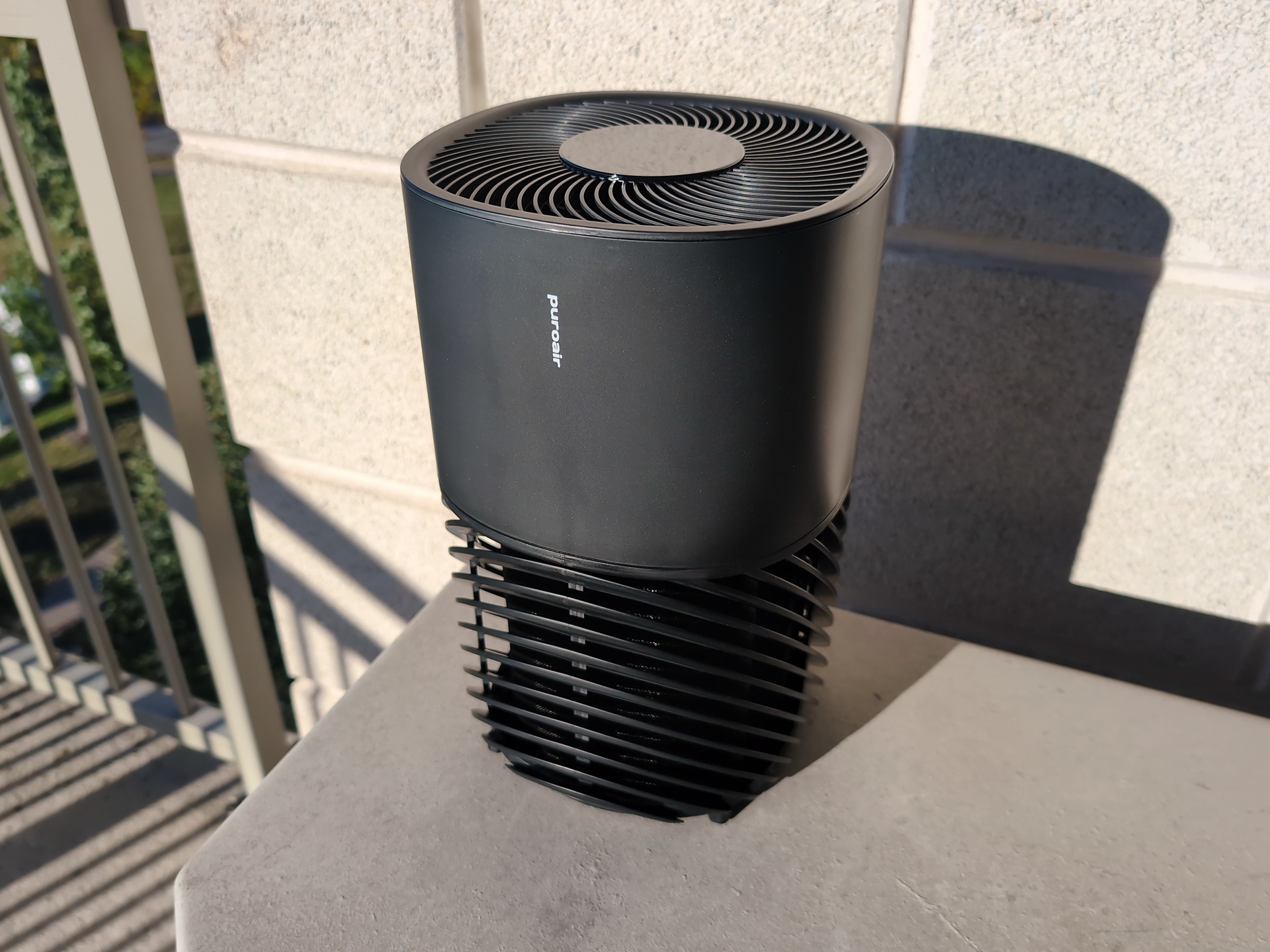
The PuroAir 130i HEPA Smart Air Purifier cost US$89.99 when HouseFresh reviewed it. Amazon.ca listed it at C$138.60 when checked. Those are different markets, so they are not a direct price comparison. The unit promises four things on the box: 600 square feet of coverage in an hour, 99.9% filtration of pollutants down to 0.1 microns, operation as quiet as 22 dB, and “smart” features. Every one of those numbers shrinks when it meets a meter. PuroAir’s own commissioned ISO 17025 lab data sits on one side of this review. On the other side: HouseFresh purchased the unit themselves and ran it through instrumented testing against the 130-plus purifiers they’ve measured, and 400 Amazon customer reviews tell you what happens after month two.
The question is whether the low sticker price hides a real-world room size of about 116 sq ft and a filter bill you’ll regret. Short answer: on two of the four claims, yes. Here’s the math.
Key Takeaways
The honest room size is about 116 sq ft per Energy Star’s CADR math, not the 600 sq ft in the marketing or the 750 in the spec table.
Filters are advertised to last 3 months, but buyers report 30 to 45 days. HouseFresh’s advertised-interval model comes to US$174.14 a year; the reported cadence could push that closer to US$326–US$484.
“Smart” means Wi-Fi only: no air quality sensor, no auto mode, and no scheduling. The SwitchBot and Govee Life Smart air purifier 2 include all three.
Table of Contents
What is the PuroAir 130i air purifier?
The 130i is a compact black cylinder with Wi-Fi and a HEPA filter, the smaller sibling of the PuroAir 240. It measures 20 cm deep by 20 cm wide by 32.2 cm tall and weighs 1.99 kg (4.39 lb), with a small fabric handle on one side for hauling it between rooms. One touchscreen button on top runs the whole thing, and it’s corded, so no battery pretense.
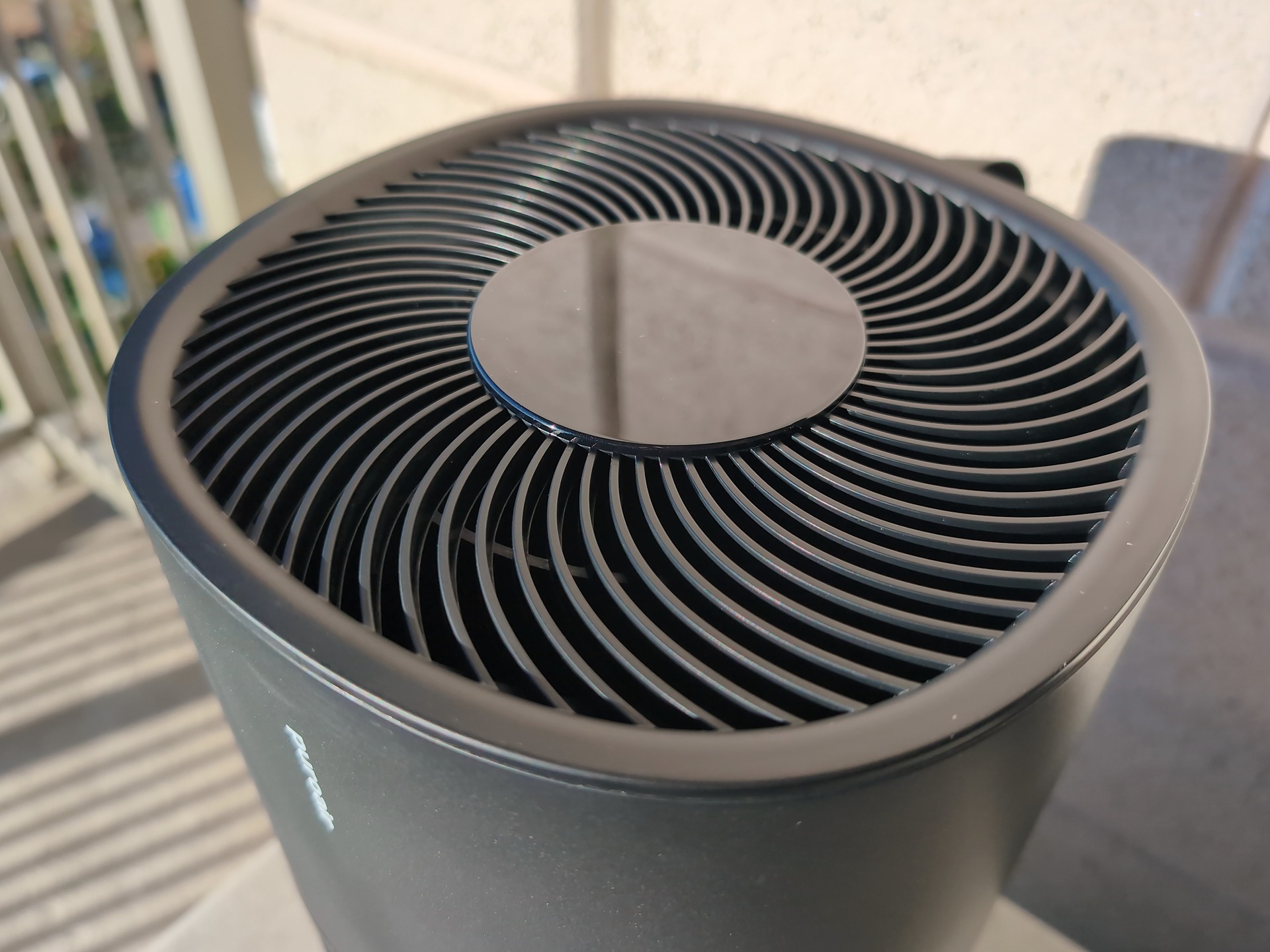
It’s sold on Amazon.ca under ASIN B0F9NVW8N9 by a third-party seller called “Elevate Your Home,” fulfilled by Amazon, with Prime shipping available on the listing. Worth knowing who you’re buying from.
Price, rating, and where it’s sold
HouseFresh reviewed the 130i at US$89.99 retail; Amazon.ca currently lists it new at C$138.60 with six offers and free shipping. Because those prices are in different currencies and come from different markets, there is no meaningful direct “gap” to calculate. Prices also vary by channel and listing date, so check the local listing before assuming it’s a bargain.
The rating is 4.4 out of 5 from 400 reviews, with 74% five-star and 6% one-star. A second listing view shows 4.5 from 165. The average looks fine, but the one-star tail is where the filter complaints live, and we’ll get to those.
Certifications, warranty, and protection plans
The unit carries CARB, ETL, ISO, UL, and Energy Star certifications, with the ETL and UL listings covering its electrical safety. Those are real listings and legitimate reassurance on safety and electrical standards. They say nothing about how well it cleans your air.
The feature list covers a filter replacement indicator, child lock, timer, multiple fan speeds, and sleep mode. A two-year warranty and 30-day returns lower the risk of trying it, which matters given the noise and filter-life findings below, and Allstate protection plans appear alongside the Asurion option on the listing. The seller’s “500,000+ families trust PuroAir” line is marketing, not evidence.
There’s an optional Asurion 3-year protection plan from Asurion Consumer Solutions of Canada Corp in the C$125 to C$149.99 band with no deductibles that starts after the manufacturer warranty ends. At the C$149.99 top of that band it can exceed the unit’s current C$138.60 price, so take it or leave it. SleepScore appears on the listing too, but no performance claim attaches to it here.
What size room does the PuroAir 130i really cover?
The honest answer is about 116 square feet, per Energy Star’s CADR-based room size recommendation. That’s roughly one-fifth of the advertised 600.
vs 750 vs 116: what each number measures
Three figures, one purifier. The 600 sq ft in one hour claim comes from a PuroAir-commissioned ISO 17025 lab test from 2025. The spec table itself says 750. Energy Star’s recommended room size, derived from the unit’s clean air delivery rate, is 116.
None of these is technically a lie; marketing coverage, spec-sheet coverage, and CADR-derived sizing measure different things. But PuroAir can’t even agree with itself on the first two, and the third is the only one that describes your bedroom.
CFM translated into clearance time
The Energy Star dust CADR is 74 CFM, from an ISO 17025 lab test PuroAir commissioned in June 2025. HouseFresh measured 59 minutes to clear PM10 after incense in a 728 cu ft room at full power. Work the numbers and that airflow supports about 5 air changes per hour only in rooms up to roughly 111 sq ft.
That airflow gap explains the review split. In a big room, the air right next to the machine smells fine while the far corner never gets treated. Small-room owners rave. Large-room owners grumble. Both are describing the same machine.
Filtration performance vs the 99.9% lab claim
PuroAir claims the 130i filters 99.9% of dust, pollen, smoke, pet dander, and VOCs down to 0.1 microns, 700X smaller than a human hair, per its own 2025 ISO 17025 lab test on inanimate particles. No independent verification exists. The catch is mechanical: capture percentage and airflow are different measurements, and a filter can catch 99.9% of what passes through it while moving too little air to matter. HouseFresh, running their own-money unit against 130+ purifiers they’ve tested, found particle removal mediocre for the price, slower than everything benchmarked except the Coway Airmega 50 and Honeywell HPA60, with an estimated PM1 CADR around 99 CFM.
Noise: 22 dB spec vs measured reality
Only the lowest speed is quiet enough for sleep, and at that speed the 130i cleans too slowly to be practical overnight. The spec says “as quiet as 22 dB,” and “as quiet as” deserves scrutiny in that sentence.
HouseFresh measured 38.5 dB on low, 45.8 on medium, and 56.4 on top, and ranked it last among small purifiers in sub-45 dB quiet testing. For reference points you might own: it’s louder than the Levoit Core 200S at top speed (49.1 dB) and quieter than the SwitchBot (59.2 dB).
Only one speed runs under the 45 dB threshold most people would call bedroom-acceptable, and at that speed the test room took 162 minutes to clear. Medium took an hour and forty. So the bedroom choice is clean air or quiet air, not both. Sleep mode exists as a feature, but the measured numbers are what decide the question.
PuroAir App audit: what “smart” leaves out
The PuroAir App has no auto mode and no air quality sensing. There’s no onboard sensor, so the “smart” in the name means Wi-Fi, nothing more.
What it does: remote fan-speed control and filter-life monitoring, plus Alexa and Google Home voice control if you’re already in that setup. What it omits: no scheduling, no timers, no sensor, no auto mode. The app is a remote control. HouseFresh also noted, with a raised eyebrow rather than an accusation, that the Google Play Store listing showed a concept design that never shipped, and a similar design turns up in Slovakian and Czech purifier manuals. Reads like a white-label situation.
Then there’s the setup pattern buyers report with 2.4 GHz-only smart purifiers: your phone sits on 5 GHz, discovery fails, and an evening disappears. One verified reviewer hit exactly this and flagged the cause as uncertain himself, so treat it as a reported pattern, not a confirmed defect. Before accepting “smart” branding on any purifier, demand three things: a sensor, auto mode, and scheduling. The SwitchBot and Govee Life Smart air purifier 2 ship all three plus Matter certification, at prices that may be lower than the 130i depending on the market and listing date.
Quick test: Before buying any “smart” purifier, confirm it has a sensor, auto mode, and scheduling. The 130i has none of the three.
Filter lifespan and the bonded-filter problem
The PuroAir 130i replacement filter is advertised to last three months, but customers report 30 to 45 days. That gap could double or even triple the filter portion of ownership, and it’s the single most important warning in this review.
How long does the filter actually last?
Layer the evidence. PuroAir advertises 3 months. Customer consensus lands at 30 to 45 days. HouseFresh watched filter life drop to 89% within 3 days of testing, which is an early reading rather than a projection of total life, but it points the same direction as the reviews.
The filter indicator light drew 5 negative mentions and zero positive ones in Amazon review themes, so the nagging light is part of the same problem: it starts complaining well before the advertised interval. HouseFresh’s replacement-filter price was US$37.99. At a 30 to 45 day cadence, that means roughly 8 to 12 filters a year rather than the four assumed by the manufacturer’s three-month schedule.
Why the all-in-one design shortens usable life
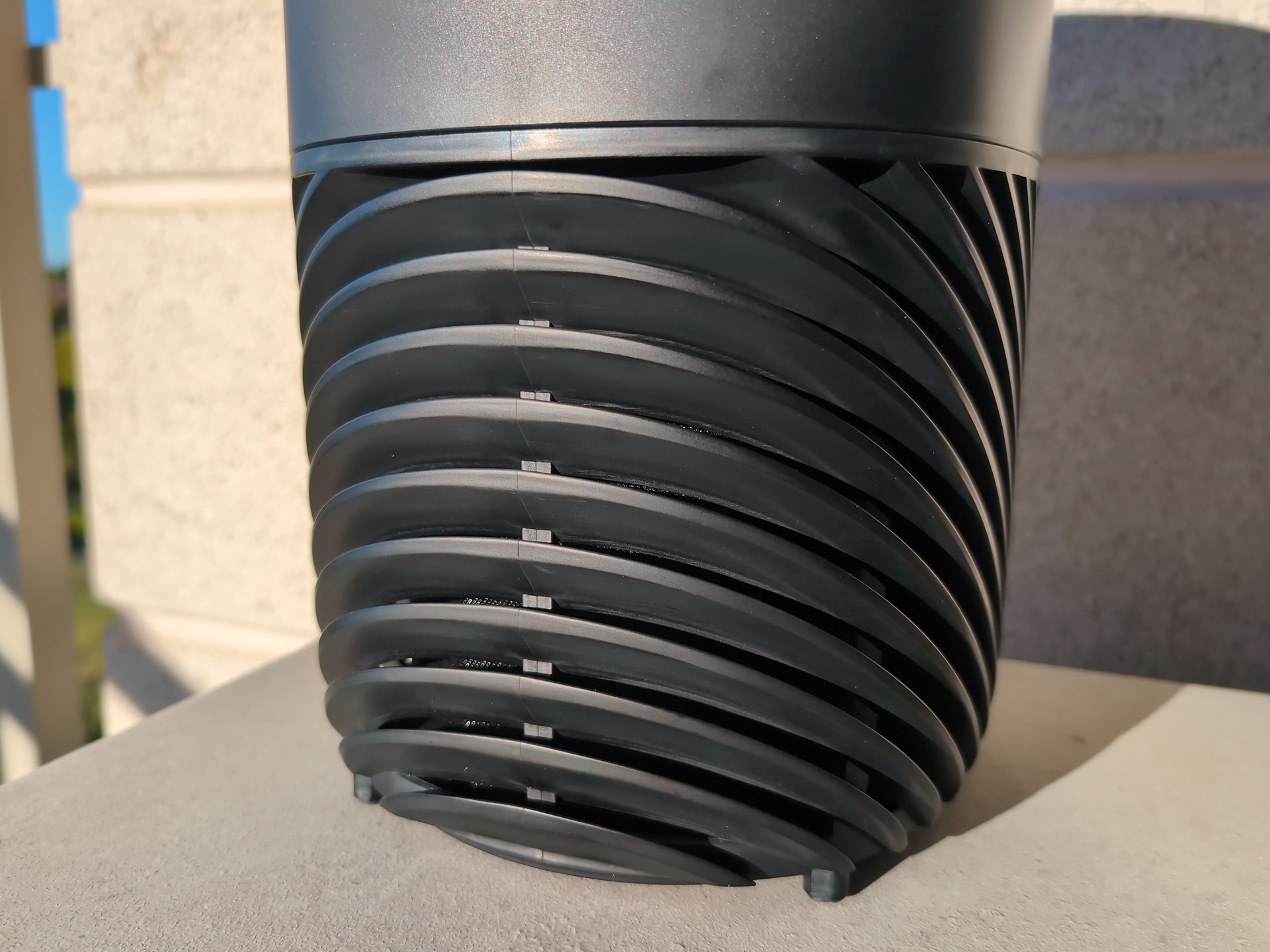
The filter is a bonded cylinder: pre-filter mesh on the outside (vacuum it regularly), a HEPA layer, and carbon-impregnated fabric. When the carbon saturates, you toss the whole thing, likely months before the HEPA is spent. The carbon fabric also holds far less carbon than the pelleted carbon Philips uses in its 9000 series, so odor handling fades sooner. The Dyson BP06 is the rare clip-on-carbon exception, so this is an industry habit rather than a habit unique to PuroAir.
Changing it is awkward, too: you tip the unit and twist the bottom cover, the same mechanism as the Xiaomi 4 Compact, so know that before you’re mid-change on the floor. The replacement filter is marketed as an award-winning CarbonTech 3-in-1 HEPA filter up to 500X stronger. Award-winning per whom? Let that sit against the 30 to 45 day reality.
Running cost: US$174.14 at the advertised cadence
HouseFresh’s U.S.-based cost model puts the PuroAir 130i at US$174.14 per year under the advertised three-month filter schedule. Almost all of that cost is filters, and the model looks like this:
- OEM replacement filter at US$37.99 every 3 months: US$151.96 per year
- Electricity: US$22.18 per year running at top speed 24/7
- Total yearly running cost: US$174.14
- First-year investment: US$264.13 on a US$89.99 purifier
Under HouseFresh’s U.S. pricing model, four filters cost more than the US$89.99 machine. That’s the whole takeaway. Canadian buyers should use the C$138.60 Amazon.ca purchase price and check the current Canadian replacement-filter price separately rather than treating the U.S. ownership estimate as a Canadian total. Compared with other small purifiers in this price range, including models from Coway, Winix, Levoit, Govee Life, SwitchBot, Honeywell, and Jafanda, this is the highest running cost in the group. If cheap to run was the pitch, it fails its own pitch.
The decision hinge is the Winix A231, because arithmetic beats opinion. In the comparison used here, the A231 costs more upfront and about US$30 more in electricity per year, yet still comes out cheaper overall than the 130i. Filter costs eat the difference and then some. This is the mistake the sticker price sets up: you choose on the purchase price without modeling the filter bill, then meet a filter-indicator light that starts complaining at week five. The pattern we keep seeing with budget purifiers is exactly this, a cheap machine attached to an expensive consumable.
Cost check: Model the filter bill before buying. At US$37.99 every 30 to 45 days, the filter schedule implies roughly US$304–US$462 a year in replacements, before electricity. Including HouseFresh’s US$22.18 electricity estimate, that is roughly US$326–US$484 annually.
HouseFresh’s power meter measurements put this unit at 18.44 W at high speed against an 18 W spec, which is basically honest, a rare win in this market. That’s the second-lowest draw among peers; only the Coway Airmega 50 draws less, and it’s also a less powerful purifier. Running flat-out around the clock adds about US$22.18 a year under HouseFresh’s electricity assumptions.
Power is where this unit saves you money; the filters are where it costs you.
What customers actually report
The 130i works well up close. Verified owners report real relief from wildfire smoke, construction dust, and odors near the machine, while complaints cluster exactly where the measured airflow says it should fall short.
Review themes: where praise is unanimous and where it splits
The 4.4/5 average becomes an explanation once you sort it by theme. Ease of use: 16 mentions, 15 positive. Air quality: 13 mentions, 11 positive. Odor removal: 6 mentions, all positive.
Then it splits. Value: 15 mentions, 8 positive and 7 negative. Filter life: 8 mentions, 6 negative. Filter light: 5 mentions, all negative.
Allergies: 6 mentions, 4 positive and 2 negative. Wi-Fi: 5 mentions, 3 positive and 2 negative. Even buyers can’t agree whether it’s worth the money, and that split is the story.
Four verified use cases
The named reviews map cleanly onto the CADR reality. Adelle Weiss (4-star, Aug 31, 2026) ran it against construction dust across the street and stopped waking up stuffed up. ivy mccray (5-star, Sep 20, 2026) used it in a post-leak townhouse while the landlord slow-walked repairs, and the room smelled normal again. Mike1983 (5-star, Aug 18, 2026) bought it for wildfire smoke drifting from western Ontario into South-east Michigan; his Wi-Fi setup failed, possibly the 5 GHz versus 2.4 GHz issue he himself flagged as uncertain. Kindle Customer (5-star, Sep 28, 2026) runs one under a desk at work against coworkers’ perfume and cleaning products.
Unanimous love for what it’s simple at, contestation where the physics says it should struggle. Nine customer videos on the listing, runtimes from 0:37 to 8:12 including Smart Business Mom’s close-up and a Drew’s Reviews three-way comparison, are social proof context, not evidence.
130i vs 240 vs 100i: choosing within PuroAir
For most buyers, the PuroAir 240 is the better PuroAir air purifier. Per Apartment Therapy‘s testing from April to June 2025 in an 800 sq ft New Jersey apartment under a flight path, part of the site’s broader PuroAir coverage from writers like Yara Pereira and Marisa Vitale, the 240 has a genuine air quality sensor with a red/yellow/green indicator light and adjusts power automatically, and its filters lasted the advertised 90 days. Those are the exact features the 130i’s name implies and lacks. Keyaira Boone, the writer there, tried three purifiers over 14 years of allergies before calling the 240 the holy grail.
It ran US$160, down from US$200, claims 1,000 sq ft/hr, and filters run US$54 from PuroAir or US$43 on Amazon. Drawbacks: black only, and a slight hum. The clam-strip frying test tells you the reviewer’s honesty: oil smell lingered, but the air never got smoky. That’s the kind of limitation disclosure the 130i’s marketing never offers.
The 100i sits between: 550 sq ft claim, C$130.35 on Amazon.ca (down 7% from C$139.68, 4.6 stars from 144 ratings), also sold as a Walmart 4-pack shipped by PuroAir directly, a 4.6-star seller from 160 reviews. In the U.S. pricing cited above, the 240 costs roughly US$70 to US$110 more than the 130i. That premium buys the sensor, auto mode, and filter life the 130i only advertises; otherwise, accept the 130i as the stripped-down budget entry.
Best alternatives to the PuroAir 130i
For allergy buyers comparing PuroAir and Levoit, the Levoit Eleva 300X carries AHAM VERIFIDE certification and over 108,000 ratings, a track record the 130i can’t match. The alternatives below target the 130i’s documented weaknesses rather than trying to rank the whole field: the SwitchBot and Govee Life Smart air purifier 2 both include the sensor, auto mode, and Matter certification the 130i only claims. The Coway Airmega 50 is the bedside pick, and the only peer that draws less power.
PuroAir or Levoit for allergies?
On documented criteria, Levoit has the stronger case. The Eleva 300X (C$152.99, was C$179.99) is a #1 Best Seller at 4.6 from 108,319 ratings, with AHAM VERIFIDE, Energy Star, and Climate Pledge Friendly badges and a 1200 sq ft claim. The Core 200S-P (C$113.94, 4.6 from 15,879, AHAM VERIFIDE) is the quiet, proven budget pick. Set both against the 130i’s allergy theme of 4 positive and 2 negative mentions and its 74 CFM CADR. There’s no universal “#1” here, but the evidence gap is not close.
Comparison table
| Purifier | Price (Amazon.ca, CAD) | Rating (count) | Certifications | Coverage claim | Measured noise |
|---|---|---|---|---|---|
| PuroAir 130i | C$138.60 (HouseFresh review price: US$89.99) | 4.4 (400) | CARB, ETL, ISO, UL, Energy Star | 600 sq ft/hr | 38.5 dB low, 56.4 dB top |
| Levoit Eleva 300X | C$152.99 | 4.6 (108,319) | AHAM VERIFIDE, Energy Star, Climate Pledge | 1200 sq ft | Not available |
| Levoit Core 200S-P | C$113.94 | 4.6 (15,879) | AHAM VERIFIDE | Not available | 49.1 dB top |
| BLUEAIR Blue 511 | C$97.99 | 4.5 (3,255) | AHAM Verified, Energy Star | 907 sq ft | 24 dB HEPASilent |
| Amazon Basics | C$118.73 | 4.2 (653) | Not available | Not available | 32 dB sleep mode |
Prices vary by channel and listing date. One dry note on the sponsored carousel: the KNKA APH3000 (C$94.98, 1123 sq ft/hr claim), Cypcat (C$139.99, 2500 sq ft claim), Rabbit Air A3, and BLUEAIR Signature SP3i (C$290.49, 19 dB) are ads, not organic results. Everyone inflates coverage. The 130i isn’t uniquely guilty, just similarly generous, and the 116 sq ft reality from earlier is the number that matters.
Sanding dust and workshops: where HEPA marketing stops
A StangNet forum user sanding and paint-correcting in a two-car garage asks the question the marketing never answers: does a real HEPA unit actually pull polishing dust, or is it mostly marketing? His skepticism is fair. The 130i’s small bonded filter and 74 CFM dust CADR would be overwhelmed by a heavy particulate load like sanding dust, and no mainstream purifier marketing addresses dust settling on wet paint. His own DIY setup, a box fan with a taped furnace filter, mostly moves dust around instead of catching it, the classic DIY limitation. He cites the ratethepick.com 130i review for discussing filter size rather than only quoting a CADR number, which is a sensible angle.
Verdict: should you buy the PuroAir 130i?
No, the PuroAir 130i is not worth the money for most buyers. The exception is narrow: tiny-room and desk-side buyers who value low power draw and dead-simple operation. Every claimed number shrinks when it meets a meter, and the filter bill is the part that never shrinks.
Who should still buy it
HouseFresh measured 18.44 W at high speed, second-lowest among peers, with only the Coway Airmega 50 drawing less, and even running flat-out around the clock it costs about US$22.18 a year in electricity under HouseFresh’s assumptions. The one-button touchscreen works, the 4.39 lb body with a fabric handle hauls room to room without thinking about it, and the CARB, ETL, UL, ISO, and Energy Star certifications plus a two-year warranty and 30-day returns mean you can try it without much risk.
The genuine fit: rooms at or under the 116 sq ft Energy Star size, desk-side or under-desk placement like the verified office reviewer’s setup, and buyers who want simplicity over automation. If that’s you, budget for US$37.99 replacement filters on a 30 to 45 day cadence, not the advertised three months, while checking the current Canadian filter price before buying.
Who should skip it and buy what instead
Everyone else. Larger rooms, anyone expecting the smart features the name implies, and cost-sensitive buyers watching long-term spend should look elsewhere. Within the brand, the PuroAir 240 ships the sensor, auto mode, and filter life the 130i lacks. Outside it, the SwitchBot and Govee Life Smart air purifier 2 fix the 130i’s missing sensor, auto mode, and scheduling, and the Coway Airmega 50 is the one peer that draws less power.
No independent consumer-lab testing of the 130i exists in the available record. This verdict rests on HouseFresh’s instrumented review, PuroAir’s own commissioned lab data, and 400 customer reviews. If you’re searching for a Consumer Reports-style verdict, that testing doesn’t exist yet. What we do have says the same thing three ways: fine up close, oversold everywhere else, and expensive to keep running.
Frequently Asked Questions
Is PuroAir a good air purifier?
It’s fine up close and oversold everywhere else. The 130i works well for small rooms and desk-side use, with owners reporting real relief from wildfire smoke, construction dust, and odors near the machine. But its honest room size is about 116 sq ft per Energy Star’s CADR math — not the 600 sq ft in the marketing — and HouseFresh’s U.S.-based advertised-interval model puts yearly running cost at about US$174.14; reported 30-to-45-day filter life could raise that materially.
What is the #1 air purifier on the market?
There’s no universal #1, and anyone claiming one is usually quoting marketing. The better approach is matching a unit to your room size and priorities: for allergies, the Levoit Eleva 300X carries AHAM VERIFIDE certification and a track record of over 108,000 ratings, while the Winix A231 beats the PuroAir 130i on total cost of ownership despite a higher sticker price. Coverage claims are inflated across the board, so CADR-based room sizing is the number that matters.
What is the lifespan of a PuroAir purifier?
The filter is the weak point, not the machine. PuroAir advertises its 130i filter lasting three months, but customers consistently report 30 to 45 days of usable life, and the replacement filter indicator starts complaining well before the advertised interval. The bonded all-in-one design is the culprit: when the carbon layer saturates, you toss the whole cylinder, likely months before the HEPA layer is actually spent.
Which is better, PuroAir or Levoit air purifier?
For allergy buyers, Levoit has the stronger case on documented criteria. The Levoit Eleva 300X is a #1 Best Seller with AHAM VERIFIDE certification and 4.6 stars from over 108,000 ratings, while the Core 200S-P is a proven, quiet budget pick at C$113.94. The PuroAir 130i’s allergy theme in customer reviews splits 4 positive to 2 negative, backed by a 74 CFM dust CADR — the evidence gap is not close.
PuroAir 130i vs 240: which PuroAir air purifier should I buy?
The 240 is the better buy for most people. It has a genuine air quality sensor with a red/yellow/green indicator, adjusts power automatically, and its filters lasted the advertised 90 days in independent testing — the exact features the 130i’s name implies and lacks. You’ll pay roughly US$70 to US$110 more upfront in the U.S. pricing cited here, but you avoid the 130i’s stripped-down app and short filter life.
What does it cost per year to run a PuroAir 130i including filters?
Under HouseFresh’s U.S.-based advertised-interval model, about US$174.14 per year: US$151.96 in OEM replacements at US$37.99 every three months, plus US$22.18 in electricity running at top speed 24/7. If filters last only 30 to 45 days, the annualized cost could be roughly US$326–US$484. Canadian prices may differ. Electricity is where it saves you money; filters are where it costs you.

