
You can’t tell anyone. Not your best friend, not your sister, not the group chat where you tell each other everything else. Your week bends around a text that may or may not come, and the holidays belong to someone else. That isolation is the job description.
And here’s the reframe nobody hands you: for all the secrecy, the position is statistically ordinary. Roughly 20 to 25 percent of married Americans have cheated, and the rates run higher in dating relationships. What’s genuinely surprising is what the research says about why. Most cheating motives turn out to be non-sexual.
What follows is drawn from named, peer-reviewed work. Dylan Selterman’s motivation studies, Esther Perel’s framework from The State of Affairs, and the Ashley Madison platform data, laid out by a men’s site, about the other party in the arrangement, without a sermon attached.
Key Takeaways
Selterman’s 2017 research identified eight motives for infidelity, anger, sexual desire, lack of love, neglect, lack of commitment, situational factors, self-esteem, and variety, and most of them aren’t about sex.
In Selterman’s 2023 study of platform users, relationship quality showed no significant link to affairs: users reported high love for their spouses, low sexual satisfaction, and about half weren’t sexually active with their primary partners.
Feeling OK about the role is a documented mechanism, not a character flaw: Alexopoulos’s 2022 survey found frequent infidelity linked to positive self-concept change rather than guilt.
Table of Contents
What the affair actually is: secrecy defines the role
An affair is defined by its secret, not its sex. Esther Perel, in The State of Affairs: Rethinking Infidelity, names three elements at the heart of cheating. Secrecy is the defining one: it’s what separates an affair from consensual non-monogamy, where the rules are out in the open. Sexual alchemy is the aura, the energy around the arrangement, not necessarily sex itself. And emotional involvement is there even when the cheater insists it isn’t.
That secrecy isn’t just a label. It’s the variable that changes what the arrangement does to everyone in it. In a 2021 study by Thompson, Wilder and Kulibert in the Journal of Sex Research, roughly 17 percent of users had their primary partner’s consent, and those consensual arrangements showed better relationship outcomes. Same behavior, no secret, different result. Which tells you the secret is the load-bearing part.
There’s no universal definition of cheating, either. The line keeps expanding with technology, porn, secret dating apps, explicit texting, apps deleted without leaving a trace. In Thompson’s doctoral work, somewhere between 10 and 45 percent of adults reported doing things they themselves judged unfaithful. People can’t even agree with themselves on where the line sits.
Why women become mistresses: the documented motivations
Women enter this role through documented entry points that are mostly not lust: the research consensus is that neglect in the primary relationship and self-esteem needs lead the list. The backbone is Selterman, Garcia and Tsapelas’s 2017 study in the Journal of Sex Research, 495 adults, average age 20, working through a 77-item questionnaire, which produced eight motives for infidelity. A 2020 study by Hackathorn and Ashdown, surveying more than 500 members, found women naming neglect as their driver. And those motives carry psychological fingerprints: neglect tracks with anxious attachment, the fear of abandonment that comes from feeling invisible, while the self-esteem motive shows up most in people high in attachment avoidance.
The eight motives
- Anger, getting even after a partner strayed or did something else that stung; tracks with fear of abandonment and fear of intimacy.
- Sexual desire, specific acts the partner wasn’t into, or more frequency than the partner wanted; its own motive, not a symptom, and it skews male.
- Lack of love, not sure it’s the right person, the love faded, or plain boredom; tracks with avoidant attachment and “destiny” beliefs about one right person.
- Neglect, not enough time together, constant conflict, feeling invisible; tracks with anxious attachment.
- Lack of commitment, no conversation about what the relationship even is, no wanted closeness; tracks with avoidance.
- Situational factors, a vacation, too much to drink, friends who cheated; men report these more.
- Self-esteem, proving independence, feeling wanted, reigniting the spark at home; also tracks with avoidance.
- Variety, more partners, confidence they won’t get caught; tracks with men and people generally open to casual sex.
The gender skew
Men lean toward the sexual and the opportunistic: desire, situational moments, variety. That’s a finding, not an indictment, and the research states it without either side winning anything.
The women’s finding
For women specifically, neglect came first, being starved of attention at home, feeling invisible. Worth the caveat: this is self-reported by a young, non-representative sample, and people aren’t fully honest about their own motives even with themselves. Perel adds one more layer: some people stray looking for a version of themselves, not another person.
Why married men seek mistresses: the data vs. the clichés
Married men most often arrive for sexual reasons, desire, variety, opportunity, not because the marriage is failing. That flat statement runs straight into the cliché of the unhappy marriage and the midlife crisis, and the best data doesn’t back the cliché. Selterman’s 2023 study in Archives of Sexual Behavior, a two-timepoint survey of platform users, found no significant correlation between relationship quality and affairs. Users reported high love for their spouses alongside low sexual satisfaction.
About half weren’t sexually active with their primary partners at all. The affairs themselves showed high satisfaction and low regret. His framing line fits: infidelity is not monolithic.
Here’s the counterpoint. Hackathorn and Ashdown’s 2020 study, 500-plus members, found dissatisfaction with the primary relationship was the biggest motivation, especially for men. Women cited neglect; men wanted more frequent sex. The two studies look like they disagree because they measure different things in different samples. They sit side by side; they don’t merge.
Who actually pays? Chohaney and Panozzo mapped the billing addresses of more than 700,000 paying subscribers in a 2018 Geographical Review study. Income was the leading determinant, infidelity behaving like a luxury good. Denser cities spent more, which tracks with anonymity and less chance of running into someone from your social network.
Religiosity correlated with fewer subscriptions. For context: Ashley Madison launched in 2002, openly marketed to married people, with men paying to start conversations, and the July 2015 breach later handed researchers real behavioral data instead of self-reports.
So the recurring configuration, in this sample: a man who loves his spouse, isn’t sexually active with her, and describes the affair as highly satisfying. Not every married man. But the data says that guy exists in large numbers, and he’s not the caricature.
Why she stays: anxious attachment and intermittent reward
She stays because the arrangement’s inconsistency works directly on her attachment system. Anxious attachment looks like craving closeness, agitation about the partner’s feelings, fear of being left, checking and hypervigilance, documented in Frontiers in Psychology research by Beltrán-Morillas and colleagues in 2019, and fragmented contact, the midday text and the canceled evening, works like a variable reward. The week gets organized around a single text; that pattern shows up repeatedly in relationship-therapy writing and anonymous forums. Attachment deepens precisely because the relationship never becomes routine.
Why am I OK with being the other woman: rationalization and self-concept
Feeling OK, or oddly numb, about the role is the mind resolving the contradiction by rewriting self-concept rather than producing guilt. That’s not my framing; it’s the documented mechanism.
The engine is cognitive dissonance. Two beliefs held at once: this hurts people, and this is the most alive I’ve felt. The uncomfortable resolution isn’t guilt. It’s becoming the person the second sentence describes. Alexopoulos’s 2022 study in the Journal of Social and Personal Relationships, a survey of more than 1,000 male platform users, found frequent offline infidelity linked to positive self-concept change rather than guilt. The rationalization in participants’ own words: this new relationship makes me more exciting or fun. And the mechanism compounds, once cheating repeats, denying responsibility stops being believable, so identity does the work instead.
Perel’s research points the same direction from a different angle. Her finding is that people often stray not to find another person but to reconnect with a different version of themselves, leaving, as she puts it, the person they’ve become rather than the person they’re with. And that cuts both ways in this arrangement. He upgrades himself through her; she can experience the role as self-expansion too. The survey data comes from male users, so read this as mechanism, not diagnosis of anyone.
The coexistence that shouldn’t work but does: I love my partner; I’m having an affair. The research backs it. Selterman’s 2023 participants maintained love and intimacy with their spouses while the affair ran, and many seemed to genuinely feel they hadn’t done anything wrong. The documented upside of being a mistress: high affair satisfaction, low regret, and the self-esteem lift of feeling wanted.
Here’s what the research actually documents participants telling themselves:
- This new relationship makes me more exciting or fun.
- I love my partner; the affair doesn’t cancel that.
- I’m reconnecting with a version of myself I lost.
- The affair fills a self-deficit the primary relationship can’t reach.
None of that makes anyone pathological. It makes them human, running a standard contradiction-resolution routine with higher stakes than usual.
The emotional cost: psychological effects of being the other woman
Yes, the costs are real, and they’re structural. Chronic anxiety, hypervigilance, and eroded self-worth follow from the arrangement’s design of secrecy, fragmented contact, and ambiguous status, the longer that design holds. The research on unforgiveness points the same way: when an offense stays unresolved, it keeps the stress response switched on and wears down well-being over time. Not from weakness. From architecture.

The costs built into the design
- Secrecy means no one to tell. The isolation is built in, which cuts off the support that normally absorbs stress.
- Waiting and canceled plans keep the nervous system on alert. Hypervigilance isn’t a choice when the next contact is always uncertain.
- Ambiguous status means chronic uncertainty. Stress research names uncertainty, missing information, and loss of control as its main causes, the arrangement supplies all three.
- The whole calendar bends around his availability. Holidays, weekends, ordinary evenings, someone else has first claim.
What the research actually measures
The stress of secrecy shows up as ongoing negative affect, which wears down well-being over time. Worthington and Scherer’s 2004 work on unforgiveness splits it into two channels: anger, fear, guilt, and resentment feed payback impulses, while shame and sadness feed withdrawal. Either way, holding it sustains stress and damages psychological well-being. Staying angry costs you, regardless of who earned it.
In the same Frontiers research line, studies of people reacting to betrayal found women showed greater negative affect across every betrayal type. The gendered emotional load is measurable, not anecdotal. Researchers count anxious attachment as the heaviest form of interpersonal dependency, linked to depression and anxiety. That’s a research tendency, not a label for any reader.
There are almost no clinical statistics on mistresses as a group. The evidence base studies cheaters and betrayed partners. So the costs here are the commonly reported dynamics plus attachment and negative-affect research, not hard numbers. If this is the worst stretch of your emotional life, the documented stress of secrecy and sustained negative affect says the difficulty is real and structural, not a verdict on you.
Why the other woman resents the wife, and why society resents her back
The resentment runs on one mechanism pointed two ways: putting the wife down protects the mistress’s self-concept, and the public’s contempt for her protects theirs. Her side: the wife becomes the rival who “doesn’t appreciate him,” while the mistress casts herself as the authentic partner. That’s a common rationalization pattern documented in research on self-justification, not a claim that every mistress hates the wife.

The mirror is uglier. The 2017 demonization studies in The Journal of Social Psychology and Psychology & Sexuality found public harshness toward exposed users was predicted by sex guilt, which carried religion’s effect, and personal jealousy. Belief in a just world didn’t predict it. Younger participants judged hardest. In short: the loudest judges had their own stuff going on. And Cross, Parker and Sansom’s 2018 analysis in the International Review of Victimology, covering more than 600 newspaper articles from Australia and Canada, found exposed users framed as non-ideal victims, with victim-blaming dominant even in pieces defending them.
The mechanism explains; it doesn’t excuse. Harm to the wife stays harm, and the mistress isn’t a victim on equal footing with a betrayed spouse.
What the role reveals: traits, attachment styles, and what a mistress means to a man
There’s no mistress personality. The research maps tendencies, and the role functions as identity work for both people. Attachment styles grade infidelity risk as graded tendencies, not categories: secure attachment means trust and stability, lower risk. Preoccupied or ambivalent attachment brings anxiety, jealousy, dependence.
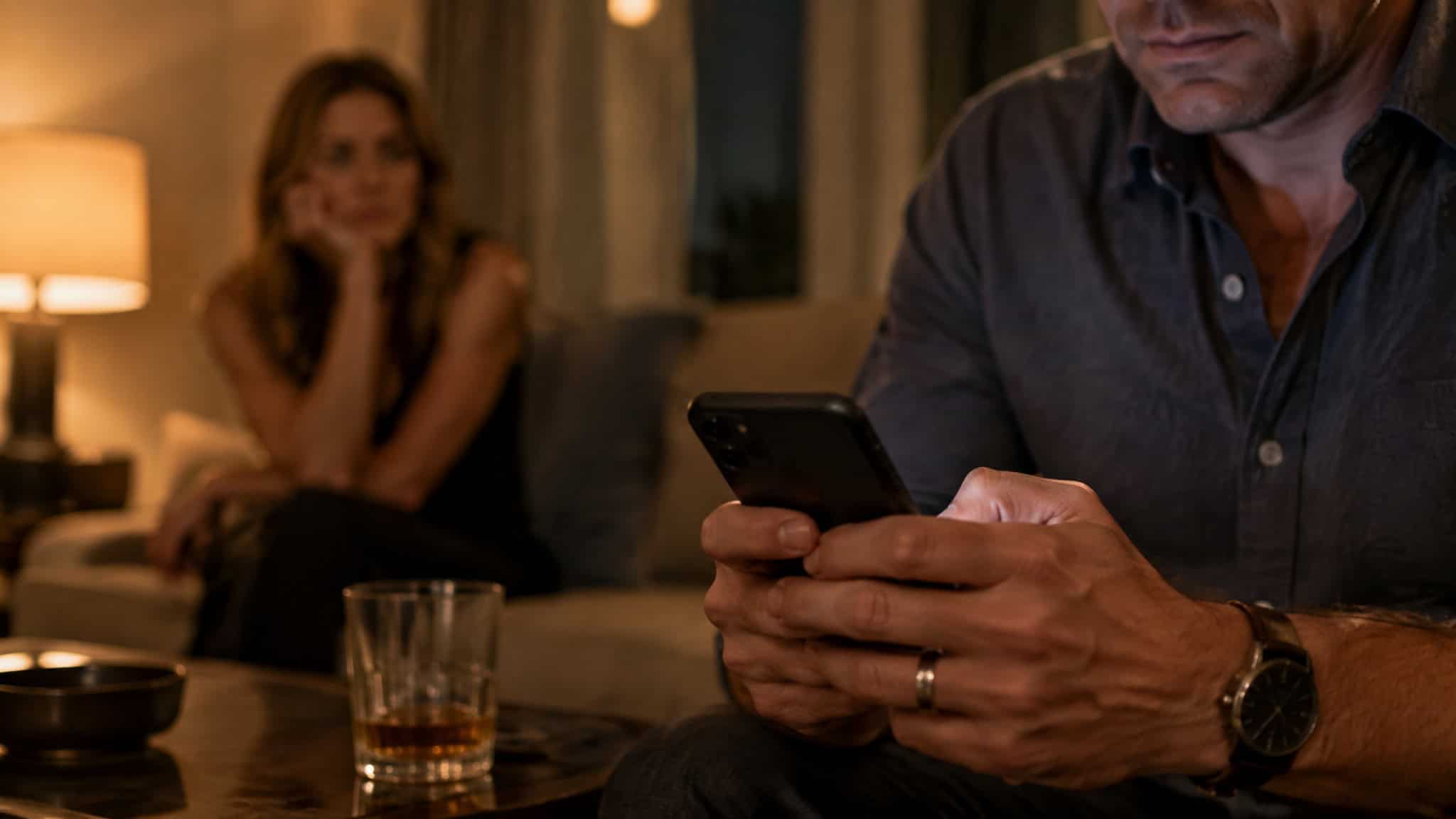
Fearful-avoidant patterns produce over-dependence that burdens partners. Dismissing-avoidant patterns dodge intimacy, which pushes partners to find emotional support somewhere else. Beyond attachment, the documented correlates are unrestricted sociosexuality, people generally open to casual sex, and self-esteem motives.
What the mistress means to the man, per Alexopoulos’s data: a self-concept upgrade. “More exciting or fun.” The role does identity work for him too.
Perel closes it with the dual framing worth sitting with: affairs hold betrayal, lying, and loss, and also yearning, longing, and self-discovery. What it did to you versus what it meant for me. Two people in the same arrangement, telling two different true stories.
Does being the other woman ever work out? Outcomes and structural asymmetry
The honest reading is that these arrangements are built to persist, not transition, and the evidence doesn’t support betting on him leaving. In Selterman’s 2023 study, affairs showed high satisfaction and low regret, but having one didn’t reliably predict divorce. The affair exists alongside the marriage rather than instead of it.
The asymmetry behind that is the investment model’s logic: years together, shared property, children give the primary relationship structural priority no matter how intense the affair feels. Which means “who is more important, wife or mistress” is a question about commitment architecture, not a ranking of feelings. On falling in love: the research doesn’t follow whether these affairs become relationships, and even strong feeling doesn’t restructure the architecture. The closest supported fact is that spousal love and affair satisfaction coexisted in the same people. Outcome data on affairs turning into lasting relationships is thin and largely outside the research base, anyone counting on him leaving is counting on something the data doesn’t document.
Bottom line: The data shows affairs running alongside marriages, not replacing them — betting on him leaving is betting on something no study documents.
What the research can and cannot tell you
Take the findings as self-reported by people who aren’t fully honest even with themselves; the motivation sample skewed young and non-representative, and the attachment studies are correlational, so none of it proves cause. The clinical upshot: the cause shapes the fix, one-size-fits-all advice fails, and forgiveness-oriented support may restore well-being, especially for anxiously attached people. And no research supports “rules of being a mistress,” so we’re not writing one.
Frequently Asked Questions
What happens when a man falls in love with his mistress?
The research doesn’t actually track whether affairs turn into lasting relationships, and even strong feeling doesn’t restructure the arrangement. Selterman’s 2023 study found having an affair didn’t reliably predict divorce — the affair runs alongside the marriage rather than instead of it. Falling in love doesn’t change the commitment architecture: shared property, children, and years together give the primary relationship structural priority regardless of how intense the affair feels.
What are the personality traits of a mistress?
There’s no mistress personality — the research maps tendencies, not a type. The documented correlates are anxious or avoidant attachment styles, unrestricted sociosexuality (general openness to casual sex), and self-esteem motives. The role functions as identity work for both people rather than attracting a fixed character profile.
What does a mistress mean to a man?
Per Alexopoulos’s survey data, she functions as a self-concept upgrade — participants described the affair as making them ‘more exciting or fun.’ Perel’s framing adds that people often stray to reconnect with a version of themselves, not another person. The role does identity work for him, not just companionship or sex.
What are some signs that my husband is falling in love with his mistress?
The research base doesn’t document behavioral signs of a husband falling in love with a mistress, so any checklist would be speculation. What the data does show is that married men most often seek affairs for sexual reasons — desire, variety, opportunity — not because the marriage is failing, and many maintain high love for their spouses throughout. Emotional involvement is present in affairs even when the cheater insists it isn’t, per Perel’s framework.
Being the other woman is killing me — is that normal?
Yes, and the difficulty is structural, not a verdict on you. The isolation is built in — no one to tell, no support to absorb stress — and the whole calendar bends around his availability. If this is the worst stretch of your emotional life, the documented stress of secrecy and sustained negative affect says the strain is real and comes from the arrangement’s architecture.