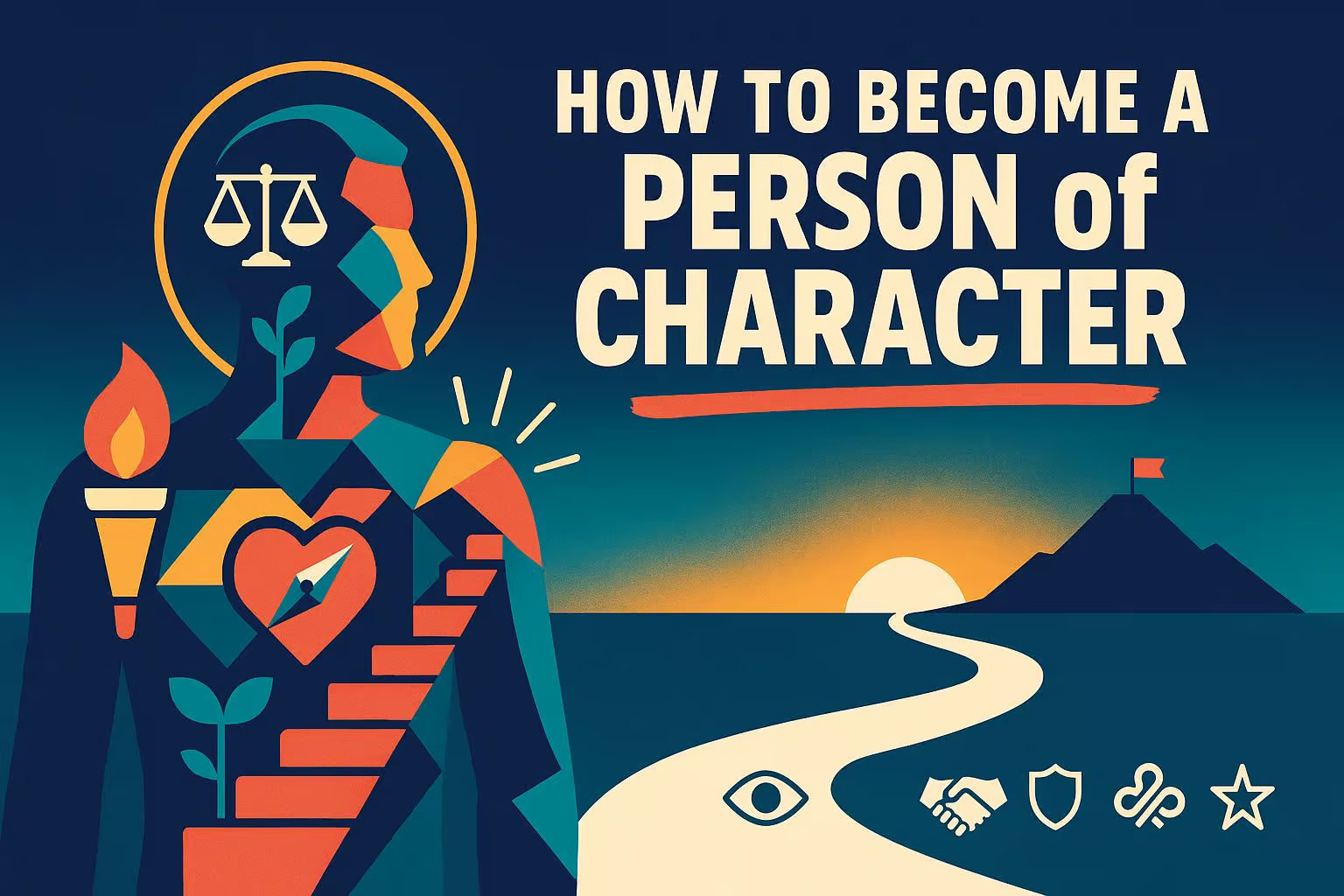
Ever feel like you’re navigating a world that prizes flash over substance? It’s a common feeling. In fact, a recent survey showed that 73% of people believe moral character is on the decline. But here’s the encouraging part: building yourself into a person of character is completely within your control.
This guide will give you actionable steps to cultivate the traits that build true inner strength. Ready to start?
Key Takeaways
Character is your internal moral compass that guides your decisions and actions, built on traits like honesty, integrity, compassion, discipline, and resilience.
Building character is an active process that requires daily effort through self-reflection, taking calculated risks, seeking mentorship, and overcoming challenges.
In leadership, strong character is essential for inspiring trust, fostering psychological safety, and promoting ethical behavior within a team.
Good character manifests in everyday interactions, strengthening relationships and creating positive social ripples through small, consistent acts of kindness and integrity.
With 73% of people believing moral character is declining, actively working to cultivate positive traits is more important than ever for personal and societal well-being.
Table of Contents
Exploring Character

Character is the foundation of who we are. It quietly shapes our choices and guides our actions, both in the spotlight and in the quiet moments.
What is Character?

In psychology, character refers to the unique combination of traits that determines how you consistently behave. It’s your true self when no one is watching.
Think of it as your moral compass, the internal guide that helps you make choices. Good character is about more than just being nice; it’s about having strong values and living by them, even when it’s difficult.
The VIA Institute on Character, a nonprofit research organization, has identified 24 universal character strengths that lead to a more fulfilling life. You can even take their free survey to identify your own top strengths, giving you a clear starting point for personal growth.
Character is who or what you are even when nobody is watching.
Significance in Life and Work

Character isn’t just an abstract idea; it has a real impact on our lives and careers. Strong character helps us make better choices, build trust, and bounce back from setbacks.
In the workplace, strong character traits are highly valued. Research from Gallup shows that organizations with highly engaged employees are 23% more profitable. That engagement is often built on a foundation of trust in leaders who demonstrate integrity and fairness.
Being a man of the world involves more than just seeing new places. It’s about having the character to handle any situation with grace and strength.
People with strong character often find more fulfillment in their jobs. They are better at setting and achieving goals, which leads to greater success and happiness in both their personal and professional lives. Cultivating your character isn’t just a nice-to-have, it’s a key ingredient for thriving.
Essential Traits of Character
Character is built on a foundation of key traits. These aren’t just positive qualities; they are the pillars of a strong moral compass that guides your actions and shapes how you navigate the world.
Practicing Honesty

Honesty is a core trait of good character. It’s about being truthful in your words and actions, creating alignment between what you think, say, and do. It’s the opposite of putting on an act.
The benefits are real. A “Science of Honesty” study presented at the American Psychological Association’s convention found that telling the truth more often significantly improves a person’s mental and physical health. Research shows that dishonesty actually increases psychological stress.

It can be tough at first. Admitting a mistake is often harder than hiding it. But over time, practicing honesty builds trust with others and boosts your own self-respect.
Honesty is the first chapter in the book of wisdom. – Thomas Jefferson
Upholding Integrity

Integrity takes honesty a step further. It’s about consistently adhering to your moral principles, especially when it’s inconvenient or no one is watching. Psychology defines integrity as moral consistency and truthfulness with yourself and others.
Living with integrity is linked to higher self-esteem and greater life satisfaction. People with integrity stand out. They’re the ones others trust and respect, like historical figures Mahatma Gandhi and Martin Luther King Jr., who held firm to their beliefs against immense pressure.
A helpful tool for practicing integrity is the “front-page test.” Before making a decision, ask yourself if you would be comfortable if your actions were detailed on the front page of tomorrow’s newspaper. This simple thought exercise helps align your choices with your core values.
Demonstrating Compassion

Compassion is the ability to feel for others and be moved to help them. It’s more than just politeness; it’s about genuinely recognizing the struggles of others and wanting to make a positive difference.
Men who demonstrate compassion show true strength. They have the courage to care when it might be easier to look away.
- Builds Trust: Compassionate acts create strong bonds and foster respect.
- Inspires Others: Small acts of kindness have a ripple effect, encouraging others to be compassionate too.
- Shows Courage: It takes bravery to connect with someone else’s vulnerability.
A simple way to practice compassion is through what author Adam Grant calls the “five-minute favor.” This involves doing something that will take you five minutes or less but can provide significant value to someone else. It’s a small investment that builds a culture of helping.
Maintaining Discipline

Discipline is the engine of achievement. It isn’t about punishment, but about building good habits that move you closer to your goals. Think of it like training at the gym; results come from consistent, focused effort.
A great way to start is with the “two-minute rule,” popularized by James Clear in his book *Atomic Habits*. The idea is to make a new habit so easy to start that you can’t say no. Want to read more? Just read one page. Want to get fit? Just put on your workout clothes. This small step makes it easier to build momentum.
Self-control is the heart of discipline. It’s about delaying gratification for a better long-term outcome. It gets easier with practice. Setting small, daily goals helps build the muscle of discipline, giving you the freedom to achieve more than you ever thought possible.
Discipline is the bridge between goals and accomplishment. – Jim Rohn
Building Resilience
Resilience is the skill of bouncing back from adversity. The American Psychological Association defines resilience as the process of adapting well in the face of trauma, threats, or significant stress. It’s not something you’re born with; it’s a capacity you build over time.
One of the pioneers of positive psychology, Dr. Martin Seligman, developed the concept of “learned optimism” as a key to resilience. It involves changing your explanatory style, or how you view setbacks, from permanent to temporary.
Building this mental muscle requires practice. You have to push yourself and reflect on your responses to challenges. Every time you get back up after a setback, you become stronger for the next one.
Building Character

Building character is an active, ongoing process. It takes conscious effort, self-awareness, and a commitment to growth. But the rewards, like deeper relationships and a stronger sense of self, are well worth the work.
Cultivating Moral Discipline
Moral discipline is the foundation of a strong character. It’s about consistently choosing what’s right, even when it’s difficult or inconvenient. This isn’t an innate quality, it’s built through daily choices.
These small acts compound over time. Keeping your word when it’s tough, showing up on time, or telling the truth are all deposits into your character bank account. I’ve found that creating a personal code of conduct helps guide my actions when I’m faced with a tricky situation.

For example, a rule I live by is to always finish what I start. It’s not always easy, but it keeps me accountable. Over time, these choices become habits, and those habits define who you are.
Fostering Moral Attachments
Moral attachments are the meaningful connections we form with others that shape our values. Positive relationships with family, friends, and mentors are crucial for helping us grow into better people.
The famous Harvard Study of Adult Development, which has been running for over 80 years, found that strong relationships are the single biggest predictor of our long-term happiness and health. These connections teach us empathy, kindness, and responsibility.
You can actively build these attachments. Simple acts like inviting a coworker to lunch, helping a neighbor with a task, or joining a community group can spark these connections. As you nurture these bonds, your own character grows stronger.
The greatest happiness of life is the conviction that we are loved. – Victor Hugo
Achieving Moral Autonomy
Moral autonomy means having the ability to think for yourself and make ethical decisions based on your own principles, not just because you’re following rules. It’s about understanding the *why* behind what is right and wrong.
The psychologist Lawrence Kohlberg developed a famous theory on the stages of moral development. He explained that people progress from a simple, punishment-and-reward mindset (pre-conventional) to eventually developing their own universal ethical principles (post-conventional).
Reaching this higher stage isn’t automatic. It’s a skill you develop by facing difficult situations and reflecting on your choices. Each time you make a tough but principled decision, you strengthen your ability to trust your own judgment.
Steps to Enhance Character

Ready to improve your character? These practical steps will help you move from theory to action.
Engaging in Self-reflection
Self-reflection is the practice of looking inward to examine your thoughts, feelings, and actions. It’s a powerful tool for personal growth, like holding up a mirror to your inner self.
You don’t need anything fancy. Simply taking a few minutes each day to journal or meditate can make a huge difference. Consider using a dedicated journaling app like Day One to make it a consistent habit.
By regularly reflecting, you can identify patterns in your behavior, understand your motivations, and make more conscious choices. It’s like being your own coach, guiding yourself toward becoming the person you want to be.
Calculated Risk-Taking and Decision-Making
Taking smart risks is crucial for personal growth. This isn’t about being reckless; it’s about weighing the potential outcomes and making a thoughtful decision to step outside your comfort zone.
When facing a big decision, a powerful tool is Jeff Bezos’s “Regret Minimization Framework.” He used this to decide whether to leave his stable job to start Amazon. The process is simple: project yourself to age 80 and ask, “Will I regret *not* having done this?” This reframes the decision around long-term fulfillment instead of short-term fear.
Whether you’re practicing making quick decisions in sweepstakes casino games on gameland.gg or contemplating a career change, the key is to learn from both your wins and your losses. Each decision sharpens your judgment for the next one.
Seeking Constructive Feedback and Mentorship
Growth rarely happens in a vacuum. Seeking out constructive feedback and mentorship provides an outside perspective that can help you see your blind spots and accelerate your development.
The data on mentorship is compelling. Mentees are promoted five times more often than those not in a mentoring program, and 97% of those with a mentor find it valuable. Finding a mentor isn’t just a good idea, it’s a strategic career move.
Look for mentors who provide honest, thorough input. Don’t be afraid to ask trusted colleagues or leaders in your field. Platforms like SCORE offer free mentorship for business owners, and LinkedIn has features to help you connect with potential mentors.
Establishing Personal Goals
Personal goals give your life direction and purpose. They are the roadmap that guides your daily actions and keeps you motivated.
One of the most effective methods for goal setting is the SMART framework, which has been a trusted model since the 1980s. This ensures your goals are:
- Specific: Clearly defined and unambiguous.
- Measurable: You can track your progress.
- Achievable: Realistic and attainable.
- Relevant: Aligned with your broader life purpose.
- Time-bound: Have a clear deadline.
Research from Dominican University found that you are 42% more likely to achieve your goals just by writing them down. So take a moment, define what you want, and write it down using the SMART criteria. Your future self will thank you.
Facing and Overcoming Challenges
Challenges are an inevitable part of life. How you respond to them is what truly builds and reveals your character. It’s in these tough moments that you discover your inner strength.
Psychologists have identified a phenomenon called “post-traumatic growth,” where people experience positive psychological change after a crisis. Research shows that as many as two-thirds of trauma survivors report at least one aspect of this growth, such as a renewed appreciation for life or a greater sense of personal strength.
Overcoming challenges isn’t just about willpower. It’s also about strategy. Break large problems into smaller steps, learn from your setbacks, and don’t be afraid to ask for help. Every obstacle you overcome builds your resilience for the future.
Character in Leadership

A leader’s character is the bedrock of their effectiveness. Leaders with strong moral principles inspire trust, loyalty, and ethical behavior in their teams.
Character’s Impact on Leadership
Leaders with good character stand out. Their honesty, fairness, and compassion create an environment of psychological safety where people feel valued and are willing to do their best work.
This isn’t just speculation. A Gallup poll found that employees with mentors, a relationship built on trust and character, are twice as likely to be engaged at work. That engagement translates directly to better business outcomes.
Character guides a leader’s decisions, especially under pressure. Leaders with integrity stick to their values, admit when they’re wrong, and learn from their mistakes. This builds a level of respect and loyalty that commands can’t buy.
Leadership Traits Illustrated
Great leaders demonstrate specific character traits through their actions. Think of leaders you admire, they likely exhibit many of these qualities.
- Accountability: They take responsibility for mistakes and don’t blame others.
- Humility: They put the team’s needs before their own and are willing to listen to different perspectives.
- Courage: They make tough decisions and stand up for what is right, even when it’s unpopular.
- Empathy: They genuinely care about their team members as individuals.
My old boss was a great example of this. He always took the time to listen to everyone’s ideas and made sure we all felt our contributions mattered. His actions created a powerful sense of loyalty and inspired us all to do our best work.
Character in Everyday Interactions

Character isn’t reserved for major life decisions. It’s forged in the small moments of daily life, from how you treat a cashier to how you react in traffic.
Applying Character Traits Daily
Living with character is about consistency. It’s about being the same person at work, at home, and with your friends. Your reputation is built on the sum of these small, everyday choices.
Think of your character as a muscle. Every time you choose to be patient, to help someone without expecting a reward, or to face a small fear, you’re making it stronger.
Make it a habit to practice these traits. A great starting point is the “Ben Franklin effect,” a psychological finding that you actually like someone more after you do them a favor. This shows that small acts of kindness not only benefit others but also reinforce your own positive character.
Effects on Relationships and Social Dynamics
Your character has a direct impact on the quality of your relationships. People are naturally drawn to those who are honest, kind, and reliable. These traits are the foundation of trust.
Renowned relationship researcher Dr. John Gottman identified contempt and criticism as key predictors of divorce. The antidote to these negative behaviors are character traits like respect, kindness, and empathy. Practicing these qualities doesn’t just make you a better person; it makes you a better partner and friend.
Your good actions create a ripple effect. When you act with integrity, you inspire others to do the same. This can transform the dynamics of your family, your workplace, and your community.
People Also Ask
What makes a person of character?
A person of character consistently demonstrates traits like honesty, integrity, empathy, and self-discipline. They live by a strong set of moral principles and do what’s right, even when it’s difficult. It’s less about perfection and more about a commitment to ethical behavior.
How can I build my character?
Building character is an active process. You can start by practicing self-reflection, setting personal goals using a framework like SMART, seeking mentorship, and consciously practicing virtues like patience and humility in your daily life. It’s about making small, positive choices every day.
Why is having good character important?
Good character is the foundation of trust in all relationships, both personal and professional. It leads to greater life satisfaction, stronger connections, and often, more career success. People with strong character are respected and seen as reliable and inspiring.
Can character change over time?
Absolutely. Character is not a fixed trait. Through conscious effort, self-awareness, and perseverance, anyone can develop their character strengths. It’s a lifelong journey of growth and learning.
How does empathy relate to character?
Empathy is a cornerstone of good character. It’s the ability to understand and share the feelings of another person. This understanding guides compassionate and ethical actions, helping you build stronger, more meaningful connections with others.
What role does ethics play in character development?
Ethics provides the framework for character. Your personal ethics are the moral principles that guide your decisions between right and wrong. Developing a strong ethical compass is essential for navigating complex situations and acting with integrity.
References
https://www.ncbi.nlm.nih.gov/pmc/articles/PMC9918758/
https://www.ncbi.nlm.nih.gov/pmc/articles/PMC8096931/
https://www.viacharacter.org/character-strengths/honesty
https://achology.com/personal-growth/essential-character-traits-for-personal-growth-and-development/
https://www.linkedin.com/pulse/developing-discipline-brian-host
https://leadershipandcharacter.wfu.edu/vision-2/seven-strategies-for-character-development/
https://greatergood.berkeley.edu/article/item/three_things_that_influence_our_character (2023-11-22)
https://www.betterup.com/blog/self-reflection (2022-12-21)
https://www.linkedin.com/advice/1/what-best-ways-build-culture-calculated (2023-09-28)
https://www.ncbi.nlm.nih.gov/pmc/articles/PMC9387358/
https://www.linkedin.com/pulse/using-challenges-opportunity-build-character-george-nying
https://www.ccl.org/articles/leading-effectively-articles/characteristics-good-leader/
https://www.harvardbusiness.org/the-case-for-leadership-character/ (2024-02-13)
https://iveybusinessjournal.com/publication/the-character-of-leadership/
https://thebaileygroup.com/the-5-characteristics-of-a-good-leader/ (2023-03-14)
https://ps.psychopen.eu/index.php/ps/article/view/7505/7505.html