We’ve all been there: it’s 2 AM, the compliance auditor is arriving in 36 hours to check the systems behind your affordable debt collection merchant account, and you’re staring at an Excel sheet trying to remember who has the SSH keys to the database. You’re taking manual screenshots of server configurations, rotating stale API keys, and praying that the firewall hasn’t drifted since last year. Then, the second the auditor signs off, everyone exhales, drops the security tools, and lets the system slowly decay until next October.
This is the great fallacy of the annual compliance checklist. The PCI Security Standards Council (PCI SSC) doesn’t set these rules just for show; they set them to keep you from getting wiped out. Treating security like a yearly stress test just turns your scanning tools into an expensive screenshot generator. Real compliance means daily operational discipline, not a chaotic fire-drill.
Key Takeaways
Stop scrambling once a year. Real compliance happens through daily state checks and continuous configuration audits.
Isolate your Cardholder Data Environment (CDE) using network segmentation. It shrinks your compliance scope, which saves you a fortune in audit costs and consulting bills.
Ignoring compliance is a massive risk. You’re looking at immediate penalties from card brands, lawsuits, and damage that can easily top $500,000.
Table of Contents
Who Must Comply, and What Is at Stake?
The payment security landscape isn’t some new-age fad. The Payment Card Industry Data Security Standard (PCI DSS) was established back in 2004 by the major payment brands—Visa, Mastercard, American Express, JCB, and Discover. If your business accepts, stores, transmits, or handles even a single credit card transaction, you’re in. This is just foundational security hygiene—it’s a different beast than general privacy rules like GDPR or HIPAA.
If you drop the ball on this, the fallout gets ugly fast. Failing an audit or suffering a data breach doesn’t just trigger standard regulatory warnings; it invites compounding credit card business penalties, civil lawsuits, and cleanup fees. In fact, a single card compromise can easily punch a hole through $500,000 in cash once you factor in forensic audits, operational disruption, and card replacements. The double-whammy of severe brand damage and heavy non-compliance penalties can quietly put small to mid-sized operations out of business overnight.
The Compliance Scaling Matrix: Level 4 to Level 1
Your compliance workload depends entirely on your annual transaction volume. As you grow, the process shifts from simple self-reporting to a much more intense, third-party audit.
Self-Assessments vs. Formal Audits
The primary difference between a PCI DSS self-assessment and a qualified security assessor audit comes down to who is signing the paperwork. For lower-volume tiers—specifically Level 2 through Level 4—you can usually self-report by filling out a Self-Assessment Questionnaire (SAQ). It’s a self-guided process that still requires technical accuracy, but you’re doing the grading. Once you cross the threshold into formal audits, a third-party Qualified Security Assessor (QSA) must physically and digitally verify your environment.
The Jump to Level 1
When you exceed 6 million transactions annually, you step into Level 1 territory. This is where the documentation workload explodes, and you’re stuck doing mandatory, on-site audits. If you’re not ready, the cost of managing these will paralyze your team. Know your transaction level early so you aren’t blindsided by the jump in requirements.
The Core Framework: Operationalizing the 12 Requirements
The core PCI DSS framework organizes its rules into 12 main technical requirements grouped under six major security goals. To survive this without losing your mind, you have to move away from tracking these controls on static spreadsheets.
Moving Past Manual Spreadsheets
To meet those twelve core requirements, you need to map automated controls directly to your security goals. Don’t assign a developer to manually check server settings every Friday. Get systems that verify themselves. Treat these rules as live code rather than static checklist items. If you do, security just becomes part of how your architecture works.
Automating the Paperwork
This is where automation engines like Sprinto earn their keep. Tools like Sprinto hook into your cloud infrastructure to log evidence and monitor for state drift automatically. Instead of drowning in endless folders of manual verification receipts, you let automated tracking run in the background, freeing your engineering team to focus on building features rather than playing compliance historian.
Firewall Architecture: The First Line of Defense
Your firewall is the digital front door to your payment database. If you leave it wide open or use lazy configurations, you’ve already lost the battle. A solid firewall configuration is the bare minimum, but it’s not a set-it-and-forget-it deal.

Leaving vendor defaults active on any network hardware is the engineering equivalent of leaving your front door unlocked with a welcome mat. Treat every default SNMP string or manufacturer password like an active security breach. If you aren’t using SNMP, disable or securely configure it to prevent it from serving as a silent backdoor.
Keep your network hardware updated with the latest software to protect against known exploits. Enforce passwords with special characters, numerals, and uppercase letters using offline password generators to ensure high-entropy security. Don’t rely on your brain or predictable patterns for passwords—use an offline generator to create and store them.
Minimizing Complexity: The ROI of Scope Reduction
If your entire corporate network can touch cardholder data, your entire network is subject to audits. That means every workstation, printer, and server has to be locked down to payment-card standards. The smartest move you can make is to limit your blast radius by isolating your Cardholder Data Environment (CDE).

By implementing strict network segmentation, you physically and logically cut off your payment systems from the rest of your business. While dealing with tedious compliance audits might eventually make some stressed IT professionals consider alternative career paths for men, this practice dramatically shrinks your overall compliance scope, making your auditable footprint small. If a piece of your network doesn’t touch card data, you don’t have to bother securing or auditing it under PCI rules.
Buyer rule: Use network segmentation to isolate payment systems; it is the single most effective way to shrink your audit scope and slash consulting costs.
While getting fully secure and compliant can run anywhere from thousands to tens of thousands of dollars in tools and engineering time for a small business, segmentation serves as an economic cheat code. It drastically lowers audit preparation costs and consultant fees by keeping unnecessary office laptops, test servers, and generic infrastructure completely out of the assessor’s focus. Think of it like a fire door in a warehouse—isolation stops a breach from wrecking your entire network, and it stops your audit bill from ballooning.
Data Encapsulation: Implementing Robust Encryption Standards
Encryption isn’t a luxury; it’s the bare minimum to keep sensitive data off the dark web. If you store or transmit Primary Account Numbers (PAN), you must protect them with high-strength cryptographic standards like AES or PGP recommended by NIST. They’ve already done the complex math, so you don’t have to reinvent the wheel.
A rule of thumb is to never display unmasked PANs on any user-facing screen. Only show the last four digits so employees can reference the record without exposing the actual payment numbers. If you’re moving data over the web without high-tier encryption, you might as well hand the files straight to an attacker.
Security also applies to how you manage the cryptography itself. Never store your sensitive encryption keys in a single vault where one compromised account ruins the whole system. Instead, implement dual control by splitting the keys into separate pieces housed in isolated secure vaults. It requires two people to authorize major changes, ensuring no single employee holds the keys to the entire castle.

Neutralizing Data Value: Tokenization and Pseudonymization
The safest way to protect credit card numbers is to delete them from your servers entirely. By leveraging both tokenization and pseudonymization, you clean up your databases and strip your technical infrastructure of its target value. If an intruder breaks past your defenses, they end up with worthless, scrambled placeholders rather than bankable card details.
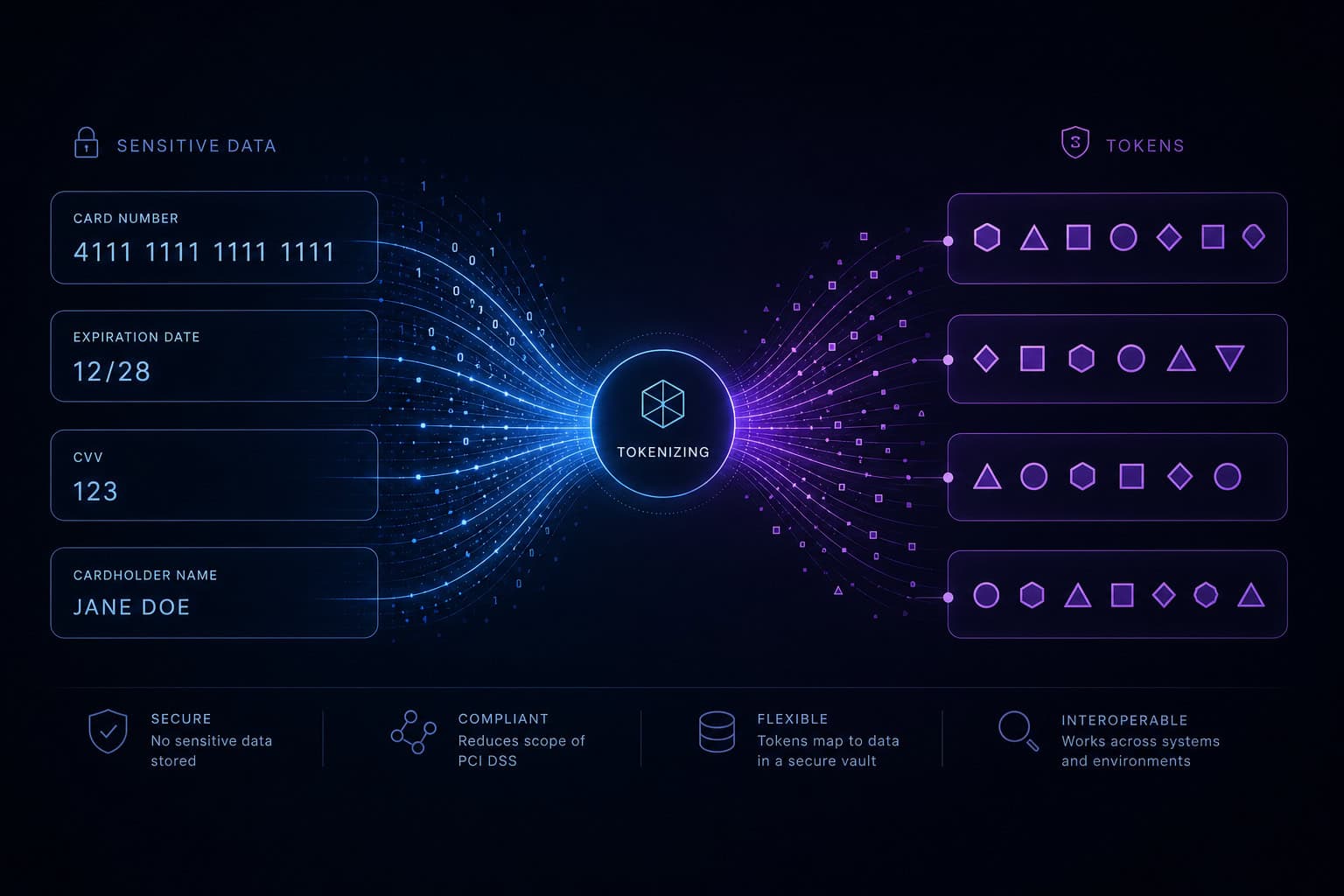
The main difference comes down to how the data is masked. Modern tokenization swaps critical card metrics with random, non-sensitive tokens, while pseudonymization separates identifying customer traits from the payment payload. When integrating legacy point-of-sale (POS) hardware with cloud payment systems, keeping the raw data transit-safe across public networks reduces overall vulnerability.
If you’re wondering how to maintain cardholder security while using third-party payment processors, the secret is simple: never let the raw card data interact with your local systems at all. Route transactions through secure API iframe fields or hosted payment pages. The processor hands you a harmless token for your records, keeping your internal databases clean and drastically lowering your liability.
Identity as a Perimeter: Access Control and Unique Identifiers
When systems break, anonymity is your worst enemy. Ban shared root or admin accounts if you want to actually know who’s doing what. Know who is logged in; otherwise, a forensic investigation will leave you blind.

Assigning unique IDs to every engineer, support rep, or administrator with CDE access is a major defense pillar. Sharing credentials is a rookie mistake that makes modern incident response impossible. Limit data access to a strict, functional “need-to-know” basis so employees only touch what they need to do their job.
To secure remote worker access to payment systems, you must enforce specific security controls: direct trace logging, MFA-bonded unique credentials, and strict firewalls that block generic account logins. If an offshore developer or remote sysadmin logs in, their session must be uniquely authenticated and tie back to an audit trail. If something goes south, you want to know exactly whose keys were in the lock.
Endpoint Hardening: Deploying Enterprise Antivirus Software
Every user laptop or backend server is a potential gateway for malware. You need enterprise-grade antivirus software running to serve as the digital equivalent of a security guard checking visitors at a checkpoint. If you try to slide by with free, basic consumer scanners, you get exactly what you pay for—or worse, you pay with your proprietary data.
Stick to reputable, supported endpoint brands like McAfee, Kaspersky, or ESET to secure your systems. These tools offer centralized signature-update monitoring, allowing you to track security states across all endpoints from a single panel. To an insurance adjuster or auditor, a licensed enterprise protection system proves you aren’t just winging it.
Continuous Exposure Management: Automated Vulnerability Scanning
Running a single vulnerability scan right before your annual audit is like studying for a test the night before and forgetting everything the next morning. Systems drift, developers make mistakes, and new exploits are published daily. You cannot keep track of this manually without losing your mind.
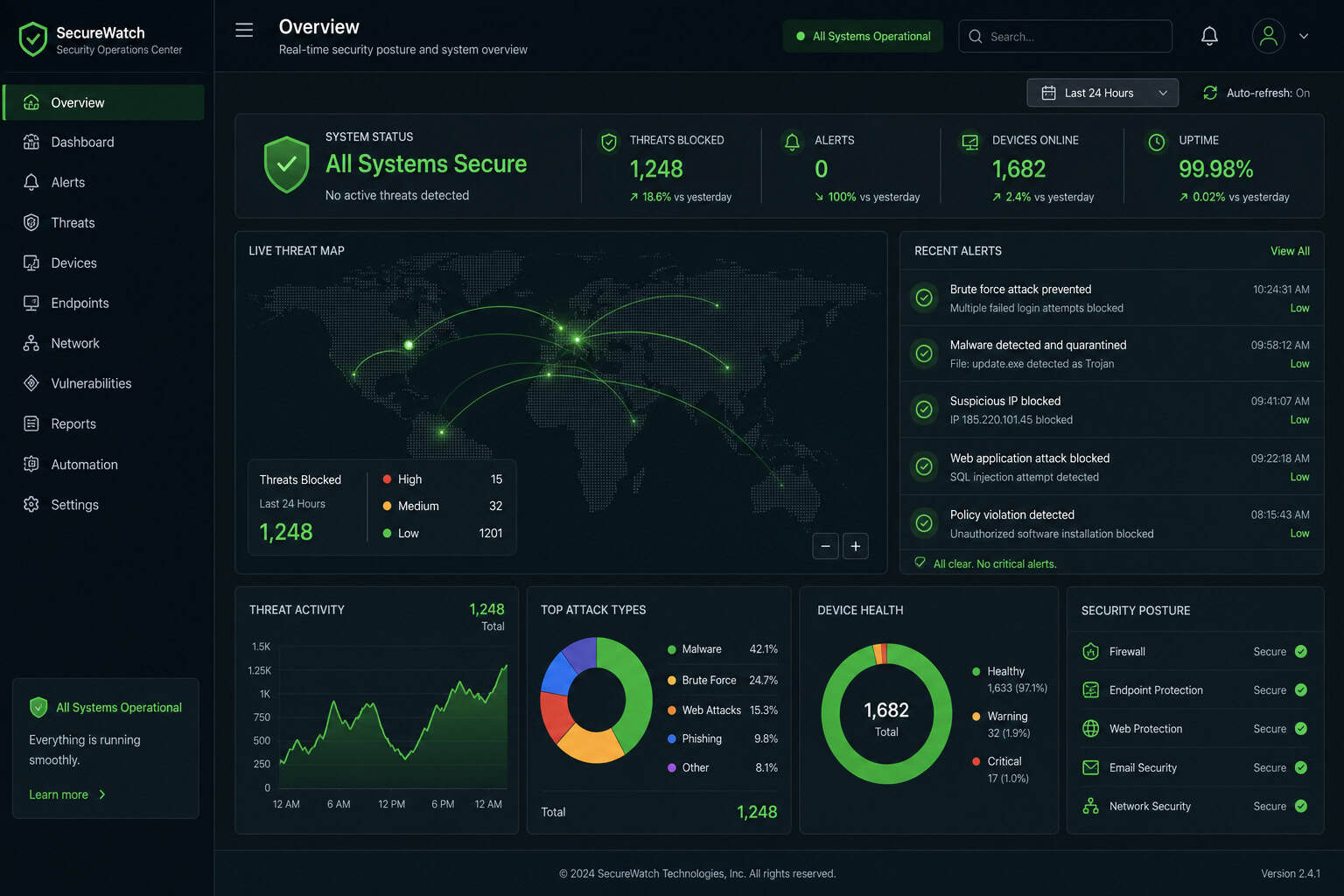
Integrating tools like SanerNow into your operations provides continuous, automated vulnerability scanning rather than static annual checks. Using SanerNow helps your team spot missing patches and outdated software before malicious actors find them. It makes continuous digital sweeps a native part of your operations.
If you think achieving PCI compliance is a guarantee that your company will not be hacked, you are setting yourself up for disaster. Compliance is merely baseline security hygiene—it proves you have the locks installed. If your configurations drift post-audit or your systems run unpatched code, those locks will be bypassed by any moderately skilled attacker.
Password Management: Securing System-Level Credentials
Write down your credentials on a sticky note, and you might as well leave the server room door wedged open. Managing passwords without an organized system is an open invitation to a breach. Every engineer and support agent should use password manager solutions, avoid sharing passwords or accounts, and regularly clear unreliable browser plugins.
An exploit vector is the collection of third-party browser plugins sitting on employee laptops. Malicious or compromised browser extensions can silently sniff login strings, capture keystrokes, and upload credentials to remote servers. Routinely audit team web browsers, purge any unrecognized plugins, and ensure your team uses offline, secure master keys.
Analog Barriers: Restricting Physical Access Controls
You can spin up the most secure virtual firewalls on Earth, but if someone walks into your server room and walks out with a physical hard drive, your security is worth zero. Physical security is as important as your software layer.

Establish strict RFID boundaries and entry tracking screens to verify every single physical visitor. Enforce designated USB-free zones in workspaces to prevent employees—or random visitors—from plugging untrusted flash drives into payment-processing machines. This basic lock on physical access keeps local malware payloads out of your infrastructure.

Don’t forget paper records, either. Letting physical transaction logs or printed card details sit around on desks is an easy way to get compromised. Buy a heavy-duty document shredder and destroy those sheets the instant the processing cycle finishes; it’s a minor investment to prevent a breach.
Governance: Maintaining a Living Information Security Policy
An information security policy shouldn’t be a generic Word document you download, sign once, and hide in a drawer. If a breach happens, you don’t want your team guessing what to do. The documentation must be treated as interactive, living procedures that outline clear retrieval paths for raw log metrics and trace forensics.
Providing ongoing security awareness training for all staff is critical to defend against human error and social engineering schemes. Run regular, practical data-awareness training sessions for your staff—keep it completely direct, skip the preachy corporate lectures, and make sure everyone understands how to handle payment data safely.
Prepared for the Worst: Establishing and Testing an Incident Response Plan
When a system security breach happens, every second of delayed containment costs your company real money and reputation. Testing your disaster playbook twice a year under mock scenarios is the only way to ensure your team acts calmly when everything catches fire. A thick document binder is useless if nobody knows how to execute the plan under pressure.

If your company discovers a potential card data breach, the first steps to take are:
- Isolate the affected network segments immediately to halt lateral movement and contain the threat.
- Activate your tested incident response team and hand control over to designated security leads.
- Stop all outbound data exports and freeze log outputs to protect critical evidentiary trails for forensic investigation.
By pre-deciding these moves and practicing them under fire, you stop panic from turning a minor containment leak into a company-killing catastrophe. Keep records of your actions as you work, as you’ll need those digital breadcrumbs when the regulators and payment brands arrive to investigate.
Operationalizing PCI Compliance: The Continuous Path
Compliance isn’t a trophy you win and hang on the wall; it is a job you do every single day. Keeping your apps updated and purging third-party legacy extensions are boring, mundane duties, but they prevent the basic exploits hackers rely on. Using unsupported or stale devices on your network immediately puts your corporate accounts and customer cardholder data at extreme risk.
Operate on the assumption that software stays fresh or it dies. Run automated checks, segment your network, and utilize continuous security patterns to move your business from a state of pre-audit panic to steady maintenance. Prioritize clean, everyday security habits over that yearly scramble. You’ll protect your income and turn the audit into a stress-free look at how you’re already doing things.
Frequently Asked Questions
What is the primary difference between a self-assessment and a formal PCI audit?
A self-assessment allows you to evaluate and report on your own compliance standing via a questionnaire, typically for lower transaction volumes. In contrast, a formal audit requires a third-party Qualified Security Assessor to physically and digitally verify your environment, which becomes mandatory once you exceed certain transaction thresholds.
How does network segmentation actually save money for my business?
Segmentation isolates your payment systems from the rest of your corporate infrastructure, such as office laptops and non-essential servers. By limiting the area that touches sensitive card data, you drastically shrink the scope of your audit, which lowers both your professional consulting fees and the overall cost of compliance tools.
Why should I bother with tokenization if I already have a firewall?
A firewall is a perimeter defense, but tokenization removes the actual value of your data by replacing sensitive payment information with non-sensitive placeholders. Even if an attacker manages to bypass your firewall, they will find useless data instead of actual credit card numbers, which effectively neutralizes the risk of a high-stakes data breach.
Is it really necessary to assign unique logins to every employee?
Yes, shared accounts are a major security vulnerability because they make it impossible to track exactly who performed which action during a security incident. Unique identifiers provide an essential audit trail that allows you to investigate breaches effectively and meet standard regulatory requirements for accountability.
What is the biggest risk of using annual checklists for security?
The annual checklist approach leads to ‘compliance drift,’ where systems decay and security patches are ignored for months at a time. Treating security as a once-a-year event turns your protection tools into mere screenshot generators rather than a functional, reliable defense against modern threats.
How should I handle encryption keys to ensure they are secure?
Never store all your encryption keys in a single, accessible location. Instead, use a dual-control method where keys are split and stored in separate, isolated vaults, requiring at least two authorized people to perform major changes or access the data.
Can I use free antivirus software to meet PCI requirements?
Basic, free consumer-grade scanners are typically inadequate for meeting the rigorous standards expected by auditors and insurance adjusters. You should use supported, enterprise-grade endpoint protection that offers centralized monitoring, which allows you to prove your security posture through verifiable logs.