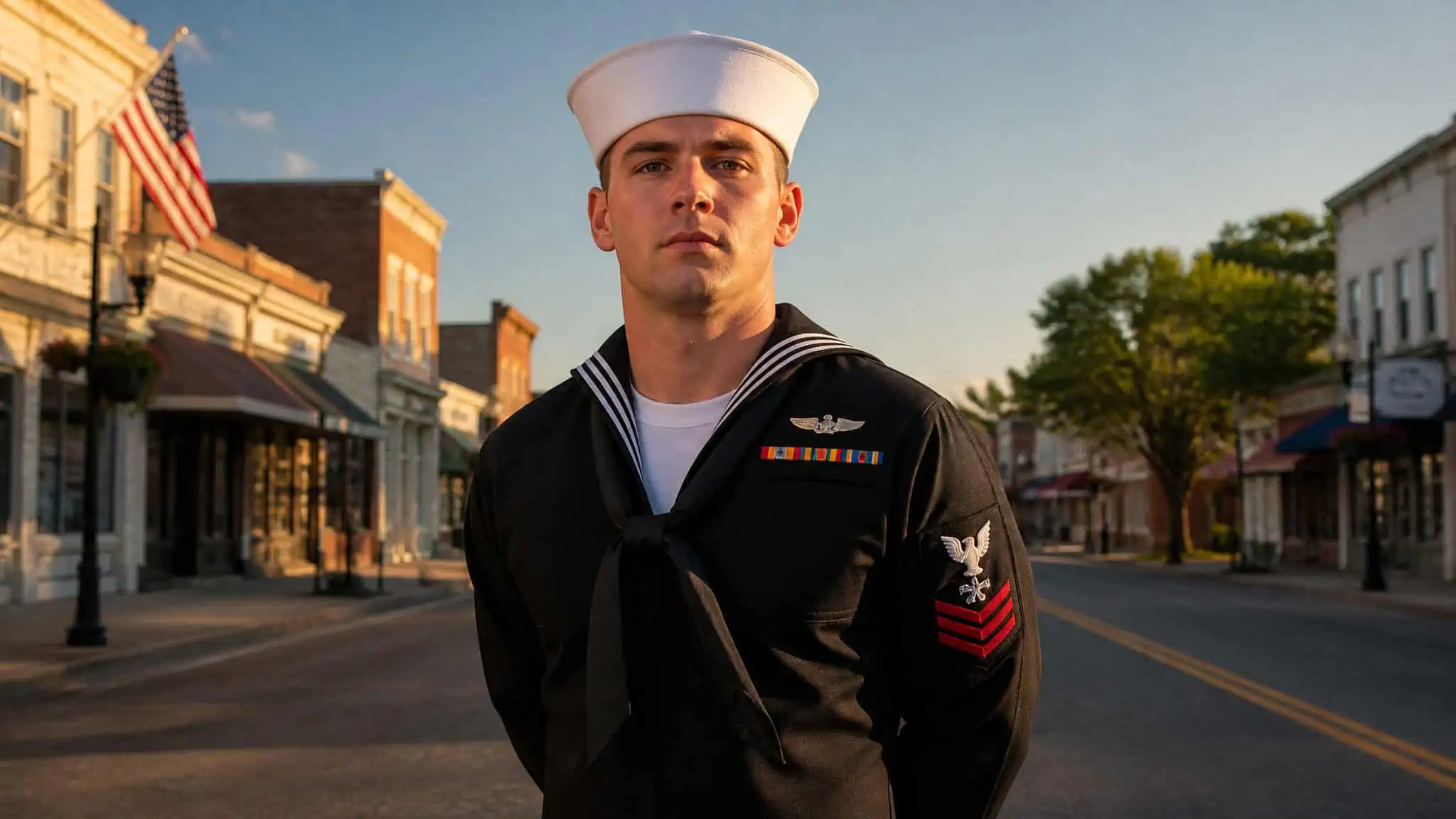
528 posts in one month.
That’s how many stories the Navy Outreach blog published in July 2026. Not a year—a month. For comparison, the whole of 2024 saw 3,449 posts, and 2025 logged 2,459. That’s 528 individual sailors from 528 individual hometowns. The Navy isn’t just telling its story; it’s telling it town by town, person by person, at industrial scale.
I’ve been digging into what that looks like on the ground in 2026, and there are two things running in parallel. One is the events—Billings Navy Week, Pacific Partnership, the submarine force—real events—happening with real people. The other is the machinery behind those stories: a deliberate strategy to saturate local news with hyperlocal narratives tied to each sailor’s hometown. Both are worth understanding because they show how the Navy builds trust when most of the country doesn’t live near a base.
Key Takeaways
The Navy Outreach blog published 528 posts in July 2026 alone, part of a multi-year strategy to generate local media coverage by linking each sailor to their specific hometown.
Billings Navy Week (Aug. 17-23, 2026) is the first to be held almost entirely in a single Montana city, featuring returning sailors like Amy Hubbell (Columbus High School 2021) and Calvin Moseman (Billings West High School 2008).
Pacific Partnership 2026 is the 22nd iteration of the mission, which shifted from direct disaster relief after the 2004 tsunami to long-term host-nation capacity building across Vietnam, Indonesia, Malaysia, Timor-Leste, the Philippines, Fiji, and Palau.
Table of Contents
Billings Navy Week — The Hyperlocal Playbook
From August 17 to 23, 2026, Billings, Montana, hosts its first Navy Week concentrated almost entirely in one city. Usually these events spread across a region, but this one is parked right in Billings. Since 2005, the Navy Week program has brought sailors to areas without a significant Navy presence. The big public draw is the Yellowstone International Air Show on August 22-23, 2026, at Billings Logan International Airport, headlined by the Blue Angels. Navy Band Northwest and the Ceremonial Guard drill team will also be performing free shows around town.
But the trick of Navy Week is personal. The Navy flies in sailors who grew up in that town—two for Billings. Petty Officer 2nd Class Amy Hubbell is a Columbus, Montana native, graduated Columbus High School in 2021. She’s a master-at-arms on the aircraft carrier USS Harry S. Truman out of Norfolk.
She joined five years ago, inspired by her great-grandfather’s World War II Army service. Chief Petty Officer Calvin Moseman is from Billings itself—Billings West High School, class of 2008. He’s a yeoman at U.S. Space Command in Colorado Springs. Before boot camp, he worked at Red Lobster, where he learned initiative and customer service from his managers.
Moseman has been in 18 years, deployed to Basra, Iraq, during Operation Iraqi Freedom (operating a Counter Rocket and Mortar system), and earned a cybersecurity degree from American Military University in 2020. He also works as a Flag Writer—think high-stakes admin for admirals and generals, which he describes as the military version of The Devil Wears Prada.
These are the stories the Navy wants local papers to run: Your neighbor’s kid is now a submarine medic.
Bottom line: The Billings Navy Week playbook works because it replaces generic recruiting messages with one hometown face per newspaper.
Pacific Partnership — The Evolving Humanitarian Mission
The December 2004 tsunami that hit Southeast Asia killed over 200,000 people. The Navy responded with a humanitarian operation in December 2004, and out of that came Pacific Partnership. Now, in 2026, it’s in its 22nd iteration and celebrating its 20th anniversary. The mission has changed from direct care to host-nation capacity building. Instead of just dropping in with doctors to treat patients, Pacific Partnership now focuses on subject-matter-expert exchanges and civil-military cooperation—teaching local medical teams how to do it themselves, training on disaster response, building long-term relationships.
This year’s mission stops include Vietnam, Indonesia, Malaysia, Timor-Leste, and the Philippines, with ongoing projects in Fiji and Palau. The mission commander, Capt. Robert C. Reyes, says the goal is a unified commitment to a free and open Indo-Pacific that strengthens regional security.
The sailors deployed on PP26 give you a sense of the range. Petty Officer 3rd Class Nicholas Munoz is a construction electrician with the Seabees—Naval Mobile Construction Battalion 5, based in Port Hueneme, California. He’s from Corpus Christi, Texas, graduated Foy H. Moody High School in 2022, and joined four years ago to learn a valuable skill. His take: No matter how arduous or redundant a task, everyone has a role that contributes to to a finished product benefiting someone else.
Cmdr. Kerry Baumann is an oral and maxillofacial pathologist and a forensic odontologist—the guy who uses dental records to identify remains. On PP26, he’s doing the medical exchange stuff, but he says what he’s most proud of isn’t the credentials; it’s says that the people they have worked alongside, including colleagues, mentors, and junior officers. **Army Spc.
Marvin Martinez** is a civil affairs specialist in the Army Reserves, from Paso Robles, California (class of 2024). He joined to follow his brother and develop discipline. In Indonesia, he’s facilitating joint training for water and vertical rescue—his first time overseas.
The Submarine Force — What’s Under the Water
Most of us don’t think about submarines unless they’re in a movie. But the Navy’s submarine force is the quiet backbone of a lot of what keeps things stable. The submarine force has a 126-year tradition of service under the sea, dating back to the USS Holland in 1900. The Pacific Submarine Force handles strategic deterrence, anti-submarine warfare, anti-surface warfare, precision land strike, intelligence, surveillance, and reconnaissance, early warning, and special warfare. It’s a lot.
The boats themselves come in three types: Virginia-class fast-attack, Columbia-class ballistic-missile, and Ohio-class guided-missile submarines. Virginia-class fast-attack subs are the most advanced—stealthy and versatile. The new Columbia-class ballistic-missile subs are replacing the Ohio-class, designed to serve through the 2080s as the nation’s “ultimate insurance program” for strategic deterrence. Meanwhile, Ohio-class guided-missile subs carry 154 Tomahawk cruise missiles each, plus heavyweight torpedoes.
The personal story that makes this tangible comes from Petty Officer 1st Class Brian Fournier. He’s a hospital corpsman and submarine independent duty corpsman aboard the USS Henry M. Jackson. That means he’s the sole medical provider on a nuclear submarine—no doctor to consult when submerged. It takes years of training, including clinical rotations, pharmacology, and emergency medicine, to qualify.
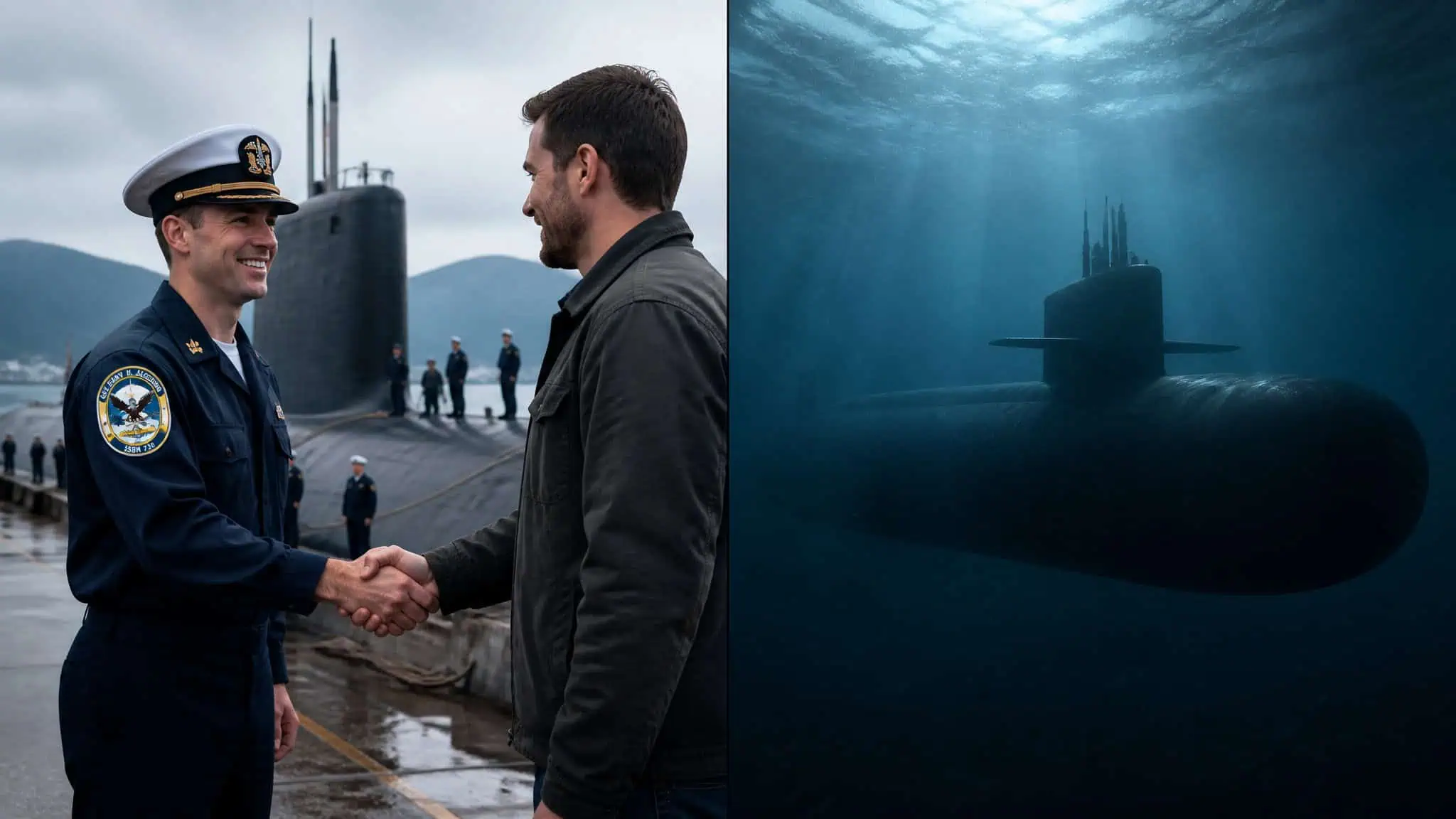
First you serve as a hospital corpsman on a sub, then you go through a program that includes clinical rotations, pharmacology, and emergency medicine. Fournier, who grew up in Center Conway, New Hampshire (Kennett High School 2010), says earning that title is his proudest Navy accomplishment. It’s a shift from basic medical care to being a fully trusted, enlisted medical provider, he says. The isolation of long patrols is a real challenge, but Fournier says the responsibility makes it worthwhile.
He says: Serving in the Navy means everything to me. It allows him the privilege of protecting the people he cares about back home.
And if you’re wondering why the Navy puts so much into submarines: 90% of global commerce travels by sea, and your internet runs on undersea fiber-optic cables.
Quick test: Next time you load a page, remember a submarine independent duty corpsman is the only medic on the boat that keeps those undersea cables safe.
The Career Catalog — Jobs You Didn’t Know the Navy Had
The roster of Navy jobs includes musician, forensic dentist, Seabee construction electrician, missile technician, and information systems technician. Here are a few you might not expect.
Petty Officer 1st Class Micah Lewis is a Navy musician. Yes, that’s a real rating. He performs at official ceremonies and international diplomacy tours. Lewis, who graduated Ridgeway High School in 2005 and studied at the University of Memphis, has been in for 13 years. I wanted to travel the world pursuing his passion, and the Navy has provided many chances to fulfill his dream, he says.
Petty Officer 2nd Class Yudhishthir Maharaj is an information systems technician on submarines, keeping radios, satellites, and computer networks running. He’s from Jamaica, New York (Thomas Edison Vocational and Technical School 2010), with 8 years in. Petty Officer 3rd Class Golden Harris is a missile technician at Submarine Readiness Squadron 31 in Kings Bay, Georgia—maintaining the weapons systems. He earned his submarine qualification (“the fish,” a big deal for a junior sailor) after three years, graduating Eagles Landing High School in 2019. Petty Officer 3rd Class Joshua Gummersall serves with Expeditionary Medical Facility 150 Mike, a deployable hospital unit.
He graduated from Idaho Youth ChalleNGe Academy in 2019, a program for at-risk youth, and has been in for six years. He says he works with “patriots who genuinely love America.”
And then there’s the crew we already met: Fournier (sub medic), Hubbell (carrier security cop), Moseman (Flag Writer/space command admin), Munoz (Seabee electrician), Baumann (forensic dentist), Martinez (civil affairs). That’s medicine, construction, music, cybersecurity, missile tech, administration, law enforcement. The Navy isn’t just ships and guns; it’s a workforce that looks more like a small city than a military branch.
The Hometown Thread — Where These Values Come From
Almost every sailor profile credits their upbringing in a small town or specific community for the values they bring to the service. The Navy highlights this deliberately.
Fournier says growing up in Center Conway, New Hampshire, taught him that neighborly care is a way of life. Hubbell talks about Columbus, Montana, and how 4-H and sports taught her hard work, kindness, and respect. Moseman’s customer-service lessons came from the Red Lobster in Billings. Munoz says Corpus Christi shaped him: his identity is not shaped by others’ expectations. Martinez attributes his perseverance to his family in Paso Robles.
The Navy is making an argument here: these are the people you grew up with, from Center Conway to Columbus to Billings. They’re the kid from down the street who went to the same high school. The outreach machine amplifies that connection, because it works as a trust signal in a way that a national ad never could, as seen with 528 posts in July 2026.
Navy-250 — The Anniversary Frame
2026 is also the 250th anniversary of the United States’ independence, and the Navy is tying its own story to that milestone with a campaign called Navy-250. You can find details at navy.mil/navy-250. It provides a larger context for the outreach push alongside Billings Navy Week and Pacific Partnership. Expect commemorative events and messaging that links the service’s history to the country’s 250th anniversary. That’s the frame; the substance is the weeks, the partnerships, and the people.
The Content Machine — Honest Look at the Operation
Let’s be direct about what this is. The Navy Outreach blog published 528 posts in July 2026, 2,459 in all of 2025, and 3,449 in 2024. Each one features a different sailor from a distinct hometown. That’s not spontaneous storytelling; it’s an industrial-scale content operation designed to generate local media coverage, with 528 posts in a single month. Every small-town paper gets a story about their local kid doing something interesting in the Navy—like Fournier from Center Conway or Hubbell from Columbus—and the Navy gets a steady stream of positive press that doesn’t look like press releases because it’s personal.
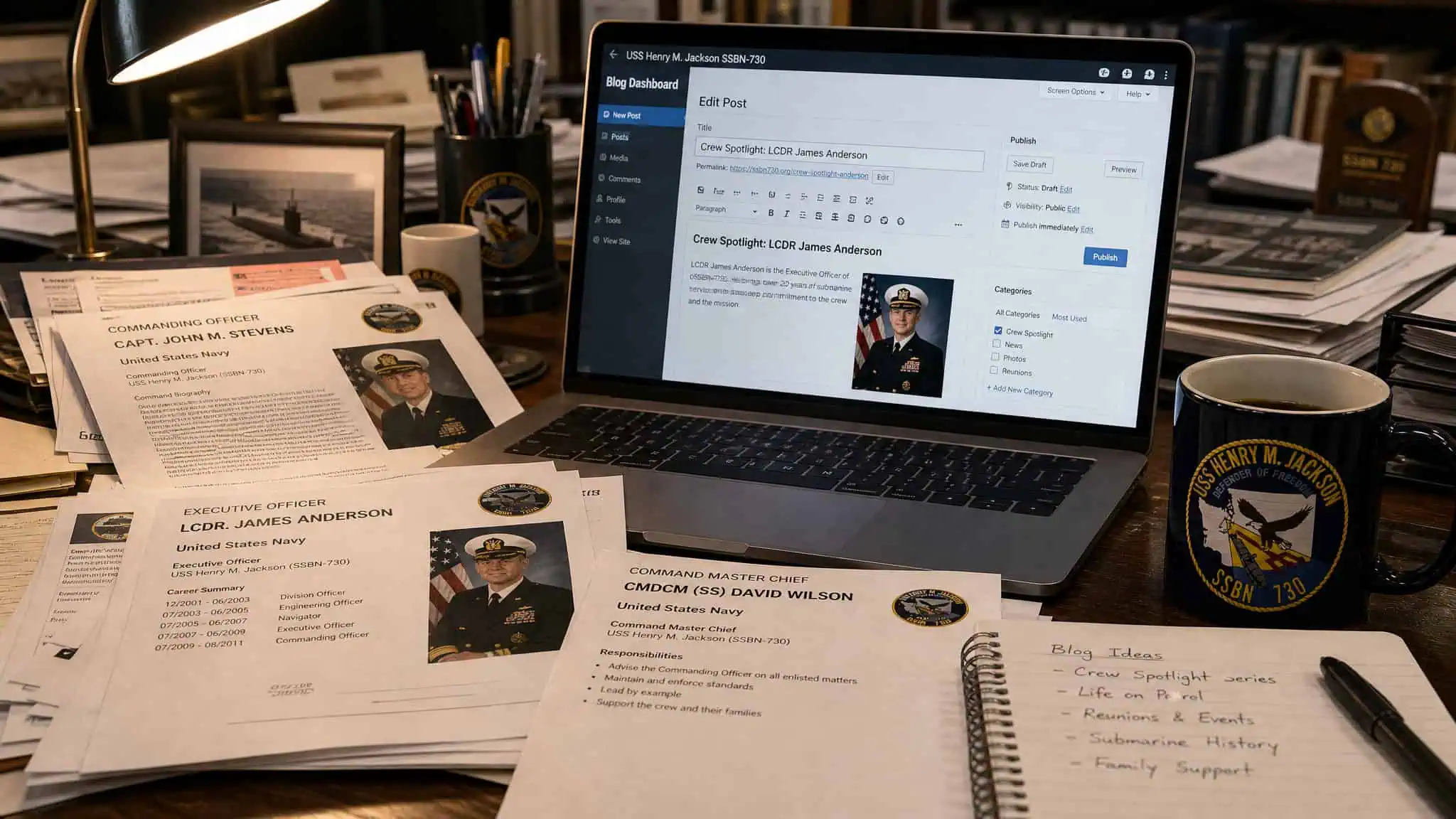
Here’s what we don’t know: there’s no public data on whether these 528 monthly posts drive recruitment numbers. We don’t know how sailors are selected for features—there’s likely a bias toward the more accomplished or photogenic, as seen with the 528 profiles published. And every story is positive; you won’t read about anyone who hates their job or had a bad deployment, as with the 528 posts in July 2026. That doesn’t mean the stories are fake, but it does mean they’re curated. The point isn’t to debunk the outreach; it’s to understand it for what it is: a smart, repeatable system for building trust through hyperlocal connection, as demonstrated by Billings Navy Week and Pacific Partnership.
Red flag: No public data ties the 528 monthly posts to recruitment numbers, and the selection process for featured sailors is opaque — assume curation, not randomness.
What It Adds Up To
You’ve got two tracks running the whole time. On one side, there’s an industrial operation pushing out 528 personalized stories a month, saturating local news ecosystems with the same fundamental message. On the other, there are real people like Brian Fournier from Center Conway, Amy Hubbell from Columbus, and Calvin Moseman from Billings—individuals who made a choice to serve and ended up as characters in that operation. The tension between the two isn’t a criticism; it’s the reality of how a massive institution communicates in 2026, with 528 posts in a single month.
For the reader, the value is in seeing both sides—the industrial operation and the individual sailors like Fournier, Hubbell, and Moseman. The next time you read a story about a sailor from your hometown, you’ll know it’s part of a pattern. But you’ll also know that behind the pattern is a guy—Calvin Moseman—who worked at Red Lobster before boot camp and now helps protect the cables that keep your internet running. That’s not nothing.
Frequently Asked Questions
How does the Navy get local newspapers to run stories about sailors from their hometown?
The Navy runs an industrial-scale content operation that publishes hundreds of sailor profiles each month, each tied to a specific hometown. Local papers pick up these hyperlocal stories because they’re about a reader’s neighbor or former classmate, making them far more effective than generic national press releases.
Is a Navy Week event actually effective for recruiting?
Navy Week works by replacing generic recruiting messages with a single hometown face per newspaper. The Navy flies in sailors who grew up in that town, and local media runs their personal stories — which builds trust in a way a national ad campaign can’t. There’s no public data tying it directly to recruitment numbers, but the strategy is designed for connection, not metrics.
What jobs in the Navy don’t involve being on a ship?
The Navy has roles like musician, forensic dentist, Seabee construction electrician, missile technician, information systems technician, and even a Flag Writer — a high-stakes admin role one sailor compared to the military version of *The Devil Wears Prada*. The workforce looks more like a small city than a traditional military branch.
Why does the Navy put so much focus on submarines?
Submarines protect the undersea fiber-optic cables that your internet runs on, and 90% of global commerce travels by sea. The submarine force handles deterrence, surveillance, precision strike, and special warfare — making it the quiet backbone of a lot of what keeps things stable.