
Three words get used like they mean the same thing: mistress, side chick, lover. They don’t. They sit at different points on a spectrum of duration, emotional investment, money, and secrecy, and the practical tell is whether the man invests resources or just time, the full guide to [the mistress role](#planned-top-mistress) breaks down those dynamics, risks, and realities. Below you’ll find a 40-year mistress’s rulebook, a panel that ranks the roles by hotel choice, and the style guide that banned one of these words outright.
Key Takeaways
A mistress is a long-term, emotionally invested, financially supported arrangement; a side chick is casual, replaceable, and secret from the main partner; a lover is the neutral term with no built-in implication of cheating.
The 8 At The Table panel draws the line by money: the mistress gets living expenses covered, while the side chick gets casual dates (an Applebee’s Two for Twenty counts) and small gifts.
The AP Stylebook has banned “mistress” as archaic and sexist, recommending “companion or lover” instead, and the ban itself is contested, not settled.
Table of Contents
Quick answer: mistress vs side chick vs lover at a glance
Yes, there’s a real difference between a side chick and a mistress, and it comes down to what the man puts in. A mistress is a long-term arrangement with real feelings and financial support behind it. A side chick is a casual, replaceable partner with no emotional connection, kept secret from the main woman. A lover is the neutral word: no built-in implication of secrecy, money, or infidelity at all.
That’s the distinction the panel show 8 At The Table drew explicitly: a mistress is a long-term side girlfriend with real feelings and financial support; a side chick is casual and swappable. Everything else follows from it.
| Mistress | Side chick | Lover | |
|---|---|---|---|
| Duration | Long-term, years+ | Short-term, replaceable | Any length |
| Emotional connection | Yes, often real feelings | No (per the panel’s framing) | Optional, neutral |
| Financial support | Yes, living expenses covered (“kept”) | No, casual dates and small gifts | No built-in expectation |
| Secret from main partner | Yes | Yes, the defining feature | Not inherently |
| Connotation | Old-fashioned, formal | Disrespectful, derogatory | Neutral (with a comedy problem) |
| Register | Traditional print, now banned by AP | Urban Dictionary, tabloids | Professional writing, everyday speech |
The legal row is where the stakes get concrete. A wife holds first claim on the surname, the children, the holidays, the properties, and the accounts. The other woman holds none of it: no legal claim, and by most framings no moral claim either.That gap is the entire risk profile of the mistress role.
Gender symmetry exists on paper. “Kept man” and “other man” are real terms, but they never gained equal currency, though one glossary claims they’re “rapidly catching up” in big metro areas. Treat that as a glossary claim, not census data.
Register matters too. The AP Stylebook won’t print “mistress” anymore. Tabloids reach for “side chick.” The takeaway: these aren’t synonyms, they’re tiers, and the fastest way to place any arrangement is to ask what he’s spending, how long it’s run, and who doesn’t know about it.
What is a mistress?
A mistress is a woman in a semi-stable, semi-permanent, secret, non-cohabiting relationship with a typically married man who covers her living expenses. That last part is the “kept” part, and it’s what separates this from a fling. The key condition: if the man has no wife or committed partner, there’s no mistress.The word only exists because someone else already holds the title.
The etymology is good bar trivia. “Mistress” comes from a French female form of “maistre,” a word for master, and it’s commonly traced as the root of both “Mrs” and “Miss,” the way “Mr” came from “Master.” A word that started as an honorific ended up describing the woman with the least power in the arrangement.
And power is the honest part of the story. The wife has first claim on everything: name, kids, houses, bank accounts. The other woman has no legal rights at all. Some glossaries blame the wife for the arrangement existing, framing her nagging or unavailability as the cause; that’s the source’s bias talking, not fact.
That said, some mistresses genuinely love the man, and circumstances, a kid, the general mess of it, keep a real relationship from forming. Not every arrangement is transactional, even if the money is what defines the role.
What is a side chick?
Yes, “side chick” is the more disrespectful term of the three.It’s also the one defined entirely by secrecy and replaceability, no precise coinage date exists in the record, only its spread through social media.
The working definition, said the way a person would: she’s neither his wife nor his girlfriend, but she’s having relations with him while he’s in another relationship. Secrecy from the “main” is the defining feature, and the second defining feature is that she accepts being “the fun for the night.” That acceptance is the line between the roles.A mistress negotiates for standing; a side chick, by the term’s own logic, doesn’t.
The definition lives on Urban Dictionary, which tells you most of what you need to know about its register. No precise coinage date exists in the record, only its recent spread through social media.
The stigma labels attached to the role are harsher than anything “mistress” ever carried: scheming homewrecker, matey, man thief.And there’s been documented pushback. A millennial op-ed argued the whole trend teaches women they can be “nothing more than a sexual encounter” and teaches men that lying is acceptable. Both halves of that critique, aimed at both sides.
The detail that stung the author: a Google search for the topic returned a Wikipedia page on being the perfect side chick.A how-to guide, for the role.
What is a lover?
A lover is the neutral pole. The word carries no inherent implication of secrecy, financial support, or infidelity.It works inside an affair and outside one, for a partner you’re cheating with and a partner you’re not. That neutrality is exactly why the AP Stylebook reached for it: when the style guide retired “mistress,” its prescription was “companion or lover” on first reference, with details later. If you need a word that doesn’t presume anything, “lover” is the one that doesn’t.
So yes, a lover can be a neutral term that doesn’t imply cheating.That’s the whole point of the word, and it’s why a professional style guide picked it out of a lineup that included “mistress” and nothing cleaner.
The problem is that neutrality doesn’t survive contact with actual speech, for two reasons.
First, the comedy problem. Plenty of people who hear “lover” in conversation hear the Saturday Night Live send-up, Rachel Dratch and Will Ferrell’s “lov-ahs” sketch, where the word gets stretched into two syllables of pure absurdity.That’s a documented cultural reference, not one writer’s observation, and it’s the reason the word gives people fits of giggles in a sentence where the AP wants it to sound clinical. You can’t prescribe a word as a neutral substitute when a comedy sketch has permanently claimed it.
Second, the objection from the ChumpLady blog: genuine lovers and companions, by definition, aren’t participants in someone else’s abuse. Her argument is that applying the word to infidelity takes a term that describes genuine, non-abusive relationships and muddies it.A couple having an honest open relationship are lovers. A woman kept secret in a married man’s apartment is something else, and flattening the two erases the distinction that matters. That’s her opinion, not consensus, but it’s the most direct objection to the AP’s fix on record.
So “lover” ends up in an odd position: the officially recommended neutral word, compromised in speech by a sketch comedy bit and in principle by critics who think it’s too clean for the job.It’s still the right word when you need one that assumes nothing. It’s not a word anyone says with a straight face anymore.

Mistress vs side chick: how people actually tell them apart
Yes, the mistress gets financial support while the side chick gets casual dates and small gifts. That’s the supported distinction, and it comes from the 8 At The Table panel, which drew the line explicitly: a mistress is a long-term side girlfriend with real feelings and financial support; a side chick is a casual, replaceable partner with no emotional connection.
The panel’s venue analogies make it land. The side chick gets picked up at Hunt’s Point and taken to a Motel 6. The mistress gets met on a dating site and taken to the Hilton. And to be fair to the lower tier: side chicks get dates too.
An Applebee’s Two for Twenty counts. So the difference is degree, not existence. It’s not that one woman gets nothing and the other gets everything; it’s where on the spending curve the man puts her.
In practice, that resource-investment tell is the common distinction people draw, per the panel, not one observer’s theory.
The panel also disagreed with itself, which is worth keeping. One panelist claimed a mistress is known by the spouse; the others pushed back. Another argued that maintaining a wife, a mistress, and a side chick at once is expensive. The counter, delivered with some relish: broke men manage numerous women on abundant free time and good sex.Both claims stayed disputed on the show, which is about right for the subject matter.
Inside the mistress role: discretion rules, money, and how it ends
Mistress relationships run long, decades in the documented cases. There are no broad statistics on typical duration, so the honest answer is the examples themselves: over 40 years for Iva T Louise, years-long arrangements for Pam W, 33 years for Marion Davies. That’s the record.Nothing broader exists.
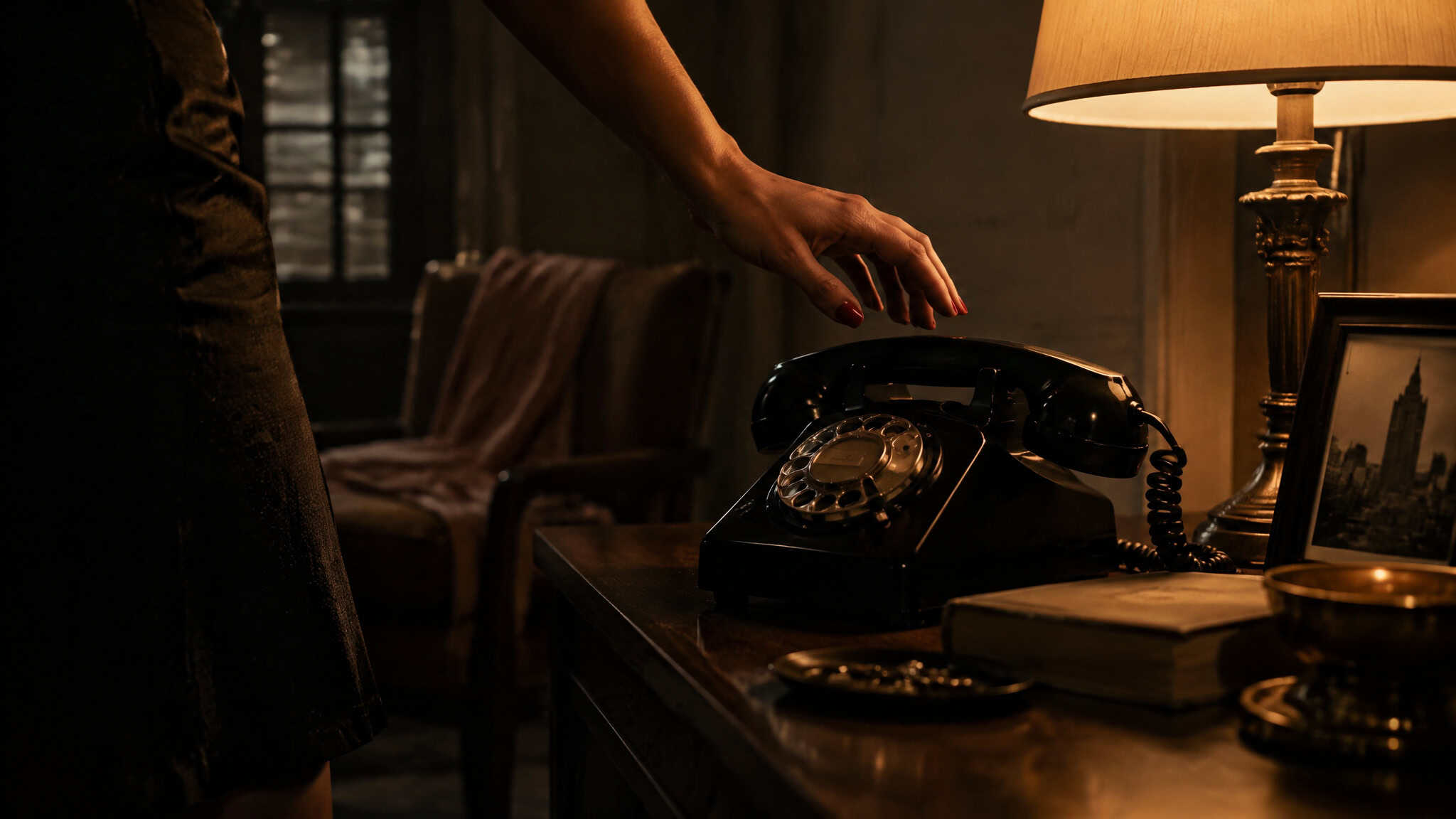
The discretion code comes from Louise, a mistress for over 40 years and author of Mistress Secrets: A Memoir. Her rules: never call him at home, never arouse the wife’s suspicion, mind the calling hours, never send him home with the smell of sex. It reads like tradecraft because it is.She frames the role as demanding wisdom, flexibility, and compassion, and her governing line is “She was there before you.” Five words that contain the entire worldview.
The money and the ending come from Pam W, 48, a self-described serial mistress since 25. Her married boss funded the down payment on a house in St Catherine, then weekly groceries and hairdos.A second married man tiled and furnished the place. Her longest relationship was with a married man whose wife lived overseas; she says it felt “more like the wife,” and it ended when his wife filed for divorce.
She calls it her only lost love. She rejects the “second place” framing entirely, saying she got exactly what she wanted.That’s her claim, not a verdict from here.
The pattern across these accounts: the arrangements end when the wife discovers the affair or files, not by the mistress’s choice. The counterpoint comes from Anthony L Gordon, a certified family educator, who argues women don’t want to share and that second-placers lack ideals. That’s his opinion, and he’s welcome to it.
The terms in documented real cases
Usage splits by era and register: “mistress” for the long-term supported relationships, “side chick” for tabloid-era casual exposure. The textbook case is Marion Davies, Hearst’s mistress from 1918 until his death on August 14, 1951: 33 years, her first top-billed film backed by him, no marriage because his wife’s divorce settlement demands were too steep, 51% of his fortune in his will, and a wedding to Horace Brown ten weeks after Hearst died. The modern register looks different. Complex’s list of “The 50 Hottest (Alleged) Mistresses Of All Time,” sourced to the NY Post, TMZ, National Enquirer, and Us Weekly, keeps everything hedged as alleged.

Rachel Uchitel reportedly received $10 million in hush money. Mark Sanford vanished for six days in June 2009 to Argentina to visit his “soul mate,” Maria Belen Chapur. Ivana Trump confronted Marla Maples in Aspen with “You bitch, leave my husband alone!” before the New York Post ran its “Best Sex I’ve Ever Had” headline, which Maples called an outright lie.
The 2009 Tiger Woods coverage is where “side chick” era framing took over: Michelle McGee, a tattooed fetish model and San Diego stripper, disclosed an 11-month affair with married Jesse James, April 2009 to March 2010, to In Touch Magazine; James’s nearly five-year marriage to Sandra Bullock ended one week after her Best Actress Oscar win in March 2010.McGee’s record includes a Nazi-themed shoot, “White Pride” leg tattoos, the quote “I make a horrible racist Nazi. I have too many colored friends,” and a reportedly Amish upbringing. Report it, don’t launder it.
Vanessa Curry was an 18-year-old Laker Girl when thedirty.com reported an alleged affair with Kobe Bryant during the 2007-2008 playoffs, news breaking May 2008; the Lakers removed her citing a “hosting career,” and she joined the Pussycat Dolls in 2010.Gossip-site sourcing, so take it with a grain of salt.
Two entries stay flat and factual. Capri Anderson was paid $3,500 to accompany Charlie Sheen to dinner on October 26, 2010; he allegedly got naked, threw a lamp, and choked her at The Plaza, ending up hospitalized, and dueling lawsuits followed while his divorce from Brooke Mueller was pending. Jasmine Waltz was linked to David Arquette in October 2010, shortly after his split from Courteney Cox following 11 years of marriage, framed as a rebound rather than a mistress arrangement, with further unverified tabloid claims stacked around her.
Which word should you use?
The AP Stylebook banned “mistress” outright, calling it “the archaic and sexist term” for a woman in a long-term, financially supported relationship with a married man, and tells writers to use “companion or lover” on first reference with details later. The ban is contested, not settled.
The strongest counterargument comes from ChumpLady, and it’s simple: the condition is sexist, not the word.Mate poaching, being kept a dirty secret, the whole arrangement. In her framing, the conduct is what deserves scrutiny, not the vocabulary describing it. Banning the term, in her view, erases the language for a real dynamic while polluting two good words, “lover” and “companion,” in the process. That’s her opinion, but it’s a real position, not a strawman.
The internet’s verdict on the whole change was delivered mostly in jokes. A satirical replacement list circulated: Affair partner, Schmoopie, Fuckpuppet, Assclown, Hypentuse. The author’s own tweeted response to the guidance was “Does fuck puppet have a hyphen?” And there was the playgroup anecdote: a mother carefully correcting another child’s word “gun” while ignoring the actual harmful behavior happening in front of her.
Policing the vocabulary instead of the conduct. That’s the parallel ChumpLady draws to AP, and it lands.
The practical middle ground, based on how the words actually get used: “lover” for neutral or professional writing, “mistress” when you mean the long-term supported role, “side chick” only in casual slang contexts. Pick your lane by register, not by committee.
Adjacent terms and open questions
A kept woman is the supported variant of the mistress role: same arrangement, with the man covering her living expenses. “The other woman” is the broader label, used with “the,” for any woman romantically involved with a married man, whether supported or not. The male equivalents are “kept man” and “other man,” terms that are less popular, though one glossary claims they’re rapidly catching up in big metropolitan areas.Hedge held.
On the four types of affairs: the honest answer is that the available material supports only the three-term distinction covered here. No source actually sorts mistresses and side chicks into a tidy typology of affairs, and I’m not going to invent one to fill the gap.
Some glossaries lump mistress, kept woman, other woman, and side chick into a single definition.That flattens exactly the distinctions the 8 At The Table panel, the published testimonials, and the AP debate all treat as real.
Frequently Asked Questions
What are the four types of affairs?
There’s no widely sourced framework that formally divides affairs into four types, and no sourced typology maps roles like mistress or side chick into one. The distinction that’s actually documented is the three-term spectrum: mistress (long-term, emotionally invested, financially supported), side chick (casual, replaceable, secret), and lover (neutral, no built-in implication of cheating).
Is there a difference between a side chick and a mistress?
Yes, and the practical tell is what the man invests. A mistress is a long-term side girlfriend with real feelings whose living expenses are covered — the “kept” part. A side chick is casual and replaceable, defined by secrecy from the main partner, and gets dates and small gifts rather than financial support.
Does a mistress get financial support while a side chick does not?
Yes — that’s the line the 8 At The Table panel drew more cleanly than any dictionary. The mistress gets living expenses covered; the side chick gets casual dates (an Applebee’s Two for Twenty counts) and small gifts. The difference is degree, not existence: it’s where on the spending curve the man puts her.