
So Bond is dead. Missiles hit him directly. Q’s screen goes flat – red lines, no pulse. The explosion is massive. He is dead, obliterated.
Then the credits roll. And the words appear: James Bond Will Return.
That’s the contradiction we’re sitting with. The franchise killed its lead actor’s character in a way that feels final. Then the words appeared: James Bond Will Return. How? Without cheapening the sacrifice or making the audience roll their eyes.
I’ve been following this franchise for years. I’ve seen the debates in forums — fans like Asp9mm, Gassy Man, FlemingBond, SeanIsTheOnlyOne, and Number24 Norway, read the interviews, and watched the ending a few times. There’s no official answer yet. But there are plausible theories – each with evidence, tradeoffs, and a catch. Let’s walk through them: Preboot, Soft reboot, Hard reboot, Codename theory, Sequel/prequel, Resurrection, The return (nightmare theory).
Key Takeaways
Bond’s death was planned 15 years ago: Daniel Craig and producer Barbara Broccoli agreed after the 2006 Berlin premiere of Casino Royale, they agreed Bond would die in Craig’s final film.
The ending leaves technical room for return: no body is shown, and the final line uses present tense (“his name is Bond, James Bond”), and the explosion is the kind of movie ambiguity Hollywood loves.
Ian Fleming’s novels provide a direct resurrection precedent: in You Only Live Twice Bond is presumed dead and returns, and in The Man With the Golden Gun he comes back brainwashed.
Table of Contents
Is Bond Really Dead? The Evidence
This is the foundation. If Bond is unequivocally dead, some theories don’t work. If there’s wiggle room, others open up.
The case for definitive death
The film doesn’t mess around. Multiple missiles lock onto Bond’s position. They hit. The explosion is enormous. Back at MI6, Q’s monitor showing Bond’s vital signs from the smart-blood injection reads zero, some flat red lines — another confirming piece of visual evidence that Bond is dead.
That’s the movie showing you, not telling you. A direct hit, confirmed by the technology the film itself established as reliable. It’s about as clear as a death scene gets.
The case for ambiguous survival
But. No body is shown. Bond doesn’t get a funeral. The camera cuts away before the blast wave reaches him. Classic movie loophole.
Then there’s the final line. Madeleine tells her daughter: ‘By the man, his name is Bond, James Bond.’ Fan FlemingBond notes this uses present tense ‘is’, suggesting Bond is still alive. Fan SeanIsTheOnlyOne insists she says ‘was’, which one would use for a deceased person. The debate is still raging on forums. Small word, huge difference.

And Ian Fleming did this exact thing. In the novel You Only Live Twice, Bond escapes a helicopter via balloon, is hit, falls toward the sea, and is presumed dead. The next book, The Man With the Golden Gun, brings him back. No Time to Die is a modern version of that same structure.
Bottom line: The camera cuts away before the blast wave hits — and the novel Bond survived a very similar presumed-death sequence.
The Reboot Spectrum: Three Ways to Start Over
If Bond is dead, the franchise can still continue by ignoring the death completely. That’s what reboots do. Here are the three main approaches.
Preboot: just ignore everything
Before Casino Royale (2006), Bond films rarely worried about perfect continuity; e.g., Bond meets Blofeld in On Her Majesty’s Secret Service despite meeting him in You Only Live Twice. You could watch Dr. No, then Goldfinger, then On Her Majesty’s Secret Service, and nobody mentioned the wife.
A preboot does the same: brings Bond back without addressing Craig’s era, treating it as a separate chapter. New actor, no reference to Craig’s era. Bond is back on the job, no explanation, no retcon. Creative freedom.
But the risk: fans who loved Craig’s emotional arc may feel cheated. His death becomes meaningless.

Soft reboot: new universe, same archetype
A soft reboot resets the character while preserving the archetype – a 007 who remains lethal and suave as ever – but resets the timeline. The new Bond appears as a fully active 00 agent, with no need to address his apparent death. No origin story, no baggage. New universe, new rules.
This is probably what most people expect. It cleans the slate while preserving what works. The catch: it loses the weight of Craig’s sacrifice. His death becomes a closed chapter with no connection to what follows.
Hard reboot: start from scratch
Casino Royale (2006) is the prime example of this approach. Young Bond, early career, earning his license to kill. To learn how to override panic and build real mental endurance, audiences can adopt the James Bond mindset as they follow Bond through his promotion to 00-status and the evolution of his famous traits.
It worked once. But we just did this. Craig’s Bond started rough and became refined — could feel redundant after Craig’s Bond already brought a younger, less refined 007. Doing it again risks feeling like a rerun. And the question is whether audiences want another origin story so soon.
Staying in the Timeline: Workarounds That Keep Craig’s Continuity
Some fans don’t want to lose Craig’s arc. They want the new Bond to exist in the same world. These are the theories that try to honor the death while moving forward.
The codename theory
The codename theory suggests that ‘James Bond’ is a codename given to new agents who take the 007 role. Each actor’s Bond is merely a new agent who inherits the alias, explaining disconnects across the franchise.
Bond 26 could feature a new agent inheriting the 007 mantle after Craig’s Bond died. Clean handoff. But many fans feel Bond’s character is not so easily replaceable; could frustrate long-time fans. It’s a fun theory, not canon.
Sequel/prequel: fill the gaps
New movies set in the blank years between Craig’s films: Bond 26 could stay within the Craig timeline and insert new stories into the gaps — between Quantum of Solace and Skyfall, or between Skyfall and SPECTRE. Same Bond, different missions.
The challenge: Craig’s timeline is tight. Retrofitting new stories would be challenging, like ‘like trying to fit an Aston Martin into a Fiat 500 parking space.’ Risk of creating plot holes and tension in continuity.
Resurrection: Bond survived, damaged
This is where Fleming’s precedent comes in. In The Man With the Golden Gun, Bond is presumed dead and returns brainwashed by the Soviets. He tries to kill M. It’s dark.
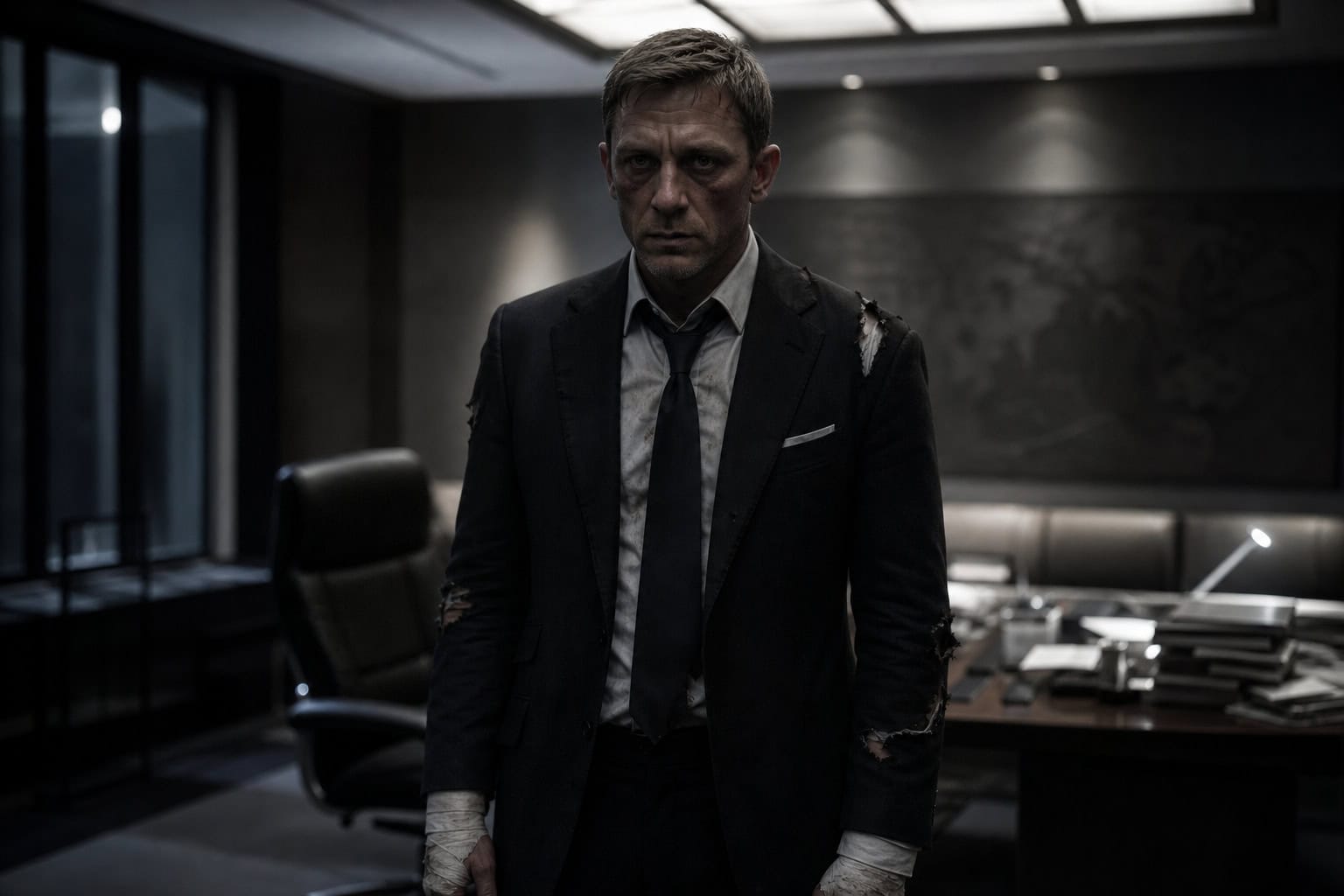
Imagine Bond 26 opening with a disoriented, wounded Bond showing up at MI6. He could return damaged, dark, and struggling with trauma or memory issues — drawing from Fleming’s novel The Man With the Golden Gun. The new actor gets a built-in story hook – trauma, memory issues, a darker edge. It connects Craig’s ending to whatever comes next, but many are already asking, will james bond return? However, it requires acknowledging the death happened, which some fans think cheapens it.
Why Bond Died: The 15-Year Plan You Didn’t Know About
This context changes how you see the ending. It wasn’t a last-minute shock.
The agreement that started it all
After the 2006 Berlin premiere of Casino Royale, Daniel Craig and producer Barbara Broccoli agreed Bond would die in Craig’s final film. They kept the plan secret from the studio and other producers for years — it was the terminus of a 15-year arc.
That’s why the ending feels earned to some and inflexible to others. It wasn’t an afterthought. It was the point.
The scrapped ideas and the final choice
Director Cary Joji Fukunaga says they went through “many, many iterations.” One scrapped idea: Bond gets blown up in a rocket. Too much, even for Bond. Another joke suggestion from Craig: death by bad oyster. They also considered an anonymous bullet but rejected it because a conventional weapons death didn’t feel final enough, as Craig wanted an ‘insurmountable problem’ and a ‘greater force’ that left Bond no way out.
The final choice: nano-bots that would kill anyone Bond touches. He stays on the island, sacrifices himself to save Madeleine and Mathilde. Craig wanted an “insurmountable problem” and a “greater force” that left Bond no way out. A tragic hero’s end.
What Fans Want: The Theories That Won’t Go Away
The fan community has been unpacking this for years. Some ideas are brilliant. Some are hilarious. All of them tell you something about how much this franchise matters.
The nightmare theory and the Cold War reboot
The return (nightmare theory): After Bond dies in No Time to Die, cut to Pierce Brosnan lounging in a hammock; he wakes up and realizes it was all a nightmare. Probably too quirky for Eon’s taste, but fun to imagine.
There’s also considerable support from fans for rebooting the series and setting it back in the 1960s, with the Cold War setting as a key attraction. Old-school espionage. The question is how well 21st century audiences would buy into this approach.
The “he’s not dead” contingent and the emotional fallout
Fan Gassy Man insists they have left enough ambiguity to decide later whether he is dead or alive, pointing to the ambiguity of the cloud of explosion. They think Bond 26 could pick up after the credits.
Then there’s the opposite camp: fan Asp9mm argues Bond died unequivocally, hit by missiles directly, fully obliterated. The franchise spent 60 years building an icon who always walks away. Killing him off, even beautifully, feels like a violation of trust. This polarization will shape how Eon navigates Bond 26.
Beyond Bond: What If the Franchise Moves On Without Him?
Here’s the contrarian option. What if they don’t bring Bond back at all?

Mathilde and Nomi as successors
Bond’s daughter Mathilde is a 5-year-old who doesn’t cry after a car chase, gun fight, kidnap, separation from her mother, and witnessing adults shot to death. Some fans critique the film’s claim to being grounded. Others see a legacy character in the making. Could she inherit the 007 mantle as an adult in a future film?
More immediately: Nomi, played by Lashana Lynch, already taken on the 007 role in No Time to Die. The franchise has already established a viable successor. A movie following Nomi as the lead wouldn’t be a stretch.
The radical option: let Bond stay dead
The franchise is hugely profitable. They’re not stopping. But they could show that the 007 role is larger than any single person. Follow a new protagonist. Honor the ending’s finality.
It’s a risk. Bond is the name on the poster. But the franchise has reinvented itself before — from Connery to Lazenby to Moore to Dalton to Brosnan to Craig. Each time, fans complained. Each time, they came back.
Which Approach Makes the Most Sense?
I’ve been through all the theories. Here’s my honest take.
The hard reboot is the simplest and most proven — fan Number24 Norway calls it ‘the obvious solution.’ But it feels redundant so soon after Casino Royale. The soft reboot is clean but loses emotional continuity. The codename theory is divisive.
The approach I keep coming back to is the resurrection. It draws from Fleming’s novel The Man With the Golden Gun, where Bond is presumed dead and resurfaces brainwashed. It gives the new actor a built-in hook. It honors the ending without erasing it. Bond comes back damaged, darker, changed – a new chapter tethered to the old one.
But honestly, I’m not sure which is best. The beauty of this franchise is that it keeps surprising us. Every time we think we know the formula, they change it.
What do you think? Which theory makes the most sense to you?
For more on the future of the franchise, check out our analysis of when the next James Bond will be announced and the latest on the Bond 26 release date.
People Also Ask
Will there be another James Bond film after No Time to Die?
Yes, absolutely. The franchise is too profitable to stop, and the end credits literally say ‘James Bond Will Return.’ The question isn’t if, but how — whether they reboot, resurrect, or follow a new character entirely.
Why did it say James Bond will return at the end of No Time to Die?
The line is a franchise tradition that signals the series will continue, not necessarily that the same version of Bond survived. It leaves room for a reboot, a prequel, a resurrection storyline, or even a new agent taking the 007 mantle.
What’s the difference between a soft reboot and a hard reboot for James Bond?
A hard reboot starts completely from scratch — new actor, new origin story, no connection to previous films, like Casino Royale did in 2006. A soft reboot resets the timeline but keeps the established archetype of a fully active 00 agent, skipping the origin story and any baggage from Craig’s era.