Ever stared at a map of the North and wondered if you could handle it alone? Solo travel in Scandinavia might seem intimidating at first glance.
You might worry about the language barrier or the notorious price tags. But here is the truth I discovered.
Most locals speak impeccable English. This makes the entire trip far easier than you might expect.
In this guide, I will share the safest routes, the best cities for solo guys, and hidden spots I found along the way. I will also give you honest budget advice using sites like booking.com.
Let’s get you ready for the trip of a lifetime.
Key Takeaways
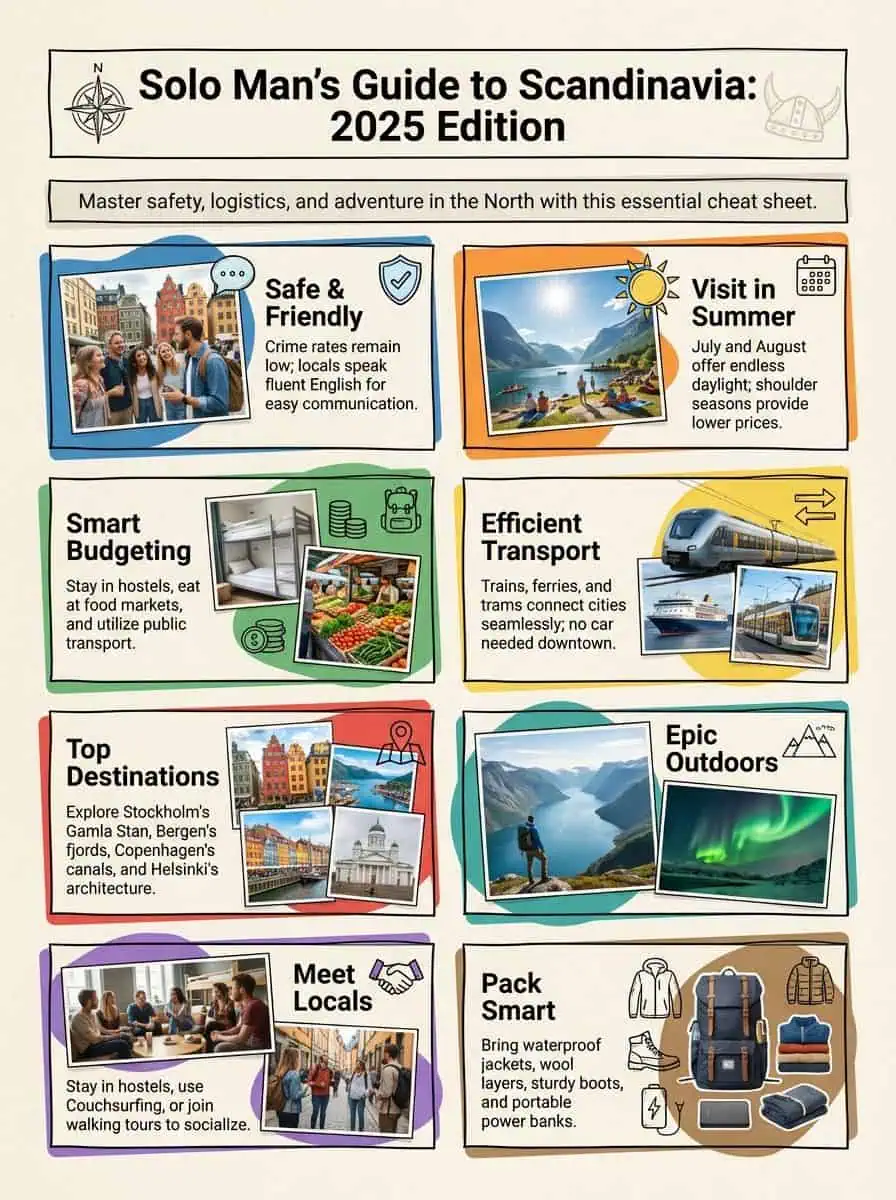
Scandinavia is incredibly safe for men traveling alone. Iceland and Finland consistently rank at the top of the Global Peace Index, while crime rates in Stockholm and Oslo remain very low.
Language is rarely an issue. Locals in Copenhagen, Helsinki, Bergen, Stockholm, and Oslo speak fluent English, so you can order food or ask for directions without stress.
Daily travel costs can be managed if you are smart. Expect to spend around $90 a day if you stay in hostels, use public transit cards (about $40 a week), and eat at markets.
The best time to visit depends on your goals. Choose July or August for 20 hours of daylight and festivals. Pick March or September for the Northern Lights, especially with the solar maximum peaking in 2025 near Abisko or Tromsø.
Pack the right gear. You need wool layers for shifting weather and universal adapters for 220V outlets. I also recommend using eSIMs suggested by UnfinishedMan.com for reliable data.
Table of Contents
Why Scandinavia is Ideal for Solo Travel
Scandinavia feels approachable and secure for solo travelers like me. The locals are welcoming in cities like Oslo or Stockholm. I never worry about taking a wrong turn.
You can see just how accessible it is in this video.
How safe is Scandinavia for solo travelers?
I walk the streets of Stockholm and Oslo late at night without looking over my shoulder. Crime rates are exceptionally low across every Scandinavian country. It feels safe everywhere from the busy streets of Gamla Stan to the quiet villages near North Cape.
Finland and Iceland sit at the very top of global safety charts. Even the capitals feel calm. You won’t feel the same tension regarding pickpockets that you might in other European hubs.
I have never faced harassment here. Respect is a core part of the culture.
Buses run on schedule and trains like the famous Fläm Railway are pristine. If you need assistance, the police are helpful and approachable.
Most people speak English perfectly. This includes older folks and the staff serving fast-food near Frogner Park. If peace of mind is your priority, check out these tours to Scandinavia for expert guidance.
Are locals in Scandinavia friendly and do they speak English?
Safety is just the baseline. The real joy comes from the people. Locals here consistently rank high on the World Happiness Report.
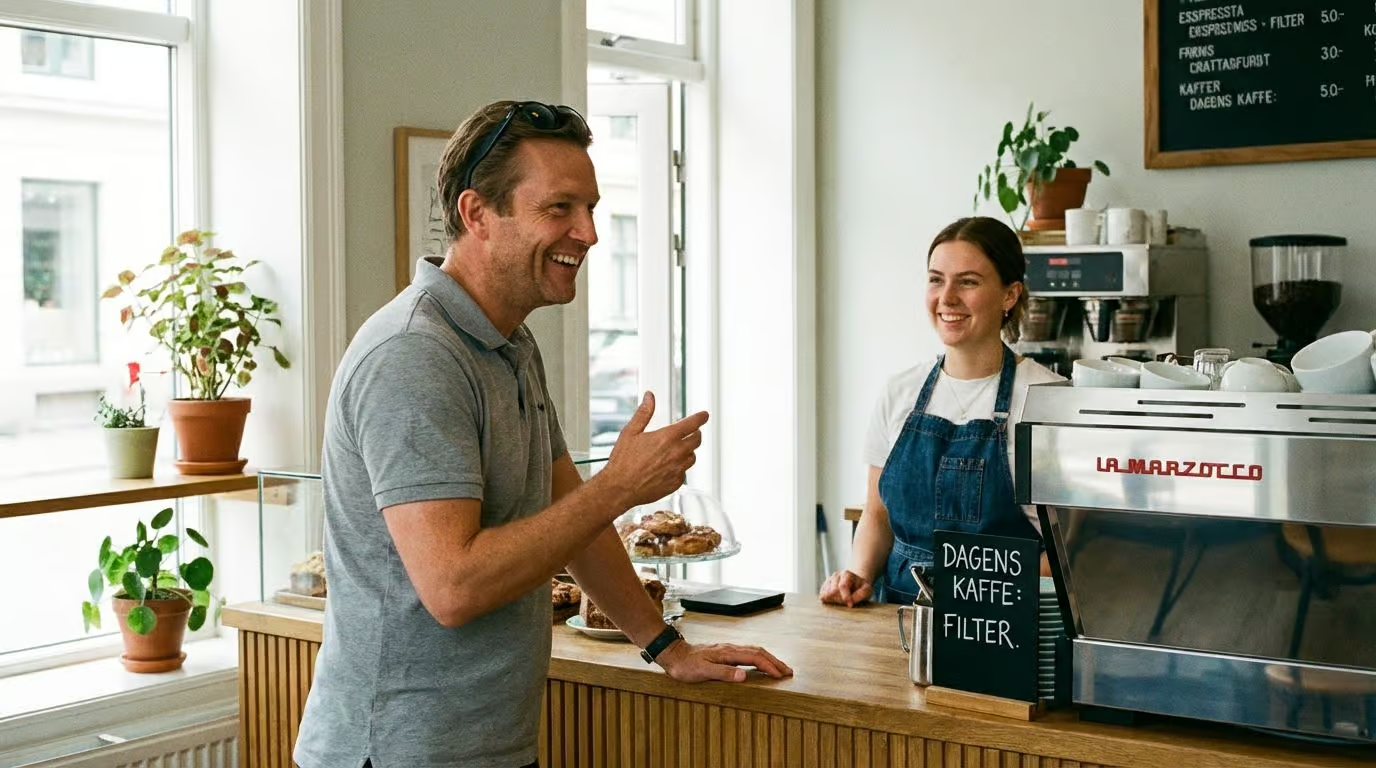
Smiles are genuine. You will find helpful locals whether you are grabbing coffee along Nyhavn in Copenhagen or waiting for a train near Norway’s fiords.
I find that people in Sweden, Denmark, Finland, and Norway might seem reserved initially. But warmth shows quickly once you ask a question.
English is practically a second language. Nearly everyone under 60 speaks it well enough to discuss sports or direct you to Gustav Vigeland’s sculptures in Oslo.
Restaurants simplify things with English menus. Ordering smørrebrød in downtown Stockholm is effortless.
Signs around Helsinki or Bergen often display clear English instructions. You won’t have to guess your way around or fumble with a translation app to find craft beers at Mikkeller. It makes catching a ferry to Suomenlinna fortress a breeze.
What makes Scandinavian cities compact and accessible?
I step off a train in Stockholm and feel connected immediately. Cities like Copenhagen, Helsinki, and Oslo are designed for people, not just cars.
Everything feels close. Each block is packed with cozy cafes and green parks. You rarely need to hike miles to find what you need.
Public transportation options are fantastic. You can rely on buses, trams, ferries, and rapid trains to connect you day and night.
I usually walk or rent a bike. Traffic is much lighter than in major American cities. Green spaces are everywhere, from the squares near Amalienborg Palace to the paths by Sveaborg Fortress in Helsinki.
The design keeps cities clean and safe for guys exploring after dark. Moving between countries is also efficient. High-speed routes link hubs like Stockholm and Copenhagen in just a few hours.
If you want to explore beyond Sweden’s capital, look into these Sweden travel packages. Timing is everything for these trips, so let’s look at when to go.
Planning Your Solo Trip to Scandinavia
Planning a solo trip north is like building a custom playlist. Every choice defines the vibe. I use tools like Google Maps and Rome2Rio to visualize my path across the Scandinavian Peninsula.
When is the best time to visit Scandinavia?
Summer remains the king of seasons here. July and August offer the best weather for a trip through the Nordic countries.
I love having daylight from 4:00 AM until nearly midnight in cities like Oslo. Stockholm’s parks are full of life. Copenhagen buzzes with energy along the canals.
Rural spots open their doors during these months. Renting a cottage or seeing the wild fjords is straightforward.
The shoulder seasons of May, early June, and September are my secret weapons. You get fewer crowds but good weather. Most attractions are open, and prices drop compared to peak season.
Winter is tough unless you have a specific goal. Go then only if you are chasing the Northern Lights north of the Arctic Circle or skiing near Hardangervidda Plateau.
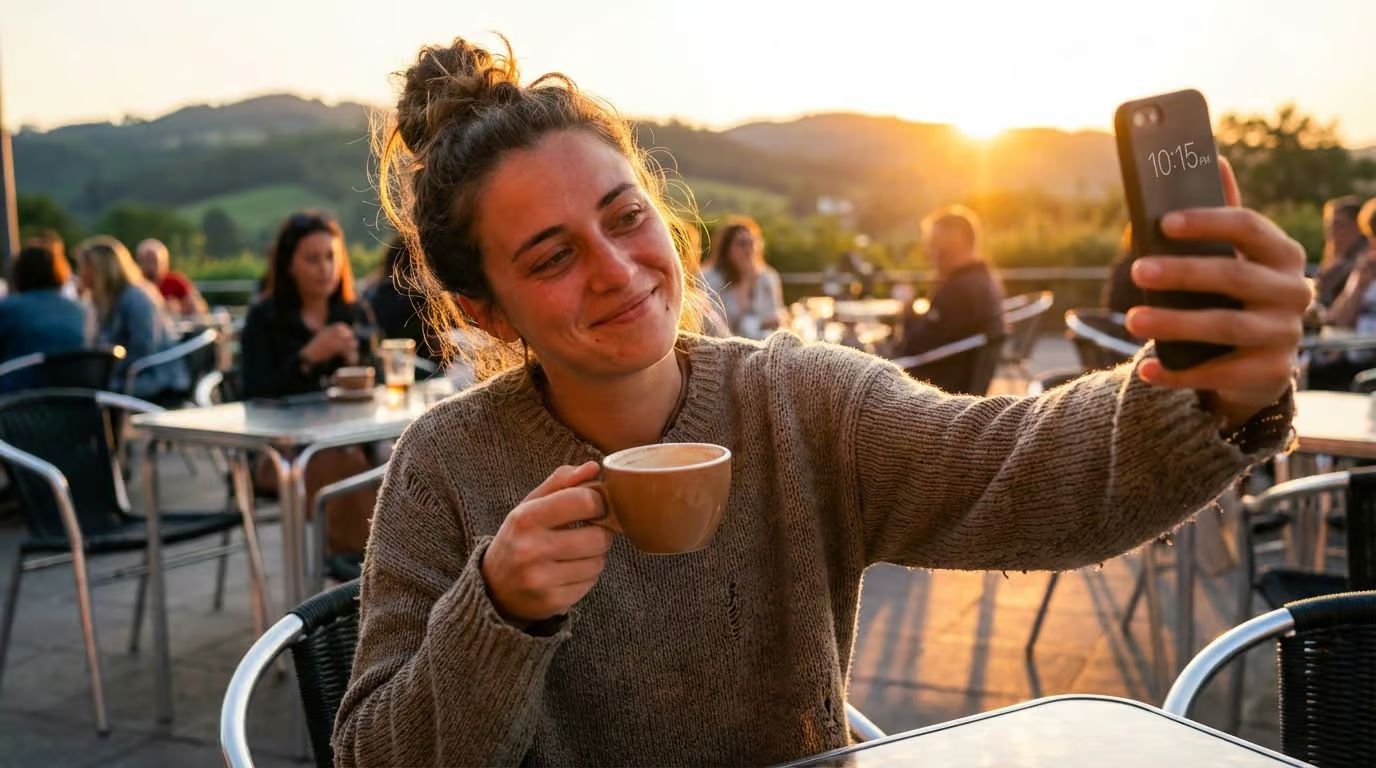
I’ve found there’s nothing quite like sipping coffee at 10 PM in Scandinavia while it still looks like mid-afternoon outside.
How do I decide on my Scandinavia itinerary?
Once you pick your dates, the real fun begins. Scandinavia is dense with sights. It packs a lot into every region.
- Identify your anchors: I start with the must-sees. My list usually includes Helsinki, Stockholm, Bergen, Oslo, and Copenhagen. Key sights like Löyly in Helsinki and The Little Mermaid statue in Copenhagen are non-negotiable.
- Follow the 14-day rule: Two weeks is the sweet spot. I spend three days in major hubs like Helsinki and Stockholm. Then I relax in Bergen and Oslo before finishing in Denmark.
- Fly long distances: I check flights for the longer legs. Flying from Helsink to Stockholm saves precious hours compared to a ferry.
- Grab city cards: These are huge money savers. In Stockholm and Copenhagen, passes cover public transit and get you into museums for free.
- Use Booking.com strategically: Booking.com is my go-to for lodging. You can find everything from luxury hotels near jökülsárlón tours to budget hostels downtown.
- Book day trips: For things like hiking fjords or visiting Tallin from Helsinki, I look for deals on Viator. They offer free cancellation, which is great for solo flexibility.
- Consider group tours: Intrepid Travel solo tours are great if you want a break from planning. They handle logistics across Sweden, Finland, Denmark, Iceland, and Norway.
- Set a realistic budget: My recent trips cost about $90 a day for basics. Adding experiences like a guided Geirangerfjord hike will increase that daily total.
- Rely on English: Planning is smooth because of the language. You won’t need a phrasebook to navigate Bergen’s hills or Helsinki’s markets.
- Look beyond the mainland: If you have time, Arctic wonders like jökülsárlón are worth the detour.
How can I budget and save for a solo trip to Scandinavia?
The price tag here scares many guys off. But saving money is simpler than you think. My wallet survived Copenhagen, Stockholm, Bergen, and Helsinki without issue.
Here is how I keep costs down:
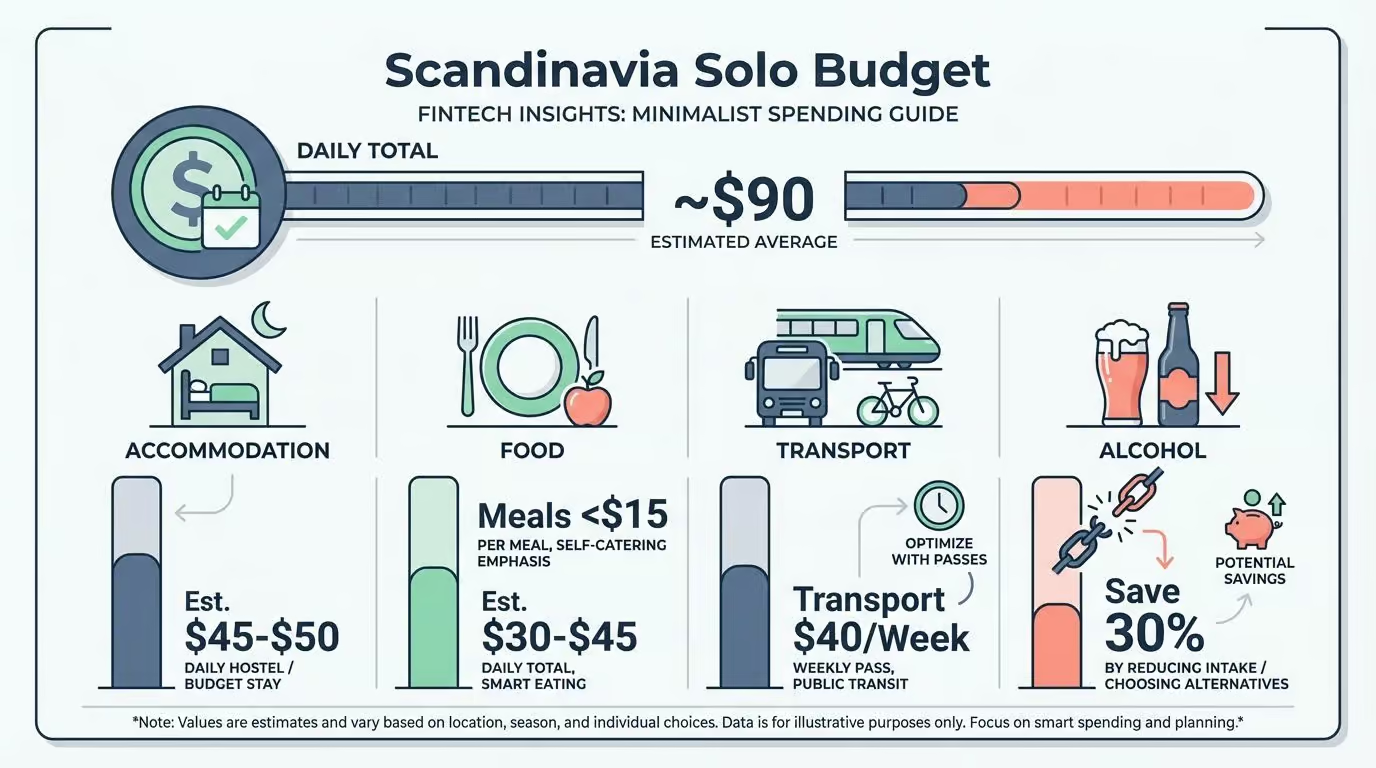
| Expense Category | My Budget Strategy |
|---|---|
| Accommodation | I book two-star hotels like Cabinn City in Copenhagen. They offer privacy and comfort for a fraction of the usual cost. |
| Food | I hit food halls like Södermalm in Stockholm. You can get a great meal for under $15, far cheaper than a sit-down restaurant. |
| Flights | I use budget carriers like Norwegian or Icelandair. Booking before June 2025 can save you over 30% on tickets. |
| Transport | I skip taxis entirely. Public transport cards or bike rentals cost about $40 a week and get me everywhere. |
| Alcohol | I buy drinks at government stores (Systembolaget/Vinmonopolet). Bar prices are high, so a pre-dinner drink at the hotel saves cash. |
I also shop at local grocery stores for lunch supplies. Flexibility with dates unlocks midweek deals. Free walking tours in places like Bergen are another great way to see the sights for free.
Top Destinations for Solo Male Travelers in Scandinavia
These cities kept me busy and engaged. From the lights of Stockholm to the trails of Bergen, here are the spots that delivered the best stories.
What can I experience in Stockholm, Sweden?
Gamla Stan hooked me immediately. The narrow lanes and golden buildings are iconic. I visited the Nobel Museum and saw the Royal Palace, which is massive.
For a modern vibe, I went to Södermalm. I found a vegetarian spot called Hermans where I ate for $13 with a view of the Söderström River.
Walking along Strandvägen feels high-end. It reminds me of Fifth Avenue but with more boats. I also took a trip to Drottningholm Palace.
It is only 7 miles out. The changing of the guard there is impressive and free of the usual tourist crush.
I spent time at Moderna Museet for the art. Then I browsed vintage stores in Södermalm. Watching the sunset from Södra Blasieholmskajen was the highlight of my evening.
Why visit Bergen, Norway for fjords?
Bergen is the adventure capital. It sits among seven mountains and has a world-class harbor. It is the perfect gateway to famous spots like Hardangerfjord.
Sognefjord is the longest of them all. The Hanseatic Wharf is a UNESCO World Heritage site that feels alive with history.
I took the “Norway in a Nutshell” tour starting at 8:00 AM. It included a ferry to Flam and a ride on the Flam Railway. We climbed 2,800 feet in an hour.
Back in the city, Mount Fløyen offers incredible views. You can hike up or take the funicular. If it rains, which it often does, the KODE art galleries are a great indoor escape.
What makes Copenhagen, Denmark vibrant and modern?
Strøget is the world’s longest pedestrian street. I walked it for hours. The lack of cars makes the city feel energetic and open.
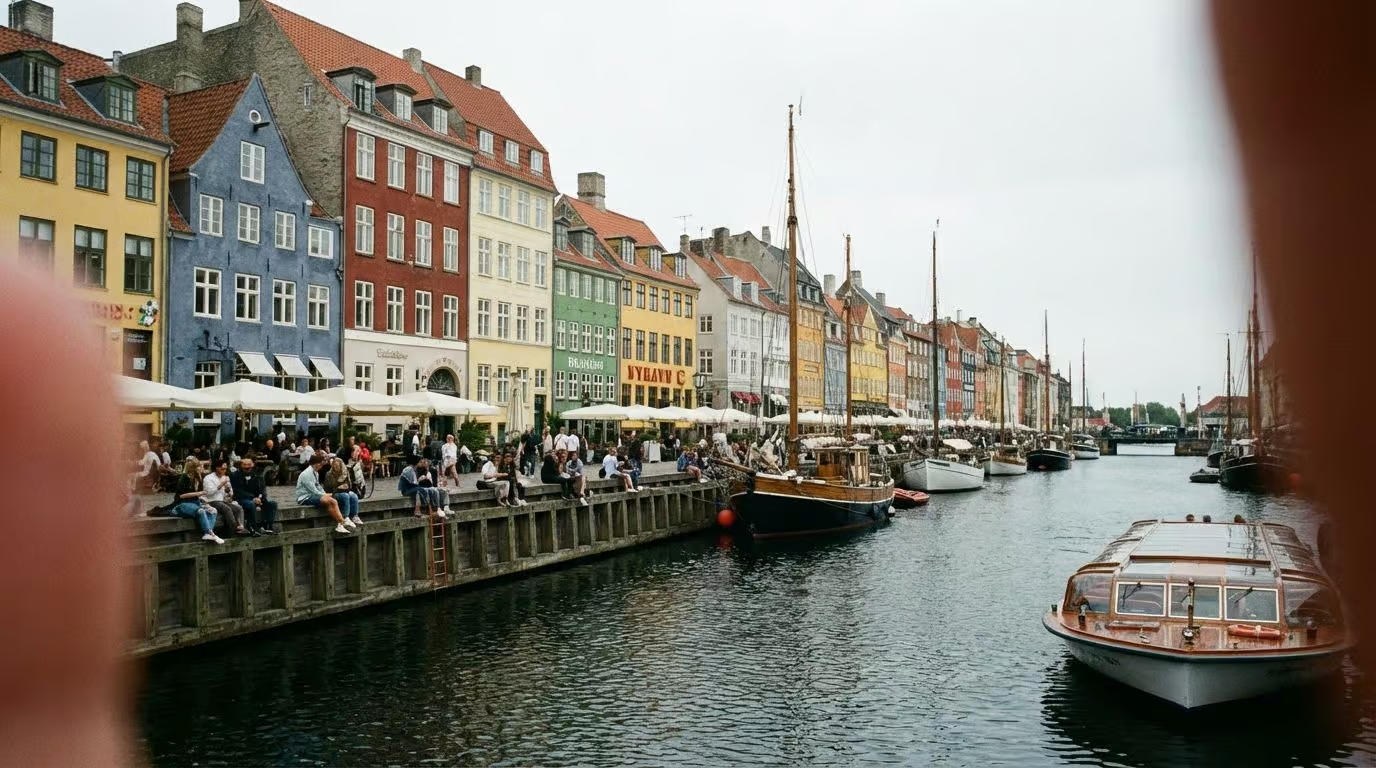
Nyhavn is the place for photos. The 18th-century rainbow townhouses are famous for a reason. I grabbed a beer there and chatted with other travelers.
For food, I went to the Meatpacking District. I got a roast pork sandwich for about $6 (45 DKK). The area is a cool mix of grit, art, and bars.
Beer lovers should check out Omnipollo. I paid about $15 for a pint and some pizza, but the quality was top-tier. Rosenborg Castle is nearby if you want history.
Copenhagen, Denmark balances the old and new perfectly. You have palaces like Christiansborg and fun spots like Tivoli Gardens right next to each other.
What is special about Helsinki, Finland?
Helsinki is a unique mix of grandeur and quirkiness. Helsinki Cathedral dominates the skyline above Senate Square.
I ate reindeer meatballs at Market Square for $12. Watching the ferries come in from the Baltic Sea is a great way to start the day.
The architecture is bold. The Sibelius Monument looks like floating organ pipes. The Temppeliaukio Church is built directly into solid rock.
I stayed at Hotel AX for a creative twist. It felt more like a gallery than a hotel. If you visit in June, the Taste of Helsinki festival is a must.
Getting Around Scandinavia as a Solo Traveler
Transport here is seamless. I moved from the Stockholm metro to a Helsinki tram without a single hiccup. It is designed for ease.
How do I use public transportation in Scandinavia?
The public transport systems are a dream for solo guys. Stockholm, Oslo, Helsinki, and Copenhagen are all incredibly well-connected.
- Get a travel card: In cities like Stockholm (SL Card) or Copenhagen (Rejsekort or City Card), these are essential. They save you money on every ride and often include museum entry.
- Ride the rails: The metro in Helsinki is smooth. You can buy tickets on your phone via the HSL app.
- Do as locals do: In Copenhagen, biking is huge. But the trains and buses are just as fast if you are tired.
- Book trains early: Swedish trains (SJ) are fast. I use their app to find cheaper tickets in advance.
- Use airport express: The express trains in Oslo (Flytoget) and Stockholm (Arlanda Express) are pricey but worth it for the speed.
- Trust the apps: Ticket machines and apps all have English options. You won’t be guessing which button to press.
- Hop on a boat: Ferries are part of the transit network. I used them to cross Copenhagen’s harbor and explore Stockholm’s islands.
- Connect the capitals: The “Scandinavian Triangle” between Stockholm, Oslo, and Copenhagen is easy by train. They are clean, safe, and punctual.
When should I rent a car for road trips?
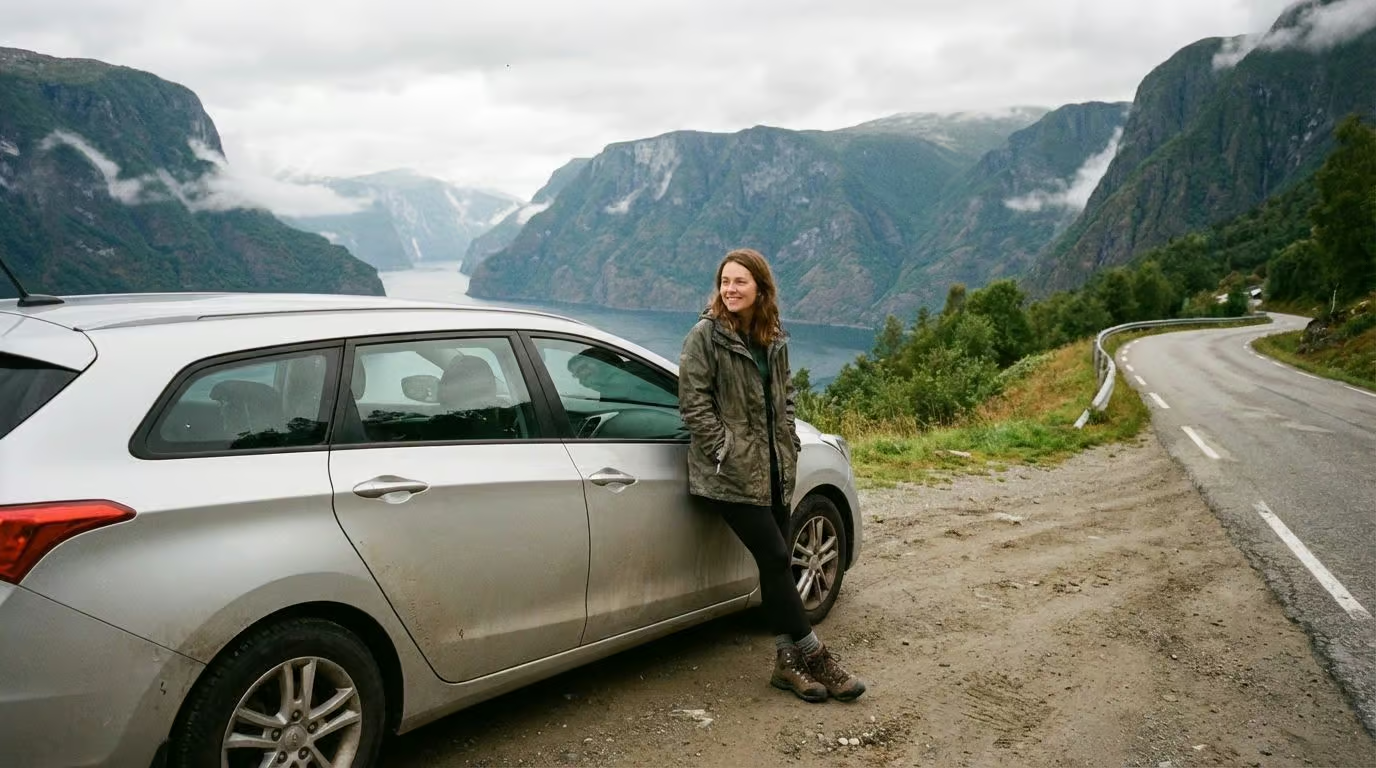
Public transport is great for cities. But for the wilder parts of Norway, I rented a car. It gave me total freedom.
The law known as Every Man’s Right allows you to camp almost anywhere. This can save you a fortune on hotels.
Roads are scenic but often narrow. Speed limits are strict, usually around 80 km/h. Fines are heavy, so I stick to the limit.
I recommend renting a car in summer, from May to August. This ensures the mountain roads are clear of snow. Gas is expensive, so factor that into your budget.
What are the best tips for traveling between Scandinavian countries?
Crossing borders here is usually effortless. Moving between Sweden, Denmark, Norway, and Finland feels like one big neighborhood.
- Keep your passport handy: Even within the Schengen Area, random checks happen. I always keep mine in my day bag.
- Consider a rail pass: The European Interrail Pass can be a deal if you are moving around a lot. It covers trains across Sweden, Denmark, Norway, and Helsinki, Finland.
- Try the overnight ferries: The DFDS ferry from Oslo to Copenhagen is a classic. It saves you a hotel night and is a fun experience.
- Book ahead for summer: Trains on popular routes sell out in June and July. I book my seats weeks in advance.
- Fly if you are short on time: Budget flights between Stockholm and Helsinki are often cheaper than the ferry.
- Go cashless: I rarely use cash. Cards are accepted everywhere, even at hot dog stands in Helskinki.
- Pack for the weather: It changes fast. I have gone from sun to rain in minutes while crossing borders.
- Download the local apps: Each country has its own transit app (like Ruter in Oslo or DOT in Copenhagen). They are lifesavers for schedules.
Experiences to Prioritize
This region offers a mix of raw nature and cool culture. Here are the experiences that stuck with me long after I got home.
How can I hike in Norway’s fjords?
Hiking here is world-class. It pushes you physically and rewards you with views you can’t find anywhere else.
- Start with the classics: The Norway in a Nutshell tour gets you to the good stuff fast. The Flam Railway drops you right into prime hiking territory.
- Go big on the plateau: Hardangervidda Plateau is the “Roof of Europe.” It is vast and empty. It’s just you and the wind.
- Hike the Vidden trail: This trail in Bergen connects Mount Fløyen and Mount Ulriken. It offers great views of the North Sea and is popular with locals.
- Try something different: In Svalbard, I joined a dog sledding team. It was a workout, but seeing arctic foxes in the wild was worth it.
- Use tech: I use apps like Komoot for trails. The weather turns quickly, so I always check the forecast.
- Eat like a Viking: After a hike, nothing beats lamb stew. Norwegian cuisine is hearty and perfect for refueling.
What should I know about Nordic cuisine?
Food here is fresh and bold. I found incredible meals in places I didn’t expect.
In Stockholm’s Södermalm, I found high-quality food that didn’t break the bank. Hermans is a standout for its all-you-can-eat vegetarian buffet.
For quick bites, try Max. It is the local burger chain and honestly tastes better than the big American brands. I grab a burger there whenever I need a quick fix in Helsinki, Finland.
Fine dining is also huge here. Denmark and Norway are famous for it. But you don’t need a Michelin star to eat well. Local dishes are a highlight of the trip.
When and where can I see the Northern Lights?
2025 is a special year. The solar maximum means the Northern Lights will be more active than usual.
I head to Abisko in Sweden or Tromsø in Norway for the best odds. Rovaniemi near Helsinki, Finland is another solid option.
If you want solitude, try the Westfjords in Iceland. The prime time is between 10 PM and 2 AM.
I plan my trips for March or September. The nights are long, but the weather is manageable. Apps like “My Aurora Forecast” are essential for tracking the lights.
How do I discover Scandinavian design and architecture?
Scandinavian design is everywhere. It is in the buildings, the furniture, and even the street signs.
- Visit the museums: Stockholm’s Moderna Museet is a great crash course in Nordic art.
- Sleep in art: Helsinki’s Hotel AX is immersive. It feels like staying inside an installation.
- See the Opera: The Oslo Opera House is stunning. You can walk right up onto the roof for a view of the fjord.
- Shop the streets: Copenhagen’s Strøget district is home to brands like Marimekko. It is a great place to see design in action.
- Check out the libraries: Public libraries like Oodi in Helsinki are architectural marvels. They are free to enter and explore.
- Explore the details: Even the fast-food joints often have cool interiors. Keep your eyes open.

Safety and Social Tips for Solo Male Travelers
I choose my accommodation carefully. Good hostels are the best way to meet people. I also use apps to connect with locals.
What are safe and social accommodation options?
I want safety and a social vibe. Here is what works for me:
- Budget Hotels: Places like Cabinn City in Copenhagen are clean and secure. They are great if you want privacy.
- Social Hostels: Hostels with shared kitchens are gold. I met travelers from all over the world while cooking dinner.
- Hiking Cabins: In Norway, the public huts are fantastic. You share space with other hikers, which naturally leads to conversation.
- Apartment Rentals: Airbnb flats give you a local feel. It is nice to have your own space in a city like Helsinki, Finland.
- Stay Connected: Free Wi-Fi is standard in cities like Stockholm and Oslo. I never feel cut off.
How can I meet locals and other travelers?
You don’t have to be lonely. I found plenty of ways to connect.
- University Dorms: In summer, some dorms operate as hostels. They are full of young travelers and have a great energy.
- Walking Tours: These are the easiest way to meet people. I joined a history tour in Copenhagen and ended up grabbing lunch with the group.
- Apps: The Couchsurfing app has a “hangouts” feature. I used it in Stockholm to find people for a beer.
- Nightlife: Places like Yaki-Da in Gothenburg are welcoming. The crowd is friendly and open.
- Inclusive Spots: Bars like Bitter Pills attract a mix of locals and visitors. It is easy to strike up a conversation.
- Events: Check for local meetups. Oslo has events specifically for guys looking to socialize.
What cultural norms should I understand?
Knowing the rules helps you fit in. The sauna is a big deal here.
In many saunas, swimwear is not allowed. Be prepared for nudity. It is not sexual; it is just how it is done.
On the trails, saying “Hei” to fellow hikers is polite. In the city, people respect personal space. Don’t be loud or aggressive.
Every Man’s Right allows you to camp freely, but you must leave no trace. Respect nature, and you will be welcome.
Packing Essentials for Scandinavia
Packing right makes the difference between misery and comfort. You need to be ready for rain and wind.
What weather-specific clothing do I need?
The weather is unpredictable. I learned to layer up.
- Wool is king: A good wool sweater is essential. It keeps you warm even if it gets damp.
- Protect your feet: Merino wool socks are a lifesaver. They keep your feet dry and warm during long walks.
- Stay dry: A quality waterproof rain jacket is non-negotiable. It rains often, even in summer.
- Extremities matter: Bring a warm hat and gloves. Even in July, nights can be chilly on the water.
- Layer smart: I wear a base layer, a sweater, and a shell. I can add or remove layers as the weather changes.
- Buff up: A neck gaiter (Buff) is versatile. It protects against wind and sun.
- Be ready for sun: The sun can be strong. Sunglasses and sunscreen are must-haves for long days outside.
Which travel gadgets and gear are essential?
I rely on a few key gadgets to keep things running smooth.
- Power up: You need voltage converters for 220V outlets. A universal adapter is the best way to cover all countries.
- Stay charged: A portable power bank is crucial. Cold weather drains batteries fast.
- Get data: I use an eSIM when travelling. It is cheaper and easier than buying local cards. Check out how to use eSIM when travelling.
- See clearly: Binoculars are great for wildlife spotting. I use them in the fjords.
- Protect your tech: A waterproof case for your phone is smart. You will be near water often.
- Be prepared: A small first-aid kit is handy. Pharmacies have limited hours on weekends.
- Light up: If you are hiking, a headlamp is useful, especially in the shoulder seasons when it gets dark earlier.
How Will Solo Travel to Scandinavia Evolve in 2025?
I think 2025 is going to be a banner year for solo trips here. The solar maximum means the Northern Lights will be spectacular.
More guys will be heading to places like Tromsø and Abisko. We will be sharing tips and photos in real-time thanks to the excellent connectivity.
New accommodation options are popping up. Treetop cabins and converted lighthouses offer unique stays that are perfect for solo reflection.
There is also a push for slower, more mindful travel. Locals appreciate visitors who take their time.
That connection is what brings me back. It is the shared moments in stunning landscapes that make solo travel here so addictive.
People Also Ask
Is solo travel in Scandinavia safe for men in 2025?
Yes, it is incredibly safe; in fact, Iceland and Norway consistently top the Global Peace Index, so I always feel secure exploring alone. While violent crime is rare, I still keep the universal emergency number, 112, saved in my phone just in case.
What should I pack for a solo trip to Scandinavia as a man?
I never leave without a waterproof Gore-Tex jacket and Merino wool base layers because the weather can shift from sunny to stormy in minutes. You should also bring a high-quality sleep mask to handle the midnight sun and a chip-and-pin credit card, as cash is almost never used here.
How do I meet people while traveling alone through Scandinavia?
I’ve found that staying at social hostels like Generator or using apps like Meetup makes connecting with fellow travelers effortless.
Are there any cultural tips men should know when visiting Scandinavian countries solo?
The most important concept I follow is “Janteloven,” which essentially means staying humble and not acting like you are better than anyone else. I also make sure to always take my shoes off when entering a home, as it is a strict sign of respect in this region.