
Running an online store takes serious grit. When you think about growing your e-commerce side hustle, it often feels like you’re trying to climb a mountain in flip-flops. You are definitely not alone if you’re facing slow sales and tough marketing challenges. Today, mobile commerce alone is projected to make up nearly 44% of all U.S. e-commerce sales in 2025, meaning the competition is literally in everyone’s pocket.
In this guide, I’m going to walk you through the exact steps to use automation tools, build the kind of customer loyalty that pays the rent, and handle social media without losing your mind. I’ll show you how to boost your profits while actually enjoying the process.
So, grab a coffee and let’s get to work—I’m going to share the shortcuts that help me reach my goals.
Key Takeaways
Customer acquisition costs have spiked by roughly 40% in recent years, sitting around $78 on average; use automation tools like Shopify Flow and Gorgias to cut overhead and keep your 2025 growth lean.
Mobile is king with 76% of U.S. adults shopping on smartphones; mobile responsiveness and “thumb-friendly” navigation are non-negotiable for keeping guys on your site.
Email marketing delivers a massive return—about $36 for every $1 spent; use personalized flows in Klaviyo to send post-purchase thank-yous and upsells that drive repeat business.
Spotting trending products requires data, not guesses; use Jungle Scout to find niches like “gorpcore” outdoor gear or men’s grooming tools before the market gets saturated.
Loyalty programs don’t need to be complicated; model yours after Mack Weldon’s “Weldon Blue” to give instant perks like free shipping or automatic discounts that keep customers coming back.
Table of Contents
What are your growth goals for scaling your e-commerce side hustle?
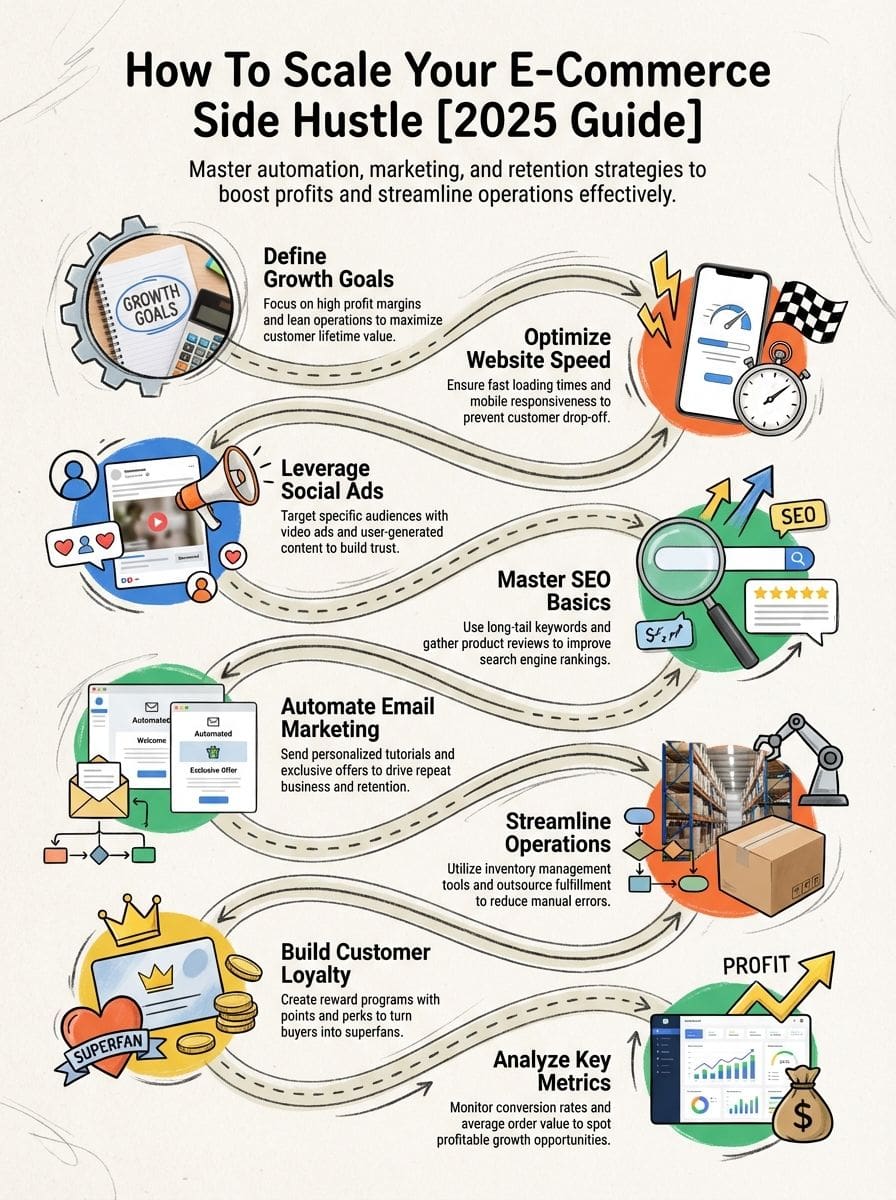
After kicking things off, I zero in on some clear growth goals. My main focus is to boost profit margins—not just revenue—and keep my business running lean. I use customer engagement tools like email marketing and simple loyalty tiers to lift sales without hiring a big team or blowing my budget on ads.
Keeping production costs low helps maximize gross margins. Sometimes, I mix in drop shipping for testing new items or use transportation of less-than-truckload services to save money on bigger inventory shipments.
Retaining one loyal customer will cost me five times less than bringing in a new shopper.
Outsourcing comes into play so daily tasks don’t eat up the hours I need for building digital marketing campaigns or creating content. Every move aims to push my customer lifetime value higher while dropping the average cost of acquisition. That way, each dollar goes further, whether it lands back in inventory or funds savvy moves like influencer partnerships built for my target audience.
Website Optimization Techniques

If my site loads slowly, shoppers will run to a faster store without a second thought. I want every guy on his phone—or swiping his debit card at midnight—to find it simple and quick to finish shopping.
How can I improve my site speed and usability?
Speed and easy navigation help men shop online without headaches. If my store loads slowly or frustrates a shopper, he clicks away, and I lose that sale forever. A delay of just one second can drop conversions by 7%, so I take this seriously.
- I keep image file sizes small by using tools like Squoosh or TinyPNG, which cuts load times significantly without ruining the look of my product photos.
- Website audits catch broken links and usability bugs; I use Google PageSpeed Insights to find the specific “Interaction to Next Paint” (INP) issues that annoy users.
- Fast site speed matters because 90% of customers value prompt replies and efficient interactions; nobody wants to wait for spinning wheels.
- Mobile responsiveness is key since most shoppers use phones now—Google even checks for this before ranking me higher through SEO.
- Strong hosting services such as Shopify or BigCommerce keep things running smoothly during shopping surges, especially on big sale days like Black Friday.
- User-generated content, like photo reviews from real buyers (think of how Chubbies does it), builds trust and shows my brand identity to new visitors.
- I always encourage account creation after checkout, not before; this reduces friction so shoppers complete orders without second-guessing.
- Order tracking in customer accounts adds extra value since guys love knowing exactly where their package is after hitting “Buy.”
- Testing plugins or apps regularly keeps bloat to a minimum—some can slow down checkout or mess with payments if not checked often.
- Regularly updating product listings trims outdated stuff and highlights trending niches so every page loads fast and feels fresh.
Shopping sites win loyal customers with fast service, clear calls-to-action, and smooth browsing; it’s all about beating that customer acquisition cost while maximizing customer lifetime value (CLV).

Why is mobile responsiveness important for my website?
After making my store quicker and easier to use, I can’t forget how crucial it is that my site looks sharp on every screen. Over 75 percent of shoppers changed the way they buy after 2020, grabbing their phones for almost everything. In fact, mobile commerce is set to hit nearly $558 billion in sales in the U.S. by 2025.
Most guys I know expect smooth shopping from their phone, not just a laptop. So if my e-commerce platform isn’t mobile-friendly, all those cool product pages and strategic marketing efforts risk falling flat. I see firsthand how 71 percent of customers want recommendations and quick support right inside their pocket.
Fast replies through contactless tools or digital wallets like Apple Pay help me secure sales with less hassle. Delivering a clean customer experience on mobile gives buyers what they want—no interruptions, just fast moves and an easy checkout. With nine out of ten shoppers sticking around for sites that run smoothly wherever they tap in, missing mobile optimization feels like leaving cash on the table.
“Every click counts when your side hustle lives in someone’s hand.”
Marketing Strategy Enhancements
Smart ecommerce marketing gets people talking and clicking. I use insights from top marketers, plus podcasts, to boost my know-how on pricing tricks and avoiding the hard sell.
How do I leverage social media advertising effectively?
I’ve tested many methods to grow my online store. Social media ads have brought me quick wins and long-term gains, especially for e-commerce marketing.

- I target men interested in specific business models, like dropshipping or print-on-demand sites such as Spring (formerly Teespring), because these groups often respond well to my offers.
- I run video ads with real customer experiences and product demos. Chubbies proved that sharing user-generated content (UGC) of regular guys having fun builds way more trust than polished corporate ads.
- I keep an eye on social trends and use hashtags. A simple campaign can spark thousands of posts if it connects with what people are already doing.
- I tweak pricing messages and deals for retargeting ads across Facebook, Instagram, and even smaller platforms like Reddit—these channels help me reach a long tail of potential customers without a huge financial risk.
- My ad visuals focus on mobile responsiveness since over half my traffic checks out products on smartphones; slow-loading or clunky landing pages push guys away fast.
- Campaigns aren’t all about the hard sell; sometimes I run behind-the-scenes stories or podcast teasers that educate about the product or the lifestyle behind it.
- Before any big launch, I build hype with teaser campaigns across multiple platforms—the pre-launch chatter helps secure sales right out of the gate.
- Deals and exclusive reward points for early customers explode when promoted through Stories; instant engagement always beats waiting around for email opens.
- I connect with local review hubs like Yelp if I have a local presence; being active there builds trust while driving direct clicks.
- To get fresh ideas, I follow successful freelancers and brands running similar platforms to see what creative angles they are testing right now.
Check out how you can effectively promote your side hustle with actionable tips drawn from real experience in scaling up small businesses online.
What are the best SEO practices for e-commerce?
After dialing in my social media ads, I want Google to work as hard for me as Instagram does. Over 75 percent of shoppers use Google before they pull out their wallets, so SEO is money on the table I can’t ignore.
- Regular site audits keep my shop fast for everyone—with tools like Screaming Frog catching broken links and slow-loading images before customers bounce.
- Long-tail keywords hook serious buyers; I plug in terms like “vegan men’s grooming kits” because shoppers type exactly what they want. Tools like AnswerThePublic help me find these specific questions.
- Mobile-friendly pages bag more sales; nearly every customer scrolls from a phone now, so my store has big buttons and simple menus.
- Review-rich product pages help me climb search rankings since 90 percent of guys read reviews. Google rewards stores with visible feedback, often showing star ratings right in the search results.
- Product titles and meta descriptions get a punchy update using natural phrases shoppers use, which draws clicks right from search results.
- Fresh content is my secret sauce—adding new collections or launching online tutorials about products tells Google my store is active.
- Tracking conversion rates through Google Analytics 4 (GA4) gives me real data—I spot whether new SEO tweaks actually drive more sales.
- Updating old product listings once a quarter keeps things lively; adding an FAQ section taps into what customers are really searching for this year.
- Clear calls-to-action on each page move folks along their customer experience without confusion—I guide them toward checkout like an online shopping Sherpa.
With regular tweaks and steady attention to these basics, my site becomes a magnet for clicks and a smoother buying experience for every visitor.
How can email marketing boost my sales?
After dialing in strong SEO moves, my next big win came from email marketing. I learned fast that this tool packs a punch, delivering an average return of $36 to $45 for every single dollar spent.
- Sprig Gourmet inspires me. They email recipes plus discounts to their buyers, keeping things fresh and relevant. This combo drives repeat business like a charm.
- Thank-you emails often get overlooked, but they work wonders. I set up an automated flow in Klaviyo so every buyer gets a personal note with their receipt.
- Tutorials are gold—people crave know-how before hitting “buy.” I send short guides about using or enjoying products, which helps build trust.
- Product suggestions go hand-in-hand with growing e-commerce. If someone buys a grooming kit, I follow up with recommendations for refills or travel cases.
- Testimonials in my emails give real-talk proof that others were happy; it clears the barrier to entry for guys still on the fence.
- First-time shoppers always snag a discount code for their next order. That nudge turns a one-off into repeat business.
- Exclusive offers make people feel seen. Every so often, select customers get deals straight to their inbox just because they’ve stuck around.
- I avoid spamming folks because nobody wants junk. Each message includes value: tips, tricks, or news about trending niches like new fitness gear.
- Automated tools make my life easier. Platforms like Mailchimp or Privy let me schedule campaigns ahead of time.
- Tracking open rates and clicks shows what’s working best. This data teaches me when to tweak subject lines or swap out rewards.
If you’re an entrepreneurial guy looking at scaling your side hustle without wasting hours each week, solid email marketing is your ace in the hole. Hand-pick what works and watch those sales tick upward.
How can I automate my e-commerce operations?
Running an online store gets much smoother when I set up automatic tools like Shopify Flow, Zapier, or automated shipping apps to handle daily tasks. Keep reading if you want to spend less time sweating the small stuff and more time growing your sales.
What inventory management tools should I use?
Running an e-commerce side hustle got a whole lot smarter with advanced inventory tools. I’ve used several myself, and each one made stock management less stressful and way more accurate.
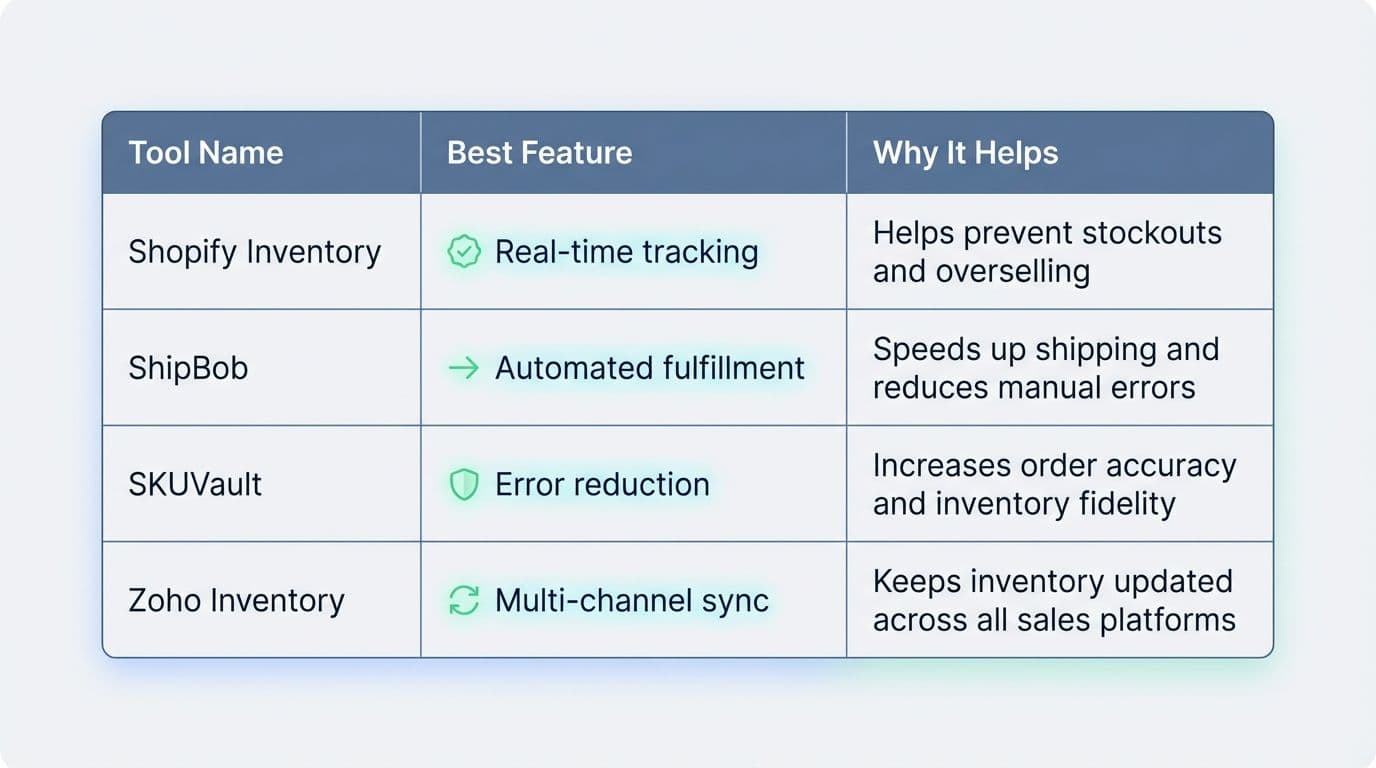
| Tool Name | Best Feature for Side Hustles | Why It Helps |
|---|---|---|
| Shopify Inventory | Real-time tracking | I spot my top products in seconds and reorder before trends shift. |
| ShipBob | Automated fulfillment | Connects to my store to ship orders automatically, so I don’t pack boxes at midnight. |
| SKUVault | Error reduction | Keeps every item labeled and counted, alerting me to low stock instantly. |
| Zoho Inventory | Multi-channel sync | Manages products across Amazon and eBay from one dashboard to prevent overselling. |
Using Fulfillment by Amazon (FBA) is another option that takes over storage and shipping entirely for my bestsellers. It connects directly to my store platform, reducing manual input from me. Tools like QuickBooks Commerce track sales figures alongside inventory levels so I can see what is profitable at a glance.
Using the right tool means fewer headaches for me, quicker shipping for customers who expect speed, and better growth potential. The right setup turns chaos into control even while handling side hustle orders between workdays.
How can I implement automated order processing?
After figuring out which inventory management tools fit best, I took the next step to automate my order processing. Reducing manual work saves my sanity and gives my customers a smoother experience.
- Outsourcing shipping and logistics to third-party fulfillment companies like ShipBob or Red Stag Fulfillment kept me from getting stuck in box-taping purgatory.
- Linking automated tools such as Shopify’s built-in order processing, or Zapier for custom shops, turns online sales into hands-off fulfillment. Each order triggers real-time confirmations and tracking emails automatically.
- Setting up chatbots with Gorgias or Tidio lets me automate “Where’s my package?” questions so I don’t drown in repetitive messages.
- Using push notification services keeps buyers updated about shipping status right from their phones; this extra touch goes a long way for building trust.
- Connecting payment gateways like Stripe means transactions clear quickly and safely, removing headaches over pending payments.
- Adding automatic stock updates between inventory apps and sales channels prevents “out of stock” mishaps, which can hurt repeat business.
- Sending instant order confirmation emails makes shoppers feel seen immediately after purchase; it cuts down on post-sale anxiety.
- Tracking all steps through analytics dashboards lets me spot any problems in the process fast, so every part of the customer experience stays reliable.
My own stress dropped by at least half just by putting these systems in place. Automation allowed me more time to focus on growth instead of solving daily issues.
How do I keep customers coming back?
Keeping your buyers eager for more feels like trying to get a cat into a bath—tricky, but with loyalty perks and upbeat follow-ups through Klaviyo, you’ll have folks crossing their fingers for your next move.
What are effective ways to reward loyal customers?
Loyal customers can be the backbone of any e-commerce side hustle. I’ve found that small gestures go a long way with people who keep coming back.
Offering loyalty programs keeps regulars engaged. Look at Mack Weldon’s “Weldon Blue” program—it’s brilliant because it’s simple. Level 1 gets you free shipping just for creating an account, and Level 2 gets you 20% off every order once you spend $200 in a year. No complex points math, just value.
Giving out product discounts to my best clients has always worked. Exclusive deals make them feel part of an inner circle. Surprising top customers with freebies or gifts makes a guy feel appreciated. A little “thank you” in his next order bag—something he didn’t expect, like a sticker or sample—can spark a smile and another sale.
Personalized email campaigns let me deliver custom offers right into inboxes. These messages speak directly to someone’s tastes, making each sale feel like it was crafted for him. Setting up automated tools on sites like Shopify helps me spot my superfans who deserve first dibs on new products.
How do I build a customer loyalty program?
Building a good customer loyalty program is like setting up the best man-cave: everyone wants to come back if the vibe is right. I’ve learned that simple rewards and a smooth experience make guys return for more.
- Give every new shopper a reason to create an account after their first order so tracking and rewarding is easier.
- Offer something they can hold onto—welcome points, a solid discount code, or even a free gift work way better than vague promises.
- Use sales data from Shopify reports to spot high-value buyers; target these guys with bigger perks because they often drive most of your repeat sales.
- Send personalized messages; nothing gets attention like seeing your name on a 10% off deal just for you.
- Run deal-based programs, such as giving out discounts on second purchases; this style keeps the customer experience moving forward.
- Send emails that ask for feedback; show you care by actively improving the reward options based on what people suggest.
- Encourage user-generated content. GoPro does this famously by featuring customer videos. It brings real faces into your community and builds trust.
- Keep everything out in the open—show honest reviews right next to products so other men know exactly what they’re getting.
I stick to these steps because they work fast, don’t require advanced tech knowledge, and keep my shop’s regulars happy without any tricks.
How can I expand my product offerings?
I like to check my store data in Google Analytics, eye the hot items with Jungle Scout, and then toss in fresh choices that fit what my buyers already want. Stick around if you want to grow your sales bench too.
What complementary products should I introduce?
Finding the right add-ons for my store can boost sales and keep customers happy. I pick products that fit with what I already sell and make sense in my buyers’ journey.
- Accessory packs work great. If I’m selling tech gadgets like wireless earbuds, I add cleaning kits or cases. Shoppers appreciate having everything they need in one place.
- Digital downloads add value. For fitness gear, offering a workout guide as a PDF is cost-effective and helpful.
- Add-on services raise the bar. Some shops offer extended warranties or product customization services alongside physical goods.
- Print-on-demand solutions. Tools like Printful let me offer shirts or mugs with custom prints related to my main items with zero inventory risk.
- Bundling increases average order value. Selling beard grooming kits? Including mini combs or oils as part of the package works well.
- Personalized suggestions. I recommend screen protectors if someone buys a smartphone case; it often adds an extra sale before completion.
- Dropshipping new ideas. This allows me to test trending items from suppliers worldwide without buying stock upfront.
- Loyalty program benefits. I award bonus points to customers who buy combos or try something new.
- Asking buyers about their needs. Last winter, I learned that rechargeable hand warmers were hot sellers when bundled with gloves after reading customer reviews.
I’ll be discussing how trending niches connect with this next, so stay tuned.

How do I explore trending niches successfully?
Spotting a trending niche is like panning for gold—it’s all about timing, gut checks, and data. I dig into research first, not just what looks shiny at a glance.
- Checking Google Trends, I watch for spikes in search volume. This gives me quick insight into demand shifts.
- Scrolling through TikTok and Reddit helps me spot what guys are talking about. “Gorpcore” (functional outdoor gear) and “quiet luxury” are huge trends for men in 2025.
- Studying my competitors with tools like SEMrush or Similarweb highlights categories they’re doubling down on.
- Testing ideas fast means tossing up product pages for new items and running tiny ad campaigns. If something flops, I yank it; if it clicks, I double down.
- Tracking market gaps is easier when I look at negative reviews on Amazon to see what guys are complaining about, then offering a better version.
- Keeping my eye on timely items pays off big—think of fitness gadgets right after New Year’s Day.
- Focusing on sustainable tactics like building an email list means my momentum grows even if one product tanks.
Every time I try these steps with new products—be it electric shavers in No-Shave November or grilling gear before the Super Bowl—I learn more about what sells. That way, chasing trends feels less risky and way more rewarding.
How do I monitor and analyze performance metrics?
I track numbers with tools like Google Analytics, Shopify Reports, and Triple Whale to spot patterns and find growth gaps. Stick around if you want the real scoop.
What sales and conversion rates should I track?
Knowing my numbers gives me a clear path to success. I keep a sharp eye on the right sales and conversion rates so I can grow with confidence.
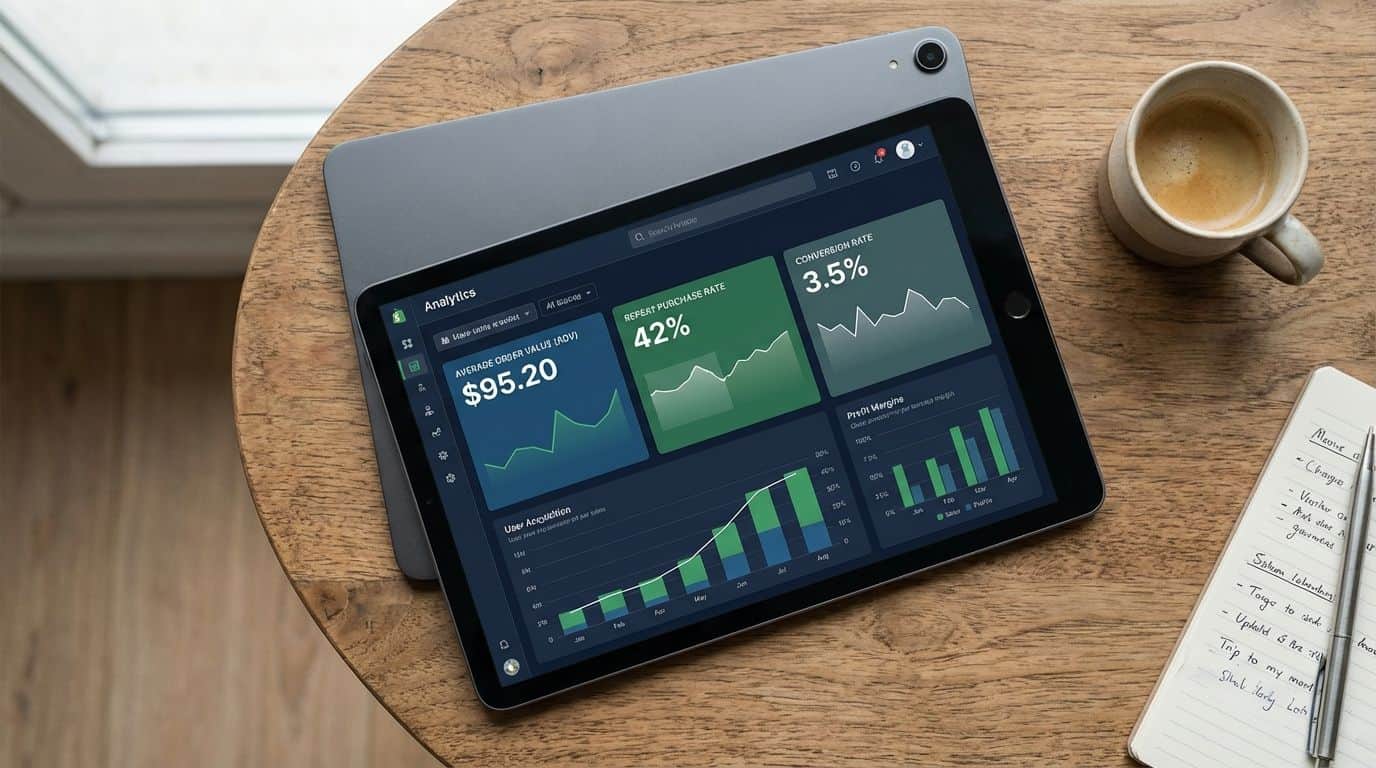
- Tracking overall sales volume each month tells me if demand is rising or dropping off.
- Measuring Average Order Value (AOV) helps me see if customers are putting more in their cart. I use bundles to try and push this number up.
- Watching repeat purchase rates lets me spot loyal shoppers. These regulars often drive up to 60% of revenue for growing stores.
- Following conversion rates from different marketing channels shows which campaign deserves more budget.
- Comparing guest checkout versus registered user flows tells me which setup works best; one-touch options often win for busy guys.
- Studying the effect of discounts on conversion rates keeps my deals smart. I check my Contribution Margin to ensure I’m not giving away all my profit.
- Analyzing how reviews affect conversions reveals whether positive chatter nudges guys into buying mode.
- Monitoring loyalty program redemption rates shows how well perks bring dudes back.
- Using analytics tools to check ROI on automated campaigns exposes which strategies fill up carts without eating cash.
Each data point puts real money in my pocket when I act on what I learn.
How can analytics help identify growth opportunities?
Analytics tools like Peel Insights or Daasity make it easy for me to spot what works. I check which products or marketing channels lag behind, then shift my focus and budget to where the money flows.
Checking store reports shows trends in how men shop, so I can target offers that land with high-value buyers. Segmenting customer data lets me send special deals to guys who spend more or buy often.
Tracking if a new product takes off tells me fast if I’m on the right path. Reading reviews and feedback helps fine-tune my lineup, sometimes adding gear based on what’s hot or getting rid of stuff nobody likes. Watching conversion rates from email blasts or social ads makes sure every dollar pushes sales higher instead of going up in smoke.
How will scaling your e-commerce side hustle change in 2025?
I find growth is less about hustle and more about smart systems. With customer acquisition costs hovering around $78 on average, I can’t just throw money at ads like in the old days.
To stay profitable in 2025, I focus on automation with tools like Shopify Flow and Zapier. That means fewer manual headaches for me and faster delivery for my customers. Outsourcing non-core tasks keeps my time free to work on what matters most—like building sharp product pages or testing new channels.
Personalization gets bigger each year. Studies say 71 out of every hundred buyers expect their experience to fit them like a glove. Rather than chasing influencers who want hefty fees, I encourage user photos and reviews because shoppers trust other buyers far more these days.
With better business insights from analytics apps, spotting trends early helps me act fast. Every tweak feels aimed at making the shop run smoother—and keeping folks coming back again and again.