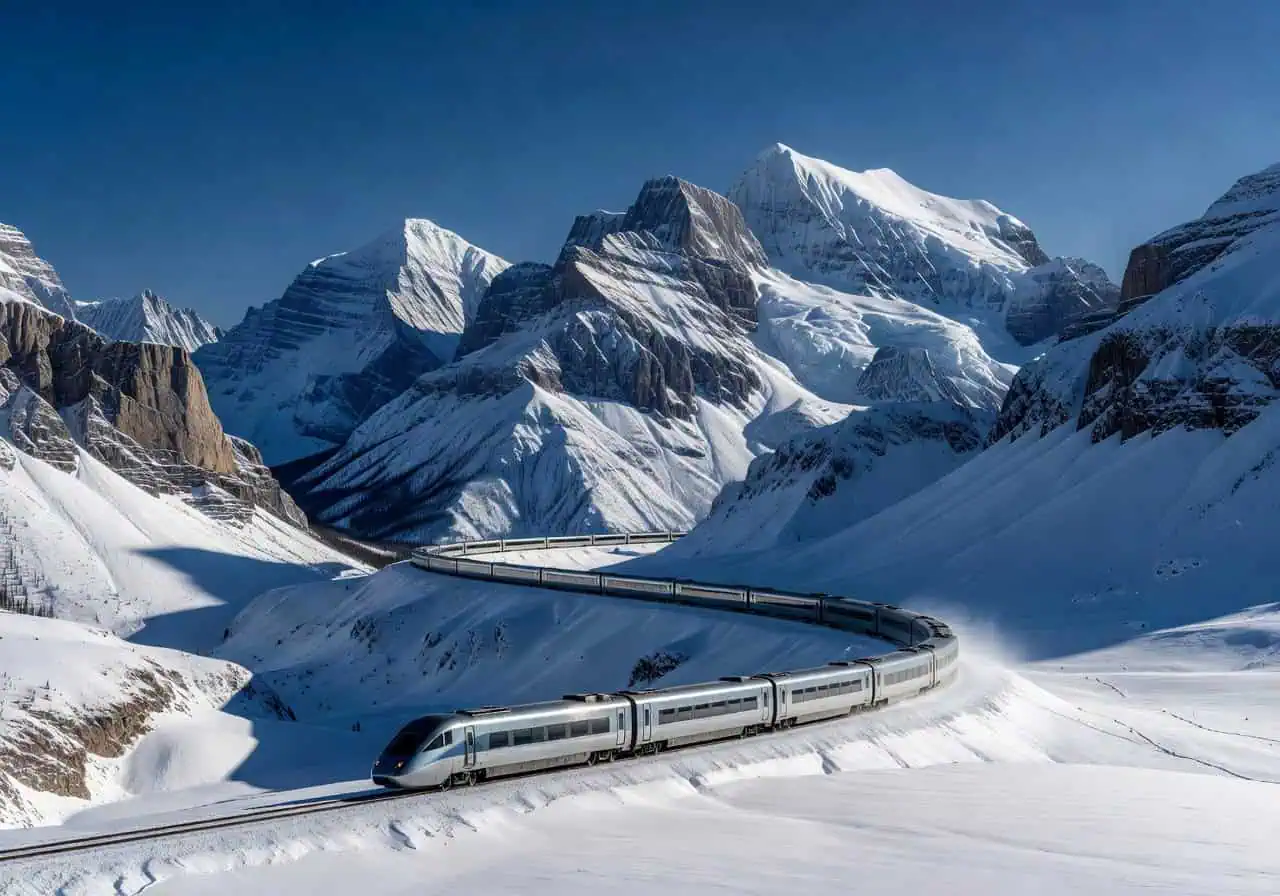
Figuring out exactly how to journey across canada by train is fundamentally different from booking a flight. It is a slow, deliberate endurance sport. The VIA Rail network is the primary engine for crossing Canadian provinces, but the logistics of long-haul passenger transit will punish anyone expecting a quick A-to-B commute. I’ve taken the Toronto to Montreal train for party weekends—where I once watched a woman crouched facing backwards in her seat for five straight hours—but traveling coast-to-coast requires serious planning.
Flying is expedient. Trains are for when you want to see the continent at surface level. Here is the step-by-step process for planning this massive trip without burning your time and your overall budget.
Table of Contents
Choose between luxury sightseeing and functional transit
The first trap most travelers fall into is conflating a tourist excursion with an actual transit network. You need to pick the right tool for the job. You can use an aggregator app like Omio to compare planes, trains, and buses, but a true cross-country rail plan requires identifying the specific operators and what they actually do.
If you want an ultra-luxury, daylight-only experience where you sleep in off-train hotels, you are looking at the privatized Rocky Mountaineer. They operate tourist-centric sightseeing routes servicing Western Canada and the US: First Passage to the West (Vancouver, Kamloops, and Banff), Rainforest to Gold Rush (Vancouver, Whistler, Quesnel, and Jasper), Journey Through the Clouds, and the Rockies to the Red Rocks route covering Moab, Glenwood Springs, and Denver.
If your goal is to sleep on the rails and actually cross the continent, your default is VIA Rail. VIA Rail is Canada’s national long-distance passenger carrier.
Forget short-haul municipal bounds. You aren’t using Translink’s rapid transit infrastructure, the Skytrain, or a West Coast Express commuter train in Metro Vancouver to cross the country. You aren’t riding the TTC (Toronto Transit Commission) subway or Metrolinx GO trains in the Greater Toronto Area. You won’t use Exo in Québec. And save the niche heritage experiences—like the Southern Prairie Railway Heritage Train, Port Stanley Terminal Rail, Kettle Valley Steam Railway, Alberta Prairie Railway Excursions, or the White Pass & Yukon Route Railway—for afternoon trips.
You need VIA Rail. For example, if you book the core multi-day train from Vancouver to Toronto, you are immediately signing up for a functional, 24/7 sleeper transit experience.
Map the geographic reality of the rails
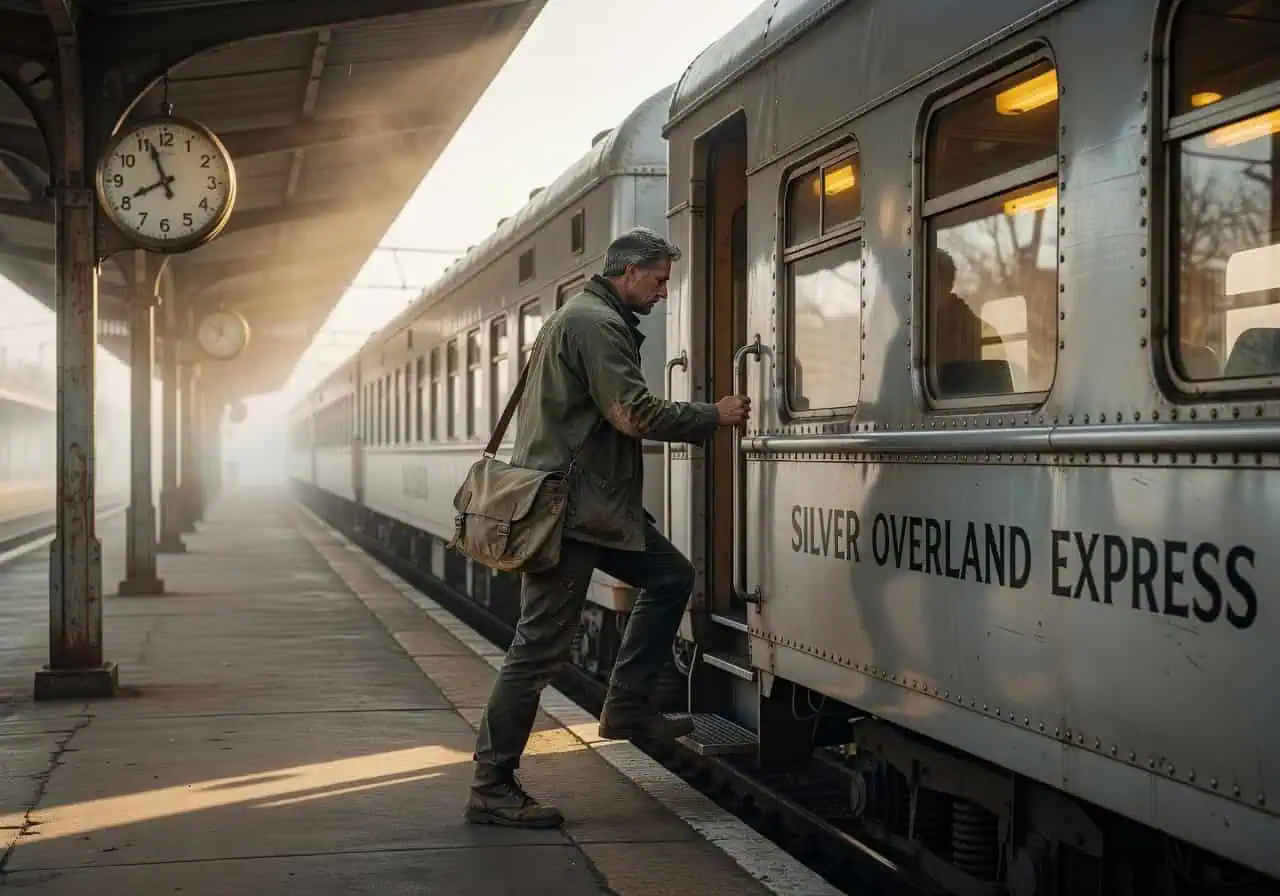
Once you commit to the national carrier, you have to face the physical map. Train travel “across Canada” is technically a misnomer.
With almost 50,000km of trackage across the country, the VIA Rail network bypasses massive chunks of the map. You will hit 8/10 Canadian provinces but exactly 0/3 northern territories. You physically cannot take a passenger train to Prince Edward Island, Newfoundland & Labrador, the Yukon, the Northwest Territories, or Nunavut.
A continuous, non-stop journey from coast to coast takes about a week. The core architecture is broken into highly specific route segments.
- The Canadian runs from Vancouver to Toronto and takes about four days.
- The Ontario-Québec route connects Windsor to Québec City. The fast jump from Toronto to Montréal alone takes about 5 hours.
- The Ocean runs from Montréal to Halifax, anchoring the eastern leg in a journey that takes almost 24h.
There are also remote adventure routes jumping between Jasper and Prince Rupert (formerly the Skeena, requiring a mandatory overnight in Prince George), Winnipeg and Churchill, Sudbury and White River, Montréal and Senneterre, and Montréal and Jonquière.
The most practical strategy? Book exactly one way. Ride the rails from west to east for the romance, then fly back. Doing a round trip by rail is an unnecessary endurance test. Global rankings consistently frame the nation as an ideal destination—and frankly, the best country to immigrate to based on its sheer scale and standard of living—but looking at the entire landmass twice back-to-back from a railcar will test anyone’s sanity.
Target a winter departure to beat dynamic pricing
Booking blindly in July guarantees you will overpay to sit in a crowded carriage. VIA Rail utilizes dynamic pricing, meaning your fare will rapidly inflate alongside seasonal demand.
Summer train travel is the default assumption, but winter is the contrarian secret for budget preservation. Traveling in February or March completely undercuts peak demand. Beyond dodging massive crowds, the visual return on investment is significantly higher. You secure empty dome cars and watch pristine, Narnia-like landscapes roll by for hours. According to the travel blog Happy to Wander, whose author spent a month travelling from Vancouver to Halifax, booking an off-season winter ticket radically changes the cost-benefit ratio of the trip.
Because VIA Rail and dynamic pricing are inextricably linked, when you buy matters as much as when you ride. Use these three mechanics to force your ticket costs down.
- Exploit Discount Tuesday. Every week, VIA Rail runs an online deal day where you can use the promo code TUESDAY. Historically this was a flat 10% discount, though current phrasing is vaguer and entirely based on availability.
- Scour the Lowest Fares page, located directly under the “Offers” tab on the VIA Rail website. Flexibility pays off here; if you check this page a few months in advance, deep into the off-season, you can occasionally find 50% off deals for sleeper cabins.
- Register for the VIA Préférence program. Even for a one-time bucket-list journey, the massive cost of a multi-day Sleeper Plus trip generates enough points to instantly fund a future corridor trip (like Toronto to Montréal).
Also leverage demographic cuts. The carrier offers standard discounts for CAA members, Age 65 +, children, youth, Indigenous persons, military, and corporate accounts. Whether you are booking for next month or looking ahead to February 27, 2026, these discount mechanics remain your strongest financial lever.
Decode the onboard survival metrics
The gap between an Economy class seat and a fully out-fitted Sleeper Plus level ticket is not about luxury. It is about physical survival. During a four-day crawl across the prairies, a lie-flat bed is crucial gear.

- Economy: You get a reclining seat. No bed. No shower. You pay out of pocket for microwave meals. It is a grind.
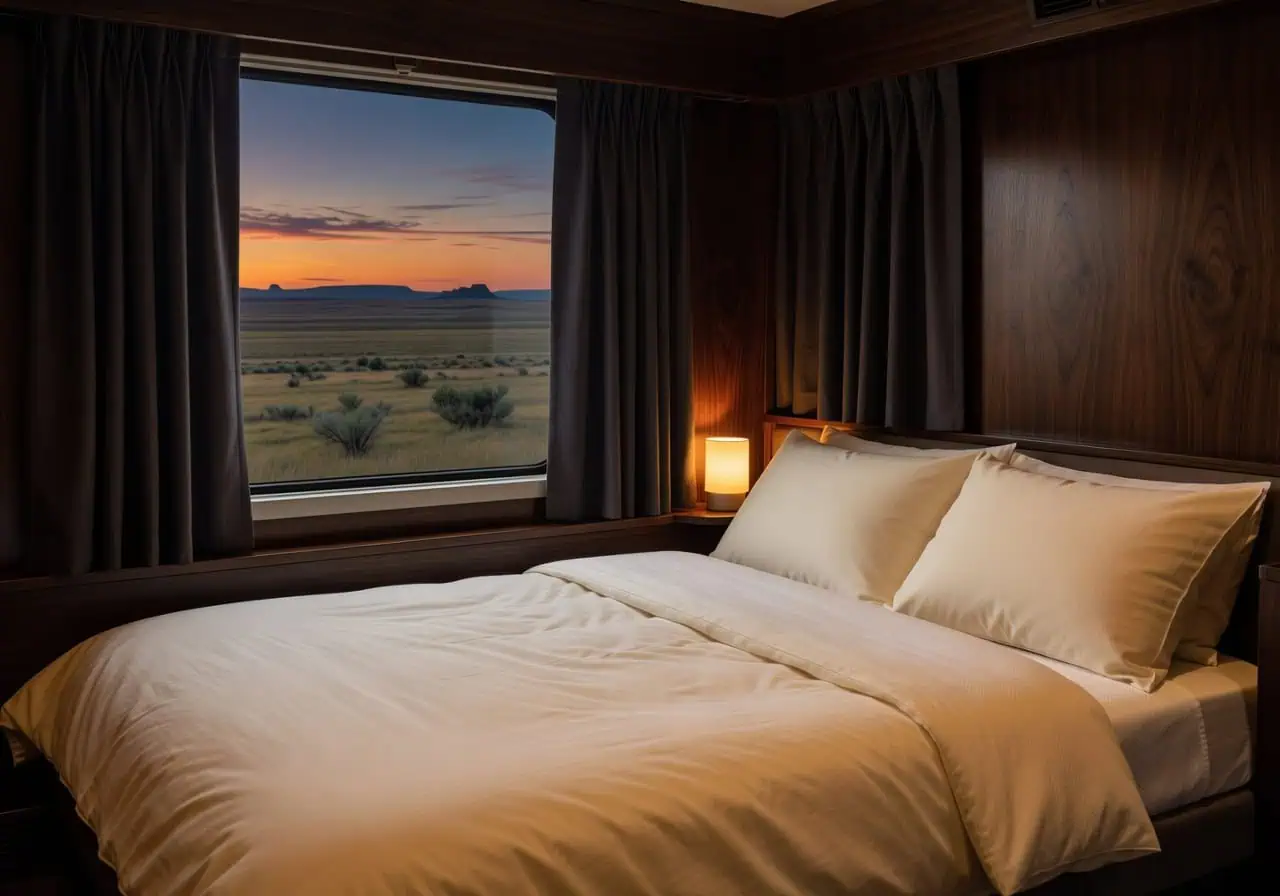
- Sleeper Plus: You get horizontal sleep, inclusive dining in the dining car, and access to a shared shower. The vocabulary matters here: booking a Lower Berth means you get two open-plan seats that push together at night into a flat bed with heavy curtains, while an upper berth folds down from the wall. A cabin is a fully enclosed private room with its own toilet.
- Prestige Class: Available exclusively on The Canadian, Prestige Class is the peak of overland luxury. It features a private room, a double bed, your own shower, a concierge, and inclusive alcohol.
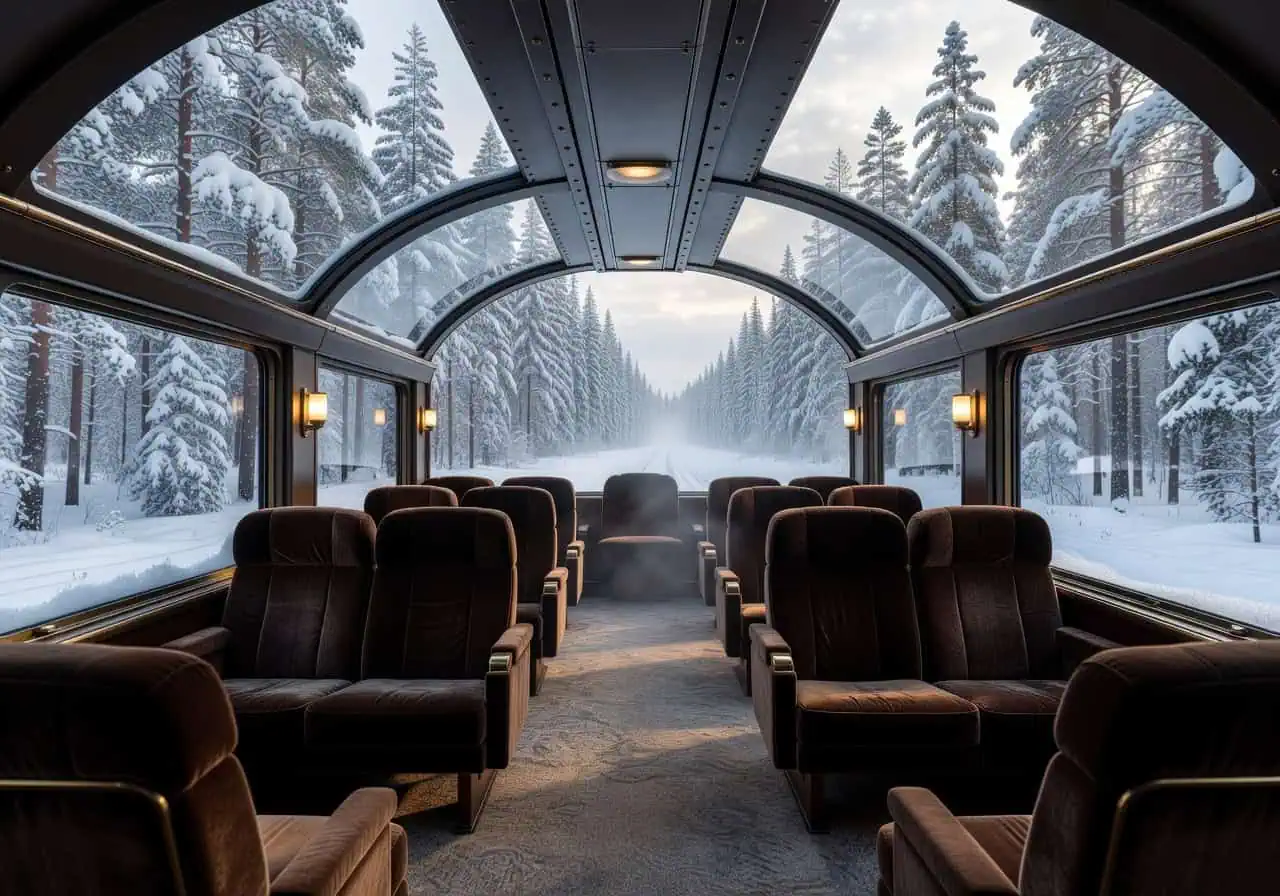
If you ride in the lower tiers, secure your sanity by finding the Skyline Car early. This is a shared panoramic dome car. For an Economy class passenger, the ability to grab a coffee and escape a cramped seat is the only thing that prevents deep claustrophobia during multi-day runs.
Stitch together manual segment tickets
The biggest misconception about Canadian train travel is the idea of a hop-on/hop-off pass. It does not exist anymore.
If you want to disembark to explore the top things to see and do in Canada—like hiking around Jasper or eating through Montréal—you cannot simply walk off a train and catch the next one using the same ticket. You must buy manually segmented tickets for each specific leg of the journey.
If you want a few days in Jasper or Saskatoon before hitting Winnipeg, that requires three distinct booking transactions. To avoid booking engine errors, skip VIA’s “Multi-city” search tool entirely and just purchase completely separate one-way tickets. Schedule a buffer of a few days in these stopover cities. Delays will inherently mess with tight schedules. Never book a tight connection between a cross-country train arrival and a hard commitment like an international flight.
Pack for a delay-prone endurance sport
Because freight transport legally holds track priority over passenger rail in Canada, the system is fundamentally delay-prone. You might sit on a siding for six hours waiting for a mile-long cargo train to pass. View the trip as an endurance sport, and pack your gear accordingly. Be highly strategic with your luggage; trying to wrestle a massive checked suitcase into a confined sleeper cabin or an economy footwell will quickly break your spirit, so strictly rely on a small day-bag for your immediate necessities.
You are heading into a massive digital blackout. The tight Ontario-Québec corridor is the only stretch on the entire network where you can expect reliable modern WiFi. Everywhere else, you are offline. Bring physical books, pre-downloaded movies, an e-reader, noise-canceling headphones, and a high-capacity power bank. A standard Lower Berth does not have personal power outlets.
“Because freight transport legally holds track priority over passenger rail in Canada, the system is fundamentally delay-prone.”
Beyond the digital void, prepare for a financial one.
During long hauls across remote rural stretches, dense forests often kill standard point-of-sale terminal connections. While a debit card might work flawlessly within city limits, out in the wild, onboard staff are occasionally forced to pull out old-school paper-imprint credit card machines or demand physical money. Bring actual cash to cover your cafe car beers and late-night snacks.
A cross-country train forces you to downshift. You are trading aviation efficiency for surface-level context. You see the vastness of the prairies, the sheer rock faces of the Rockies, and the dense pine forests of the Shield precisely because you have to grind through them mile by mile.
Start mapping your segments today. Pick a Tuesday, log onto the VIA Rail portal, and find your sleeper berth. If you accept the delays, prepare for the cash-only dead zones, and secure the right cabin, this long-haul rail journey stops being an intimidating transit puzzle and starts becoming the greatest analog trip on the continent.
Frequently Asked Questions
What’s the difference between VIA Rail and the Rocky Mountaineer?
VIA Rail is Canada’s 24/7 national transit network designed to actually transport you across the continent while you sleep on the trains. The Rocky Mountaineer is a privatized sightseeing excursion in Western Canada and the US that only runs during daylight hours and puts you in off-train hotels at night.
Can I buy a hop-on, hop-off pass to explore different Canadian cities?
No, that ticketing concept does not exist anymore for Canadian passenger trains. If you want to disembark in Jasper or Saskatoon and catch a later train, you must manually purchase separate segment tickets for each leg of the journey. You also need to bake in a buffer of a few days since freight delays will inevitably wreck any tight itinerary.
Why does VIA Rail suffer from such massive transit delays?
Freight transport legally holds track priority over passenger rail in Canada. This means your cross-country train will frequently be forced to sit on a siding for hours just to let a mile-long cargo train pass. You have to treat the journey as an endurance sport and never book a tight connection between your arrival and an international flight.
Is booking a winter train trip across Canada actually a good idea?
Yes, it is the absolute best way to hack VIA Rail’s dynamic pricing and preserve your budget. Traveling in February or March completely undercuts peak summer demand, occasionally scoring you deep discounts on sleeper cabins and securing empty panoramic dome cars. You trade a crowded carriage for days of pristine, uninterrupted landscapes.
How does Sleeper Plus class differ from a standard Economy ticket?
Economy traps you in a reclining seat for days with no shower access and requires paying out of pocket for microwave meals. Sleeper Plus secures horizontal sleep, inclusive dining car meals, and shared shower access. The upgrade isn’t about luxury—it is a critical physical survival tactic for a four-day crawl across the prairies.
What is a Lower Berth versus a Cabin on VIA rail?
A Lower Berth consists of two open-plan facing seats that slide together at night to form a flat bed, closed off from the aisle only by heavy curtains. A cabin is a fully enclosed, private room with an actual door and its own toilet. Unless you upgrade all the way to Prestige Class, you will likely lack personal power outlets and need a high-capacity power bank.
Can I rely on Wi-Fi and digital payments while crossing the country?
Absolutely not. Reliable Wi-Fi is strictly limited to the tight Ontario-Québec corridor, meaning the remainder of your trip is a massive digital blackout. Dense forests will also frequently kill the train’s point-of-sale terminals, so you must bring physical cash to buy cafe car beers and snacks out in the wild.