
When I was in California recently visiting a friend in the middle of filing a wrongful death lawsuit, the hardest part to watch wasn’t the legal theory. It was the sheer volume of paperwork, deadline-tracking, and waiting while grieving. Miss one deadline and a judge often tosses the case, handing the defendant a win by default and saving the insurance company money even after paying its own lawyers. Who can sue, how long the clock runs, and what proof holds up all shift between Colorado, Georgia, and Ontario.
Key Takeaways
Legal standing and damages rules change across borders: Colorado’s Wrongful Death Act (C.R.S. section 13-21-201 et seq.) compensates what survivors lost and lets a will’s designated beneficiary override default family claimants, while Georgia restricts filing to four priority parties and measures the “full value of the life of the deceased,” and Ontario gives immediate family classes and the estate separate claims.
Both Colorado and Georgia enforce a strict two-year statute of limitations from the date of death that runs independently of insurance claims or criminal investigations, though Colorado alters the window for intentional acts or prior incapacitation and Georgia extends it for criminal investigations or shortens it for government defendants.
A live complaint can plead multiple liability theories at once, as seen in the King County Superior Court lawsuit over the death of 27-year-old Leon Davis, which uses 90 minutes of police body camera footage and injury photographs to allege excessive force against Federal Way police and medical malpractice against hospital owner CommonSpirit.
Table of Contents
What a wrongful death lawsuit is, and what it pays for
A wrongful death claim is a civil lawsuit brought by eligible survivors when a person dies because of another party’s negligence, recklessness, intentional wrongdoing, or criminal actions, seeking monetary compensation rather than criminal punishment. Because it’s a civil action, it runs separate from any criminal prosecution.
What the lawsuit actually pays for depends on how your state defines the loss. According to the Killian Law guide, the Colorado Wrongful Death Act, codified at C.R.S. section 13-21-201 et seq., recognizes the financial and emotional hit of losing a primary provider or contributor without putting a dollar price tag on a human life. Instead, Colorado provides a legal remedy for what the survivors lost: lost income and future earnings, loss of companionship, love, and guidance, funeral expenses, and the survivors’ own pain and suffering.
According to the Isenberg & Hewitt guide, Georgia takes a different doctrinal angle. A Georgia claim seeks compensation for the “full value of the life of the deceased,” combining economic losses like lost wages and benefits with intangible losses such as care and companionship.
Who has legal standing to file a wrongful death claim
Legal standing to file a wrongful death claim is a statutory right restricted to specific family members who knew the deceased or to an estate representative, governed by strict state and province priority rules rather than a universal standard. While state laws typically give filing priority to immediate relatives like a spouse, children, or parents before an estate representative, a single estate-planning detail can flip the order: under Colorado law, a designated beneficiary named in the deceased’s will overrides every other potential family claimant.
Colorado’s claimant hierarchy under C.R.S. 13-21-201
Colorado runs a strict order for eligible individuals who knew the deceased. If the deceased had children, the surviving spouse and children file jointly. If the person died unmarried with no children, the parents hold the right to file, unless a designated beneficiary named in a will steps in to trump the entire default lineup.
Georgia’s four-party priority order
Georgia is strict compared to states that allow extended relatives like aunts or grandparents to sue. Eligibility is locked to four parties in priority order: the surviving spouse (who also represents minor children), the children if there’s no spouse, the parents if there’s neither spouse nor children, and finally the estate representative, who distributes any recovered proceeds to the next of kin.
Ontario’s family classes and the estate’s own claim
According to personal injury attorneys Andrea Iacobelli and Colton Lung of the Iacobelli Law Firm, Ontario-specific legislation entitles immediate family across generations (parents, siblings, children, grandchildren, and grandparents) to bring individual claims. Separately, the deceased’s estate holds its own claim, including the deceased’s pain and suffering between the accident and death, which passes through a will or Ontario intestacy law.
How long you have to file: the two-year deadline
- The statute of limitations for a wrongful death claim cuts off your right to sue two years from the date of death unless a specific statutory exception alters the clock.
- Both Colorado and Georgia enforce a strict two-year deadline from the date of death as the baseline rule, and missing that window can forfeit the family’s right to pursue legal action entirely.
- Exceptions do exist. In Colorado, deaths caused by intentional acts or periods where the decedent was incapacitated before dying can shift the filing timeframe. In Georgia, a related criminal investigation can extend the deadline, whereas a claim against a government entity can shorten it.
Families routinely assume that an active police investigation or an open insurance claim pauses the civil calendar. It doesn’t. The civil limitation period runs on its own track, and part of that two-year window often burns away before a grieving relative ever picks up the phone to call a lawyer.
Common causes of wrongful death claims
The most common causes of wrongful death lawsuits are preventable fatal incidents rooted in a specific breach of duty, ranging from highway collisions and medical errors to unsafe property conditions. Each category turns on proving that a party failed to meet an established standard of care:
- Motor vehicle accidents: Car crashes, truck collisions, motorcycle wrecks, and pedestrian strikes, frequently tied to drunk, distracted, or speeding drivers.
- Medical malpractice: Doctors, nurses, or hospitals deviating from accepted standards of care and causing a patient’s death.
- Product liability: Under product liability law, a manufacturer, distributor, or seller is answerable when a malfunctioning vehicle component, dangerous pharmaceutical drug, or faulty appliance kills someone.
- Premises liability: Landlords failing to maintain safe property for tenants or visitors, along with negligent security cases involving shootings or assaults, which are a frequent driver of claims in Georgia.
- Workplace accidents: Fatal hazards in construction or manufacturing tied to employer negligence, such as unsafe working conditions or skipped safety training.
- Other fatal negligence scenarios: Serious slip and fall accidents (such as a fatal head strike), building fires, and nursing home neglect.
That list isn’t exhaustive. In Colorado, any death caused by another party’s negligent or wrongful actions can potentially support a claim.
What you must prove to win a wrongful death case
Even with the best wrongful death lawyer, winning a wrongful death lawsuit requires proving a continuous chain of liability through substantial evidence like accident reports, medical records, witness testimony, and expert opinions: Colorado mandates five elements (the death of an individual, the defendant’s negligence or fault, proximate cause where the death wouldn’t have occurred without that negligence, eligible statutory beneficiaries, and measurable damages), while Georgia frames liability around four parts (duty of care, breach of duty, direct causation, and damages). In a Georgia premises case, an apartment owner owes a legal duty to keep the site safe for tenants and visitors, breaches it by leaving a broken security gate wide open, directly causes a resident’s death when a known criminal walks through that open gate to commit murder, and leaves the family with measurable funeral and counseling damages. Under Colorado’s five-element test, the same proof chain walks through each link on paper: medical records and a death certificate establish the death, accident reports or witness testimony prove the defendant’s negligent actions or inaction, expert opinions tie that fault directly to a death that wouldn’t have happened otherwise, statutory filings confirm recognized beneficiary status, and financial records quantify lost monetary support, companionship, guidance, and emotional distress.
Evidence to gather: proving fault and proving loss
- The evidence needed to prove a wrongful death lawsuit splits into two distinct jobs: establishing that the defendant caused the death and proving the financial and relational size of each survivor’s loss.
- Building the core file requires death certificates, medical records, autopsy reports, police or accident reports, photographs and video footage, witness statements, employment and financial records, expert testimony, and relevant emails or contracts.
- To price each family member’s individual claim with concrete proof, investigators collect family questionnaires written like a diary of favorite memories and shared routines, relationship photos and videos, and expert calculations of lost income or services. In the Leon Davis lawsuit, the core liability proof included 90 minutes of police body camera footage alongside photographs taken by Davis’s brother documenting numerous bruises, a split lip, cuts on his face and scalp, and black eyes.
The first few weeks after a death dictate whether your case can still prove fault a year later. Surveillance and body camera video can get overwritten, witnesses scatter, and hospital records require formal requests. Pulling those files early locks down the record before it thins out.

How to file a wrongful death lawsuit, step by step
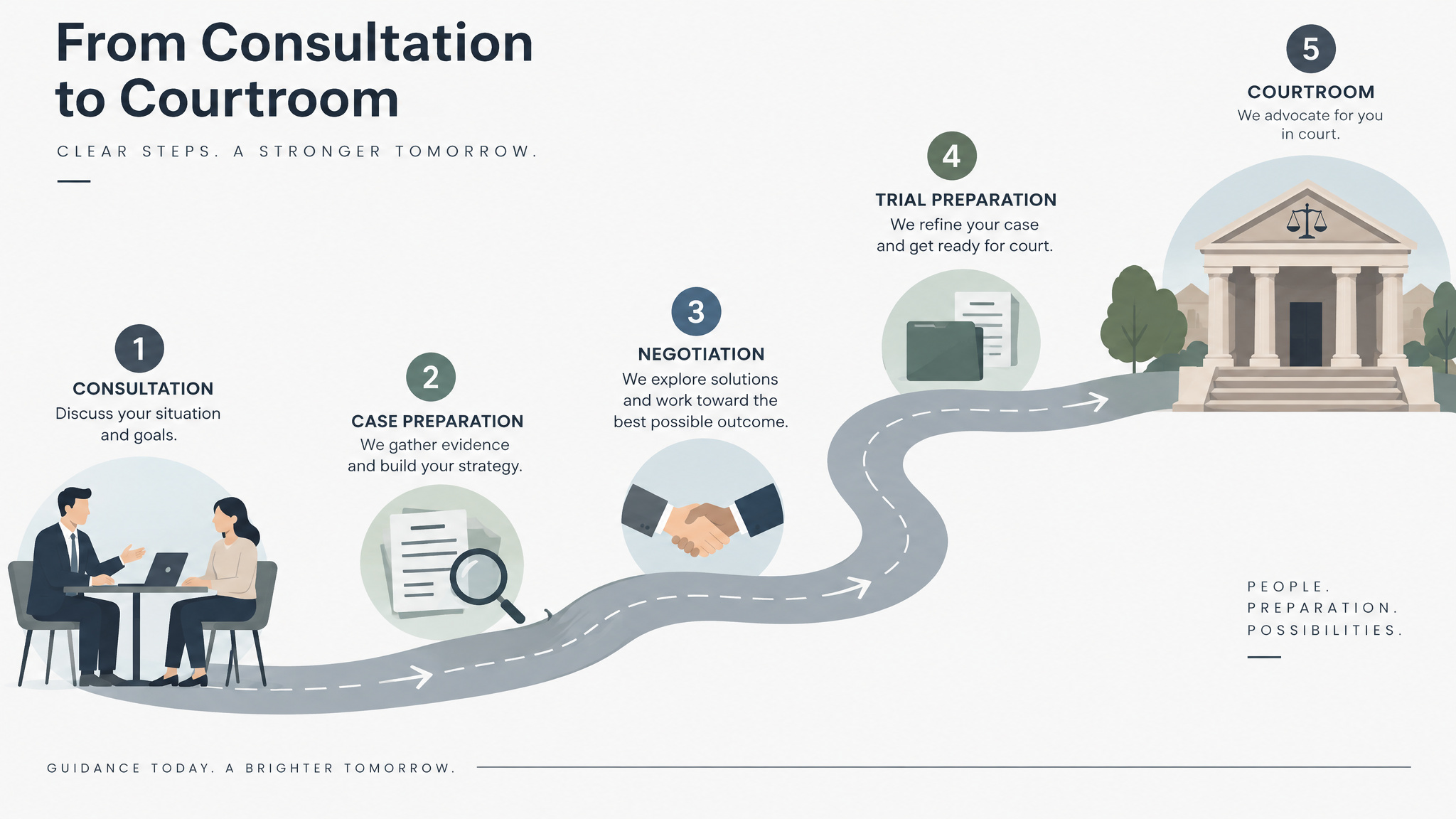
- Filing a wrongful death lawsuit follows a six-step sequence that starts with an attorney checking standing and deadlines and ends in an out-of-court settlement or a trial verdict.
- The process moves from an initial legal consultation to evidence investigation, establishing liability across all defendants, filing and serving the formal complaint, exchanging records in discovery, and negotiating a payout or trying the case.
- Once a complaint is filed in the proper court and served on the defendant, the discovery phase gives the case procedural teeth, forcing both sides through depositions, written interrogatories, and formal document requests before a judge or jury ever weighs in.
At Unfinished Man, we spend a lot of time looking at how guys handle heavy financial and life logistics when the stakes are real, and watching my friend in California deal with his filing drove home how much of this process is pure endurance.
- Consult an attorney: A lawyer evaluates whether the claim is viable, checks the statute of limitations, and maps out the procedure. Law firms have dedicated staff whose entire job is tracking deadlines and getting the paperwork right.
- Investigate and gather evidence: Counsel pulls police reports, medical and autopsy records, witness statements, and expert opinions to lock down what happened.
- Establish liability and identify the defendants: Your legal team maps duty, breach, causation, and damages onto every responsible party. A single suit can name individuals, employers, property owners, hospitals, and municipalities at once; the Leon Davis complaint sues the city of Federal Way, individual police officers, and hospital owner CommonSpirit together. Proving fault gets especially technical in medical malpractice and product liability cases, and calculating lost wages, lost companionship, and emotional distress takes meticulous evaluation.
- Prepare and file the formal complaint: The lawyer drafts the complaint detailing the incident, the specific negligence alleged, and the damages sought, files it in the appropriate court (such as a Georgia state court or King County Superior Court), and serves the defendants, who then file their responses to kick off formal litigation.
- Discovery phase: Both sides trade evidence through sworn depositions, written questions, and document demands. For the family, this is the hardest stretch, because it requires reliving the loss repeatedly under questioning.
- Negotiation and settlement, or trial: Most cases resolve through out-of-court settlement negotiations before trial. If the defense won’t offer a fair number, the case goes to trial, where a judge or jury decides liability and damages, including rare punitive damages reserved for outrageous misconduct.
How long a wrongful death lawsuit takes to settle or reach trial depends on whether the defense settles early and whether outside investigations are running in parallel. There’s no fixed timeline for civil death claims, and the Leon Davis case shows how a civil suit can move forward in Superior Court while a county prosecutor’s criminal charging decision sits pending with no timetable.
If you lose a wrongful death lawsuit at trial, or if a judge dismisses your case because you missed a procedural deadline and hands the defendant a default win, you recover no compensation at all. And if the case actually goes to trial, who ends up paying which costs afterward comes down to each court’s own rules, that part sits outside the basic filing process.
Why to consult a wrongful death attorney early
- Consulting a wrongful death attorney early in the specific jurisdiction where the death occurred is the single move that protects both the evidence file and your legal right to sue.
- Across the Colorado, Georgia, and Ontario guides, early legal counsel is recommended to evaluate whether a case is viable, lock down evidence before it disappears, and keep the claim inside strict limitation windows.
- Local rules create serious jurisdictional traps: Colorado allows a will’s designated beneficiary to override default family claimants, Georgia shortens the filing deadline when a government entity is involved, and Ontario splits the work between a personal injury lawyer who recovers the funds and an estates lawyer who distributes the estate’s share.
Hiring a lawyer who actually practices in the state or province where the death happened isn’t a minor detail. A family member who qualifies to sue in Ontario (like a sibling or grandparent) is shut out by Georgia’s strict four-party list. A lawyer working in that specific court system knows whether the lawsuit is measuring survivor losses like Colorado or the full value of the deceased’s life like Georgia, and whether a municipal defendant triggers a shortened clock.

Even if you can technically file a civil wrongful death suit without a lawyer, hiring counsel is the practical move for any family facing a contested claim. While civil courts allow self-represented filings in principle, walking in alone pits a grieving family against defense attorneys in a system full of complex liability proof, expert economic valuations, and unforgiving procedural rules.
As my friend’s experience in California showed, the paperwork and deadline pile is relentless even when you do things right. If a self-represented family misses a single court deadline, a judge will often toss the case out, giving the defendant a default win while an experienced wrongful death attorney preserves key evidence, keeps the filing inside strict time limits, and guides the family through the legal process.
Lawyers also divide the labor once money is on the table. Under the Ontario practice described by Iacobelli and Lung, personal injury litigation counsel handles proving the case and recovering the compensation, while distributing an estate’s recovery under a will or intestacy law is handed off to a separate estates lawyer. Initial consultations are typically free; for example, the Georgia firm Isenberg & Hewitt, PC offers a free consultation at 770-351-4400 to review the facts before you commit.
Damages: what compensation covers and how it’s valued
No online wrongful death settlement calculator can give you an accurate payout number, because a claim’s value is built from your jurisdiction’s damages doctrine, the claimant’s legal class, the deceased’s age, and documented financial dependence rather than a standard formula or universal cap.
Compensation splits into three buckets:
- Economic damages: Measurable financial hits, including lost income and future earnings, medical bills, funeral and burial costs, and lost support and services.
- Non-economic damages: Intangible losses, covering pain and suffering, emotional distress, and the loss of companionship, love, care, and guidance.
- Punitive damages: Awarded only in rare cases involving outrageous misconduct.
Where you file changes the math. Colorado values what the survivors lost, while Georgia prices the “full value of the life of the deceased.” In Ontario, valuation starts with the claimant’s legal category (such as a spouse, sibling, or grandparent) and the victim’s age, then narrows to the family’s actual closeness and financial dependence, often using economic experts to calculate lost income or services. Meanwhile, insurance companies frequently treat the entire wrongful death payout as a single aggregate pot of money without caring how the relatives divide it.
Minors, family conflict, and the emotional cost of litigating a death
When family members disagree about a wrongful death claim or how to split the insurer’s single pot of money, Ontario attorneys Andrea Iacobelli and Colton Lung note that a lawyer may deal with each relative separately or recommend separate counsel so everyone gets independent legal advice. One shared lawyer can’t represent conflicting family interests at the same time.
Court approval and the John Smith example
In Ontario, any settlement for a family member under age 18 requires formal approval from a judge. To see how quickly claims multiply, take the Ontario source’s hypothetical example: if John Smith is struck and killed by a car while crossing the road, leaving behind his wife Jane Smith and two children under 18, that single death creates four separate claims. Jane holds one, each minor child holds one (both requiring a judge’s sign-off to settle), and John’s estate holds a fourth covering his pain and suffering from the crash until death.
Grief, guilt, and when families call a lawyer
Relatives routinely feel guilt about asking for money after a death, but a lawyer can’t bring anyone back, and monetary compensation is the only remedy the civil law can offer. Waiting out of guilt can cost the family the two-year deadline, and surviving the depositions and discovery phase requires compassionate legal support.
The Leon Davis case: one lawsuit, two tracks
Suing police and a hospital in a wrongful death case requires pleading distinct liability theories against each defendant with hard evidence, and as the ongoing lawsuit over the death of 27-year-old Leon Davis shows, filing a strong complaint in King County Superior Court doesn’t guarantee a quick verdict or settlement.
What the Davis complaint alleges
According to reporting by Paige Cornwell of The Seattle Times (syndicated via Tribune Content Agency) and KOMO News, the lawsuit filed on a Tuesday in King County Superior Court names the city of Federal Way, the involved Federal Way police officers, and CommonSpirit, owner of St. Francis Hospital. Davis had checked into St. Francis Hospital for alcohol withdrawal treatment and been hospitalized for two days before police were dispatched on March 14 over a report of a “disorderly patient” who allegedly assaulted staff.
The King County medical examiner’s office ruled Davis’s manner of death a homicide caused by cardiac arrest, prolonged restraint in prone position in setting of alcohol withdrawal syndrome, listing obesity and chronic alcohol use disorder as contributing factors while finding a spit hood did not contribute to the death. Professionals consulted by The Seattle Times said the death was preventable.
The complaint alleges excessive force against the city of Federal Way and its officers and medical malpractice against CommonSpirit as the owner of St. Francis Hospital for negligently giving a “cocktail” of sedatives, including Haldol. The filing also claims staff and officers were “blinded by their own biases” and that hospital medical notes contained “untrue statements” about Davis thrashing around. While police reported a “disorderly patient” who allegedly assaulted staff, the lawsuit states hospital security tackled him in an unrecorded scuffle, that he barely moved after handcuffing, and that he was never told he was involuntarily committed and had a right to leave after speaking on the phone with Shannice Johnson for about an hour.
Body camera footage and photographic evidence
Family attorneys released an hourlong version of the 90 minutes of police body camera footage on YouTube for transparency and accountability, which The Seattle Times reviewed. On the video, a nurse walks an officer down the hallway saying, “He’s a big boy.” A female officer tells Davis, “We don’t want to use more force on you, but we will if you have to. You are under arrest at this point.”
Pinned face down in three sets of handcuffs behind his back for at least 25 minutes before suffering a fatal heart attack, Davis groans in pain, asks for help, and struggles to breathe. An officer tells him, You gotta earn our trust bud. … You’re a big dude. When Lt. Hilary Mariani tells him to breathe, Davis replies, I can’t… Oh please! Tell me what you want!
At the 20-minute mark, medical staff inject medication said to take five to 10 minutes to take effect. Davis is turned onto his side for the first time at the 26-minute mark with blood visible on his face, and staff attempt resuscitation for at least 45 minutes. Officers later discuss keeping handcuffs ready in case Davis woke up, discuss which exit to use to avoid his family before turning their cameras off, and pull back to a room.
Officers also forced an ill-fitting spit hood over Davis’s face; one officer said he hadn’t spit but tried to bite someone. Family attorney Roger Rogoff noted a spit hood doesn’t prevent biting, violates proper practice, and goes against a policy Washington police are legally required to follow prohibiting hooding people struggling to breathe or bleeding from the mouth or nose, following media investigations documenting dozens of in-custody deaths involving spit hoods.
Davis’s brother also photographed his numerous bruises, split lip, face and scalp cuts, and black eyes. At a news conference, attorney Simeon (Sim) Osborn said, “He walked in under his own power… They wheeled him out in a gurney,” while Rogoff said, “They saw him as just a big Black man” and cited poor police-hospital communication and policy failures.
“These people are supposed to be caring for him, and even the public officers, you’re supposed to protect and to serve,” Shannice Johnson said. “You guys are supposed to help him, and instead he’s gone, and his life was taken at such a young age.”
Where the Davis case stands now
The involved officers were placed on administrative leave and have since returned to duty. The Valley Independent Investigative Team (VIIT) investigated and referred the case to the King County prosecutor’s office, which has requested training documents from Federal Way police but has not made a charging decision. Virginia Mason Franciscan Health stated it cannot comment on ongoing legal matters or discuss patient details, leaving the family’s civil lawsuit moving forward in Superior Court while the criminal track remains undecided.
Frequently Asked Questions
How long do you have to file a death claim?
In states like Colorado and Georgia, the baseline deadline is two years from the date of death, and missing that cutoff can cost your family the right to sue entirely. Active police investigations or open insurance claims do not automatically pause the civil clock. However, specific circumstances can shift the window: Colorado alters the timeframe for intentional acts or prior incapacitation, while Georgia can extend it during a related criminal investigation or shorten it if you are suing a government entity.
Who can bring a claim on behalf of a deceased?
Eligibility is strictly locked to specific relatives or an estate representative depending on where the death happened. Georgia restricts filing to a four-party priority hierarchy starting with the surviving spouse, then children, parents, and finally the estate representative. Colorado also prioritizes spouses, children, and parents, with one major twist: a designated beneficiary named in the deceased’s will overrides every default family claimant. In Ontario, immediate family members across generations—including siblings, grandparents, and grandchildren—can file individual claims alongside a separate claim by the estate.
Can a person file a civil suit without a lawyer?
Technically yes, civil courts allow you to represent yourself, though doing so in a contested wrongful death case is a brutal gamble. You are going up against defense attorneys in a system packed with complex liability rules, expert financial valuations, and relentless paperwork. As I saw when visiting a friend in California going through a filing, missing a single procedural deadline often means a judge tosses the case out, handing the defendant a win by default and saving the insurance company a payout.
What happens if you lose a wrongful death lawsuit?
If you lose at trial—or if a judge dismisses your lawsuit because you missed a procedural deadline—your family recovers zero compensation. The defendant walks away with a win, and the insurance company keeps its payout even after covering its own legal bills. Any post-trial cost-shifting rules are governed by the specific court procedures in your jurisdiction.
what is wrongful death and what are the grounds for a claim
A wrongful death claim is a civil lawsuit seeking monetary compensation—not criminal punishment—when someone dies due to another party’s negligence, recklessness, or intentional wrongdoing. Common grounds include fatal car and truck crashes, medical malpractice, defective products, unsafe property or negligent security, and workplace hazards. To win, you have to prove that the defendant breached an established standard of care, directly caused the death, and left eligible survivors with measurable damages.
what evidence do I need to prove a wrongful death lawsuit
You need two buckets of proof: evidence showing the defendant caused the death and evidence pricing each survivor’s financial and emotional loss. The core liability file relies on death certificates, medical and autopsy records, police reports, witness statements, expert opinions, and video or photo proof—like the 90 minutes of police body camera footage and injury photos used in the Leon Davis lawsuit. To prove the value of the loss, investigators gather tax and employment records, expert wage calculations, relationship photos, and family questionnaires detailing shared routines and memories.
how to file a wrongful death lawsuit step by step
The process runs through six distinct phases: consulting an attorney to check standing and deadlines, investigating to lock down evidence, and mapping liability across every responsible defendant. From there, your lawyer drafts and files the formal complaint in court and serves the defendants. Once the defense responds, both sides enter discovery—trading documents, written questions, and sworn depositions—before either negotiating an out-of-court settlement or taking the case to a judge or jury at trial.
How do you choose the right wrongful death attorneys near you?
You need a personal injury litigation attorney who actively practices in the exact state or province where the death occurred, because eligibility, deadlines, and payout formulas change completely across borders. A local lawyer will know jurisdictional traps, such as whether a municipal defendant shortens your filing clock in Georgia or whether you also need an estates lawyer to distribute the estate’s recovery under Ontario practice. Most firms offer free initial consultations to evaluate whether your claim is viable before you commit.

