Ever open your closet and feel like you’re staring at a sea of the same old jeans, sweaters, and tank tops? Maybe you’re just tired of wearing the same sweatshirt every week.
Buying a whole new wardrobe is expensive, and besides, those clothes still fit perfectly fine.
What if you could give that shirt a fresh twist or add some personality to a plain pair of pants right at home? That’s where learning how to make custom clothing comes in, and it’s easier than you think.
Adding patches, doing some simple embroidering, or even trying tie-dye can turn boring clothes into custom designs that show off your personal style. I’m going to walk you through 18 easy ways to give your wardrobe a serious refresh using simple tools you might already have.
Key Takeaways
You can easily customize clothing at home with affordable tools like fabric paint, patches, trims, and embroidery thread.
Techniques like screen printing and bleaching can transform a plain shirt into a unique piece. In fact, a 2023 survey showed over 40% of men under 30 tried bleach or dye effects.
Simple DIY methods include cropping T-shirts with sharp scissors, sewing on extra pockets for more function, and distressing jeans with sandpaper for a modern grunge look.
Experts like designer Joy Cho recommend starting with woven fabrics for embroidery; using strong threads from brands like DMC and basic stitches creates designs that last.
Heat printing with a machine like the Cricut EasyPress 2 gives you fast, professional results on shirts and hoodies that can last for over 30 washes.
Table of Contents
Popular Ways to Customize Clothing
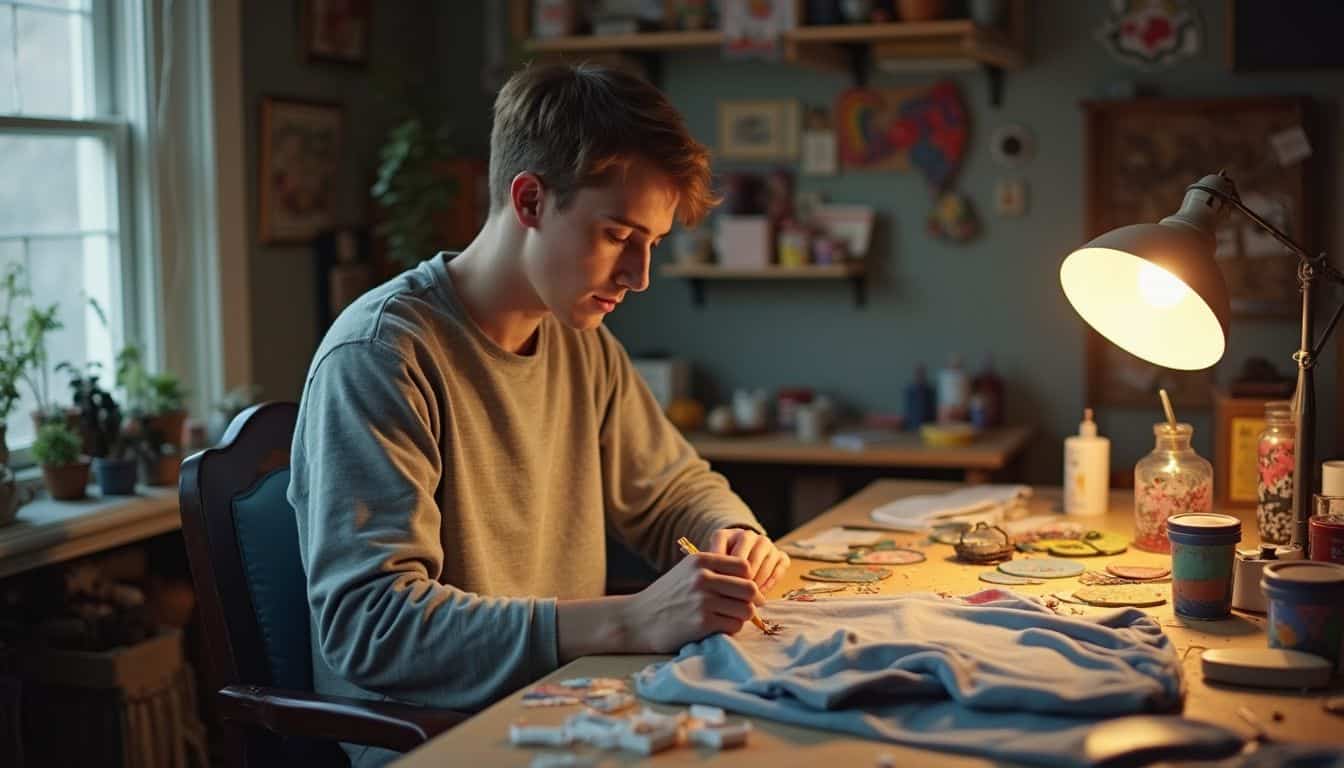
You can completely change up a pair of pants or a pullover with just a few simple supplies. Think patches, threads, and fabric paint.
Guys are personalizing their sweatshirts and printed T-shirts with embroidery, unique screen-printed designs, and patches found everywhere from Etsy to Amazon.
How can I add decorative elements to clothing?

Adding a few decorative touches is a solid way to make a standard pair of pants or a jean jacket stand out. It’s also a lot cheaper than buying a bunch of new gear.
- Hand embroider a design: Use colored thread and a needle to add initials or simple geometric patterns to polo shirts or hoodies.
- Paint with stencils: A little fabric paint goes a long way. You can find stencils for anything from sports logos to abstract shapes to put on printed t-shirts or other sports apparel.
- Iron on custom patches: A well-placed patch can totally change the vibe of a jacket or workwear. You can find thousands of unique options on Etsy, from band logos to vintage designs, or check out these custom patches if you have a specific idea in mind.
- Add zippers: Sewing a zipper into the side seam of a shirt adds an unexpected, modern look.
- Sew on extra pockets: Add a pocket cut from a contrasting fabric (like flannel on a denim shirt) to cargo shorts or a jacket for a practical and cool update.
- Try applique: Cut out felt letters or numbers and use a tight zigzag stitch to attach them to a Russell Athletic jersey or sweatshirt.
- Stitch lace into rips: If you have ripped jeans, try stitching dark lace behind the holes for a cool contrast.
- Create monograms: Hand-stitch your initials onto the cuff of a shirt or a Nike Golf polo for a subtle, personalized touch.
Once you’ve tried adding these details, you can move on to paint techniques that can transform your clothes even more.
How do I use fabric paint or screen printing on clothes?
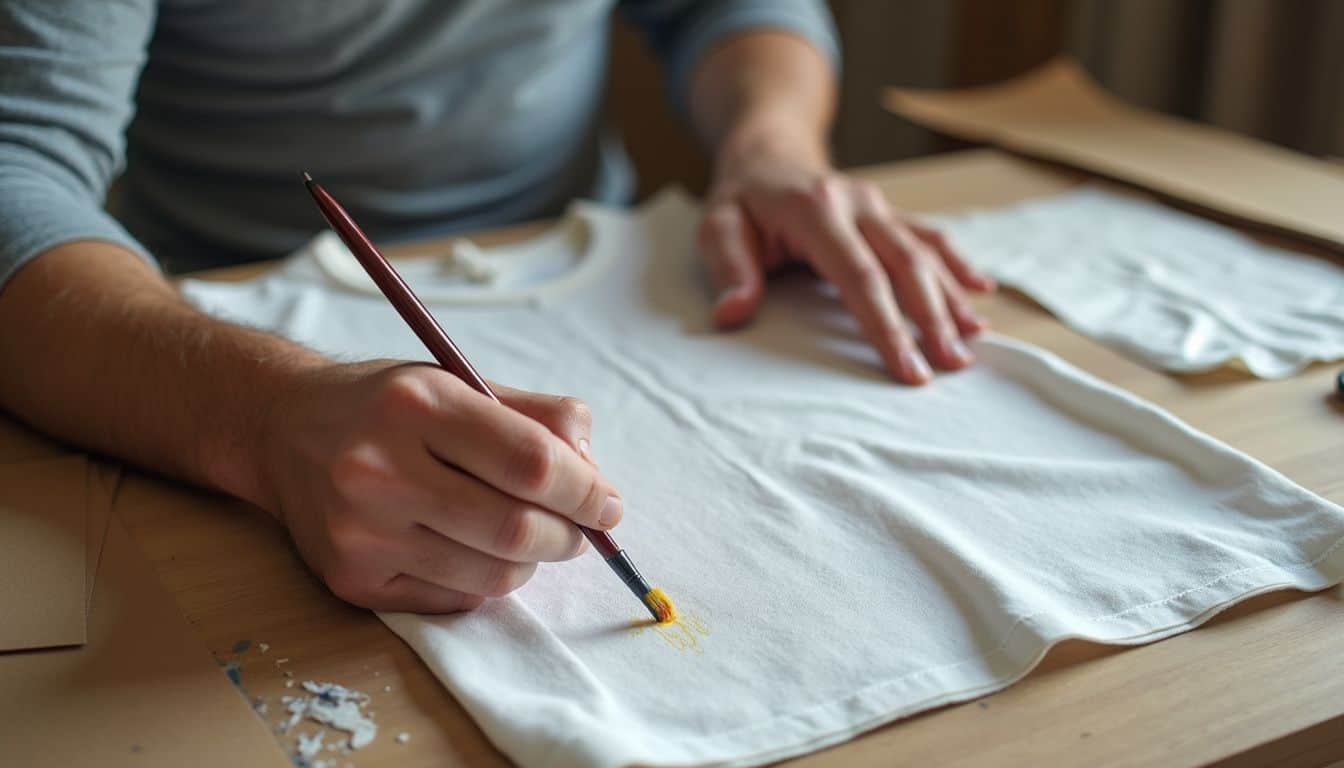
Fabric paint and screen printing are awesome ways to turn an old shirt into something completely new. These methods let you add bold colors and sharp designs with your own unique style.
- Prep your materials: Start with clean, dry cotton or polyester fabrics for the best results. Make sure to put a piece of cardboard inside the shirt to prevent paint from bleeding through.
- Choose the right paint: For painting directly on fabric, brands like Tulip Soft Fabric Paint and Jacquard Textile Color are popular choices because they stay flexible and don’t crack after washing.
- Heat-set your design: After the paint is completely dry, you need to make it permanent. Cover the design with a thin cloth and iron it on a medium setting for 2-3 minutes. This crucial step helps the design last through many washes.
- Try screen printing: For a more professional look, screen printing is the way to go. You can get a beginner-friendly kit like the Speedball Screen Printing Kit. Simple, bold vector art designs work best for clean lines.
- Pick your mesh count: When screen printing, higher mesh counts (like 156) are better for designs with finer details, like text or intricate logos.
- Use iron-on transfers: For a quick and easy option, you can print a design onto special transfer paper with an inkjet printer and then iron it onto your shirt.
Always test your technique on an old piece of fabric first. You don’t want to mess up your favorite golf polo on your first try.
What is the best way to sew or iron patches onto clothing?
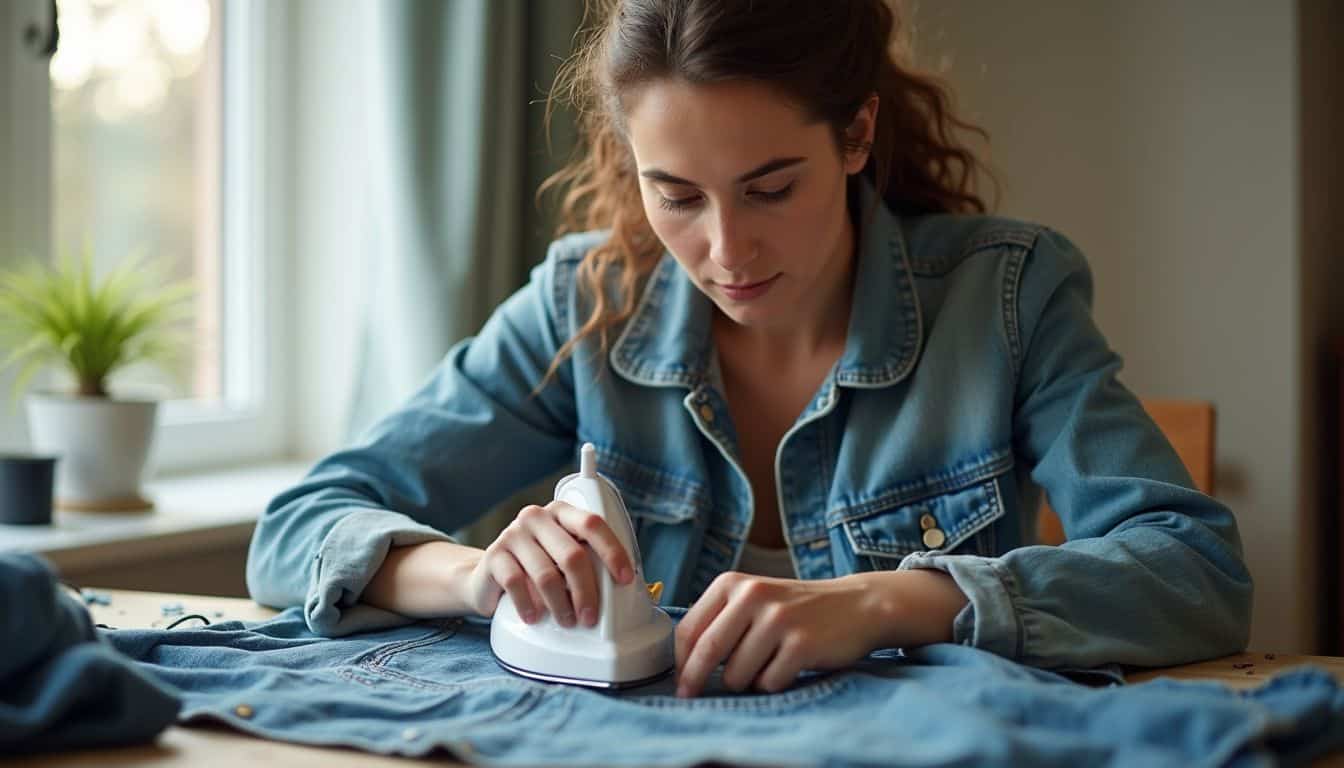
You don’t need to be a pro to add patches to your clothes. With the right approach, you can get clean, lasting results pretty quickly.
- Start with a clean garment. Always wash and dry the item first so the patch adhesive sticks properly.
- Position it perfectly. Lay the clothing flat and use pins to hold the patch exactly where you want it. Nothing is worse than an off-center patch.
- Use a pressing cloth. Place a thin piece of cotton fabric, like a tea towel, over the patch to protect it from the direct heat of the iron.
- Check your iron’s heat setting. Use high heat for denim and cotton, but turn it down to medium for polyester blends.
- Press firmly. Hold the iron down with firm pressure for about 30-45 seconds. Don’t slide it around like you’re ironing a shirt.
- Flip and repeat. Turn the garment inside out and press the back of the patch for another 20-30 seconds to secure it.
- For extra security, add a few stitches. Even for iron-on patches, sewing down the corners with a matching thread will ensure it never peels off, especially on items you’ll wash a lot.
- Hand-sewing is best for delicate fabrics. For thinner shirts or knits, skip the iron and hand-stitch the patch on to avoid damaging the material.
How do I add embroidery or appliques to my garments?
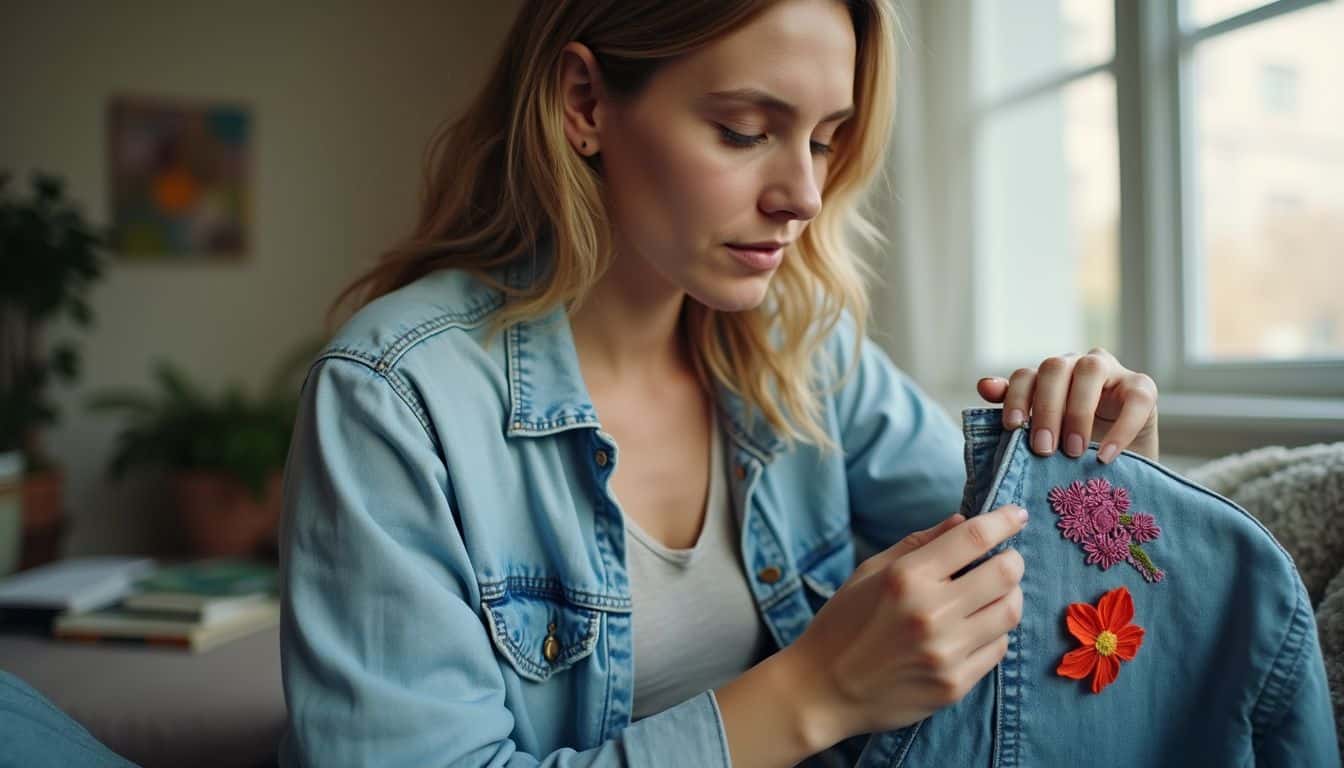
Moving on from patches, adding some embroidery or an applique can turn a plain shirt or jacket into a real statement piece. Even if you’re a total beginner, you can get great results.
Here are a few tips to get you started:
- Start with the right fabric. Woven materials like cotton, linen, and denim are the easiest to work with because they don’t stretch while you’re stitching.
- Use a good transfer method. To get your design onto the fabric, you can use a water-soluble transfer paper like DMC Magic Paper. You just print or draw your design on it, stick it to the fabric, stitch over it, and then wash it away.
- Choose strong thread. A quality embroidery floss, like DMC Cotton Embroidery Floss, will prevent fraying and make your design look sharp.
- Keep your stitches simple. You don’t need to know a hundred different stitches. The backstitch is perfect for outlines, and the satin stitch is great for filling in shapes.
- Use an embroidery hoop. This keeps the fabric taut, which makes it much easier to create neat, even stitches.
- For appliques, use an adhesive. If you’re sewing a fabric shape onto your garment, an iron-on adhesive like HeatnBond will hold it in place so you can stitch around the edges without it moving.
If you’re looking for an easy entry point, beginner embroidery kits from brands like Akacraft or Unime provide everything you need, including pre-printed patterns and instructions.
How can I attach bows or trims to clothing?

Adding trims like ribbons or lace can give your clothes a quick and easy upgrade. Just make sure you attach them securely so they hold up.
- Plan your placement first. Lay the trim on the fabric and pin it in place before you start sewing. This helps you get it straight.
- Hand-sew delicate trims. For things like lace, small, neat hand stitches are best to avoid puckering the fabric.
- Use a sewing machine for sturdier trims. For ribbons or thicker trims on cuffs or hems, a sewing machine will give you a stronger, more durable finish.
- Seal the raw edges. Fold the ends of the trim under or use a product like Fray Check to keep them from unraveling.
- Secure bows at the knot. If you’re adding a bow, a few stitches right through the middle of the knot will keep it from coming undone in the wash.
- Try a no-sew option. If you don’t want to sew, a strong fabric glue like Aleene’s Fabric Fusion is a great alternative. Let it dry completely, usually for 24 hours, before wearing.
- Think about contrast. Using a thread color that contrasts with the trim can add a cool, intentional detail to your design.
Transforming Old Clothing
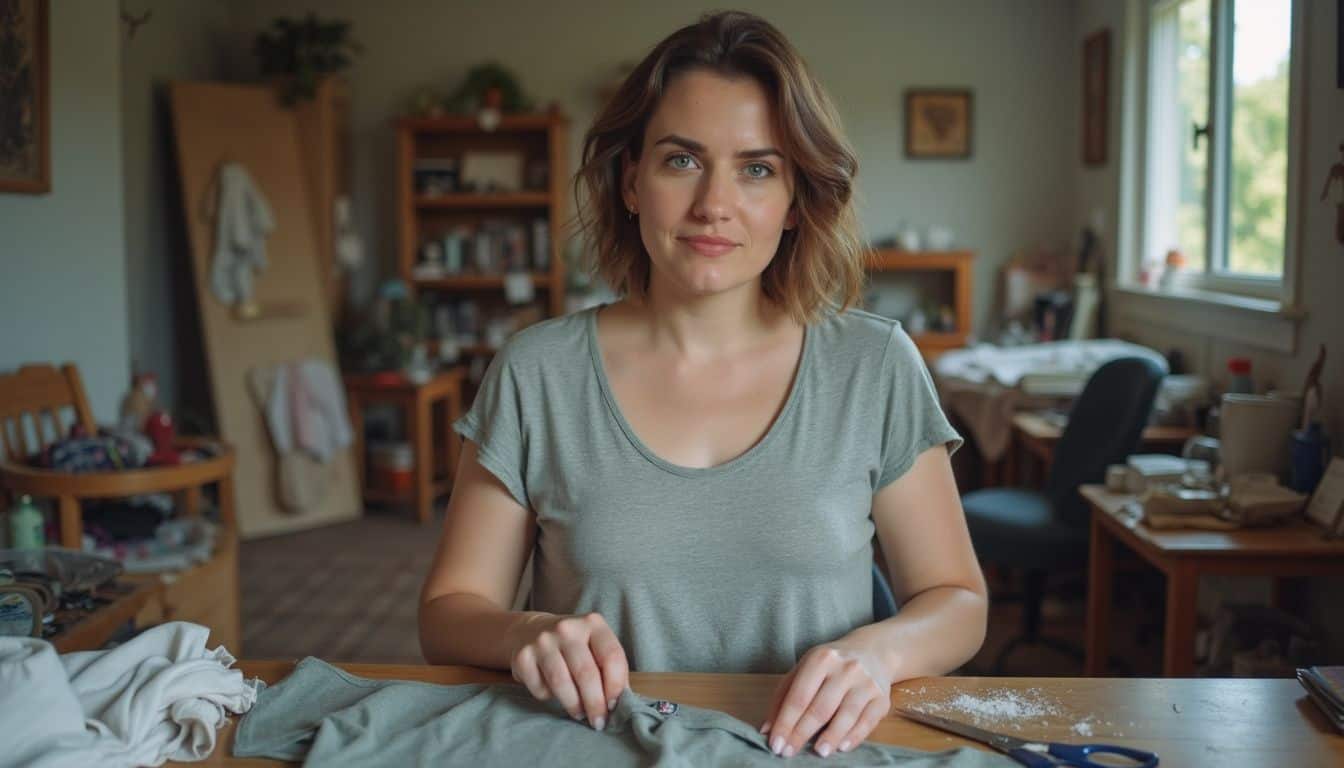
Got some tired shirts and jeans sitting in your closet? With a pair of scissors, a needle and thread, or a bit of fabric paint, you can turn those old clothes into fresh styles.
How do I turn a T-shirt into a crop top?
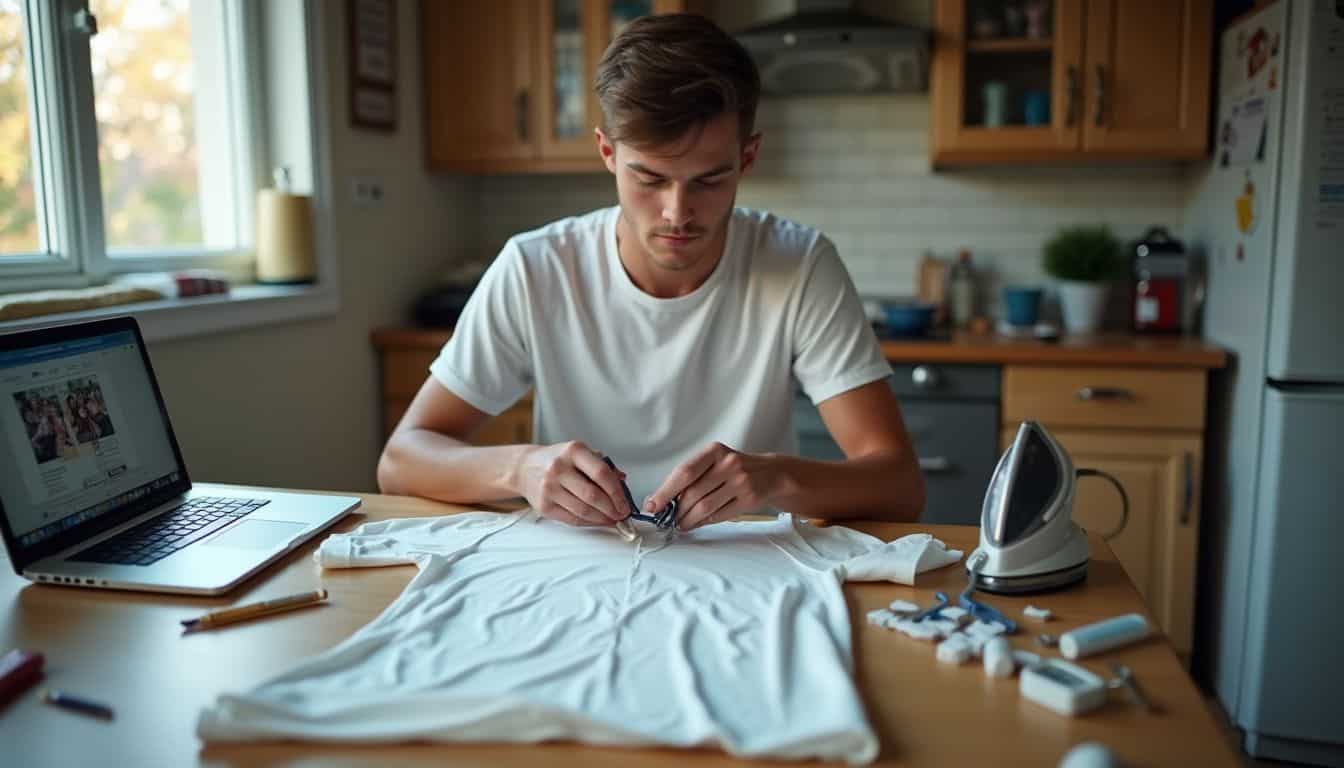
Turning a regular t-shirt into a crop top is one of the easiest ways to give your wardrobe an instant update. You can do it in just a few minutes with stuff you probably already have.
- Pick the right shirt. A slightly oversized t-shirt works best for a comfortable, relaxed fit.
- Mark your cut line. Try the shirt on and decide where you want it to end. Use tailor’s chalk or even a bar of soap to draw a straight line. It’s always a good idea to cut it a little longer than you think you want, you can always trim more off later.
- Use the right tool. A sharp pair of fabric scissors, like ones from Fiskars, is essential for a clean, straight cut. Kitchen scissors will just give you a jagged, messy edge.
- Cut with confidence. Lay the shirt on a flat surface and cut carefully along your marked line.
- Leave the edge raw. For a casual look, you can just leave the cut edge as is. The fabric will naturally roll up a bit after washing, which adds to the style.
- Or hem it for a cleaner finish. If you want a more polished look, fold the raw edge up about half an inch and secure it with a simple stitch or iron-on hem tape.
Pair your new crop top with high-waisted jeans or joggers. It’s a simple change that’s been a strong trend for men since the 1980s and continues to be popular today.
What are simple ways to add or remove sleeves?
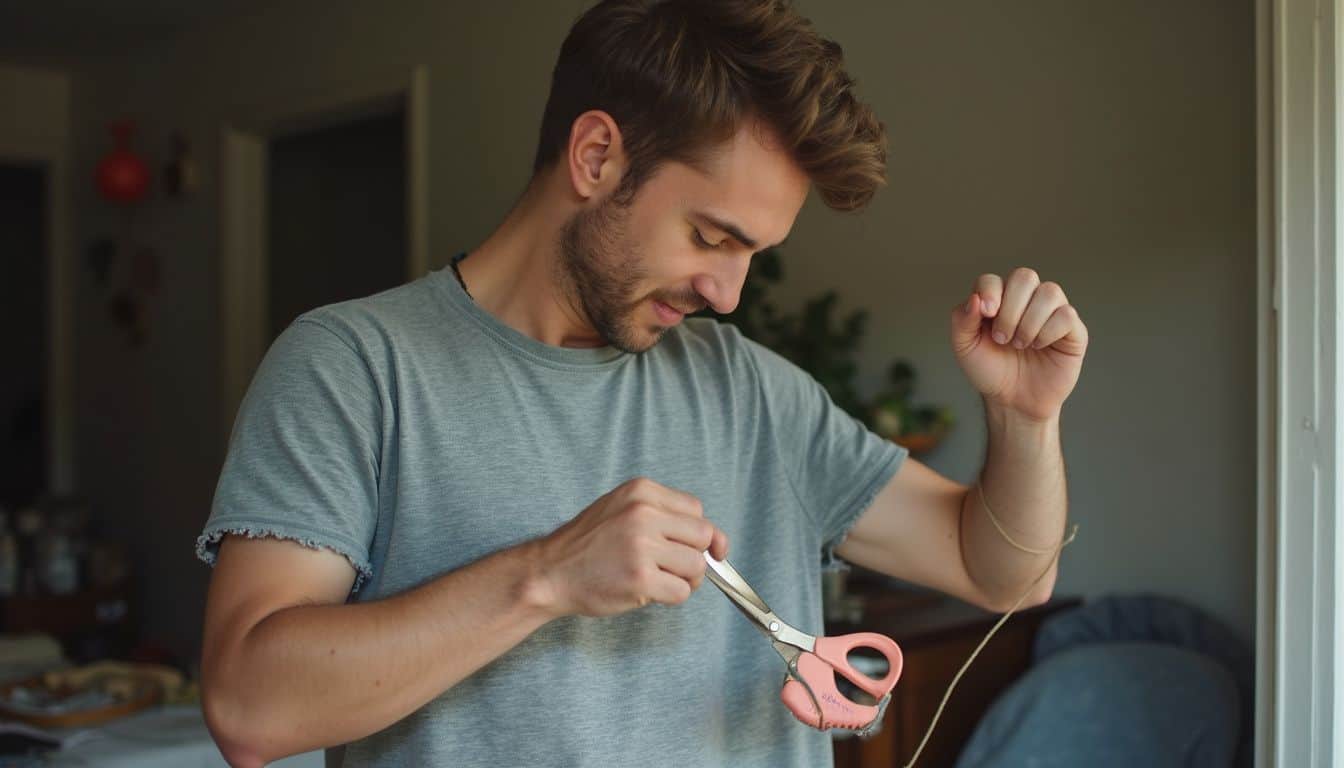
Changing up the sleeves on a shirt can completely alter its vibe. You don’t need a sewing machine or any fancy skills to get started.
- For a classic tank top: Use sharp fabric scissors to cut the sleeves off a t-shirt right along the seam for a clean look.
- For a raw-edge muscle tee: Cut the sleeves off further inside the seam to create larger armholes. The unfinished edge is part of the style, which has been a popular trend since 2023.
- To prevent fraying without sewing: If you prefer a neat finish, you can use iron-on hemming tape, like HeatnBond Hem Tape, to fold and secure the edge.
- To add new sleeves: You can attach sleeves from another shirt using fabric glue or by sewing them on. Just line up the armholes and use a basic straight stitch.
- For a punk-inspired look: Some guys use safety pins to temporarily attach or modify sleeves for an edgy style that doesn’t require any permanent changes.
How can I change necklines or hemlines at home?
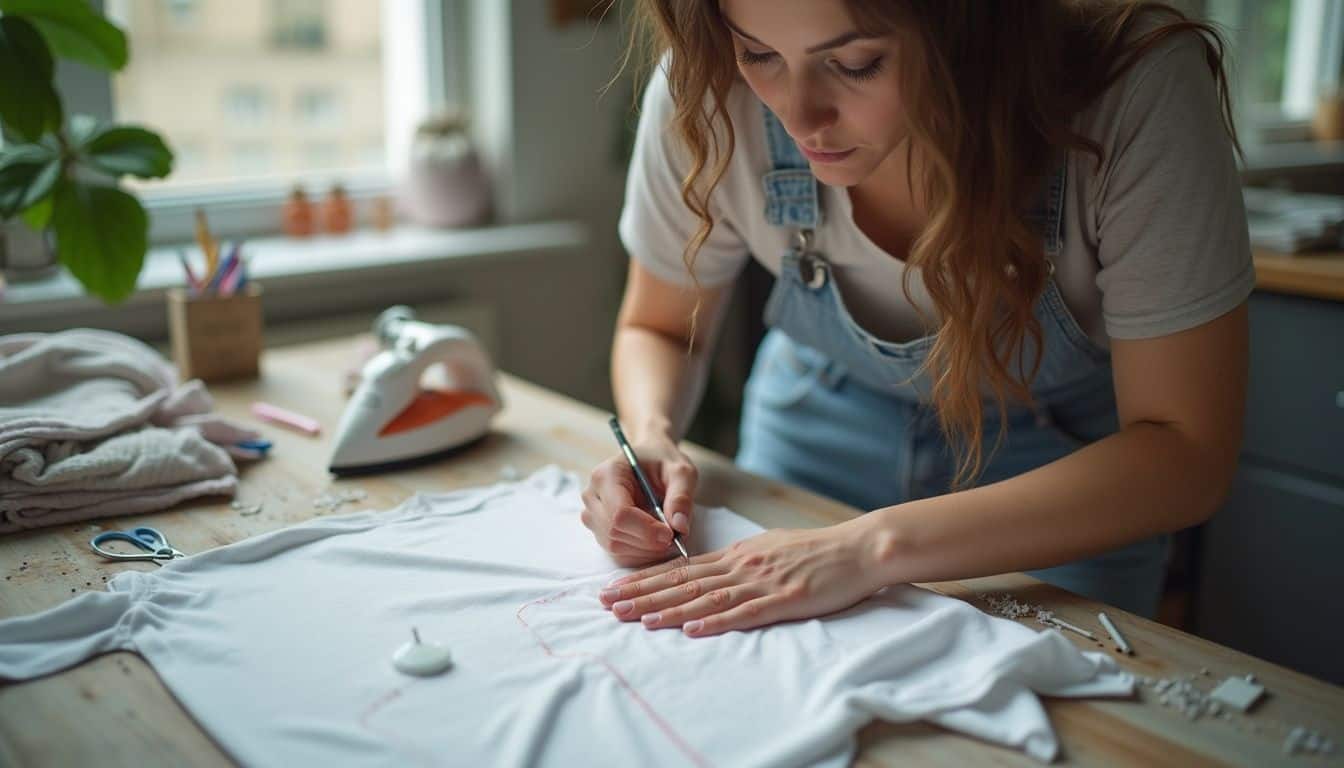
Altering the neckline or hemline of a shirt or pair of pants is another easy way to get a fresh look. All you need are a few basic tools and a little patience.
- Measure and mark carefully. Use a measuring tape and tailor’s chalk to mark your new line. This is the most important step to avoid a crooked result.
- Use sharp fabric scissors. Just like with cropping a shirt, good scissors are key to getting a clean, professional-looking cut.
- Create a V-neck. Find the center of the collar and cut a straight line down. Then, cut diagonally from the end of that line up to the shoulder seams on both sides.
- For an off-the-shoulder look: Cut a wide U-shape from shoulder to shoulder, removing the collar.
- Hem it without a sewing machine. For t-shirts or other lightweight fabrics, you can use iron-on hem tape for a quick and easy no-sew hem.
- Go for a raw edge. On cotton jersey or denim, you can just cut the hem and leave it. Pulling on the fabric a bit will encourage it to roll or fray slightly for a relaxed vibe.
- Use bias tape for a clean finish. For necklines, sewing on bias tape is a great way to create a smooth, comfortable, and professional-looking edge.
How do I create ripped or distressed clothing styles?

If your jeans are looking a little too perfect, distressing them can add a lot of character and style.
Here are a few ways to get that worn-in look:
- Use sandpaper or a cheese grater. For a faded, naturally worn look, rub sandpaper or a cheese grater on the areas you want to distress, like the knees and thighs.
- Make small cuts with scissors. Use sharp fabric scissors to make small horizontal cuts. For a classic ripped-knee look, make a few slits and then pull at the threads with tweezers to fray the edges.
- Try a Dremel tool for more control. For a more advanced technique, a Dremel with a sanding bit can be used to carefully skim the surface of the denim, exposing the white horizontal threads without creating a huge hole. Just be sure to practice on an old pair first.
- Use a bleach pen for highlights. After you’ve created some rips, you can use a bleach pen to add some subtle white streaks around the distressed areas for extra detail.
- Wash after distressing. Tossing your newly distressed item in the washing machine will help the edges fray naturally and make the whole look feel more authentic.
Creative Techniques for Customization
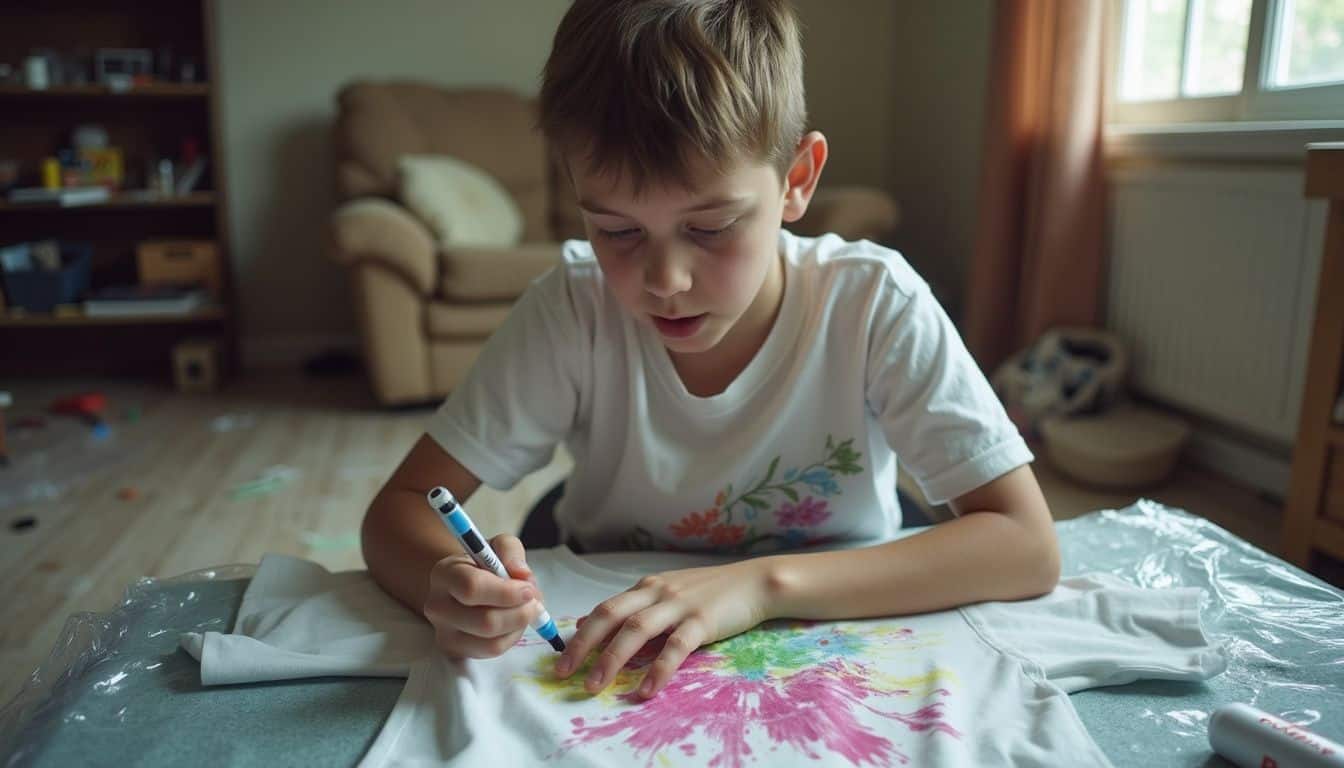
If you’re ready to get a little more creative, techniques like tie-dye, bleaching, and heat printing can take your custom clothing to the next level.
How can bleaching and dyeing change my clothes?
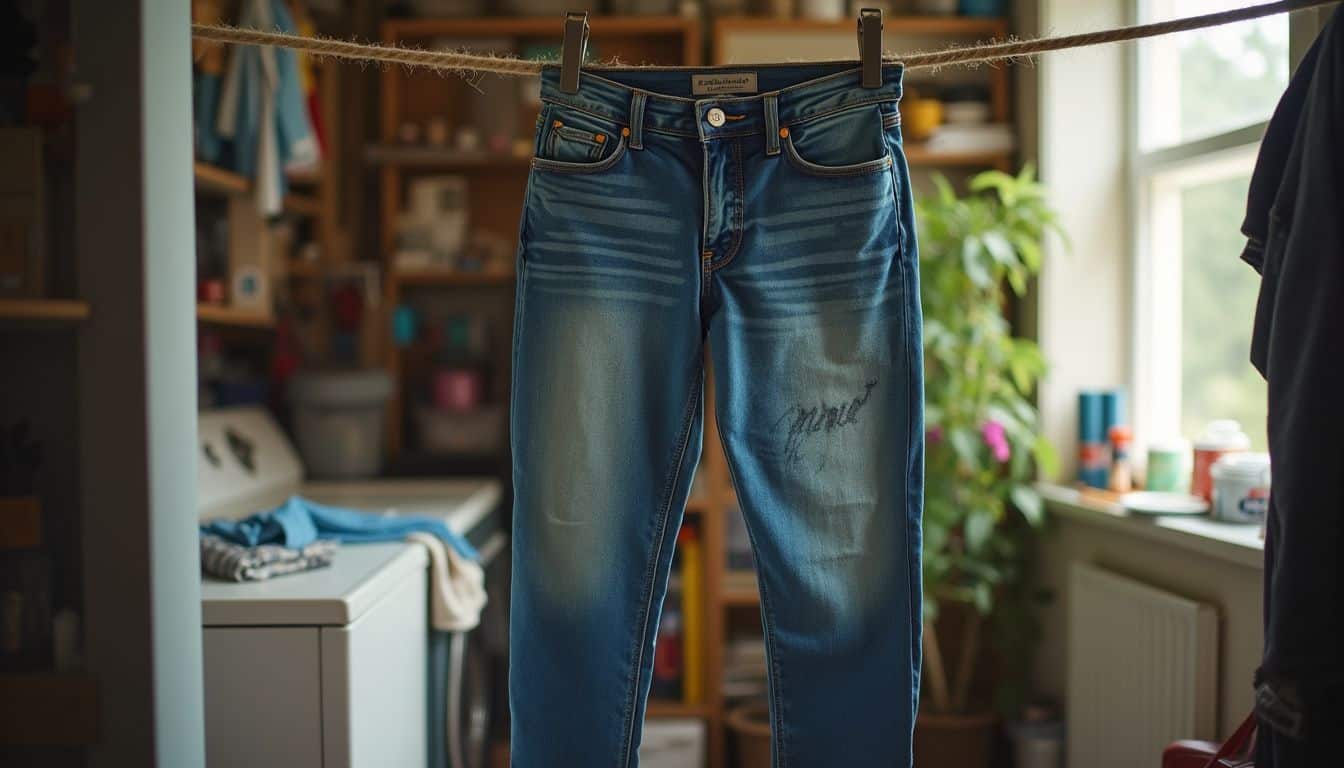
Bleaching and dyeing can completely transform boring clothes into something unique. These are both really popular and easy ways to show off your personal style.
A 2023 survey showed that 40% of men under 30 had tried bleaching or dyeing their clothes, with styles like reverse tie-dye and splatter effects being top choices.
For dyeing, brands like Rit and Tulip offer easy-to-use kits that come with everything you need. For the most vibrant, long-lasting colors on natural fabrics like cotton, many serious DIYers prefer fiber-reactive dyes like those from Dharma Trading Co.
Bleach dyeing, or reverse tie-dye, is also a great option. It works best on dark-colored cotton clothes. You can create patterns by twisting the fabric with rubber bands and then spraying it with a diluted bleach solution. Just be sure to work in a well-ventilated area and rinse the garment thoroughly with cold water after a few minutes to stop the bleaching process.
What are easy methods to create cut-outs in fabric?
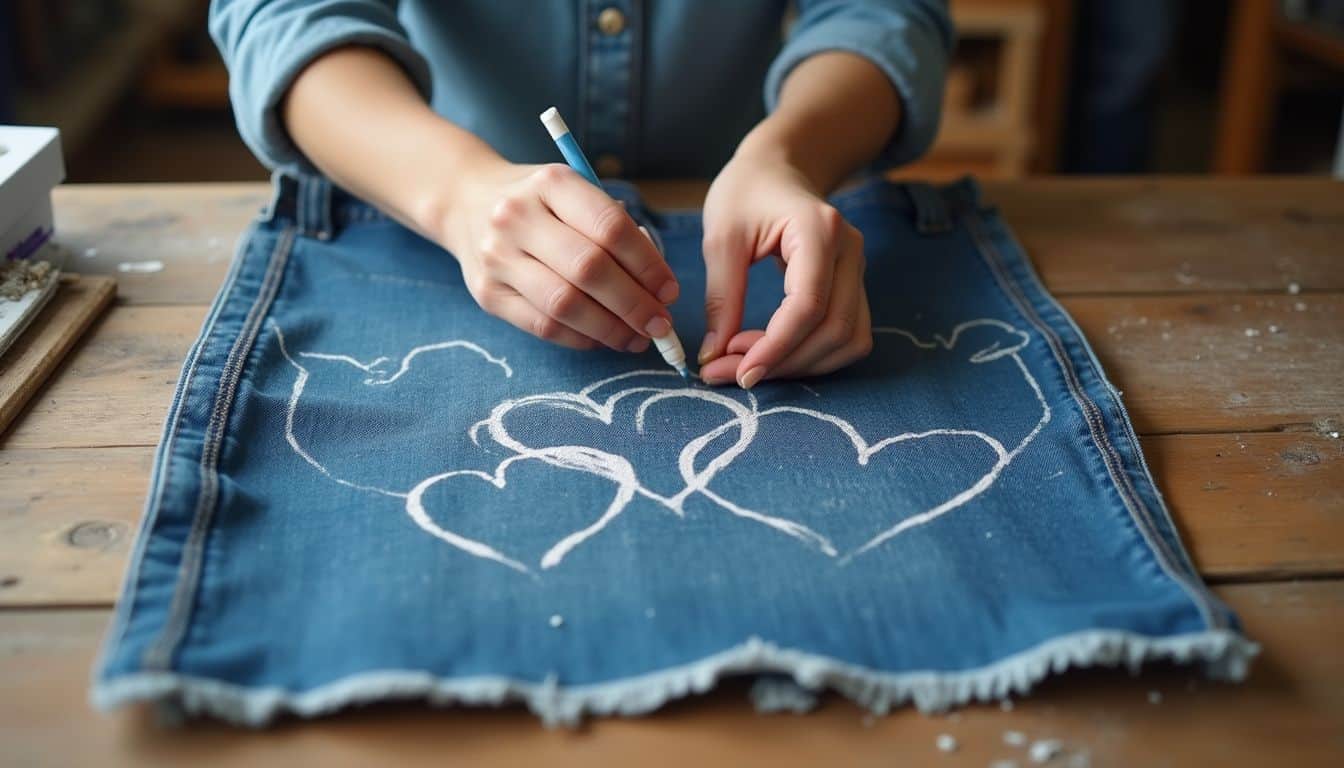
Adding cut-outs can give an edgy, interesting look to a plain piece of clothing. You can try out a few of these simple methods this weekend.
- Draw your shape first. Use tailor’s chalk to outline the shape you want to cut, whether it’s a simple geometric design or something more complex.
- Create a slashed back. For a classic rock-and-roll vibe, lay a t-shirt flat and cut horizontal strips across the back.
- Add lace inserts. Cut a shape out of the back or sleeves of a shirt and then sew or use fabric glue to attach a piece of lace behind the opening for a cool contrast.
- Use fusible interfacing for clean edges. To keep the edges of your cut-outs from rolling or fraying, you can iron on a thin strip of fusible interfacing before finishing the edge.
- Weave ribbons through slits. Cut narrow, parallel slits in a shirt and then weave a ribbon or strip of contrasting fabric through them for a unique look.
How do I use heat printing to add designs?
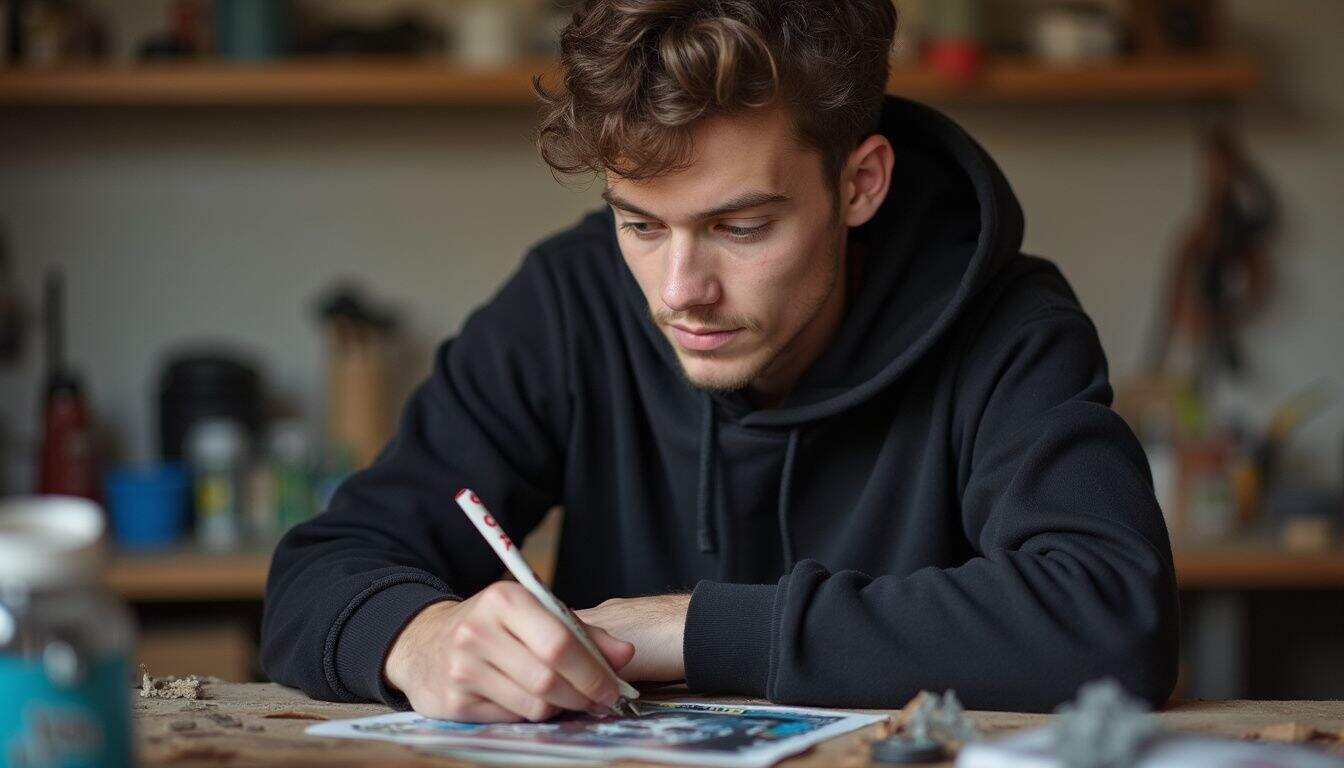
For really sharp, professional-looking graphics, heat printing with heat transfer vinyl (HTV) is the way to go. It lets you add logos, text, and custom art to almost any piece of clothing.
A portable heat press like the Cricut EasyPress 2 makes this process incredibly simple. It gives you even heat and pressure, ensuring your design will last through dozens of washes without peeling.
Here’s the basic process:
- Choose your vinyl. A popular and user-friendly brand is Siser EasyWeed, which comes in a huge variety of colors and finishes.
- Cut your design. You’ll need a cutting machine like a Cricut or Silhouette to cut your design out of the vinyl. Remember to mirror the image before cutting.
- Weed the excess vinyl. This just means removing all the little pieces of vinyl that aren’t part of your design.
- Press the design. Set your heat press to the recommended temperature for your fabric, usually around 305°F for cotton. Preheat the garment for a few seconds, position your design, and then press firmly for about 10-15 seconds.
This method is perfect for adding numbers to sports jerseys, logos to hoodies, or any other custom graphic you can think of.
Structural Modifications

You can also make simple structural changes to your clothes, like adding pockets or zippers. Even small adjustments to the fit can make a huge difference.
How do I add zippers or pockets to clothing?
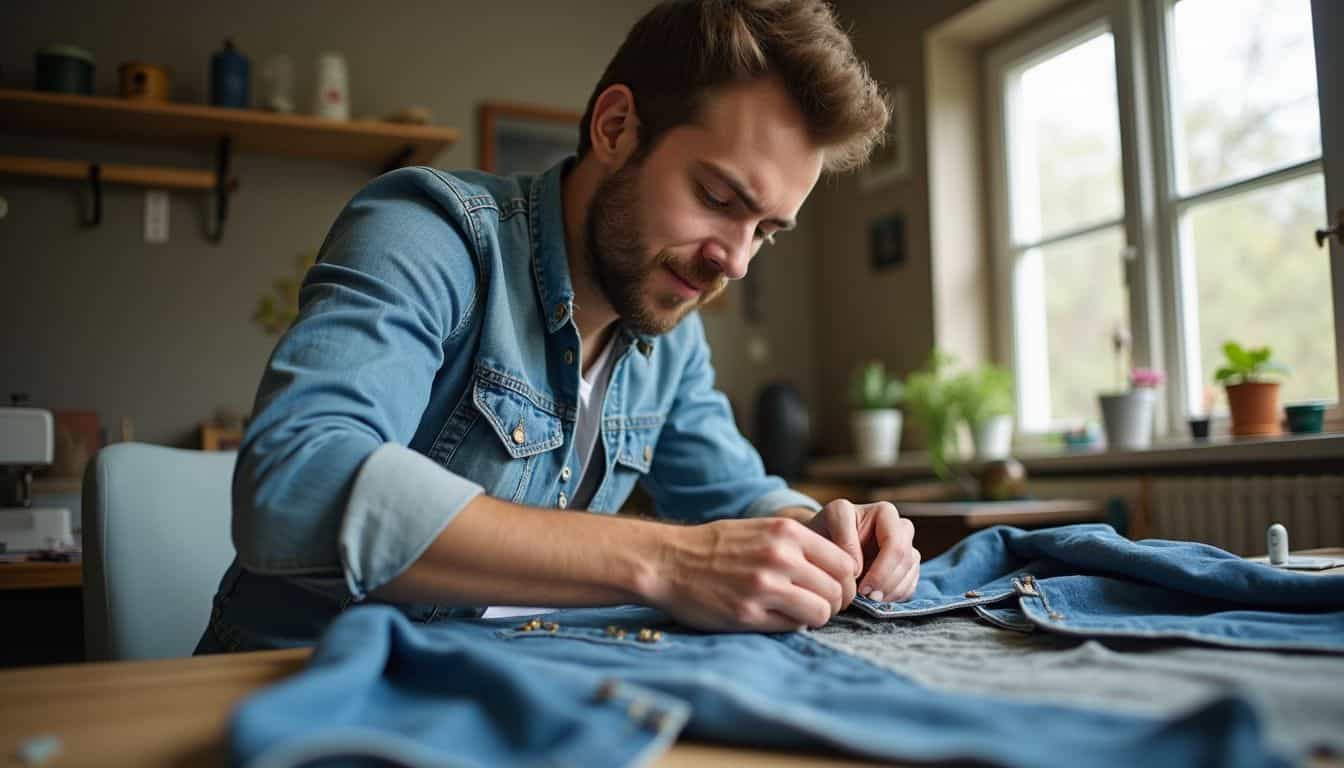
Adding functional elements like zippers and pockets can make your clothes more practical and stylish. It’s a great way to make a piece truly your own.
- Add a zipper to a seam. Use a seam ripper to open up a side seam on a shirt or the leg seam on a pair of jeans. Pin a zipper from a reliable brand like YKK in place and sew it in.
- Patch pockets are the easiest. Just cut a square or rectangle of fabric, fold the edges under, and sew it onto the front of a shirt or jacket. Using a contrasting fabric can create a cool visual pop.
- Try hidden inseam pockets. These are a bit more advanced but create a very clean look. They are sewn into the side seam of a pair of pants or shorts.
- Kangaroo pockets are great for hoodies. This large, single pocket on the front of a pullover is easy to add and gives it that classic, relaxed vibe.
- Get your placement right. Before sewing, always pin the pocket in place and try the garment on to make sure you like where it sits. Use tailor’s chalk to mark the position so it’s perfectly even.
- Use a walking foot for thick fabrics. If you’re sewing a pocket onto a denim or canvas jacket, a walking foot attachment for your sewing machine will help prevent the fabric from bunching up.
What are tips for altering fit to improve appearance?
Sometimes, the biggest upgrade you can make to a piece of clothing has nothing to do with decoration. A good fit can make an inexpensive shirt look custom-made.
Here are a few simple alterations you can make:
- Take in the side seams. If a shirt is too boxy, turning it inside out and sewing a new seam an inch or so in from the original can create a much more flattering, slim fit.
- Taper the legs of your pants. For a more modern look, you can take in the seam of your pants from the knee down.
- Shorten your sleeves or hem. This is one of the easiest fixes. Just fold the fabric up to your desired length, press it with an iron, and secure it with a simple stitch or hem tape.
- Add darts to the back of a shirt. Two simple vertical darts in the back of a button-up shirt can eliminate that billowy, untucked look and give it a much cleaner silhouette.
Pro-Tip: Always wash and dry a garment before you alter it. You don’t want to spend time getting the perfect fit only to have it shrink in the laundry.
How can I combine fabrics to create unique styles?
Mixing different fabrics is a great way to add texture and character to your clothes. It’s an easy way to make any outfit stand out.
Try these ideas:
- Start with a neutral base. Cotton and denim are great base fabrics because they pair well with almost anything.
- Add contrasting panels. Sew corduroy elbow patches onto a denim jacket or add leather shoulder panels to a wool sweater.
- Mix textures. Combine something rugged, like canvas, with something smoother, like a soft jersey knit. This contrast in textures can be really eye-catching.
- Stick to a simple color palette. When you’re mixing multiple textures, keeping the colors muted or in the same family helps the final piece look intentional and balanced, not chaotic.
- Layer small pieces. You don’t have to go big. Adding wool cuffs to the sleeves of a cotton shirt or a velvet collar to a jacket is a subtle way to experiment with this technique.
Tips for Beginners

Getting started is easy. Grab some old tees or jeans and a basic sewing kit. It’s always a good idea to test out your tools and techniques on something you don’t care about before you start on your favorite clothes.
Why should I practice on old garments first?
Old clothes are the perfect practice canvas. They let you try out fabric paint, test an iron-on patch, or practice your sewing without the pressure of ruining your favorite shirt.
Working on old pieces helps you figure out what styles you actually like and what techniques work best for you. I can’t tell you how many times a thrift store t-shirt has turned into one of my favorite things to wear after a little experimenting.
Plus, repurposing old clothes is a great way to be more sustainable and save some money.
What tools and materials are best for beginners?
You don’t need a professional studio to start customizing your clothes. With a few basic tools, you can get much cleaner and more durable results.
Here’s a good starter list:
- Sharp fabric scissors: This is non-negotiable. A good pair of scissors made for fabric will give you clean cuts, while regular scissors will just frustrate you.
- A basic sewing kit: Get one with needles, a few colors of thread, pins, and a seam ripper. A seam ripper is your best friend for fixing mistakes.
- Fabric paint: Look for a heat-set paint that will be permanent after you iron it.
- Iron-on transfer paper: This lets you print any design from your computer and iron it right onto a shirt.
- An iron: You’ll need this for setting paint, applying transfers and patches, and pressing seams.
- Measuring tape: Guessing is the fastest way to get a crooked result. Always measure.
Using these simple tools can help you save money on clothes and give you more cash for your next project.
How can I experiment with small changes safely?
With the right tools in hand, you can start making small tweaks to your clothes. The key is to start with low-risk experiments on items you don’t mind messing up.
I once tried cutting the sleeves off a thrift store shirt before attempting it on one of my regular tees. It was a smart move because my first try was a disaster.
Start with simple things: crop a shirt by just an inch, swap out the buttons on a jacket, or pin some patches from a craft store like Joann Fabrics on before you commit to sewing or ironing them down. These small changes will help you build confidence and figure out what you like without any major regrets.
How Will Clothing Customization Change in 2025?

Looking ahead, custom clothing is only going to get bigger and more accessible.
We’re already seeing trends like heavyweight corduroy pants and versatile day-to-night tops shaping men’s fashion for 2025. What’s cool is that customizing these trends at home is getting easier than ever.
Tools like Canva now let you design your own graphics for merch, which simplifies the whole process of creating personal designs. At the same time, there’s a huge push for sustainability in fashion. Programs like “One Print, One Tree” are connecting custom clothing purchases with environmental goals like biodiversity.
Ultimately, the future of custom clothing is about putting more control in your hands while also supporting a greener way of thinking about what we wear.
People Also Ask
What are some easy ways to customize clothing at home?
You can use Tulip fabric paint for custom graphics or find unique iron-on patches on Etsy. Try distressing a pair of jeans with sandpaper for a worn-in look or swap out the generic buttons on a jacket.
Do I need sewing skills to refresh my wardrobe?
No, you can easily make alterations without stitching by using no-sew products like iron-on hem tape or Aleene’s Fabric Fusion glue.
How can I make my clothes stand out without spending much money?
Use stencils with a bleach pen to create sharp graphics on dark t-shirts for a couple of dollars. Another simple trick is swapping the basic drawstring on a hoodie for a colored paracord or leather lace.
Will customizing my clothes help me express personal style?
Absolutely, because every change makes a piece uniquely yours in a way that off-the-rack clothing can’t. Even small details, like swapping the laces on your sneakers or adding an enamel pin to a jacket, create a personal look.
References
https://www.lemon8-app.com/@bujellastyles/7447991376521724462?region=us
https://scalablepress.com/blog/beginners-guide-how-to-screen-print-on-clothes/
https://www.thestudio.com/blog/how-to-iron-patches-on-clothes-step-by-step-guide/
https://www.gathered.how/needlework/embroidery/embroidery-on-clothes (2023-05-17)
https://www.wikihow.com/Customize-Clothes
https://www.lemon8-app.com/stephsupernova/7269522117530501637?region=us
https://www.buzzfeed.com/jemimaskelley/restyle-old-clothes-alteration-sewing (2018-11-16)
https://www.wikihow.com/Reuse-Old-Clothes
https://www.onlineclothingstudy.com/2024/04/transform-your-wardrobe-clothing-alteration.html (2024-04-18)
https://www.lemon8-app.com/experience/bleach-dye-pattern-clothes?region=us (2025-05-13)
https://www.create-enjoy.com/2014/05/diy-cutout-back-dress-tutorial.html
https://www.deesclothingglobal.com/revamp-your-wardrobe-tips-to-turn-old-clothes-into-something-new/
https://logounlimited.com/clothing-heat-press-a-comprehensive-guide-to-ideal-techniques-and-tips/ (2024-12-18)
https://www.lemon8-app.com/lemon11371580208/7226550720081117701?region=us
https://www.facebook.com/groups/2595664814092384/posts/4266623653663150/
https://shiragill.substack.com/p/how-to-refresh-your-style-without
https://www.masterclass.com/articles/how-to-create-outfits-by-mixing-and-matching-clothing-textures
https://www.vogue.com/article/vogue-wardrobe-essentials-guide (2025-09-12)