
Men often neglect proactive health maintenance and avoid stepping foot in a men’s health clinic, even though your testosterone naturally dips between ages 30-40. If your truck developed a harsh metallic rattle in the front axle, you wouldn’t just turn up the radio and plan to address it in five years when the wheel flies off on the highway. Yet, most guys do exactly that when they’re trying to figure out how to stay healthy. We run our bodies like high-mileage machinery, ignoring bad sleep, chronic brain fog, and creaking joints until a catastrophic failure forces us into an emergency room.
Guys at places like Houston Methodist point out that the massive physical and financial costs you’ll face later are almost always because you waited too long to act.
Key Takeaways
Aim for at least 150 minutes of hybrid training each week. Mix resistance work with some cardio to burn belly fat and keep your heart strong.
Keep your daily added sugar under 36 grams. Check the labels on condiments, sports drinks, and cereals—that’s where it hides.
Get PSA screenings based on your personal risk. Start at 50 if you’re at average risk, 45 if you’re African-American or have a family history, and 40 if you’ve got multiple family members who’ve dealt with it.
Table of Contents
Monitor and Maintain Healthy Testosterone Levels
Testosterone isn’t a badge of masculinity; it’s a critical mechanical asset that regulates your baseline energy, daily focus, and muscle mass. As we clear the 30-to-40-year-old window, our bodies naturally hit a hormonal plateau and begin a progressive decline. While some decline is perfectly normal, this slide is heavily accelerated by carrying visceral belly fat, unmanaged type 2 diabetes, and poor lifestyle choices.
One of the quickest ways to crash your hormone production is through poor sleep. Sleep apnea and nocturnal hypoxia (low blood oxygen at night) disrupt the secretion of luteinizing hormone, which is the internal biological signal that tells your testes to produce testosterone in the morning. Sleep apnea and snoring are symptomatic of risks associated with low testosterone, which is often exacerbated by sleep apnea or obesity.
If you’re wondering if your testosterone is low, look for these signs:
- Persistent morning brain fog that caffeine can’t fix.
- Stubborn gut fat that refuses to budge despite dieting.
- A sudden drop in workspace focus and workout motivation.
- Sluggish recovery from minor physical tasks.
Plus, high stress floods your system with cortisol. It binds to the receptors in your testes, basically telling them to stop producing testosterone. It’s a chemical shut-off valve. If you think your levels are low, skip the mystery supplements.
See your doctor and get blood work done to see where you actually stand. Schedule a morning serum panel with your doctor to establish your actual baseline total and free testosterone markers.
Engage in Consistent Physical Activity
To keep your health in check, aim for at least 150 minutes of moderate activity each week. Splitting that into three days a week is an easy way to build a routine that actually fits your schedule, protects your heart, and keeps you moving well.
The key is mixing steady cardio with progressive resistance training. While jogging is fine for cardiovascular capacity, it does little to prevent the accumulation of deep, dangerous abdominal fat. Visceral fat wraps around your internal organs and is selectively down-regulated by resistance training, which protects your overall metabolic health.
Joint and Orthopedic Preservation for Men Over 30
If you’ve been away from the gym for years, jumping straight into heavy squats on cold knees is a recipe for a tendon tear. Focus on light eccentric training (the lowering phase of a lift) and progressive tendon loading to build up your physical armor. Joint preparation and slow, controlled movements will keep you out of the physical therapy clinic while your connective tissues catch up to your muscles.
Lowering Blood Pressure and Cholesterol via Compound Movements
Using compound movements—with bands, bodyweight, or free weights—forces your biggest muscles to clear glucose from your blood. This metabolic demand improves your insulin sensitivity, naturally lowering your blood pressure and resting cholesterol levels.
Meet Daily Protein Requirements
If you want to preserve your muscle mass and keep your metabolic furnace hot, protein is non-negotiable. Trying to track every single crumb in a complicated app is a fast track to burnout. Instead, simplify your nutrition by focusing on a direct protein target.
Aim for a range of 20 to 40 grams of protein per meal, keeping a target floor of 25 grams per meal as your baseline. This structure keeps you full, prevents late-night junk food cravings, and supports cellular repair.
When selecting your protein, skip the expensive, chemical-heavy isolates and stick to clean, whole foods. Focus on high-quality, lower-lipid profiles to protect your heart health. Excellent lean options include:
- Poultry, such as skinless chicken breast
- Pork tenderloin
- Fresh fish (like salmon or cod)
- Soy products and tofu
- Lentils and black beans
Manage Weight Via the Mediterranean Diet
Adopting a Mediterranean diet, characterized by whole foods and healthy lipids like extra virgin olive oil, wild-caught fish, and nuts, provides the anti-inflammatory nutrients needed to support cardiovascular function. It’s all about sticking to whole foods like fruits, veggies, whole grains, fish, and healthy fats to manage your weight and keep your waistline in check.
Your primary focus should be on reducing your waistline circumference rather than obsessing over the scale. Visceral fat is the firm, hard fat behind your abdominal wall—the classic “beer gut.” It sits there, acting as an active, independent endocrine organ. This dangerous fat secretes inflammatory cytokines (like IL-6 and TNF-alpha) and activates the aromatase enzyme, which actively converts your healthy testosterone into estrogen.
To protect your hormones, try to keep your waist-to-height ratio under 0.5. For example, if you’re six feet tall (72 inches), your waistline measured at the navel should be under 36 inches.
Understand Your Body Type
Your somatotype is a way to manage your physical expectations and set realistic dietary goals. There are three general body categories:
- Ecto-morphs: Naturally lean, fast metabolisms, struggle to put on muscle.
- Meso-morphs: Naturally muscular, wider shoulders, responsive to weight training.
- Endo-morphs: Wider-framed, slower metabolisms, prone to storing body fat.
If you’re a stocky endomorph, forcing yourself into a high-carb endurance runner’s diet will likely leave you feeling exhausted and storing extra fat. Work with your natural frame, not against it.
Limit Added Sugars and Refined Carbohydrates
Consuming high amounts of refined grains and added sugars causes rapid spikes in insulin, which over time leads to metabolic syndrome and endocrine suppression. Refined carbs can decrease testosterone production almost immediately, making it a direct trade-off between a sweet treat and your basic energy levels.
The American Heart Association (AHA) recommends a strict daily limit of 36 grams of added sugar for men. Most guys blow past this ceiling before lunch without even realizing it.
Be sure to check:
- Condiments: A couple of tablespoons of commercial barbecue sauce or ketchup can hold half of your daily allowance.
- Cereals: Even the box brands marketed as “heart-healthy” or “whole grain” are often packed with syrup.
- Energy and Sports Drinks: These are frequently loaded with sucrose to mask their chemical taste.
- Pre-made Salad Dressings: Often use sugar as a cheap thickener and flavor enhancer.
Remedy Sedentary Work and Life Habits
Even if you train hard in the gym three days a week, sitting in an office chair for eight hours straight will slowly damage your vascular health. Prolonged, unbroken sitting downregulates an enzyme called lipoprotein lipase (LPL) in your skeletal muscles. When LPL activity drops, your body’s ability to clear circulating triglycerides from your blood stalls, leaving fatty acids to pool in your bloodstream.
You need to break up the sedentary rot with simple, low-barrier physical movements:
- Set a silent 50-minute workstation timer to remind you to stand up.
- Take a quick two-minute walk around the office or house every hour.
- Take the stairs whenever the option is available.
- Spend five minutes doing basic lower-back and hip stretches before bed to work out the joint stiffness from sitting.
Optimize Hydration and Alcohol Consumption
Chronic, mild dehydration is a sneaky tax on your cardiovascular health. When you don’t drink enough water, your overall blood plasma volume drops, making your blood more viscous. To move this thicker blood through your vascular system, your heart is forced to pump faster and harder, which steadily raises your resting blood pressure.
Make it a daily habit to drink 13 cups of water (about 3 liters). It’s an easy way to beat that sluggish afternoon feeling and ease joint stiffness.
However, you should understand the physical trade-off: alcohol severely degrades your deep REM sleep. Because your body restores its natural hormone levels during deep sleep, even a couple of evening drinks can blunt your recovery and lower your testosterone production the following morning. Keep the drinks occasional to keep your hormones functioning.
Prioritize Fiber Intake
Soluble fiber acts like a mechanical broom for your cardiovascular system. In your digestive tract, this fiber binds directly to bile acids, which are rich in cholesterol. Once bound, they are excreted, forcing your liver to pull circulating low-density lipoprotein (LDL) cholesterol out of your bloodstream to manufacture replacement bile.
To get this natural blood-pressure and cholesterol-clearing benefit, aim for a clinical daily range of 25 to 38 grams of dietary fiber. Focus on whole-food options rather than mixing dry fiber powders into your morning drinks. Excellent sources include:
- Whole grains (like oats and barley)
- Raw nuts (almonds, walnuts)
- Vegetables like broccoli and Brussels sprouts
- Fresh berries and apples
A practical warning: If you increase your fiber intake, you must scale your water consumption alongside it. Adding dry bulk to your digestive tract without extra water is a direct ticket to painful constipation and bloating.
Identify and Rectify Exercise Barriers
If you have to drive thirty minutes to a crowded gym after a long day, you’ll eventually just stop going.
Remove the mental hurdles before you’re tired and unmotivated. Stash a clean gym bag with a change of clothes and a pair of running shoes in your car trunk or office cabinet, making it easy to tap into the benefits of running for men. Having your gear in your direct line of sight removes the excuse of having to go home first, where the comfort of the couch makes leaving again nearly impossible. If time is tight, utilize bodyweight training or resistance bands to meet the recommended minimum 150 minutes per week of activity.
Incorporate Magnesium and Zinc
While dietary supplements are secondary to high-quality, whole-food nutrition, ensuring you aren’t deficient in key minerals is critical for your endocrine health. Utilizing dietary magnesium and zinc supports natural testosterone production, hair health, metabolic function, and your immune system.
A severe zinc deficiency acts as a direct physical roadblock to your pituitary gland’s signaling pathways. It halts the hypothalamic-pituitary-gonadal (HPG) axis, preventing the downstream chemical signals required for your body to synthesize testosterone.
Before buying expensive mineral pill formulations, focus on adding these nutrient-dense foods to your diet:
- Pumpkin Seeds: A rich, cheap source of zinc and magnesium.
- Almonds and Black Beans: Packed with magnesium to support muscle recovery and sleep quality.
- Seafood and Lean Beef: Provide highly bioavailable zinc to keep your hormonal signaling active.
Consider Creatine Supplementation
Creatine monohydrate is one of the most thoroughly researched and scientifically validated sports supplements available. It works by donating a phosphate group to rapidly regenerate adenosine triphosphate (ATP), the primary energy currency of your cells, which supports muscle recovery and explosive strength.
Emerging clinical research indicates that creatine’s cellular energy support extends beyond muscle tissue. It also aids brain glial cells, helping to protect cognitive performance and working memory during periods of acute sleep deprivation.
Stick to 5 grams of creatine a day. Any more is just a waste of money; your muscles can only hold so much. Because creatine can alter creatinine levels—a biomarker used to estimate kidney filtration rates—always check in with your primary care physician to verify healthy renal performance before starting a daily routine.
Choose Healthy Unsaturated Fats
Your Leydig cells in the testes require dietary cholesterol to convert it into pregnenolone, which is the essential chemical master-building block for all testosterone synthesis. If you starve your body of dietary fat, you are effectively cutting off the raw material your liver needs to keep your hormones balanced.
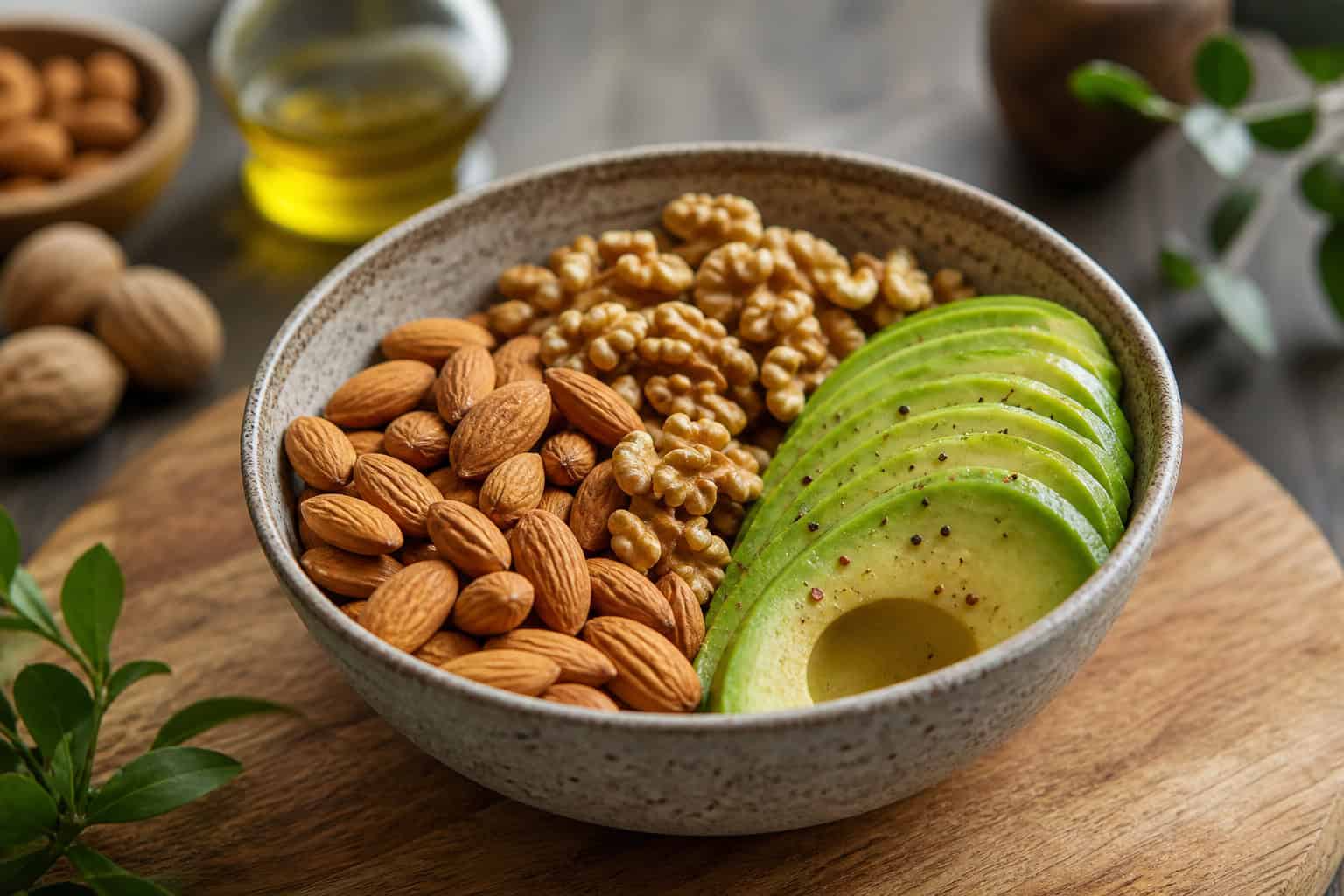
Focus on getting clean, unsaturated lipids that support your cardiovascular health. Ditch processed seed oils and get your fats from high-quality, whole-food sources:
- Extra virgin olive oil
- Avocados
- Wild-caught salmon
- Handfuls of raw almonds and walnuts
Manage Stress and Cortisol
When your brain perceives chronic lifestyle stress, it continually releases cortisol. Elevated cortisol binds directly to the glucocorticoid receptors on the Leydig cells in your testes, flatly blocking their sensitivity to luteinizing hormone and halting testosterone synthesis. It is a direct mechanical shutoff valve.
To keep your hormonal engine from overheating, build a few minutes of daily nervous system decompression into your schedule. Taking five to ten minutes of slow, nasal diaphragmatic breathing (such as box breathing) or practicing Non-Sleep Deep Rest (NSDR) instantly shifts your nervous system out of a sympathetic “fight-or-flight” state and back into a restorative parasympathetic state.
Practice Pelvic Floor Exercises (Kegels)
Pelvic floor training is associated with women’s health, but strengthening these muscles is highly practical for men’s long-term plumbing and urinary health. Strengthening the pubococcygeus muscle supports your overall urinary pathways, keeping your pelvic floor tight and functionally stable as you age.
This is about basic hydraulic control. Keeping these core support muscles strong reduces sudden urinary urgency and prevents the annoying frequent bathroom trips that ruin your sleep cycles middle of the night.
To build a routine, perform 3 sets of 10 to 15 slow contractions (squeezing the muscles you would use to stop your urine flow mid-stream) and hold each contraction for 5 seconds. Do this three days a week while sitting at your desk or driving; no one will even know you’re doing them.
Maintain Regular Medical Checkups
Your annual physical is your yearly dashboard run-through to check for systemic warnings.
Your annual visit should include a basic blood panel to check your metabolic health, blood lipids, and hormone levels. It’s also the time to answer a key clinical concern: When should I see a doctor for potential hormonal issues? If you’re experiencing chronic fatigue, sudden erectile dysfunction, or rapid muscle loss despite consistent exercise, don’t wait for your scheduled appointment. Schedule a targeted visit to check your endocrine health.
Prostate health is another non-negotiable benchmark, as it remains the second most common cancer risk for men. Rather than relying on a generic age-50 rule, customize your screening timeline based on personal risk profiling:
- Age 50: Initiate standard PSA screening if you are at average risk.
- Age 45: Start early if you are African-American or have a first-degree relative (father or brother) diagnosed with prostate cancer, as aggregate risk for aggressive cases is significantly higher in these groups.
- Age 40: Start screening early if you have multiple close family members diagnosed with prostate cancer.
Frequently Asked Questions
What is the 30 30 30 rule for men?
This term refers to a structured approach to metabolic health that involves consistent physical activity and dietary management. Specifically, it emphasizes dividing 150 minutes of weekly exercise into three sessions, consuming at least 30 grams of protein per meal, and maintaining disciplined heart-rate and weight management markers.
How do I improve my health as a man?
Focus on the basics of biological maintenance: prioritize whole-food nutrition with a focus on protein and fiber, manage stress to control cortisol, and engage in hybrid training that blends cardio with resistance work. You must also treat your body like machinery by attending regular medical checkups specifically targeting hormone panels and prostate screenings based on your personal risk profile.
Do I really need to worry about visceral fat if I’m not overweight?
Yes, even if your weight seems stable, visceral fat acts as an independent endocrine organ. It secretes inflammatory chemicals and enzymes that actively convert your natural testosterone into estrogen, meaning it disrupts your hormonal chemistry regardless of what the scale shows.
Can I just use supplements to fix low testosterone?
No, supplements are not a substitute for addressing the root causes like sleep quality, stress levels, and poor nutrition. If you suspect low testosterone, skip the mystery pills and get a morning serum blood panel from your doctor to establish your actual baseline hormones.
Is 150 minutes of exercise per week actually enough?
Yes, 150 minutes of moderate activity is a effective baseline for heart health and body composition, provided it’s a mix of cardio and resistance training. The key is consistency; splitting this into three sessions per week helps prevent the metabolic problems caused by prolonged sedentary time, especially for those working office jobs.
Why does my waist size matter more than how much I weigh?
The scale fails to account for where your fat is stored, and the fat behind your abdominal wall is metabolically dangerous. A waist-to-height ratio above 0.5 indicates you are likely carrying visceral fat, which directly suppresses your hormone production and increases systemic inflammation.
What is the best way for a man to manage his prostate screening schedule?
Stop relying on a generic age-50 milestone and adjust based on your specific risk factors. Start at age 45 if you are African-American or have a first-degree relative with prostate cancer, and move that start date to age 40 if you have multiple family members with a history of the disease.