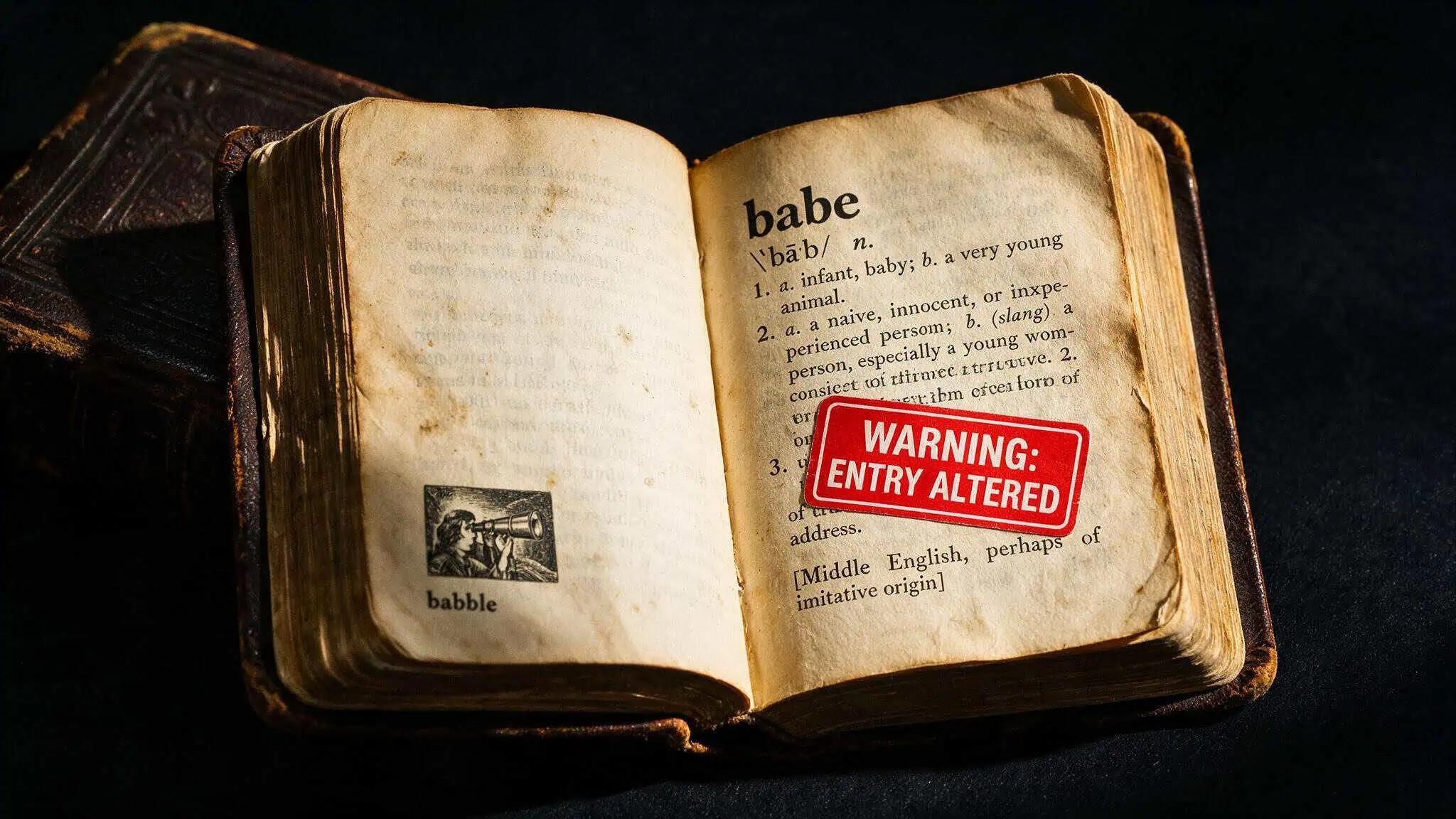
Urban Dictionary defines “hot babe” as “hot girl, very beautiful girl (woman).” That’s the straightforward definition. But the same term that gets a perfect 10/10 on a crowd-sourced slang site also comes with a warning label from major dictionaries. Here’s the straight answer on what it means, what the dictionaries say about it, and, more importantly, when you’re fine using it and when you’re better off keeping your mouth shut.
Key Takeaways
Urban Dictionary defines “hot babe” as “hot girl, very beautiful girl (woman),” a definition submitted by user Leonardus on December 29, 2007 and rated 10/10 by the community.
Britannica Dictionary says “babe” means a person considered sexually attractive, typically applied to young women, but explicitly warns it’s “very informal and sometimes considered offensive.”
The difference between playful and disrespectful comes down to relationship distance: calling a partner or close friend “babe” is normal; calling a stranger or acquaintance “babe” can easily piss them off.
Table of Contents
What Does “Hot Babe” Mean? A Straightforward Definition
The simplest answer is the one you already know. “Hot babe” means a hot girl, a very beautiful woman. That’s the definition Urban Dictionary user Leonardus posted back on December 29, 2007, and the community voted it a perfect 10/10. It’s not academic, it’s not complicated — it’s how people talk.

Pull up the Britannica Dictionary, and the definition reads the same: a person considered sexually attractive, typically applied to young women. Then comes the catch. Britannica marks the word as “very informal” and adds a note that it’s “sometimes considered offensive.” So the same term that gets a perfect score on a crowd-sourced slang site also comes with a warning label from a major dictionary.
“Hot babe” is a compliment that carries baggage. The rest of this article is about understanding that baggage so you can use the term — or decide not to, with your eyes open.
What the Dictionaries Really Say
The formal dictionaries and the user-generated ones don’t disagree on the definition. They disagree on how much risk you’re taking when you say it.
Britannica Dictionary is the most direct. Its sense 2a for “babe” is a person considered sexually attractive, typically applied to young women. Then the usage note kicks in: addressing someone you do not know well as “babe” may cause offense. It also describes the term as “very familiar in tone.” That’s a polite way of saying you don’t call your boss “babe,” and you probably shouldn’t call a stranger one either.
Dictionary.com goes further. It labels “babe” as “Sometimes Disparaging and Offensive” when used about a girl or woman. That’s not a casual heads-up — that’s an official classification from a major reference work based on the Random House dictionary. They’re not trying to be woke; they’re describing how the word actually lands in real conversations.
Then there’s Urban Dictionary. A quick search for what does hot babe mean urban dictionary reveals Leonardus’s 2007 entry is simple: “hot girl, very beautiful girl (woman).” No warnings. No caveats.
A 10/10 rating from the community. The Urban Dictionary store sells a “hot babe” mug priced at $32.95 — the term has become a commodity, a gag gift you can buy and laugh about.
The formal dictionaries describe the social risk. Urban Dictionary describes how people actually talk.
The Surprising History — How “Babe” Went from Infant to Slang
The word “babe” has been around for a long time. Like, long. It first entered English sometime between 1150 and 1200, with the original meaning of infant or baby. It was a nursery word. And that original meaning is still very much alive today.
The Literal Meaning Still in Use
You don’t have to look hard to find “babe” used in its original sense. A BBC article from June 28, 2025 talks about feeding a newborn: “especially if your babe is clusterfeeding.” That’s not slang — that’s a parent talking about their baby.
George R.R. Martin uses it the same way in A Clash of Kings. One character reflects on a battle: Still… mothers and children, he might have thought she would try to save the infant. Here, “babe” means a young child, not an attractive person. If you’re reading older texts or parenting articles, context is everything.
The Slang Sense Emerges
The slang meaning — “babe” as an attractive person, didn’t show up until 1915 to 1920. That’s a roughly 700-year gap. For most of the word’s history, “babe” meant a literal baby. The romantic and sexual meanings are a 20th-century invention.
“Hot babe” is a more recent intensification. “Hot” here comes from the same place as the Australian slang “hottie” — meaning a physically attractive person. Combine it with “babe,” and you’ve got a term that didn’t exist for most of the English language’s existence, but now you hear it everywhere.
Playful or Disrespectful? It Depends on the Relationship
When is it okay to call someone a “hot babe,” and when does it make you sound like an asshole?
Affectionate and Empowering Uses
When the relationship is close, the term is fine. A Salon article from June 24, 2026 includes the line, And I said, babe, I would if I could. That’s conversational. That’s between people who know each other. No edge, no offense.
The Los Angeles Times used it differently in a January 18, 2026 piece, talking about “everyone’s inner emo babe.” Here, it’s self-identification — describing a vibe or a phase, not a label directed at someone else. The article mentions Britney Spears, Charli XCX, Bad Bunny, and Paramore. It’s pop culture.
It’s playful. And it’s not directed at anyone.
When the term is used between partners or as self-description, it’s fine. The relationship is close. The tone is right.
Dismissive and Objectifying Uses
Flip the script, and it gets ugly fast. A MarketWatch article from June 3, 2026 quotes someone saying, Yep they aren’t compatible — the girl only wants a man with $$$. That’s sarcastic. That’s dismissive. It reduces someone to a type.
The dictionary warnings back this up. Britannica: addressing someone you do not know well as “babe” may cause offense. Dictionary.com: “disparaging and offensive” when used by a man addressing a woman he doesn’t know.
The same word feels affectionate between partners and degrading from a stranger. If you don’t know the person well enough to call them by their name, you shouldn’t call them “babe.”
Related Terms and Common Confusions
A few edge cases worth clearing up.
- “Hottie” — Originally Australian slang. Means a physically attractive person. This is where the “hot” in “hot babe” comes from.
- “Good looker” — More neutral. Can apply to people or things. Less loaded than “hot babe.”
- “Babe in the woods” — Completely different idiom. Means an innocent or inexperienced person. Not the same thing at all.
- “Miss Universe” — An annual international beauty pageant. The term is sometimes used as a synonym for an exceptionally beautiful woman, linking it to the same chain of attractiveness and beauty standards.
- The literal infant meaning — As we covered, “babe” still means baby in plenty of contexts. A BBC article about clusterfeeding and a George R.R. Martin novel about saving a child both use the word in its original sense. Context matters.
If you hear Gen Z using “baddie” or “snatched” instead of “hot babe,” that’s the latest evolution. The core idea — calling someone attractive, stays the same. The packaging changes.
Navigating the Term Today
Britannica Dictionary warns that using “babe” with someone you don’t know well may cause offense. Dictionary.com labels it “Sometimes Disparaging and Offensive.” That’s your reliable guide: don’t use it with people you don’t know well, recognize that it can land as disparaging even if you mean it as a compliment, and when in doubt, err on the side of caution.
The term has evolved from from a casual compliment to something that can be objectifying. That doesn’t mean you can never use it. It means you need to know your audience. If you’re talking to your partner and they’re fine with it, go ahead. If you’re talking to a stranger, a coworker, or someone you’ve met, pick a different word.