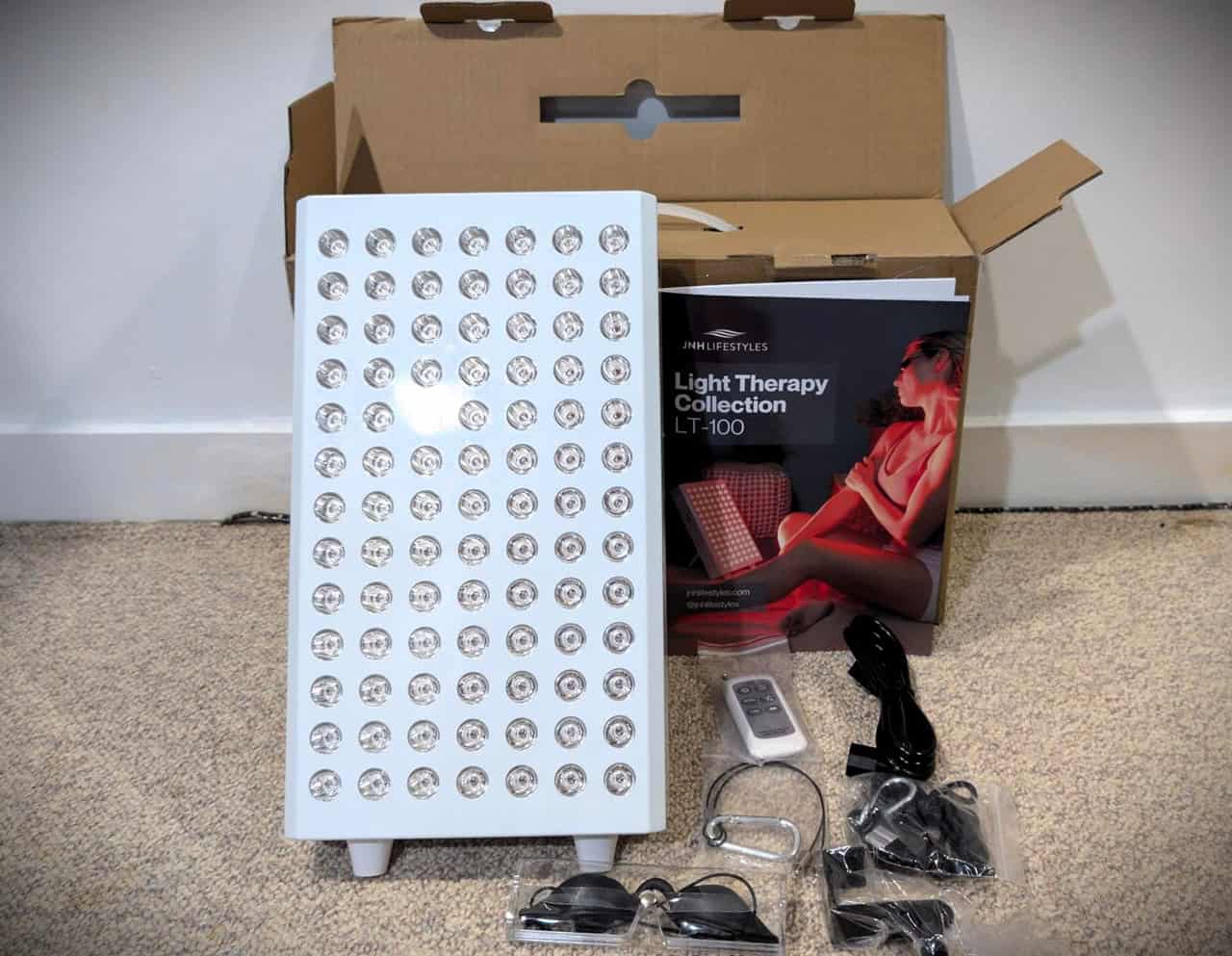
$799 buys a lot of things. A decent watch. A nice grill. Or, if the marketing photos are to be believed, a 15-inch slab of “medical-grade” red light that sits on your desk and supposedly recharges your cells, the fix, at least on paper, for the sore muscles and restless nights that drain your energy.
The HELIOS-300 Medical-Grade Desktop Red Light Therapy Panel from JNH Lifestyles is the product in question, and this review doesn’t take the product page’s word for anything. We read the spec sheet, found the dose table JNH published, and ran their own numbers against each other.
Two things came out of that exercise, and they shape everything below. First: the 455W figure on the spec sheet is an LED power class, not what the thing actually pulls from your wall. Real consumption is 135W, give or take 5%, which changes how you read the “high power” pitch. Second: JNH’s own copy describes this as a device for the face, neck, joints, and focused areas, explicitly “without the size or intensity of a full-body panel.” That’s honest of them, and it means whether this is worth $799 depends entirely on whether you want spot treatment or whole-body coverage.
Key Takeaways
The 455W on the spec sheet is an LED power class, not actual draw, the HELIOS-300 consumes 135W ±5% from the wall, roughly a bright incandescent bulb.
This is a targeted-area device by JNH’s own description: 15″ × 8.7″, 91 LEDs, 163 mW/cm² at 6 inches, great for face, neck, and joints, wrong for whole-body coverage.
The “Clinically Validated” badge names no certifying body, and the product page contains zero user reviews or third-party measurements, so verification is on you.
Table of Contents
HELIOS-300 review: the quick verdict
The HELIOS-300 is worth $799 when you want targeted treatment of specific areas like the face, neck, and joints, not whole-body coverage. If that’s your use case, the panel backs it up with real numbers: 163 mW/cm² of irradiance at 6 inches is a strong output figure for a footprint of 15″ × 8.7″ × 2.75″, and it draws 135W ±5% from the wall doing it.
Who it fits: the guy who wants to park a panel on a desk or shelf and hit specific spots. Face, knees, shoulders, whatever’s talking to you. Who should skip it: anyone imagining they’ll stand in front of it and bathe their whole body. JNH says it plainly on the page, and we’ll say it again later because it’s the single most important thing about this product.
The pros are straightforward. 163 mW/cm² of irradiance at 6 inches in a small footprint, independent red and near-infrared controls, goggles included so you’re not improvising eye protection, and a 3-year warranty in the box. The cons: limited coverage is baked into the design, $799 is premium money for a two-wavelength panel, and the “Clinically Validated” badge on the page names no certifying body, which we’ll dig into.
Dual-wavelength design: what 660 nm and 850 nm each do
Yes, red light therapy panels like the HELIOS-300 have real research behind their two wavelengths, 660 nm and 850 nm are the best-evidenced in the field, but the panel’s benefit claims are the manufacturer’s, and its “Clinically Validated” badge names no certifying body (for a balanced take on the pros and cons of red light therapy, see this overview). Those are two separate things, and keeping them separate is the whole game here.
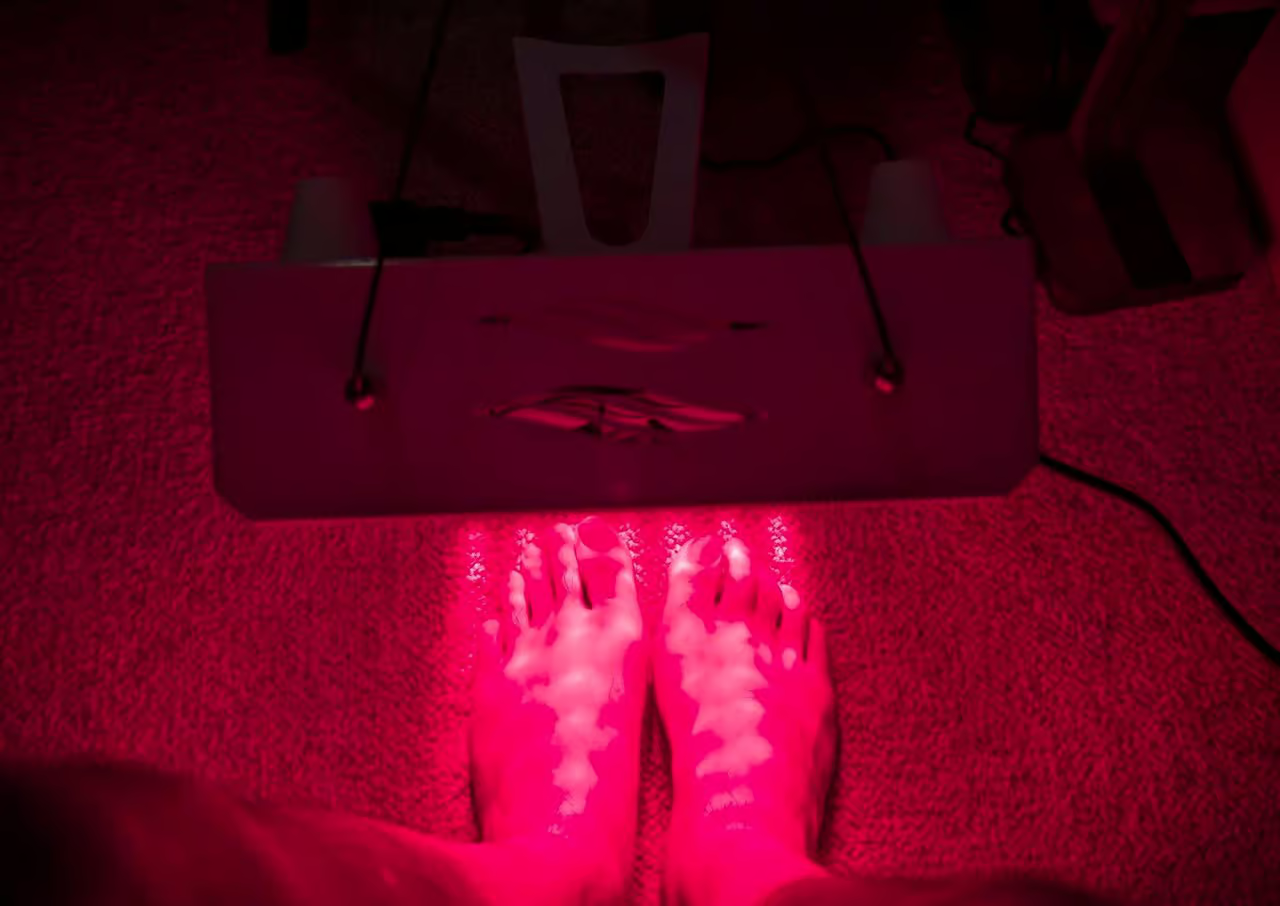
JNH’s pitch is that these two wavelengths, 660 nm (red) and 850 nm (near-infrared, or NIR), were picked for efficiency and depth. That’s their framing, but it’s also the industry-standard pairing, so nobody’s getting weird with the spectrum. Two wavelengths, two jobs.
nm: the red you can see
This is the visible half of the panel, and it works at the surface. JNH positions 660 nm for skin absorption and surface renewal. In buyer terms: this is the wavelength for your face and any skin you can see in a mirror. The benefit list attached to it covers skin rejuvenation, wound healing, surface tissue repair, plus pain and fatigue support, all the brand’s list, not settled outcomes, and the page itself frames the results as gradual. If someone’s promising overnight skin changes from a red light, they’re selling, not informing.
nm: the invisible half doing the deep work
Near-infrared light is something you can’t see, and that’s the point, it reaches deeper structures. JNH points 850 nm at muscles, joints, and connective tissue, with a claim list covering muscle recovery, circulation, and joint support. This is the wavelength for the sore knee, not the complexion.
How it shakes out as a buyer decision: red for what you can see, NIR for what hurts underneath. The mechanism theory behind all of it is that red and near-infrared light give cellular energy production a boost, which is a real and reasonably accepted concept in the field, as covered in this HigherDose red light hat review. What’s less credible is the page’s claim of a therapeutic-level boost “in minutes.” The mechanism is plausible. The speed promise is sales copy.
The honest take on a two-wavelength design: at $799, running just 660 and 850 is arguably a deliberate, defensible choice rather than a corner cut. Broader multi-wavelength panels add amber and other bands that reach different depths, and if you want the full spread you’ll pay more for it. JNH picked the two wavelengths with the most research behind them and stopped there.
Power and irradiance: reading the spec sheet correctly
The HELIOS-300’s headline specs are 660/850 nm wavelengths, an LED quantity of 91 pcs, a 455W LED power class with 135W ±5% actual consumption, 163 mW/cm² irradiance at 6 inches, and a 15″ H × 8.7″ W × 2.75″ D footprint. Here’s the full grid:
| Spec | HELIOS-300 |
|---|---|
| Wavelengths | 660 nm (red), 850 nm (near-infrared) |
| LED count | 91 |
| LED power class | 455W |
| Actual power consumption | 135W ±5% |
| Irradiance | 163 mW/cm² at 6 inches |
| Dimensions | 15″ H × 8.7″ W × 2.75″ D |
| Beam angle | 30° |
| LED lifespan | 100,000 hours |
| Warranty | 3 years |
| Timer | 10-30 minutes |
| Price | $799 |
Why 455W isn’t what it costs to run
The 455W number is an LED power class convention, not a measurement of what the panel consumes. Actual draw is 135W ±5%. That’s roughly a bright incandescent bulb, and it works out to pennies per session on your electric bill. Nobody should buy this thing worried about the power bill; the wattage label shouldn’t be mistaken for intensity, either.
Red flag: If a panel advertises only a wattage class and no at-distance irradiance figure, you can’t judge its real output.
Why 163 mW/cm² at 6 inches is the number that matters
Irradiance, measured at a stated distance, is what determines your dose. Wattage labels alone make cross-brand comparisons meaningless, because they describe the LED class, not the light arriving at your skin. The 163 mW/cm² at 6 inches figure is the strongest hard spec on JNH’s page, and it’s the one to hold onto when comparing panels.
In practice, first-time panel buyers and a lot of casual reviewers compare products by advertised LED wattage instead of actual draw and at-distance irradiance. It’s an easy trap because the big number is right there in bold. The two numbers that actually tell you anything are the ones in the paragraph above.
How to use it: dose guidelines checked against the numbers
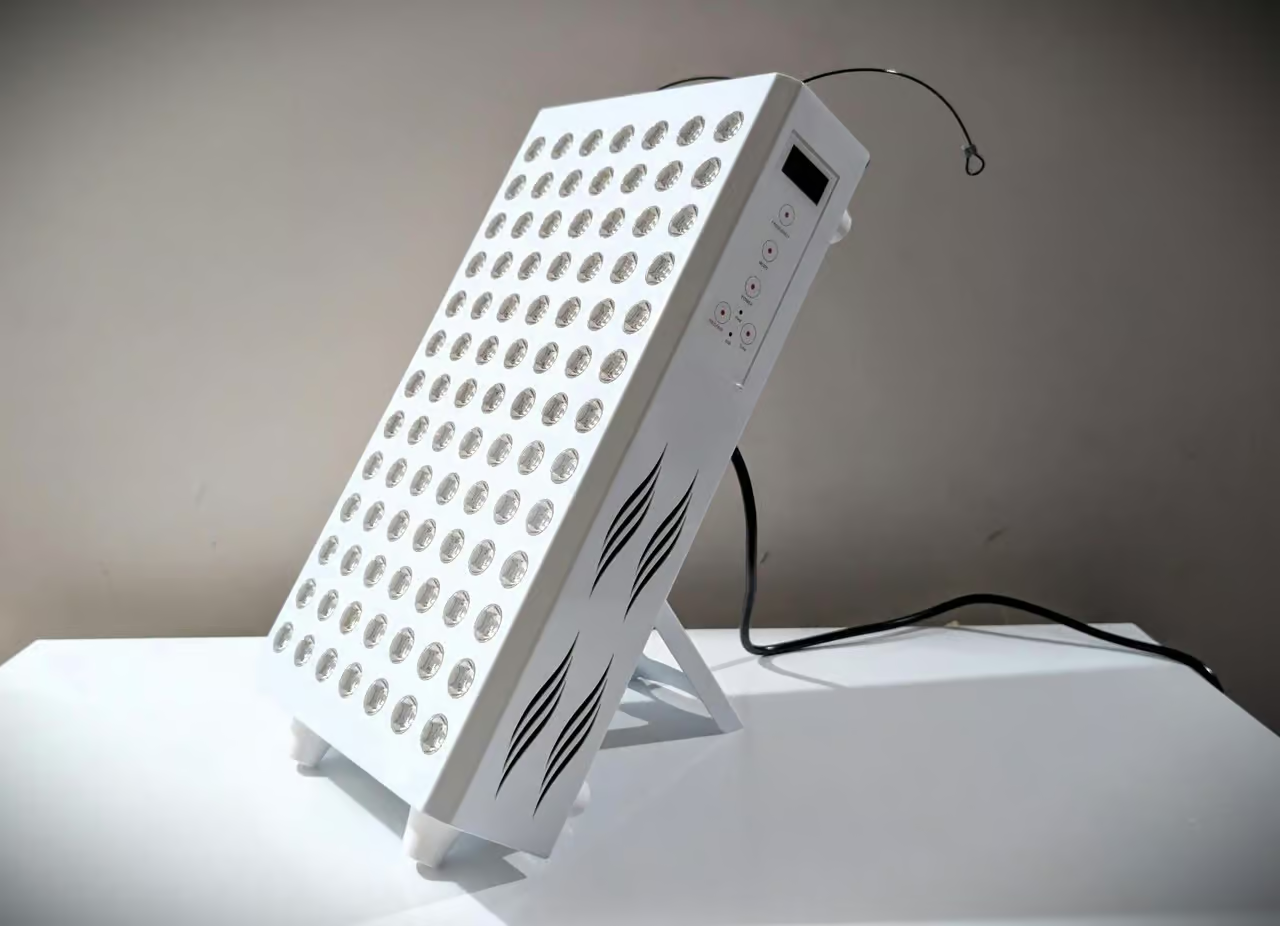
HELIOS-300 dosing follows JNH’s published table: 2-7 minutes per area at 6 inches, 5-10 minutes at 12 inches, or 7-14 minutes at 18 inches, targeting 10-40 J/cm² for muscles, joints, and bones. That’s from the page’s own Optimal Energy Delivery Guidelines, and here’s the whole thing:
| Distance | Time per area |
|---|---|
| 6 inches | 2-7 minutes |
| 12 inches | 5-10 minutes |
| 18 inches | 7-14 minutes |
Dose is power × time × distance, so the table matters more than the raw J/cm² number. Farther away means a longer session to hit the same dose. Your call which trade you prefer.
Does JNH’s table hold up?
Running the arithmetic on JNH’s own figures, at 163 mW/cm² a 6-inch, 2-minute session delivers roughly 20 J/cm², and 7 minutes lands around 68 J/cm², estimates based purely on the manufacturer’s numbers, since irradiance falls off with distance and the 30° beam angle narrows the treatment zone as you back up. Those figures sit inside or slightly above the 10-40 J/cm² target, so the table’s close-range recommendations are internally consistent with the stated irradiance. The far rows are harder to check without knowing exactly how fast the output drops past 6 inches, but the direction of the math is right: longer times at longer distances to compensate for falloff.
One pattern worth knowing: in practice, new panel owners tend to default to the closest range because it feels stronger, then either over- or under-dose relative to the table without realizing it. The table exists for a reason. Pick a distance, use the matching time.
Controls, timer, and the 10Hz/40Hz pulse modes
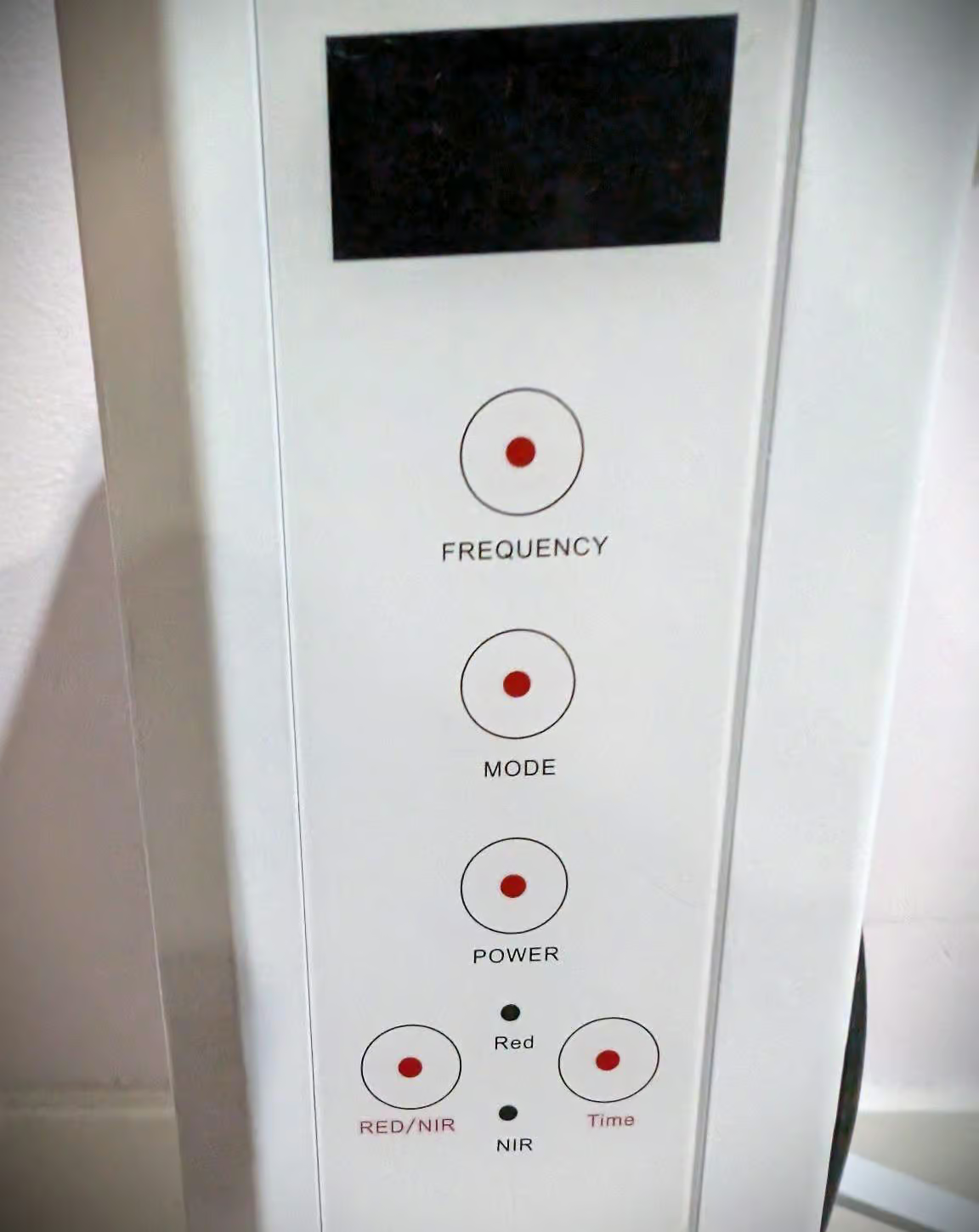
The pulse modes pulse the light at 10Hz or 40Hz, which JNH links to brain-wave effects, relaxation for the Alpha mode, mental clarity for the Gamma mode. They’re the most unusual features on this panel for the price tier, and they deserve a skeptical look rather than a feature-listing pass.
What 10Hz Alpha and 40Hz Gamma actually do
Alpha Mode pulses at 10Hz and is linked by JNH to alpha brain waves for relaxation and recovery. Gamma Mode pulses at 40Hz and gets tied to gamma brain waves for clarity, memory, and cognitive focus. Note the language: “linked with” is association, not demonstrated effect, and direct evidence that pulsed panel light entrains brain waves at this level of dosing is thin. Treat both modes as a bonus feature. Nobody should spend $799 on this panel for brain-wave anything.
The controls you’ll actually use
The genuinely useful control here is independent red and NIR output. You can run skin-only sessions with just the 660 nm, or NIR-only on a knee without lighting up your face. That’s flexibility you’d actually use, not spec-sheet filler. There’s also a digital timer covering 10-30 minute sessions with a remote, so you set it and walk away instead of watching the clock.
Here’s the catch, and no spec table highlights it: the timer’s 10-minute minimum can’t deliver the shortest 2-7 minute guideline at 6 inches. If you’re doing close-range facial work per JNH’s own dose table, you’ll be running sessions longer than the table suggests and stopping them manually.
What’s in the box: setup, mounting, and the sauna question
Everything you need ships in the box, there’s no separate goggle or mount purchase hiding at checkout. That matters at $799, because accessory creep is a real thing in this category.
The full inclusions and three ways to mount it
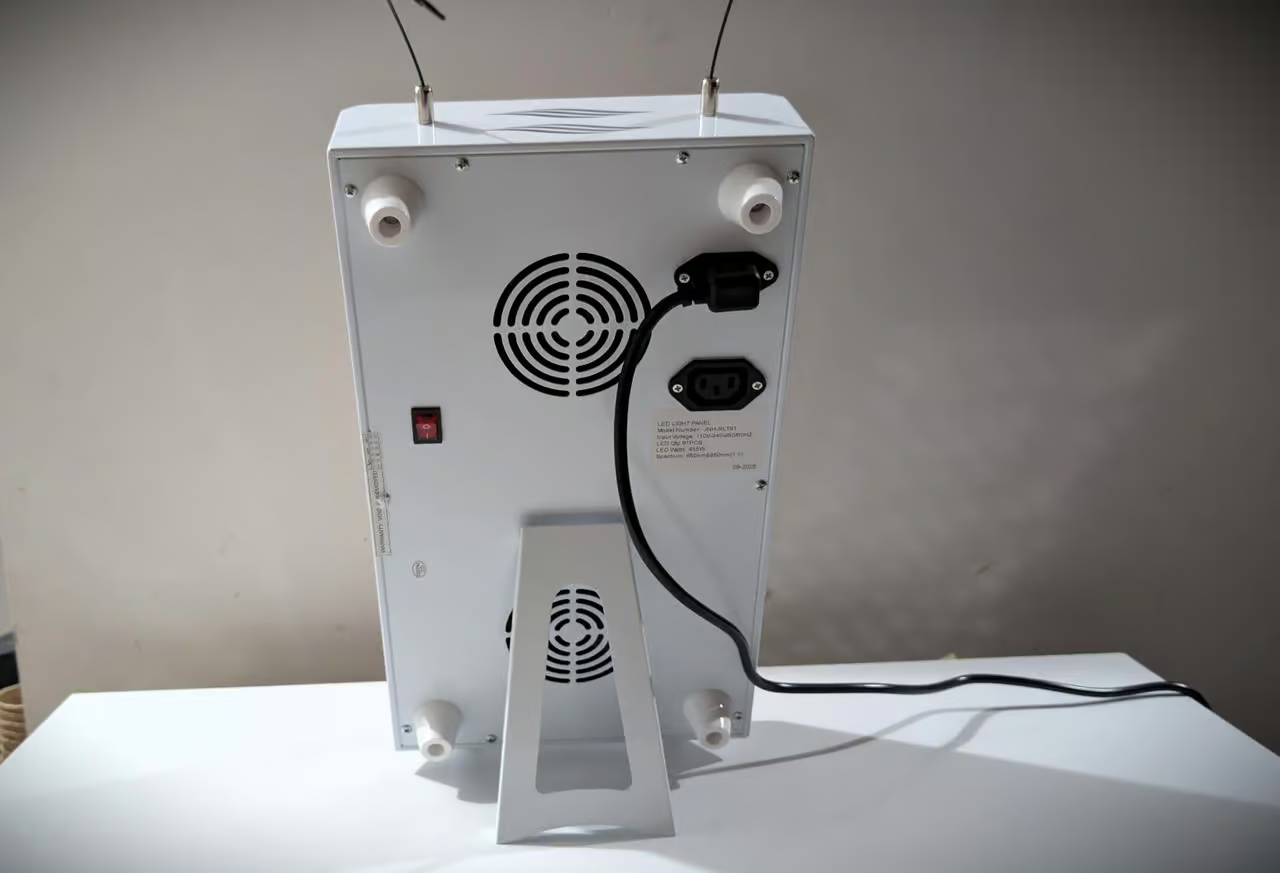
The box contains the panel, protective goggles, power cable, remote control, mounting bracket, a steel cable with carabiner, a pulley strap with carabiner, the user manual, a quick start guide, and the 3-year warranty card. The useful details are the goggles and the two mounting options.
You’ve got three placement paths: desk or shelf with the bracket, hanging via the steel cable, or the pulley strap setup. In practice, first-time owners often assume the included bracket covers every placement, then find that a door-mount and a hanging setup need different clearance decisions for a 15-inch panel. Measure before you commit to a spot.
Can it go inside a JNH sauna?
No. JNH states the panel is a standalone device not intended for use inside JNH saunas, positioned instead as a supplement to a full spectrum or far infrared sauna routine when used separately. The page says the restriction without explaining the reason for it, so we’ll report it as stated and leave it there. Sauna first, panel after, or skip the sauna entirely. The two don’t combine.
Certifications, warranty, and whether JNH Lifestyles is trustworthy
JNH Lifestyles is an established sauna company, jnhlifestyles.com, branching into red light panels, which cuts both ways. They know heat-based wellness hardware, and the 3-year warranty and generous inclusions suggest they take the product seriously. But panels are a newer line for them, so the track record in this specific category is short.
Now the raised eyebrow. The product page displays a “Certifications: Clinically Validated” badge, but no certifying body is named anywhere on it. A badge without a name attached doesn’t tell you much. It’s a yellow flag, not a dealbreaker, and a buyer can close the gap by asking JNH directly what the certification actually refers to and who issued it.
Same story with the “medical-grade” label: that’s marketing language, not a regulatory designation. And the medical expert videos on the page feature unnamed experts discussing red light therapy panels generally, nice context, but nobody’s name is attached and it’s not an endorsement of this specific panel.
If you’re hunting for user reviews on Reddit or Amazon before buying, you won’t find any on the manufacturer’s site. The product page contains zero testimonials and zero third-party measurements, so social proof has to come from somewhere else. What actually protects your money here is concrete: the 3-year warranty and the 100,000-hour LED lifespan. Run it 15 minutes a day, every day, and the LEDs will outlast your interest in the panel, with the warranty covering the early years anyway.
HELIOS-300 vs full-body panels: who should buy it
The HELIOS-300 is a targeted desktop panel, 15″ × 8.7″, 91 LEDs, built for face, neck, joints, and focused areas, so the choice against a full-body panel comes down to localized intensity versus coverage area, not quality. Three camps, three answers.
If you’re treating specific spots, this is defensible at the $799 price. 163 mW/cm² at 6 inches, dual 660/850 nm wavelengths, small footprint, done.
If you want whole-body coverage, this is the wrong tool, full stop. JNH sells higher-wattage panels in its own Helios line, and cross-shoppers looking at those should understand the structural tradeoff: more LEDs and more coverage cost more money and take up more room. The 300 is the compact end of that spectrum, not a lesser version of the same thing.
And if you already own a JNH sauna, the panel complements the routine as a separate device. It never joins the sauna session and doesn’t replace it, different tools for different jobs.
The bottom line on the HELIOS-300
Yes, the HELIOS-300 delivers on what its own numbers promise, when you’re treating specific areas rather than seeking whole-body coverage. The 135W actual draw and 163 mW/cm² at 6 inches support the intensity claim honestly, the dose table holds up to basic arithmetic, and the included goggles, mounting hardware, and 3-year warranty mean you’re not spending another $100 finishing the setup. Before buying, verify the certification question by asking JNH who issued that “Clinically Validated” badge, and accept that the 10-minute timer minimum fights the short close-range sessions.
The broader lesson applies to any panel purchase, not just this one: buy on irradiance at a stated distance and fit-for-purpose, not on wattage labels. A big number in bold is marketing. A measured output figure at 6 inches is evidence. The HELIOS-300 at its $799 price is a good example of a company putting the right number on the page, now ask them who certified it.
Frequently Asked Questions
Is helios red light therapy good?
The HELIOS-300 backs up its intensity claims with real numbers: 163 mW/cm² at 6 inches and a 135W actual draw, and JNH’s own dose table holds up to basic arithmetic. Whether it’s good for you depends on fit — it’s a targeted desktop panel for face, neck, and joints, explicitly not a whole-body device. The main caveat is the ‘Clinically Validated’ badge, which names no certifying body.
Do red light therapy panels really work?
The two wavelengths these panels use — 660 nm red and 850 nm near-infrared — are the best-evidenced in the field, and the underlying mechanism theory, that red and near-infrared light boost cellular energy production, is a real and reasonably accepted concept. What’s less credible are speed promises like therapeutic-level results ‘in minutes,’ which are sales copy. Manufacturer benefit claims and the science behind the wavelengths are two separate things.
Why is the HELIOS-300 listed at 455W when it only draws 135W?
The 455W figure is an LED power class convention, not a measurement of actual consumption. The panel really pulls 135W ±5% from the wall — roughly a bright incandescent bulb, working out to pennies per session. The label shouldn’t be mistaken for intensity either; the at-distance irradiance figure is what tells you the real output.