If you’ve ever looked up “how to get free rooms in Vegas” you already know the script. Every guide says the same thing: get a players card, gamble at the right machines, ask the host nicely. That works if you’re a high roller. For the rest of us it’s useless advice. I’ve watched this pattern play out in travel forums for years — guys asking how to avoid the casino and still get a comp, and the answers always assume you’re dropping a few hundred on blackjack.
Las Vegas saw 1.5 million fewer visitors in 2025. Gaming revenue dropped five consecutive months. Hotel occupancy on the Fourth of July — normally a packed weekend, was 66.7%, a 15% decline from 2024. Revenue per available room fell 28.7% to $102.75.
That’s your opening. The traditional comp system is designed to reward gambling losses. But right now you have leverage as a non-gambler, and there’s a smarter way to play it.
Key Takeaways
Non-gaming hotels like Waldorf Astoria Las Vegas (389 rooms, Hilton Honors), Four Seasons Las Vegas (floors 35–39 of Mandalay Bay, Marriott Bonvoy), and Trump International (no casino, no smoking) are your best targets for points redemptions and no resort fees — they can’t offset your stay with gambling revenue, so they actually want your room business.
The Wynn poker room offers $1.50/hour in comp points via the Red Card loyalty program — earned on time played, not money lost, plus daily $200–$300 tournaments with overlay potential (prize pool guarantees that exceed buy-ins) that can effectively subsidize a room.
Avoid the trap of a “free” room that still charges $40–$50/night in resort fees and $40/day in parking by choosing properties like Virgin Hotels ($0 parking) or using elite status (Hilton Gold, Marriott Platinum) to waive fees.
Table of Contents
Step 1: Target Non-Gaming Hotels for Points and Status
The biggest mistake people make is chasing comps at MGM or Caesars properties. Those resorts built their business model on the assumption that you’ll lose money at tables and slots. They comp rooms based on theoretical loss — what the house expects to take from you. If you don’t gamble, your theoretical loss is zero. You’re invisible.
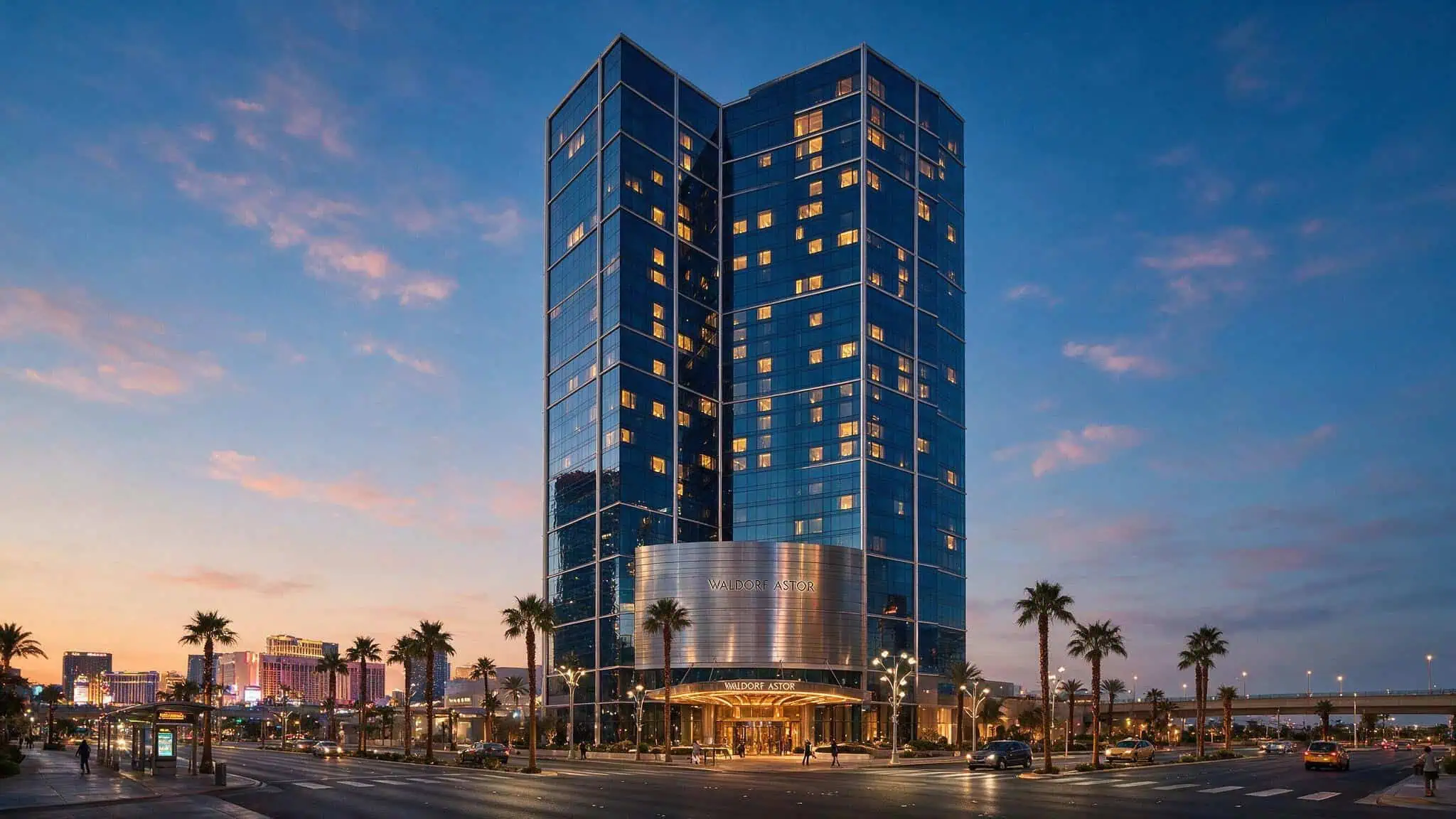
Non-gaming hotels flip that. They make money on rooms, dining, and amenities. They’re happy to see you even if you never step near a casino. These are the properties where points redemptions, credit card certificates, and off-peak cash rates work.
Trump International Hotel Las Vegas
No casino, non-smoking, no pool parties — just suites on the Strip. Condé Nast Traveler Readers’ Choice Awards rank it well, and its proximity to the Fashion Show Mall and Las Vegas Convention Center makes it convenient for convention travelers.
But base rates are often lower than comparable luxury hotels because there’s no gambling revenue subsidizing the room. Best for cash bookings during off-peak periods. Price spikes when the convention center is busy, so check the calendar.
Waldorf Astoria Las Vegas
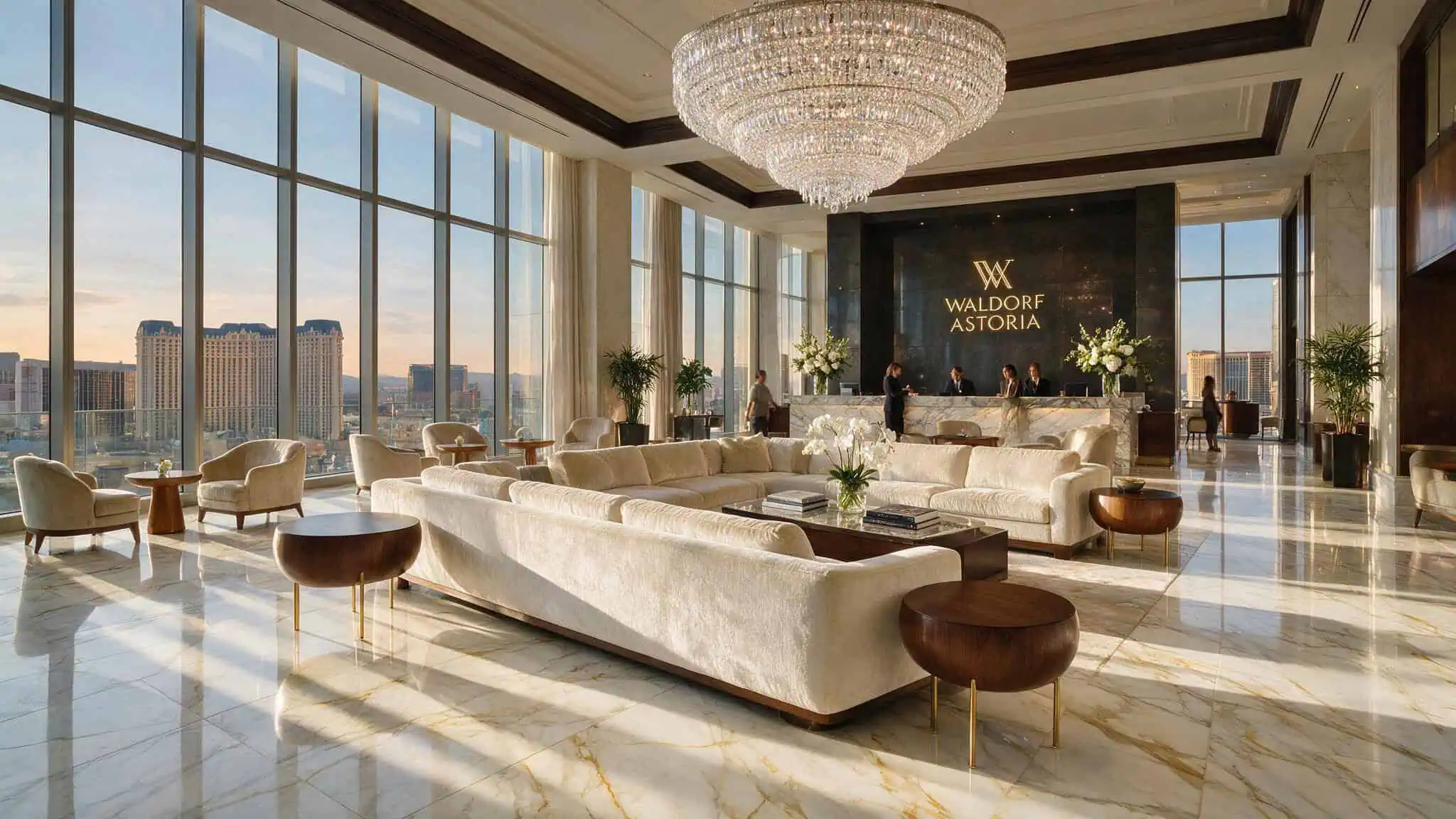
Formerly the Mandarin Oriental, this is the prime points target. 389 rooms, non-gaming, non-smoking. The lobby alone has 11,000 square feet of Calacatta Gold marble. It’s a Hilton Honors property, which means the free night certificate from the Hilton Aspire card works here. New social spaces on the 23rd floor — Peacock Alley, Hard Shake, give you non-casino places to hang.
The tradeoff: 389 rooms means limited standard award availability. Book six months ahead for peak times, or target off-peak weeks. When award nights are open, this is the best non-gaming redemption on the Strip.
Four Seasons Las Vegas
Non-gaming, non-smoking, private pool and spa. Marriott Bonvoy property. It’s been redesigned with a Mojave Desert palette — warm, modern.
Michael Mina’s Bourbon Steak is on-site.
Platinum
255 keys, suites from 910 to 2,100 square feet. Non-smoking, non-gaming. Pools open 365 days a year. Independent, so no chain points — but sometimes bookable through travel portals or credit card booking credits.
Massive rooms for a Vegas hotel. The catch: independence means less promotional support. You won’t see “Stay 3 Pay 2” offers here. But base rates are lower than chain equivalents, and the year-round pools are a differentiator.
Nobu Hotel Caesars Palace and Other Hybrid Plays
182 rooms, kintsugi-inspired design, its own lobby and check-in. First Nobu-branded hotel, opened 2013, refreshed in 2021–22 by kwell Group. It’s a Caesars property but operates independently — you get Strip access (Omnia, Forum Shops, Bacchanal Buffet) without walking through a casino to your room. Often overlooked because it’s technically Caesars, but worth considering as a “hotel within a hotel” hybrid. The concept extends to Four Seasons (already covered) and other mini-hotels inside larger resorts.
Step 2: Use Poker Room Comps (Skill-Based, Not Gambling)
Yes, poker is technically gambling. But comps in poker rooms work differently than slots or table games. That difference matters, and it’s the most contrarian play in this guide, especially if you explore how to get Vegas comps without gambling.
At the Wynn Las Vegas poker room — 28 tables, open 24/7, USB charging at each seat, comps are earned via the Red Card loyalty program at a rate of about $1.50 per hour. The key: that’s based on time played, not money lost. Slots and table games comp you based on theoretical loss (what the house expects you to lose). Poker comps are flat hourly. You earn that $1.50 regardless of whether you win or lose that session, which is why this is the smartest approach to how to get free stuff at casinos: it’s closer to being paid to play a game than gambling for comps.
Self-parking is complimentary at Wynn/Encore, so there’s no cost to drive in and play. The hourly rate won’t cover a room on its own, but it adds up. Play a few hours a day, and you’re subsidizing your trip.
Tournament Overlays and the Mystery Bounty Advantage
Wynn runs a daily $200 No-Limit Hold’em tournament at noon, $300 on Saturdays. Unlimited re-entry. Seasonal festivals — Spring, Summer, Fall, with buy-ins $400 to $2,200 and guarantees over $750,000. The value comes from overlays: when the prize pool guarantee exceeds the total buy-ins, the house adds the difference.
You’re playing for money the casino provided. Wynn popularized the Mystery Bounty format starting summer 2021, where bounties are randomly assigned — you can win more than your seat cost without playing for high stakes. Tournament players also earn comp points, so the overlay plus the hourly comp creates a small profit opportunity for skilled players.
Step 3: Avoid Resort Fees and Ancillary Charges
Here’s the trap that kills most “free” room strategies. You get comped at an MGM or Caesars property, and they still hit you with $40–$50 per night in resort fees. Maybe $40/day for parking. Suddenly your “free room” costs $180 for a weekend.
The fix starts with property selection. Non-gaming hotels like Trump, Waldorf Astoria, Four Seasons, and Platinum are less likely to charge resort fees, or they’re lower. If you’re booking on points at a chain property, elite status can waive resort fees. That’s the difference between a “free” room that costs $50 and a free room.
Hilton Gold (included with the Hilton Aspire card) waives resort fees at Waldorf Astoria. Marriott Platinum (earned or from Bonvoy Brilliant) does the same at Four Seasons. Booking through Amex Fine Hotels & Resorts can also include property credits and waived resort fees at eligible properties like Waldorf Astoria.
Parking is another hidden cost. Virgin Hotels Las Vegas charges $0 for parking — a rarity on the Strip. Wynn/Encore offers complimentary self-parking for all guests, another rare perk. Most casino properties charge $40+/day. Target properties that waive parking or use status to eliminate it.
Step 4: Use Credit Card Sign-Up Bonuses and Points Stacking
This is the most powerful non-gambling path to a free room, but it requires specificity. Most “use points for Vegas” advice says “get a hotel card and redeem.” That’s fine, but you need to target properties that want your points redemption.
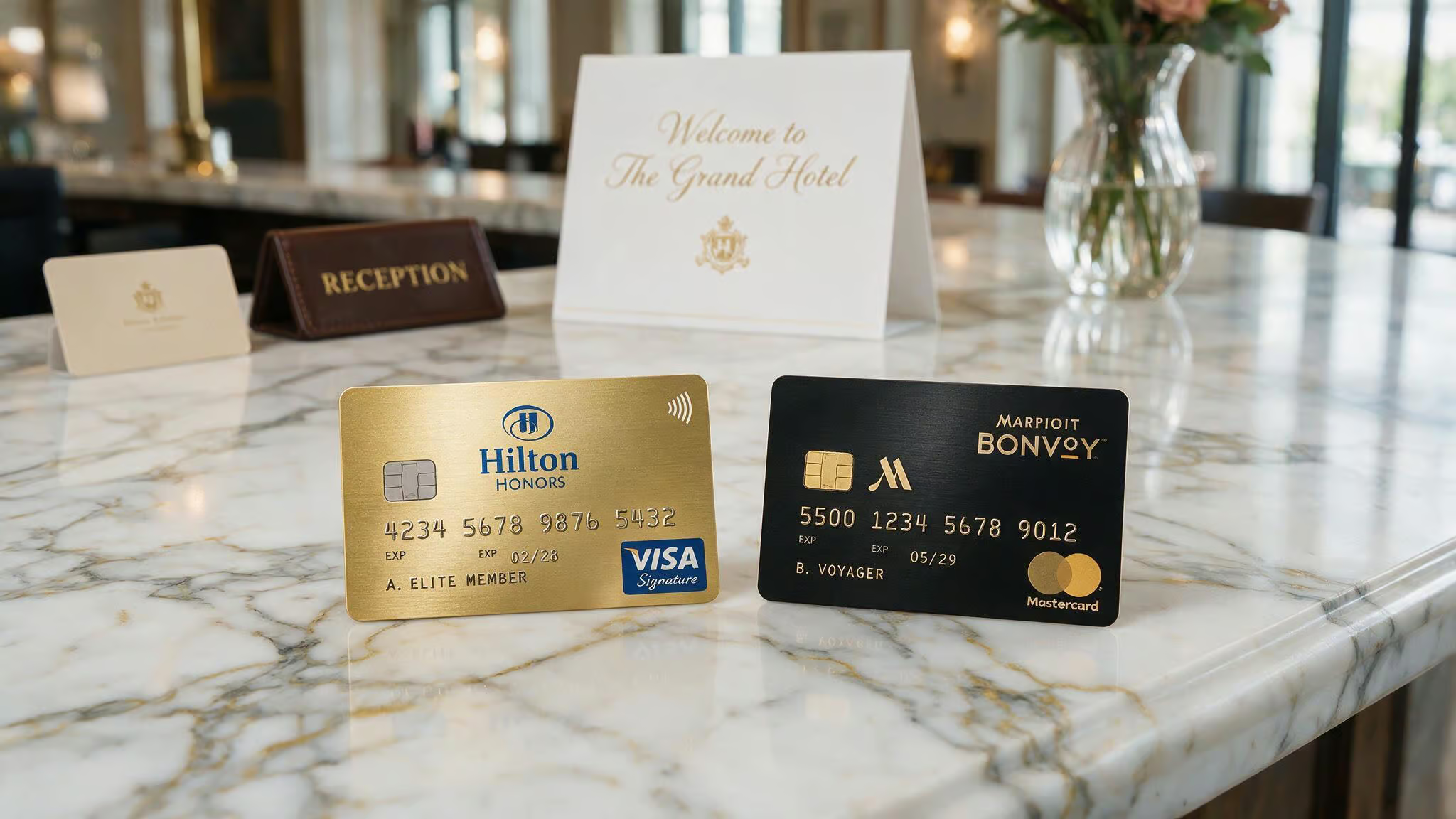
Waldorf Astoria (Hilton Honors) and Four Seasons (Marriott Bonvoy) are your targets. A single sign-up bonus from the Hilton Aspire card or Marriott Bonvoy Brilliant card can cover 2–3 nights at these properties. Stack with a property promotion — Stay 3 Pay 2, breakfast credits, property credits, for maximum value. These hotels don’t have casino revenue, so a points redemption is the same as a cash booking to them. They’re happy to see you.
Working Around Limited Award Availability
The problem: 389 rooms at Waldorf, 255 keys at Platinum, five floors at Four Seasons. Limited inventory means standard award rooms disappear fast. You can’t book these on points during CES or a holiday weekend and expect availability. The fix: book 6–12 months out for peak periods, or target off-peak weeks after checking the convention calendar. Check standard award availability before applying for a card. There’s nothing worse than earning a bonus and finding nothing available.
Step 5: Time Your Stay Around the Convention Calendar
“Go midweek” is the usual advice, but it’s an oversimplification. Vegas pricing is driven by conventions, not just day of week. A Tuesday during a tech convention costs more than a Friday in August with no events. Trump International’s proximity to the Las Vegas Convention Center makes it a bellwether — if Trump’s rate is expensive, a convention is driving prices across the Strip.
Using the Current Downturn to Your Advantage
The 1.5 million fewer visitors, the 66.7% Fourth of July occupancy, the 28.7% RevPAR decline — all of this means you’re in a buyer’s market. Hotels are cutting prices to fill rooms. Even holiday weekends are soft. If you’ve been waiting for the right time to try this, it’s now. Book during this window, it won’t last forever. Use the convention calendar to find the cheapest weeks, and combine that with points booking for maximum savings.
Putting It All Together — Sample Trip Plan
Here’s how the pieces fit together. No invented trip, just a composite that shows the logic.
- Target property: Waldorf Astoria (non-gaming, Hilton Honors, 389 rooms)
- Funding: Hilton Aspire sign-up bonus covers 2–3 nights on points
- Timing: Non-convention week during current downturn — check convention calendar for a dead week
- Fee elimination: Hilton Gold status from the Aspire card waives resort fees
- Trip supplement: Afternoon at the Wynn poker room — earn $1.50/hour comps, play a $200 daily tournament with overlay potential
- Parking: Complimentary self-parking at Wynn/Encore
Each strategy supports the others. The card covers the room. The timing ensures availability. The status kills fees.
The poker comps add value during the trip. The parking is free.
Conclusion
The traditional “free room” system is built for gamblers. It rewards people who lose money at tables. But the non-gambler’s toolkit — points, non-gaming properties, off-peak timing, poker comps, fee avoidance, is powerful when used correctly. This isn’t a hack or a loophole.
It’s just better targeting. By picking properties that want your room revenue (not your gambling losses), you align your interests with the hotel’s. That’s the whole game.
Frequently Asked Questions
How do people get free hotel rooms in Vegas?
Most people get free rooms by gambling heavily and earning comps through a players card, but that only works for high rollers. For non-gamblers, the smarter path is using hotel credit card sign-up bonuses at non-gaming properties like Waldorf Astoria or Four Seasons, targeting off-peak weeks, and stacking elite status to waive resort fees.
What is the $20 rule in Vegas?
The $20 rule is an old trick where you slip a $20 bill to the front desk clerk when checking in, hoping for an upgrade. It’s hit-or-miss and doesn’t get you a free room. A more reliable strategy is using points at non-gaming hotels and avoiding the trap of resort fees that can turn a ‘free’ room into a $50-a-night charge.
How to get a hotel room for free without paying?
The most reliable way is to sign up for a hotel credit card like the Hilton Aspire or Marriott Bonvoy Brilliant, use the sign-up bonus to book award nights at non-gaming properties such as Waldorf Astoria or Four Seasons, and combine that with elite status to waive resort fees. Timing your stay during a non-convention week improves award availability.
How do resort fees ruin a free room deal?
A comped room at an MGM or Caesars property still hits you with $40–$50 per night in resort fees and up to $40 a day for parking, turning a ‘free’ room into a $180 weekend. The fix is choosing non-gaming hotels like Waldorf Astoria or using elite status — Hilton Gold or Marriott Platinum — to waive those fees entirely.