Have you ever put on a suit and felt like you were wearing a costume instead of an outfit? You want to look sharp, but baggy trousers or an awkward jacket length get in the way. A well-fitted men’s suit changes everything.
It boosts your confidence and comfort at any event, from black-tie nights to job interviews. You don’t need to be a fashion expert to get it right. This guide breaks down simple steps for choosing a suit jacket or dress pants that actually look good on you, not just on a mannequin.
Ready to leave behind stiff blouses and ill-fitted garments? I’m going to walk you through the exact steps I use to curate a versatile shirt collection and find the right jacket, and I think you’ll be surprised at how easy it can be.
Key Takeaways
A perfect-fitting men’s suit boosts confidence, comfort, and style at events like job interviews and black-tie nights; fit matters more than brand names or high prices.
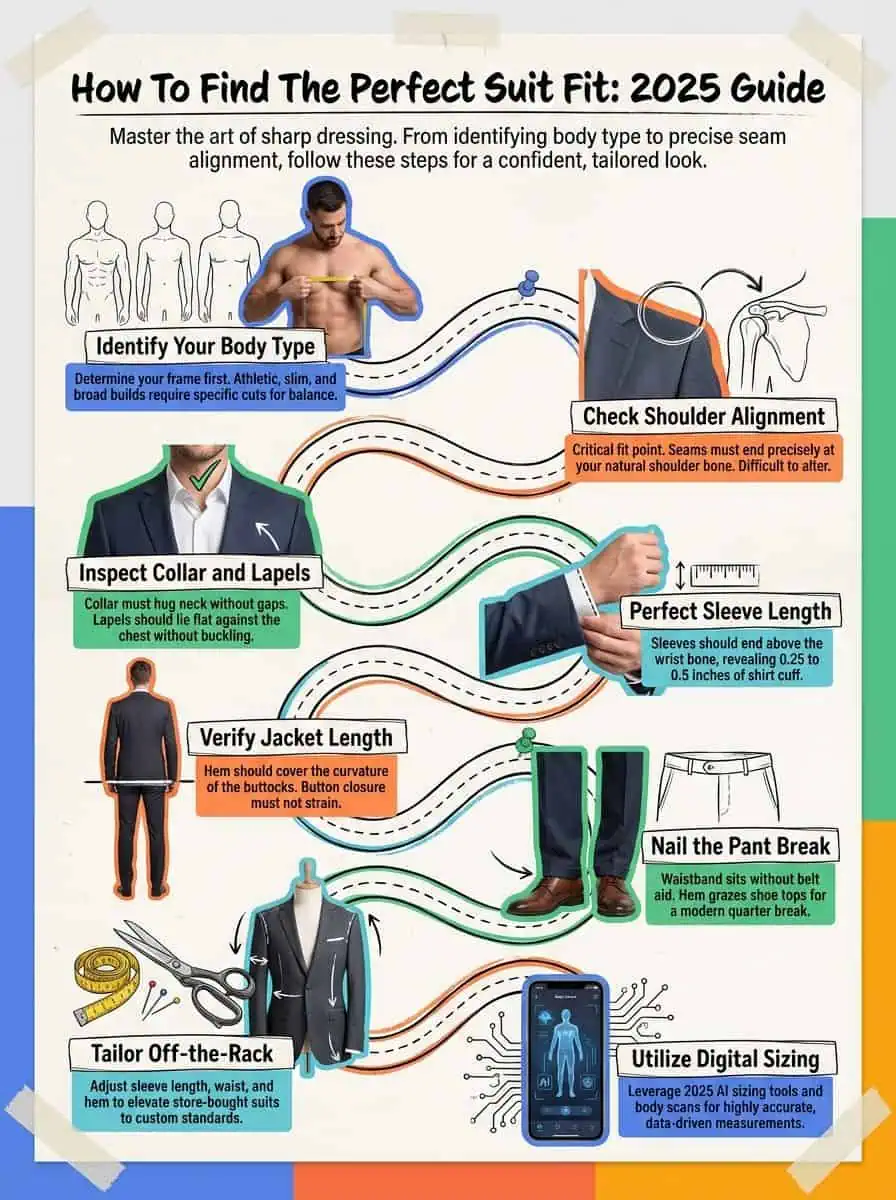
Key suit details include shoulder seams sitting at the natural end of your shoulders, 0.25–0.5 inch of shirt cuff showing past the jacket sleeve, pants with a clean waist fit, flat seat, slight ankle taper, and minimal break over shoes for a sharp look in 2025.
Body type shapes suit choices: athletic frames need fitted jackets with two buttons; slim guys benefit from padded shoulders and double-breasted coats; heavyset men should pick dark colors and flat-front trousers for slimming effects.
Off-the-rack suits often require tailoring—shorten sleeves to show the cuff, adjust jacket length by up to one inch as needed, hem pant legs for modern quarter/half breaks seen in current trends (2024–2025), and consider digital sizing tools like Sizer or MTailor for an improved match.
By 2025, expect advanced digital body scanning and AI-powered size recommendations that match different builds (athletic to short) using real-body data rather than guessing from size charts alone (per Men’s Health Magazine 2018 trend analysis).
Table of Contents
Why Does the Right Suit Fit Matter?
A suit that fits right turns heads faster than a Ferrari on Main Street. It polishes your look, boosts comfort, and lets you move with ease. Just ask anyone who has worn both a tight jacket and one that felt like it was made for them.
Confidence shoots up once you see yourself in the mirror. Researchers at Northwestern University call this “enclothed cognition.” Their studies show that wearing clothes you associate with power and focus actually changes your psychological state.
People notice the difference instantly. Studies suggest you have only seven seconds to make a first impression. Your suit speaks before you do.
Good pant fit helps posture too. A solid stance makes breathing easier and keeps nerves down. Men’s suits carry real authority in business meetings or semi-formal dinners when there are no wrinkled shirts poking out or sloppy seams dragging along behind.

Style meets focus every time with flat-front trousers and classic peak lapels paired with polished shoes. For guys wanting more color than navy blues, check out fresh options online like tan suits to keep things modern yet timeless.
Nothing beats stepping into a room knowing your outfit does half the talking.
Up next: Let’s spot what body type you have so picking that perfect men’s suit feels easy.
How Can You Identify Your Body Type?
Spotting your frame is like choosing the right chair. Comfort matters, and fit makes all the difference. Grab a mirror, toss on a dress shirt or coat, and start noticing where things hang loose or pull tight.
What Defines an Athletic Body Type?
Broad shoulders, a defined chest, and a narrow waist stand out in an athletic body type. Think of someone who hits the gym but skips the extra bulk. Maybe you played football in college or built muscle hauling furniture for your buddy.
The challenge here is the “drop”—the difference between your chest and waist size. Standard suits often fit the shoulders but swim around the waist. Brands like State & Liberty have become famous in the US specifically for solving this by catering to the “V-taper” shape with stretch fabrics.
Suits that highlight these lines do wonders: fitted or slim fit suit jackets with two buttons shape your torso without squeezing it. Structured shoulders matter here. Go light on padding to avoid looking boxy.
Jacket length runs standard or just slightly shorter than usual. Nothing should drape past your seat like you borrowed Dad’s old coat. Lapels stick to regular width. Skip those skinny lapels unless you are channeling late-night TV hosts from 2012.
Suit pants should taper down and skim your legs. You want clean lines and comfort that means business at every dress code.
How to Recognize a Slim Body Type?
Long sleeves hang loose. A standard men’s suit may feel baggy in all the wrong places. Slim guys have narrow shoulders, a smaller chest, and a slim waist that seems to hide behind every off-the-rack suit jacket fit.
Standing sideways in wedding photos? You might almost disappear beside your friend with broad shoulders. Popular cuts like the SuitSupply Havana fit or J.Crew Ludlow are designed specifically for this frame, offering higher armholes and trimmer torsos.
Peak lapels help make your frame stand out and padded shoulders add shape where nature kept things subtle. “I used to swim in my old suits,” my brother joked after he finally tried double-breasted jackets with slightly shorter lengths and wider lapels.
A slight taper or pleat down the trousers gives balance without making everything look tight. Look for these cues on yourself before shopping online. You’ll find picking out men’s suits becomes less of an uphill climb.
A good suit doesn’t just cover you, it frames you.
What Are the Features of a Broad or Heavyset Body Type?
After spotting a slim body type, it’s time to talk about guys with a broad or heavyset frame. Think wider shoulders, thick chest, and a waist that’s far from skinny jeans territory.
Many men deal with this build. Trust me, as someone who has wrestled into more than one jacket in the store mirror, you are definitely not alone. Brands like DXL or custom options from Indochino often provide the extra room needed in the chest and seat without looking sloppy.
A broad or heavyset bloke often needs clothes that give shape without adding bulk. Picture single-breasted suits with soft shoulders. They won’t make you look boxy like some double-breasted types can.
Thin lapels help keep things sharp instead of drawing extra attention across your chest. Pick dark colors for jackets and pants to create clean lines. They do wonders for slimming things down visually.
Flat-front trousers work much better than pleated ones. Go for a straight leg if you want balance top-to-bottom. A longer jacket adds length, which slims the whole profile fast.

How to Identify a Tall and Lean Body Type?
Long legs and arms stand out first. This body type looks slim with little bulk in the chest or shoulders. Shopping for off-the-rack suits? Jackets may feel short or tight, while sleeve length often runs high-water style.
The shoulders lean narrow. The limbs stretch long, sometimes making regular men’s suits look like they shrunk in a hot dryer. Specialized shops like American Tall offer jackets with extra body length and sleeve inseams up to 40 inches.
Wider lapels, three-button jackets, and pleated trousers work well here. Heavier fabrics can add some visual weight without making you sweat bullets from zero breathability. A longer jacket balances those long legs and gives your shape more punch.
Light padding at the shoulders helps too. It smooths lines without turning you into an action figure from the ‘90s.
What Characterizes a Short Body Type?
Shorter men often struggle to find men’s suits that fit just right. Many off-the-rack jackets are too long or baggy. This makes the whole outfit feel boxy. I know this experience well. My first suit felt like I’d borrowed it from a much taller uncle.
The key? Choose shorter jackets and slim pants to avoid cutting your legs in half visually. Brands like Peter Manning NYC redesign the entire garment for men under 5’8″, moving pockets and buttons up to maintain proper proportions.
Most style guides and tailors recommend narrow shoulders, shorter jacket length, and slim lapels for this body type. Trousers should be tapered at the ankle so your frame looks sharp rather than swallowed up by extra fabric.
Guys under 5’8″ should use a skinny belt instead of chunky options because wide belts break up height even more.
A clean silhouette works wonders for shorter frames, says fashion stylist Marcus Thomas.
Stick with styles that keep things tidy. Think clean lines with minimal excess material so you appear proportional and confident in any setting, boardroom or bar included.
Key Components of a Well-Fitted Suit
A sharp suit relies on small details like the fit in every seam, notch, and drape. Fit can make you look ready for a Forbes cover or like a kid borrowing dad’s clothes.
How Should the Jacket Fit Shoulders, Collar, and Lapels?
Shoulders, collar, and lapels set the standard for a men’s suit. Get them right, and people notice for positive reasons.
- The Wall Test: Lean your shoulder against a wall. The pad of your jacket should touch the wall at the same time as your arm. If the pad hits first and crumples, the jacket is too big.
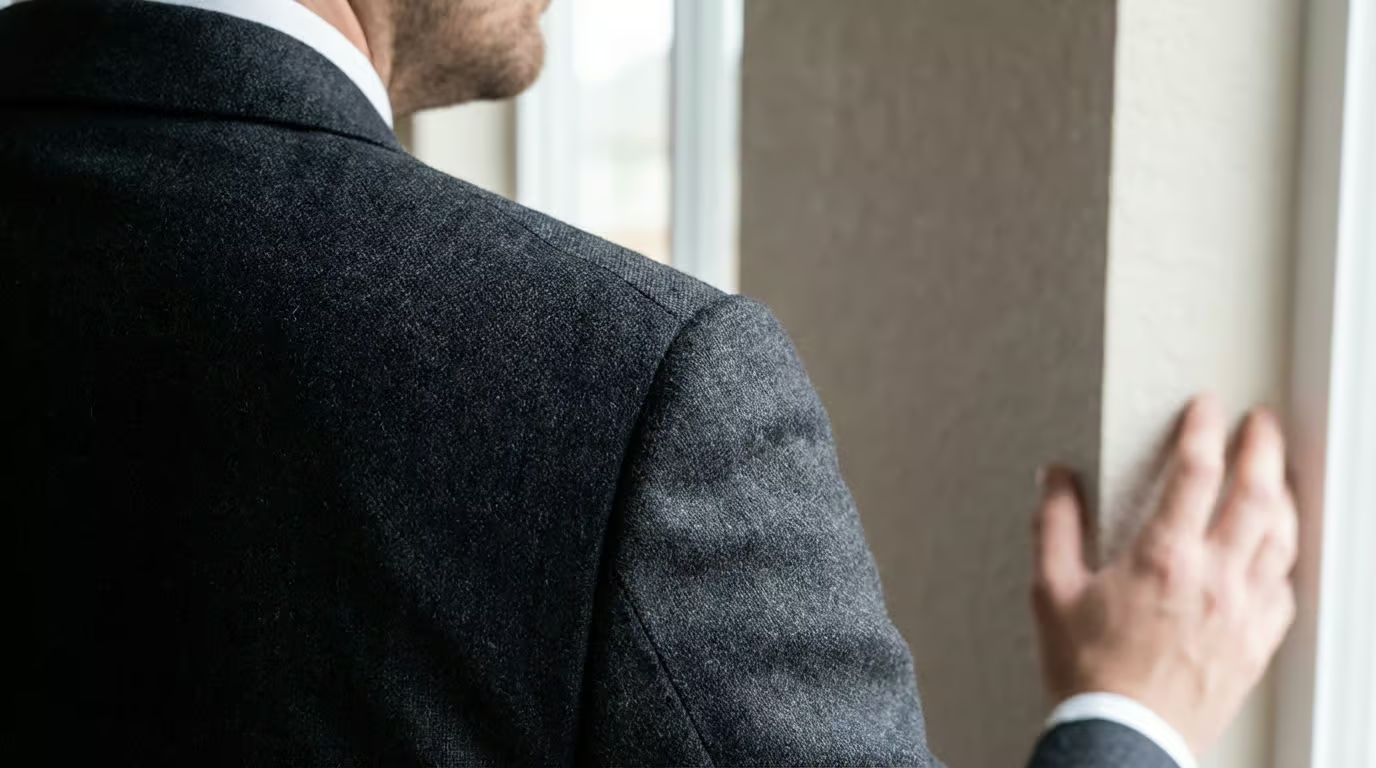
- Shoulder seams must sit exactly where your natural shoulder ends. If the seam drops down your arm or sits above the bone, it appears untidy. Fixing shoulders is tough work, even for expert suit makers.
- The fit of high-end brands such as Tom Ford demonstrates that the cleanest shoulder line always flatters most shapes. This applies whether you are athletic or broad.
- A proper jacket collar hugs the back of your neck with zero gaps. This gap is often called “collar gap” and signals the jacket is too tight across the chest or the wrong slope for your posture.
- Poorly fitting collars create unattractive bunching under your shirt collar. This is never good in job interviews or wedding photos.
- Lapels must lay flat against your chest without sticking out or flaring away awkwardly. Watch how Daniel Craig wears his suits in Bond movies. Nothing opens up when he moves.
- Bring any men’s suit with lapel issues to a custom shop. Adjusting lapels can turn a lower-priced off-the-rack jacket into something sharp and clean.
- If you see gaps between your chest and lapels while moving your arms forward, sizing could be off by one or two inches. This happens even with big brands like Hugo Boss.
- High-armholes make each movement feel easy. Tailors recommend closer-fitting yet comfortable armholes for more mobility instead of the loose styles seen in chain stores.
- No amount of money fixes poor shoulder fit after-the-fact. Tailors say spend extra time here before focusing on other tweaks.
What Is the Correct Sleeve and Jacket Length?
Getting the sleeve and jacket length right is like hitting a home run for your men’s suit game. A perfect fit highlights confidence, style, and even handshakes.
- Sleeve ends above the wrist bone with arms relaxed at your side. You should spot about 0.25 to 0.5 inch of shirt cuff peeking out. It looks like a stripe of white around your wrist.
- A tailor once told me the “show a bit of cuff” rule sets true gentlemen apart from lost tourists in cheap jackets. Shortening sleeves typically costs between $25 and $40 in the US, depending on if you have functional buttons.
- Suit jackets for modern fits fall just below the buttocks and cover the base of your crotch. This keeps proportions sharp, no matter if you’re tall or on the shorter side.
- Traditional cuts drop lower, so decide if you want that old-school vibe or a crisp update for 2025 trends.
- Button closure should never strain. Two fingers must slip easily between your dress shirt and jacket when fastened. Breathe easy and avoid awkward bulging known as the “X-crease.”
- I once wore a men’s suit off-the-rack with sleeves past my thumb knuckle. I looked more magician than office-ready! Shorter means neater. Always check with both arms relaxed before buying.
- If pants break rules, sleeves do too. No bunched fabric at the wrists is allowed in any proper tailored clothing fit.
- Gents aiming for custom suits often bring their go-to dress shirts to fittings. This shows clearly how much shirt cuff appears and is a simple hack for accuracy.
Suit up right, keep it sharp, and let details carry you faster than caffeine ever could.
How Should Pants Fit at the Waist, Seat, Taper, and Length?
Getting the fit right in men’s suits starts with the pants. A sharp trouser can make or break your whole look.
- Pants should rest on your waist. They shouldn’t cling to it like a boa constrictor or slip down during a busy day. Try sitting and standing. Your waistband should stay put without pinching or needing a belt two sizes up.
- The seat of your pants is where comfort meets style. It should lay flat against you, never pulling so hard the pockets gape open and never sagging like you borrowed them from someone else.
- Tapering from thigh to ankle depends on what you want. Slimmer tapers are popular now, but it’s key that fabric falls smooth with no bunches or balloon shapes.
- Talking pant length, focus on “break.” In 2024 and likely through 2025, quarter breaks and half breaks rule for men’s suits. That means your pant hem grazes the top of your shoe and barely folds at the front.
- A classic slim fit finds the pants resting just at the top line of the shoe with a slight bend in fabric up front. This works for business meetings, weddings, or even Saturday brunch.
- Take a seat test before buying. If you sit down and see half your calf exposed, those pants are too short. I learned this at my first office job after college.
- Hem should finish atop your shoe with just a hint of wrinkle at the bootlace. Too much stacking says “I bought these five years ago,” while too little looks like high tide hit unexpectedly. A simple hemming job at a local cleaner usually runs $15 to $25.
With every new pair designed for men’s suits—or if you’re splurging on custom clothing—checking these basics saves headaches later.
Tailored Suits vs. Off-the-Rack Suits
Suits custom-made by a skilled tailor or picked right off the rack from department stores have clear differences. Stick around to see which choice fits your life and body better.
What Are the Benefits of Tailored Suits?
You want your men’s suit to fit like it was made just for you. Custom-made suits offer a level of comfort and style you can’t get off the rack.
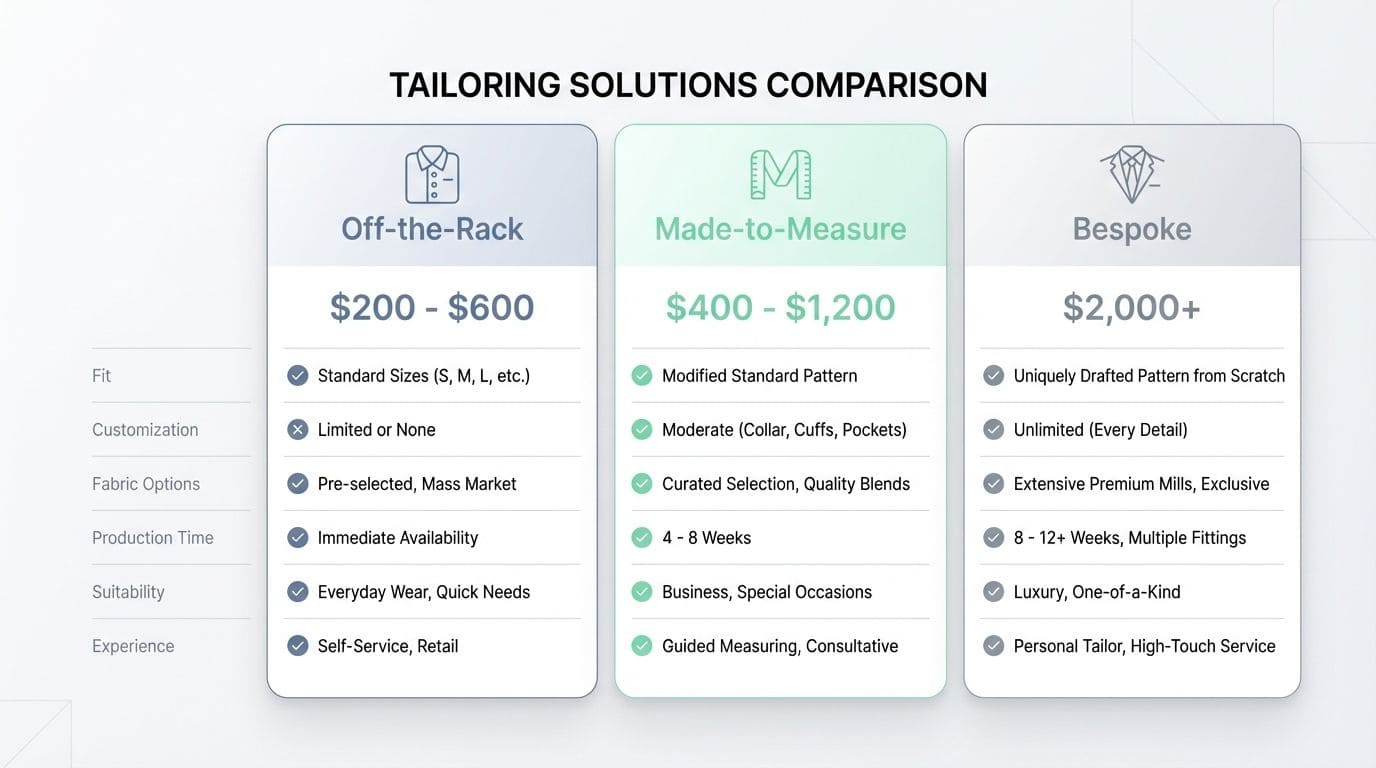
| Feature | Off-the-Rack (e.g., Macy’s) | Made-to-Measure (e.g., Indochino) | Bespoke (Custom) |
|---|---|---|---|
| Estimated Price (US) | $200 – $600 + Alterations | $400 – $1,200 | $2,000+ |
| Fit Accuracy | General sizes (40R, 42L) | Modified to your measurements | Exact mold of your body |
| Time to Wear | Immediate (plus 1 week for hems) | 3 – 6 weeks | 8 – 12 weeks |
Each custom suit is built using your exact measurements. Nothing feels tight where it shouldn’t or loose where it counts. Personal touches stand out too. You pick your own lining, buttons, and lapels that match your taste and mood.
Expert tailoring upgrades the finish. You get sharp lines across the shoulders, crisp lapels at the collar, and smooth seams on every pocket. Suits made to order move with you during a long day at work or special events. In my own daily grind, I’ve never had to tug or adjust a custom fit once.
Craftsmanship separates handmade men’s suits from ordinary store-bought options. Each stitch is checked by an expert tailor who takes pride in his skill. Custom clothing celebrates individuality. No one else will have your exact look at a wedding or big meeting.
High-quality fabrics feel softer against the skin and last longer. My oldest custom suit still looks new after six years. A proper fit boosts posture naturally. A good jacket hugs the shoulders without pinching and sits flat against your back for that straight-up stance bosses love.
Time spent getting measured pays off because repairs are rare. No more split pants at awkward moments! For more insights on saving money while looking sharp, check out this article about renting vs buying suits.
How Can You Adjust Off-the-Rack Suits for a Better Fit?
Off-the-rack men’s suits rarely fit perfectly straight from the store. With a few smart adjustments, any man can boost his look and comfort in less than a week.
- Visit a clothing tailor to shorten sleeves so the shirt cuff peeks out. This is usually about half an inch.
- Adjust the jacket length if it covers more than half your seat or looks too short for your height. You may request changes by up to an inch.
- Fix shoulder seams if there is bunching or pulling. While hard to alter, skilled specialists can improve minor flaws here. This matters most for fit.
- Have the chest and waist taken in for a sharp silhouette. Many shops suggest slimming both for men who want that “made-for-me” look common among custom suits.
- Hem pants so they just graze your shoes without pooling on top. Follow current 2025 style that favors a cleaner ankle break.
- Taper pant legs below the knee to create clean lines. Wide trousers can drown slim frames and look sloppy.
- Adjust waistbands using side tabs or discreet darts. This helps secure the fit without needing a belt every time you wear your suit.
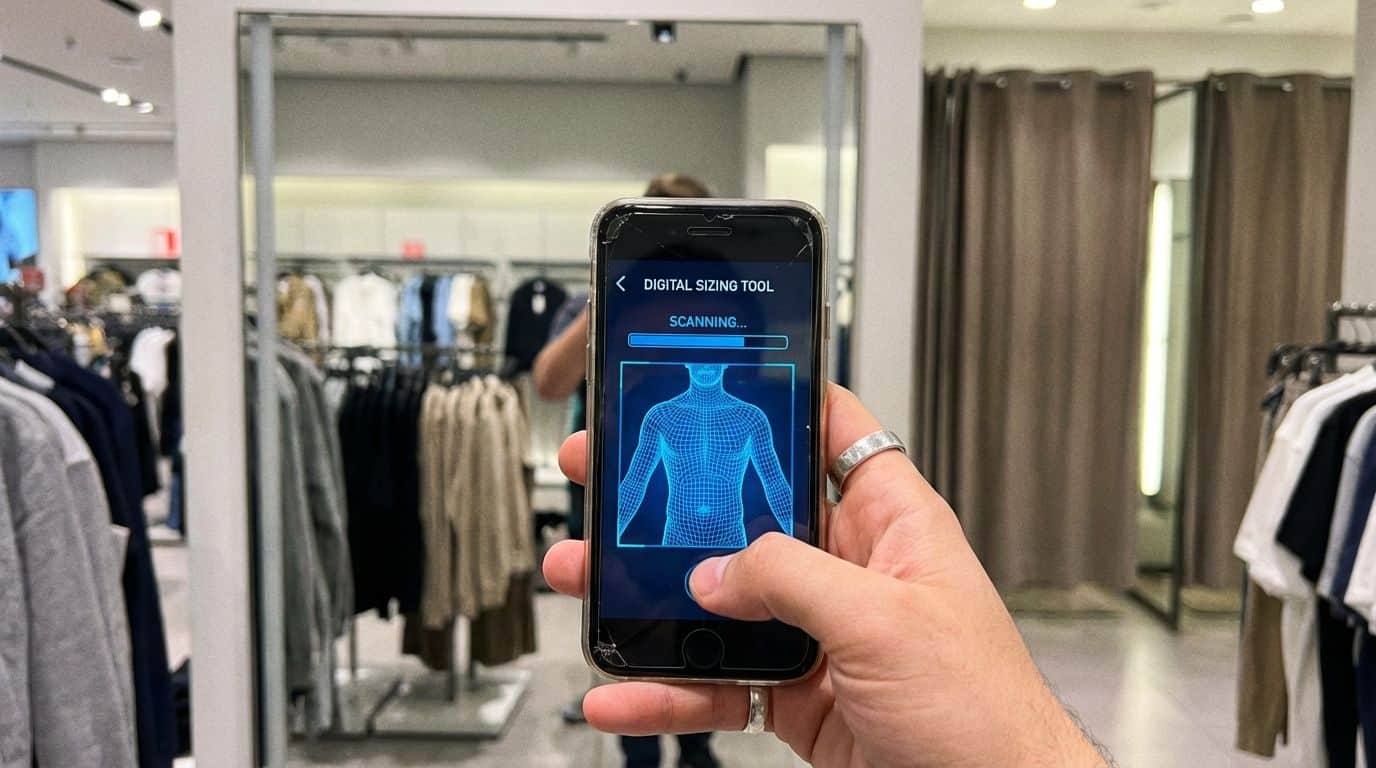
- Use digital measuring tools like Sizer or MTailor for highly accurate size data. These apps scan your body with your phone camera and help eliminate guesswork during fitting.
- Ask brands that offer clear tailoring options to keep track of measurements. They should log chest, jacket length, sleeve length, waist size, hips, inseam, seat width, and outseam. This is ideally done with a soft tape held close against the body.
- Select new buttons if needed. Sometimes simple details lift cheaper off-the-rack suits closer to custom clothing standards in both style and feel.
Every fix counts in reaching that polished finish seen on custom pieces from respected names like Savile Row or Zegna suits worn by athletes and celebrities alike.
What Common Suit Fit Mistakes Should You Avoid?
Getting a men’s suit wrong can turn heads for all the wrong reasons. Spot these classic goofs and find out how to dodge them.
Why Is Selecting the Wrong Size a Problem?
Settling for the wrong size in men’s suits can ruin your whole look. A baggy jacket droops, making you seem careless, while pants that pinch or sag draw all the attention away from your face.
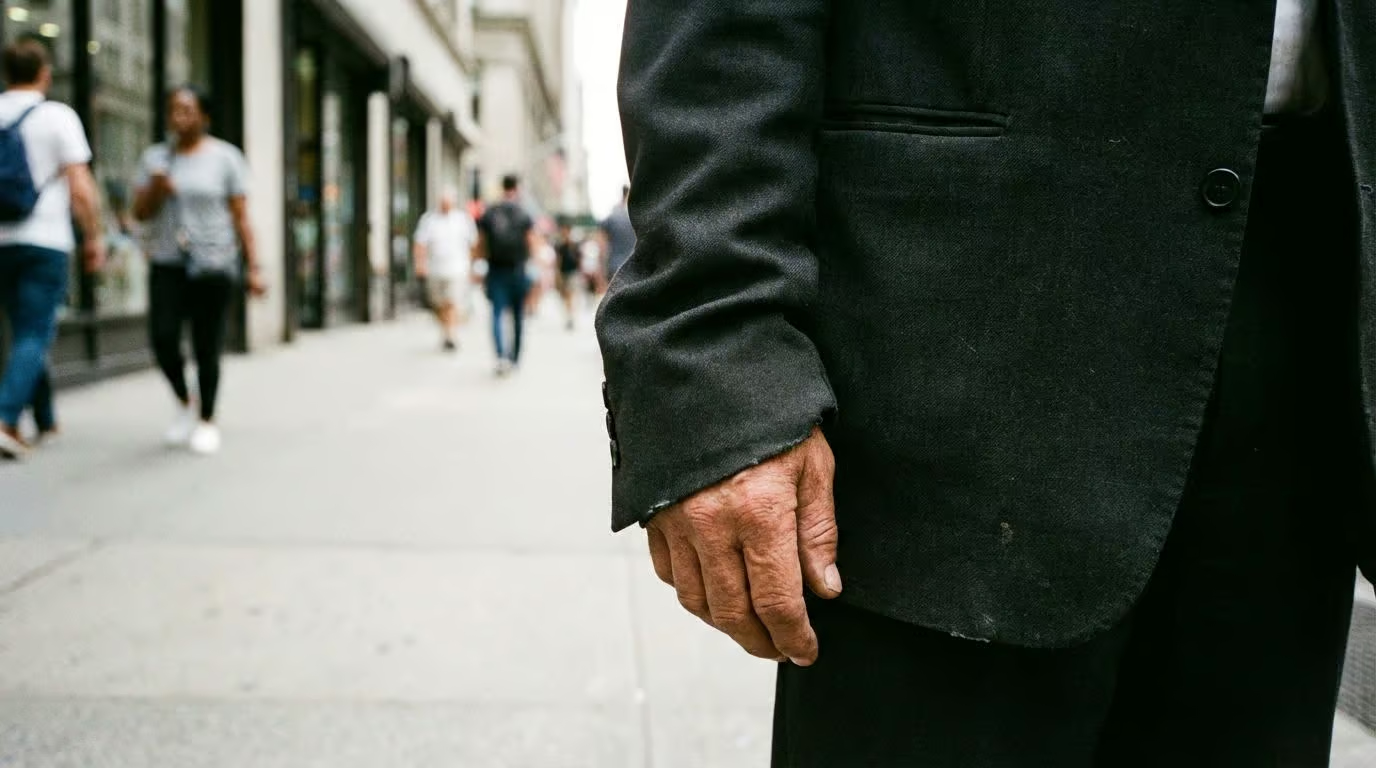
Poor fit leads to an awkward appearance and knocks down your confidence fast. Guys wearing ill-fitted custom clothing can feel as out of place as a penguin at a Texas barbecue. One major warning sign is the “divot” below the shoulder pad. This happens when the jacket shoulder extends past your natural arm, creating a hollow dent.
Precise measurements become vital here because sloppy sizing wrecks even expensive custom suits and off-the-rack outfits alike. Skipping proper measurements makes you blend into the background rather than stand tall.
Next up, let’s talk about how ignoring proportions affects suit fit and comfort.
How Does Ignoring Proportions Affect Suit Fit?
Ignoring proportions throws off everything in men’s suits. Shoulders sag, pants puddle, and the whole look screams poor fit instead of sharp style. You might have seen a man with jacket sleeves too long or trousers so short they show ankle for days. These are avoidable mistakes made by skipping proper measurement.
I once bought an off-the-rack suit thinking “close enough,” but felt uncomfortable all night. My arms looked shorter than they were, and the seat bunched every time I sat down.
The right balance matters more than people admit. Body shape plays a big role here. A slim guy in a bulky coat looks lost, while someone heavyset wearing skinny lapels looks squeezed in like toothpaste.
Men benefit most from suits shaped to their measurements. This includes not just chest size alone but also sleeve width and pant taper. Ignore these details, and you get discomfort along with awkward glances at the office party or job interview.
What Happens if You Overlook Trouser and Sleeve Length?
Too-long sleeves can cover your shirt cuffs, making even an expensive men’s suit appear untidy. You might notice you keep tugging at your jacket or feeling uncomfortable during a handshake.
An odd trouser length disrupts the clean line of pants and appears disorderly near fine leather shoes. The break should be light and just touch the shoe. Otherwise, you get bunching or too much sock visible.
Guys often say they feel uneasy when pant legs gather around ankles or if wrists disappear inside wide sleeves. These small mistakes affect confidence quickly, especially in meetings or dates where first impressions matter.
Even custom suits lose their sharpness if details like sleeve ends and trouser hems go unchecked. That neat appearance is gone before anyone sees the brand label.
What Additional Tips Help Achieve the Perfect Fit?
Getting the perfect fit in men’s suits is part art, part science. Small adjustments or new tricks can make your suit look sharp and polished.
- Take your actual measurements with a tape measure, not just size labels on tags. Chest, waist, shoulders, hips, inseam, sleeve—all matter.
- Use sizing guides from different brands for men’s suits. Every brand has its own size chart; use it alongside your numbers for better accuracy.
- Book a fitting with an expert if you want something special like a custom-made or made-to-measure suit. Experts know how to fix small issues that throw off the look.
- Try body scanning tools at select stores. These digital gadgets map out 3D data points from your frame for more precise results than old-school sizing charts by hand.
- Wear dress shoes and the shirt style you plan to wear under your jacket during fittings. It helps get true jacket length and trouser breaks so nothing feels off later.
- Keep psychological comfort in mind. Feel good in your outfit and avoid styles that make you self-conscious about body image.
- If you buy an off-the-rack men’s suit, work with a skilled alterations tailor who can nip or tuck at critical spots: seat, waist, sleeves, or hem.
- Avoid pants pooling at the ankle or jackets that billow out midsection. Clean lines always trump bagginess no matter what trends say.
- Ask friends whose style you admire for their opinions during the first try-on session. It gives honest outside perspective in case mirrors are lying to you today.
- Stay aware of developments like new International Size Standards discussed by researchers and industry leaders. These may appear by 2025 to help match more people with accurate fits worldwide.
Now take a quick look at how future rules could reshape men’s suit fitting as 2025 approaches.
How Will the Rules of Suit Fitting Change in 2025?
Digital sizing tools have hit dress shops and apps in 2025, promising smarter suit fits for men everywhere. Step into a shop, stand still for a scan, and the system will measure you in seconds. It uses artificial intelligence to suggest the exact fit.
New sizing systems are on deck too. Brands want to cover every type of frame—athletic, slim, broad-shouldered, or short—and technology is making that possible. We are seeing a shift back to relaxed fits and wider trousers in 2025 fashion shows, moving away from the super-skinny styles of the 2010s.
Clothing makers now mix old-school tailoring with body data from smart devices and university research. This means your next custom suit might start with an online quiz asking about comfort zones or favorite sports rather than guessing waist size.
Psychographic questions help shape suits by mood as much as measurement. More companies aim at mass customization so each man can find his sweet spot between style and comfort without fussing over racks of odd sizes.
Style meets science. Comfort teams up with sharp looks—just like that old friend who always knows how to dress for any party.
People Also Ask
How do I know if a men’s suit fits well?
You know you have a winner when you see exactly one-quarter to one-half inch of shirt cuff peeking out from your jacket sleeve. Make sure the jacket length covers your backside completely and that you can comfortably slide three fingers into the chest area when it is buttoned.
What makes bespoke clothing different from off-the-rack options?
Think of off-the-rack as a cookie-cutter template, while true custom work involves creating a brand-new pattern from scratch just for you. A master cutter takes over 20 unique measurements of your body and will often require three to five separate fittings to account for nuances like posture and shoulder slope.
Is it worth investing in a bespoke suit instead of buying ready-made?
Since a hand-crafted suit can last 15 to 20 years compared to the typical 3-year lifespan of a mass-produced one, the long-term cost per wear actually makes it the smarter financial choice.
Can I spot quality in men’s suits without being an expert?
The best trick I know is the “pinch test,” where you gently squeeze the fabric near the buttons to feel for a loose third layer that signals high-end canvas construction rather than cheap glue. You should also look for functional buttonholes on the sleeves and genuine horn buttons, which are dead giveaways of superior quality.
References
https://made-to-measure-suits.bgfashion.net/How-to-buy-the-perfect-suit/74
https://2.olivenca.al.gov.br/fulldisplay/JU45uK/5S9092/SuitVestSizeGuide.pdf
https://bayoulifemag.com/for-love-and-life/
https://www.bgfashion.net/sustainable-fashion/
https://admisiones.unicah.edu/Resources/kSe7rK/7OK140/HowDoILookStyle.pdf
https://ww2.jacksonms.gov/Resources/kSe7rK/7OK140/how__do__i_look__style.pdf (2025-01-25)
https://www.academia.edu/36346730/Vandananarangthesissoftcopy
https://admisiones.unicah.edu/Resources/kSe7rK/7OK140/how_do__i_look_style.pdf