
I’ve been using a custom infrared sauna from SaunaCloud for a few months now. Fast forward through 4 weeks of sessions, and I felt a quantifiable increase in strength during my 45-minute strength exercise routines. My skeletal muscles recovered faster, and the weights moved a little easier.
Naturally, I wanted to know if this heat exposure was acting as a biological shortcut, forcing my body to produce more testosterone. So, I looked into the clinical data.
Your post-sauna feeling of strength is a legitimate physiological response. You should recognize, however, that this sensation owes its thanks to systemic recovery and a neurological reset, rather than a direct spike in testosterone.
Key Takeaways
Sauna use does not directly manufacture more testosterone, but it actively lowers cortisol (scientifically documented to drop from 13.61 to 9.67 µg/ml) to prevent catabolic suppression of your existing androgens.
Habitual physical activity—specifically hitting targets over 1,500 METs-min/week—is the primary driver of your baseline testosterone, outweighing passive heat exposure.
That post-sauna physical surge comes from deep systemic neuromuscular recovery and human growth hormone release rather than a steroid-like response.
Table of Contents
Endocrine Stability: Resolving the Scientific Testosterone Conflict
Clinical data proves that extreme heat preserves your reproductive hormones rather than spiking them. If you go back a few decades, you will find old reports hinting that heat chambers caused androgen spikes. One well-known study published in the European Journal of Applied Physiology even pointed to a significant post-session testosterone increase.

But there was a catch with those early numbers. The researchers failed to fully account for diurnal variation, testing guys at different times of the day, which skewed the serum concentration metrics. Your testosterone naturally drops from morning to evening.
Modern, tightly controlled research shows that thermal stress does not disrupt hormonal balance. The body maintains endocrine stability to protect core functions during heat exposure. During extreme heat, such as the conditions described in an infrared sauna health guide, your cardiovascular system mirrors the intensity of a 6 METs-min/week activity, which reduces long-term risks for cardiovascular disease and stroke. Yet, mean testosterone levels remain stable, shifting from 4.04 to 4.24 ng/ml.
This stability proves that passive heat does not harm male fertility or disrupt long-term reproductive loops. Expect stable androgen levels rather than hormonal spikes from your sweat sessions.
Cortisol Suppression and the Growth Hormone Recovery Engine
The Cortisol-testosterone Axis
You can utilize sauna therapy specifically to drive serum cortisol levels down, effectively removing the biological friction that caps your testosterone. Cortisol is your primary stress hormone. When it stays chronically elevated, it breaks down muscle tissue. More importantly, excess cortisol actively causes testosterone suppression.

Researchers from the University of Warmia and Mazury studied young men over 72 minutes of infrared sauna therapy. They found that serum cortisol plunged from 13.61 to 9.67 µg/ml. This drop suggests that saunas build a safe harbor for existing testosterone by minimizing catabolic suppression.
The Neuromuscular Growth Hormone Pulse
The physical strength you feel post-sauna is driven by a surge in human growth hormone (GH), which acts as the engine for your neuromuscular recovery. Heat stress forces the pituitary gland to secrete growth hormone to aid in cellular regeneration and tissue repair.
“Faster muscle repair and central nervous system recovery allow for consistent training intensity, which is often mistakenly attributed to increased testosterone.”
Faster muscle repair and central nervous system recovery allow for consistent training intensity, which is often mistakenly attributed to increased testosterone.
Traditional Extreme Heat Vs. Infrared Tissue Penetration
Using an at-home infrared sauna prioritizes localized muscle recovery and deep nervous system relaxation, which differs from the 90-91°C environmental shock used in clinical trials. If you look at the baseline data for heat adaptation, researchers almost exclusively rely on the traditional Finnish sauna paired with cold water immersion.
That specific thermal protocol creates severe contrast. The heat followed by ice water activates your sympathetic nervous system, forcing it to communicate rapidly with the hypothalamus-pituitary-adrenal axis to manage the shock, ultimately dialing up hormones like renin and aldosterone to regulate your fluid balance as you sweat. It is a full-body cardiovascular workout.
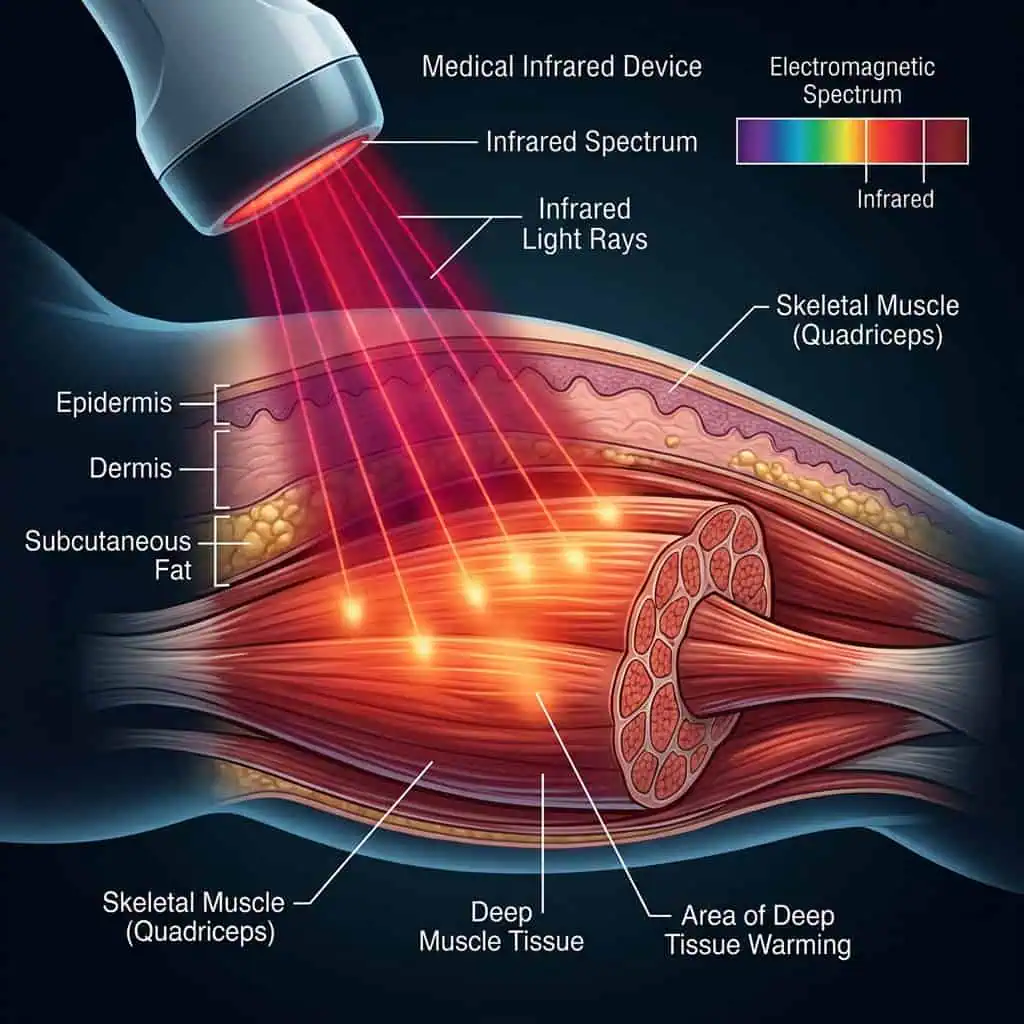
My SaunaCloud unit, on the other hand, is an infrared model. Infrared saunas operate at much lower ambient temperatures. Instead of relying on a blazing hot room, the infrared light penetrates directly into the muscle tissue. Just know that the biological mechanism is a slow tissue warming rather than the acute systemic cardiovascular shock seen in the clinical literature.
Habitual Physical Activity: the True Driver of Baseline Androgens
Your baseline testosterone is dictated by how much heavy physical work you do outside the heat, not inside it. The sauna is an accelerant, not a replacement for effort.

The physical heat causes rapid vasodilation and a spike in your resting metabolic rate, which drives metabolic clearing to flush fatigue from your muscles. Researchers using an ELISA test found that guys with the highest testosterone recorded at least 1,500 METs-min/week of physical work.
They measured this using the International Physical Activity Questionnaire. The sweet spot for anabolic hormone health sits above a specific effort threshold. Studies show that maintaining a high Metabolic Equivalent of Task (MET) score—specifically pushing past 1500 METs-min/week—is the driver of high baseline androgens. If you want high testosterone, you have to establish a baseline of heavy physical activity and use the heat strictly to recover from the damage.
Setting Realistic Physiological Expectations
Treat sauna usage as a recovery tool focused on hydration and electrolyte management, rather than attempting to induce a hormonal upswing.
The heat maintains homeostasis through cortisol reduction and growth hormone stimulation. It clears out cortisol. It pushes growth hormone. It resets your central nervous system so you can go back to the gym and move heavy iron. But if you sit in a hot box for an hour hoping to chemically mimic a steroid cycle, you will only end up dehydrated and exhausted.
Frequently Asked Questions
Does sitting in an infrared sauna actually increase my testosterone levels?
No. Clinical data shows that while older, flawed studies suggested a spike, modern research confirms that testosterone levels remain stable during heat exposure. The sauna helps maintain your baseline by reducing stress, but it does not act as a synthetic booster.
If saunas don’t boost testosterone, why do I feel stronger after using one?
That surge is caused by a pulse of human growth hormone (GH) and a significant reduction in cortisol. By lowering stress hormones and aiding in neuromuscular recovery, the sauna clears biological friction, allowing you to train harder and recover faster.
What is the relationship between sauna use and cortisol levels?
Sauna therapy acts as a buffer against catabolic stress. Research has documented a drop in serum cortisol from 13.61 to 9.67 µg/ml during sessions, which prevents elevated stress hormones from suppressing your natural testosterone production.
What is the difference between an infrared sauna and a traditional Finnish sauna?
Traditional saunas rely on extreme ambient heat to shock the cardiovascular system, often paired with ice baths to force a systemic response. Infrared saunas operate at lower temperatures, using light to penetrate deep into muscle tissue for localized recovery rather than acute thermal stress.
How much exercise do I need to actually move the needle on my testosterone?
Baseline testosterone is driven by heavy physical activity, specifically hitting a threshold of 1,500 METs-min/week. The sauna is an effective recovery tool for that workload, but it is not a replacement for the volume of physical effort required to move your baseline androgens.
Can I use infrared sauna sessions to replace my gym workouts?
Absolutely not. Sauna sessions provide metabolic clearing and tissue repair, but they are recovery tools, not an alternative to resistance training. Relying on passive heat to mimic the effects of exercise will only lead to dehydration and exhaustion.
Why did some early scientific papers claim saunas spike testosterone?
Those studies failed to account for diurnal variation, which is the natural decline of testosterone throughout the day regardless of heat. When controlled for time of day, modern research shows that your endocrine system maintains stability rather than spiking hormones.