Casino comps are a predictable system built on one number: theoretical loss. That’s the amount the casino expects to win from you over time, not what you actually win or lose. You can walk out ahead and still earn comps. You can lose your shirt and get the same offers. The casino bases comps on theoretical loss, not actual wins or losses.
The math is simple: total amount wagered × house edge = theoretical loss. The casino then returns a slice of that expected profit as comps — typically 10 to 40 percent, depending on the property, your player level, and the market.
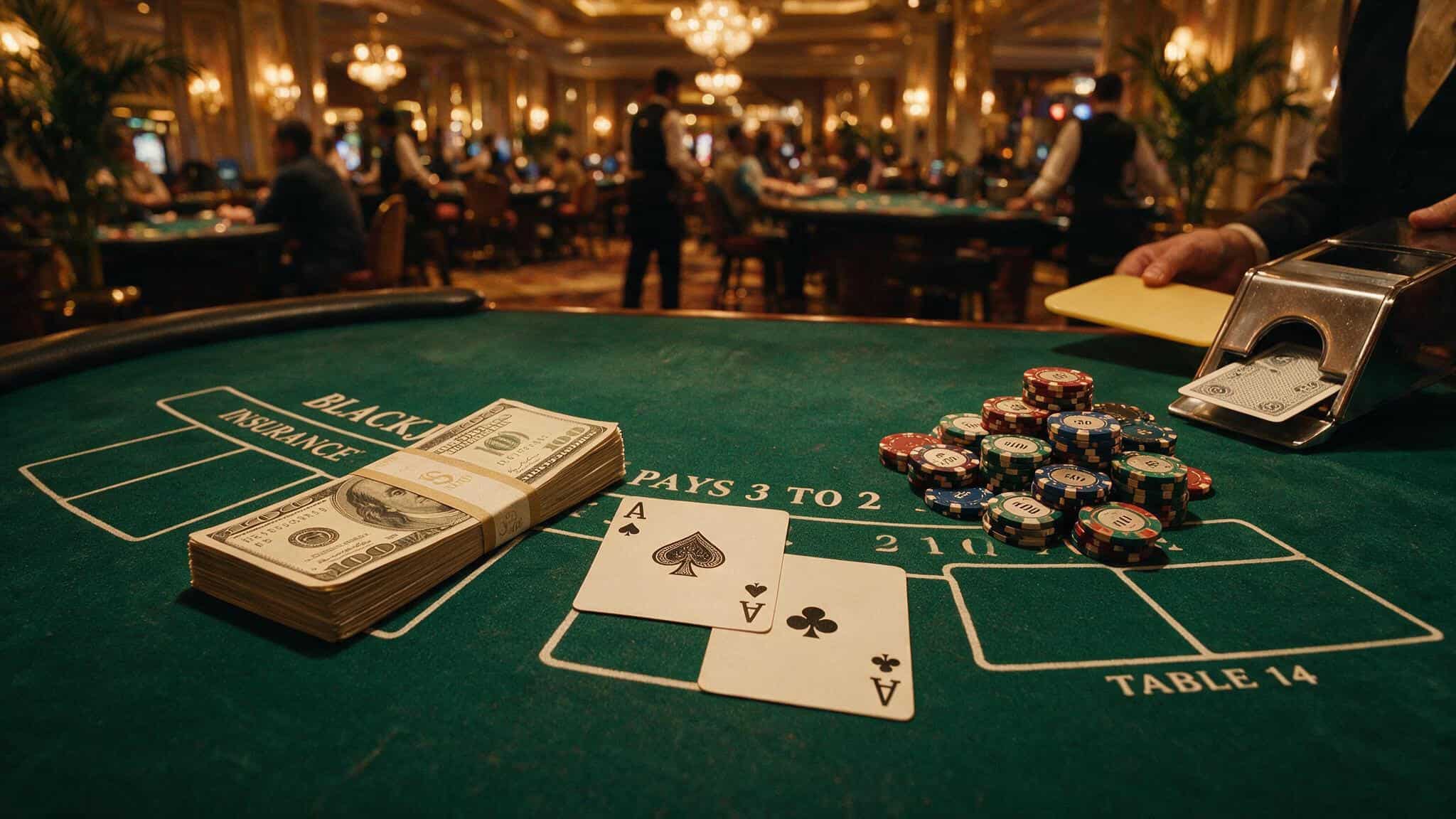
Take a concrete example. A blackjack player with a $25 average bet, playing four hours at 70 hands an hour, generates about $7,000 in total action. At a 1.5% house edge, that’s $105 in theoretical loss. If the casino returns 30% of theo as comps, you’re looking at $31.50 in value.
That’s a comped buffet and a few drinks.
Key Takeaways
Comps are based on theoretical loss (total wagered × house edge), not on how much you actually win or lose — you can profit and still get free rooms.
Slot play at $5 wagered per point earns comps fast but at a terrible ratio: $100 in slot play with 90% payback yields an expected loss of $10 and comps worth about $0.20 (2% of expected loss).
Concentrating your play at one casino group improves offers: MGM Rewards covers nine Vegas casinos and Caesars Rewards covers nine — two cards give you 18 properties, and the same $1,000 wagered at one group makes you look like a much bigger player.
Table of Contents
The Invisible Rating System: Making Sure You Get Credit
If the casino does not track your play, you will not receive proper credit.
For slots and video poker, tracking is automatic. You need your players card in the machine. No human error, no negotiation.
Pit supervisors estimate your average bet, how long you played, and how many hands per hour. They also assign a house edge — and they might guess higher than the actual game. That’s good for you in the short term (higher theo), but it means the system is imprecise even when they’re trying.
The fix is simple: put your players card next to your cash when you buy chips. The dealer hands it to the floorperson. After a session, politely ask if your card is being tracked. Don’t be a pest, but a quick check saves you from playing for nothing.
Three ways to claim comps
- Floorperson – Best for low-stakes table game players. They can authorize small comps on the spot like a meal or a drink.
- Players Club desk – Handles slots and video poker comps. Limited compared to a host, but it’s the default option most people use.
- Casino host – Has the most discretion. We’ll get to them in section five.
Most players only hit the club desk.
The points math
Slots: $5 wagered = 1 point ≈ $0.01. Video poker: $10 to $20 wagered = 1 point. Run the numbers on a $100 slot session: 90% payback means an expected loss of $10.
You earn 20 points worth $0.20 — two percent of your expected loss. That comp-to-loss ratio is tiny.
One nuance: some casinos require spouses to share a single players club account. Others let you keep separate accounts. Separate accounts can mean two mailers — say three free nights each, giving you a full week in Vegas on the house. Check the rules before you decide.
A joint account builds points faster toward higher tier status. Pick the strategy that matches your play style.
The Concentration Strategy: Why Spreading Play Hurts Your Offers
Average daily theoretical loss — ADT, is the number that drives your offers. Spread $1,000 across five casinos, and each sees a small player. Drop that same $1,000 at one casino, and you’re worth paying attention to.
This is why the two big loyalty programs matter. MGM Rewards covers nine Vegas casinos: Mandalay Bay, Luxor, Excalibur, New York New York, Park MGM, MGM Grand, Aria, Bellagio, and the Mirage. Caesars Rewards covers nine more: Bally’s, Caesars Palace, the Cromwell, Flamingo, Harrah’s, LINQ, Paris, Planet Hollywood, and Rio.rs. Two cards, 18 casinos — and for broader insight into the industry, you can check out GamingToday online casino guides. You can concentrate all your Vegas play within one group and never touch the other.
The long-term payoff can be large. I received Wynn free room offers for thirteen years after a single visit with minimal play. When I finally took them up on it, I played maybe $30, lost $15, and still get offers.
Players in Atlantic City chase the red carpet at a new casino, play there a few times, then complain when their old casino stops sending offers. Switching casinos should be like changing jobs — you should only do it after weighing all the pros and cons, and only when you are certain the grass is greener. Casinos will eventually adjust their offers, so constant switching rarely pays off.
Which Games Earn the Most Comps (and Which Ones Cost You)
Every game trades off between how fast you earn comps and how much you lose.
Slot machines give the fastest, most consistent comp accumulation. Tracking is automatic, and the house edge is high — meaning more theoretical loss per dollar wagered. But higher theo also means you’re bleeding money faster. The comp-to-loss ratio is low.
Video poker earns points slower — about half the rate of slots. One point per $10 or $20 wagered instead of $5. But if you find a machine with a strong pay table and play perfect strategy, the house edge can drop under 1%. Your bankroll lasts longer, and the net cost (loss minus comp value) is lower.
Table games like blackjack, baccarat, craps pass line bets, and roulette each have their own house edges. The comps depend on the pit supervisor’s estimate. A $25 blackjack player generating $105 in theo gets back roughly $31.50 at 30% comp return. Compare that to slots where $100 in play yields $10 expected loss and $0.20 comps. Playing craps over slots can save about $50 per hour in expected loss.
If you want to maximize comps per dollar expected loss, low-volatility slots are interesting. Machines like Black Diamond and Hot Tamales pay back smaller amounts more frequently. They cycle your coin-in efficiently, generating theo without wiping you out quickly.
Leveraging Promotions: The Mid-Week Multiplier Hack
Bonus points days are where you get leverage without gambling more. Most casinos run these mid-week. A 2x points day is common; some offer 5x or 10x.

Look for point multipliers, cashback, free play, dining credits, slot tournaments, and tier credit bonuses. Some specific promotions to watch: New Member Promotion at Live! Casino (up to $50 free play), Comp Swap days, Spin & Win wheels at MGM National Harbor, “Making Winners is How We Roll” at Ocean Downs with drawings every 30 minutes, Rocky Gap’s Friday Earn & Return, Hollywood Perryville’s rotating offers, and 50 Fifty Wednesdays. For those who prefer not to wager, there are legitimate ways to how to get Vegas comps without gambling through credit card rewards, hotel status matches, and casino marketing offers.
Since around 2020, you can earn comps without gambling. MGM Resorts and Caesars Entertainment let non-gamblers earn points on hotel stays, dining, shows, and shopping, and our guide to how to get free stuff at casinos explains the full strategy. You don’t have to touch a slot machine to get an offer.
The Secret Weapon: Your Casino Host
A host has more discretion than the players club desk. Room upgrades, dining credits, event tickets, VIP lounge access, resort fee waivers — things that aren’t visible on the app or the club desk menu. Hosts can also review your play history and unlock offers that automated systems miss.
You don’t have to be a high roller to ask a host to review your play.
Real example: The Stratosphere comp offer list includes one to four free nights, $50 to $200 freeplay, spa access for two, bonus chips, room upgrades, and show tickets. A host can unlock those tiers faster than the algorithm.
One trick: ask about resort fee waivers. They’re generally waived on comped rooms, but the benefits (internet, gym) may not be included unless you’re Diamond level at Caesars. I paid $39 a night for internet at Encore in 2019 because my comped room had no resort fee but also no included benefits. A host might have fixed that.
Free Cruises: The TikTok Strategy That Actually Works
Royal Caribbean’s Club Royale program gives complimentary cruises to passengers who earn enough points in the casino. Points are based on coin-in, not on how much you lose. That’s the key.
TikToker Joe (@joe2go_ta) claims he spends about $2,000 once a year exclusively on low-volatility slots (Black Diamond, Hot Tamales) to hit 2,500 points and reach Prime status in one sailing. Then he stops gambling for the rest of the year. Prime status gets you an instant certificate onboard, an annual complimentary cruise, and weekly or monthly offers. Joe claims 37 back-to-back cruises almost for free. His most popular video has nearly a million views.
I hit Prime on one sailing myself. Got the instant certificate and another free cruise offer the following April. Diamond Plus status adds free drinks, free laundry, and other perks that cut down onboard costs.
But you need to know the limitations. Prime member offers tend to be on older, smaller ships — Enchantment of the Seas, Grandeur of the Seas, Rhapsody of the Seas, not the newest mega-ships like Star of the Seas or Utopia of the Seas. Only certain sailings qualify. Check the list before you book. The Crown & Anchor Society loyalty program governs these offers, so your status there determines what you receive.
And Joe’s $2,000 figure is his claim, not a guarantee. Results vary.
The strategy works because low-volatility slots keep you in the game longer, cycling coin-in to earn points without a massive bankroll hit. Then you stop.
The Fine Print: What They Don’t Tell You About “Free”
Resort fees on comped rooms are generally waived, but don’t assume benefits come with it. At Caesars, you need Diamond level to keep gym and internet access. One reader reported a comped Caesars room with the resort fee waived and all benefits included — your mileage will vary.
Comped meal tickets cannot be used to tip waitstaff. Bring cash. Unused credit on a comp ticket disappears — no refund, no transfer.
Points earned at Strip and downtown casinos expire after a month or two. Use them during the same trip or lose them. Don’t let a free buffet expire because you saved your card for next time.
Venetian and Palazzo are the stingiest. In February 2011, they stopped offering free rooms and meals to anyone except high rollers. Policies change. In October 2016, Caesars and MGM experimented with minimum-bet drink requirements. That didn’t last, but it shows the system evolves.
The Golden Rule: Never Chase Comps
The math makes this obvious. $100 in slot play, 90% payback, $10 expected loss, $0.20 comps. You’re getting 2% of your expected loss back.
Decide your gambling budget first, then use rewards to maximize value from planned play.
Offers aren’t a reward for past play. They’re based on what the casino expects you to spend in the future. Keep a consistent daily budget to stabilize your offers. Don’t visit the same casino too often; longer intervals often yield better offers.
My Wynn example again: after 13 years of free offers, I went back, played $30, lost $15, and still get offers. The initial concentration of play built a reputation that minimal maintenance kept alive.
The only sure way to get better offers is by spending more.
Frequently Asked Questions
What is the $20 method at the casino?
The $20 method is a trick where you slip a $20 bill to the hotel front desk clerk when checking in and politely ask if there are any complimentary upgrades available. It’s not a guaranteed hack, but it sometimes works at properties that have room inventory and discretionary upgrade authority at the front desk.
How much do you have to spend to get comped at a casino?
There’s no fixed dollar amount because comps are based on theoretical loss, not how much you actually spend or lose. A blackjack player betting $25 per hand for four hours generates about $105 in theoretical loss, which might earn a comped buffet and drinks. Slot players need to wager more to see meaningful offers because the comp-to-loss ratio is much lower.
How to get a casino to comp a room?
Concentrate your play at one casino group so your average daily theoretical loss (ADT) looks higher to that property. Use your players card every time you play, especially at table games where you need to ask the dealer to hand your card to the floorperson. After a session, politely confirm your card is being tracked so you don’t play for nothing.
Are casino comps based on how much you win or lose?
No, comps are based on theoretical loss — total amount wagered multiplied by the house edge — not on your actual wins or losses. You can walk out ahead and still earn comps, or lose your shirt and get the same offers. The casino calculates what it expects to win from you over time, then returns a slice of that as comps.
What’s the difference between slot and table game comps?
Slot comps are tracked automatically by the machine when your players card is inserted, while table game comps depend on a pit supervisor’s estimate of your average bet, time played, and hands per hour. Slots earn comps faster but at a terrible ratio — $100 in slot play with 90% payback yields an expected loss of $10 and comps worth about $0.20. Table games like blackjack give you a much better comp-to-loss ratio.
Can you get comped without gambling?
Yes, since around 2020, major casino groups like MGM Resorts and Caesars Entertainment let non-gamblers earn points on hotel stays, dining, shows, and shopping. You don’t have to touch a slot machine to get offers. Some properties also offer credit card rewards, hotel status matches, and casino marketing promotions that don’t require wagering.