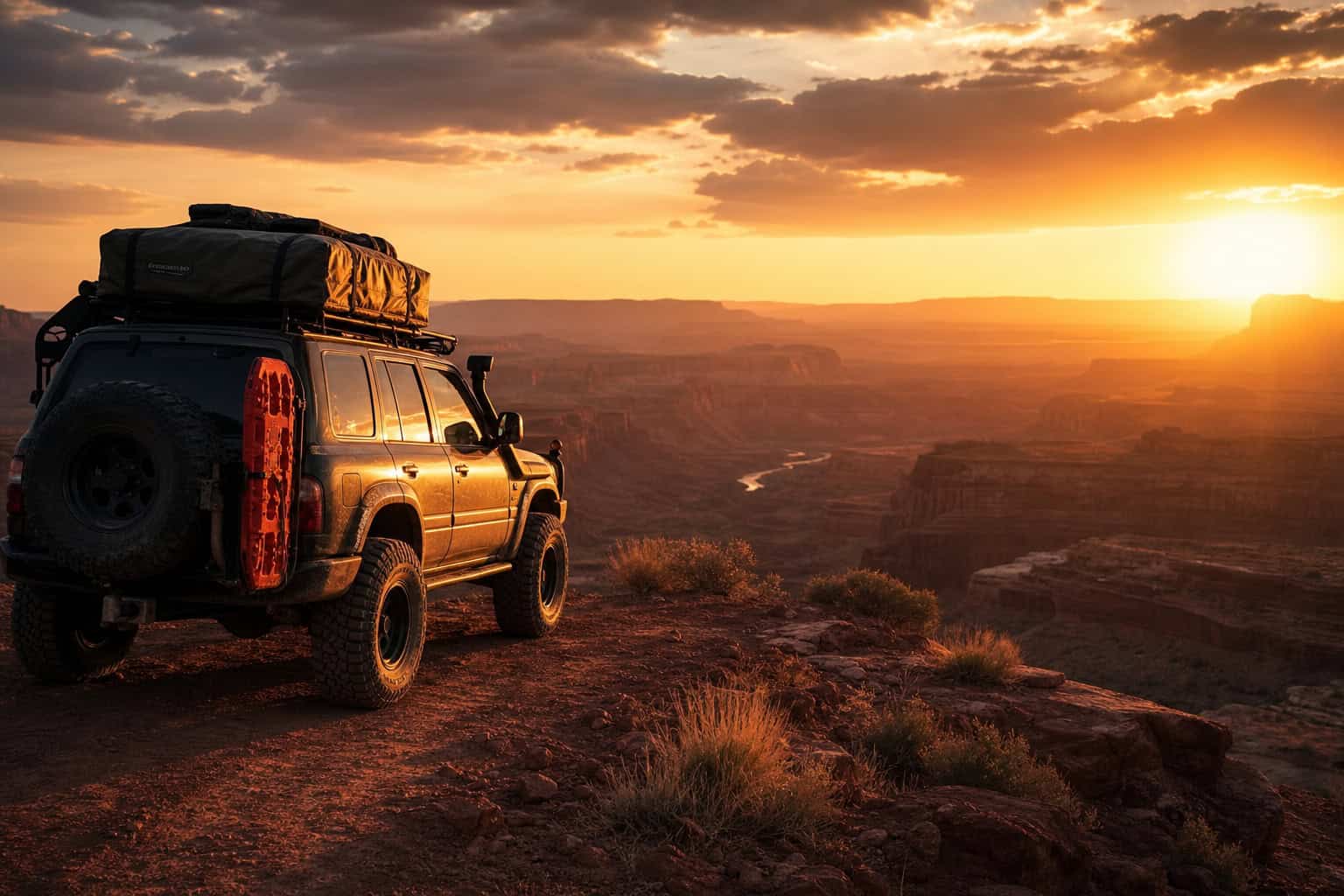
The classic 3,000 to 6,000-mile coast-to-coast sprint is a romantic idea that usually ends in physical misery. Grinding out 3,000 to 6,000 miles across flat highway lanes turns what should be an active adventure into a grueling logistics shift. You spend your days staring at gray asphalt, eating gas station food, and exceeding the 4-6 hours of daily driving limits.
To plan a trip that keeps you engaged, you need to abandon the terminal velocity mentality. Trade the 3,000 to 6,000-mile cross-country dash for high-density regional loops instead. By focusing your route west of the Rockies, you maximize your experiential density—getting the highest concentration of rugged mountain passes, technical canyon roads, and landscapes per mile driven.
Key Takeaways
Keep daily driving to 4–6 hours. You’ll stay fresh enough to hike unexpected trailheads and avoid burning out halfway through the trip.
Grab the $80 America the Beautiful annual pass at your first park gate. It beats paying $30 to $35 every time you roll into a new park.
Target the shoulder seasons—ideally the weeks flanking the summer peak—to sidestep the desert heat, heavy tourist traffic, and early snowfall.
Table of Contents
Route 1: The Red Rock Basin Loop (Utah’s Mighty Five to the Grand Canyon Rim)
This route carves through the arid, high-elevation desert systems of the Great Basin and Southern Utah. It’s a high-impact circuit designed for guys who want to trade interstate convenience for raw, red rock geological formations.
Backcountry Permits and the Lottery Bottleneck
Getting onto bucket-list trails like Angels Landing in Zion or The Wave in Coyote Buttes means dealing with mobile lotteries. You must log into Recreation.gov between 6:00 AM and 6:00 PM local time the day before to secure a permit. Always have a backup list of state parks and hikes. You aren’t guaranteed a spot in the lottery.
Strategic Basecamping in Kanab, Utah
Instead of packing and unpacking your gear every single night, make the historic town of Kanab your base. Kanab offers proximity to three national parks and the local BLM visitors center for walk-in Wave permits. Stay there for three or four days, and you’re within a 90-minute drive of three different national parks. It lets you run light day-packs instead of hauling your entire life across the desert.
Leveraging BLM Dispersed Camping
You don’t need to fight tourist crowds for booked-out national park campsites or overpriced hotel rooms. The Bureau of Land Management (BLM) lands bordering the parks are open for free, dispersed camping. It’s dry camping, so you’ll need to bring your own water and handle your own waste and fire safety. It keeps your trip wild, cheap, and isolated.
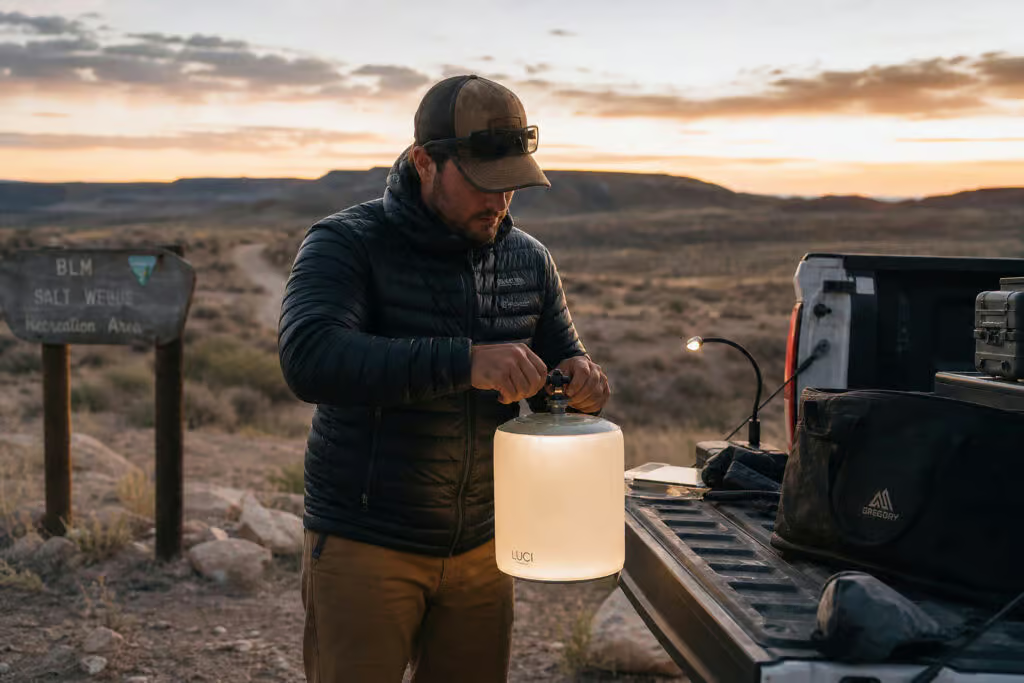
If you are joining the loop from the West Coast, budget your transit carefully to avoid losing days to Southern California’s urban sprawl. Skip the LA Basin by taking CA-58 past San Luis Obispo and Bakersfield, cutting through the Tehachapi Range and the Mojave, or using CA-78 and I-8. Try to clear that coastal stretch in under 3 days so you’ve got at least 10 solid days left for The Mighty Five in Utah and Arizona.
Route 2: The Northern Rockies Adrenaline Run (Glacier National Park to the Beartooth Highway)
While road trippers seeking red rocks might prefer a guide to Utah’s Mighty 5, the northern high-elevation wilderness corridor through Wyoming, Montana, and Idaho is the ultimate destination for pure mountain elevation. This route trades flat highway cruising for the Beartooth Highway, which traverses the northern edge of Wyoming and part of Montana.
High-Altitude Vehicle Preparation Rules
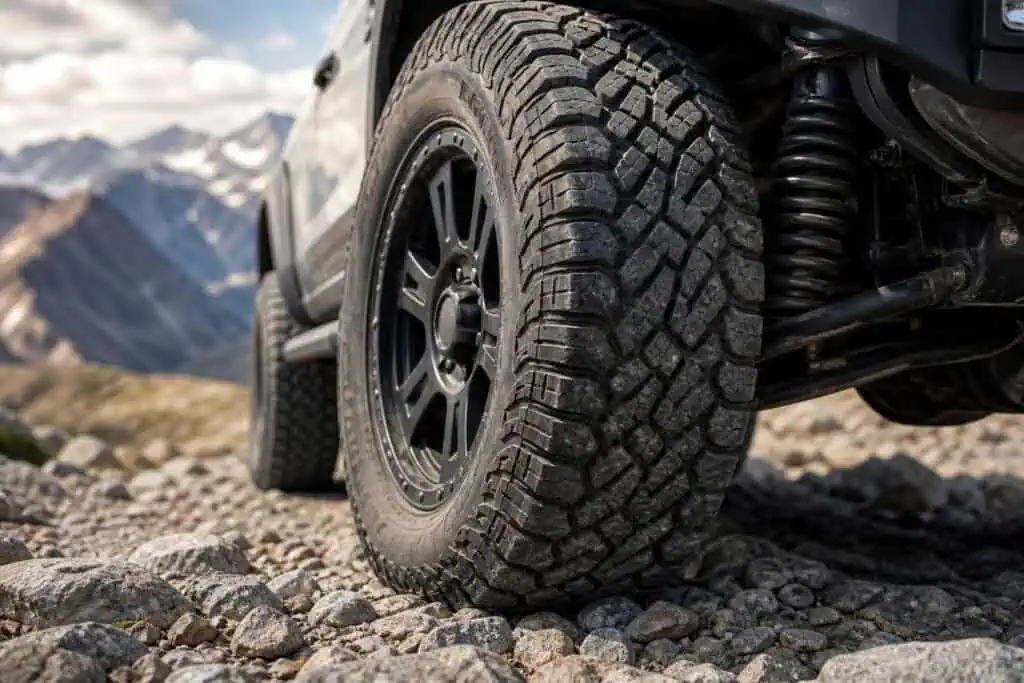
Climbing deep into high-alpine country tests your vehicle’s cooling system, brakes, and tires. Above 9,000 feet, you should drop your cold tire pressure by 2 to 4 PSI. Atmospheric pressure drops at high elevations, which can cause your tires to over-inflate and wear unevenly under heavy internal heat buildup. Watch your transmission temperature gauge on long climbs, and keep cold-weather layers handy. Mountain weather is volatile; you can hit blinding snow in Idaho in August or the High Sierra in May.
Navigating the Beartooth Pass and Summit
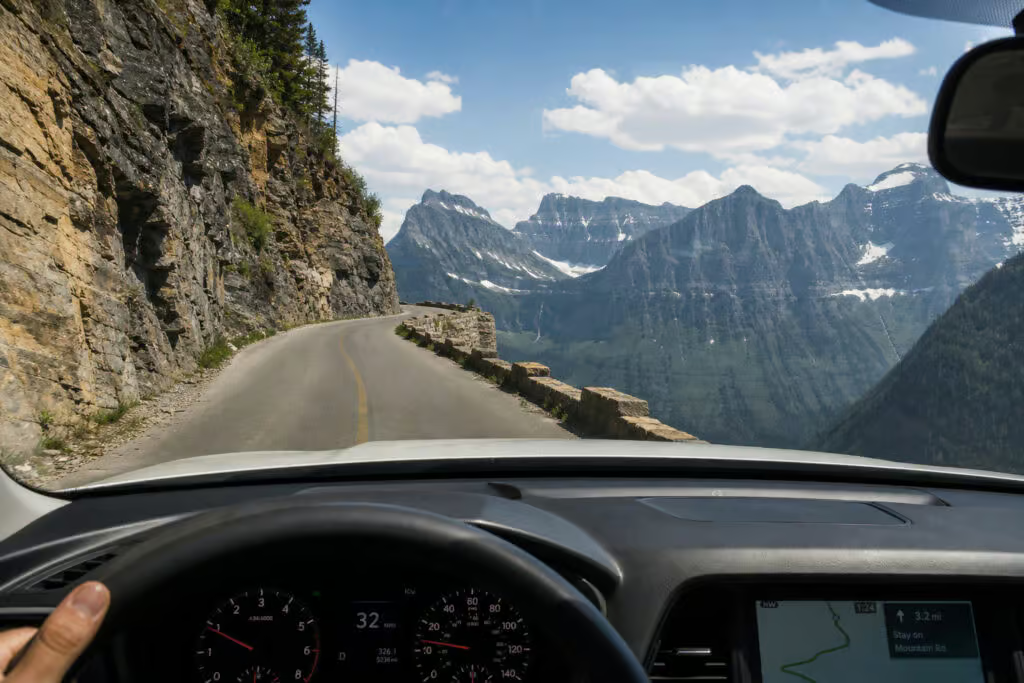
The Beartooth Highway crosses the border of Wyoming and Montana, cresting at a staggering 10,947 feet. It’s a technical, cliff’s-edge drive packed with sharp switchbacks and zero room for driver distraction. To drive it safely, hit the pass between 8:00 AM and 11:00 AM. This avoids sudden, nasty afternoon thunderstorms and keeps you on dry pavement through the tightest curves.
When mapping out a 40-day itinerary for an ultimate boys’ trip, choosing the northern tier over a flatter central route changes the entire nature of the journey. The northern route offers ecological diversity, cooler summer driving, and mountain peaks. The trade-off is the weather window. The periods between mid-spring and early summer or late summer and mid-autumn remain best for avoiding snow-related closures.
Route 3: The San Juan Skyway (Colorado’s Million Dollar Highway Corridor)
Colorado’s US Route 550 is a white-knuckle stretch of mountain asphalt carved directly into the rugged San Juan Mountains. It connects historic mining towns and demands concentration from the driver.
Driving Techniques and Mining Town Outposts
When you’re driving the narrow, guardrail-free Million Dollar Highway, always head north to south. Starting at Ouray and heading south toward Silverton places your passenger-side wheels on the inside lane hugging the mountain wall. It keeps a lane of asphalt between your vehicle and the sheer, unfenced drops on the outer edge.
To explore the region properly, pull over in historic spots like Ouray, Silverton, Durango, or Telluride, utilizing cozycozy to find private vacation rentals that offer the physical space and parking needed for your adventure rigs. Rent a 4×4 to explore the Alpine Loop from these base camps rather than risking standard vehicles on rough trails. Once you cross the eastern plains, take US-160 across Colorado for a rugged detour to the towering sand dunes of Great Sand Dunes National Park.
Managing a long-haul trip, whether navigating inland mountain passes or cruising the scenic Florida Keys Overseas Highway, means learning how to balance major metropolitan areas with pristine wilderness. Treat cities like Denver or Salt Lake City purely as tactical refueling and gear-restocking points. Get in early, load up on water, fresh food, or replacement gear, and exit immediately back to the mountain highways where the real driving happens.
Route 4: The Great Basin Desert Run (Nevada’s US Route 50)
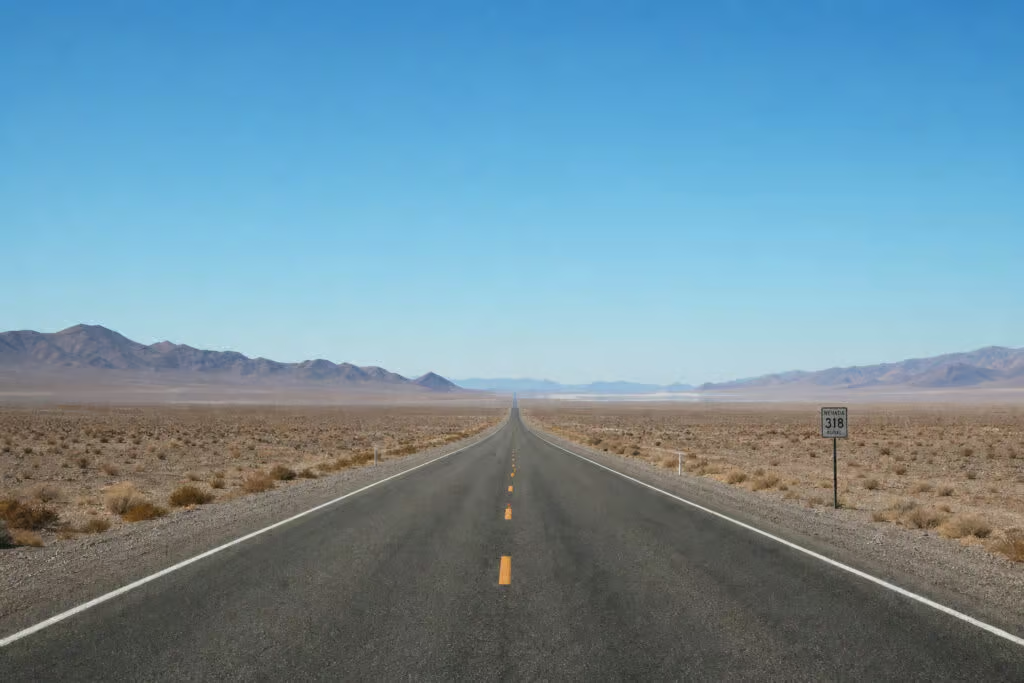
Known as the “Loneliest Road in America,” US Route 50 through Nevada offers a stark, barren landscape with no commercial clutter. It is the perfect run for a driver who wants to test his self-reliance against miles of pure silence.
Fuel Management and High-Desert Survival
In the Great Basin, highway services are sparse, and minor mechanical issues can escalate quickly. Gas stations on Route 50 are frequently separated by 30 to 50+ miles of empty land. Make it a habit to fill up at any open pump once your gauge hits half a tank. Do not play games with your fuel level or your tires in this landscape.
Great Basin Night Skies and Thermal Drops
At the eastern end of this lonely corridor sits Great Basin National Park, an underappreciated peak-climbing destination. Because of its extreme isolation, it has virtually no light pollution, offering the finest stargazing in the lower 48 states. Prepare for high-altitude temperature drops once the sun sets. Even in July, you need cold-weather gear rated down to 30°F to survive the night comfortability. For unique desert sights along the way, detour to the dried-crust spires of the Trona Pinnacles.
For your first major desert road trip, skip the hyped nostalgia of Route 66. Most of Route 66 has decayed into commercialized kitsch. If you want an authentic, uninterrupted encounter with the quiet wilderness of the American West, US Route 50 in Nevada is the superior highway.
Route 5: The Intercultural Corridor (Midwest Architectural Treasures to the Appalachian Ridges)
Transitioning your road trip from the wild West to the historic East requires a shift in mindset. You leave the granite peaks behind and swap raw wilderness for architectural marvels, winding back roads, and dense forests.
Frank Lloyd Wright’s Organic High-Density Trail
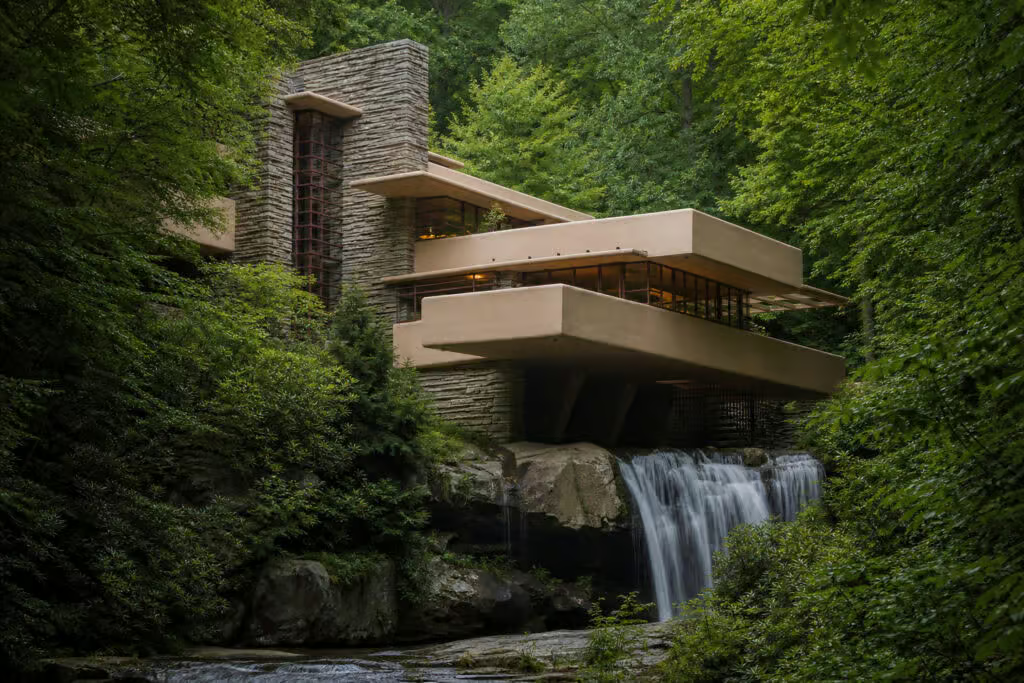
As you head east, architectural masterworks like Taliesin in Spring Green, Wisconsin, and Fallingwater or Kentuck Knob in Pennsylvania’s Laurel Highlands offer a great cultural break. These structures are lessons in organic design, built to blend into the local sandstone and regional geology. While in Wisconsin, make the quick detour to the House on the Rock to check out its bizarre, cantilevered engineering. You’ll need to book private tours for Frank Lloyd Wright sites like Taliesin at least six weeks out.
Midwest State Parks and Natural Inlets
Keep your driving transit active by stopping at high-character state parks. Sandstone structures at Starved Rock State Park in Illinois, Apostle Islands in Wisconsin, and the quiet pine forests of Rocky Arbor State Park offer excellent spots to stretch your legs. They break up the long highway stretches with short, technical hikes.
When heading from west to east, adapt your national park strategy to the changing landscape. Trade the national parks for smaller, high-character state and historical parks. Skip the slow, commercial tourist traps around Mount Rushmore. Instead, drive through South Dakota’s Custer State Park along the Needles Highway to squeeze your car through narrow granite tunnels, then head east on historic routes like the Lincoln Highway (US 30) or US 24 to keep your speeds around a steady 45 mph.
Strategic Logistics: Blueprint for Executing 30-to-50-Day Routes
A long road trip needs some rhythm. If you don’t manage your energy, it’ll feel like a second job by the second week.
First, cap your driving time. Aim for 4 to 6 hours behind the wheel at about 40–45 mph on back roads. Keeping your driving segments short preserves your physical energy and leaves your schedule open to explore random historic markers, old mining ruins, and roadside trails.
Second, purchase the $80 America the Beautiful annual pass. With individual park entry fees running $30 to $35 per vehicle, the pass pays for itself by your third gate. It acts as a year-long key to every national park and federal recreation site in the country.
Finally, get your park accommodations squared away months before you leave. For popular parks with strict timed-entry corridors—such as Yosemite, Arches, and Rocky Mountain—you must log into Recreation.gov at exactly 8:00 AM local time on the day reservation windows open. Always maintain a flexible backlog of secondary state parks and free BLM lands so you have immediate backup options if your first-choice canyon is booked solid.
Frequently Asked Questions
Is $1000 enough for a road trip?
It depends entirely on your strategy, but you can significantly stretch your budget by avoiding hotels and expensive commercial campgrounds. By utilizing free BLM dispersed camping and purchasing an $80 America the Beautiful pass, you eliminate the biggest daily overhead costs of national park travel.
What is the best road trip route across the US?
Instead of a singular cross-country sprint, the most rewarding trips focus on high-density regional loops west of the Rockies. Routes like the Red Rock Basin in Utah or the San Juan Skyway in Colorado provide a higher concentration of technical roads and rugged scenery than a flat, transcontinental haul across the Midwest.
How do I safely drive the Million Dollar Highway?
Always plan your route from north to south, starting in Ouray and heading toward Silverton. This configuration places your vehicle in the inside lane, keeping a buffer of asphalt between you and the unfenced, vertical drops on the outer edge of the mountain pass.
Why does high-altitude driving require special vehicle preparation?
Thin air at high elevations affects mechanical systems, so you should monitor your transmission temperature closely on steep climbs and be prepared for higher engine heat. Additionally, you should drop your tire pressure by 2 to 4 PSI because atmospheric pressure changes can cause tires to over-inflate and wear unevenly as they heat up.
How can I avoid crowds at popular national park trailheads?
Avoid the peak summer season by targeting the shoulder weeks that flank the hottest and busiest months. If you are already at the park, always maintain a backup list of state parks or BLM lands so you aren’t forced into high-traffic areas if you miss a popular permit lottery or encounter a full parking lot.
What is the benefit of making a basecamp instead of moving every day?
Establishing a multi-day basecamp allows you to stop hauling your gear and supplies across the landscape, letting you run light day-packs on your excursions. This approach saves time on logistics and provides greater flexibility to explore the surrounding region without the daily cycle of packing and unpacking your vehicle.
How do I manage fuel on remote roads like Nevada’s US Route 50?
Treat gas stations as a necessity rather than an option by refueling whenever your tank hits the half-way mark. In isolated corridors where services can be separated by 50 miles or more, never gamble with fuel levels or push your vehicle’s range because minor mechanical issues become significantly more dangerous in the empty basin.