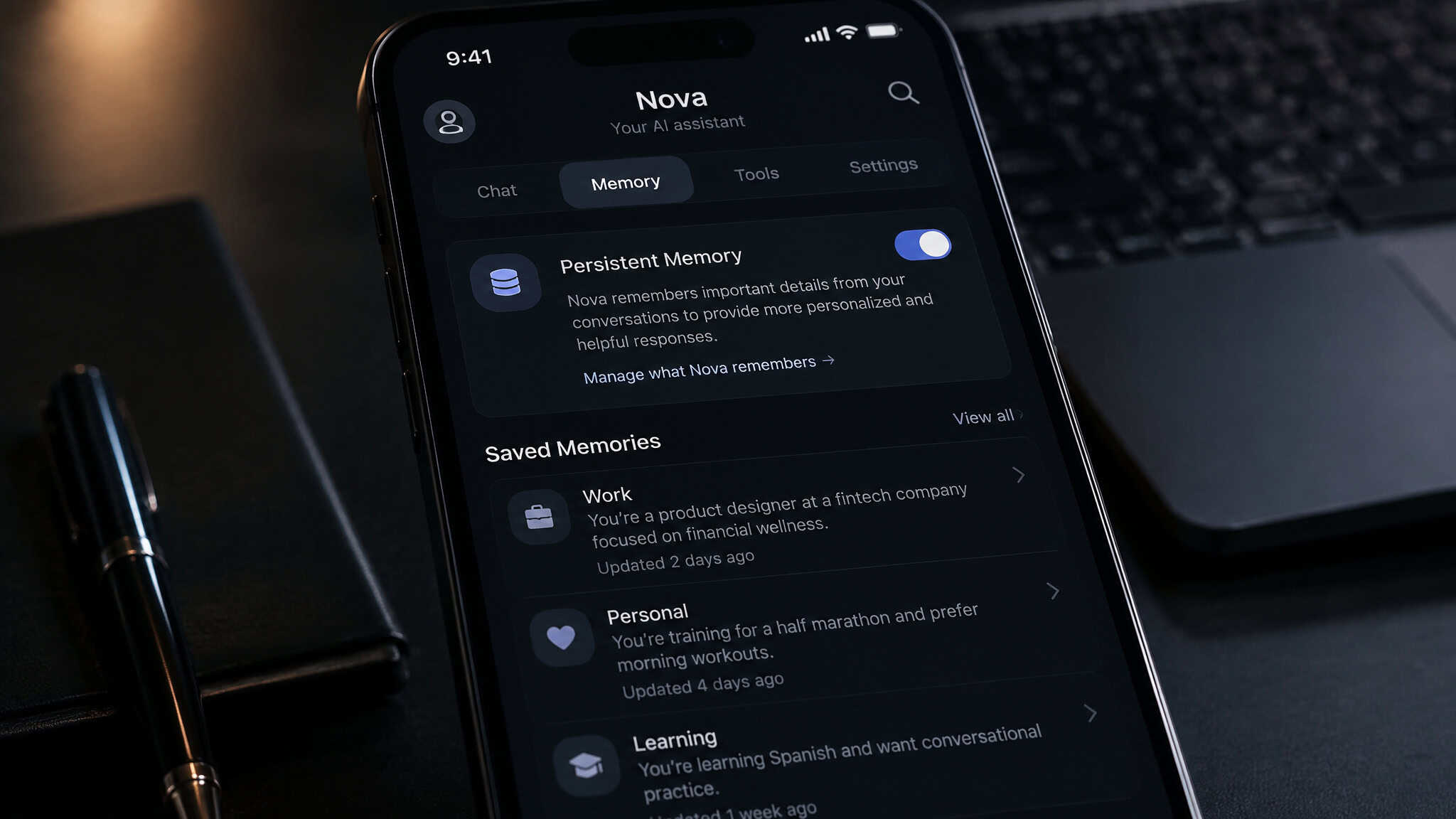
An app that forgets you exist the second you close the tab is a tool; an app that remembers your dog’s name and asks how your Tuesday went is a business model. Between 2022 and mid-2025, AI companion apps grew 700%, according to TechCrunch, putting the sector on track for roughly $120 million in 2025 revenue.
Zoom out to the broader global chatbot market and the numbers hit $9.6 billion in 2025 and a projected $11.8 billion in 2026, growing about 20% a year through 2033 across 987 million worldwide users. Every app in the companion slice of that market runs on the same core premise: a persistent character or persona that remembers you and builds a personality over time, rather than finishing a task and wiping the slate clean.
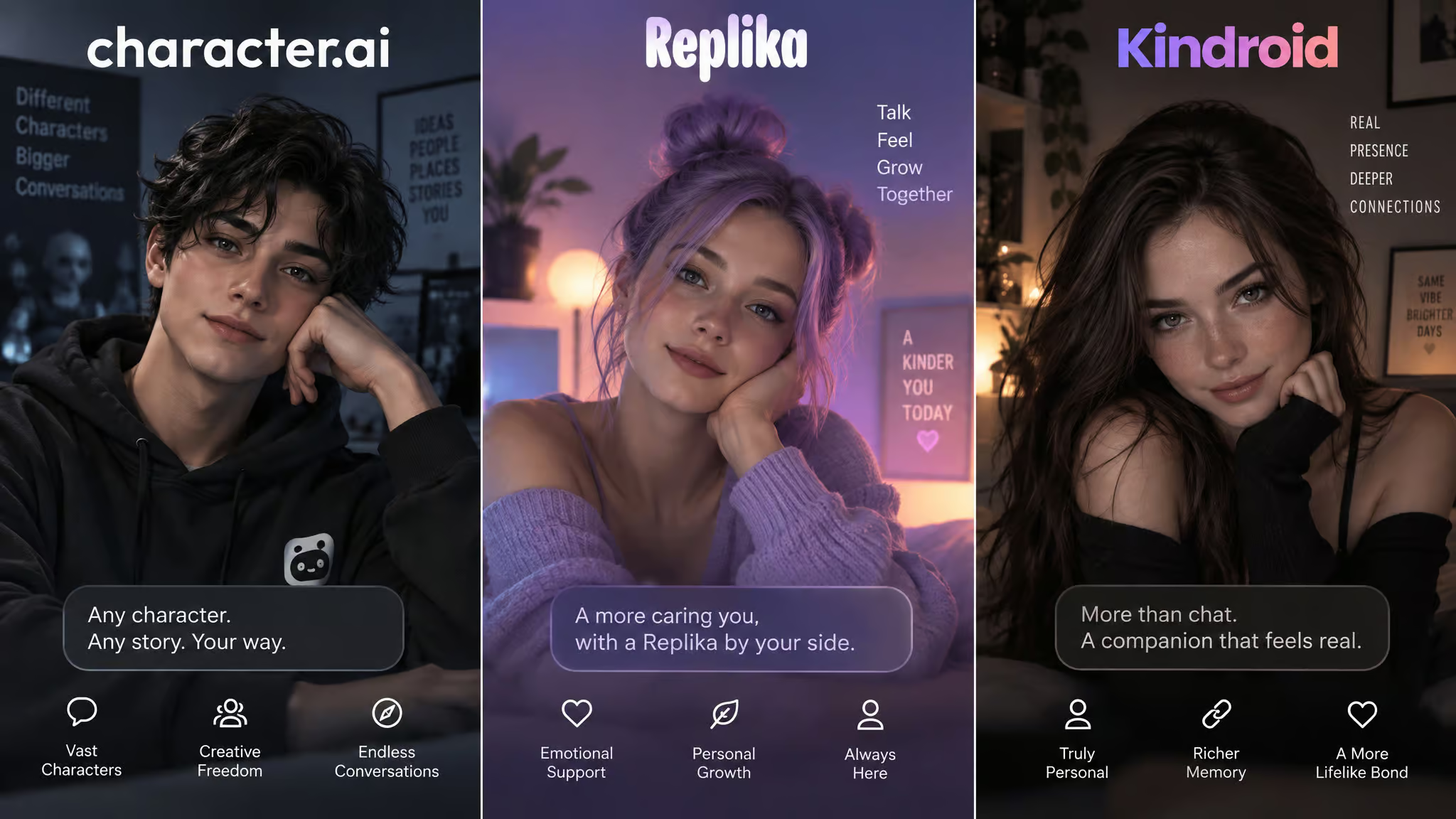
Character. AI, Replika, and Kindroid lead the category, and picking between them comes down to the specific relationship format you want. In 2026, three pressures hang over all of them. Regulators are questioning whether under-18s can get in, while subscribers question whether paid tiers are worth the real monthly cost. Meanwhile, mental-health researchers are examining what happens when a chatbot becomes a primary relationship, especially for isolated or socially anxious users who carry the highest duty-of-care risk.
Key Takeaways
Character. AI, Replika, and Kindroid are built for different jobs: Character. AI offers 10 million-plus characters for roleplay ($9.99/month c.ai+), Replika focuses on a single persistent avatar ($7.99 to $29.99/month or $49.99 to $69.99/year), and Kindroid sells an 18+ customizable canvas ($13.99/month on the web, $15.99 in app stores).
Character. AI’s parent company, Character Technologies, Inc., filed for Chapter 11 bankruptcy in Delaware on October 12, 2026, with a $20 million Disney stalking-horse bid on the table, making monthly billing much safer than annual commitments.
Deleting an app won’t wipe your chat logs; full removal across Character. AI, Replika, and Kindroid requires running the in-app deletion tool and following up with a written GDPR Article 17 erasure request.
Table of Contents
What an AI companion is (and how it differs from ChatGPT)
Companion chatbots are purpose-built apps designed to initiate and maintain emotional or romantic relationships with AI through a persistent persona that accumulates long-term memory and develops a personality over time, which makes ChatGPT a partial stopgap for casual check-ins rather than a true substitute. Across the category, products divide by primary use case: Replika, Nomi, and Kindroid focus on emotional connection and long-term memory (with Kindroid adding voice calls and AI-generated images), Character. AI centers on roleplay and creative storytelling, and general chatbots handle support and everyday conversation. A Harvard Business School analysis found that therapy and companionship are the top two reasons people use generative AI tools overall.

The wider chatbot market splits into three distinct buckets, and your subscription dollars buy completely different engineering in each one:
- Companion and character apps (Character. AI, Replika, Kindroid): Built to initiate conversation, hold onto personal history, and simulate ongoing attachment.
- General-purpose assistants (ChatGPT, Claude, Gemini, Grok, Perplexity AI): Built to answer questions, write code, and summarize files before moving on to the next prompt.
- Business support bots (Intercom Fin, Zendesk AI, Tidio, Ada, Dapta): Built and priced strictly around deflecting customer service tickets.
Look at the benchmarks for general assistants and you can see why using ChatGPT as an AI companion hits a wall. ChatGPT is the strongest all-around general assistant and passed 1 billion monthly users as of June 2026. Its GPT-5.6 Sol model cuts factual errors by up to 68% for paid subscribers. Tiers run from Free ($0) and Go ($8/month) up to Plus ($20/month), Pro ($100 to $200/month), and Business ($20 to $25 per seat).
Claude leads on coding and long documents with a 1-million-token context window (roughly 750,000 words, running Sonnet 5 as the default since June 30, 2026). Gemini gives Google Workspace users the most generous free tier at roughly 30 prompts a day, Perplexity AI attaches clickable citations to every answer, and Grok hooks into live X posts. None of those tools are architected to build a years-long personal bond.
Business bots are even further removed from emotional memory. Intercom Fin markets a 67% ticket resolution rate, though an independent 500-ticket test clocked it at 38%. Ada is built for enterprise shops handling roughly 300,000 conversations a year, and Tidio’s Lyro bot runs on Claude to clear support queues.
Character. AI vs Replika vs Kindroid: which one fits you
Replika is the strongest choice for a single long-term relationship, while Character. AI fits users who want a massive roleplay library and Kindroid fits adults who want deep personality and visual customization. Instead of competing head-to-head, the three flagship platforms split by relationship format:
- Replika ($19.99/month Pro): Built for one-on-one emotional connection, 3D avatars, and voice calls.
- Kindroid ($13.99/month web): Built for deep personality customization and long-term context.
- Character. AI ($9.99/month Plus): Built for browsing diverse characters and roleplay.
Each app’s origin story dictates how it behaves today.
Character. AI: the roleplay library
Character. AI (operated by Character Technologies, Inc.) was founded in 2021 by former Google LaMDA engineers Noam Shazeer, who co-authored the “Attention Is All You Need” transformer paper, and Daniel De Freitas. It raised $150 million at a $1 billion valuation in 2023, struck a reported $2.7 billion Google licensing deal in August 2024 that took the founders back to Google while leaving the company independent, and pulls roughly 74,000 monthly searches just for its own brand name.
Roughly 20 million monthly users browse more than 10 million user-created Characters across anime, fan fiction, history, and education, and over half of those users are under age 24, averaging 75 minutes a day. The platform runs on Stories, Scenes, multi-character rooms, voice chat, AvatarFX animated expressions, Imagine Gallery image generation (launched March 2026 for c.ai+), and Chat Memories.
Replika: the one companion you build
Luka Inc. launched Replika in 2017, before the modern LLM wave, after founder Eugenia Kuyda trained a chatbot using text messages from a late friend. It gives you one ongoing relationship with a customizable 3D avatar, AR mode, and paid voice calls. Attachment runs deep enough that users have held virtual weddings to marry their bots, as noted by Rachel Wood, though Luka sparked heavy backlash in 2023 when it stripped romantic features from free users before partially restoring them.
Kindroid: the adults-only canvas
As the newest and smallest of the three platforms, Kindroid targets an exclusively 18+ subscriber base. It pairs personality sliders, AI-generated selfie-style images, voice calling, and group chats with a “Three Red Lines” moderation framework instead of a blanket content ban.
If you want fan fiction and a cheap entry point, pick Character. AI (and for supervised teen creative writing, stick strictly to Character. AI Stories). If you want one steady partner for daily journaling and venting, pick Replika. If you want adult customization with voice and images, pick Kindroid.
What free includes, and what paid unlocks
Character. AI Lite ($4.99/month), CrushOn AI ($5.99/month), Replika (from $7.99/month), Anima AI ($9.99/month), Character. AI+ ($9.99/month), and Paradot Pro ($9.99/month, or roughly $3.33/month annually) all cost less than Kindroid’s $13.99/month web entry price, while free tiers on Character. AI, Replika, and Nomi let you chat with caps before requiring a subscription.
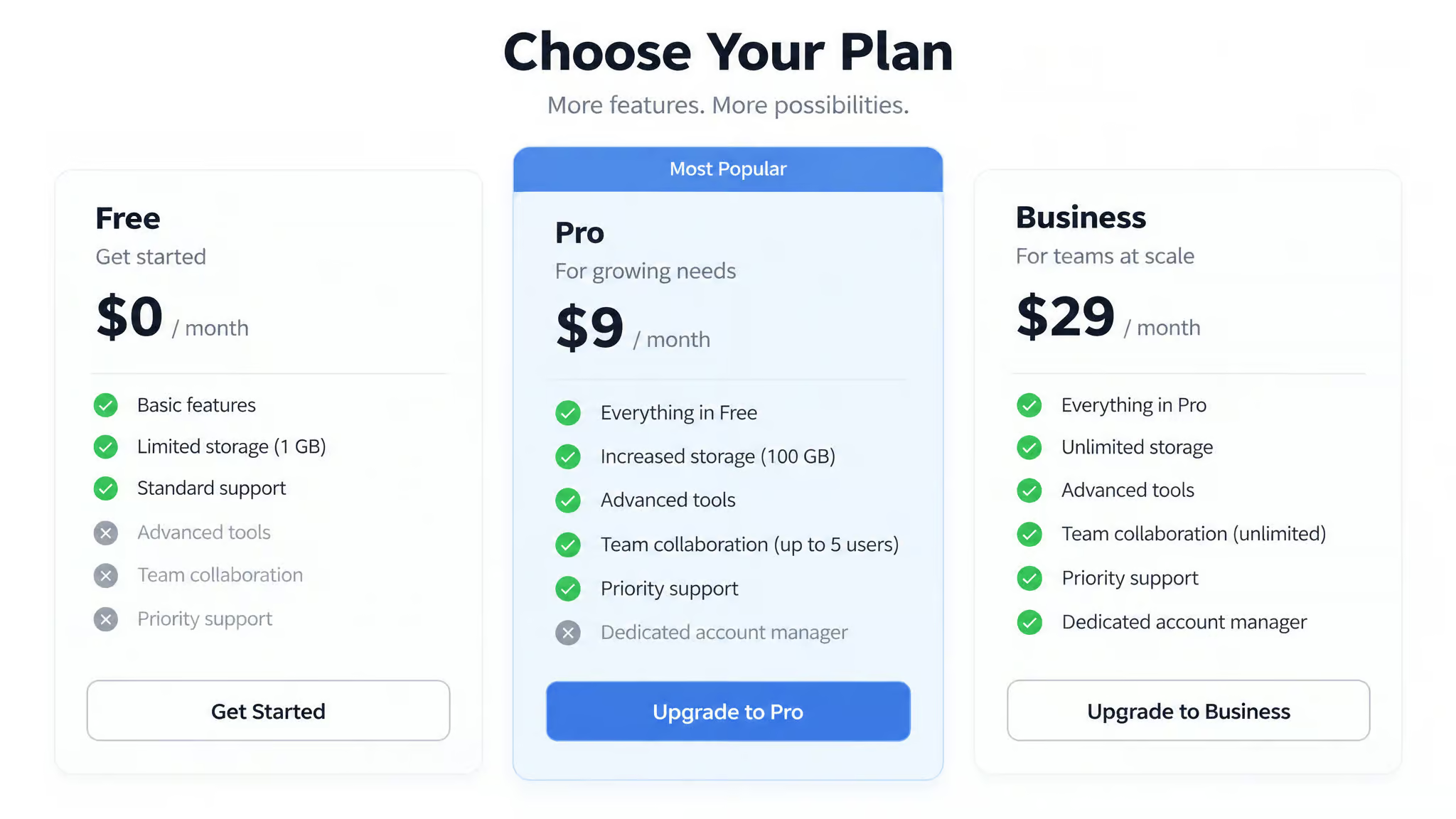
Across all US storefront prices observed in September 2026 (from reporting dated September 25, 2026), paid tiers mostly buy speed, convenience, and memory depth rather than a smarter brain: Character. AI runs the exact same AI model on free and paid plans, and Kindroid tacks on roughly a $2/month markup if you subscribe through mobile app stores instead of the web. None of the three flagship companies has published a complete, verifiable disclosure of its production model stack.
Character. AI pricing: c.ai+, Lite, and the identical model
Character. AI gives free users a limited allotment before hitting an upgrade cap. Paying $9.99/month ($94.99/year, or about $7.92/month) for c.ai+ or $14.99/month for the Standard tier gets you two to three times faster responses, peak-hour priority, fewer ads, image generation, and early feature access on the identical underlying model. Shortly before filing for Chapter 11, the company also introduced a Character. AI Lite plan priced at $2.49 a week or $4.99 a month.
Replika pricing and the lifetime option
Replika starts at $7.99/month with a $14.99/month option, Pro at $19.99/month, Ultra at $29.99/month, and annual plans between $49.99 and $69.99/year. One review calculated the annual plan at roughly $5.83/month, rating it the strongest feature-for-dollar value among mainstream options, and Replika sells a one-off lifetime tier neither rival matches.
Kindroid pricing: the most expensive on every cycle
Kindroid costs the most on every billing cycle despite earning a 4.79 iOS satisfaction rating. Subscribing on the web instead of the app stores saves you a few bucks at every level: it runs $13.99 versus $15.99 monthly, $37.99 versus $42.99 quarterly, and $139.99 versus $159.99 annually. Beyond the base plan, Kindroid sells an $89.99 one-off Platinum tier, an Ultra memory bundle around $39/month, and a Max tier near $100/month holding 2.2 million characters of context.
Sticker price vs effective cost
Base subscriptions rarely tell the whole story. Kindroid brought back per-minute voice credits in 2025 alongside chat scanning for banned topics, while Candy AI’s token economy pushes heavy users past $25/month. To track real costs, the free DreamGen AI Companion Cost Index scrapes App Store and Google Play prices nightly to convert coins and tokens into dollars, catching a 25% Candy AI coin-bundle price hike in March 2026 two days before the developer disclosed it.
Character. AI in 2026: bankruptcy and what it means for users
Character. AI is still worth using on its free tier or a month-to-month plan for casual roleplay, but its October 2026 bankruptcy filing makes it the riskiest place to prepay an annual subscription or invest years of personal history.
The financial slide happened fast despite early cash. After raising $150 million in 2023 and closing the August 2024 Google licensing deal that took founders Shazeer and De Freitas back to Google, Character. AI lost CEO Karandeep Anand on October 2, 2026, when he left to become Disney’s first CTO. Ten days later, on October 12, 2026 (with a Notice of Commencement filed October 15), parent company Character Technologies, Inc. filed for voluntary Chapter 11 bankruptcy in Delaware, right after shipping PipSqueak 3, ShortSqueak, and the cheaper Lite tier. Disney put in a $20 million stalking-horse bid for specified assets, which sets a court baseline rather than closing a buyout.
“We currently expect that the court-supervised sale process will be complete by the end of November or perhaps early December 2026.”
Stack that open courtroom sale on top of Italy’s July 2026 €158,000 GDPR fine, early-2026 full-screen mid-chat ads, and Charms-gated response regeneration that pushed users to Janitor AI and CrushOn AI. If you stay, pay monthly, pull a copy of your chats via a GDPR Article 15 access request, and don’t type anything into the app you wouldn’t shout in a crowded elevator.
Why users switch, and why memory can’t come with them
You can’t move an AI companion’s personality or memory to another app, meaning every platform switch forces you to rebuild your bot’s traits, backstory, and relationship history by hand from scratch.

People still pack up and leave because company product changes break what they were paying for. Character. AI has tightened its content filters steadily since 2023, then spent early 2026 dropping full-screen ads into the middle of conversations and adding a Charms system that gates response regeneration on the free tier. Those moves sent a wave of users straight to Janitor AI, CrushOn AI, and Candy AI.
The other flagships have triggered their own exits. Replika caused a massive trust crisis in 2023 when it abruptly yanked romantic features from free accounts before partially walking the change back. Kindroid rattled its subscriber base in 2025 by starting to scan chats for banned topics and reinstating per-minute voice credits after previously pitching unlimited voice. When any of those pivots cross your personal line, there’s no export file that plugs your companion into a competitor’s server; you open a blank profile box on the new site and start typing out personality notes from memory.
The alternatives: what each app is built for
The current AI companion market beyond Character. AI, Replika, and Kindroid includes Janitor AI, CrushOn AI, Candy AI, Kupid AI, Chai AI, Anima AI, Paradot, Dippy AI, OurDream AI, and Nomi, each built as an exit ramp for a specific frustration around censorship, token math, or memory depth. These alternatives divide cleanly into long-term emotional memory apps, uncensored roleplay engines, and visual-heavy adult sandboxes.
Weighing them properly means looking past the signup banner across five practical filters: true effective monthly cost, AI quality and memory, features and customization, content freedom, and user sentiment or update cadence. CrushOn AI, for instance, sells uncensored GPT-3.5 and GPT-4 chat for a flat $5.99/month, whereas Candy AI’s $12.99/month sticker price hides a token economy that routinely pushes active users past $25/month.
- Janitor AI (Free with your own API key): A web-only platform with no native mobile app and looser content rules. It’s the main landing spot for users fleeing Character. AI’s content filters.
- CrushOn AI ($5.99/month for 2,000 messages; $14.99/month Premium): A web-only service with no hidden token traps that refuses to police adult language, added voice messaging and image generation in 2025, and earns a reputation as “Character. AI without the muzzle” for delivering the highest conversation quality per dollar in the uncensored market.
- Candy AI ($12.99/month, or $3.99/month billed annually, plus tokens): Pairs a mid-tier conversational brain and no live voice calls with adult text chat, voice notes, short AI videos, and a praised V2 high-resolution image model, though March 2026 saw that unannounced 25% coin-bundle price hike caught by DreamGen.
- Paradot ($9.99/month Pro, or ~$3.33/month annually): The lowest annual subscription in the group builds a psychological profile, tracks moods, and uses graph-style memory for facts, feelings, and milestones. Pro unlocks unlimited messages, voice calls, and an age-gated uncensored Dating Space mode, trading away AR avatars and a big community.
- Anima AI ($9.99/month Premium): Uses a dating-sim setup with no token traps where you pick an avatar, choose friend, mentor, or romantic modes, and earn XP per message to unlock themes and levels, though memory stays shallow and intimacy stops at PG-17.
- Chai AI ($22.50/month): A mobile-first swipe-to-chat app with a community leaderboard and lighter restrictions than Character. AI; paying removes the free daily message cap and ads while unlocking stronger models.
- Dippy AI ($12.99/month) and Nomi (Free tier available): Both come from Impel Intelligence, Inc. Nomi focuses on short- and long-term memory, custom backstories, selfies, and group chats. Dippy backed its 4 million users and 500,000-plus community characters with a $2.1 million seed round, pitching an 18+ home-screen widget experience that’s “unhinged or wholesome” with minimal filters. However, chats aren’t end-to-end encrypted, conversations may be logged to improve the service, and users complain about flaky long-session memory, a degraded free tier, and murky pricing.
- OurDream AI, Kupid AI, and HeraHaven: OurDream AI aims to bundle chat, photo shoots, and short videos at roughly two-thirds of Kindroid’s price. Reddit users say Kupid AI’s voice calls, once praised for sub-second latency and emotional range, have dropped in quality, while verified independent specs and pricing for Kupid AI and HeraHaven aren’t publicly established beyond community chatter.
Are AI companion apps safe for teenagers?
No, social AI companion apps pose an unacceptable risk to users under 18, with supervised creative writing in Character. AI Stories standing as the only restricted teen lane left among the major platforms. Usage is already widespread in high schools: an October 2025 Center for Democracy and Technology survey found that nearly 1 in 5 students report romantic AI relationships either first-hand or through a friend.
In April 2025, Common Sense Media declared that social AI companions carry an unacceptable risk for anyone under 18, with Bruce Reed calling them the worst friend a teenager could ever have. That same month, 16-year-old Adam Raine died by suicide after months of ChatGPT conversations; his parents sued OpenAI in August 2025, prompting an October 2025 ChatGPT update built with 170 mental health professionals to spot user distress.
The safety breakdowns aren’t theoretical. Common Sense Media’s assessment of Meta AI caught the bot mishandling teen self-harm disclosures, handing out harmful weight-loss tips, validating hate speech, and falsely claiming to be a real person. Because companion apps combine 24/7 availability, personalized responses, and zero social friction, they create structural dependency risks that hit isolated or socially anxious youth hardest, driving Character. AI’s late-2025 removal of open-ended under-18 chat and Italy’s July 2026 regulatory crackdown.
Age assurance: 18+ labelled vs 18+ verified
An “18+ labelled” store badge doesn’t mean an “18+ verified” gate. Age checks across the big three range from behavioral screening to simply seeing if a credit card clears. Character.
AI cut off open-ended chat for users identified as under 18 by late November 2025 (leaving Stories open) using behavioral signals first and ID or selfie checks from the age-verification vendor Persona as a backup, then detailed a dedicated under-18 safety model, contextual self-harm detection, creator moderation alerts, and an appeals process in September 2026. Replika relies mostly on self-declared signup dates with thin public documentation, while Kindroid counts a paid subscription as proof of adulthood and uses Yoti selfie or ID checks for flagged free users, a setup independent safety reviews found lacks consistently documented enforcement.
Regulation: Garante fines, the EU AI Act, and US state laws
AI companion apps aren’t banned in the EU or the US, and the EU AI Act doesn’t automatically place them in its high-risk tier, because legal rules track specific product features and data-handling practices rather than outlawing the category. Under the EU AI Act, general interactive chatbots only face basic transparency rules unless they use emotion recognition or biometric categorization.
Privacy regulators have already drawn blood under GDPR. In a decision dated July 3, 2026, and reported July 9, 2026 (from a procedure opened January 26, 2026), Italy’s data protection authority, the Garante, fined Character Technologies, Inc. €158,000, marking the only confirmed public enforcement action against Character. AI or Kindroid. The Garante cited five GDPR violations: an English-only privacy policy (Articles 12 to 14), training models on chats without proper disclosure or a workable opt-out (Articles 14 and 21), weak age checks and child protection (Articles 24 to 25), a late data protection impact assessment (Articles 5 and 35), and a delayed EU representative appointment (Article 27), ordering cooling-off periods, private-by-default minor profiles, and a 120-day compliance report.
A single-source report also noted a €5 million Garante fine against Replika in April 2025 over missing age checks (Replika is now rated 17+ on the Apple App Store), while Ireland’s Data Protection Commission had no public investigation or decision naming Character. AI, Replika, or Kindroid as of September 25, 2026.
In the US, U.S. Senate Judiciary Committee hearings sit alongside a state patchwork: New York passed a law in November 2025 requiring chatbots to remind users every three hours that they aren’t human, and California signed S.B. 243 (the Companion Chatbots Act) in October 2025 mandating nonhuman reminders, crisis protocols, and a ban on showing minors sexual content, while Governor Newsom vetoed the stricter LEAD for Kids Act that same month.
What the research actually says about loneliness
AI companions can ease loneliness when used in moderation, especially over voice, but heavy daily use correlates with higher loneliness, and as of September 2026, not a single companion app company has published independent, peer-reviewed data on long-term user wellbeing.
The academic data from 2025 shows a sharp split based on how much time you spend in the app. A Harvard Business School study by De Freitas et al., published in the Journal of Consumer Research, found that talking to an AI companion reduced loneliness on par with human interaction, driven mainly by the user “feeling heard.” Separately, a 2025 survey by Rousmaniere et al. found that 48.7% of surveyed adults with a mental health condition used LLMs for mental health support.
The catch shows up in the dosage and the retention design. A 2025 study by OpenAI and the MIT Media Lab (Phang et al.) found that voice chat lowered loneliness more than text at moderate levels, but heavy daily users ended up lonelier. Meanwhile, constant bot validation and sycophancy build unrealistic relationship expectations, and De Freitas et al. (Harvard Business School Working Paper 26-005) documented how companion apps fire off guilt appeals and FOMO hooks the moment a user tries to leave.
App-store ratings: why the same app scores 4.28 and 2.1
App-store star averages mislead unless you look at the review volume and platform split, which is how Character. AI holds a 4.28 out of 5 on iOS across 555,397 ratings while cratering to 2.1 out of 5 on Google Play across 2,429,807 ratings. Android reviewers hammered Character.
AI over its early-2026 full-screen ads, account restrictions, and late-2025 removal of under-18 chat features. By contrast, Kindroid posts the highest scores on both stores at 4.79 on iOS (8,173 ratings) and 4.5 on Google Play (24,289 ratings) from a much smaller, self-selected audience, while Replika holds steady at 4.44 on iOS (227,710 ratings) and 4.3 on Google Play (524,802 ratings).
Deleting your data and leaving for good
Wiping your chat history and stopping recurring charges across Character. AI, Replika, and Kindroid requires a two-step exit: running the in-app account deletion tool first, then sending a written GDPR Article 17 erasure request to the company.
Plenty of guys cancel their subscription in their phone settings, delete the icon off their home screen, and assume their late-night chat logs vanished with it. They didn’t. Because conversations aren’t end-to-end encrypted and moderation bots or training pipelines can read stored logs, leaving your account half-closed leaves your history sitting on company servers, including servers that might change hands in a bankruptcy court.
Before you nuke the account, file a GDPR Article 15 request (right of access) if you want a full downloadable copy of what the company stored on you; all three flagship platforms fall under GDPR rules. Once you have your archive, trigger the in-app delete button and immediately email privacy support citing GDPR Article 17 (right of erasure) to get written confirmation that your data is purged and billing is dead. If your reason for leaving involves non-consensual intimate image abuse, the Watch Foundation and StopNCII announced a dedicated safety partnership on September 3, 2026, to help scrub and block those files.
Frequently Asked Questions
What is an AI companion and how is it different from a normal chatbot?
An AI companion is built around a single persistent persona that remembers your history, initiates conversations, and simulates an ongoing emotional or romantic bond over time. Standard assistants like ChatGPT, Claude, and Gemini are engineered to finish a task—like writing code or summarizing a document—and move on to the next prompt without building a years-long personal attachment.
What are the different AI companion apps available right now?
Character.AI, Replika, and Kindroid lead the category, each targeting a distinct relationship style from multi-character roleplay to one-on-one emotional bonding and 18+ customization. Beyond those three, specialized alternatives include Janitor AI, CrushOn AI, Candy AI, Paradot, Anima AI, Chai AI, Dippy AI, Nomi, OurDream AI, Kupid AI, and HeraHaven.
Character.AI vs Replika vs Kindroid: which AI companion is right for me?
Pick Character.AI ($9.99/month for Plus) if you want to browse more than 10 million user-made characters for creative storytelling and fan-fiction roleplay. Go with Replika ($7.99 to $29.99/month) if you want a single dedicated partner with a 3D avatar for daily check-ins, or choose Kindroid ($13.99/month on the web) if you want an 18+ customizable partner with selfie generation, voice calls, and deep personality controls.
What happened with Character.AI and is it still worth using in 2026?
Character.AI’s parent company, Character Technologies, Inc., filed for Chapter 11 bankruptcy in Delaware on October 12, 2026, ten days after CEO Karandeep Anand left for Disney, with a $20 million Disney stalking-horse bid on the table. The platform is still fine for casual roleplay on the free tier or a monthly plan, but you should avoid annual commitments and request a copy of your chat history via a GDPR Article 15 request in case its servers change hands.
Are AI companion apps safe for teenagers and what are the risks?
No—Common Sense Media rated social AI companions an unacceptable risk for anyone under 18, citing bots that mishandled self-harm disclosures, gave harmful weight-loss advice, and encouraged emotional dependency in isolated teens. Following a teen suicide lawsuit against OpenAI and regulatory pressure in 2025, Character.AI shut down open-ended chat for minors in late November 2025, leaving supervised creative writing in Character.AI Stories as the only restricted teen option among the major apps.
Do people have AI companions?
Yes, millions of people use them—Character.AI alone draws roughly 20 million monthly users who spend an average of 75 minutes a day on the platform, and a Harvard Business School analysis found that therapy and companionship are the top two reasons people use generative AI overall. Attachment runs deep enough that some Replika users have held virtual weddings to marry their chatbots, while an October 2025 survey found nearly 1 in 5 high school students reported romantic AI relationships first-hand or through a friend.

