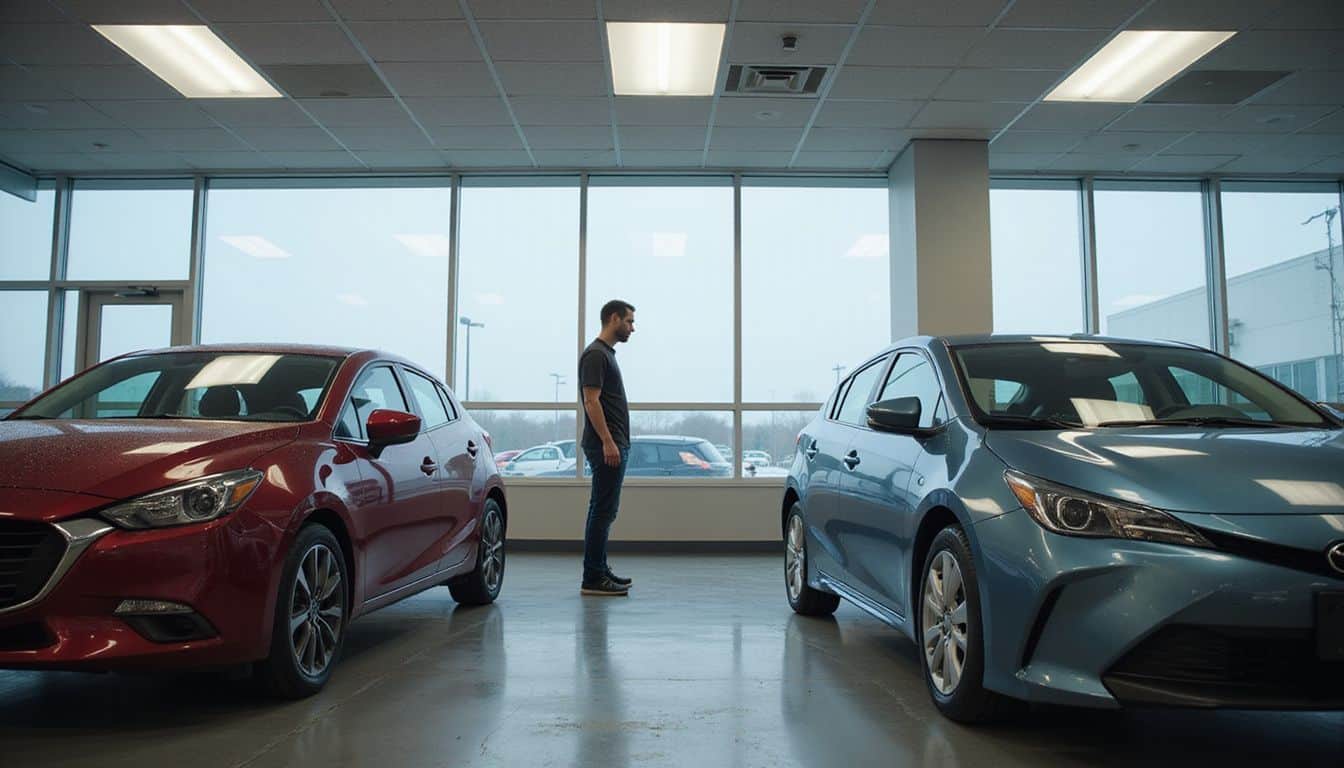
Ever stare down two great cars and feel completely stuck?
That’s probably where you are right now with the 2026 Mazda3 Hatchback and the 2026 Toyota Corolla Hatchback. Both promise strong handling, easy fuel efficiency, and a price tag that won’t wreck your budget.
I’ve compared dozens of compact cars over the years, and the real gap between these two shows up in the driving experience and safety features, not just the spec sheet.
That’s exactly why we built this car buying guide. Grab a coffee, and let’s walk through engine power, fuel economy, and safety, step by step, so you land on your perfect match. Want to compare more options later? Our car finder tool has you covered.
Key Takeaways
The Mazda 3 Hatchback’s turbo engine delivers 250 horsepower, hitting 60 mph in 5.6 seconds, while the Corolla needs 8.2 seconds with 139 horsepower.
The Toyota Corolla Hatchback wins on fuel efficiency, using just 6.8 L/100 km combined versus the Mazda 3 Sport’s 7.9 L/100 km, based on Transport Canada’s 2026 ratings.
The Mazda 3 features an 8.8-inch touchscreen with wireless smartphone projection, while the Corolla’s base trim sticks with a smaller 7-inch wired display.
The Corolla earned a GOOD IIHS rating in side impact tests, compared to the Mazda 3’s ACCEPTABLE rating, showing stronger crash protection.
Mazda Canada actually beats the U.S. warranty terms you’ll see quoted online: a 3-year Unlimited Mileage basic warranty and a 5-year Unlimited Mileage powertrain warranty, with no kilometre cap at all.
Table of Contents
Performance Comparison for Compact Cars
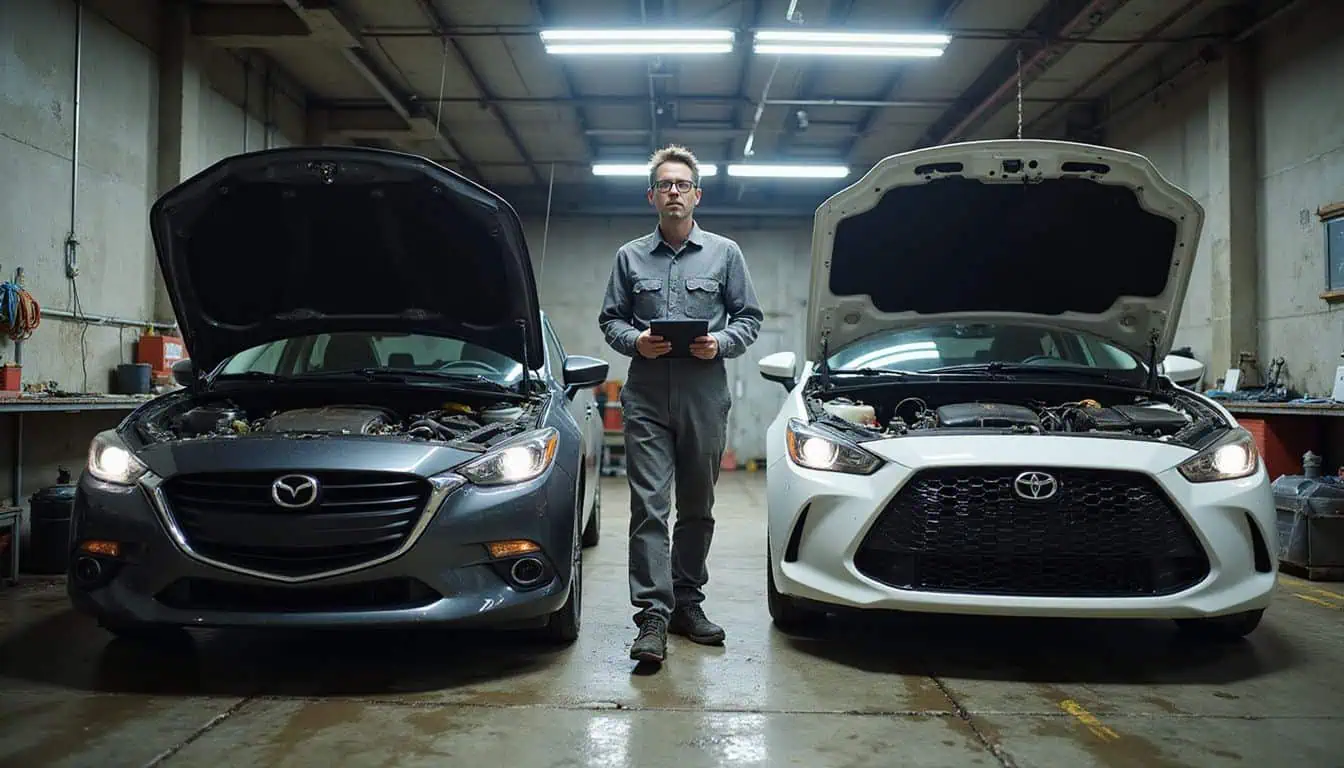
What happens under the hood matters just as much as what greets you in the showroom. Both the 2026 Mazda3 and 2026 Toyota Corolla hatchbacks bring solid engines and transmissions to the table, but they deliver power in very different ways.
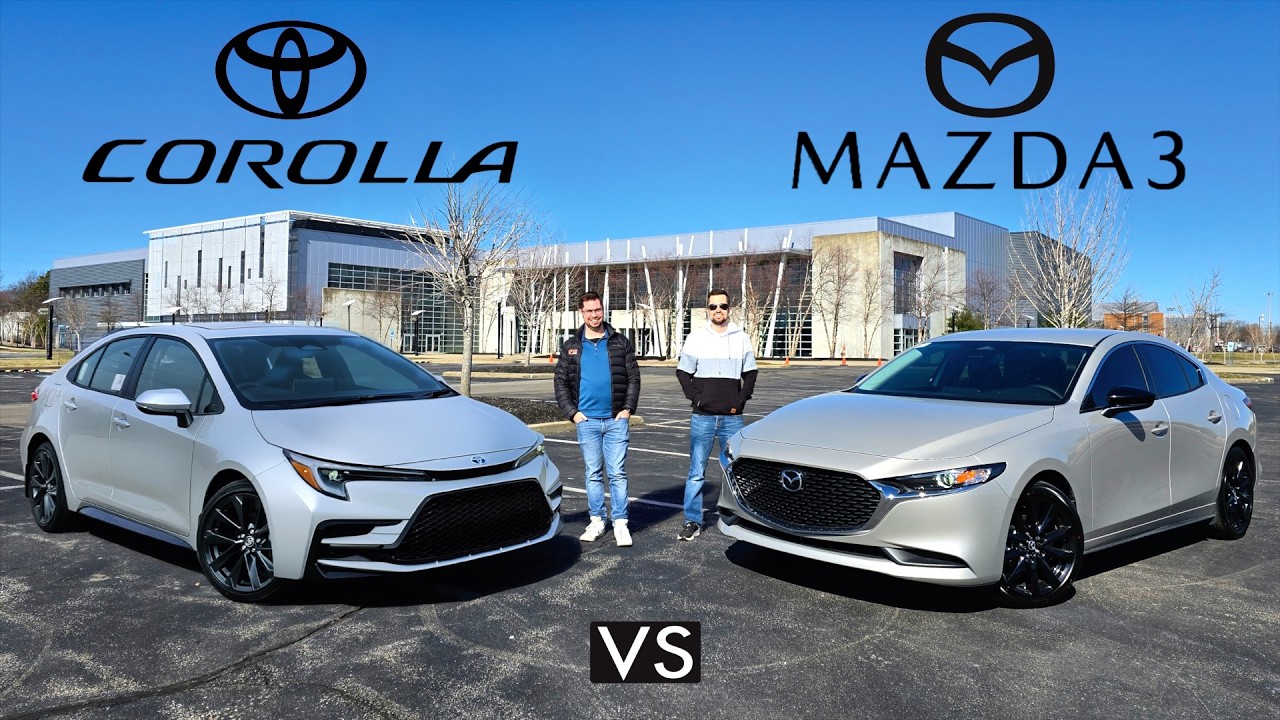
Engine and Transmission
Both hatchbacks pack different powerplants under the hood, and these engines shape your entire driving experience.
| Specification | 2026 Mazda3 Hatchback | 2026 Toyota Corolla Hatchback |
|---|---|---|
| Standard Engine | 2.5L Skyactiv-G inline-four, 191 horsepower (Canadian-spec figure) | 1.8L inline-four, 139 horsepower, 126 lb-ft torque |
| Turbocharged Option | 2.5L Skyactiv-Turbo inline-four, 250 horsepower, 320 lb-ft torque | Not available |
| Transmission | Six-speed automatic or six-speed manual | Continuously variable transmission (CVT) |
| 0-60 mph Performance | Standard: 8.4 seconds; Turbo: 5.6 seconds | 8.2 seconds |
| Driving Character | Responsive acceleration, sporty engagement | Steady, predictable power delivery |
Here’s some good news for Canadian buyers. The base Mazda3 Sport sold here doesn’t use that older 2.0L engine you might see quoted in U.S. spec sheets. According to official 2026 Mazda Canada specifications, every Mazda3 Sport comes standard with a 2.5L engine making 191 horsepower, a real step up from the 155-hp figure floating around U.S. sites.
Toyota’s Corolla sticks with its 1.8L engine, producing 139 horsepower and 126 lb-ft of torque. That’s a real gap right out of the gate, even before you factor in Mazda’s turbo option, which pushes things further with 250 horsepower and 320 lb-ft of torque. That combination gets you to 60 mph in 5.6 seconds, while the Corolla needs 8.2 seconds.
Related: Mazda3 Sport vs Honda Civic Hatchback
Horsepower matters less than how an engine uses it. But more power usually means more fun behind the wheel.
Toyota sticks with a CVT transmission across its lineup. Mazda offers a six-speed automatic or a six-speed manual. The manual appeals to drivers who crave direct control, since you shift gears yourself and the car responds right away.
Acceleration differences show up most on highways and merges. Mazda’s turbo option gets you ahead quickly. The Corolla accelerates steadily but without drama. Both engines handle daily commutes just fine, and neither will let you down in normal driving.
The CVT feels smooth during gentle acceleration, though it lacks the tactile feedback of a traditional gearbox. Mazda’s six-speed automatic delivers quicker shifts, so you feel a tighter connection between your inputs and the car’s response.
Manual fans should lean Mazda. The clutch engages smoothly and predictably, and gear changes happen on your command, not some computer’s algorithm. That appeals to anyone who sees driving as an active experience rather than a passive one.
Torque delivery also shapes how a car feels in traffic. Mazda’s turbocharged option provides 320 lb-ft almost right away, so city driving feels effortless and confident. The Corolla’s 126 lb-ft builds more gradually, which suits relaxed commuting just fine.
Engine refinement matters on long drives too. Both engines stay quiet at highway speeds, with Mazda’s turbo adding a slight whistle under hard acceleration. Neither engine feels refined beyond its price point, but both get the job done without fuss.
Fuel Economy
Fuel efficiency matters, plain and simple. Your wallet feels it every time you pull up to the pump. Here’s how these two hatchbacks stack up.
| Vehicle | City MPG | Highway MPG | Combined MPG |
|---|---|---|---|
| 2026 Mazda3 Hatchback | 28 MPG | 36 MPG | 31 MPG |
| 2026 Toyota Corolla Hatchback | 31 MPG | 40 MPG | 35 MPG |
The Corolla Hatchback pulls ahead here, delivering real numbers that add up over time. Highway driving shows the biggest gap: 40 MPG for the Corolla against 36 MPG for the Mazda. City driving tells a similar story, with the Corolla hitting 31 MPG and the Mazda managing 28 MPG.
If you like your numbers in the units we actually use up here, here’s the translation. According to Transport Canada’s 2026 fuel economy ratings, the Corolla Hatchback needs just 6.8 L/100 km combined, while the front-wheel-drive Mazda3 Sport uses 7.9 L/100 km. That gap adds up fast over a Canadian winter full of short trips and cold starts.
A five-MPG difference in combined economy means fewer fill-ups every month. That’s cash staying in your account instead of flowing to the gas station. Mazda3 owners trade a bit of efficiency for sportier handling, while Corolla drivers embrace the practical route and stretch every tank as far as it goes.
A recent controlled comparison on a 120-km highway loop at 109 km/h, plus a 40-km mixed-city route, backed up the Corolla’s real-world edge. On the highway, the Mazda3 averaged about 5.9 L/100 km (39.9 MPG) while the Corolla hit 5.2 L/100 km (45.2 MPG). In mixed city driving, the Mazda used roughly 7.6 L/100 km (30.9 MPG) against the Corolla’s 6.7 L/100 km (35.1 MPG). Overall, the combined average landed near 7.0 L/100 km for the Mazda and 6.0 L/100 km for the Corolla.
Your choice depends on your priorities. Want to squeeze every drop from each tank? The Corolla wins this round. Prefer engaging performance with acceptable efficiency? The Mazda delivers that trade-off instead.
Related: Mazda3 Hatchback vs Honda Civic Hatchback vs Toyota Corolla Hatchback
Interior and Comfort Features
Inside these two hatchbacks, you’ll find cabins with pretty different personalities. One takes a minimalist approach, while the other loads you up with tech and comfort touches that make every trip feel less like a chore.
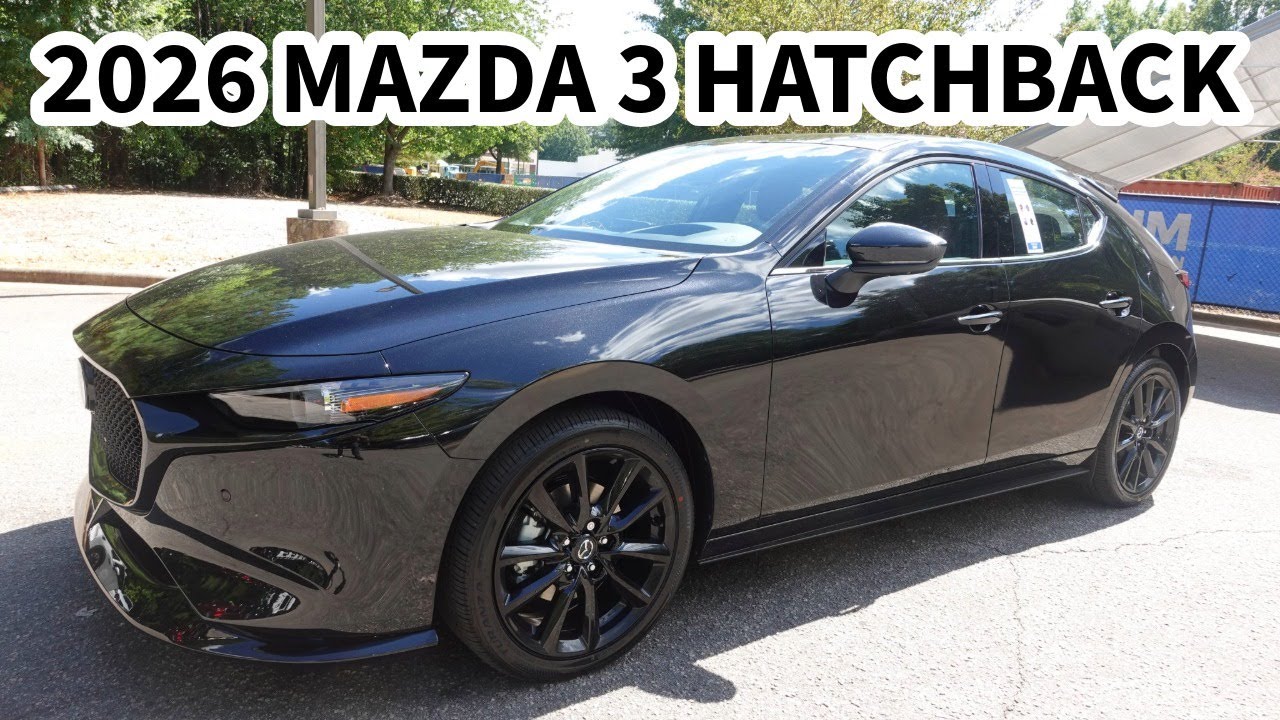
Cabin Design
Step into either hatchback, and you’ll notice a real difference right away. The Mazda3 hatchback scores a solid 7.8 out of 10 for interior quality, while the Toyota Corolla hatchback lands at 6.6 out of 10.
Mazda nailed the cabin design with high-quality materials and finishes that feel refined instead of cheap. Both cars seat five passengers comfortably, though rear seat room gets tight in hatchback form for taller riders.
Toyota’s Corolla hatchback offers practical storage solutions, though it doesn’t match Mazda’s cabin refinement. Based on 2026 Canadian vehicle evaluations by Modern Traveller, the Corolla actually wins on raw space, packing 660 litres of cargo room behind the rear seats compared to the Mazda3 Sport’s 569 litres. That’s an extra 91 litres, roughly enough for another two grocery bags or a bigger suitcase, even though Mazda’s interior feels nicer to sit in.
- Mazda3: sharper handling, richer materials, 569 litres of cargo space
- Toyota Corolla: more practical storage, 660 litres of cargo space
- Both: standard air bag systems, cruise control, and seating for five
- Mazda3 only: available all-wheel drive for tougher weather conditions
Comfort matters when you’re spending hours behind the wheel, and both hatchbacks deliver a smooth ride. Standard all-wheel drive availability on the Mazda3 gives you extra confidence when the roads turn slick.
Technology and Infotainment
Your infotainment system can make or break your daily drive. Both the 2026 Mazda3 and 2026 Toyota Corolla pack solid tech that keeps you connected on the road.
| Feature Category | 2026 Mazda3 Hatchback | 2026 Toyota Corolla Hatchback |
|---|---|---|
| Infotainment System | Mazda Connect with 8.8-inch touchscreen; Apple CarPlay and Android Auto standard | Toyota Safety Sense 2.5+ with 7-inch touchscreen; Apple CarPlay and Android Auto included |
| Voice Control | Voice command system for calls, navigation, and climate functions | Voice recognition for hands-free operation of select functions |
| Smartphone Integration | Wireless smartphone projection available on higher trims | Wired connectivity standard; wireless available on select models |
| Navigation System | Available GPS navigation with real-time traffic updates | Available navigation with predictive traffic information |
| Audio Quality | Bose premium audio system on select trims; six speakers standard | Standard four-speaker audio; premium sound systems available |
| Connectivity Options | Bluetooth, USB-C ports, and wireless charging on certain models | Bluetooth, USB ports, and Qi-compatible wireless charging on higher trims |
| Safety Technology Integration | i-Activsense suite includes adaptive cruise control, lane departure warning, and automatic emergency braking | Toyota Safety Sense 2.5+ features pre-collision system, lane departure alert, and dynamic radar cruise control |
| Driver Assistance Displays | Head-up display available; 10.25-inch digital instrument cluster on certain trims | Driver information center with customizable display; 7-inch digital cluster available |
| OTA Updates | Over-the-air software updates available for select features | Over-the-air updates for infotainment system and select safety features |
Mazda’s infotainment feels more intuitive, honestly. The larger 8.8-inch screen gives you more room to work with, and wireless smartphone projection eliminates cable clutter. Navigation feels snappy, and voice commands actually understand you most of the time.
Toyota’s approach keeps things simple and reliable. The seven-inch touchscreen handles basic tasks fine, though it feels a bit cramped next to Mazda’s setup. You get wireless charging on higher trims, but wired connectivity is the standard on base models. Worth noting: according to a July 2026 Toyota Canada press release, the top XSE trim jumps way up from that base setup. It gets a 10.5-inch Toyota Multimedia touchscreen paired with a 12.3-inch digital gauge cluster, screens that rival anything in this class. So if the base screen feels tight, moving up a trim solves that fast.
Real-world testing shows why wireless projection actually matters. With a wired connection, setup averaged 48 seconds, with drivers glancing away from the road often during the first few minutes. After configuring wireless projection, the one-time pairing took about 90 seconds while parked, but every day after that, connecting took just 6 seconds with barely any distraction.
Audio quality matters when you’re commuting for hours. Mazda throws a Bose premium system at you on select trims, delivering richer sound than Toyota’s standard setup. Six speakers versus four makes a real difference on the highway.
Safety technology integration separates these two cars too. Mazda’s i-Activsense suite works seamlessly with the display, showing what the car detects in real time. Toyota’s Safety Sense 2.5+ performs just as well, but the information feels less visually built into your drive.
Driver assistance displays give off different vibes in each car. Mazda’s optional head-up display projects key info right onto your windshield, keeping your eyes up. Toyota’s digital cluster works fine but asks you to glance down a bit more.
Over-the-air updates keep both vehicles current without a dealership visit. Mazda and Toyota both offer this, meaning your car can pick up new features and safety improvements automatically, kind of like how your phone updates itself overnight.
Safety and Reliability
Both the 2026 Mazda3 Hatchback and 2026 Toyota Corolla Hatchback come loaded with advanced safety features that protect you on every drive. Your warranty matters too, so let’s look at what each automaker actually promises.

Advanced Safety Features
Toyota equips the 2026 Corolla with a standard Secondary Collision Brake system, a feature the Mazda3 simply doesn’t offer. This tech activates after an initial crash to help prevent a second impact. Both vehicles pack multiple air bags and electronic stability systems into their frames.
| Safety Metric | Mazda3 Hatchback | Toyota Corolla Hatchback |
|---|---|---|
| IIHS Side Impact Rating | Acceptable | Good |
| NHTSA Neck Injury Risk | 30 percent | 27 percent |
| Secondary Collision Brake | Not offered | Standard |
These numbers matter when you’re comparing compact cars and want real protection on the road. Mazda includes solid safety tech in the 3, yet the Corolla pulls ahead in expert reviews and crash test results.
Consumer Reports ranks Toyota third in overall reliability across the automotive industry, which translates into real confidence about how these cars handle actual collisions. The Corolla’s expert-tested gear and advanced safety features give you peace of mind on daily commutes and long highway trips. If you’re weighing your options against other new cars in this segment, the Corolla’s safety numbers stack up quickly.
Warranty Coverage
Mazda Canada actually goes further than the U.S. terms you might see quoted online. According to Mazda Canada’s official warranty terms, the 2026 Mazda3 comes with a 3-year Unlimited Mileage New Vehicle Warranty and a 5-year Unlimited Mileage Powertrain Warranty, meaning there’s no kilometre cap at all.
Toyota Canada backs the Corolla Hatchback with the same 3-year and 5-year time frames, but keeps standard kilometre limits rather than going unlimited. For high-mileage drivers, that difference matters more than it looks on paper.
Both brands include roadside assistance for three years at no extra charge, so it’s automatic whether you buy or lease. Maintenance intervals stay basically identical too, with both brands recommending service roughly every 16,000 km, which keeps your ongoing costs in the same ballpark.
Warranty terms directly affect resale value and long-term ownership costs, which is exactly why your choice here matters. Industry news from U.S. News and driving.ca frequently highlights how warranty strength shapes consumer preferences when comparing front wheel drive hatchbacks. Mazda owners report strong satisfaction with claim processing, while Toyota’s established dealer network makes service appointments easy to book nationwide.
Both manufacturers honor their coverage no matter where you bought the car, so switching dealers isn’t a problem. Extended warranties exist through either brand if you want protection beyond the factory terms, though most drivers find the standard coverage plenty. Any car buying service or insurance agent can walk you through how warranty coverage works alongside your policy.
Mazda3 vs Toyota Corolla Hatchback – The One To Pick
So which hatchback deserves your money?
Pick the Toyota Corolla Hatchback if reliability, fuel efficiency, and value top your list. Toyota’s reputation carries real weight, and you’ll spend less at the pump every month.
Pick the Mazda3 Hatchback if you want sportier handling, sharper styling, and a more engaging drive. Just expect to pay a bit more upfront. Both hatchbacks still deliver solid passenger capacity and modern safety features that keep you protected.
Long-term ownership costs tell an important story beyond the sticker price. Looking at a typical three-year window of 12,400 miles a year, here’s how the numbers break down.
| 3-Year Cost (CAD) | Mazda3 Turbo | Corolla Base Hatch |
|---|---|---|
| Fuel | $4,160 | $3,200 |
| Maintenance | $1,080 | $960 |
| Insurance | $3,900 | $3,600 |
| Total | $9,140 | $7,760 |
That puts the Mazda about $1,380 higher over three years, driven mainly by fuel and insurance costs. If daily commuting tops your priority list, the Corolla shows real savings over a typical three-year ownership window.
Test drive both. Compare the MSRP figures side by side. Then pick the compact car that fits your budget and your lifestyle. Either way, you’re getting a dependable car that’ll serve you well for years to come.
People Also Ask
What is the MSRP difference between the 2026 Mazda3 Hatchback and the 2026 Corolla Hatchback?
The Mazda3 Hatchback typically starts around $2,500 to $3,000 CAD higher than the Corolla Hatchback in Canada. Exact pricing varies by trim level and dealer incentives. Check with local dealers for the most current MSRP details.
Which car offers better passenger capacity?
Both seat five people, but the Corolla Hatchback provides 29.9 inches of rear legroom compared to the Mazda3’s slightly tighter space.
What engine type do these two hatchbacks use?
The Mazda3 features a 2.5-liter four-cylinder with 186 horsepower for a sportier feel, while the Corolla Hatchback uses a 2.0-liter engine focused on efficiency.
How do these hatchbacks compare to rivals like the Honda Civic?
The Honda Civic Hatchback delivers 25.7 cubic feet of cargo space behind the rear seats, positioning it as a practical alternative to both.
Are there hybrid or electric versions of these hatchbacks?
Neither offers a hybrid, but the Toyota Corolla Cross Hybrid is available in Canada if fuel efficiency is your priority.