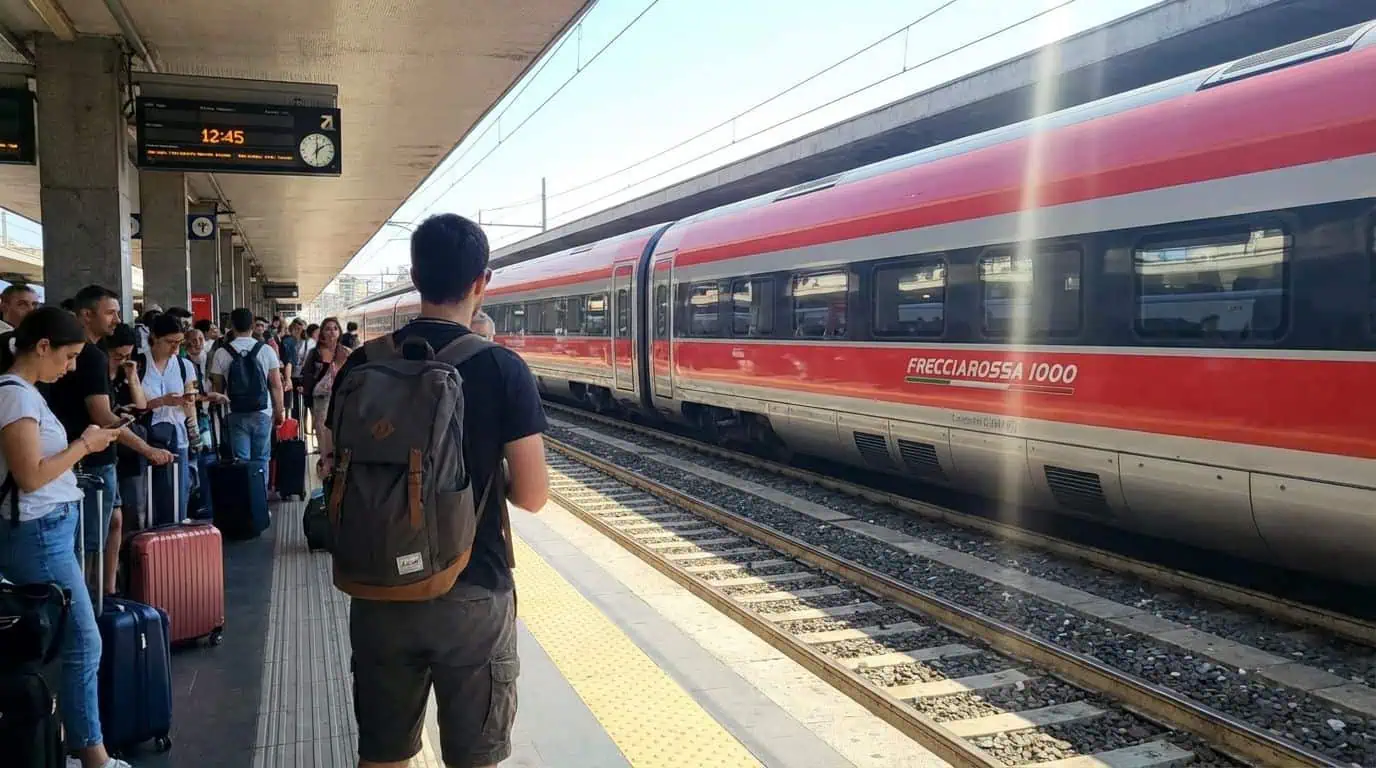
Planning a big trip to Italy can feel stressful. You want to see as much as possible, but driving in Italy or dealing with airport crowds is no fun. Ever stood in a security line, shoes in hand, wondering if there’s a better way to start your vacation? I’ve been there, and I can tell you: there is. High-speed trains help make travel between cities like Rome, Florence, and Venice easy and quick.
These trains really do save precious vacation time compared to flying. Public transport connects you right from the center of one city to another with comfort and modern perks—no rental car needed. You can explore more places each day in Italy without extra hassle or worry. I’m going to walk you through the exact steps I use, and I think you’ll be surprised at how easy it can be.
Key Takeaways
High-speed trains like Trenitalia’s Frecciarossa 1000 and Italo’s AGV 575 connect major Italian cities such as Rome, Florence, Milan, Naples, and Venice in record time, with stations located right in each city center.
The journey from Rome to Milan can take as little as 2 hours and 50 minutes, beating the total travel time of flying when you factor in airport transfers and security checks.
Advance bookings through official sites or mobile apps can land you “Super Economy” or “Low Cost” fares for as little as €19.90; business class upgrades are surprisingly affordable when purchased early.
Trains offer modern amenities including free Wi-Fi, air conditioning, spacious leather seats with guaranteed reservations, and generous luggage racks without the strict size limits airlines enforce.
High-speed trains are an eco-friendly choice, emitting roughly 14 kg of CO₂ per passenger on a Rome-Venice trip compared to over 100 kg for a flight.
Table of Contents
Convenience and Speed
I step onto a Trenitalia high-speed rail and, within minutes, I’m zipping from Rome to Florence without breaking a sweat. My e-ticket sits safe in my e-mail, ready for the conductor while I watch the Tuscan hills flash by.
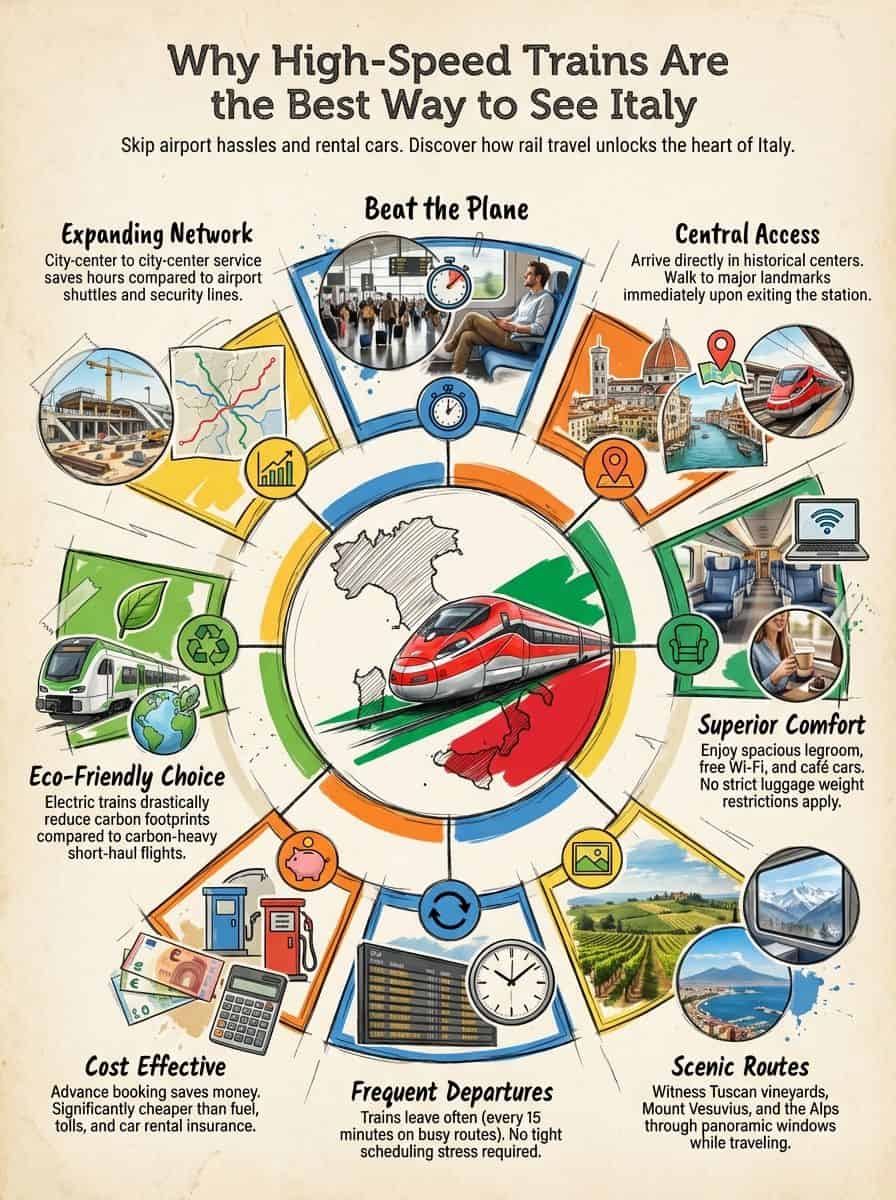
How do high-speed trains connect city centers in Italy?
Stepping off a high-speed rail service at Rome Termini or Milan Centrale, I feel like I’m in the thick of things right away. Trenitalia and Italo whisk riders between city centers, skipping outlying airports and tedious shuttles.
Florence Santa Maria Novella station sits steps from Renaissance sights; Naples Centrale drops me near real pizza shops and ancient ruins. The network stretches over 1,000 km, so zipping from Rome to Naples takes just over an hour—fast enough for an espresso break before my next stop.
Last month, I grabbed a Venice to Florence train ticket online with e-tickets sent straight to my e-mail. That ride rolled through Tuscan hills before rolling right into downtown Florence; no slow buses or pricey taxis needed.
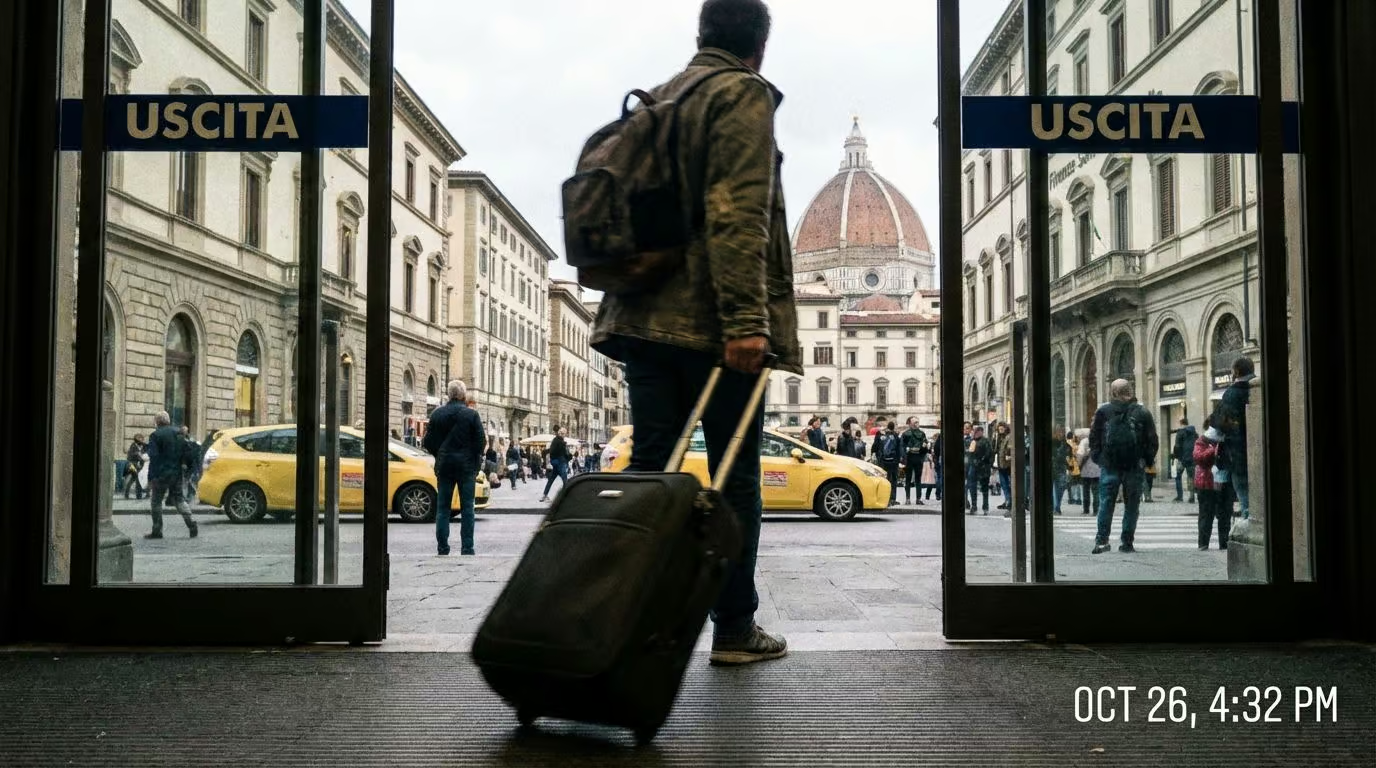
Local spots around stations lure me in with restaurants, coffee bars—even history tucked inside old stone walls. With each trip, these rails help me make quick connections between Italy’s biggest cities.
Trains deliver you right into the pulse of Italian life—no wasted time getting stuck outside the action.
Next up: why traveling by high-speed train beats flying for speed across Italy.
Why are high-speed trains faster than flying for Italy travel?
Airports sit far from city centers in Italy, so flying means dealing with long drives or expensive taxis before and after flights. High-speed trains like Trenitalia’s Frecciarossa leave right from places such as Rome Termini and Milan Centrale, cutting hours off my travel time to places like Florence or Naples.
Flights might only last a short while in the air, but I always lose time with check-in lines, security checks, delays at baggage claim, and waiting for boarding calls. On trains, I board fast with an e-ticket and stroll onto my coach class seat within minutes. In fact, you generally only need to arrive 10 to 15 minutes before departure just to find your platform.
For me, there’s no need to worry about luggage restrictions; overhead racks hold all my bags even if I’m hauling cookies home from Monterosso or souvenirs picked up along the way.
Reserved seats come standard on high-speed rail services across Italy—no wrestling for space once onboard. If I want to zip between Venice and Rome or try out the Bernina Express toward Switzerland, connections stay quick because platforms sit just steps away instead of miles outside town like airports do. Most trips have fewer chances for delay since Italian railways structured their systems for rapid stops and smooth departures every day of the week.
How can you make quick connections between major Italian cities?
After seeing just how much time high-speed trains save over flying across Italy, I started thinking about making quick hops between cities. Fast connections make the heart of Italian travel go from a crawl to a sprint, and believe me, it changes everything.
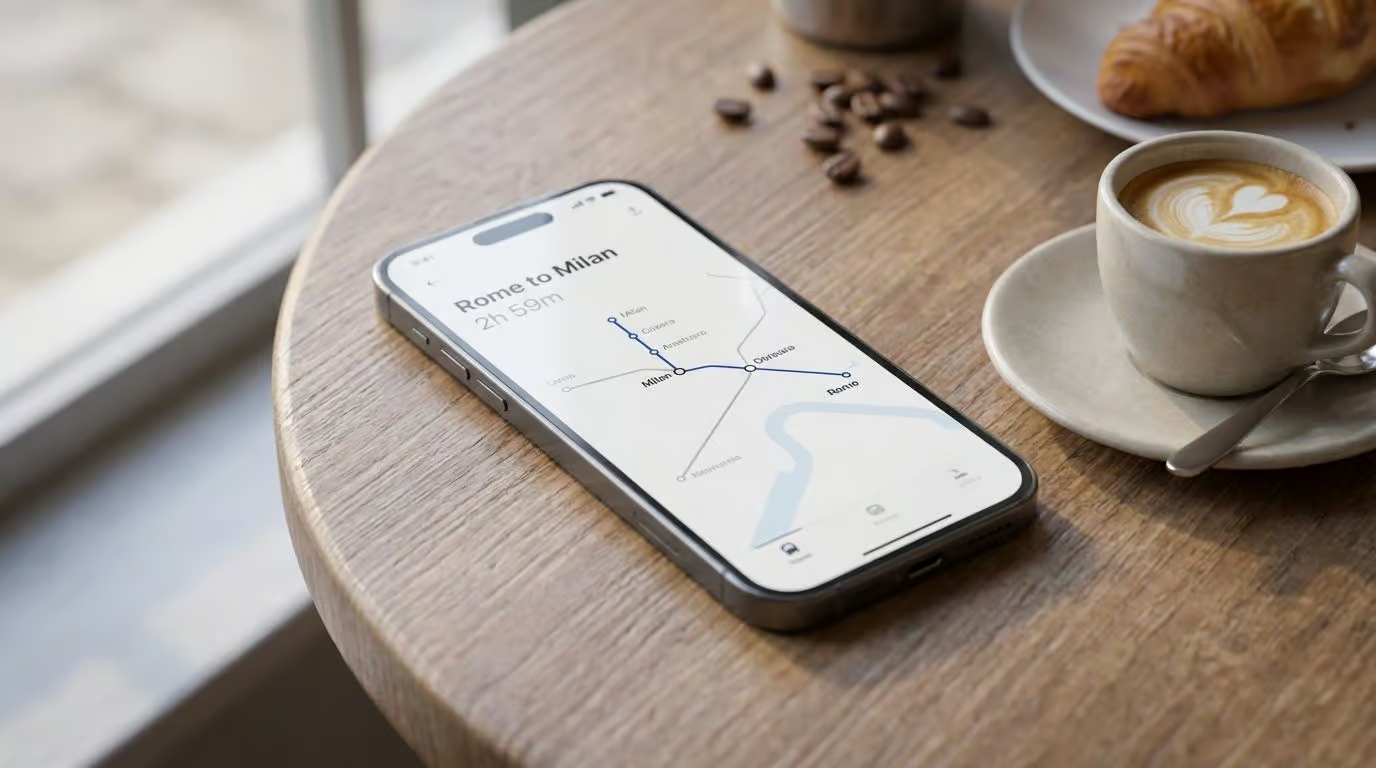
- High-speed trains link Rome, Florence, Milan, and Naples in less than three hours per route. Specifically, the “non-stop” Frecciarossa options can get you from Rome to Milan in just 2 hours and 59 minutes.
- Frequent departures run from early morning until late night, so I never feel rushed or boxed in by a tight schedule. On the main trunk lines, trains leave every 15-20 minutes during peak hours.
- Major stations like Rome Termini and Milan Centrale act as central points; switching lines is fast and well-marked. The last time I zipped from Florence to Naples through Rome, my transfer took less than ten minutes.
- Booking train tickets ahead of time lands me better seats and cheaper fares; tickets sell out quickly on popular routes like Rome to Milan or Rome to Naples by train.
- The Italian rail system makes all this possible with clear signage, easy platform access, and announcements in both Italian and English.
- On most trips, I watch busy travelers with Interrail passes dash across platforms with ease while others relax over coffee at station cafes between departures.
- Day trips to smaller towns are tempting too; for example I once left Milan after breakfast and made it to Positano via Naples before sundown thanks to high-speed links.
- Sleek Frecciarossa and Italo trains cut down waiting times; their top speeds mean delays rarely eat into my plans for the day.
- Business class options serve up comfort while still getting me there on time—so meetings or a quick change into something sharp for dinner are no problem.
These little details combined make traveling city-to-city in Italy almost effortless if you ask me.
Comfort and Onboard Experience
If you ask me, zipping across Italy by Trenitalia Frecciarossa or Italo feels almost as easy as sitting in my living room. Plus, watching vineyards and mountains roll by beats getting stuck in airport security lines any day.
How do high-speed trains provide stress-free travel?
Skip the car keys, skip the stress. Italian high-speed trains make travel smooth and easy for guys like me who want more time relaxing and less dealing with headaches. I slide into my spacious seat, stretch out, and know there’s no traffic or fuel worries ahead. No hunting through cramped city streets for parking, either—now that feels good.
Ticket checks run smoothly since conductors pass by often; this keeps things calm on board. The ride stays gentle with hardly a jolt so I can read a book or even nap if I feel like it. Hungry? On the Frecciarossa, I head to the FrecciaBistrò car for a standing espresso bar experience that feels genuinely Italian. Italo trains don’t have a full café car, but they have well-stocked vending areas and seat service in premium classes.
Seats come reserved which means none of that mad dash at busy stations—my spot is always waiting for me.
Relaxation isn’t just an option on these trains—it comes built in.
You’ll find modern amenities too; free Wi-Fi lets me catch up on sports highlights while sipping coffee, all inside air-conditioned comfort. And hey, if you’re planning your next big family trip across Italy with older parents in mind, check out some smart vacation tips for elderly parents here: vacation tips for elderly parents.
Ready to see what perks are waiting onboard?
What modern amenities are available on Italian high-speed trains?
Seats come with air conditioning, which is a blessing during the hot Italian summer. I plug my phone or laptop into the power outlets and stream from my device using free Wi-Fi. I always grab window seats if possible; panoramic glass stretches along each car, making it easy to watch olive groves fly by at 200 miles per hour.
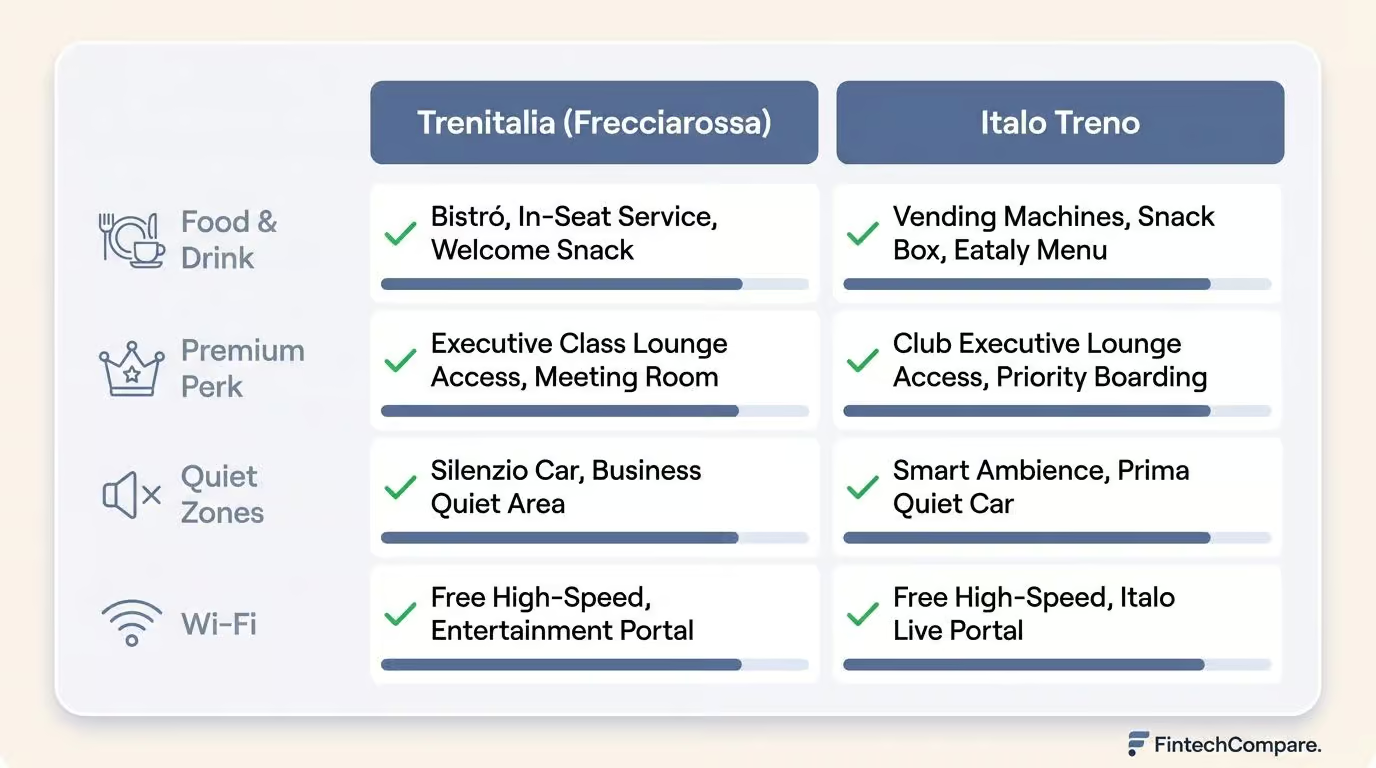
Frecciarossa and Italo offer guaranteed seating through reservation, so there are no sprints for spots like on old commuter lines. Here is a quick breakdown of what you get so you can choose the right ride:
| Feature | Trenitalia (Frecciarossa) | Italo Treno |
|---|---|---|
| Food & Drink | Full FrecciaBistrò bar car for espresso & snacks; Seat service in premium classes. | Vending machines in “Smart” class; Trolley service & seat service in “Prima” & “Club”. |
| Premium Perk | Executive Class includes a full plated meal, unlimited drinks, and meeting room access. | Club Executive includes lounge access, personal 9″ screens, and priority boarding. |
| Quiet Zones | “Area Silenzio” available in Business Class for noise-free travel. | Dedicated quiet carriages often available in Prima class. |
| Wi-Fi | Free “Frecce” Wi-Fi portal with entertainment. | Free Wi-Fi (often rated slightly faster/more reliable by users). |
Luggage rules stay relaxed compared to airlines; I just walk on with my bags and slide them onto the racks overhead or next to my seat without fussing about size limits. For longer rides, premium classes serve meals right at your seat with extra comfort thrown in. Booking feels simple these days since e-tickets land straight on my phone thanks to handy mobile apps such as Trenitalia’s and Italo’s tools.
Where can you enjoy scenic views of Italy’s countryside on the train?
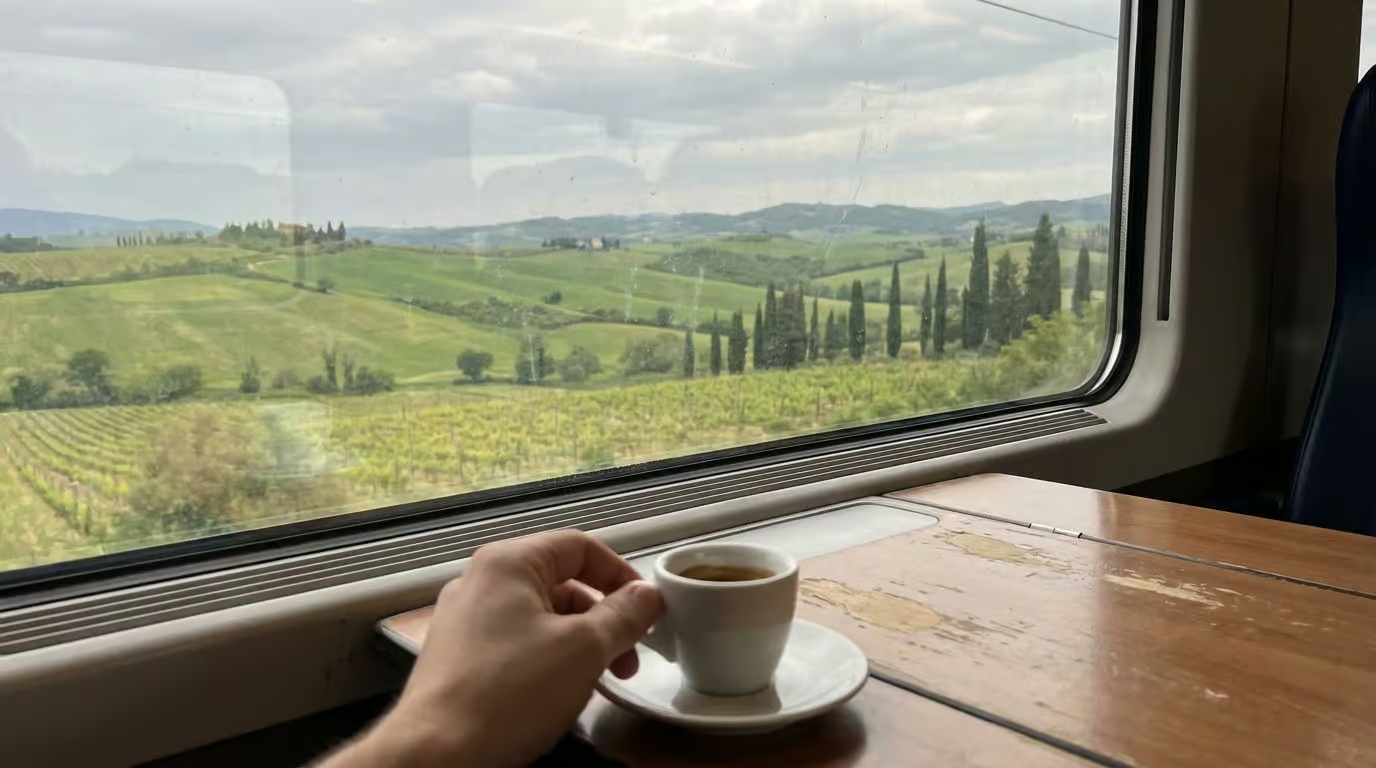
All those plush seats and modern perks make the ride smooth, but the real magic happens through the windows. The Florence to Rome high-speed route sweeps past rolling Tuscan vineyards and green Umbrian hills, though you should expect some tunnels on this fast line.
On the Milan-Tirano train, I see snow-capped peaks and deep blue lakes before catching a link to the Bernina Express. The Naples-Sorrento Circumvesuviana train winds through lava fields with views of Mount Vesuvius and glimpses of the Gulf below.
Sicily’s Palermo–Cefalù–Messina service hugs turquoise coastline and climbs gentle hillsides lined with olive trees. Riding from Bolzano up toward Brenner Pass feels like shooting straight into Alpine wonderland, especially in winter months.
For real wow-factor, I hop on trains with wrap-around windows—ideal for routes like Centovalli between Locarno and Domodossola or trips along Cinque Terre’s dramatic cliffs. Even quick rides can turn into photo ops when you roll across Sardinian plains or snake through the wild Vigezzo Valley.
Flexibility and Exploration
I can hop on a fast train to Florence for the morning, eat real pizza in Naples by lunch, and be back in Rome before sunset—stick around to discover how easy Italian adventures really get.
How can you take easy day trips to smaller Italian towns by train?
Quick getaways to hidden Italian gems are a breeze with the rail network. I often use regional trains to visit towns outside the usual tourist path, but there is one major rule you must know to avoid a hefty fine.
- Crucial 2024 Update: If you buy a digital regional ticket, you must “check in” online before your train departs. You’ll see a button in your email or the app. If you don’t click it before the train leaves, the ticket is invalid, and conductors aren’t shy about handing out fines.
- Regional trains run at slower speeds, making stops in small villages you cannot reach with high-speed routes like Trenitalia’s Frecciarossa or Italo.
- Point-to-point tickets can be snapped up for under ten bucks, sometimes just minutes before departure, which means I never need to plan every step ahead.
- Tickets for these local rides have no set seat, so I hop on any train during the validity window and adjust my plans if something catches my eye.
- Major cities like Milan, Florence, and Rome have several stations—knowing whether my ride leaves from Milano Centrale or Porta Garibaldi saves me headaches and time.
- Luggage storage at stations (look for “Deposito Bagagli”) lets me stash my bag for a few euros, freeing my hands and spirit while I roam alleys or sip espresso in the square.
- The entire country is stitched together by this network—from Lake Como’s peaceful shores to hilltop Umbrian towns—so diverting off-track feels as easy as picking a new flavor of gelato.
- Every ride brings surprises: medieval walls in Lucca, sandy beaches near Rimini, artisan cheese stalls beside Parma’s platforms—the kind of stuff big tours skip right over.
How do high-speed trains simplify multi-city itineraries in Italy?
Nothing beats hopping from one small Italian town to the next, but planning a path through big cities can stump even the most seasoned traveler. Italy’s high-speed trains take all that stress and toss it out the window.
Every major city is connected by Trenitalia’s Frecciarossa and Italo, with trains leaving as often as every 15 minutes during busy times. Rome, Milan, Florence, Naples—slide right off the train and find yourself in each city center.
No wasted time fighting traffic or searching for parking spots; I step off at Stazione Centrale or Roma Termini, ready to explore without delay. One-way tickets make it easy to build a multi-city trip; I just pick my cities and dates. Mix Florence with Venice or slip Bologna between Turin and Naples.
The EURAIL ITALY PASS fits those not from Europe; this ticket covers unlimited rides for up to eight days in a month. As an EU citizen, I use an INTERRAIL ITALY PASS instead—same idea, just for locals.
Train seats sell out fast on popular routes, so reservations are required for all high-speed trips; no standing in line hoping for space. My seat waits with my name on it.
E-tickets land straight into my inbox or mobile app. Managing changes is simple—my phone acts as both wallet and travel agent throughout the whole route. Multi-city trips cost less than renting cars or booking flights separately. No fuel fees or insurance headaches either. Instead of burning money on gas or parking garages, I spend more on gelato in Siena or pizza in Naples.
What affordable options exist for booking high-speed train tickets in advance?
Booking in advance on Trenitalia or Italo’s websites saves me serious cash; sometimes tickets are half the price, just for planning ahead. Their mobile apps let me check deals and swap tickets fast, all while keeping things in English so I don’t get lost.
I always look for specific fare names to get the best deal:
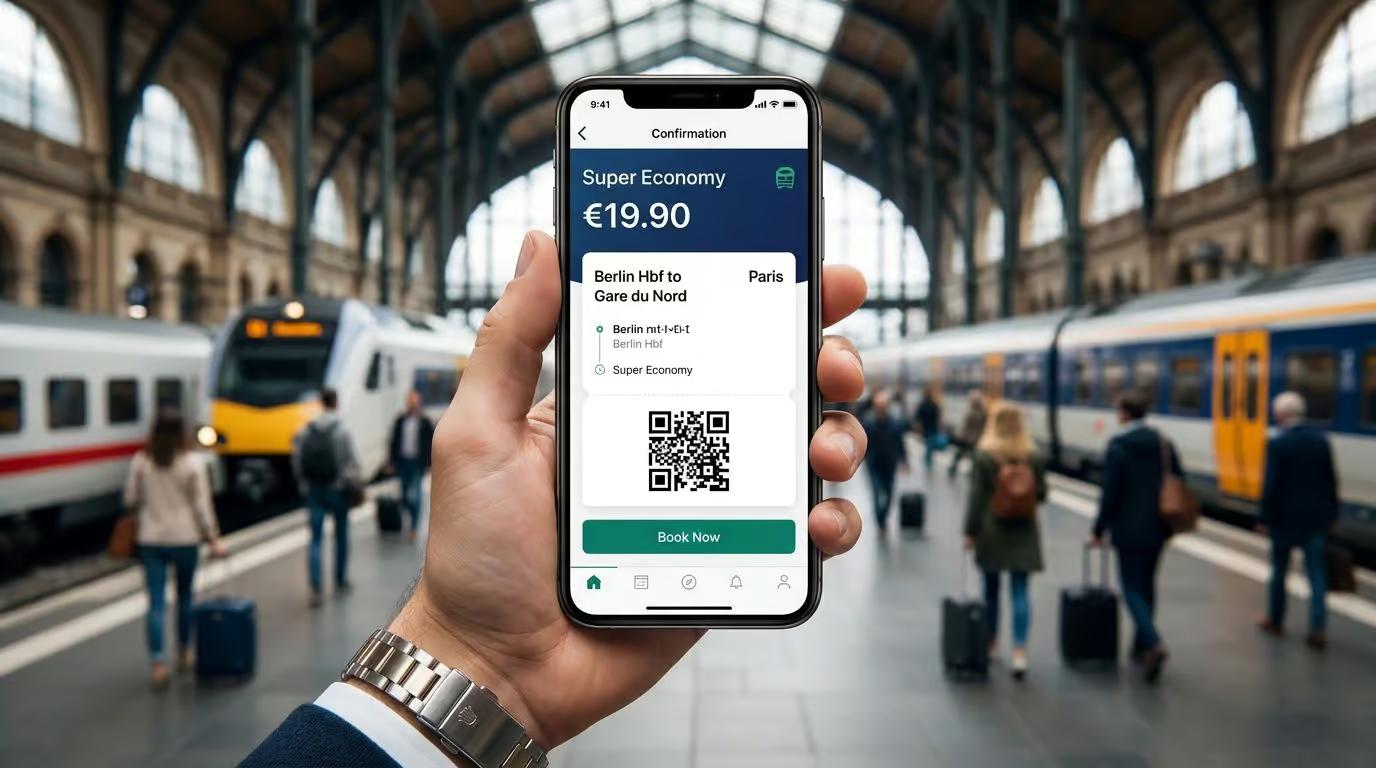
- Trenitalia: Look for “Super Economy” fares. These can drop as low as €19.90 for a Rome-Milan trip if you book 2-3 months out. They are non-refundable, but the savings are massive.
- Italo: Their equivalent is the “Low Cost” or “eXtra Magic” fare. I’ve snagged tickets for the price of a couple of coffees by committing to a specific train early.
ItaliaRail makes booking easy too, showing real-time seats and e-tickets with a few clicks. On longer trips, waiting to buy can even drop prices as fares change; that always feels like beating the system.
Snagging business class early means upgrades cost less than most people think—talk about riding in style without breaking the bank. I always compare ticket prices before hitting “buy” because promotions often pop up for early bookings through these official channels. That quick check between last-minute and advance rates helps me keep more euros in my pocket for pizza later.
Environmental Advantages
High-speed trains use less energy per passenger than planes, cutting down on pollution across Italy. If you care about keeping the Dolomites and olive groves beautiful, hopping on a Frecciarossa or Italo helps protect those sights for the next guy.
How do high-speed trains reduce your carbon footprint compared to flying?
Taking the Frecciarossa or Italo from Rome to Milan, I noticed how Italian high-speed trains help the planet. “Steel wheels on steel rails make energy stretch farther than jet fuel ever could.” These electric giants run on clean power, so they avoid burning oil like planes do.
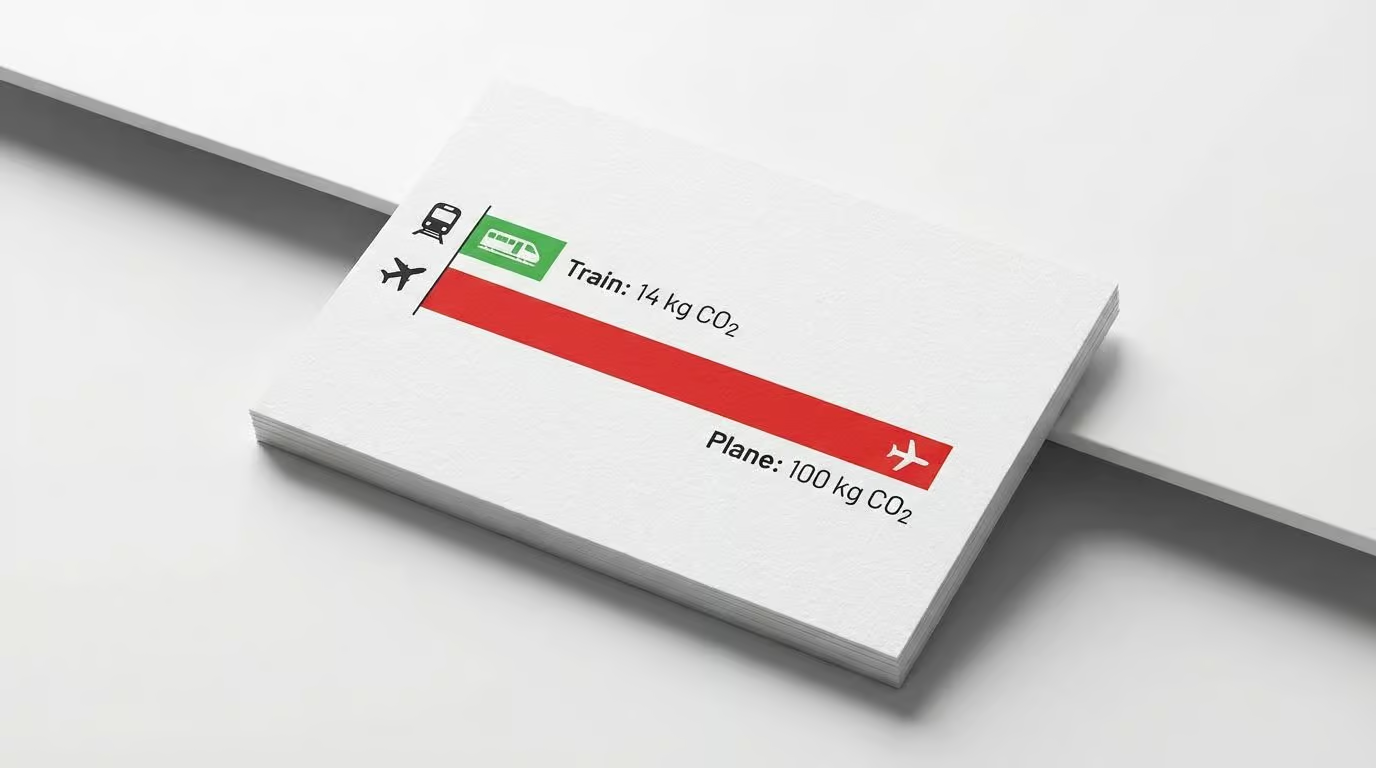
Let’s look at the numbers. A train trip between Rome and Venice emits roughly 14 kg of CO₂ per passenger. That same journey by plane? You’re looking at over 100 kg of CO₂ once you factor in the flight and the ground transport to the airport. That number floored me.
With room for up to 12,000 travelers every hour, these trains pack folks in tight and keep emissions low for each ticket sold. No need to fuss with parking at airports or endless taxi rides—just stroll into the station downtown and ride straight out again.
Skipping takeoff cuts pollution too; it’s more direct travel without all that wasted time and gas circling above cities waiting to land. Riding through Italy by rail keeps my footprint small and gives me an excuse to grab a gelato at the next stop instead of rushing past it in some crowded terminal.
How Will High-Speed Train Travel in Italy Change in 2025?
I’ve watched the Italian high-speed train network stretch its rails every year, but 2025 feels like a rocket launch. They’re adding lines fast, working toward that goal of over 5,000 kilometers by 2030.
Right now, the big news is the Naples-Bari line. Parts of this route, like the Cancello-Frasso Telesino section, are seeing major progress in 2025. Once fully complete, it will cut the travel time between the Tyrrhenian and Adriatic seas by nearly half. I’m already planning a coast-to-coast trip to test it out.
Ticket prices make me do a double take these days; competition between Trenitalia and Italo has sliced costs by nearly forty percent compared to just a few years back. Stats show rail accessibility is shooting up as much as eighteen percent in the next phase alone. New stations will pop up across regions too, boosting regional equity significantly if things go as planned.
People Also Ask
Why should I choose high-speed trains to travel around Italy?
High-speed trains like the Frecciarossa 1000 and Italo AGV hit top commercial speeds of 186 mph, getting you from city center to city center faster than any other mode of transport. You skip the airport security theater entirely and get extra legroom to stretch out while the Italian countryside blurs by.
How do high-speed trains compare with driving or flying in Italy?
The train from Milan to Rome takes just under three hours, blowing the six-hour drive out of the water. Unlike flying, which wastes hours commuting to distant airports like Malpensa or Fiumicino, the train drops you right in the downtown action where you need to be.
Are Italian high-speed trains reliable for seeing multiple cities on one trip?
With departures as frequent as every 15 minutes between major hubs, you have near-constant options that keep your itinerary moving even if a specific train runs a few minutes behind.
What can I expect onboard an Italian high-speed train?
Expect consistent free Wi-Fi, power outlets at every seat, and the option to book a ‘Silenzio’ area for distraction-free travel. You can grab a fresh espresso at the FrecciaBistrò bar or hit the vending machines in Italo’s Smart class to keep fueled up.