
If you are building a home recovery protocol, adding a red light therapy infrared sauna to your routine is one of the highest-yield investments you can make for your long-term health. You aren’t just buying a hot box to sweat in; you’re stacking two clinically proven medical tools to permanently improve your HRV and skin. Let’s look at exactly how to browse the market, avoid toxic materials, and get the most out of these dual-therapy cabins without getting ripped off.
I’ve gotten big into the sauna space over the past year, experimenting with both traditional hot rock cabins and modern red light infrared setups. Like a lot of guys, I started paying closer attention when people like Bryan Johnson began heavily promoting both therapies as non-negotiable longevity tools.
My HRV, restorative sleep quality, and baseline skin health have markedly improved since I started doing this regularly. But buying separate clinical devices costs a fortune and eats up entire rooms in your house.
I spent months looking for a setup that actually married the technologies without off-gassing toxic glue at high heat. That search pointed me toward integrated systems running Arki™ Solo. It actively improves your physiological baseline by letting the physical mechanics of heat and light complement each other perfectly.
Table of Contents
Maximizing systemic recovery with red light therapy infrared saunas
Yes, using red light therapy and an infrared sauna at the same time is entirely safe and actively mimics the dual benefits of natural morning sunlight. Activating both systems simultaneously opens the body to absorb light faster while generating a deep, detoxifying sweat.
The human body didn’t evolve to process intense light in an air-conditioned room. We absorb light best when our physical temperature is slightly elevated.
Instead of stacking contradictory wellness tools that fight against each other, a unified cabin creates a biological loop. The heat preps the tissue, and the light penetrates the cells.
To understand why this combination works so reliably, we first have to map exactly how light and heat behave inside the body.
How infrared heat amplifies red light therapy absorption
The difference comes down to biological targets: the broader 630–50,000 nm spectrum dictates that red light handles mitochondrial work at the surface, while IR heat handles mechanical thermal changes deeper inside your muscles. They perform different jobs, but they work exponentially better together.
Decoding wavelengths: 5-10mm vs 20-40mm

Medical professionals and genuine longevity clinics do not view these lights as identical. Mitochondrial ATP requires 630-850nm wavelengths to trigger production when hitting the skin’s surface.
That specific red and near-infrared light only penetrates about 5 to 10 millimeters into the dermis. It acts as a strict cellular stimulant for surface tissue.
Meanwhile, mid and far-infrared therapy travels much deeper. It penetrates 20 to 40 millimeters into your body to physically heat your joints and muscle tissue from the inside out.
The vasodilation delivery mechanism
The biggest myth in the wellness space is that mixing different wavelengths causes them to cancel out. The exact opposite is true in human biology.
Heat causes your blood vessels to physically expand. This vasodilation supercharges photobiomodulation, acting as a fast-track delivery mechanism.
Pumping light therapy into a cold, stiff body does almost nothing compared to delivering it into a pre-warmed, circulatory-optimized environment.
“Pumping light therapy into a cold, stiff body does almost nothing compared to delivering it into a pre-warmed, circulatory-optimized environment.”
Measurable health benefits of dual-wave sauna therapy
Combining an infrared sauna with red light directly improves cardiovascular conditioning, deeply relieves chronic pain, and significantly increases dermal collagen density. While something like a deep-tissue massage creates temporary relaxation, sustaining a cabin environment of 170°F (77°C) generates an active physiological workout alongside a permanent cellular skin reset. For anyone serious about biohacking and longevity, understanding these overlapping biological responses is essential.
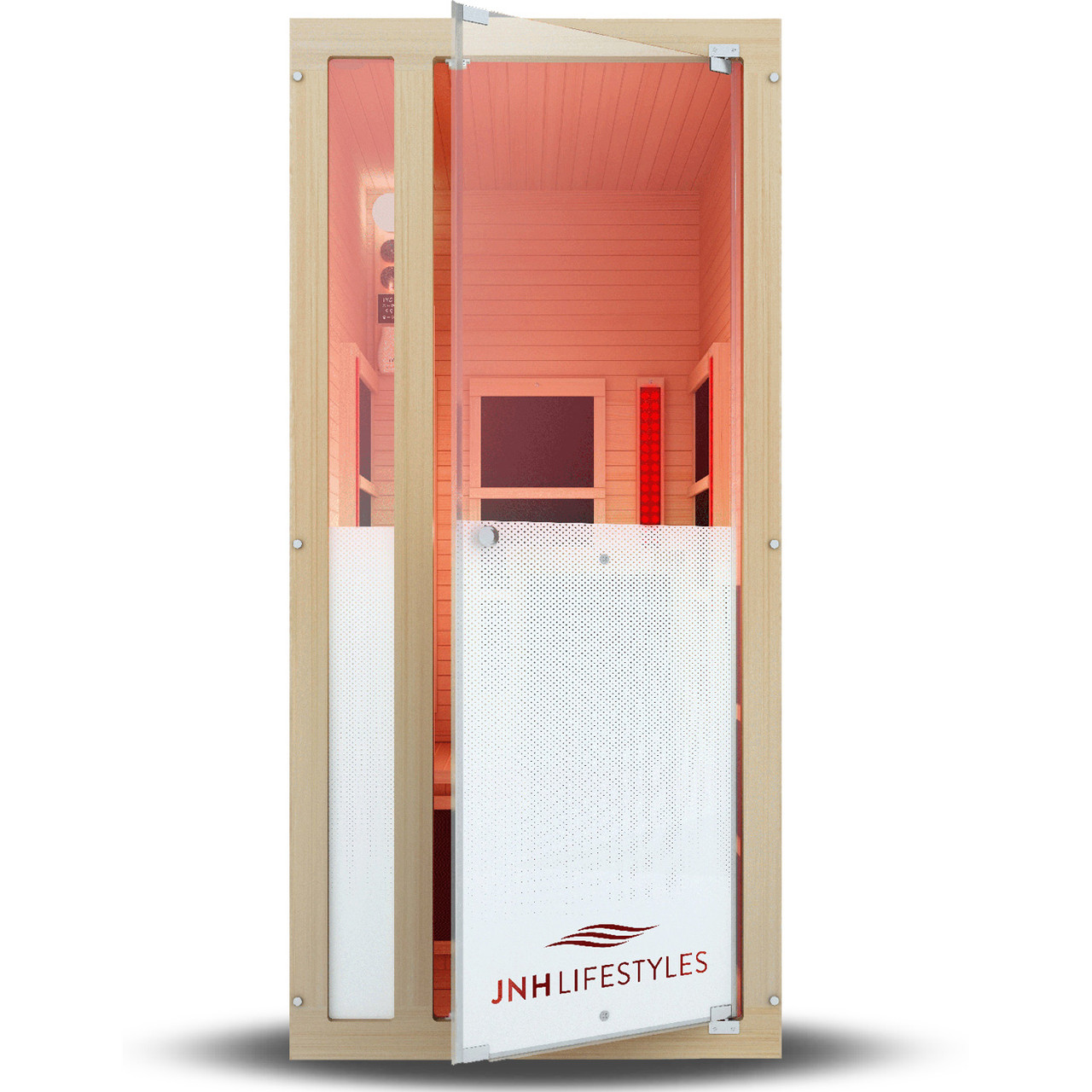
When you expose your body to prolonged, penetrating heat, your internal temperature rises, forcing the heart to pump harder. This cardiovascular mimicry effectively acts as passive exercise, conditioning your system while you sit still. At the exact same time, the targeted red light wavelengths bathe your flushed skin, triggering mitochondrial energy production that repairs damaged cells. Instead of paying for isolated spa treatments, a dual-therapy cabin consolidates your complete restorative protocol. By generating an optimized healing environment, you effectively command your cells to continuously repair themselves.
Mimicking cardiovascular stress
Sitting in deep thermal heat raises your heart rate and forces your cardiovascular system to burn cardio calories like you are going for a light jog. When paired with a dialed-in diet and baseline exercise, this acts as passive weight management for people rehabilitating underlying injuries.
Routine heat-stress conditioning lowers all-cause mortality, especially when hitting the Finnish standard of 4-7 sessions per week, a fact repeatedly backed by massive longevity studies.
If you look at standard things to do in Finland, daily sauna use is practically a religion, and their national cardiovascular health data proves why.
Dermal collagen and joint relief
The split therapies hit completely different physical layers simultaneously. You experience a rapid epidermal reset relieving deep tissue inflammation during the same thirty-minute window, providing profound, systemic pain relief. It allows you to manage joint pain naturally without constantly reaching for over-the-counter anti-inflammatory drugs.
Medical guidance from institutions like the Mayo Clinic often notes that repeated heat therapy can offer significant relief from chronic autoimmune and joint conditions like arthritis, low-back pain, and fibromyalgia. As a bonus, routinely raising your core body temperature gives your immune system a highly effective way to fight off seasonal colds.
Meanwhile, the red light exposure actually increases dermal collagen density by up to 30 percent in clinical setups. You step out with reduced joint stiffness and visibly repaired skin.
Standalone red light panels vs. 360-degree heated cabins
Buying an infrared sauna with built-in red light is far more effective for systemic recovery than purchasing a separate, isolated light panel. A heated cabin provides a gentle, full-body wash of light, whereas a standalone panel only blasts a small section of your body.
The myth of peak intensity
Red light panels are aggressively marketed based on raw power. Companies boast about extreme peak irradiance, telling you to stand naked in front of a blinding 160 mW/cm² panel for exactly five minutes.
It looks wildly impressive on a spec sheet, but it is biologically inefficient. You get a harsh hotspot on your chest while the rest of your body stays cold and untreated. You’re buying a flashlight when you actually need ambient sunshine.
Mastering the systemic dosage
A premium heated cabin prioritizes cumulative light dose over peak irradiance. Having 12 strategically placed emitters pushing a moderate 40-60 mW/cm² of light for 30 minutes generates a massive full body dose of 48-108 J/cm². This pushes a gentle, effective wave of light into your entire body instead of blasting one spot.
You get less blinding intensity per square inch but an infinitely better systemic physiological response. This flexible setup also lets you adjust your routine based on your physical readiness, running heat only, light only, or both if your body needs to be completely reset.
The invisible dangers: Thermal off-gassing and EMFs
An ultra-low EMF rating ensures you aren’t exposing your body to unnecessary localized radiation while trying to recover. Beyond electrical safety, you must strictly vet the structural materials, as baking cheap synthetic wood at high temperatures creates a genuinely dangerous breathing environment.
Preventing toxic inhalants at high heat
Most guys entirely ignore what their sauna is built with until it heats up and smells strongly of hot plastic. Standard plywood and cheap chemical glues rapidly break down at 170 degrees.
Insisting on Zero VOC prevents thermal off-gassing, ensuring you aren’t actively breathing in chemicals while you sweat.
The cabin requires solid, untreated FSC-Certified Canadian Hemlock for hypoallergenic structural integrity. Anything less than genuine, raw wood is a legitimate respiratory hazard at high temperatures.
Validating ultra-low radiation
The other invisible trap in the home sauna market is electromagnetic frequency. Sitting inches away from cheap carbon heaters for 30 minutes a day exposes you to massive amounts of unregulated radiation.
Quality manufacturers rely on strict third-party lab testing to measure EMF/ELF shielding in milligauss (mG), keeping levels down to an ultra-low threshold. You want a physical reading averaging exactly 0.32 mG or lower so your daily recovery habit doesn’t compromise your cellular health.
Market costs and choosing your perfect home sauna
Home infrared saunas equipped with medical-grade red light therapy generally cost between $9,000 and $12,000, though the fact that many 1-person models plug directly into a dedicated 120V household outlet saves you thousands on custom electrical wiring. Real wellness architecture requires a serious budget, though seasonal sales often bring these figures down by a couple of thousand dollars.
Assessing medical-grade market options
If you want true zero-chemical construction and verified safety shielding, expect to pay for the underlying engineering. A standout example in this specific category is from JNH Lifestyles.
Their Arki™ Solo 1-Person Full-Body Medical-Grade Red Light Therapy + Full Spectrum Infrared Sauna hits every benchmark for heavy-duty safety and thermal performance.
While the MSRP sits around $11,500, you can usually find it significantly discounted to $9,495.00 during sales events. That is the realistic price of entry for safe, high-grade home heat therapy that won’t fall apart in a year.
Establishing your daily wellness protocol
Once you install the cabin in your home, dial in the accessories to make it a daily refuge. A lot of guys skip the extras, but upgrading the environment actually changes the entire physical experience.
Adding a Chromotherapy Light Bulb, an Oxygen Ionizer, a solid Ergonomic Backrest, and an Infrared Floor Heater turns a simple sweat session into a dedicated performance ritual.
As a reader of Unfinished Man, you already know that investing slightly more upfront to dial in your daily habits always pays dividends down the road. Build the right protocol once, and let your body do the rest.
Frequently Asked Questions
What’s the difference between red light therapy and standard infrared heat?
Red light operates at a 630 to 850nm wavelength, penetrating just 5 to 10 millimeters into your skin to trigger mitochondrial ATP production and boost dermal collagen. Infrared heat travels much deeper—20 to 40 millimeters—to physically heat your joints, alleviate muscle inflammation, and mimic cardiovascular stress. They handle completely different biological jobs, making them an entirely complementary stack.
Can I use red light therapy and an infrared sauna at the exact same time?
Absolutely, and human biology actually prefers it this way. The thick infrared heat induces vasodilation, physically expanding your blood vessels to prep the tissue. This creates a biological fast-track delivery mechanism that supercharges your body’s ability to absorb the healing red light.
Why are full cabin saunas considered better than standalone red light panels?
Standalone light panels aggressively market raw peak irradiance, effectively acting like a high-powered flashlight that burns a harsh hotspot onto a cold, stiff body. A 360-degree heated cabin is biologically superior because it prioritizes systemic cumulative dosage over blinding intensity. You get a completely warmed circulatory system actively absorbing a gentle, full-body wash of therapeutic light.
What is thermal off-gassing and why does it matter in saunas?
Thermal off-gassing happens when cheap synthetic wood and chemical glues break down at 170-degree heat, releasing toxic inhalants into the air. If your cabin isn’t built with Zero VOC construction using untreated, raw wood like Canadian Hemlock, you are turning a recovery tool into a respiratory hazard. You don’t want to build a wellness habit around breathing hot plastic fumes.
Is checking for EMF radiation in a home sauna actually necessary?
It is completely non-negotiable if you care about your long-term cellular health. Cheap carbon heaters pump out massive amounts of unregulated electromagnetic radiation right next to your body. You need a structurally vetted unit backed by third-party lab testing that proves its EMF emissions sit at or below an ultra-low 0.32 mG baseline.
How much does a medical-grade dual-therapy sauna cost?
A genuine, heavy-duty home setup with verified EMF shielding and zero-chemical construction typically runs between $9,000 and $12,000. Models like the JNH Lifestyles Arki Solo retail for around $11,500 but frequently drop to $9,500 during seasonal sales. It’s a steep entry price, but you are buying true professional-grade longevity architecture rather than a disposable sweat box.
Do I need custom electrical wiring to install an infrared sauna?
Not necessarily, which is a massive hidden cost-saver for homeowners. Many premium 1-person models are engineered to plug directly into a standard dedicated 120V household outlet. Checking the power requirements before purchasing can save you thousands of dollars in electrician fees and drywall repairs.