So, you want to build a better body, but you’re stuck deciding between parkour vs gym workouts. It’s a classic crossroads, right?
Do you go with the creative, real-world challenge of parkour, where you’re running, climbing, and jumping outdoors? Or do you stick with the focused strength and precision of indoor gym training?
I get it. You want to make the right choice for your goals.
Let’s break down both styles with some real facts to help you pick your path. Ready to see which training method comes out on top for you? Let’s get into it.
Key Takeaways
Parkour delivers intense full-body workouts using just your bodyweight, which skyrockets your core strength, endurance, and agility. A 2022 study showed that adolescent males in parkour training saw greater gains in peak oxygen uptake and explosive power compared to those in traditional gym training.
Gym workouts are fantastic for isolating specific muscle groups with machines or free weights. Using progressive overload with classic moves like the bench press and squat is the proven way to build muscle mass, but it can sometimes lack real-world functional movement unless you add specific mobility drills.
Parkour sharpens your coordination, balance, and reflexes by forcing you to adapt to new obstacles constantly. One 2021 study found that children in parkour even outperformed kids in team sports on flexibility and mobility tests. Gym training builds stability through structured routines but offers less dynamic, real-time body control.
When it comes to cost, parkour is tough to beat. You really only need a good pair of grippy shoes and comfortable clothes. Compare that to gym memberships, which can run anywhere from $30 to over $100 a month, or a home gym setup that could cost up to $3,000 or more upfront.
Both training styles are incredible for building confidence and crushing stress. The noncompetitive vibe in parkour fosters creativity, while hitting new personal records in the gym fuels self-belief. Community support is strong in both, from programs like Swift Movement to high-energy group fitness classes.
Table of Contents
Physical Benefits Comparison
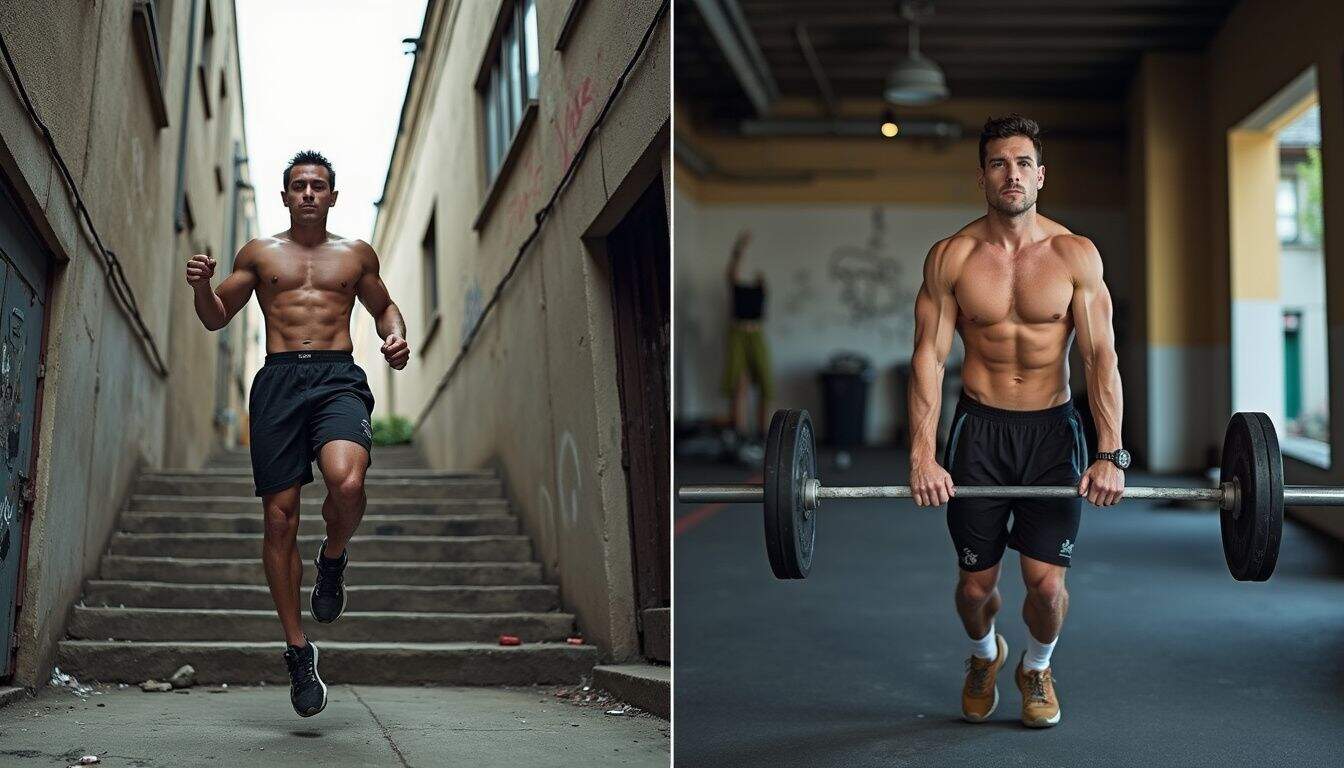
Parkour essentially turns your city into a giant obstacle course, making every muscle fire as you leap over fences or balance on rails. It’s a full-body challenge every time.
On the flip side, lifting heavy iron in the gym builds raw power with classic moves like deadlifts. Meanwhile, bodyweight exercises like push ups and the single leg squat can build coordination and functional strength incredibly fast.
How do strength and endurance differ between parkour and gym training?

Building serious muscle and stamina requires grit, no matter where you train. Here’s a look at how the sweat and results compare.
| Parkour | Gym Training |
|---|---|
|
|
What are the flexibility and mobility benefits of parkour versus gym workouts?

Beyond pure strength, how you move is what really counts. Let’s look at how parkour and the gym affect your body’s range of motion and ability to recover.
| Aspect | Parkour | Gym Workouts |
|---|---|---|
| Training Style | Dynamic and playful. You’re jumping, vaulting, and rolling over real-world obstacles. It feels less like a workout and more like recess for adults. | Structured and focused on reps, sets, and specific muscle groups using benches, dumbbells, and machines. |
| Flexibility Gains | Flexibility is built-in. Your body is constantly stretching and adapting to new shapes. A 2023 study found young parkour athletes had better flexibility scores than team sport athletes. | Flexibility often requires dedicated effort, like post-workout stretching or a separate yoga class. Many lifters unfortunately skip this. |
| Mobility Benefits | Joint mobility improves naturally through varied, real-world movements. Hips, shoulders, and knees are exposed to a wide range of motion. A 2022 study showed clear mobility gains in parkour practitioners. | Mobility work is often isolated. Many serious lifters follow specific programs like The Ready State to improve their range of motion and prevent injury. |
| Injury Prevention | Enhanced flexibility and mobility help you dodge injuries. By forcing the body to adapt quickly, parkour can reduce muscle tears and sprains. | Stretching routines can cut down on injuries, but lifters who neglect mobility work often pay the price with pulled muscles down the road. |
| Sports Performance | The gains directly transfer to other sports. Increased flexibility helps in everything from martial arts to a casual game of basketball. | There’s crossover, especially in sports that require raw power, but athletic mobility can lag without focused effort. |
| Examples of Movement | Climbing fences, swinging from bars, and leaping over benches. Each movement opens up joints and activates new muscles. | Squats, bench presses, and deadlifts. These can build mobility if done with a full range of motion, but ego lifting often leads to shortened, less effective reps. |
| Research Findings | A 2021 study showed kids in parkour outperformed team sports kids on flexibility and movement skill tests. | While professional gymnasts show elite flexibility, the average gym-goer often has average scores unless they add dedicated stretching. |
How do parkour and gym exercises improve coordination and balance?
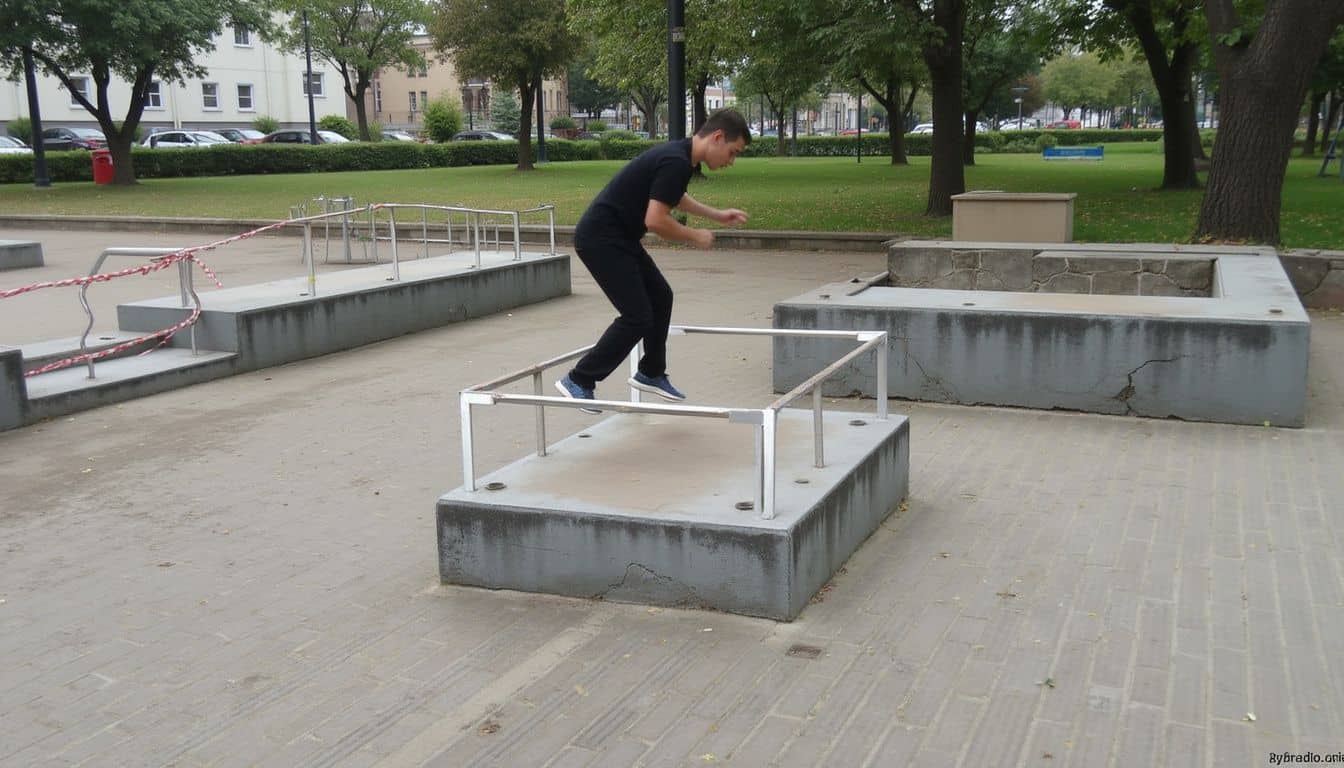
Both parkour and gym training can sharpen your body’s control, but they do it in very different ways. Here’s how they compare for guys who want to move like an athlete.
| Parkour | Gym Training |
|---|---|
|
|
Mental and Emotional Benefits

It’s not just about building muscle; it’s about building a stronger mind. Parkour challenges you with split-second decisions, while the gym builds mental toughness through the grind of lifting heavy weights.
Both can transform stress into sweat, leaving you feeling powerful and clear-headed.
How does parkour or gym training help build confidence?

Nailing a difficult vault you’ve been practicing for weeks gives you an incredible rush. Every time you conquer an obstacle, your brain banks another win, building what psychologists call “self-efficacy.”
The gym fosters that same kind of grit. Pushing through your last set of squats or hitting a new personal record on the bench press transforms doubt into solid self-belief, one rep at a time.
“The best way to gain self-confidence is to do what you are afraid to do.” – Swati Sharma
This sense of achievement is powerful. For example, some kids in Swift Movement programs track their progress with colored wristbands. Each new band represents a new level of skill and a bigger goal achieved, building pride without direct competition.
That feeling sticks with you, whether you’re landing a jump or grinding out pushups. You’re not just sculpting muscle, you’re building real, lasting confidence.
Can parkour or gym workouts provide stress relief and mindfulness?

Parkour is basically a form of movement meditation. When you’re calculating a jump, your mind goes quiet. You have to be completely present, or you risk falling. This intense focus, known as a “flow state,” is a powerful way to push away daily stress and anxiety.
In fact, a 2023 study highlighted that the problem-solving nature of parkour supports emotional balance and resilience. The gym offers a similar mental escape. Lifting weights or hitting a cardio machine lets you channel frustration into physical effort. According to the Anxiety and Depression Association of America, about 14% of people use regular exercise to cope with stress.
High-intensity workouts like CrossFit demand your full attention on form and breathing, leaving no room for worrying about deadlines. A 2021 review of over 1,000 studies confirmed that 89% found a positive link between physical activity and mental health.
Both styles release pent-up energy and give your mind a break. You walk away feeling lighter and more centered.
How do these fitness approaches support goal setting and achievement?
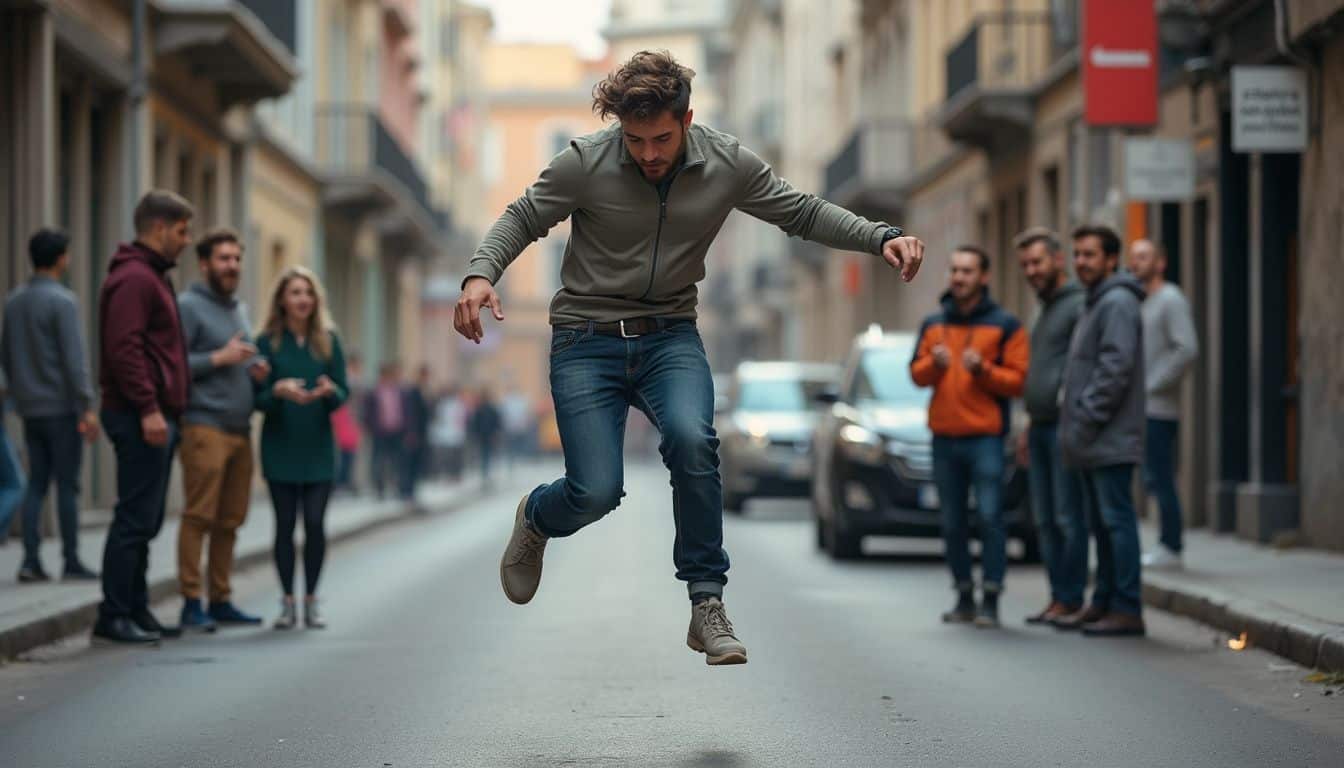
Setting and crushing goals is what keeps you motivated. Both parkour and the gym are perfect platforms for this. You can apply the S.M.A.R.T. goal framework to either discipline.
- Gym Goal: “I will increase my deadlift by 20 pounds (Specific, Measurable, Achievable) in the next 3 months (Time-bound) to improve my overall strength (Relevant).”
- Parkour Goal: “I will consistently land a 6-foot precision jump (Specific, Measurable, Achievable) within 2 months (Time-bound) to improve my control (Relevant).”
Systems like the Swift Movement Wrist Band System help break down huge goals into smaller, manageable steps. This creates a clear path for progress, which is incredibly motivating.
Self-Determination Theory, a well-known psychological framework, suggests that this feeling of progress and competence is more powerful than any external reward. Parkour’s non-competitive nature fuels creativity, while the Intrinsic Motivation Inventory (IMI) shows that people enjoy activities more when they feel a sense of autonomy.
You don’t need fancy equipment to chase a personal best, just the determination to keep moving forward.
Accessibility and Environment

Where you train shapes your entire experience. Whether you prefer the freedom of outdoor monkey bars or the structured environment of an indoor squat rack, each setting offers unique advantages and challenges.
What are the differences between indoor and outdoor training options?

Gyms provide a controlled environment with a massive arsenal of weight-training equipment. You can precisely track your progress, and amenities like changing rooms and showers add a layer of convenience.
A home gym takes convenience to the next level. There’s no commute, and you can train whenever you want.
Outdoor training, on the other hand, introduces terrain that no machine can replicate. There’s a different kind of satisfaction in vaulting a real park bench instead of a plyo box. Plus, training in the sunlight boosts your mood and provides a free dose of vitamin D.
Of course, the weather can be a major roadblock. Rain or extreme cold can shut down your session. That’s where a reliable weather app like AccuWeather or WeatherBug becomes essential for planning. You also have to be more aware of safety hazards, as the outdoor world is unpredictable.
What equipment is needed for parkour compared to gym workouts?

The gear you need depends entirely on your chosen playground. Here’s a quick rundown of what you’ll need for parkour versus a typical gym routine.
- Parkour is minimalist; your body is the primary tool.
- A good pair of parkour shoes is the most important investment. Brands like Feiyue or Onitsuka Tiger offer the flexible soles and solid grip you need.
- Lightweight, breathable clothing is key for staying cool and agile.
- A small parkour backpack can carry essentials without getting in the way during a run.
- Most traceurs (parkour practitioners) avoid gloves because they reduce grip feedback. Bare hands build toughness.
- For home practice, a multi-grip pull-up bar is great for working on swings and muscle-ups.
- Indoor gyms are equipment-heavy: dumbbells, squat racks, kettlebells, and resistance bands are just the beginning.
- Gym wear can be anything from tank tops to compression tights, depending on your workout.
- Many lifters use gloves to prevent calluses and wrist wraps for support during heavy lifts.
- Shoe choice in the gym is specific. Many prefer flat-soled sneakers for deadlifts, while others use specialized weightlifting shoes with a raised heel, like Nike Romaleos, for squats.
- Some routines borrow from gymnastics, but rings and ropes aren’t available at every gym.
- If you’re looking for a complete list of gym essentials, this guide on what to pack in your gym bag is a great resource.
How adaptable are parkour and gym training to various locations?
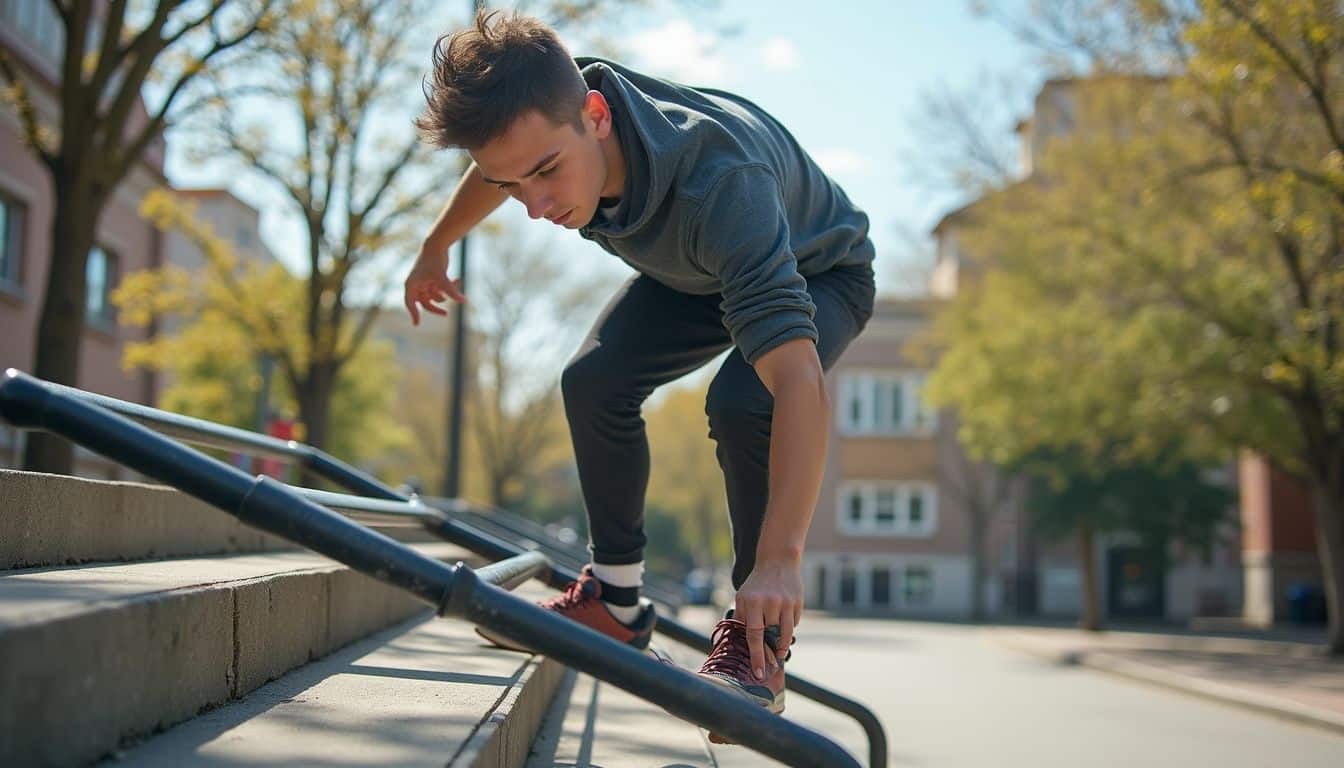
Parkour is incredibly adaptable. You can train almost anywhere, from a city park to a quiet parking lot. All you need is your imagination and a solid pair of shoes.
This freedom to turn any urban landscape into a training ground is a core part of its philosophy and is promoted by international organizations like Parkour Earth. This approach boosts creativity and problem-solving in a way that structured gym workouts can’t always replicate.
Gym workouts, by contrast, usually depend on fixed machines or weights in a dedicated facility. If you don’t have access to a gym or a home setup, your training options become very limited.
Parkour breaks down these barriers, encouraging movement diversity wherever you are. This adaptability often leads to better all-around athletic performance compared to sticking with a single, fixed environment.
Community and Social Interaction

Whether you’re spotting someone on a bench press or cheering on a friend who just nailed their first wall climb, fitness has a way of bringing people together.
What is the group dynamic like in gym training?
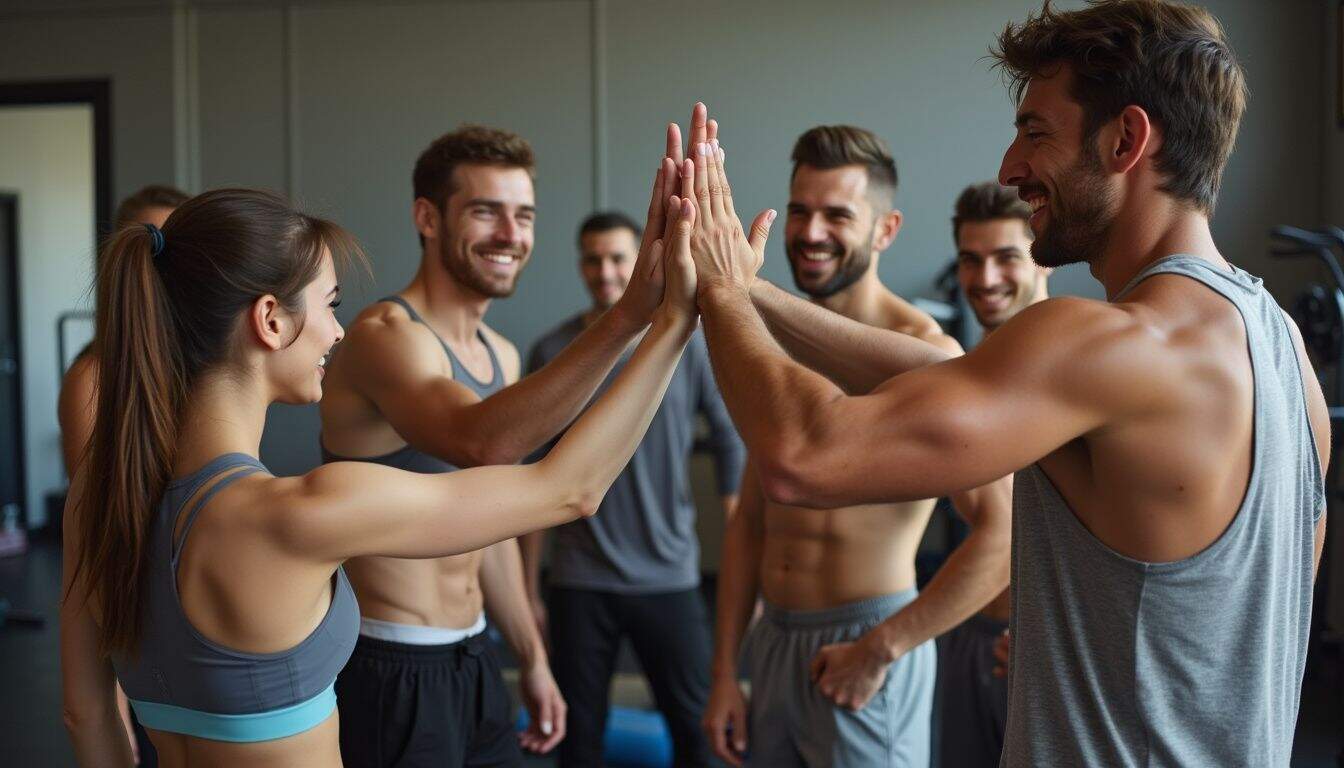
The gym can be a surprisingly social place. High-energy group fitness classes like those from Les Mills or F45 are designed to build camaraderie through shared effort. The instructor leads the way, so everyone is on the same page.
This structured environment creates a powerful sense of accountability. When you’re part of a group, you’re less likely to skip a workout. Research consistently shows that gym-goers who participate in group classes have significantly higher retention rates. One study found that group fitness participants have a 56% higher retention rate than those who work out alone.
Another report showed that members who take group classes are 26% less likely to cancel their membership. That shared struggle through the last few reps builds connections that often turn into real friendships.
How does the collaborative spirit manifest in parkour communities?
Parkour communities are built on collaboration. During training sessions, or “jams,” athletes constantly spot each other, offer tips, and share techniques.
Organizations like the Swift Elite Team, which started in 2023, host group workouts and competitions like the Midwest Parkour League to help everyone improve together. Online communities, such as the Cincinnati Parkour Community Discord server, are active hubs for planning meet-ups and sharing advice.
There’s a strong, supportive vibe where everyone celebrates each other’s progress. The guy who lands his first simple vault gets just as much encouragement as a seasoned pro nailing a complex move.
This inclusive atmosphere makes it easy for beginners to feel welcome and learn in a safe, encouraging environment.
Suitability for Different Fitness Goals
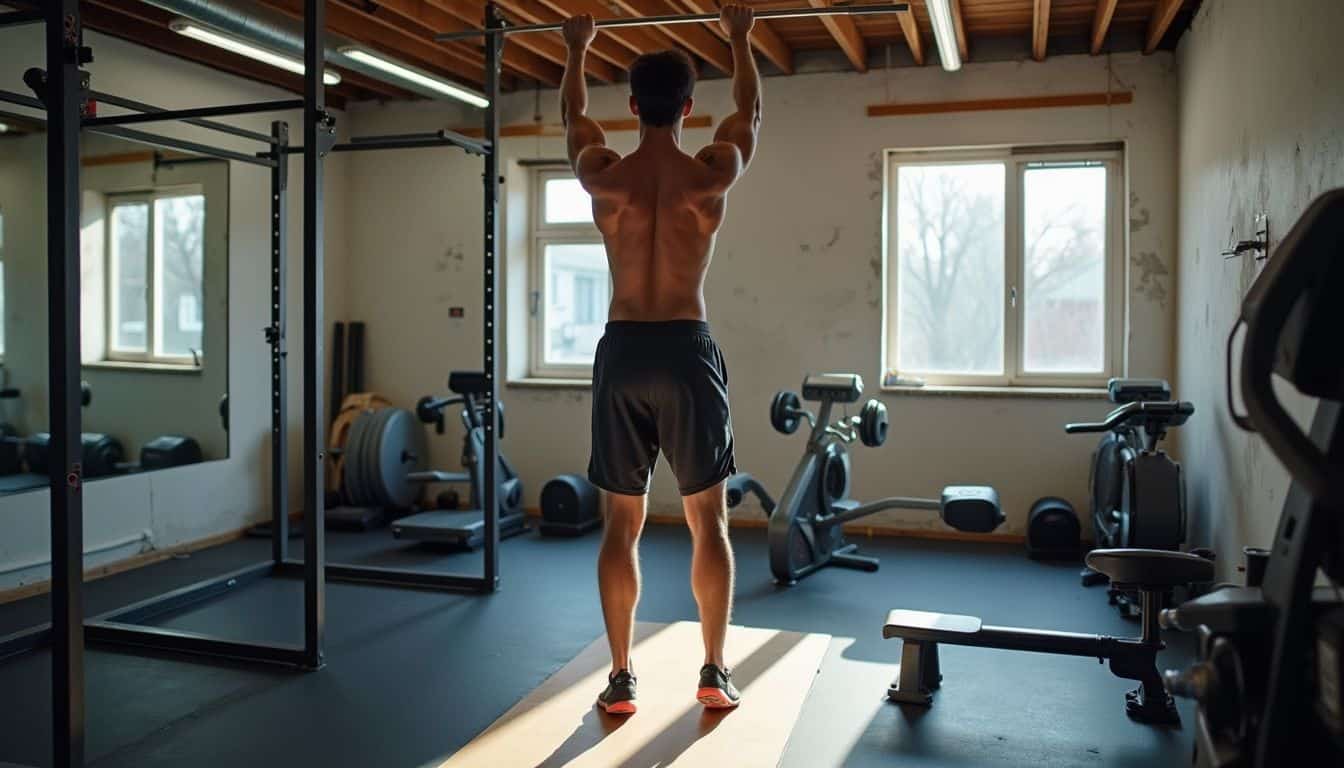
Whether you want to lose weight, build serious muscle, or just move better, both parkour and the gym can get you there. The key is picking the approach that aligns with your specific goals.
Which approach is better for weight loss and muscle building?
Both disciplines are effective for getting lean and strong, but they achieve it in different ways. Here’s how they stack up for guys who are serious about results.
| Aspect | Gym Training | Parkour |
|---|---|---|
| Weight Loss |
|
|
| Muscle Building |
|
|
| Motivation & Participation |
|
|
How do parkour and gym training support functional fitness and movement skills?
Parkour is the essence of functional fitness. It forces you to move your body over, under, and through real-world obstacles efficiently. Every drill, from climbing walls to landing precision jumps, improves your speed, balance, and coordination.
The discipline’s roots can be traced back to Georges Hébert’s “méthode naturelle,” a training system based on practical, natural human movements. This philosophy, carried on by pioneers like David Belle, is all about making athletic performance feel like second nature.
Gym workouts are fantastic for building the raw strength that underpins functional fitness. Lifting free weights with exercises like the farmer’s walk or kettlebell swings strengthens the stabilizer muscles that protect your joints and power your movements. This foundational strength is crucial for executing powerful jumps or absorbing landings when you’re training parkour.
By mixing both styles, you get the best of both worlds. The mobility from gym lunges complements the dynamic power from wall runs, making you a more capable and resilient athlete in any situation.
Safety and Injury Risks
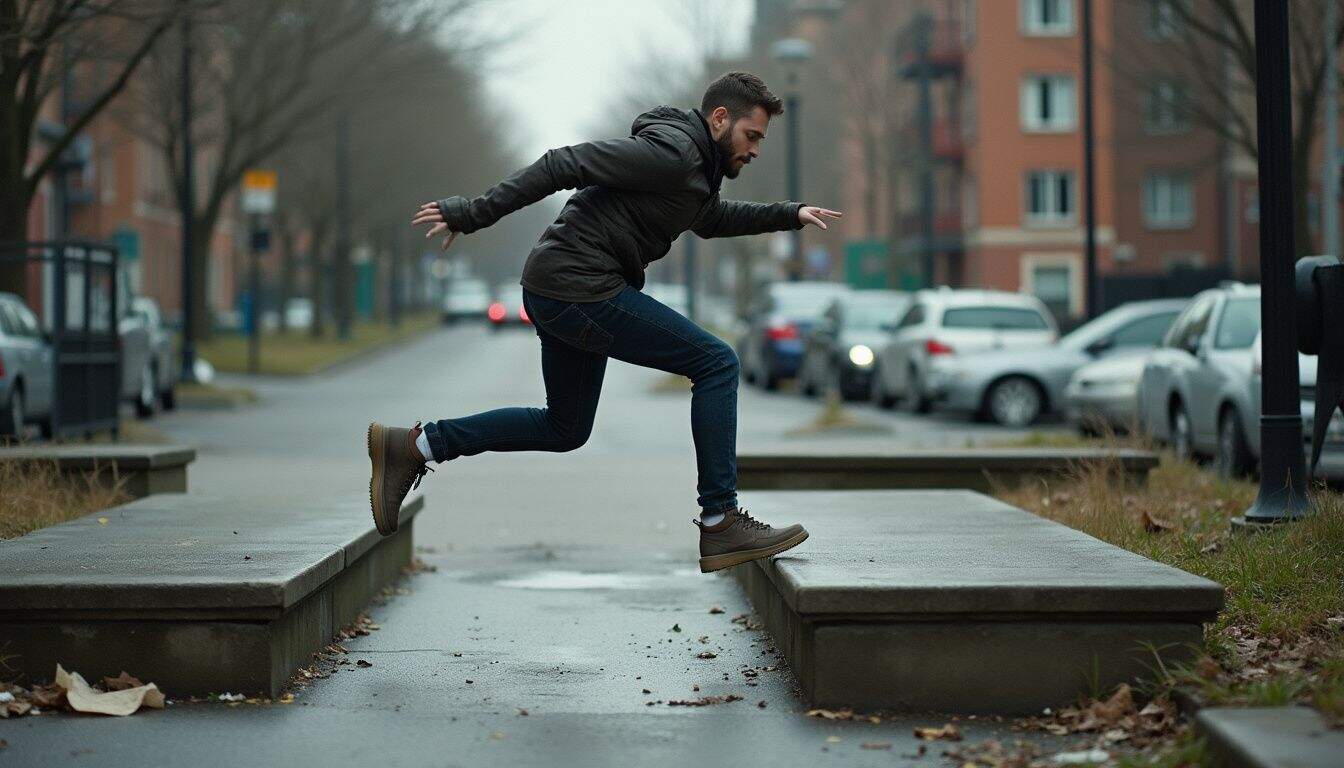
Any physical activity comes with risks. Whether you’re jumping over a rail or pushing for a new PR on the bench press, strains and sprains are always a possibility. Knowing the risks and how to manage them is key.
What are common risks associated with gym workouts?
While the gym is a controlled environment, it’s not without its dangers. Here are some common risks to be aware of before you load up the bar.
- Overuse injuries are common, especially in the shoulders, elbows, and knees from repetitive movements.
- Lifting with poor exercise technique on major lifts like squats and deadlifts is a leading cause of lower back and limb pain.
- Overtraining without enough rest can stall your progress and increase your risk of injury.
- Pushing too hard, too fast in high-intensity workouts can sometimes lead to a rare but serious condition called rhabdomyolysis, where muscle fibers break down and release harmful substances into the blood.
- Improperly set up equipment, like failing to use the safety arms on a squat rack, can lead to serious accidents.
- Data shows that squats can put stress on the knees, while the bench press is a common cause of shoulder and elbow strain.
- Training without professional supervision can allow bad habits to form, which may lead to injuries later on.
What safety precautions should be taken when practicing parkour?
In parkour, your safety depends on your awareness and preparation. I’ve learned from experience that a little caution goes a long way.
- Always scan your landing spot before you jump. A 2023 study noted that bad landings account for around 40% of parkour injuries.
- Wear shoes with excellent grip, like Feiyue or Onitsuka Tiger, not worn-out running shoes.
- Practice safe rolls and breakfalls regularly. It’s a skill that will save you from injury when a move doesn’t go as planned.
- Check surfaces for anything that could cause a slip, like wet spots, loose gravel, or ice.
- Build up to complex moves slowly. Master the basics before you even think about attempting high-risk stunts.
- Train with a friend or in a group. Having someone to spot you is invaluable.
- Always warm up for at least ten minutes to prepare your joints and muscles.
- Listen to your body. If something feels wrong, stop. Pushing through pain is a direct path to injury.
- Consider getting certified training. Organizations like AD
APT Qualifications
offer courses that teach parkour and safety from the ground up.
Cost and Time Commitment

Your budget and your schedule are two of the biggest factors in choosing a fitness routine. Parkour can be virtually free, while a gym membership is a recurring expense. Let’s break down the costs and time involved.
How do membership fees and equipment costs compare?
Trying to figure out where your money is best spent? Here’s a clear comparison of the costs associated with parkour and various gym options.
| Training Type | Monthly Cost (2025 Est.) | Initial Investment (2025 Est.) | Equipment Needs |
|---|---|---|---|
| Commercial Gym | $30 – $100+ (e.g., Planet Fitness vs. Equinox) | $50 – $150 (enrollment/annual fees) | Membership, proper shoes, activewear. Optional extras like trainers can add up. |
| Home Gym | $0 (after setup) | $800 – $5,000+ | A basic setup might cost $1,000, while a full rack with weights can be $3,000 or more. |
| Parkour | $0 | $60 – $120 | A good pair of sneakers and comfortable clothes. It’s the lowest barrier to entry. |
| Calisthenics | $0 | $0 – $50 | Bodyweight only. An optional pull-up bar is a small one-time cost. |
What are the time flexibility considerations for each training style?
Parkour is incredibly flexible and perfect for busy schedules. You can do it anywhere, anytime, with no need to travel to a specific location. I’ve done quick parkour drills on a nearby ledge before work, saving time on a commute to the gym.
Since most of it relies on bodyweight exercises, you can start a session whenever you have a spare moment.
Gym sessions are a bit more structured. They often depend on the gym’s operating hours, and you might have to wait for equipment during peak times like after 5 p.m. However, you can make your gym time more efficient.
Research shows that controlling your total training volume is more important than how many days you go. You can use time-saving techniques like supersets or a Tabata protocol, a form of HIIT where you perform 20 seconds of intense work followed by 10 seconds of rest, to get a killer workout in under 30 minutes.
How Will Parkour and Gym Training Evolve in 2025?

The line between different fitness disciplines is blurring. In 2025, expect to see even more hybrid training styles that mix the best of both worlds.
Coaches are increasingly blending gymnastics drills with traditional weightlifting. More athletes are using both barbells and monkey bars in their weekly routines to build well-rounded strength and incredible core power.
Many professional athletes are already cross-training. NBA players lift weights for power, but they also incorporate parkour-like movements to improve agility and land safely. This trend of cross-training is growing because it prevents burnout and creates more resilient athletes.
Wearable technology is also playing a bigger role. Devices like the WHOOP strap and Garmin watches now track detailed metrics like joint angles and recovery scores, allowing athletes to fine-tune their training and prevent injuries before they happen. The future of fitness is about smart, integrated training that builds a body that’s not just strong, but capable of anything.
People Also Ask
Which builds muscle faster, parkour or gym workouts?
The gym is much faster for building muscle mass because lifting weights allows for progressive overload, the key driver for growth. Parkour builds lean, functional strength but won’t add significant bulk.
Is parkour better for burning calories than a regular fitness center routine?
Parkour is an incredible calorie-burner, with some estimates suggesting you can burn up to 600-800 calories per hour, often surpassing a typical gym session unless you’re doing continuous high-intensity interval training (HIIT).
Can I get flexible doing only weight training instead of parkour?
While weight training can improve mobility if you use a full range of motion, parkour develops superior dynamic flexibility by constantly forcing your body to twist, reach, and bend.
Which is safer for beginners: learning flips outside or starting on machines inside?
Starting on machines is safer as it provides a controlled environment, whereas learning advanced parkour moves outdoors without a certified coach significantly increases the risk of injury.
References
https://mainewarriorgym.com/the-benefits-of-ninja-warrior-and-parkour-as-cross-training-for-other-sports/ (2024-06-18)
https://swift-movement.com/blog/gymnastics-vs-parkour-kids/ (2024-06-26)
https://pmc.ncbi.nlm.nih.gov/articles/PMC11983557/
https://www.parknplaydesign.com/post/benefits-of-parkour-for-kids
https://www.mdpi.com/1660-4601/22/11/1632
https://parkour.com/parkour-gear-list/ (2020-02-12)
https://pmc.ncbi.nlm.nih.gov/articles/PMC8554233/
https://www.delawarefitfactory.com/blog/the-power-of-community-how-group-workouts-keep-you-motivated (2025-01-17)
https://eprints.whiterose.ac.uk/id/eprint/79203/2/Tracing%20the%20cityWhiteRose.pdf
https://pmc.ncbi.nlm.nih.gov/articles/PMC9565175/
https://www.parknplaydesign.com/post/rules-of-parkour
https://pmc.ncbi.nlm.nih.gov/articles/PMC8449772/
https://sdgymnastics.com/blog/gymnastics-parkour-the-athletic-advantage/