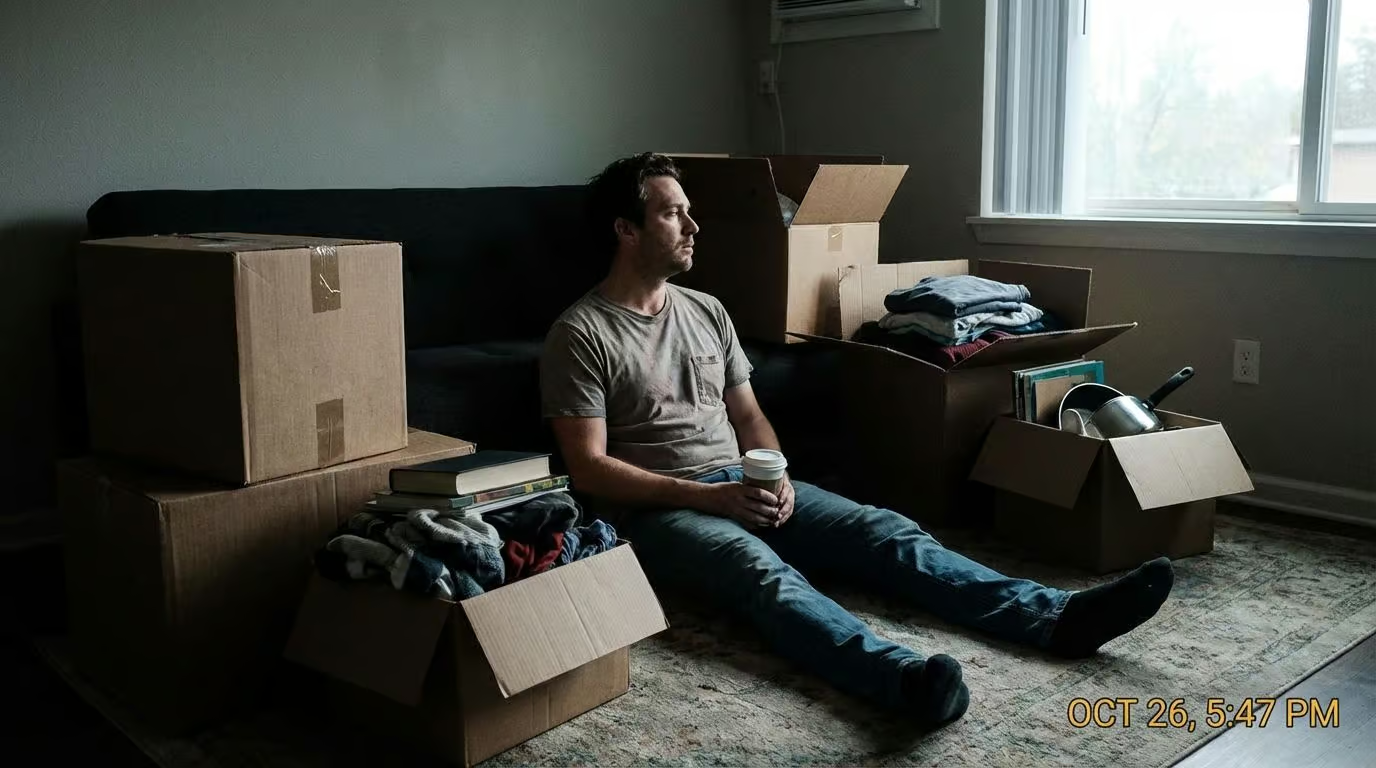
Have you ever finished moving to a new city, set the last box down, and then felt the silence get a little too loud?
A lot of men hit that moment and don’t say a word about it.
This page is the honest truth about why relocating can feel tougher for men, and what you can do this week to build real social connections, start making friends, and even pull off the “send the first inbox message” move to start reconnecting with old friends.
Let’s make the new place feel like yours.
Key Takeaways
Many men were taught to hide loneliness, and that habit can quietly block friendships, help-seeking, and emotional relief.
In a 2023 Pew Research Center survey, 8% of U.S. adults said they have no close friends, which is a real problem if you’re starting over in a new zip code.
In the 2023 Surgeon General’s advisory on loneliness and isolation, social disconnection is linked with higher risks of heart disease, stroke, dementia, and premature death, so building community is health work too.
The fastest path to new beginnings is repeat contact: pick two recurring activities (same day, same time) and show up long enough for “familiar face” to turn into “friend.”
Table of Contents
Why Moving to a New City Can Be Harder for Men
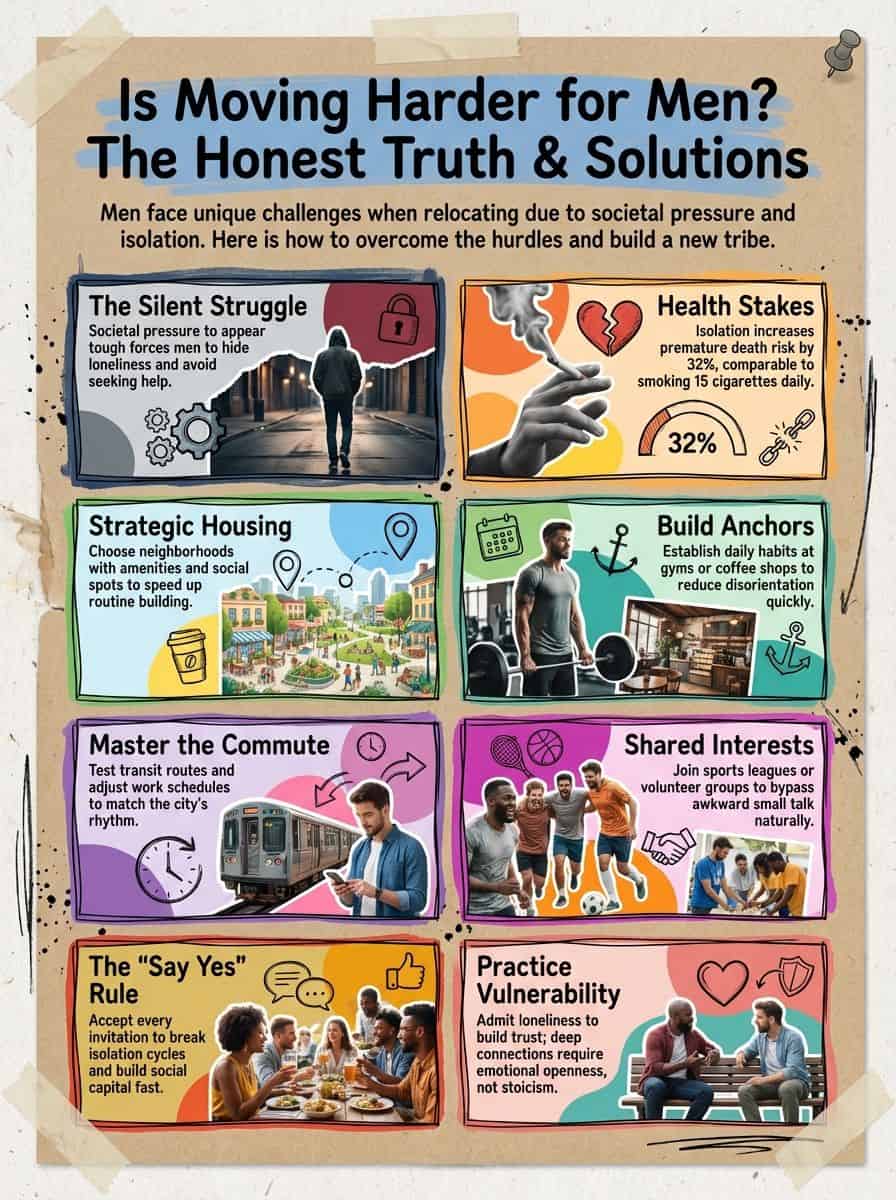
Moving can hit men harder because a lot of us were trained to treat loneliness like a private failure instead of a normal human signal.
When you’re new, you need reps: repeated places, repeated people, repeated chances to say, “Good to see you again.” If you only go once, you stay a stranger.
According to Mike Hammer Moving in Overland Park, KS, if you’re still in the logistics phase, you should get the move done cleanly so you have energy left for your social life. I like to keep planning simple and then focus my brain on people.
- Pick two “third places” (gym, rec league, coffee shop, library) and go at the same time every week.
- Use one group channel (a class, volunteering shift, men’s group) so you don’t rely on random small talk.
- Schedule one reach-out to an old friend within 72 hours of arrival, momentum matters.
How do societal pressures affect men’s vulnerability?
A lot of “be a man” rules reward emotional quiet. You keep it together, you don’t ask for help, you act like you’re fine.
The problem is that the same rulebook that praises toughness often punishes the exact behaviors that create close friendships: honesty, consistency, and asking for time.
A recent Pew Research Center report on men and social connection found that men with close friends tend to communicate with them less often than women do. In a new city, low contact can turn into social isolation fast.
- Make “checking in” a habit: one text on Tuesdays, one call on Sundays.
- Talk about something real: lead with one true sentence, then keep it moving.
- Choose environments that make openness normal, like a support group, a team, or a volunteer shift with shared purpose.
Why is it difficult for men to express loneliness or seek help?
If you’ve built your identity around self-reliance, asking for help can feel like losing status.
So men often try to “solve” loneliness alone. That usually means more nights inside, more scrolling, and fewer chances for real connection.
If you’re in a rough spot mentally, don’t tough it out in silence. In the U.S., you can call or text 988 (the 988 Suicide & Crisis Lifeline) for immediate support.
- Use a low-friction opener: “New city, trying to rebuild my life, can I ask you a quick question?”
- Start with one professional doorway: your primary care clinic, your insurance directory, or an Employee Assistance Program (EAP) if your job offers one.
- Try a room where sharing is expected: peer support groups (like NAMI Connection), recovery groups, or men’s circles.
Saying you are lonely can be the first brave thing you do for yourself.
What makes building new social circles challenging for men?
Adult friendships don’t form by accident the way they did in school. You have to be intentional.
There’s also a “closed circle” problem. Many people already have their routines and their people, so you must show up long enough to be trusted.
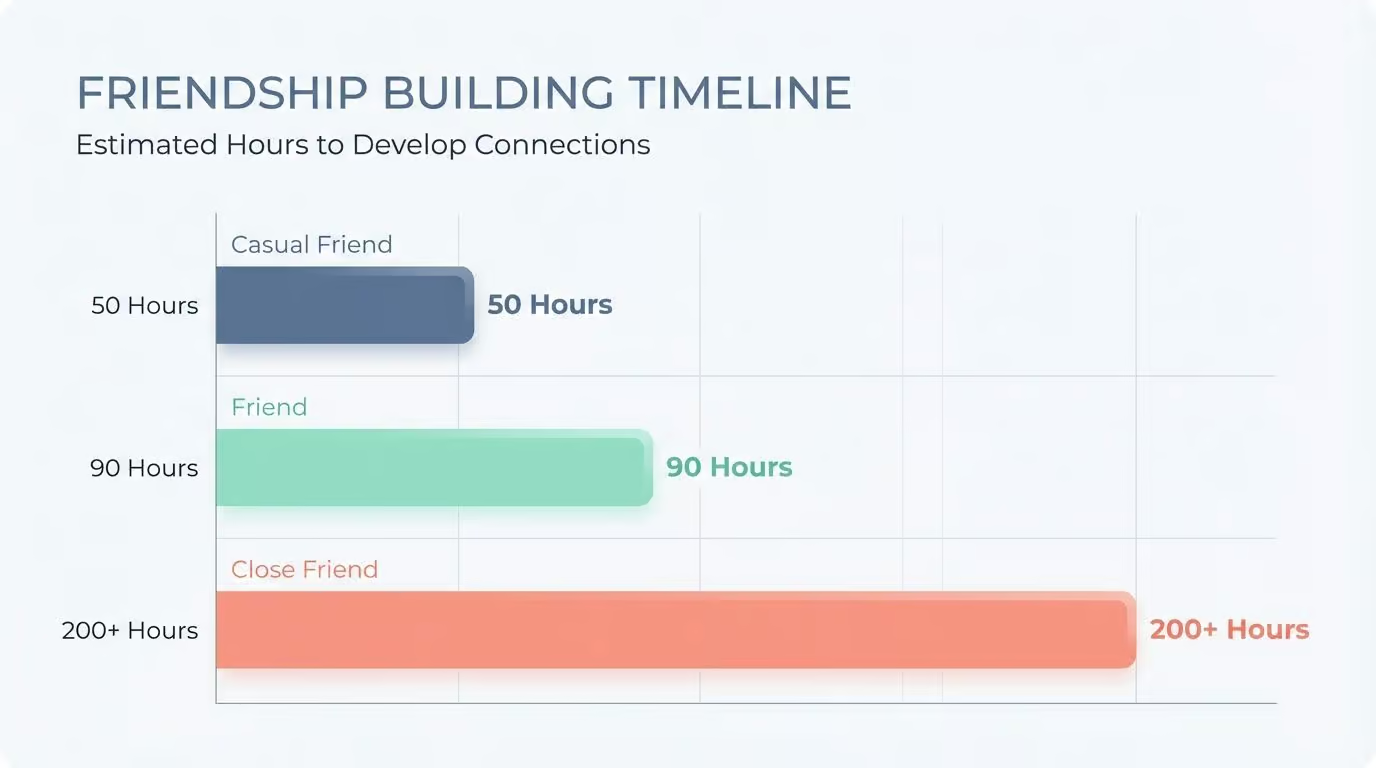
Research led by University of Kansas professor Jeffrey Hall estimates that it takes about 50 hours together to move from acquaintance to casual friend, about 90 hours to become friends, and 200+ hours to feel like close friends. That’s not meant to scare you, it’s meant to help you plan.
| Friendship stage | Rough time together | What you do in a new city |
|---|---|---|
| Acquaintance to casual friend | About 50 hours | Pick one recurring group and attend weekly for 2 to 3 months |
| Casual friend to friend | About 90 hours | Add 1 hangout outside the group (coffee, a walk, lunch) |
| Friend to close friend | 200+ hours | Create shared routines (game night, training plan, volunteering) |
- Stop waiting for “chemistry”: aim for repeat contact and shared effort.
- Go one-on-one sooner: group time is great, but closeness usually needs side conversations.
- Follow up within 24 hours: “Good meeting you. Want to grab coffee next week?”
Emotional and Psychological Challenges
Moving can shred routines and confidence at the same time. That combo can mess with sleep, appetite, and mood.
If you treat your mental health like part of your moving checklist, you settle faster.
- Watch your basics: sleep, food, movement, sunlight, and hydration.
- Name the feeling: “I’m lonely” is clearer than “I’m fine.”
- Build structure before motivation: a schedule gives you traction even when you feel flat.
How does social isolation impact men’s mental health?
Social isolation doesn’t just feel bad. It can raise stress and make anxiety and depression symptoms heavier.
If you want a practical starting point, try two quick self-check tools many clinicians use: the PHQ-9 (depression) and the GAD-7 (anxiety). You don’t need to self-diagnose, you’re just looking for a signal that you should talk to someone.
- If your score worries you, book a primary care appointment or therapy intake and bring the results.
- If you’re stuck at home, choose a group-based activity first, it creates built-in contact.
- If you’re isolating at night, schedule a call earlier in the evening so you’re not alone with your thoughts.
What is the effect of losing routine and familiarity?
Losing routine rips apart social networks and daily anchors. Greenblatt et al., 1982 found that destroying established networks is a strong determinant of poor mental health. Mobility had significant effects on depression, even after controlling for social class, marital status, gender, and employment.
The fix isn’t complicated, but it is consistent: rebuild a few “default” behaviors so your brain stops treating every day like an emergency.
- Keep one old routine: same workout plan, same morning coffee, same Sunday reset.
- Create two new anchors: one weekday and one weekend activity that repeat.
- Make your home feel safe fast: clean sheets, good lighting, and a chair you actually like.

Moving breaks more than boxes; it breaks rhythms.
Up next, look at how anxiety and stress show up when you’re starting over.
How do anxiety and stress affect men when starting over?
Stress can show up as sleeplessness, irritability, low drive, or a quiet slide into depression. A move can trigger all of it at once.
Men also tend to “cope alone,” which often means waiting too long to ask for support.
- Try a 2-minute reset: box breathing (inhale 4, hold 4, exhale 4, hold 4) before you walk into a social event.
- Use movement as medicine: a brisk 20-minute walk can lower tension enough to make socializing possible.
- Lower the bar: your job is to show up, not to be impressive.
Practical and Logistical Difficulties
Finding a place, setting up utilities, hauling boxes, and mastering a new commute can drain your energy fast. The goal is to reduce decision fatigue so you have bandwidth left for people.
One U.S. rule that matters if you’re moving across state lines: the Federal Motor Carrier Safety Administration explains that interstate movers must give you a written estimate and a consumer booklet called Your Rights and Responsibilities When You Move, so you can understand what you’re signing.
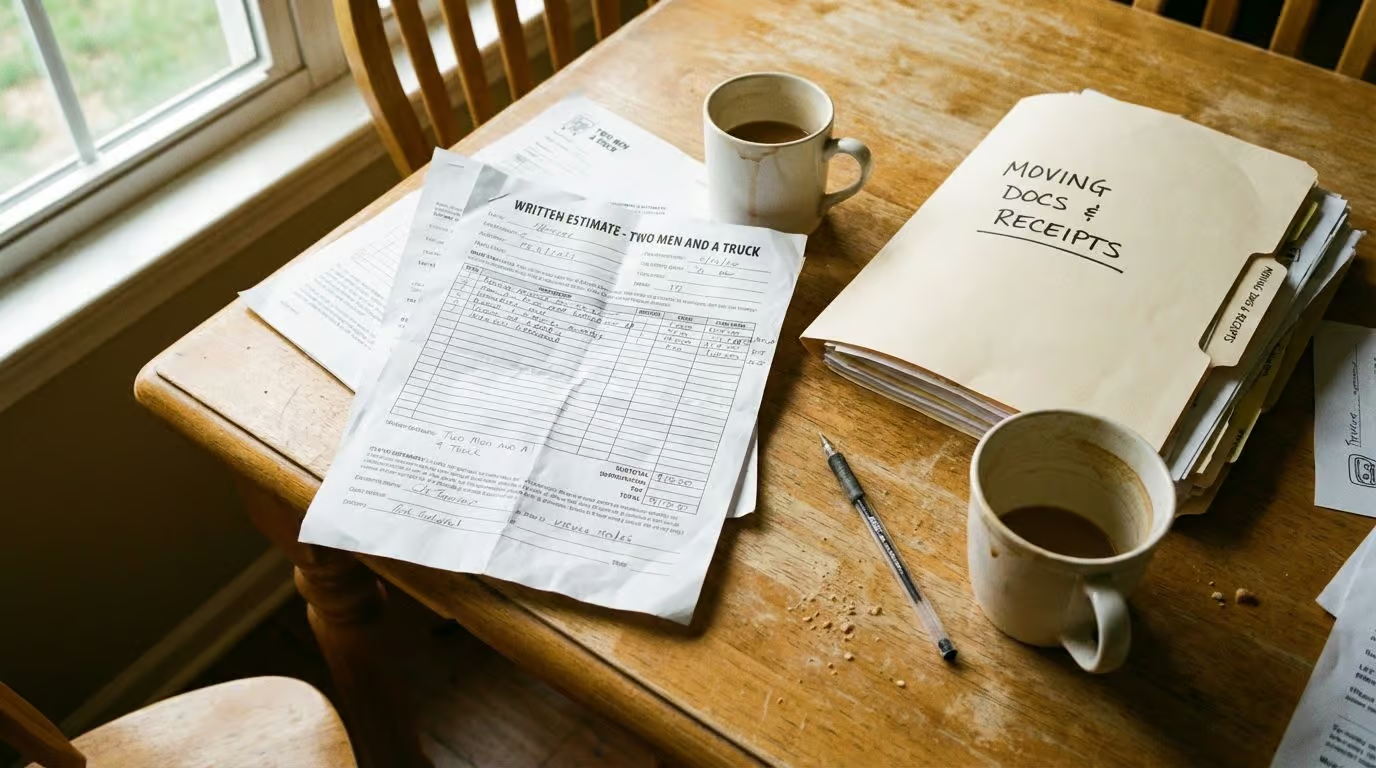
- Ask whether your estimate is binding or non-binding, and get it in writing.
- Get an actual inventory (in-person or virtual), not a casual “rate quote.”
- Keep a move folder: estimate, inventory, receipts, photos of valuable items.
If a moving company won’t put the details in writing, treat that as a red flag.
How can men find housing and set up a new home?
Move fast on the housing search, but don’t rush blind. You’re picking the base that will shape your routines and your social connections.
- Build a shortlist: commute range, grocery access, gym options, and one “hangout” spot you’d actually use.
- Prep your application packet: ID, proof of income, references, and a simple explanation of your move timeline.
- Schedule utilities early: electric, water, internet, trash, and any parking permits.
- Buy basics first: a bed, a towel set, a pan, and a decent lamp. Comfort reduces stress.
- Create a comfort corner on day one: one chair, one light, one place to decompress.
Renting in the U.S. usually means thinking about renters insurance too. The Insurance Information Institute’s most recent national average is about $170 per year (roughly $14 per month), and many landlords expect you to carry it.
What are the challenges of adapting to a new city’s culture and pace?
Even after you get your keys, the city can still feel foreign. You’re learning unspoken rules, local rhythms, and the kind of small talk people actually respond to.
- Run a “local week” experiment: try one neighborhood coffee shop, one park, one library, one casual restaurant, and one community event.
- Use low-pressure repeat spaces: a gym class, a volunteer shift, or a recreational league puts you around the same people again and again.
- Copy what works: watch how people greet, tip, queue, and exit conversations, then follow suit.
- Protect your mood: big climate changes and less daylight can hit energy, so prioritize sleep and morning light.
How do men navigate commutes and daily routines in a new city?
A commute can quietly steal your social life, because it eats the exact hours you’d use for hobbies, the gym, and friendships.
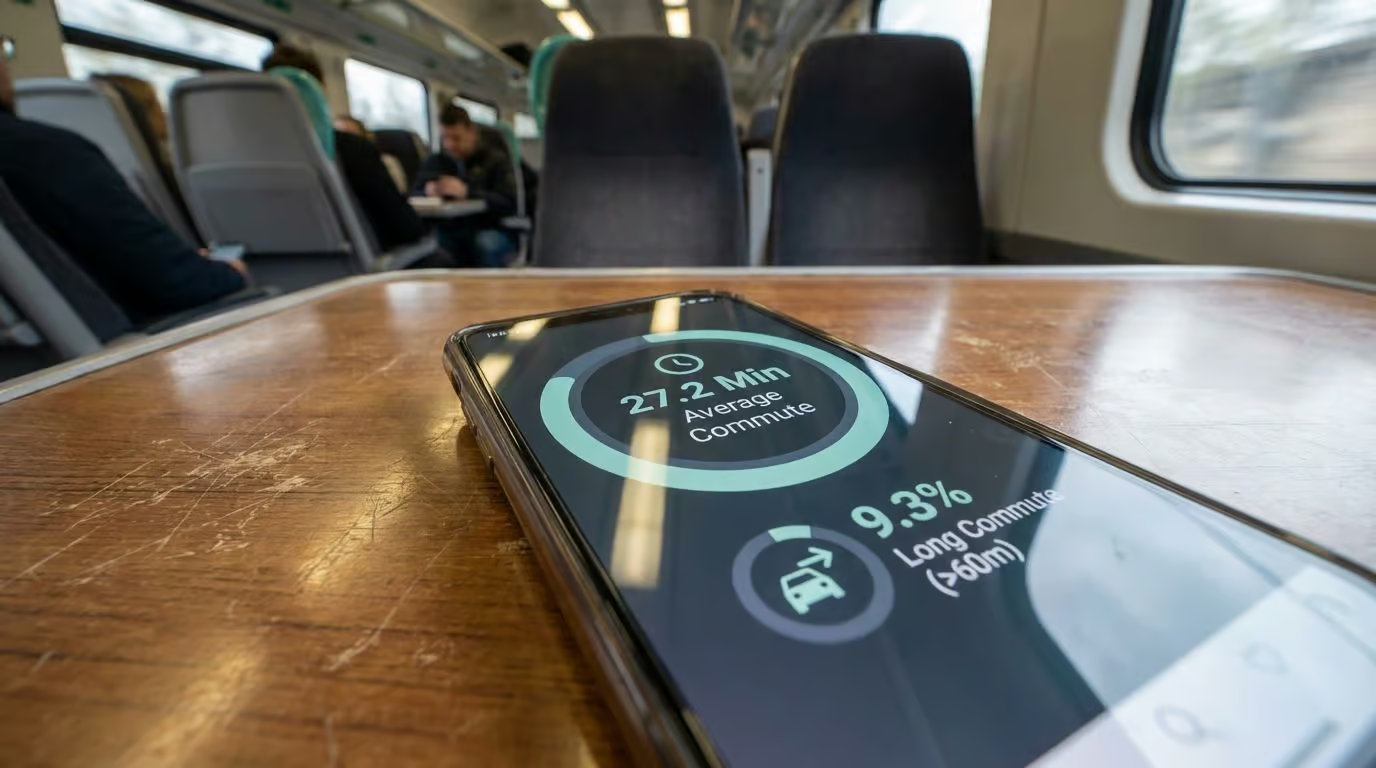
The U.S. Census Bureau’s 2024 American Community Survey lists the mean one-way commute at 27.2 minutes, and 9.3% of workers report a one-way commute of 60 minutes or more, so it’s worth planning around.
- Test two routes at rush hour before you sign a lease, one “normal day” route and one backup.
- Choose one errand cluster: groceries, pharmacy, and gym within the same zone.
- Build a “buffer habit”: use the last 5 minutes of your commute to plan your evening so you don’t drift into isolation.
- Claim a routine spot: a coffee shop or gym near home can turn commute time into community time.
Tips for Men to Adjust to a New City
If you want the move to feel easier, act like connection is part of the move, not something you “get to later.”
I like a simple rule: two recurring commitments, one reach-out, and one yes per week.
- Pick two recurring activities you can repeat without thinking.
- Say yes once per week, even if you feel awkward at first.
- Send one message to keep reconnecting with old friends alive while you build locally.
How can joining clubs or groups help men adjust?
Clubs and groups speed up the process because they remove the “where do I even meet people?” problem.
Start with places that create built-in conversation. You want shared tasks, shared goals, or shared sweat.
- Recreational sports leagues and running groups: the activity carries the small talk for you.
- The YMCA or community center classes: you get repeat faces and easy structure.
- Men’s groups and peer support (like NAMI Connection): you can be honest without feeling like you’re “dumping” on friends.
- Volunteering: food pantries, park cleanups, and animal shelters put you on a team fast.
- Coworking spaces: great for remote or hybrid workers who need human contact.
Why is building routines quickly important for men?
Routines reduce stress and create natural “touch points” with other people.
When your week has a shape, you’re more likely to leave the house and more likely to see the same faces again.
- Morning anchor: same wake time, same first stop (walk, gym, coffee, library).
- Midweek anchor: one recurring class or league night.
- Weekend anchor: one standing plan (volunteer shift, hike, game night).
How can men embrace discomfort and allow time to adjust?

I moved to Chicago in 2019 and felt awkward for months. That feeling is common, and it doesn’t mean you chose the wrong city.
Instead of waiting to “feel confident,” build a repeatable plan and let confidence catch up later.
- Use a 10-minute rule: if you hate an event after 10 minutes, you can leave. Most of the time, you’ll stay.
- Track wins: “I went,” “I introduced myself,” “I followed up.” Those count.
- Keep your standards kind: your goal is progress, not perfection.
How can hobbies and shared interests help meet new people?
Hobbies give you a built-in topic and a reason to show up again.
If you’re new, choose hobbies with repeat attendance, not one-time events.
- Skill hobbies: cooking classes, woodworking, language exchange, or music lessons.
- Game hobbies: board game nights, trivia teams, or tabletop groups.
- Outdoor hobbies: hiking groups, cycling meetups, or climbing gyms.
- Service hobbies: volunteering that matches your values.
If you can’t find a group, create one small and simple: “Saturday morning coffee, same spot, same time.”
What are effective ways for men to build a support system?
Moving alone takes work, but you can make it practical.
- Join meetup groups, gym classes, or a church team, use chat platforms and LinkedIn to find people, then show up consistently.
- Keep long-distance ties warm: schedule a weekly call, and set a recurring reminder so you don’t rely on memory.
- Use a “two-deep” rule: invest in two people you can text without overthinking it.
- Host something easy: a walk, a casual meal, a game on TV, keep it light and repeatable.
- Send the inbox message you’ve been putting off. Here’s a clean template: “Hey man, I just moved and you popped into my head. How have you been? If you’re up for it, I’d love to catch up this week.”
Universal Challenges Everyone Faces When Moving
Some parts of moving are hard for everyone: culture shock, money stress, and losing your old support system.
The good news is that the fixes are simple. They’re just not instant.
- Build a basic routine before you try to build a full social life.
- Handle admin early so it doesn’t drag you down for months.
- Get face time every week, even if it’s brief.
What is culture shock and how can people adapt to new surroundings?
Culture shock is that mismatch between what you expected and what you found. It can feel like confusion, irritation, or anxiety.
- Phase 1: everything feels new.
- Phase 2: everything feels annoying.
- Phase 3: things start to feel normal.
Adapt faster by learning the basics: transit, grocery stores, local etiquette, and one or two “default” places you like.
How does leaving behind a support system affect emotions?
When you leave your support network, you lose quick favors, casual hangouts, and the comfort of familiar people.
That gap can feel like grief. It’s a real emotional hit, even if the move is a good decision.

- Keep one old ritual with old friends (weekly call, group chat, online game night).
- Build one new ritual locally (league night, class, volunteering shift).
- Don’t wait for a crisis: start building before you “need” people.
What financial and logistical stresses come with relocation?
I moved across states once and the bill surprised me. Rent, security deposit, utilities, and basic furniture can add up fast, and setting up internet and bank accounts can take days.
Admin tasks can pile on too: the DMV, finding a new clinic, switching insurance, and learning local rules.
If you try moving without securing a job, expect tighter finances, more stress, and more paperwork while you get settled.
How Men Can Overcome Social Isolation
You don’t beat loneliness by “being tougher.” You beat it by stacking small social wins until your week has people in it.
Start with shared activities, then turn those into real friendships.
How can men find a tribe through shared activities?
You need a tribe that fits your life, not a perfect social calendar.
- Volunteer with a cause you respect, shared purpose makes conversation easier.
- Join a sports league, climbing gym, martial arts class, or running group for repeat contact.
- Try a men’s group format that fits you, support groups, faith-based groups, or skill-based meetups.
- Host something monthly and keep it easy: “First Thursday burgers,” “Sunday morning walk,” or “Game night.”
- Introduce two people you like to each other. You become a connector, and that builds community fast.
Why should men say yes to invitations and opportunities?
Saying yes breaks the loop where you stay home because you’re lonely, and you stay lonely because you stay home.
You don’t have to say yes to everything. You just need to say yes more often than your fear wants you to.
- Say yes with a time limit: “I can stay for an hour.”
- Say yes with a role: “I’ll bring snacks,” “I’ll help set up,” roles reduce awkwardness.
- Say yes with a follow-up: “Good seeing you, want to do that again next week?”
How can practicing vulnerability and openness help men?
Vulnerability is not a speech. It’s a small honest sentence that gives the other guy permission to be real too.
That’s how surface contacts become actual friends.
- Try a simple opener: “I’m still getting my footing here, what do you do for fun around the city?”
- Name one real thing: “I’ve had some lonely nights since the move.”
- Ask for a small favor: “Any barbers you trust?” “Best gym for beginners?” Small favors create connection.
How Will Moving to a New City Change for Men in 2026?
In 2026, one big shift is that your social life might not come from an office anymore. Hybrid work gives flexibility, but it can also remove built-in daily contact.
WFH Research surveys suggest that in 2025, about 27.7% of paid full workdays were worked from home on average, which helps explain why so many men need intentional “people time” outside work.
- If you work hybrid, pick a coworking space or a repeat café day so you don’t drift into isolation.
- If you moved for cost, protect your commute so you still have evening energy for friends.
- If you want real community, prioritize recurring in-person groups over endless online scrolling.
Tech can help you discover events, but the win still comes from showing up, again and again, until you’re a familiar face.
People Also Ask
Is moving to a new city harder for men than for women?
Men can find moving to a new city harder, but it varies by person, studies show mixed results. Men may lose close ties, and that can hurt social support and emotional health.
Why might men struggle more during relocation?
Men often lean on routine and small daily chats, so when those vanish, loneliness can hit hard, and jobs or housing stress can add up.
How can men make the move easier?
Cast a wide net, join groups, meet people at work or classes, say yes to invites. Little steps add up fast, start small and keep at it.
Is feeling lonely normal after a move?
Yes, it is normal, many feel that way at first. Talk to people, build a new routine, and check your emotional health as you settle in.