
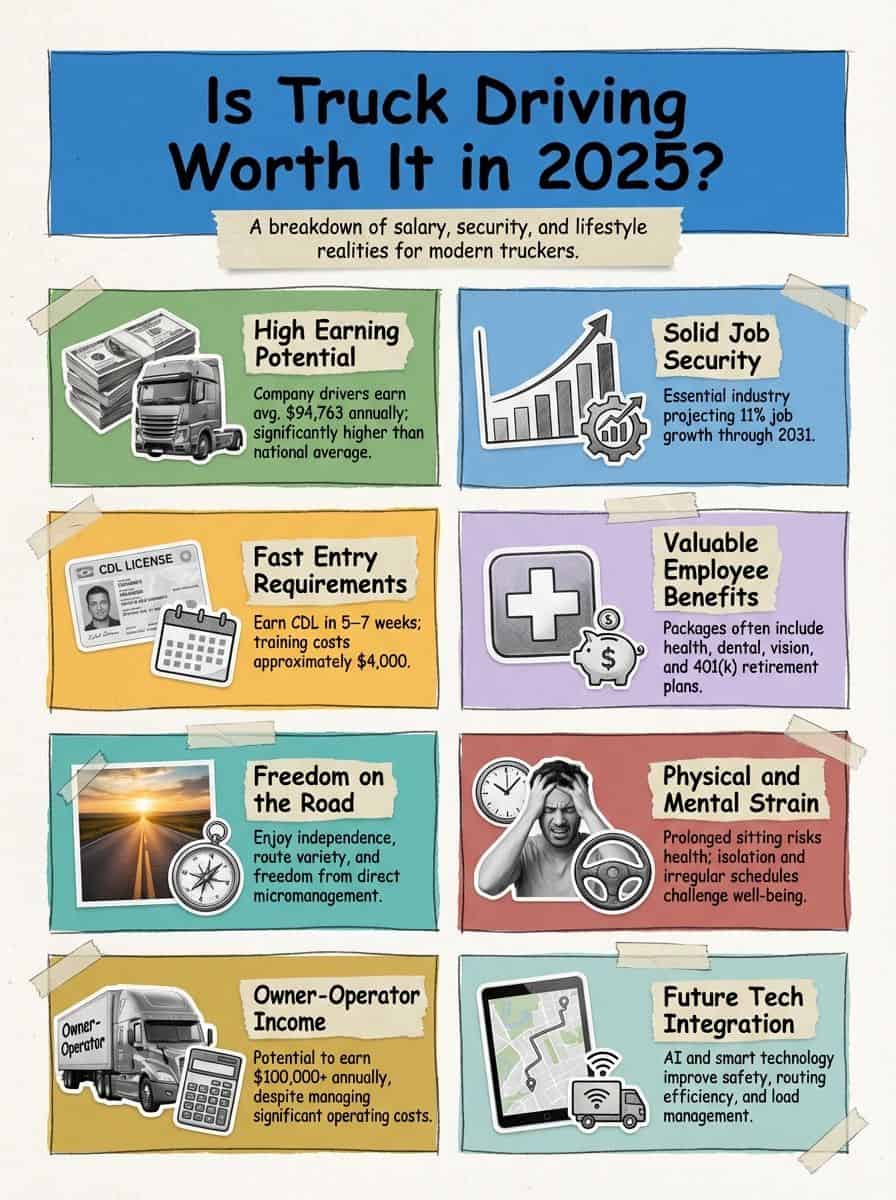
Ever thought about ditching the 9-to-5 for a life on the open road? Maybe you’re sick of staring at the same four walls, or maybe you just want a paycheck that actually reflects the hard work you put in. It’s a common frustration. You might be surprised to learn that company truck drivers could make around $94,763 a year in 2025.
I know that number grabs your attention. But is the lifestyle behind the money actually worth it? In this guide, I’m going to walk you through the real deal—from job security and paychecks to the honest truth about living in a cab.
We’ll look at the perks, like health insurance and total independence, but we won’t shy away from the tough stuff either. So, grab a coffee and settle in. I’ll share everything I’ve learned to help you decide if this career is your next big move.
Key Takeaways
Top-tier earners vs. the average: While some experienced drivers earn around $94,763, the national median is closer to $59,428. Location matters—drivers in Delaware can average over $70,000, while those in Hawaii might see closer to $44,000 (Zippia).
Job security is real: The industry is short about 60,000 drivers right now, and that number could hit 82,000 by late 2025. The Bureau of Labor Statistics predicts 11% growth for delivery jobs through 2031, so the work is definitely there.
Low barrier to entry: You don’t need a college degree. A high school diploma (or GED) and a CDL are your tickets in. Programs from companies like Schneider or Roehl Transport can even pay you while you train.
The physical toll: It’s not just driving. About 70% of truckers struggle with obesity, and the risk of diabetes is double the national average. You have to be proactive about your health in the cab.
Tech is your friend: New tools like the Garmin dēzl GPS and apps like Drivewyze help you bypass weigh stations and find parking, making the daily grind much smoother.
Table of Contents
Benefits of a Truck Driving Career
Being a truck driver gives me steady work and a sense of freedom that office jobs just can’t match. With a commercial driver’s license in my pocket, the highway is my office, and the paychecks help me take good care of my family back home.
Why is truck driving considered a secure job?
I see the truck driving field keeps rolling even when other jobs slow down. My CDL makes me part of an industry with more open positions than available drivers, especially in 2025. The American Trucking Associations (ATA) reports a shortage of over 60,000 drivers, which puts folks like us in the driver’s seat when it comes to finding work.
The Bureau of Labor Statistics expects delivery truck driver and sales worker roles to grow by 11 percent from 2021 to 2031. This beats the average for almost every other job out there.

If you’re looking for the hottest markets, states like Texas, Ohio, Pennsylvania, Florida, and California always need heavy tractor-trailer drivers to move freight. The country depends on us to haul cargoes in big rigs or handle package delivery jobs.
Demand bounced back fast after the COVID-19 shutdowns since trucking is essential no matter what happens in the economy. Jennifer Fink from altLINE says this career offers freedom and solid earning power if you’re willing to work hard and drive safe loads. According to Go4cdl, getting a commercial driver’s license opens doors to steady employment because supply chains cannot function without us truckers behind the wheel.
“Even during tough times, wheels keep turning—someone has got to deliver those cookies.”
With a shortage making headlines—a whopping 74% of my fellow truckers worry about being overworked just because there aren’t enough hands on deck—it looks clear that job security comes with my CDL badge.
How much can truck drivers earn?
After talking about job security, pay grabs my attention fast. Paychecks in a trucking career beat the average American job by a country mile. While the top earners pull in around $94,763, it’s important to know the starting line.
Most company truck drivers see a national average salary around $59,428. But if you specialize, the numbers jump significantly. For instance, getting a Hazmat (H) endorsement or driving a tanker (N endorsement) can boost your value instantly.
Here is a quick look at how pay can vary by region and role:
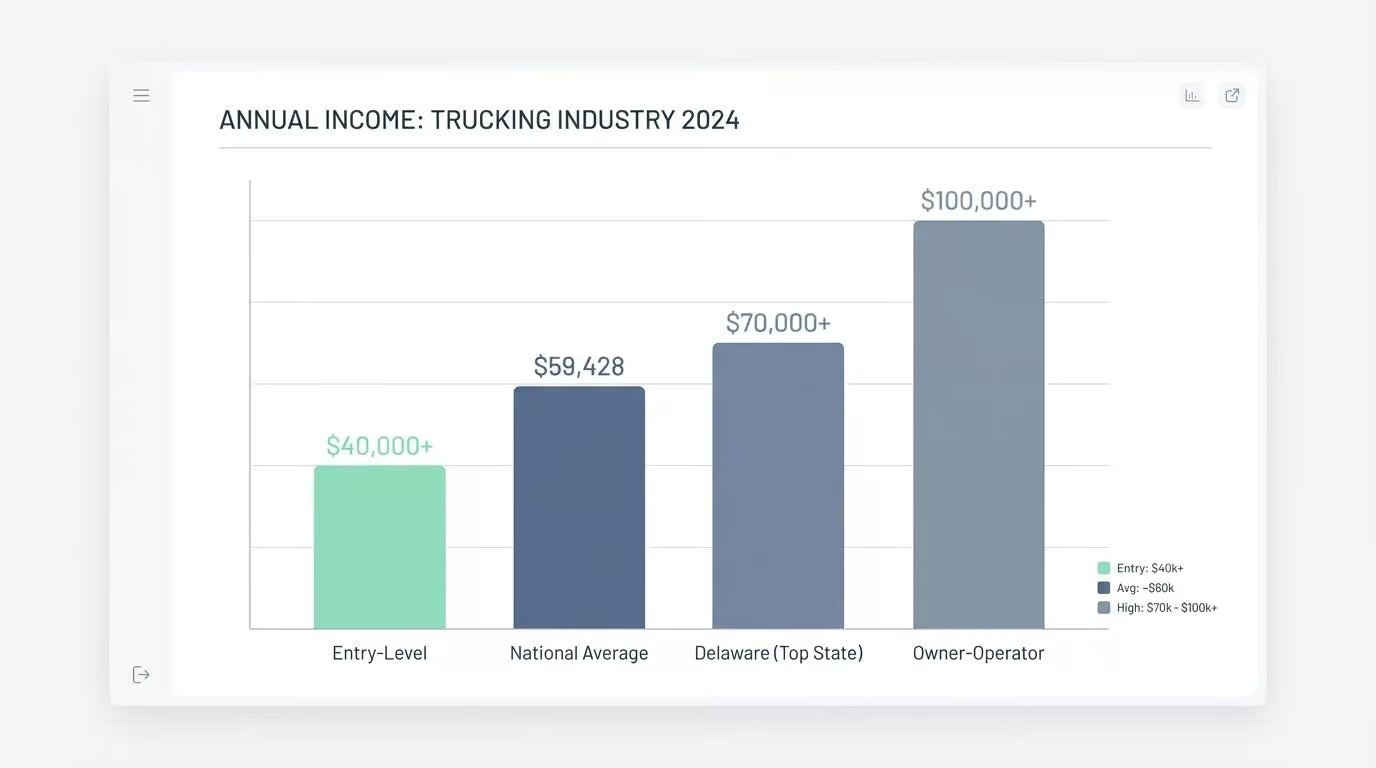
| Category | Average Annual Pay | Key Detail |
|---|---|---|
| National Average | $59,428 | Based on standard freight hauling. |
| Top State (Delaware) | $70,000+ | High demand in the Northeast corridor. |
| Entry-Level | $40,000+ | First-year earnings after training. |
| Owner-Operator | $100,000+ | Gross revenue is higher, but you pay expenses. |
Not bad for sitting behind the wheel of a tractor-trailer and listening to your favorite jams on satellite radio or chatting with dispatchers! Even delivery drivers starting out can see over $40,000 their first year once they finish CDL training and get rolling.
Hauling bigger loads or moving up as an owner-operator? That’s where things really pick up speed; lease/owner-operators can rake in over $100,000 per year if they play their cards right. Some drivers using CloudTrucks can pull down as much as $6,000 every week—yes, you read that right—which puts them well above many other US jobs.
Trucking companies often pay by the mile plus toss in sign-on bonuses and per diem payments to keep folks happy through long stretches away from home. Need more details? The site explains what truck drivers make an hour with clear facts for anyone curious.
What education and training do you need to start?
To step into the truck driver lifestyle, I needed a Commercial Driver’s License, known as a CDL. Most folks can earn one in about five to seven weeks through driving school or community college programs.
My training cost around $4,000, but here is a pro-tip: you might not have to pay a dime upfront. Major carriers like Prime Inc., Roehl Transport, and Swift offer paid apprenticeship programs. They cover your training costs if you agree to drive for them for a set period, usually around a year.
A high school diploma or GED was enough for me; no fancy degree is required. I had to pass both written exams and a skills test behind the wheel of tractor-trailers before getting my commercial license. Since February 2022, you also need to complete Entry-Level Driver Training (ELDT) from a registered provider, which ensures everyone meets the same safety standards.
Keeping my driving record clean made things smoother. Some guys pick up extra endorsements on their CDLs—like H for hazardous materials or T for double trailers—to snag higher-paying gigs in transport jobs. Military veterans sometimes walk right in since their service often counts toward licensing requirements too.
How much freedom do truck drivers have on the road?
I get a lot of freedom as an OTR truck driver. Out on the highway, I set my own pace within the rules—like working up to 70 hours in eight days and then taking a 34-hour break. I pick when to stop for fuel or food, often deciding which spot feels right for me at the moment.
No boss follows me every mile. Sometimes, I pull over and stream some music or listen to podcasts with just my thoughts for company. But you don’t have to guess where to stop anymore. I use apps like Trucker Path to check real-time parking availability at rest stops, so I’m not scrambling for a spot at 10 PM.
Owner-operators have even more say in their schedule and choice of loads. Platforms like CloudTrucks let me choose preferred routes or interesting jobs if that’s what I want that week. Most days roll by solo, except at stops or loading docks where there’s quick chatter with other drivers. Within delivery windows set by companies or clients, I manage how best to meet those goals—giving me real independence inside this commercial driver’s license world.

Can truck driving satisfy your travel interests?
I spend most days on the road, racking up around 500 miles before sunset. As an OTR truck driver, I pass through big cities and tiny towns, watch landscapes change from mountains to flat fields, and sometimes even cross into places like Canada or Mexico.
There is nothing quite like driving I-70 through the Rockies in Colorado or seeing the sunrise over the cornfields in Nebraska. “Every day holds a new view—sometimes rain-soaked highways, sometimes sunrise over cornfields.” Life behind the wheel of a tractor-trailer truck keeps things fresh. My user profile could read “guy who has eaten at diners in every time zone.”
Downtime often finds me parked with trucks stopped at rest areas or quirky local spots. With my phone and internet service provider keeping me connected, I explore nearby attractions or just walk off some road stiffness. Hauling different cargo to new locations means no two weeks are quite alike. If you crave seeing what’s out there without sticking to one zip code for too long, this career offers plenty of travel stories you won’t forget.
What benefits and retirement plans are available?
Working as an OTR truck driver, I get to enjoy some solid benefits. Health insurance, dental, and vision plans often come as part of the deal, which helps if unexpected medical expenses pop up. Companies know they need to compete for drivers, so packages are getting better.
I know plenty of guys who like having a 401(k) retirement plan in their back pocket too. With companies desperate for drivers due to shortages these days, many throw in sign-on bonuses or performance-based rewards that pad the wallet even more. For example, some carriers match your 401(k) contributions up to 3% or 4%, which is free money for your future.
Paid time off is another perk most company OTR truck drivers can count on; it lets me spend time with family or just recharge after weeks on the road. Some trucking outfits toss in per diem payments and reimbursement for certifications—a big plus since every bit counts when planning for early retirement.
Accident coverage and flexible spending accounts have saved my skin before, especially after long hauls where anything can happen out there on the network of highways. Even referral programs sweeten the pot if I point a buddy to a new job using electronic communications or factoring services through my contacts in user profiles online.
What Are the Challenges of Being a Truck Driver?
Spending days on highways can wear on your body, and being away from home tests your mind. Dealing with electronic logs, strict schedules, and costs for things like fuel or repairs is no walk in the park either.
How do long hours affect truck drivers and their families?
Long hours on the road put me through my paces, both in mind and body. Over-the-road jobs keep me away from home for three weeks or more at a stretch, then I get just a few days back with my family before hitting the highway again.
That 8×8-foot truck cab becomes my second home, but honestly, it can feel lonely. My schedule flips upside down every week, so I miss birthday parties and school games; that stings most of all. Technology helps bridge the gap, though. I use FaceTime or Zoom almost every night to say goodnight to my kids, which makes a huge difference compared to just a phone call.
The rules say I can work up to 70 hours in eight days before grabbing a thirty-four-hour break; this kind of grind often leaves my loved ones feeling like strangers. Mitchell McHugh’s advice stuck with me: regular calls help bridge those long miles between us and give everyone some peace of mind.

“You’ve got to call home every day if you want your relationships to survive,” veteran driver Mitchell McHugh told me after two decades on the job.
Physical challenges are only half of what we carry—the mental toll hits hard as well. If things get really heavy, resources like the St. Christopher Truckers Fund or simply dialing 988 for the crisis lifeline are there for us. Listening to podcasts like The Trucker Dump can also help you feel less alone by hearing others share the same struggles.
What physical and mental challenges do truck drivers face?
Prolonged sitting behind the wheel shakes up my body. I feel stiff after those ten-hour runs, and back pain comes with the territory. My doctor warns me that too much sitting increases health risks like diabetes or heart problems. In fact, studies show truck drivers are twice as likely to develop diabetes compared to other workers.
Stopping for fast food is like falling into a trap—I can’t always find healthy meals on the road. The small space in my cab, barely eight feet by eight feet, gets old fast. To fight the “trucker gut” (since 70% of us are considered obese), I started cooking in the cab using an Instant Pot. It saves money and keeps the grease off my plate.
Even tougher are the mental hurdles no one talks about at truck stops. Isolation hits me hard since long trips mean days without seeing friends or family. Most of my day happens alone; loneliness sneaks up between radio static and phone calls home. I use a Garmin dēzl smartwatch to track my steps and heart rate, reminding me to get out and walk around the rig whenever I fuel up.
Irregular hours mess with sleep, leaving me tired while needing sharp focus all day amid heavy traffic and tight deadlines; stress creeps in quickly then settles deep in my mind if I’m not careful. Only 5.8% of drivers are women—sometimes that means extra challenges for them too, especially when social support feels miles away from their tiny mobile homes on wheels.
Why is stress common due to deadlines and regulations?
I face a lot of pressure to meet strict delivery schedules. Every load comes with a deadline set by clients or brokers, and missing one can mean losing future work. On top of that, I have to follow rules like the seventy-hour limit in eight days, required breaks, and mountains of paperwork to stay legal.
Falling behind on just one trip can make me scramble for the rest of my week. To keep my sanity, I rely on ELD (Electronic Logging Device) apps like Motive. They handle the compliance math for me so I don’t have to stress about accidentally violating the Hours of Service (HOS) rules.
Rules keep changing too—new technology rolls out all the time while states adjust requirements on things like safety checks or emissions. During 2023 and 2024, spot rates fell off a cliff; it’s rough competing with other drivers when loads are less common but expectations keep rising.
Sometimes I spend hours planning fuel stops or hunting for parking instead of resting, all while worrying about staying up-to-date so I do not get left behind in this job’s race against time. Most truckers I know say working longer is now normal because there are fewer drivers available; no wonder almost three out of four guys report big concerns over increased hours eating into what little free time we have left at home.
What costs come with becoming an owner-operator?

Buying my own truck set me back over $100,000 right out of the gate. Then came insurance bills, which can total $10,000 or more a year for one rig. Getting my CDL was another hit to the wallet, running between $3,000 and $5,000 before I even started shopping for equipment.
Every tire blowout or oil change is on me too—maintenance costs add up fast. A simple oil change on a semi can cost $300 to $500. Running loads means more than just hauling freight. I have to pay for fuel every time prices spike at the pump. Many owner-operators budget $60,000 to $80,000 annually just for diesel.
There are electronic logging devices (ELDs) and load management tools required by law now; those cost money as well. Paperwork eats into my pocket with fees for permits and compliance records that keep Department of Transportation folks happy and off my back.
Sure, some years cleared six figures in income if everything went right—but slow months bite hard without a steady paycheck waiting at home. It takes sharp business skills and careful planning to keep all these expenses from eating up every dollar I earn on the road.
Career Advancement in Trucking
I’ve watched drivers climb the ladder, starting with a simple Class A license, then chasing bigger rigs or company jobs. Some folks use skills like GPS tech and logbook management to steer into training or dispatch roles—plenty of chance for growth if you’re hungry.
What does it take to become an owner-operator?
Becoming an owner-operator means taking charge. You run your own truck business while still hauling goods across the country. It’s a big step up from being a company driver, and here is how I broke it down:
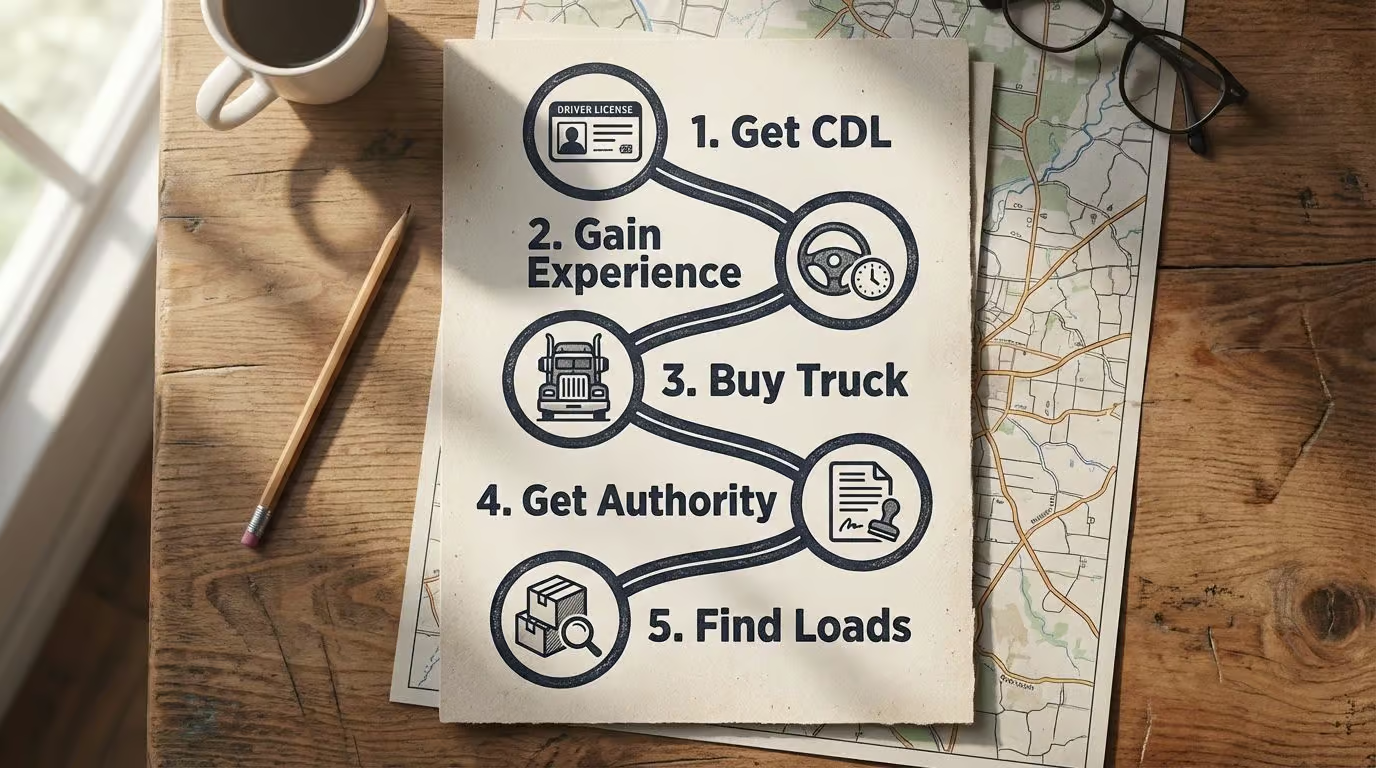
- Get the License: I started by getting my Commercial Driver’s License, or CDL. This step required hands-on training and passing both written and driving tests.
- Gain Experience: First jobs always matter, so I gained experience as a company driver. Most places want to see at least one or two years on the road before you buy your own big rig.
- Secure the Rig: Owning a truck is serious business; I had to decide whether to purchase or lease my vehicle and equipment. Used trucks can cost anywhere from $40,000 to $100,000, depending on age and condition—new ones can be north of $150,000.
- Get Authority: Every owner-operator must get their trucking authority with the Federal Motor Carrier Safety Administration (FMCSA). It’s not just paperwork; it’s proof you’re allowed to haul freight for clients under your own business name. You’ll need an active MC Number and DOT Number.
- Insure Yourself: Insurance isn’t cheap in this field. Coverage costs me thousands every year for liability, cargo protection, and physical damage expenses.
- Stay Legal: Managing all legal requirements eats up more time than most guys expect—hundreds of regulations cover things like hours of service and regular safety checks.
- Maintain the Beast: Keeping my truck running right is key; repairs and regular maintenance are always on my mind because a breakdown hurts both schedule and wallet.
- Find the Loads: Finding loads never stops for me; platforms like CloudTrucks help by connecting drivers with shippers while sorting out logistics headaches like compliance management.
- Build Relationships: On top of everything else, building trust with shippers takes effort every day—I handle contracts myself and talk directly with clients about each delivery’s needs.
- Manage the Cash: Income swings happen based on fuel prices and market demand; some years owner-operators can earn over $100,000 if they play their cards right but it’s not easy money—there’s plenty of risk involved along with the reward.
My experience says running your own show gives freedom but asks for a thick skin, lots of information gathering daily—and sometimes nerves of steel when dealing with tight deadlines or surprise costs.
What specialized driving roles can you pursue?
Hauling hazardous materials takes extra skill and nerves of steel. I needed a special H or X endorsement just to step up for jobs like that, but the pay often makes my pulse race in a good way. Hazmat drivers can easily earn $10,000 to $15,000 more per year than standard dry van drivers.
Driving tankers, flatbeds, refrigerated trailers, or even LTL trucks means handling equipment most folks never see up close. Tanker work needs an N endorsement—hauling liquids can get messy fast if you make mistakes, and the “surge” of liquid in the tank changes how the truck handles.
Transporting oversized loads sometimes calls for pilot cars and planning that would give a puzzle master a headache. If raw materials are on your rig, hopper or end dump trailers become your tools of the trade. Companies sometimes cover costs for these extra certifications since skilled drivers don’t grow on trees.
More responsibility usually equals better wages and more interesting routes; hauling temperature-sensitive goods in reefer trailers keeps me thinking sharp no matter what’s waiting at my next stop. Taking charge as an owner-operator is one road forward; looking ahead, moving into management or training brings another set of opportunities within reach.
How can you move into management or training?
I started out behind the wheel, but soon realized companies need trainers, safety coordinators, and dispatchers who know what it’s like on the road. I used my clean safety record to get noticed for bigger roles. Many successful Safety Directors started exactly where you are—in the driver’s seat.
Management spots go to those who show solid leadership and handle deadlines with a cool head. You might spot an opening as a driver trainer, someone who helps rookies pass their CDL or learn company rules. Trainers often get paid extra for every mile their student drives, which can really boost your weekly check.
Some folks become compliance experts or focus on accident prevention. Loads of carriers offer extra courses and certification if you’re aiming higher. Dispatch is another field where experience matters—it’s all about planning routes and keeping drivers moving safely.
I found that these new roles come with steadier hours than life in the cab and better job security too. If you want to swap the open highway for a desk chair without leaving trucking behind, sharpening your skills can make all the difference.
How Will Truck Driving Change in 2025?
Big changes keep rolling in, especially with technology. Artificial intelligence is showing up more, and that means I need to learn new skills, use smarter trucks, and get used to gadgets that never break a sweat. We aren’t seeing robot trucks take over yet, but Level 2 autonomous assist features—like automatic braking and lane centering—are becoming standard on new rigs.
Some folks worry about fewer jobs because of these changes, but the truth is we still have more old-timers leaving than young guys joining up. It feels like there are always trucks waiting for good drivers. You’ll also see more electric trucks on the road, like the Tesla Semi or Freightliner eCascadia, especially for local and regional routes.
The market took a hit in 2023 and 2024 with low freight rates; finding loads got harder than wrestling an alligator. But tech tools from companies like CloudTrucks help me grab better-paying routes faster. Apps like Drivewyze let me bypass weigh stations using just my phone, saving me time and fuel.
Now, it’s common to find work through mobile apps or online load boards instead of calling around all day. The Bureau of Labor Statistics expects local delivery driving will jump by about 11% through 2031—steady as she goes for anyone wanting job security.
Trucking keeps growing; the U.S. industry hit $217 billion in 2022 and aims for slow but solid growth till at least 2027 at three percent each year. Staying sharp on new laws or smart devices gives me an edge over others who might dig their heels in. With forums and trucking groups online firing off advice day and night, most days feel less lonely out on the highway—even if my only company is satellite radio or a cup of cold coffee.
People Also Ask
Is becoming a truck driver in 2025 still a good career choice?
Honestly, with the industry currently short over 80,000 drivers, the job security is unbeatable if you are willing to put in the miles. It is definitely a solid path if you want steady work that keeps the country moving.
What are the biggest challenges of being a truck driver today?
The real struggle isn’t just the driving; it is the severe lack of parking spots and the unpaid detention time you spend waiting at loading docks. Losing valuable hours just sitting in your cab can be incredibly frustrating when you are trying to maximize your daily clock.
How much money do truck drivers make in 2025?
While the average starter pay is around $56,000, I have seen drivers in private fleets or specialized niches like tankers make well over $90,000. It really comes down to who you drive for and what exactly you are willing to haul.
Do I need special training to become a truck driver now?
You absolutely need to complete a federally mandated Entry-Level Driver Training (ELDT) program before you can even take the skills test for your commercial license.